Posts Tagged ‘biotech’

NC biotech industry eyes unique chance to shape the FDA
Saturday, October 15, 2011, 8:48 pm No Comments | Post a CommentGov. Beverly Perdue’s announcement that a California biotech will set up shop in North Carolina’s Research Triangle was a welcome but short-lived diversion Wednesday during the annual meeting of the North Carolina Biosciences Organization in Research Triangle Park.
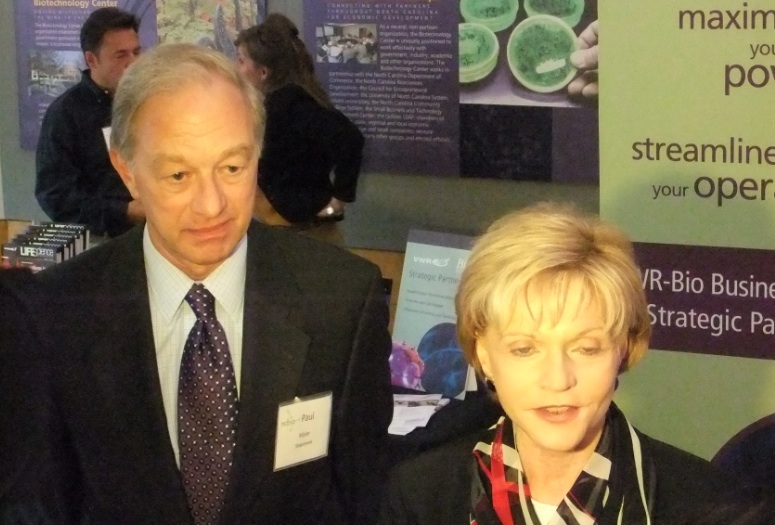
Paul Maier, Sequenom's chief financial officer, and Gov. Beverly Perdue face the TV cameras following Perdue's announcement that San Diego-based Sequenom will open a large lab in the Research Triangle.
Sequenom, a San Diego-based diagnostics company, plans to open a lab on Kit Creek Road next year and start analyzing blood samples from a new, prenatal blood test to detect Down Syndrome. The test would replace more invasive measures such as amniocentesis, which employs a long needle to sample amniotic fluid from inside the uterus.
Sequenom will invest $18.7 million and create up to 242 jobs.
The standing-room-only audience in the N.C. Biotechnology Center auditorium gave Paul Maier, Sequenom’s chief financial officer, a round of applause before Maier and Perdue faced the TV cameras and reporters outside.
Then, the biotech executives inside the auditorium went back to the unique chance that presents itself next year to shape the U.S. Food and Drug Administration.
Andrew von Eschenbach, former FDA commissioner and NCBIO’s keynote speaker, left no doubt that nothing short of a radical therapy will do.

Andrew von Eschenbach
“We’re approaching a crisis situation [in the U.S.] as far as being at the forefront of innovation,” Eschenbach said. The FDA is “in need of a systematic, systemic and formal revision. The moment for modernization is now.”
The FDA has been under close public scrutiny since 2004, when Vioxx was linked to thousands of sudden cardiac deaths before Merck pulled the pain killer off the market.
In 2009, a report released by the Government Accountability Office, the investigative arm of Congress, listed the FDA at risk of failing to fulfill its mission. Chronic underfunding, expanding responsibilities and an aging workforce that wasn’t keeping up with the rapidly advancing science hobbled the agency.
In July, FDAImports.com, a blog written by regulatory consultants, published information that suggested FDA Commissioner Dr. Margaret Hamburg was restructuring the agency’s top management tier. As a Washington Post profile pointed out, Hamburg, a Harvard-trained physician and former New York City health commissioner, had no ties to the pharmaceutical industry when President Obama appointed her.
With changes already under way at the FDA, it could become a watershed year.
In 2012, renewal of the Prescription Drug User Fee Act, or PDUFA, is up. Enacted in 1992, PDUFA established a funding mechanism for the FDA to regulate new medical products and make sure they are effective and do no unnecessary harm. The federal law has been subject to changes every five years, when Congress had to renew it to keep the system going.
The potential for significant changes is particularly large in 2012, because PDUFA for the first time is due for renewal during a presidential election year. And what a turbulent election year it promises to be four years into stubbornly high unemployment, ongoing banking crises and steep government budget cuts.
“This is going to create some interesting politics in Congress,” said J.C. Scott, the head lobbyist for AdvaMed, a trade association representing the medical device and technology industry. Scott was one of several NCBIO speakers addressing regulatory policy recommendations for overhauling the FDA.
Lobbyists for the biotech, pharmaceutical and medical device industries are not about to pass up this opportunity.
Young and small companies are getting squeezed by a lack of innovation capital. (More on innovation that isn’t being funded here.) Facing stagnant research and development productivity and the expiration of valuable drug patents in the U.S., large drugmakers have been cutting jobs for years. (More on the lack of big pharma R&D productivity here.)
The Biotechnology Industry Organization, or BIO, has already drawn up a wish list of changes. According to Cartier Esham, BIO’s senior director of emerging companies, health and regulatory affairs, who also spoke at NCBIO’s annual meeting, policy items on the list include:
- a fixed six-year term for the commissioner,
- the use of electronic health records and smart phones in clinical trials,
- faster approval of products for unmet medical needs similar to how European regulators do it,
- improved advisory committees,
- the establishment of chief medical policy officer positions and
- setting up the FDA with an independent budget. (The FDA is now funded under the U.S. Department of Agriculture.)
“It is our intent,” Esham said, “to get as many of these [policy changes] enacted into legislation as possible.”
RTP biotech companies travel to Bay Area to pitch to investors
Friday, October 7, 2011, 12:16 pm No Comments | Post a CommentYoung biotech companies in North Carolina’s Research Triangle don’t have to read Ernst & Young’s 2011 industry report to know that early stage funding is down, that investors increasingly tranch their payments and make the tranches dependent on milestone accomplishments, that competition from other industries is growing fiercer for venture capital nationwide. (More on what isn’t being funded here.)
But sitting around and complaining doesn’t help, either. So, seven Research Triangle Park area biotech companies decided to do something. Last month, they traveled to the San Francisco Bay Area on their own dime to meet with potential investors.
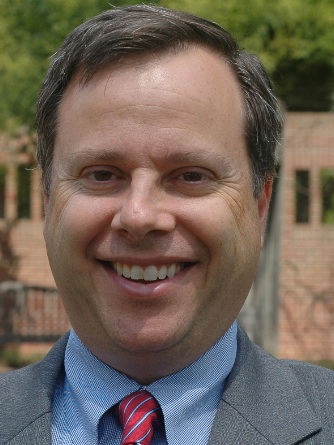
Peter Ginsberg
The trip to Palo Alto, Calif., was the first of its kind the N.C. Biotechnology Center organized, said Peter Ginsberg, the biotech center’s new vice president of business and technology development.
“We wanted to change the way Bay Area venture capitalists think about North Carolina companies,” Ginsberg said. “And maybe, maybe, down the line, knock, knock, knock, get them to open an office here.”
A report that the biotech center submitted to state legislators in January offers clues where investors from outside the state see shortfalls in the North Carolina biotech industry, which is centered in the RTP area and along the Interstate 85 corridor to Charlotte.
Even though in 2010 North Carolina was home to about 500 biotech companies that employed more than 225,000, ranking the state third behind California and Massachusetts, very few of the North Carolina companies generated revenue. Also, among the companies located in the state only 10 were publicly traded, according to Ernst & Young. That’s about 3 percent of all publicly traded biotech companies nationwide.
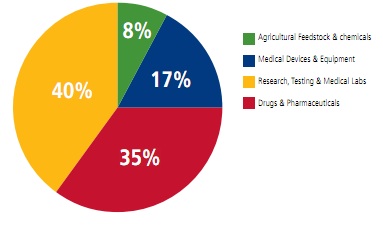
North Carolina's biotech employment is diverse.
Compared to other biotech hot spots, North Carolina lacks local life science entrepreneurs who successfully developed products and brought them to market and who financed multiple entrepreneurial ventures. (More on building entrepreneurial networks in the RTP area here and here.)
And the state’s many research institutions haven’t done a very good job translating their sponsored research into products.
As a former biotech analyst, institutional investor and company executive, Ginsberg has a good grasp of the fallout.
“We don’t have the breadth of life science venture capitalists as California or Massachusetts,” he said.
Add to that travel inconveniences.
The Bay Area is home to many venture capitalists, but without a non-stop flight to Raleigh-Durham International Airport most are reluctant to visit the RTP area, he added. “Venture capitalists travel a lot and it’s not easy for them to get here.”
So, traveling to Palo Alto for a day-long meet-and-greet with investors was similar to Muhammad going to the mountain to preach because the mountain wasn’t going to come to Muhammad.
The event was sponsored by Silicon Valley Bank, which has operations in the Triangle, and attracted more than a dozen venture capital firms, Ginsberg said. He declined to name them.
The seven biotech companies were traditional drug development companies, medical device and diagnostics companies and a company developing vaccines:
- Advanced Liquid Logic in Morrisville is working on a lab-on-a-chip based on nanotechnology developed at Duke University. Founded in 2004, the company has received $15 million in grants and $8.1 million in angel funding.
- CoLucid Pharmaceutical in Durham is testing a migraine drug in patients and working on therapies for chronic pain, Alzheimer’s disease and depression. Founded in 2005, the company has raised $42 million in venture capital.
- Heat Biologics, which relocated its headquarters from Miami to RTP this year, is working on therapeutic vaccines to combat a range of cancers and infectious diseases. Founded three years ago, the company has not released its funding.
- nContact in Morrisville develops and sells medical devices for minimally invasive treatment of heart arrhythmia. Founded in 2005, the company has raised more than $42 million.
- Scynexis in RTP is a drug discovery and development company that has delivered 11 drug candidates to customers in the past five years and is working on its own pipeline of experimental therapies. Founded in 2000, the company collaborates with Merck on a cancer drug and is part of a consortium working on the first pill to treat human African trypanosoniasis, also known as sleeping sickness.
- TearScience in Morrisville in July received regulatory approval to sell its first product, a medical device to treat dry eye patients in an outpatient procedure. Founded in 2005, the company has raised more than $60 million in venture capital. To bring the dry eye device to market, TearScience recently received $15 million in debt financing.
Hamner signs Chinese collaborator
Wednesday, July 20, 2011, 4:28 pm No Comments | Post a CommentTwo years after the Hamner Institutes for Health Sciences set up a gateway to China, the Research Triangle Park research institute is adding a Chinese company to its collaborators.
Ascletis will establish its U.S. research and development operations on the Hamner campus. Other operations of the company will be in the National High Tech Industry Development Zone in Hangzhou, a city about two hours southwest of Shanghai.
Jinzi Wu
Founded this year by Jinzi Wu, former head of global HIV drug discovery at GlaxoSmithKline in RTP, and Jinxing Qi, a Chinese real estate investor and chairman of the Hangzhou Binjiang Real Estate Group, Ascletis has $100 million in commitments from U.S. and Chinese angel investors. The company plans to establish a global therapeutics business that targets cancer and infectious diseases.
Allan Baxter, former global head of medicines development at GSK, will lead Ascletis’ discovery and development strategy as chief strategy officer.
According to its Web site, the company aims to buy the rights to new treatments, develop them and introduce them to the growing Chinese pharmaceutical market.
Allan Baxter
Projected to generate about $60 billion in sales this year, the Chinese pharmaceutical market is increasing at an annual rate of more than 20 percent, according to a report by strategic consulting firm The Monitor Group. By 2015, Monitor advisors expect China to rank second in market size to the U.S. and ahead of Japan, Germany, France and the United Kingdom.
Incidence and mortality rates for lung, stomach, liver and breast cancers are comparable or higher in China than in the U.S., the Monitor report pointed out. But competition among pharmaceutical companies is high in China. Nearly all multinationals and numerous local firms are jostling for market shares.
Also, health insurance coverage in China is improving rapidly. In the past two years, the Chinese government invested more than $160 billion in healthcare reform.
Bill Greenlee, the Hamner’s chief executive, and Wu, chief executive of Ascletis, signed the joint venture July 16 at the U.S.-China Governors Forum in Salt Lake City. At the same forum, N.C. Gov. Beverly Perdue and Zhao Hongzhu, the party secretary of the province to which Hangzhou belongs, signed an agreement to foster business and economic development between North Carolina and Zhejiang Province through commercial interactions.
Biotech innovation: What isn’t funded
Tuesday, June 28, 2011, 11:35 pm No Comments | Post a CommentInnovation capital, money to turn some of today’s most innovative discoveries into tomorrow’s medical treatments, is getting so scarce in the U.S., politicians, economic developers and entrepreneurs in regions specializing in early stage biotech research and development are scrambling.
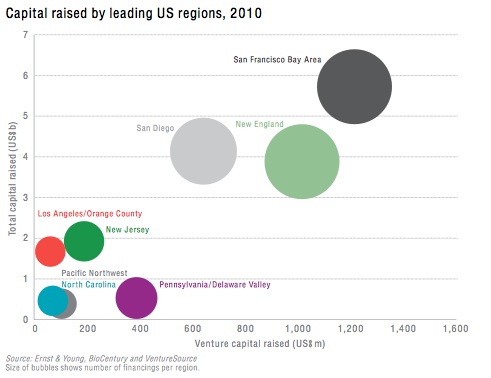
North Carolina, a hub for young biotech companies, trailed other U.S. biotech hot spots in venture capital raised last year, according to an Ernst & Young report.
North Carolina’s Research Triangle, the third largest U.S. biotech hub, is one of those regions.
Some of the world’s largest R&D companies have operations in the Triangle, including GlaxoSmithKline, Novartis and Bayer. But the lifeblood of the area has long been young, early stage companies in pursuit of ideas developed at local research universities such as Duke University, the University of North Carolina at Chapel Hill and N.C. State University or hatched by researchers who used to work in corporate labs in Research Triangle Park.
A little more than two years after a deregulated U.S. banking industry stumbled in the fall of 2008, investors are increasingly shying away from early stage biotech companies, a high-stakes, high-rewards gamble in the best of times. Innovation capital is drying up in the U.S., according to a 2011 report the U.S. accounting firm Ernst & Young published this month.
One consequence, a Research Triangle venture capital investor said, is “deals are dying on the vine.”
“More and more small, really good startups are having problems finding money,” said Norris Tolson, chief executive of the N.C. Biotechnology Center. “We’re about the only game in town for early stage biotech companies.”
The biotech center, which offers grants and loans up to $250,000, has seen the number of funding requests increase by about 10 percent, Tolson said. In the past year, about 280 applicants asked for financial support. About 130 were approved.
Traditionally, young biotech companies have relied on private investors, often venture capital investors, to kick their R&D into gear.
U.S. biotech companies raised $5.5 billion in venture capital in 2007, about twice as much as in 2000, according to Ernst & Young. But in the past three years, the amount has stagnated at about $4.5 billion annually and venture capitalists have begun to hold money back until companies reach certain milestones.
Total capital raised by biotech companies in the U.S. bounced back to $20.7 billion last year, from about $13 billion in 2008, according to Ernst & Young. But much of that capital went to mature companies. Young, early stage companies, which work on the most innovative technologies and generate more jobs than large, established companies, actually received about 20 percent less in capital than the year before.
In Europe, capital raised was more evenly distributed among startups and mature companies. In Singapore, China and India, governments are ratcheting up efforts to bolster biotech innovation. And in Latin America, Brazil’s already strong agricultural biotechnology sector is gaining attention.
But politicians, economic developers and university administrators in the Research Triangle have come up with ideas to encourage the formation of R&D startups despite the early stage funding crunch

The planned Alexandria Ag-Tech Center.
The biotech center teamed up with Alexandria Real Estate Equities, a Pasadena, Calif.-based real estate investment trust, to attract young companies working in agricultural biotech research. Alexandria, which already owns lab buildings in the Triangle, will build a $13.5 million business incubator with about 18,000-square-feet of greenhouse space near RTP.
Several universities and the Council for Entrepreneurial Development are working with the charitable arm of the Blackstone Group, a global investment firm, to turn more technologies developed at universities into companies and bolster the Triangle’s existing entrepreneurial network.
The chancellors at UNC-CH and NCSU have set up innovation funds to further support spinoffs.
And state legislators are again considering establishing a nonprofit that can loan young companies money. The legislation has come up twice before and would use about $100 million an out-of-state investor is willing to provide, Tolson said. Initially, only life science companies could benefit, but recently state lawmakers suggested that information technology and green technology companies should also be included.
“There’s a huge need for startup capital across the U.S.,” Tolson said. In North Carolina, “a lot of people are understanding the need.”
Bayer continues to shift biotech seed development focus to U.S.
Thursday, April 28, 2011, 2:20 pm No Comments | Post a Comment
Rendering of Bayer CropScience's new greenhouse.
The 60,000-square-foot greenhouse that Bayer CropsScience is building in North Carolina’s Research Triangle Park represents a critical step in a strategic shift the German Bayer Group initiated two years ago.
The two-story greenhouse is projected to cost $20 million and will quadruple the greenhouse space Bayer Cropscience has in RTP.
Biotech crop seeds have long been part of Bayer CropScience’s business. Much of the trait development - work in the lab and greenhouse to come up with genes that improve crop yield and make corn, soybean, cotton and canola plants more resistant to insects and more tolerant to herbicides, drought and stress - has been done at Bayer’s plant technology innovation center in Ghent, Belgium.
When Bayer stepped up investment in plant technology research and development in 2009, it could have just added on to the Ghent facilities. Instead, the company shifted its focus from Europe to the U.S., where consumers are more accepting of genetically modified crops. So far, Bayer has announced close to $400 million in investments to boost biotech trait development near Bayer CropScience’s U.S. headquarters in RTP.
“We see that as a logical place,” Bayer CropScience spokesman Jack Boyne said from his RTP office.
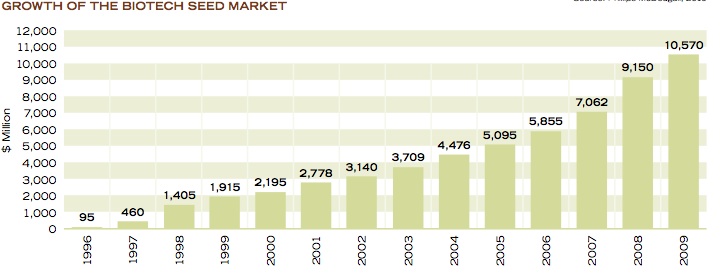
The number of biotech crop seeds on the market has been rising steadily. In 2007, biotech seeds accounted for about $22 billion in worldwide sales with the top 10 sellers garnering about 68 percent of the global market, according to a report. Bayer CropScience came in seventh, behind Syngenta and market leader Monsanto.
U.S. biotech seed sales
The RTP area, a U.S. biotech hotspot, is home to agricultural biotech operations of four of the large companies - Monsato, Syngenta, Bayer and BASF - and several smaller companies and startups. (More about research at Syngenta’s corporate biotech research center here.)
Eager to catch up, Bayer CropScience in 2009 bought a smaller RTP neighbor with an enviable collection of crop seed traits for $365 million. Athenix, which had research collaborations with Monsato and Syngenta, is now part of Bayer CropScience. So are Athenix’s 65 employees, but Bayer CropScience continues to hire to add a total of 125 employees by 2015. (More about the Athenix acquisition here.)
“We are making an increased investment in bioscience,” Boyne said. “We see this area as a strong growth opportunity.”
So do Monsanto, DuPont and Syngenta.
In 2009, Syngenta bought Monsanto’s hybrid sunflower seed business for about $160 million. In 2010, Monsanto broke ground to expand a soybean seed production facility in North Dakota. And DuPont announced in February that it will invest $50 million to expand its agricultural biotech research center in Delaware.
DuPont expected sales of its ag unit to rise 8 percent to 10 percent per year through 2015.
North Carolina’s biotech industry gets wakeup call
Friday, February 25, 2011, 8:44 pm No Comments | Post a CommentBuyers looking for a kitchen appliance, computer or car can turn to a variety of product reviews and ratings, but there’s no version of Consumer Reports that helps physicians or patients with information about which treatments pack the most bang for the buck.
For that matter, in cases where multiple treatments are available, there may not even be any research to see which treatment does better under what circumstances.
Sure, health care providers like Duke University Health System and health insurers like Blue Cross Blue Shield keep extensive medical records to track an allergic reaction to a medication, length of stay in intensive care and other treatment results for each patient. Kaiser Permanente, the largest managed care organization in the U.S., developed a reputation early on for denying coverage of treatments that are not as effective as their cost might suggest. But in general, health insurers and providers don’t use comparative information extensively. They also rarely share the data.

Scott Evangelista
In the United Kingdom, regulators look at how new medicines fare against existing ones in clinical and cost effectiveness before they approve the new medicines for sale.
In the U.S., the standard test to get regulatory approval for a new medicine is a comparison with a placebo, a drug that is designed to do nothing, Scott Evangelista, a Deloitte consultant who lives in Chapel Hill and helps life science companies with tough problems nationwide, told an audience of hundreds this week at the North Carolina Biotech conference in Raleigh.
And when the new medicine passes the test, the drugmaker can claim, “We’re better than the sugar pill,” Evangelista said. The test results provide few clues how effective the new medicine is in a real-world situation.
But the pressure is rising to get the right medicines to the right people at the right time and the right value, he said.
For the more than 500 biotech companies in North Carolina - the majority of them call the Research Triangle area home - this could mean significant changes.
“You have to get your customers involved and you have to listen to things you don’t really want to hear,” Evangelista told the crowd at the conference.
Things like comparing a new drug head-to-head with existing ones, which can end favorably for the competition. Zeroing in on a small group of patients who stand to benefit most from a new drug, thereby limiting the drug’s sales potential. Adding a test to make sure only the patients who benefit from a drug get it, which makes the treatment more expensive and less convenient. Or suspending development of a drug, because it will cost a lot more than existing ones but is only a little bit more effective.
A 2010 report in the Journal of the American Medical Association suggested that of more than 300 studies the top six medical journals published over 15 months in 2008 and 2009, 43 percent included comparisons of different medications. Only 2 percent of the studies analyzed which treatments were better values.
Indeed, of the more than $2 trillion in annual U.S. health expenditures, only an estimated 0.1 percent is spent on researching the comparative effectiveness of medical treatments, according to a 2007 report of the Congressional Budget Office.

Source: Centers for Medicare and Medicaid Services, Office of the Actuary, National Health Statistics Group
The lack of information has contributed to health care costs that have little to do with how well patients do.
Case in point: Blood-pressure lowering drugs.
An 8-year-long study that followed more than 32,000 high-risk Americans age 55 and older found that diuretics were not only superior but also cheaper than newer enzyme inhibitors and calcium-channel blockers, according to outcome results published 2002 in JAMA.
With annual health care expenditures doubling to 16 percent of the U.S. economy in about 30 years and projected to reach 20 percent by 2016, this disconnect between costs and outcomes has insurers, employers and politicians pushing for a change in course.
In the past two years, Congress approved health care reform that stresses patients’ rights, earmarked $1.1 billion for comparative effectiveness research as part of the federal stimulus bill and established the Patient-Centered Outcomes Research Institute to set research priorities, oversee clinical trials and hand out money.
“None of this would be happening if cost wasn’t an issue,” Evangelista said.
Of course, comparative effectiveness isn’t a new concept in U.S. health care. It’s been around for more than 30 years. Two federal institutes to evaluate health care technology have opened and closed since 1978.
But this time around, America is graying - 10,000 baby boomers turn 60 every day, said Deidre Connelly, president of GSK North America Pharmaceuticals and a featured speaker at the biotech conference - treatments for chronic diseases account for an estimated 75 percent of U.S. health care spending and the rapid switch to electronic medical records will make comparative effectiveness analyses easier within a few years.
One Midwest health insurer has already launched its own research arm with plans to analyze its medical records for comparative effectiveness and conduct its own clinical trials, according to a report by CenterWatch, a trade publication that tracks the contract medical research industry.
This time, Evangelista said, “it’s going to happen.”

Engineering for Better Wastewater Treatment Results
Sunday, December 26, 2010, 3:02 pm 1 Comment | Post a Comment
Wayne Flournoy, president of Entex Technologies
A few weeks ago, I reported on water quality expert Kenneth Reckhow’s concern that we will be unable to achieve water quality standards set by states in response to the Clean Water Act. Municipal water treatment plants have been improved “to the limits of technology,” he said, and additional cleanup was going to have to happen with somewhat unlikely changes like limiting development, changing farming practices, and prohibiting lawn fertilizers.
Last week, I had the opportunity to discuss the challenges of cleaning wastewater from the perspective of an entrepreneur who has been working with municipalities and industry to improve treatment plant performance. Wayne Flournoy is cofounder and president of Entex Technologies, a Chapel Hill company that designs systems for upgrading wastewater treatment plants or for new plants. Read more…

On the future of personal genomics and the law…
Friday, July 2, 2010, 1:51 pm No Comments | Post a Comment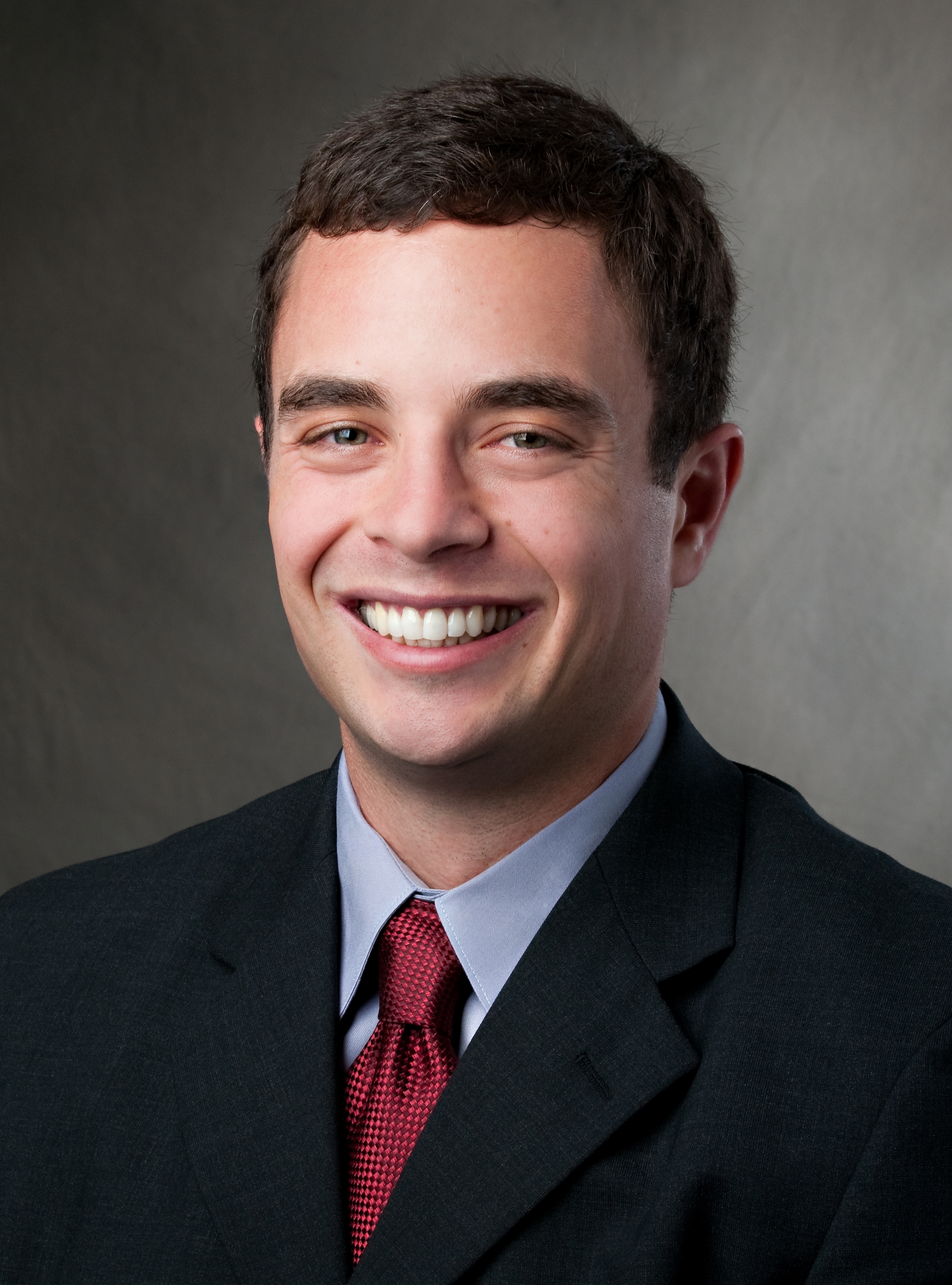
Dan Vorhaus
Dan Vorhaus is a lawyer with Robinson Bradshaw and Hinson in Charlotte, N.C. where a portion of his practice comprises the growing field of personal genomics law. Given the interest in personal genomics in the Triangle, I thought I’d create an expanded version of the short question-and-answer interview I did with him for an up-coming issue of the Sci-Tech section in the Charlotte Observer and the Raleigh News and Observer (be on the lookout for that next Monday in print and online), and post it here. Vorhaus also authors the Genomics Law Report, a blog about the legal side of personal genomics, and he will be giving testimony to the Food and Drug Administration in the near future as the agency attempts to sort out particulars of how it plans to regulate genomic diagnostic testing.
How did you become interested in concentrating on personal genomics as an area of the law?
I have a master’s in bioethics; I did that degree before I went to law school. So as I started thinking about the areas of law and policy that were most interesting to me, that was clearly one of them. And it seemed like there was a tremendous opportunity for a field that is developing and emerging and creating all sorts of new and exciting legal issues. And it’s something that I’ve always had an interest in the underlying science and technology, and I was fortunate enough in law school to start working with some real pioneers in the field, specifically George Church in the personal genome field. Everything sort of built from there. Now, it’s how I make my living, it’s my career. And I love it. It’s something new and fascinating every single day and I can’t get enough of it.
Gephardt visits Triangle on tour to spur medical innovation
Wednesday, June 30, 2010, 2:12 pm No Comments | Post a CommentDick Gephardt is traveling across the country to reinvigorate medical innovation and on Wednesday the former Congressman, U.S. House majority leader and two-time Democratic presidential candidate visited North Carolina, a U.S. biotech hot spot.

U.S. Rep. Dick Gephardt
He carried a to-do list with him that he plans to take to Congress and the Obama Administration.
Changing the way the Food and Drug Administration regulates the development of new medicines, making the research and development tax credit for companies permanent and establishing a federal office to spearhead public-private partnerships between universities, the National Institutes of Health and R&D companies were among the suggestions on the list.
“It needs to be the new space program in my view,” Gephardt told about 100 people at the packed Capital City Club in Raleigh. Read more…
Needed: Cash to pay for innovation
Thursday, February 25, 2010, 1:02 am 1 Comment | Post a CommentA $500 ticket to the Biotech conference Monday and Tuesday offered face time with heavy-hitting investors. After an 18-month, deep recession that dried up funding for drug research and development nationwide, it was a lure that attracted Research Triangle area companies to the Raleigh Convention Center in droves.
The visitors made it clear they and other investors remain skittish, but they also noted signs of hope, such as the handful of initial public offerings by biotech companies in past months and an adjustment in venture funding last year in favor of early-stage companies.

Stephen Sands
“When we look at a year ago, we’re really all taking a breath of relief that the Dow [Jones stock index] is over 10,000,” said Stephen Sands, vice chairman of U.S. investment banking in Lazard’s healthcare group, who moderated a panel addressing the future of biotech funding at the conference. Read more…


