Posts Tagged ‘NESCent’

Couple documents evolution as it happens
Friday, April 15, 2011, 8:56 pm No Comments | Post a CommentIf Charles Darwin returned to the Galapagos Islands today, he would find all but one of the finch species that lived there during his visit in the 1830s. But he would also find birds that look and sound different.
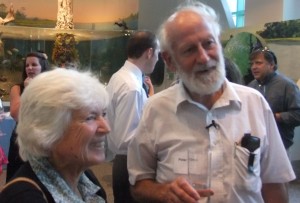
Rosemary and Peter Grant during a reception in their honor at the N.C. Museum of Natural Sciences
Peter and Rosemary Grant, husband-and-wife evolutionary biologists at Princeton University, have written about a medium ground finch that is heavier, has a broader beak and sings a different song than its closest relative.
The Grants have documented the emergence of this medium ground finch lineage since 1981, when they caught what they believe was an immigrant bird on Daphne Major, a tiny Galapagos island where they’ve measured, weighed and tagged ground finches several months every year since 1973.
The new lineage, which nobody has dared to call a new species yet, has been molded by droughts, above average rainfall and competition for food - factors that also affected other finches living on Daphne Major.
“In the 2000s, the birds are not the same as the ones that were on the island when we started,” Peter Grand told a crowd of more than 200 who had come to his and his wife’s presentation April 11 at the N.C. Museum of Natural Sciences in Raleigh.
That evolution can happen as researchers watch was unexpected. That the Grants documented the making of what might be a new species in 20 years has turned them into legends.Their research has won multiple awards and is featured prominently in biology textbooks and one Pulitzer-Prize-winning book.
The couple’s visit to North Carolina’s Research Triangle was the result of a collaboration of the museum, N.C. State University and the National Evolutionary Synthesis Center.
Thirteen species of ground finches live on the Galapagos archipelago, a cluster of more than a dozen islands located in the Pacific Ocean about 600 miles west of Equador. They are plain birds with brown, gray or black plumage that have been famous since they helped Darwin develop the theory of evolution.
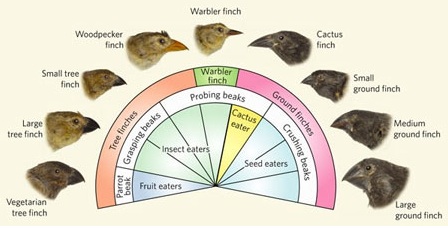
Darwin's finches
All descend from one species that lived on the South American mainland.
The smallest finch species on the Galapagos Islands weighs about one-fourth of the largest species and each species has developed a specific beak to eat a special diet.
The Warbler finch has a slender beak to probe for insects. Ground finches have broad beaks to crush seeds of various sizes. Cactus finches have long, curved beaks to probe flowers for nectar. The large tree finch has a powerful, curved beak to strip bark and extract insects and termites.
The diet has a lot to do with where a species lives. The medium tree finch, for example, can only be found on Floreana Island. The common cactus finch lives on all but the five Galapagos Islands that are inhabited by the large cactus finch.
Daphne Major is home to four species, the Grants reported. The couple caught small, medium and large ground finches and cactus finches, including some that had immigrated from neighboring islands.
The males of each species sing a different song, which male and female birds learn as nestlings listening to their fathers. Males and females of a species recognize each other by that song. Interbreeding can occur, Rosemary Grant said, for example, when the fatherly lesson gets garbled because the nest is close to the nest of another species in the same cactus bush.

Immigrant hybrid male the Grants caught in 1981. Source: Proceedings of the National Academy of Sciences
In 1981, the Grants caught a medium ground finch immigrant whose plumage was particularly glossy and black. The male bird was about 20 percent bigger than the biggest medium ground finch captured on Daphne Major and had a wider beak. It also sang an unusual song and a blood test determined that it carried cactus finch genes.
The immigrant hybrid male mated with a female hybrid that also carried genes of both species. Three generations of offspring - finches live up to 16 years - bred with local medium ground finches and other hybrids.
Then, all but two of the birds in the lineage died during a severe drought in 2003 and 2004. The remaining two birds, a sister and a brother, mated and their offspring has mated, but only with each other.
This has led to two distinct groups of medium ground finches on Daphne Major that do not mix, the Grants reported. They differ in weight, beak shape and song and breed in two different areas on the island.
(More in the Grants’ inaugural article in the 2009 Proceedings of the National Academy of Sciences.)
Of lizards, female choice and male competition
Friday, February 4, 2011, 2:50 pm 2 Comments | Post a Comment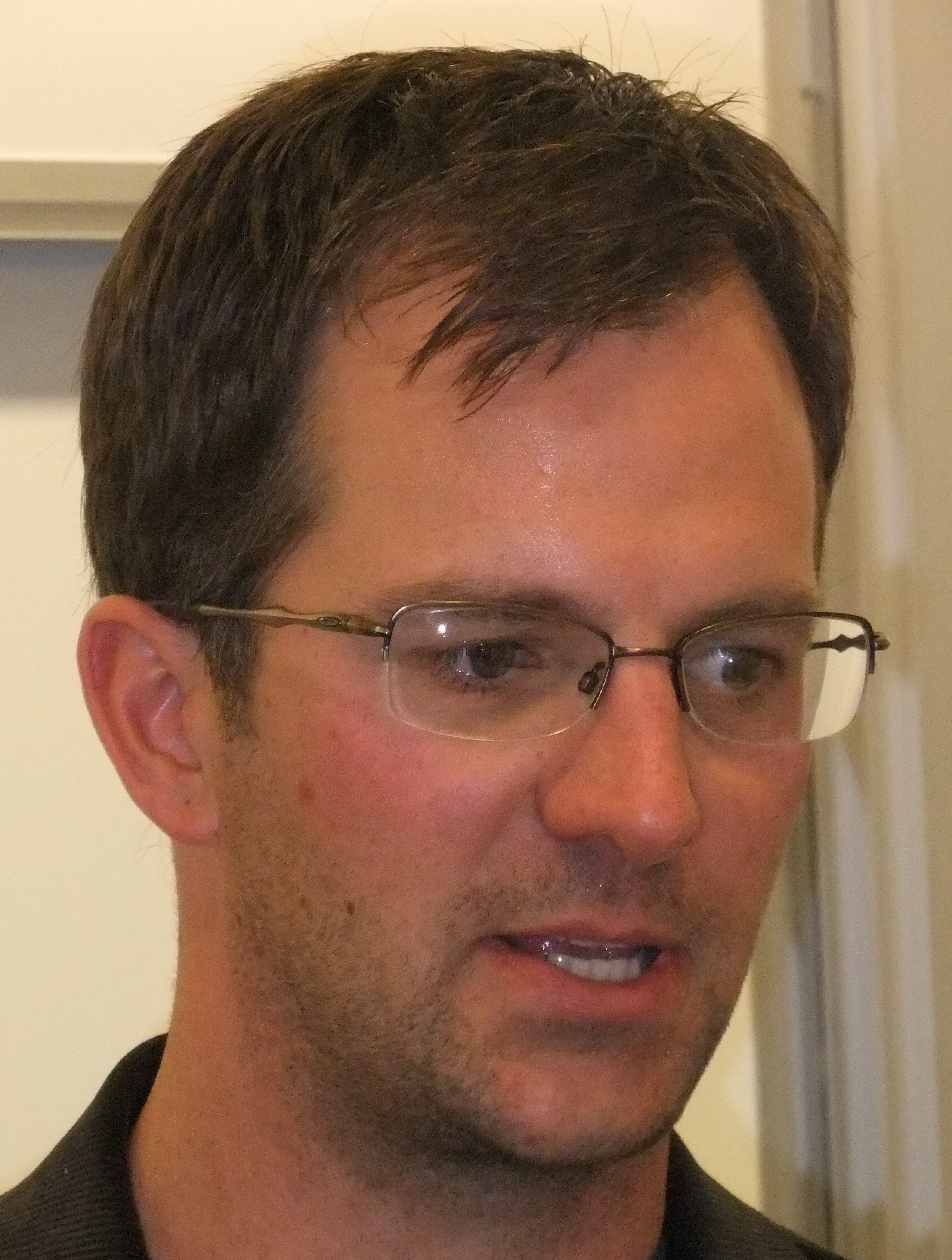
Ryan Calsbeek
I didn’t feel kinship with female lizards until I listened to Ryan Calsbeek talk about women having a say in whether their children will be boys or girls.
Calsbeek has studied natural selection among lizards and spoke about his research Thursday at N.C. State University’s biology department. He is an assistant professor of biological sciences at Dartmouth College and a visitor at the National Evolutionary Synthesis Center in Durham where he is working on a book.
Experiments he and his team have run with brown anoles, lizards native to Cuba and the Bahamas, suggest that the female lizards sort sperm to have the fittest males father more male offspring. It’s unclear how female brown anoles do that, Calsbeek said, but they’re not the only ones doing it.
“It’s even true in humans,” he said.
The remark generated quips from the audience about the exclusively female offspring of three consecutive U.S. presidents and the girl that Calsbeek’s pregnant wife is expecting. But Calsbeek argued that statistically four examples don’t mean much. Throughout history, women whose mates were presidents and kings tended to overproduce sons, he said.
Still, why should I care about sperm sorting among reptiles the size of my finger? Because brown anoles are, as Calsbeek put it, “the drosophila of lizards.” Both are model organisms. Just as the drosophila fruit fly has been extensively used to understand genetics, brown anoles can tell us something about the role female choice plays in the evolution of organisms, including ours, Calsbeek said.
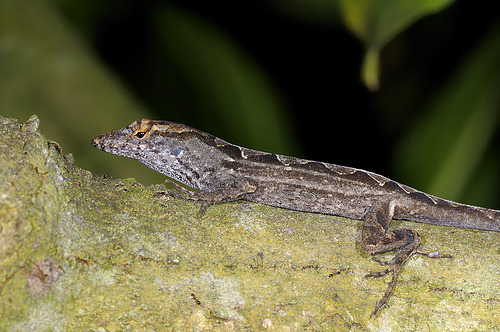
Brown anole
More than 150 years ago, Charles Darwin picked up on female behavior patterns that ensure reproductive fitness down the generations.
Nature is full of examples. To a peacock hen lustrous tail feathers on a male signal he’s not parasite-ridden. Size and strength help male elephant seals drive away competitors and attract harems of up to 100 cows. Size is also important for female brown anoles to determine male fitness.
After World War II, another Brit, Angus Bateman, determined through drosophila experiments that female choice makes sense, because the number of offspring a female fruit flies can produce is limited more by how many eggs she generates than by how many mates she has. Bateman concluded that eggs are more precious than sperm, Calsbeek said.
Calsbeek and his team conducted breeding experiments with brown anoles to learn more about the choices the female lizards made. The findings they reported last year suggested the dams were very sophisticated.
The experiments showed that the size of the father only played a role in the number of male offspring that hatched.
Males are either losers or winners while females do pretty well regardless, Calsbeek said. “If you’re a loser in the animal kingdom, you’re probably a male. Sorry guys.”
Astrobiology “is way beyond hunting for little green men.”
Wednesday, October 6, 2010, 7:47 pm 1 Comment | Post a CommentWhat is somebody who tracks the way life evolved on Earth doing at NASA?
Lynn Rothschild, a research scientist at NASA’s Ames Research Center, suggests that evolutionary biology, not just geology and astronomy, holds answers to questions that scientists have asked for thousands of years: Where do we come from? Are we alone in the universe? And where are we going?
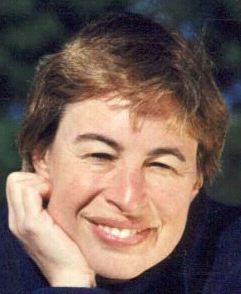
Lynn Rothschild
During a seminar Wednesday at the National Evolutionary Synthesis Center in Durham, Rothschild argued that studying life on Earth under the most extreme conditions can provide clues where to search for life elsewhere in space - life that may be a lot more primitive than little green men who build radio transmitters capable of sending signals powerful enough to reach Earth.
Astrobiology, Rothschild said, “is way beyond hunting for little green men.”
Evolutionary biology is based on the fact that all life, from microbes to plants to humans, adapt when push comes to shove. Poor adaptors disappear, good adaptors multiply. About 150 years after Charles Darwin grasped the dynamics of natural selection, evolution is still not universally accepted. Uniformed police officers recently attended a Rothschild talk in Texas to make sure everybody in the audience behaved.
 Astrobiologists start with the building blocks of life in our solar system, which is part of the Milky Way, a relatively old galaxy at about 13 billion years of age.
Rothschild counts organic carbon, carbon that is part of a molecule, as a building block of life. It’s the fourth most common chemical element in the universe and various molecules containing carbon can be found in space, even molecules needed in the construction of genetic information.
She is not as sure that water and oxygen are essential building blocks of life.
Here’s why: life forms that have adapted to extreme conditions on Earth.
Single-cell microorganisms can be found near hot springs and in salt lakes. Flamingos and algae thrive in ammonia water. Some plants can survive in areas with just 1-inch of rainfall per year and high radiation from ultraviolet rays.
Based on what evolutionary biologists have learned from extremophiles, life forms that push the limits, Rothschild pinpoints the following places in the solar system where life might have been or might be possible:
- Venus could have been Earth’s twin, but a run-away greenhouse effect turned it into an 800-degree-Fahrenheit inferno.
- Mars could have been where life originated, even though no organic carbon has been fund.
- Jupiter moon Europa and Saturn moons Titan and Enceladus could support some type of life underneath the miles of ice that covers them.
More about NESCent planning to get into astrobiology here.
RTP Weekahead 3/15
Sunday, March 14, 2010, 3:21 pm No Comments | Post a CommentEvents taking place the week of March 15 in the Research Triangle area that are open to the public: Read more…

ScienceOnline2010 - interview with Robin Ann Smith
Monday, March 8, 2010, 11:22 pm No Comments | Post a CommentContinuing with the tradition from last two years, I will occasionally post interviews with some of the participants of the ScienceOnline2010 conference that was held in the Research Triangle Park, NC back in January. See all the interviews in this series here. You can check out previous years’ interviews as well: 2008 and 2009.
Today, I asked Robin Ann Smith from NESCent to answer a few questions:
Megalodon and other sharks at Darwin Day
Saturday, February 13, 2010, 8:44 am 1 Comment | Post a CommentLast night, braving horrible traffic on the way there, and snow on the way back, I made my way to the N.C. Museum of Natural Sciences for the Darwin Day shark lecture co-organized by NESCent and the sneak preview of the Megalodon exhibit which officially opens today.
RTP Weekahead 2/8
Sunday, February 7, 2010, 5:24 pm No Comments | Post a CommentEvents taking place the week of Feb. 8 in the Research Triangle area that are open to the public: Read more…
RTP Weekahead 2/1
Sunday, January 31, 2010, 10:33 pm No Comments | Post a CommentEvents taking place the week of Feb. 1 in the Research Triangle area that are open to the public: Read more…
NESCent panel on intersection of public policy, economics, & evolution
Thursday, November 26, 2009, 4:02 am No Comments | Post a CommentNESCent Catalysis Meeting, coorganized by the Evolution Institute was on November 13-15, 2009 and several of the participants remained another day and came to NESCent on the 16th to report on the meeting in a form of a panel. The meeting and the panel were organized by David Sloan Wilson, professor of evolution at Binghamton University and one of my newest SciBlings. The other panelists were Dennis Embry, John Gowdy, Douglas Kenrick, Joel Peck, Harvey Whitehouse and Peter Turchin.


