
RTP biotech companies travel to Bay Area to pitch to investors
Friday, October 7, 2011, 12:16 pm No Comments | Post a CommentYoung biotech companies in North Carolina’s Research Triangle don’t have to read Ernst & Young’s 2011 industry report to know that early stage funding is down, that investors increasingly tranch their payments and make the tranches dependent on milestone accomplishments, that competition from other industries is growing fiercer for venture capital nationwide. (More on what isn’t being funded here.)
But sitting around and complaining doesn’t help, either. So, seven Research Triangle Park area biotech companies decided to do something. Last month, they traveled to the San Francisco Bay Area on their own dime to meet with potential investors.
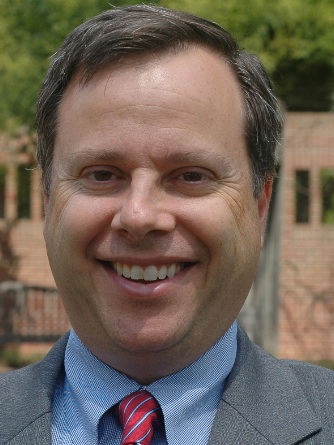
Peter Ginsberg
The trip to Palo Alto, Calif., was the first of its kind the N.C. Biotechnology Center organized, said Peter Ginsberg, the biotech center’s new vice president of business and technology development.
“We wanted to change the way Bay Area venture capitalists think about North Carolina companies,” Ginsberg said. “And maybe, maybe, down the line, knock, knock, knock, get them to open an office here.”
A report that the biotech center submitted to state legislators in January offers clues where investors from outside the state see shortfalls in the North Carolina biotech industry, which is centered in the RTP area and along the Interstate 85 corridor to Charlotte.
Even though in 2010 North Carolina was home to about 500 biotech companies that employed more than 225,000, ranking the state third behind California and Massachusetts, very few of the North Carolina companies generated revenue. Also, among the companies located in the state only 10 were publicly traded, according to Ernst & Young. That’s about 3 percent of all publicly traded biotech companies nationwide.
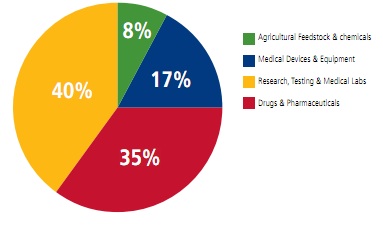
North Carolina's biotech employment is diverse.
Compared to other biotech hot spots, North Carolina lacks local life science entrepreneurs who successfully developed products and brought them to market and who financed multiple entrepreneurial ventures. (More on building entrepreneurial networks in the RTP area here and here.)
And the state’s many research institutions haven’t done a very good job translating their sponsored research into products.
As a former biotech analyst, institutional investor and company executive, Ginsberg has a good grasp of the fallout.
“We don’t have the breadth of life science venture capitalists as California or Massachusetts,” he said.
Add to that travel inconveniences.
The Bay Area is home to many venture capitalists, but without a non-stop flight to Raleigh-Durham International Airport most are reluctant to visit the RTP area, he added. “Venture capitalists travel a lot and it’s not easy for them to get here.”
So, traveling to Palo Alto for a day-long meet-and-greet with investors was similar to Muhammad going to the mountain to preach because the mountain wasn’t going to come to Muhammad.
The event was sponsored by Silicon Valley Bank, which has operations in the Triangle, and attracted more than a dozen venture capital firms, Ginsberg said. He declined to name them.
The seven biotech companies were traditional drug development companies, medical device and diagnostics companies and a company developing vaccines:
- Advanced Liquid Logic in Morrisville is working on a lab-on-a-chip based on nanotechnology developed at Duke University. Founded in 2004, the company has received $15 million in grants and $8.1 million in angel funding.
- CoLucid Pharmaceutical in Durham is testing a migraine drug in patients and working on therapies for chronic pain, Alzheimer’s disease and depression. Founded in 2005, the company has raised $42 million in venture capital.
- Heat Biologics, which relocated its headquarters from Miami to RTP this year, is working on therapeutic vaccines to combat a range of cancers and infectious diseases. Founded three years ago, the company has not released its funding.
- nContact in Morrisville develops and sells medical devices for minimally invasive treatment of heart arrhythmia. Founded in 2005, the company has raised more than $42 million.
- Scynexis in RTP is a drug discovery and development company that has delivered 11 drug candidates to customers in the past five years and is working on its own pipeline of experimental therapies. Founded in 2000, the company collaborates with Merck on a cancer drug and is part of a consortium working on the first pill to treat human African trypanosoniasis, also known as sleeping sickness.
- TearScience in Morrisville in July received regulatory approval to sell its first product, a medical device to treat dry eye patients in an outpatient procedure. Founded in 2005, the company has raised more than $60 million in venture capital. To bring the dry eye device to market, TearScience recently received $15 million in debt financing.


