Archive for the ‘University Research’ Category

NCSU scientist chases tornadoes to better understand them
Sunday, October 2, 2011, 10:24 pm No Comments | Post a Comment
Matt Parker
Matt Parker, a N.C. State University associate professor, sounded almost nostalgic when he talked about the more than 700 tornadoes that were reported roaring across the South, Southeast and Midwest in April, about four times as many tornadoes as hit the U.S. during an average April.
Parker is an atmospheric scientist and has studied how tornadoes develop to help improve weather forecasts.
“This was a historic year,” Parker told science writers and educators during a Sept. 27 talk at Sigma Xi in Research Triangle Park.
A spring storm season like this year’s doesn’t come around often. That’s a good thing, considering the loss of life and the devastating destruction the tornadoes wrought.
 April 2011 ranks as the most active tornado month on record, according to the National Oceanic and Atmospheric Association. A storm system that moved across Oklahoma, Arkansas, Mississippi, Alabama, Georgia, North Carolina and Virginia in mid-April killed 43 people, 22 of them in North Carolina. One of the tornadoes it spawned April 16 cut a 180-foot-long track through suburban Wake County, Parker said.
A second storm system at the end of the month was even deadlier. It caused a super outbreak of tornadoes in the South that killed more than 300 people in four days, according to NOAA.
A month later, on May 22, a powerful tornado hit Joplin, Mo., killing 157 people. According to NOAA, the Joplin tornado packed winds of more than 200 miles per hour, it was nearly a mile wide and its track lasted 6 miles.
What about climate change? Could that be a cause for the historic outbreak of tornadoes this year?
“We really don’t know,” Parker said.
A tornado is a mere blip in a 100-year data set that tracks changes in the climate, he said. The increase in the number of reported tornadoes, he added, is likely due to better forecasting and warning systems, a higher population density and the increase in the number of storm chasers.
What was devastating and deadly to the people who lived in the tornados’ way could have provided scientists like Parker with a bevy of otherwise hard-to-come-by data.
In May and June of 2009 and 2010, Parker and his team of students were among about 100 scientists who tracked storms with radar, measured wind speeds, sent up weather balloons and fed the information to a database. The study, called VORTEX2, was one of the largest field studies to determine the origin of tornadoes and a follow-on to a more limited tornado hunt in 1994 and 1995. The teams had about $10 million worth of equipment at hand.
April 2011 was never part of VORTEX2′s data collection phase.
Working with tornadoes is often frustrating, Parker acknowledged. May and June 2009 were two very uneventful months - only two storm systems that generated tornadoes.
“Two thousand ten was much better,” Parker said. “On some days we had the pick of tornadoes.”
About 40 storm systems with the potential to generate a tornado, also known as super cells, and about 20 tornadoes occurred in May and June 2010, he said.
A super cell starts similarly to an ordinary thunderstorm. Warm, moist air rises amidst cooler surroundings and the moisture condensates. In an ordinary thunderstorm, the precipitation creates a cool downdraft that cuts off the warm, moist updraft within about 30 to 45 minutes. The storm dissipates.
A super cell thunderstorm develops when strong upper-level winds allow the warm, moist updraft to continue for up to six hours. The stage is set for the downdraft and the updraft to begin rotating.
But the process that produces a tornado in a super cell thunderstorm is not well understood, Parker said.
For example, strong super cells are not associated with tornadoes, he said. Storms with similar structures may differ in tornado production. And the relationship between near-ground wind fields and structural damage isn’t clear either.
Scientists hope that once the VORTEX2 data is crunched and analyzed and published, some of the questions will be answered, Parker said. Especially head-to-head comparisons of data collected from storms that generated tornadoes and storms that didn’t might be fruitful.
Goals of the VORTEX2 study are to extend the average lead time for tornado warnings from about 13 minutes currently to at least 35 minutes and reduce the false alarm rate, which is currently at about 70 percent.
Woodson envisions a new NCSU
Wednesday, September 28, 2011, 9:08 am No Comments | Post a CommentWilliam “Randy” Woodson has been frank about his intentions to shake things up since he moved halfway across the country from Indiana’s Purdue University to become N.C. State University’s chancellor last year.

Randy Woodson
More than doubling NCSU’s endowment to about $1 billion. Recruiting more tenure-track faculty to better serve a student population that has grown rapidly in the past decade. Woodson has repeatedly put these two priorities on the top of his to-do list. He did so again when he spoke Sept. 20 at the Triangle Area Research Directors Council in Research Triangle Park.
But he went further, telling TARDC members how another budget cut - NCSU lost about $80 million, or 15 percent, in the current school year - has made strategic restructuring necessary. To bolster NCSU’s research budget and educate top-notch graduates in science, technology, engineering and math, the NCSU model has to change, he said.
“Our goal shouldn’t be to be the biggest,” Woodson said. “We’ve got to be an engine for the economy of the state.”
The 15 percent budget cut - the largest in three years of state revenue shortfalls - prompted NCSU to pool resources rather than cut across the board. Courses were cut, administrative staff laid off, programs consolidated. NCSU lost about 780 employees, Woodson said.
Tuition increased. Although NCSU received about 20,000 application for about 4,000 student spots this year, Woodson said he knows he’s not popular among students fearful of further increases. But the adjustments were necessary.
“We didn’t ask for the model to be changed,” he said.
To further bolster revenue and research, NCSU is stepping up its efforts of marketing technologies developed in its labs and is getting more involved in helping the state and the region recruit companies. (More on NCSU’s economic development efforts here.)
In 2010, NCSU spun off four companies and took in $5.1 million in royalties, Woodson said. He would like to see the number of spinoffs double to about eight or 10 a year, he added.
To recruit more tenure-track faculty - graduate enrollment has increased nearly 50 percent in the past 10 years while new faculty enrollment rose only 2 percent during the same period - Woodson said NCSU established a faculty recruitment program and funded it with $5 million.
An issue he’s also burning to address: NCSU’s ability to raise salaries to prevent faculty from being raided.
Currently, a raise requires a letter from another university offering a faculty member a job with a higher salary. By that time, the faculty member has very likely already decided to leave and NCSU offering a pay raise comes too late, Woodson said.
Biotech center funds steady, but funding requests are up
Monday, September 5, 2011, 10:04 pm No Comments | Post a CommentThe N.C. Biotechnology Center, a state-funded booster of the research and development enterprise in North Carolina’s Research Triangle, has as much money for grants and loans this fiscal year as a year ago despite a 13 percent budget cut.
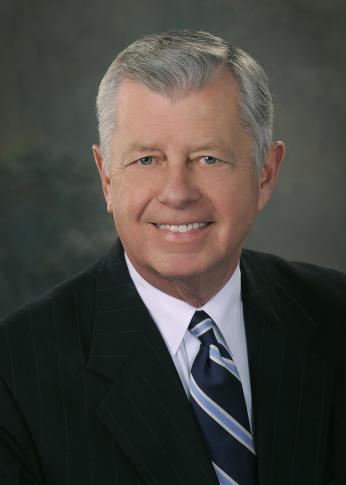
Norris Tolson
Coming up short in tax collections, state legislators approved only $17.5 million for the fiscal year that started July 1, said Norris Tolson, who took over the helm at the biotech center in 2007 after serving six years as state secretary of revenue. But the biotech center made up the difference with about $2.3 million savings that it didn’t have to give back.
“We underspent our budget,” Tolson said about the last fiscal year.
Still, the biotech center will again have to turn down a number of funding requests this year.
Established in 1984 in Research Triangle Park, the state-funded nonprofit has long supported researchers projects on university campuses across the state, paid for equipment, helped recruit companies and university scientists and funded educational activities in K-12 schools, community colleges and museums.
Grants awarded last fiscal years include research grants of up to $75,000 to researchers experimenting with blueberries, fungi and algae to find new treatments for diabetes or to kill cancer cells or viruses. The University of North Carolina bioengineering program at UNC-Chapel Hill and N.C. State University received $195,500 to advance its micromachining capabilities. Duke University received a $145,757 grant to establish an insect transgenesis facility.
The biotech center also earmarked $2.5 million to accelerate development of commercial products from marine biotech research in Eastern North Carolina. (More about the Marine Biotech Center of Innovation here.)
Ken Tindall
About $8.5 million in grants and loans were approved last fiscal year, said Ken Tindall, senior vice president of science and business development.
But demand for funding is up, Tindall said. The biotech center received requests totaling about $13.7 million last year, or about 61 percent more than it approved.
Former GlaxoSmithKline researcher Subba Katamreddy is among those who applied for a loan and got turned down. To start his own drug discovery company, Vijaya Pharmaceuticals, Katamreddy and his wife invested savings and established a lab in the Park Research Center incubator in Research Triangle Park to explore some ideas he had for next-generation antibacterial and anti-inflammatory treatments. (More on Vijaya Pharmaceuticals here.)
“Demand is up across the board,” Tindall said.
Large drugmakers in RTP, like GlaxoSmithKline, are struggling and cutting R&D budgets and jobs like others in the pharmaceutical industry, but the agricultural biotech sector is booming. RTP is home to U.S. headquarters of BASF and Bayer CropScience and Syngenta’s corporate biotech research hub. The area is also a hub for vaccine research and has growing medical device and nanotechnology sectors.
When light damages the eyes
Tuesday, August 16, 2011, 9:52 am No Comments | Post a Comment
Joan Roberts
Regardless of how many birthday cards, T-shirts and magazines declare that 50 is the new 30, the organs in our bodies start showing their age after 40. One of the first organs to do so is the eye, said Joan Roberts, a visiting scientist at the National Institute of Environmental Health Sciences in Research Triangle Park.
Presbyopia is what we notice - the eye’s lens loses elasticity, which makes it harder to focus on nearby objects and requires us to wear reading glasses. The chemical changes we don’t notice - at least not right away.
Between 40 and 50, the amount of protective antioxidants in our bodies decreases. That makes the eyes particularly vulnerable to damage from light, because it compounds a chemical change in the production of protective pigments that starts at about the same time.
The result, nearly 40 percent of Americans develop cataracts by the time they are 65 or older, according to data of the Centers for Disease Control and Prevention.
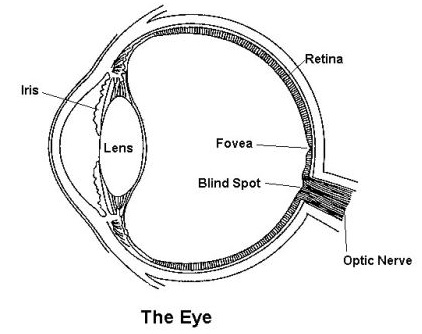
Cataracts, or clouding of the lens, can be treated with surgery. But when this increased vulnerability to light damages the retina, cells die and macular degeneration develops. This age-related disorder, which causes tunnel vision around a blurred spot in the center, affects about 5.6 percent of Americans 65 or older, according to CDC data.
Cataracts and macular degeneration aren’t avoidable, Roberts said, but their onset can be delayed.
 Roberts, a chemistry professor at Fordham University in New York City who for 15 years has done part of her research at NIEHS, has more than 25 years experience tracking the good and bad effects of light on the eye.
Ultraviolet radiation is largely responsible for the bad effects, as Roberts described in a 2009 research paper.
The cornea absorbs UV light with the most potential for damage. In adults, the lens absorbs the remainder of the UV light and only visible light reaches the retina. But the eye’s natural defenses start to break down after 40. The chemical changes in the pigments and the loss of antioxidants cause damage to the lens that adds up over time. Clear lenses get cloudy. Cataracts develop.
Drugs, such as the antibiotics Cipro and tetracycline, and medicinal herbs such as St. John’s Wort, can accelerate the lens damage. So can light reflecting off of sand and snow.
Roberts, who said, “It’s my job to turn that 70 into 100,” had several suggestions how to delay the onset of cataracts: Antioxidant boosts through nutrition. Fruit and vegetables high in vitamin E and lutein and green tea were high on her list. Wraparound sunglasses protect on the beach and in the mountains.
Macular degeneration can develop following UV damage to the retina at a very young age or following prolonged damage by visible light called short blue visible light. Age-related changes in the eye’s pigments after the age of about 50 can promote such prolonged damage.
Roberts’ suggestion to delay age-related macular degeneration are Eagle Eye sunglasses, which were developed by NASA and designed for astronauts to block short blue visible light.
RTP startup gears up to track down cat scratch fever bacterium
Friday, July 1, 2011, 1:09 pm No Comments | Post a CommentEditor’s note: North Carolina’s Research Triangle is home to hundreds of young companies. Scientists and entrepreneurs started them to develop technologies and medicines for better detection and treatment of diseases. Some of the companies work on innovations that are the result of research done at one of the area’s universities. Others are outgrowths of established companies. Galaxy Diagnostics, which chases a stealth bacteria that infects pets and their owners, is one of those young companies.
Galaxy Diagnostics is going where few have gone before, to borrow a phrase from the American science fiction franchise Star Trek.
The startup is an outgrowth of work researchers at the N.C. State University College of Veterinary Medicine have done on Bartonella bacteria, pathogens that live in the digestive guts of lice, fleas, biting flies and ticks and are transmitted through the insects’ poop. Cats are particularly prone to harboring Bartonella; about 40 percent of them carry a strain called Bartonella henselae at some time of their lives. That’s why Bartonella infections in humans are best known as cat scratch fever.
Scientists have found signs of Bartonella infection in a 4,000-year-old human tooth from southeastern France. At the time, the pharaohs were building the pyramids in Egypt. But today’s physicians aren’t much better at diagnosing a Bartonella infection than their colleagues were in ancient Egypt.
To track down the elusive bacteria, the NCSU researchers combined lab skills common in the 1950s with 21st century genetic sequencing technology.
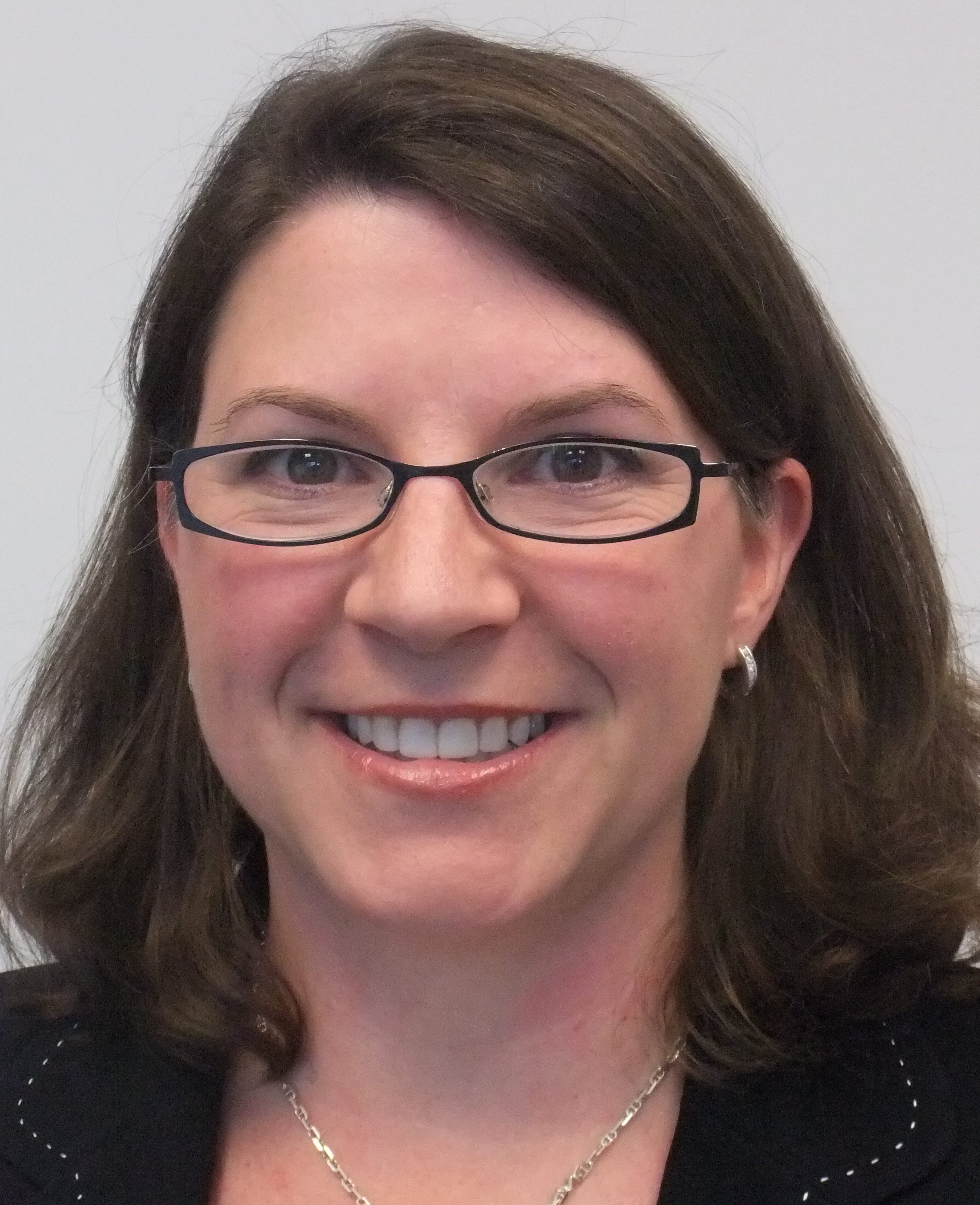
Amanda Elam
In 2009, with little hope of attracting outside investors while the U.S. economy was reeling, the researchers teamed up with a sociologist to launch Galaxy Diagnostics.
Amanda Elam, the sociologist, runs the company. Her title is president, but she calls herself “chief cook and bottle washer.”
To earn her doctorate in sociology at the University of North Carolina at Chapel Hill, Elam studied entrepreneurship. She taught at the NCSU College of Management last year and she continues to publish papers in her academic specialty. The company has received a state loan and a federal grant totaling about $230,000, but unlike the three lab technicians Galaxy Diagnostics employs, Elam doesn’t get paid for the more than 40 hours she puts in as the company’s president.
“It’s field work,” she said.
As Elam’s assessment of her job suggests, Galaxy Diagnostics is an experiment in more ways than one.

Bartonella henselae, a strain that infects cats. Researchers have identified more than two dozen Bartonella bacteria strains.
The test that the company has developed promises to detect a Bartonella infection earlier than other tests, before symptoms progress from a low-grade fever and muscle and joint aches to brain seizures, loss of sight, poor coordination and muscle weakness. But Galaxy Diagnostics also straddles human medicine and veterinary medicine, two health care disciplines that have more in common than most people think.
Animal pathogens can adapt and cause new diseases in humans. Severe acute respiratory syndrome, or SARS, bird flu and swine flu are among the most recent examples. All three diseases emerged in the past decade after viruses jumped from animals to humans.
The quicker viruses and bacteria multiply, the faster the infection develops. Two E.coli can form a colony of hundreds of bacteria in just a few hours. Bartonella bacteria double in numbers just once every 24 hours and infections can take years to develop.
Left to multiply, Bartonella bacteria infect red blood cells and the cells lining blood vessels and they manage to hide where the body’s immune defenses cannot detect them. That’s why tests looking for immune system antibodies to Bartonella bacteria often produce false negative results.
Galaxy Diagnostics goes after the bacteria themselves. The company uses a patented enrichment media in which even small numbers of Bartonella grow in a bottle. Genetic fingerprinting follows to positively identify the bacteria. A multi-drug antibiotic treatment usually gets rid of the bacteria.
More than 250 veterinarians in the U.S., Canada, the United Kingdom and Brazil have already sent Galaxy Diagnostics blood, tissue or fluid samples from pets that the company has tested for Bartonella bacteria.
In the past three to four years, a research lab at the NCSU vet school has run more than 800 human blood samples through Galaxy Diagnostics’ testing process. The samples came from patients suffering from symptoms their physicians couldn’t allocate to a disease. About 28 percent of the samples were positive for a Bartonella infection, Elam said.
By the end of the summer, Galaxy Diagnostics expects to be able to test human samples at its new lab in the Alexandria Innovation Center at a cost of about $600 to $800 per patient.
TEDxChapel Hill: A glimpse into the global technology era
Sunday, June 12, 2011, 7:08 pm No Comments | Post a CommentSoftware programmers who build Web sites that map incidents reported by mobile phone. A branchless banking system that allows customers to send cash by mobile phone text message. Medical specialists who diagnose patients hundreds of miles away with the help of images uploaded through a mobile phone app and stored as electronic medical records.
These are just three innovative uses for mobile phones, crowdsourcing and open-source technology. But this type of innovation isn’t happening in rich, developed countries like the U.S. or in Europe.
The Ushahidi mapping tool has collected crowdsourced incidents reports in Afghanistan, the Democratic Republic of Congo and Mexico. Kenyans mail small amounts of cash through M-Pesa‘s branchless banking system. SANA‘s open-source technology brings healthcare screening to rural areas in India and the Philippines.
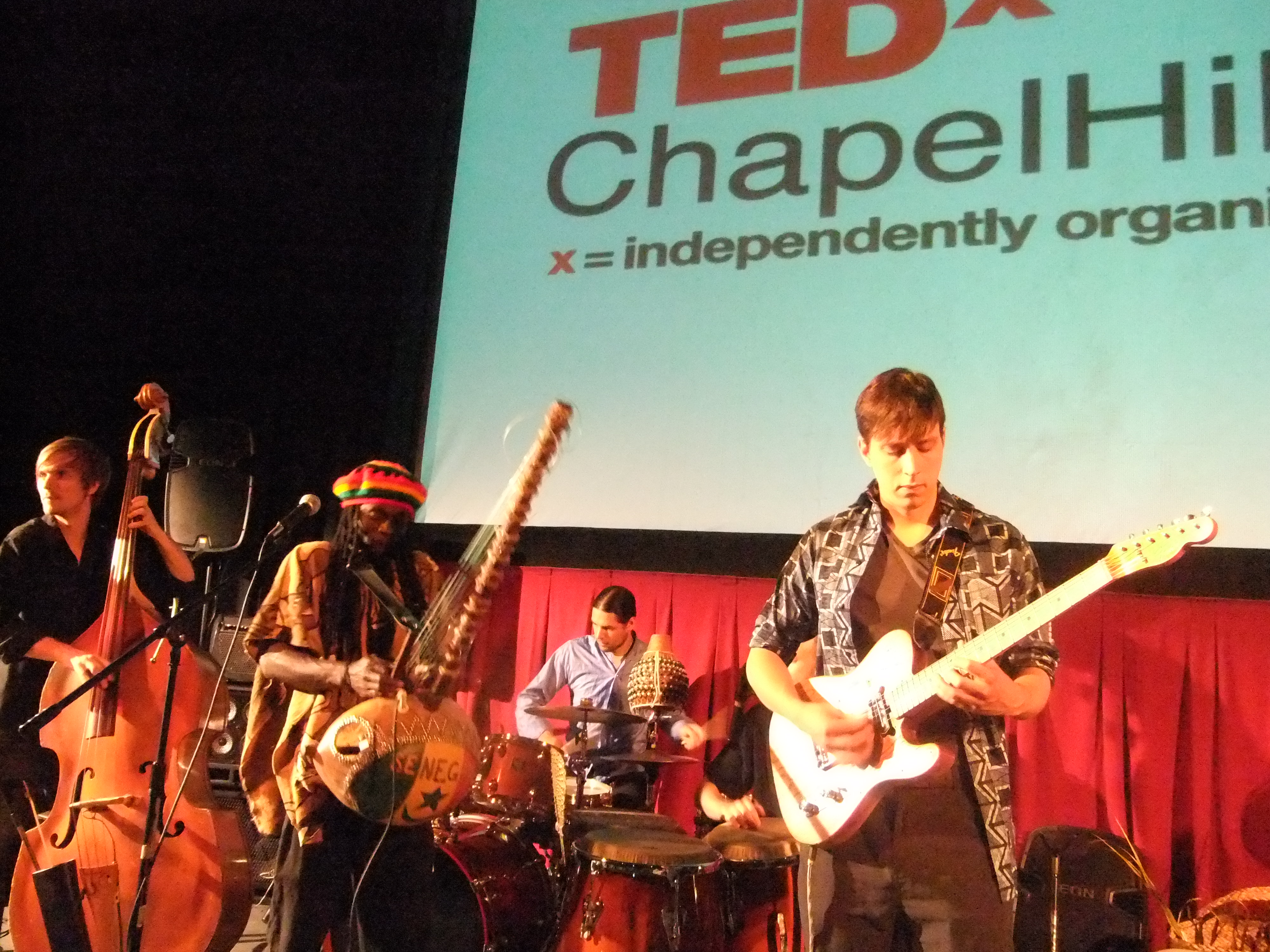
Diali Cissokho & Kairaba play music reminiscent of West African dance bands.
Presented at a TED talk independently organized by IntraHealth June 2 at the Varsity Theatre in Chapel Hill, these innovative technological applications provided a glimpse of what’s possible in places without functioning transportation, healthcare and banking infrastructures.
As Diali Cissokho & Kairaba, a band of Senegalese and North Carolina musicians, played between presentations, the crowd of more than 250 in the filled-to-capacity movie theater just across from the University of North Carolina’s Chapel Hill campus was left to re-examine perceptions of developed versus developing countries.
“It’s the new era of global technology,” said Heather LaGarde, special projects advisor to IntraHealth OPEN, an initiative that encourages the use of the latest technological advancements to improve healthcare in poor countries.
TED talks are an outgrowth of a conference that brought together technology geeks, entertainers and design mavens. The concept is owned by a private foundation a magazine publishing entrepreneur started in 1996.
TED talks follow in the footsteps of storytellers who spread knowledge and wisdom. Their purpose is to disseminate ideas.
Holden Thorp at TEDxChapel Hill
TEDxChapel Hill was the fourth independently organized TED talk in the Research Triangle. Three previous talks took place in the past 18 months, one at the Research Triangle Park headquarters, one at N.C. State University and one in Raleigh. (More about the TEDxTriangle event at RTP here.)
The Chapel Hill talk was organized by IntraHealth, a UNC spinoff focused on global health. Among the speakers featured was Holden Thorp, UNC-CH’s chancellor, who as a UNC chemistry professor developed technology for electronic DNA chips and founded companies.
Thorp encouraged scientists to bring their research to bear upon problems people around the world are dealing with, such as drought, poverty and climate change.
“We have a leg up addressing these problems,” he said.
Thorp could draw some inspiration from the venue. In the mid 1980s, while he was an undergraduate at UNC, Thorp said, he watched the “Adventures of Buckaroo Banzai Across the 8th Dimension” 16 times at the Variety Theatre. The science fiction movie was about an adventurer, surgeon and rock musician who took on evil alien invaders with his band of men.
UNC and other universities as well as nonprofit research institutes and global health organizations in the Triangle are trying to do just what Thorp suggested.
At UNC, the Carolina Global Water Partnership developed a microfinancing program for Cambodians to buy biosand and ceramic filters and gain access to clean drinking water.
Robert Malkin
At Duke University, Robert Malkin, director of Engineering World Health, is encouraging engineers to develop medical equipment that works in hospitals in Sudan, Nigeria, Nicaragua, El Salvador, Haiti, Liberia and Sierra Leone.
The World Health Organization estimated that 70 percent of the medical equipment developed in the U.S. or Europe doesn’t work in poor countries in Asia, Africa and Latin America, including used and new surplus equipment donated by U.S. hospitals.
Indeed, much of this equipment is stacked in large warehouses, collecting dust, Malkin said. (More on barriers for medical devices in the developing world here.)
During his presentation at TEDxChapel Hill, Malkin said he observed this first-hand when he attended a heart surgery in a Nicaraguan hospital many years ago and the overhead surgery lights caught on fire. The nurses responded calmly, protecting the patients from the billowing smoke with a blanket, Malkin said. He found out later, that the special light bulbs for which the donated surgery lights were designed weren’t available in Nicaragua. The 100 Watt light bulbs the hospital used instead caught on fire routinely.
IntraHealth, which mostly deals with community health workers in developing countries, is also looking for hands-on solutions. IntraHealth’s OPEN Council brings together some of the most innovative thinkers, such as Jon Gosier, the founder of Appfrica, a company that invests in East African software startups; and Josh Nesbit, the chief executive of Medic Mobile, a nonprofit that uses mobile technology to create health systems in developing countries.
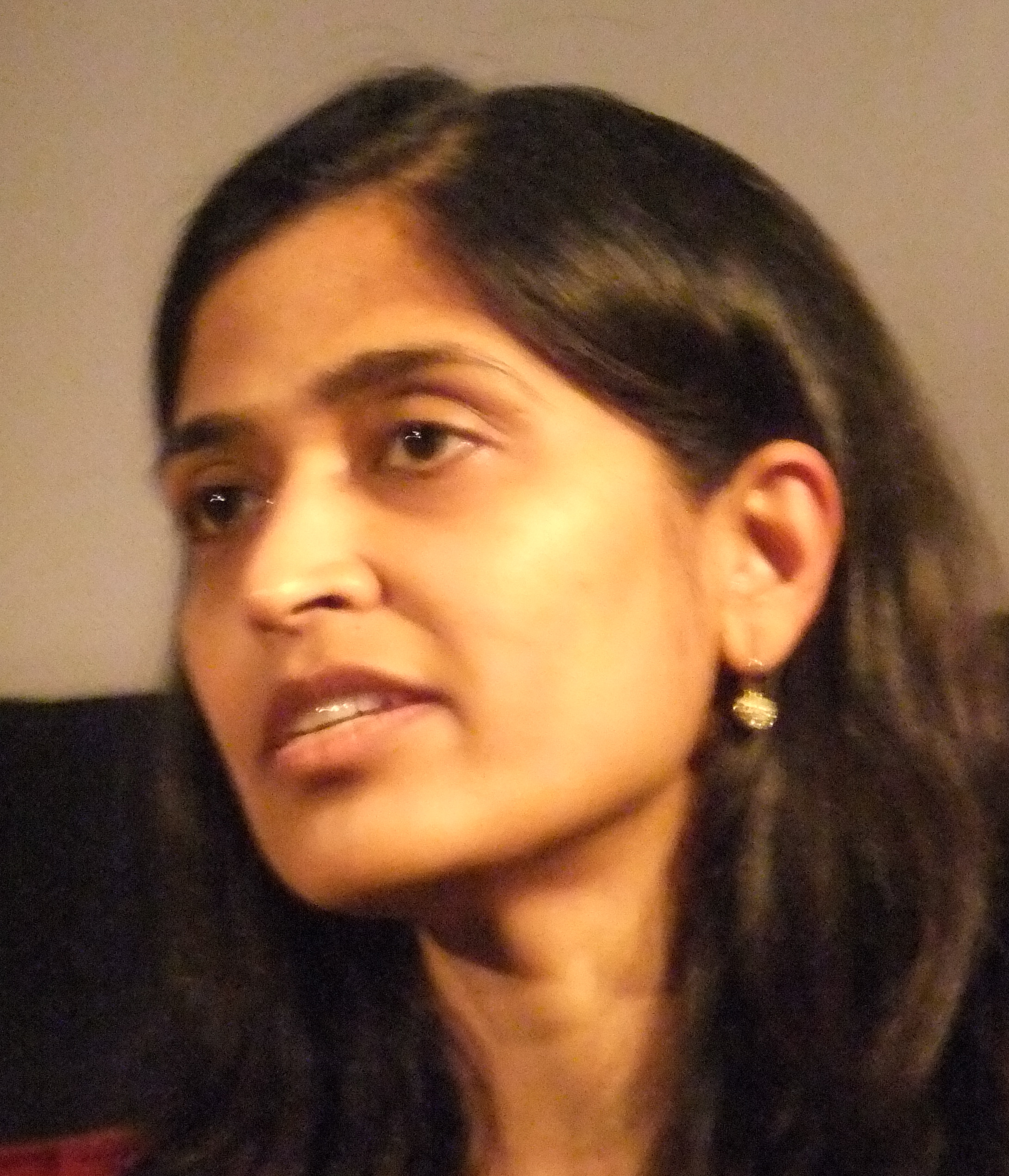
Dr. Radhika Chigurupati
Gosier and Nesbit also participated in TEDxChapel Hill, and so did Dr. Radhika Chigurupati, a surgeon at the University of California San Francisco Children’s Hospital, who talked about her work with SANA.
Mobile device technology developed by a team of students, volunteers and faculty at the Massachusetts Institute of Technology in Boston allows SANA to bring health screening to remote rural area.
More than half of the population in developing countries are mobile phone subscribers, according to a 2010 United Nations report.
In India, Chigurupati said, community health workers use their mobile phones to take high-resolution pictures of potentially cancerous lesions in patients’ mouths or on feet. The images are uploaded to a server to which physicians in faraway urban areas have access.
Trips from the countryside to see a doctor are prohibitively expensive for the patients. But mobile telemedicine enables community health workers to screen for cancerous lesions and connects them with experts who can help treat the lesions and save lives.
In 2010 alone, more than 4,000 patients in rural India were screened for oral cancer, a disease that is prevalent because of widespread tobacco and beetle nut chewing.
“I think the tide is high,” Chigurupati said. “If you’re shrewd enough and committed enough, you can make a difference in the lives of millions.”
NC history of flight extends to space
Thursday, May 19, 2011, 9:26 pm No Comments | Post a CommentNASA’s interest in North Carolina goes back to the 1960s, when U.S. astronauts came to the University of North Carolina at Chapel Hill to learn at the Morehead Planetarium how to navigate in space by looking at stars, according to a N.C. Museum of History report. In the past 25 years, a handful of North Carolinians flew on space shuttle missions, including Beaufort native Michael Smith, who died in 1986 when the Challenger exploded shortly after liftoff.
To prepare for and support NASA missions, researchers at N.C. State University have studied how to more precisely land a vessel on Mars and how to grow plants in a spacecraft operating in zero gravity.
But NASA’s involvement in North Carolina goes further. Since 1991, teachers and students at North Carolina universities, community colleges and public schools have received about $15 million to study science, technology, engineering and mathematics, to research issues related to space missions and to work in companies contracting with NASA.
Funding for the research grants, scholarships and summer internships has been provided through the N.C. space grant, a program administered at NCSU.
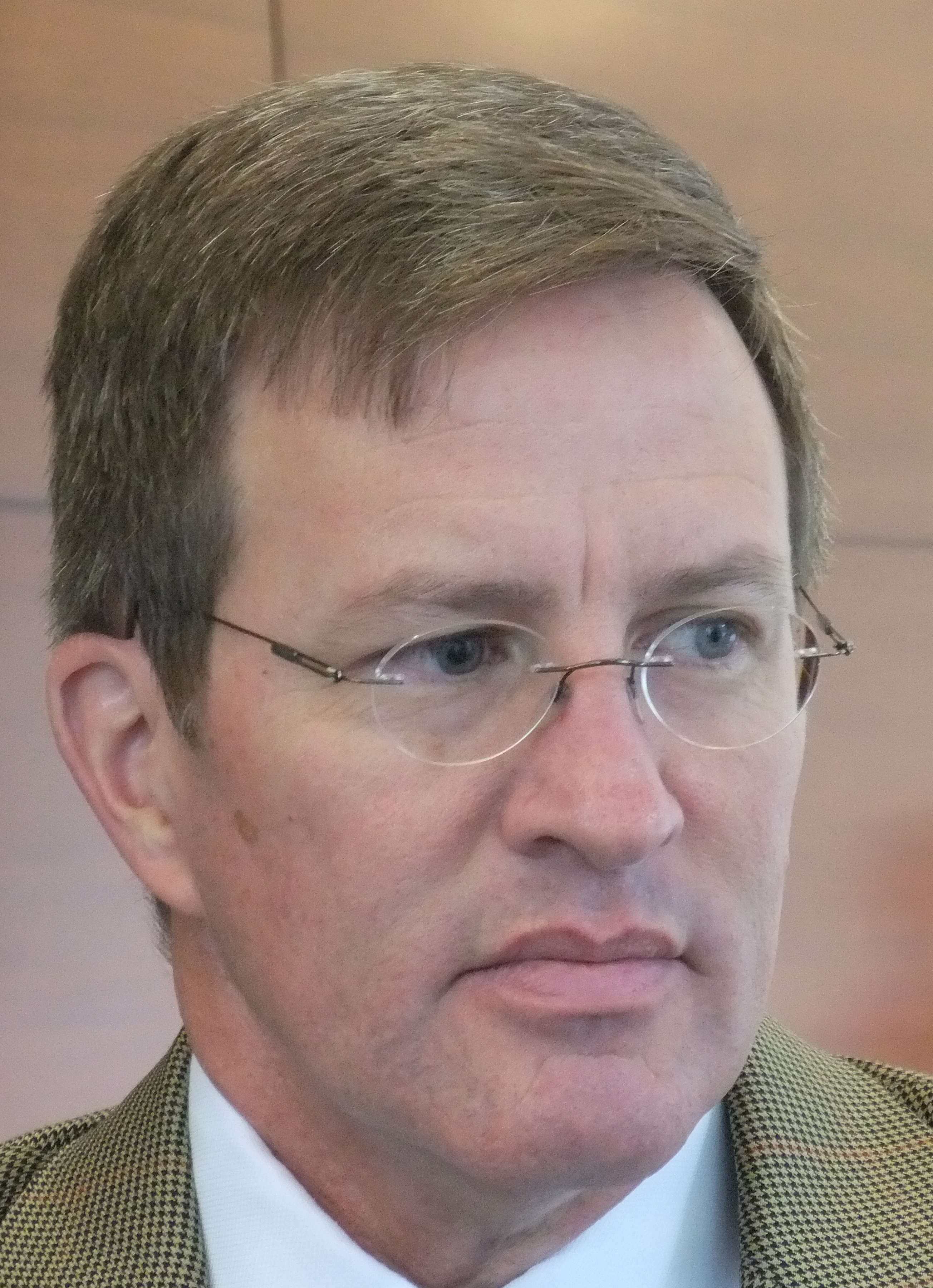
Christopher Brown
“The goal is to keep the pipeline filled for NASA,” Christopher Brown, director of the N.C. space grant, told members of the Triangle Area Research Directors Council who gathered this week at Research Triangle Park headquarters.
But “this isn’t just rockets and aerospace,” Brown said. Space grant projects in North Carolina include satellite tracking of red wolves and the development of an undergraduate robotics course at Duke University.
As a professor of plant biology at NCSU, Brown teaches a space biology class and some of his plant experiments will travel to the international space station on the last shuttle flight scheduled to take off in August.
NASA funds the N.C. space grant and similar programs in all other states through its annual budget.
In the past five years, the total for these grants has increased from about $30 million to $45.6 million. North Carolina’s portion is about $800,000 annually, Brown said. That includes a state match. The match used to be about $200,000 per year, but budget cuts have reduced it to $180,000.
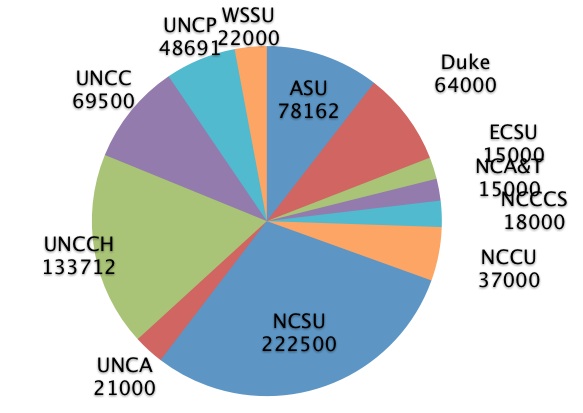
N.C. space grant beneficiaries
Federal cuts are also looming, but Brown said he didn’t think the program would be eliminated, because every Congressional district receives money. For fiscal year 2012, which starts Oct. 1, President Obama’s budget request for the space grant program is $26.5 million, according to NASA budget information. That’s a reduction of more than 40 percent.
In the past, N.C. space grant money has supported research of young university faculty, helped develop new college courses and paid for professional development of K-12 teachers, provided scholarships and summer internships for graduate and undergraduate students and students at community colleges.
Thirteen university campuses across North Carolina are affiliated with the N.C. space grant, from UNC Asheville to Elizabeth City State University.
Couple documents evolution as it happens
Friday, April 15, 2011, 8:56 pm No Comments | Post a CommentIf Charles Darwin returned to the Galapagos Islands today, he would find all but one of the finch species that lived there during his visit in the 1830s. But he would also find birds that look and sound different.
Rosemary and Peter Grant during a reception in their honor at the N.C. Museum of Natural Sciences
Peter and Rosemary Grant, husband-and-wife evolutionary biologists at Princeton University, have written about a medium ground finch that is heavier, has a broader beak and sings a different song than its closest relative.
The Grants have documented the emergence of this medium ground finch lineage since 1981, when they caught what they believe was an immigrant bird on Daphne Major, a tiny Galapagos island where they’ve measured, weighed and tagged ground finches several months every year since 1973.
The new lineage, which nobody has dared to call a new species yet, has been molded by droughts, above average rainfall and competition for food - factors that also affected other finches living on Daphne Major.
“In the 2000s, the birds are not the same as the ones that were on the island when we started,” Peter Grand told a crowd of more than 200 who had come to his and his wife’s presentation April 11 at the N.C. Museum of Natural Sciences in Raleigh.
That evolution can happen as researchers watch was unexpected. That the Grants documented the making of what might be a new species in 20 years has turned them into legends.Their research has won multiple awards and is featured prominently in biology textbooks and one Pulitzer-Prize-winning book.
The couple’s visit to North Carolina’s Research Triangle was the result of a collaboration of the museum, N.C. State University and the National Evolutionary Synthesis Center.
Thirteen species of ground finches live on the Galapagos archipelago, a cluster of more than a dozen islands located in the Pacific Ocean about 600 miles west of Equador. They are plain birds with brown, gray or black plumage that have been famous since they helped Darwin develop the theory of evolution.
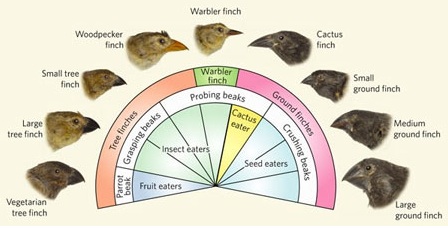
Darwin's finches
All descend from one species that lived on the South American mainland.
The smallest finch species on the Galapagos Islands weighs about one-fourth of the largest species and each species has developed a specific beak to eat a special diet.
The Warbler finch has a slender beak to probe for insects. Ground finches have broad beaks to crush seeds of various sizes. Cactus finches have long, curved beaks to probe flowers for nectar. The large tree finch has a powerful, curved beak to strip bark and extract insects and termites.
The diet has a lot to do with where a species lives. The medium tree finch, for example, can only be found on Floreana Island. The common cactus finch lives on all but the five Galapagos Islands that are inhabited by the large cactus finch.
Daphne Major is home to four species, the Grants reported. The couple caught small, medium and large ground finches and cactus finches, including some that had immigrated from neighboring islands.
The males of each species sing a different song, which male and female birds learn as nestlings listening to their fathers. Males and females of a species recognize each other by that song. Interbreeding can occur, Rosemary Grant said, for example, when the fatherly lesson gets garbled because the nest is close to the nest of another species in the same cactus bush.

Immigrant hybrid male the Grants caught in 1981. Source: Proceedings of the National Academy of Sciences
In 1981, the Grants caught a medium ground finch immigrant whose plumage was particularly glossy and black. The male bird was about 20 percent bigger than the biggest medium ground finch captured on Daphne Major and had a wider beak. It also sang an unusual song and a blood test determined that it carried cactus finch genes.
The immigrant hybrid male mated with a female hybrid that also carried genes of both species. Three generations of offspring - finches live up to 16 years - bred with local medium ground finches and other hybrids.
Then, all but two of the birds in the lineage died during a severe drought in 2003 and 2004. The remaining two birds, a sister and a brother, mated and their offspring has mated, but only with each other.
This has led to two distinct groups of medium ground finches on Daphne Major that do not mix, the Grants reported. They differ in weight, beak shape and song and breed in two different areas on the island.
(More in the Grants’ inaugural article in the 2009 Proceedings of the National Academy of Sciences.)
Proposed global health spending cuts raise concerns in Research Triangle
Wednesday, April 6, 2011, 10:45 pm No Comments | Post a CommentAt a global health conference in Chapel Hill, the tug-of-war over budget cuts on Capitol Hill landed smack-dab in North Carolina’s Research Triangle.
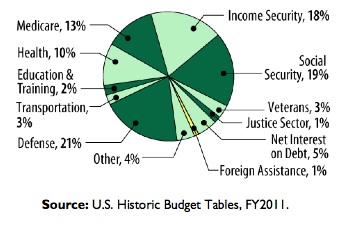
In 2010, foreign assistance accounted for 1 percent of all U.S. spending.
While Republicans and Democrats are negotiating about getting a handle on the federal deficit, concerns about proposed federal funding cuts are rising in states with global health research hubs, such as North Carolina, California and Washington.
House Republicans have proposed cutting international affairs and foreign assistance spending by a total of 44 percent over the next five years, including 29 percent in 2012. They’re also pushing for an 11 percent funding cut for global health programs during the remaining months of the current fiscal year, which would scale back malaria programs and reduce immunizations, the number of skilled birth attendants and other basic health services worldwide, Dr. Rajiv Shah, head of the U.S. Agency for International Development, told a House appropriations subcommittee.
At the conference, which took place April 1 at the University of North Carolina Friday Center in Chapel Hill, experts from USAID and the Center for Strategic and International Studies in Washington, D.C., and the Centers for Disease Control and Prevention in Atlanta addressed the future of global health and development.
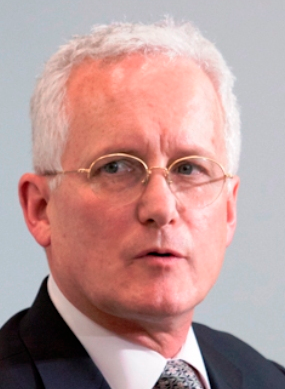
Stephen Morrison
“We’re now in an era of austerity, uncertainty and flattening or declining budgets,” said Stephen Morrison, director of the CSIS Global Health Policy Center.
Morrison didn’t foresee a catastrophic collapse of global health budgets. But the days of double-digit annual increases are gone, he said.
From 1990 to 2010, international spending for global health rose from about $6 billion to an estimated $27 billion, according to a report by Chris Murray of the University of Washington Institute for Health Metrics and Evaluation. About one-third of last year’s funding came from the U.S.
U.S. spending on foreign aid and global health more than doubled in the past 10 years and the increase benefited Africa and parts of Asia.
The Bush administration started an initiative to battle HIV/AIDS in Africa, contributed to an International Monetary Fund effort aimed at boosting education, health status, nutrition and gender equality in poor countries and increased security-related assistance to Afghanistan and Pakistan.
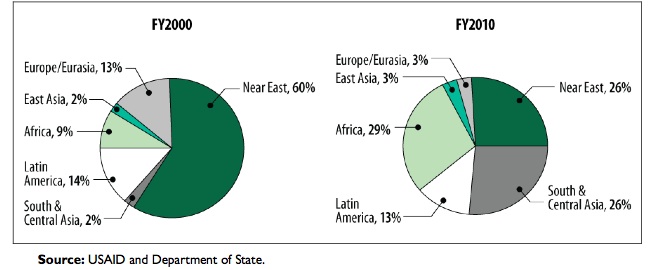
Regional distribution of U.S. foreign aid in FY 2000 and FY2010
In fiscal year 2010, the U.S. spent $39.4 billion on foreign aid, according to a Congressional report. Nearly 90 percent of that money was funneled through USAID. Still, foreign aid accounted for only about 1 percent of all U.S. spending.
Domestically, the funding increases boosted grant revenue at research institutes and created jobs at universities.
In the Research Triangle, RTI International was one of the biggest beneficiaries. RTI increased funding from USAID from $165.9 million in 2006 to $265.4 million in 2010. Another local research institute that benefited was Family Health International. FHI’s annual revenue rose about 40 percent from $224 million in 2005 to $370 million in 2009. About 70 percent of the global health funding FHI secured in 2009 came from USAID.
The UNC Gillings School of Global Public Health and the Duke Global Health Institute trained the workforce needed to implement the new initiatives.
In 2009, a Duke University study determined that North Carolina’s global health sector supported more than 7,000 jobs and $508 million in annual salaries and wages. The sector’s impact on the state’s economy was nearly the same as the textile industry’s, according to the study.
Similar economic impact studies have been done in California, where global health supports about 350,000 jobs that generate $19.7 billion in annual salaries, wages and benefits, and in Washington state, where global health supports 13,700 jobs that generate $1.7 billion in annual salaries, wages and benefits.
At the conference, Morrison encouraged global health professionals in the audience to lobby their House representatives, but he was convinced that global health would take a disproportional hit no matter how the budget negotiations would turn out.
“This is a moment of wake-up for us,” he said.
Humans, monkeys age the same, say Duke primatologists
Sunday, March 27, 2011, 7:13 pm No Comments | Post a CommentOriginally published: 3/17/11
Studies find the muriqui monkey can live as long as the average human being
Humans share 98 percent of their DNA with monkeys. Clearly, the two species have a few things in common. One, say researchers from Duke University, is how we age.
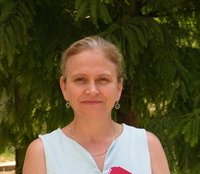
Dr. Susan Alberts, a Duke biology professor, has been studying baboons in Kenya’s Amboseli National Park for quite some time. In fact, she’d just gotten off a flight home, she mentioned when interviewed.
Dr. Susan Alberts
Alberts is one of several Duke scientists who have teamed up with universities across the world to study aging behavior in wild primates. She said data was combined from seven different studies on non-human primates, each spanning 25 to 50 years. Two of these—the Jane Goodall Institute study on chimpanzees and Alberts’s Amboseli study on baboons—were based at Duke.
Findings from the studies appear in the March 11 edition of Science.
The studies chronicle primates over the course of their lives. Monkey populations were observed for births, deaths and physical deterioration. Alberts said long-term primate studies like these are invaluable to putting the human experience in perspective.
“Before, we didn’t have anything to compare to that was like us,” Alberts said. “So we were comparing ourselves to lab mice. And we are really different than lab mice.”
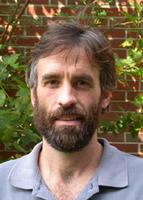
Dr. William Morris, a Duke ecology and population biology professor who assisted Alberts, said main conclusion of the report was that aging patterns and mortality risks coincide between humans and non-human primates.
Dr. William Morris
“Your chance of dying increases with age in a similar way whether you’re a gorilla or a baboon or a human,” said Morris. “Humans still win, but we’re not too far away from our primate relatives.”
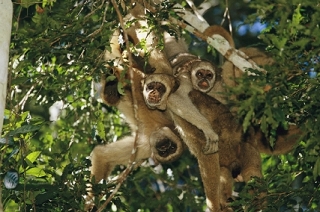
According to the report, female chimpanzees often live into their forties, some even into their fifties. Males live into their thirties but are mostly dead by their early forties. Morris said the monkey with the longest life expectancy was not the chimp or gorilla, but rather the lesser-known Brazilian muriqui, which can survive all the way into its seventies.
That is not too far off from the average life expectancy of a human, said Dr. Anne Pusey, chair of Duke’s evolutionary anthropology department. Nowadays, the typical American male will live into his eighties. Females, she said, live slightly longer. The gender difference is more pronounced in monkeys, though, because of male-male competition for reproductive opportunities with a limited number of females.
Pusey has been working with renowned British primatologist Jane Goodall at her chimpanzee park in Tanzania since 1970. In the wealth of data she’s collected over four decades, she has developed an eye for identifying chimp aging behavior.
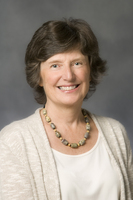
Dr. Anne Pusey
“Just knowing more about mortality patterns in other species helps us think about the evolution of our mortality patterns and understand which patterns are fixed and which are more elastic,” Pusey said. In the future, she and her colleagues plan to investigate how reproductive rates change with age.
“Humans are unusual in this regard because we hit menopause and continue to live a long time afterwards,” she said. “But female chimps go on having babies up until they die.”
Pusey took on her job at Duke last year. She said she was attracted to the area because she feels it’s one of the best of its kind in the country. Also, she had heard about Dr. Alberts’ study and discovered how much potential there is for primate research in the Triangle region.
Alberts said she’s interested in how animals use social behavior to solve environmental problems and how that impacts their survival. What characterizes the human race, she said, is that we’re primarily monogamous, which levels out competition among males.
This might seem counterintuitive at first. If females only mate with one male, wouldn’t there be increased drive for men to settle down with the most desirable female? Alberts said it is actually a great equalizer for the men, and everyone still ends up with a partner.
However, in non-human primate species, not everyone does. The females mate with multiple fathers, but not every male passes that litmus test.
“If females only mate with one male, it isn’t how many kids he’s going to have but how good a mate he’s going to get,” she said. “In primates, the least successful male wouldn’t have any kids at all.”
One finding that surprised her was that primate males are able to differentiate their own offspring. She found this remarkable since females mate with many different males in the course of a lifetime and there’s no discernable way for fathers to keep track of who’s whose. Paternal care goes very deep in our primate roots, she said.
“Human males are very good fathers, especially compared to most mammals,” said Alberts.
So in a lot of ways, socialization has factored into reproduction and life expectancy. Insight like this, Morris said, paves the way to understanding how human evolution has digressed from that our hairy ancestors.
“We live longer than the other primates because of the environment we create for ourselves,” he said. “Nutrition, modern medicine, health care—other primates don’t have these things.”
To Morris, the importance of the Amboseli study is in advocating long-term primate research because he thinks that’s how we really learn about the aging process. He said it’s much different than the plants he studies.
“With trees you can take a look at the core and see how old it is,” Morris said.
“You can’t do that with baboons and monkeys. You really need to follow them around to get the whole picture.”


