Posts Tagged ‘innovation’

Big pharma goes back to college
Saturday, June 4, 2011, 3:53 pm No Comments | Post a CommentNorth Carolina’s Research Triangle is one of several research hubs in the U.S., Canada and the United Kingdom, where large drugmakers have hooked up with universities in the past year to boost drug discovery and shore up dwindling product lineups.
Pfizer signed a research collaboration with the University of California, San Francisco. Sanofi-Aventis has done the same with Harvard University, UCSF and Stanford University. GlaxoSmithKline and AstraZeneca called on the British University of Manchester. GSK, which is based in London and has its U.S. headquarters in Research Triangle Park, also struck up a strategic partnership with 16 academic institutions in Toronto.

Tom Denny
In the Research Triangle, Novartis went to Duke University.
“We had the right infrastructure,” said Tom Denny, chief operating officer of the Duke Human Vaccine Institute. Duke and Novartis will be working together on pandemic flu vaccines.
Big pharma companies have begun to troll for marketable innovation at universities - places where science and research are a taxpayer- and tuition-funded way of life - after spending increasing amounts of money on their own and other companies’ research and development with meager results.
Consolidation, R&D reorganizations, acquisitions of technologies and whole companies - large drugmakers have tried many strategies in the past decade to rejuvenate aging product lineups and plump up drug development pipelines. But the average number of innovative new medicines that came to market in the U.S. decreased to 22 in the second half of the decade from 28 in the first half, and that despite annually rising R&D expenses.

As blockbuster drugs lose patent protection, remaining sales drop off a cliff.
With R&D productivity stalled and valuable drug patents about to expire, big pharma three years ago began to cut R&D jobs and lay off thousands. The restructuring is still ongoing with a focus on reducing R&D expenses and boosting sales in emerging markets such as Asia and Latin America.
The driver behind the cost cutting is the U.S. “patent cliff.”
By 2015, cheaper generics are projected to replace prescription drugs worth more than $100 billion in U.S. sales. The losses are expected to send sales on a sharp decline that, drawn as a line, looks like a cliff.
After trying everything else with insufficient success, large pharma companies are now betting on universities for inspiration.
Pfizer agreed to pay UCSF $85 million over five years. Under the agreement, researchers from Pfizer and UCSF will work at UCSF labs to turn research into potential biological medicines.
The University of Manchester will receive about $16 million from GSK and AstraZeneca. The investment will establish a translational research center and recruit scientists who will look for novel treatments for inflammatory diseases, such as asthma and rheumatoid arthritis.
The pharma industry has long had relationships with individual university professors. It’s also not uncommon that university medical school faculty work with industry to test new treatments or that an academic research project attracts the interest of pharma companies. What’s new is that big pharma companies are outsourcing R&D to universities.
The seed for the pandemic flu vaccine collaboration grew out of an HIV/AIDS collaboration between Novartis and Duke, Denny said.

The Novartis vaccine manufacturing plant in Holly Springs.
One of the Novartis HIV/AIDS researchers was a Duke alumnus who knew his alma mater was just 30 miles from the state-of-the-art flu vaccine manufacturing plant Novartis opened in 2009 in Holly Springs. (More on the Novartis plant here.)
Flu viruses can change from year to year and vaccines have to be made to match the anticipated changes in the virus. But it’s only safe for researchers to work with highly contagious, maybe even deadly, flu virus strains in a specially equipped biocontainment lab. Duke has such a lab and the ability to test pandemic flu vaccines on animals.The vaccine manufacturing plant, which Novartis build in Holly Springs precisely because of the site’s proximity to RTP and its three anchor universities, has neither.
In case a new flu virus starts spreading around the world and the Centers for Disease Control and Prevention and the World Health Organization call a pandemic emergency, the agreement gains Novartis priority access to the Duke biocontainment lab within 24 hours for a daily fee.
The agreement also allows researchers from Duke and Novartis to collaborate on longer-term projects paid for by grants from the National Institutes of Health. The rights to any technology would be jointly owned by each partner, Denny said.
“This is, what we would hope, a long-term collaboration,” he said.
An RTP lab to test business ideas
Wednesday, June 1, 2011, 4:57 pm No Comments | Post a CommentA good idea has shelf life. We all know that.
Ideas pop into our heads every day. Only the good ones linger. They survive challenges and reassessment. That’s also true for business ideas, which hold the promise of starting a company, generating income and creating jobs.

Ron Harman
But it’s hard to test how good a business idea really is, because honest feedback is difficult to get, said Ron Harman, owner of CTO Outsourcing, a Durham company that provides software expertise to startups.
“Getting people to tell you how great you are is easy,” Harman said. But few friends, relatives or paid consultants aren’t usually willing to probe an idea for flaws that could kill it.
“Nobody wants to tell you bad news,” Harman said.
To fill that gap, he and six other entrepreneurs in North Carolina’s Research Triangle eight months ago founded the RTP Idea Lab. So far, they’ve held three idea vetting sessions at RTP headquarters.
The sessions attract crowds of a few dozen and combine idea pitches, question-and-answer follow-up and critiques. It’s a concept that’s also being tried in other areas where lots of people work in research and development, including Boston, Pasadena, Calif., Austin, Texas, and at universities, but the efforts aren’t mirror images of each other.
Pasadena-based Idealab has created and operated pioneering technology companies since 1996. Bostinnovation is a digital community hub for ideas that have matured into startups. The Business Innovation Factory in Austin, Texas, is a nonprofit that was founded in 2004 to help innovators test ideas before they turn them into startups. The University of North Carolina at Chapel Hill has an IDEA Group to develop novel biomedical imaging and analysis tools.
The RTP Idea Lab mainly aims to provide a forum where innovators pitch their business ideas to a group of people who are neither experts nor potential investors. Ideas bandied about have ranged from mining company e-mails to prevent theft of intellectual property to matching up retired executives with startups and nonprofits in need of short-term mentoring.
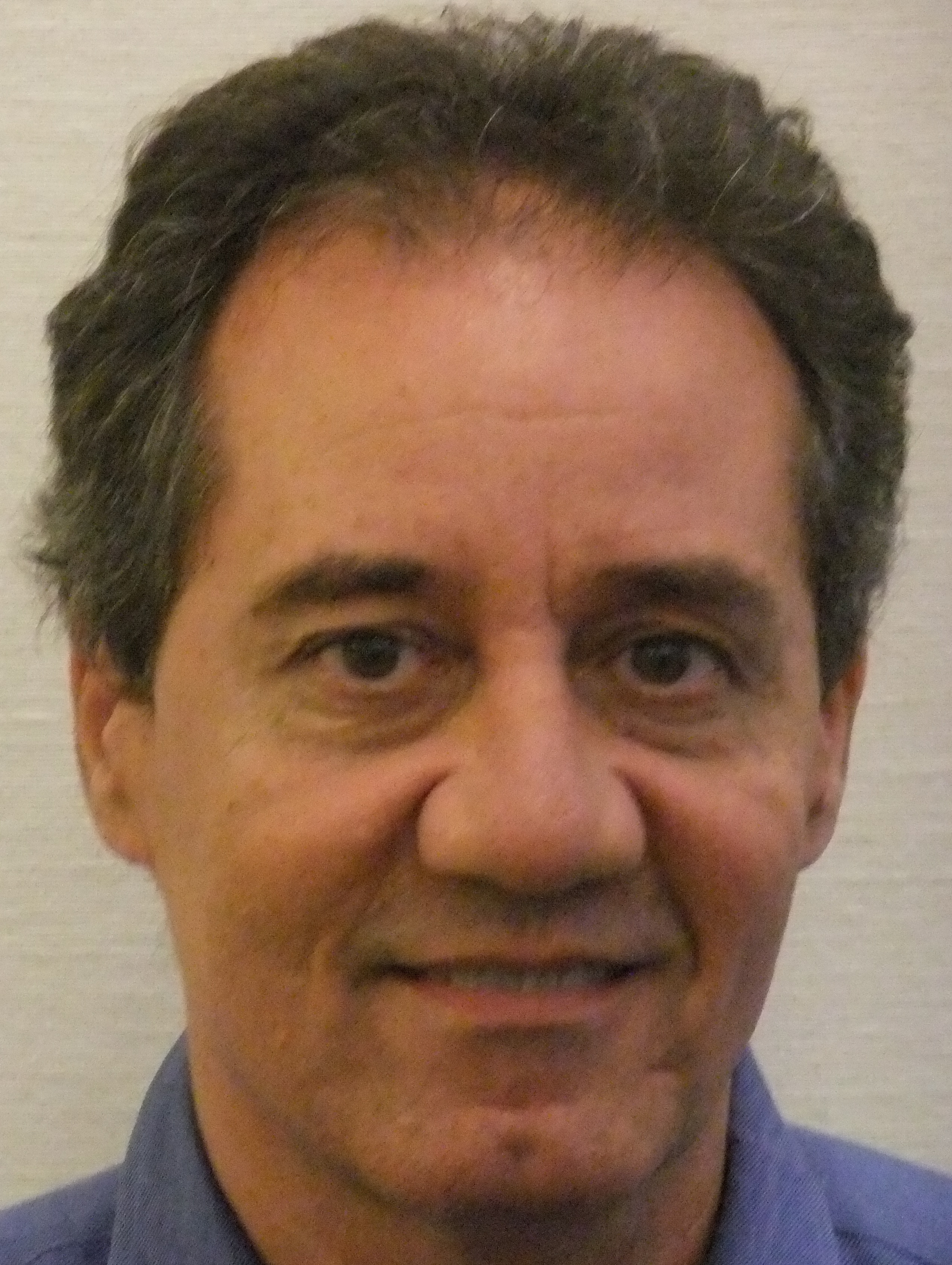
Jim Ingram
“Getting into a group and talking about ideas was very attractive,” said Jim Ingram, a technical writer and a RTP Idea Lab board member. At the most recent session in May, Ingram pitched his idea to reconfigure the hierarchy with which computers file information.
“An idea without an interaction with others is just a thought,” Ingram said. ” It dies in the brain if it isn’t talked about.”
The founders of the RTP Idea Lab, most of them local technology entrepreneurs, also want to stimulate the birth of new companies and the creation of jobs in the Triangle. The area’s unemployment rate has come down slightly in the past year, but it remains above 7 percent, according to April state unemployment figures. That compares to 9.5 percent unemployment statewide.
With federal and state budget cuts looming, it’s not likely that the government and public universities, important contributors to the Triangle’s economy, will be of much help. But technology startups are on a roll. Another Internet gold rush is on, stocks are up, investors are eager and startups are sprouting from New York to Durham.

Anthony Edwards
The Triangle offers plenty of services to form a startup and find a home for it. What the area lacked was a place where people with ideas could ask other people, “What do you think?,” and get a honest answer. That’s where the RTP Idea Lab fits in, said Anthony Edwards, board chairman of the RTP Idea Lab.
Edwards is an IT consultant and a founder of Morrisville-based Tavve Software. He’s also involved in RedOak Logic, a Chapel Hill startup that targets the drug development industry but has yet to be funded.
Having RTP Idea Lab sessions “is good for the community, for RTP,” he said. “It encourages people to form companies.”
He wants to add to the feedback sessions and form partnerships with serial entrepreneurs, venture capitalists and angel investors to also provide seed funding.

IBM Leads Country, State in Invention in 2010
Thursday, February 10, 2011, 8:30 am 1 Comment | Post a Comment
Cyber-criminals probe databases in ways that can be predicted and detected. That's the basis of newly patented IBM software that monitors access to databases for suspicious activity and then locks down critical data.
Burglars often act in predictable ways: they lurk in overgrown bushes, come to your door pretending to be service people, or check for unlocked doors. If you witness this kind of behavior outside your house, you’re likely to check your locks and perhaps arm your security system before calling the police.
Cyber-criminals are the same as physical ones, says IBM’s Dave Kaminsky. They probe databases in ways that can be predicted and detected. That’s the basis of U.S. patent no. 7,827,608: software that monitors access to databases for suspicious activity and then locks down critical data, preventing it from being downloaded. It is intended for use at banks, mortgage companies, and other companies that might keep your social security number or other private information in their databases.
Importantly, the software monitors realtime events, acting only if an intrusion appears to be imminent. As Kaminsky says, it would be counterproductive to forestall legitimate attempts to access information (such as for a credit check), just as you don’t want to overreact when someone comes to your house to clean your gutters.
Kaminsky is IBM’s Chief Patent Innovation Architect. Based at RTP, he is not only a frequently patented inventor, but he helps other inventors in the company navigate the “Alice in Wonderland” world of the patent process and contributes to decision-making about which innovations the company should patent. That last is important, because even though IBM received 5,896 patents in 2010, more than any other company, Kaminksy says just a fraction of the company’s eligible innovations go forward in the patent process.
IBM’s RTP site generated 570 patents, and those, combined with patents from Charlotte, made IBM the leading recipient of patents in the state, ahead of Cree, Red Hat, and the leading universities. Most of the patents from RTP are in software. They include a program that routes phone calls to either internet or traditional phone lines to incur cost savings (patent no. 7,710,946, Jim Silwa) and a GPS add-on that gives drivers of hybrid, electric, or other alt-fuel vehicles routing that will lead them to charging stations, thereby reducing their fossil fuel usage (patent no. 7,860,808, Mark Peters). Then there are hundreds more inventions that may not resonate with consumers, like a new caching algorithm, Kaminsky says, but that make our lives easier nonetheless.
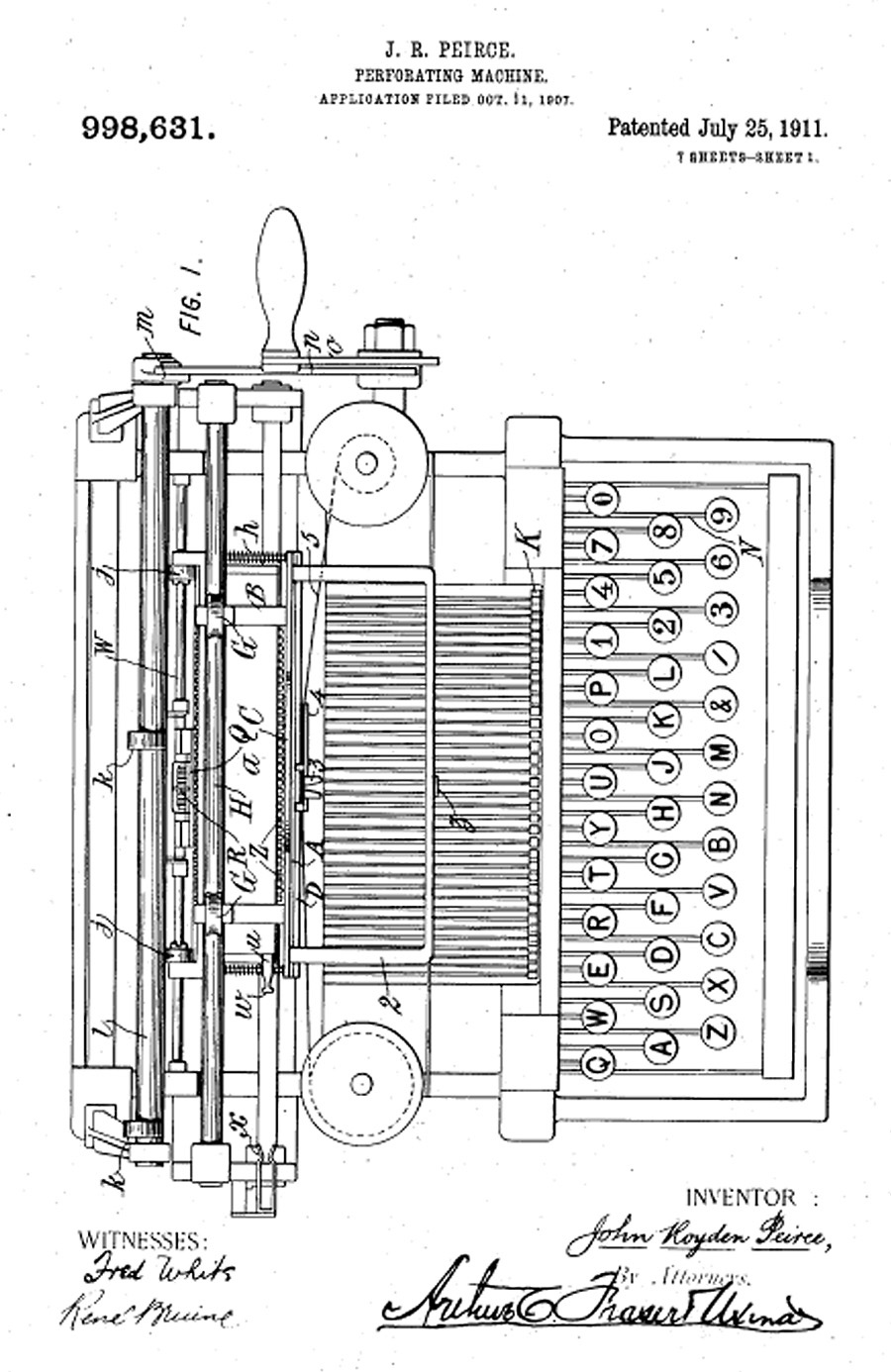
Almost 100 years ago, IBM received its first patent. In 2010, it received 5,896, more than any other company
IBM encourages staff members to generate patentable ideas, Kaminsky says, through a financial incentive program and through career advancement: people who contribute to the intellectual property of the organization are likely to advance.
Contrary to the stereotype of the inventor as a lonely figure, most patents achieved at IBM come from ad hoc groups. Kaminsky led a team of four software engineers on the online security project, which took less than six months to complete but almost four years to patent. Ideas come from clients and from the inventors themselves, sometimes through conversations with collaborators and sometimes through “Aha” moments when people think of ways in which technology could solve a problem.
This was the 18th consecutive year that IBM has led the list of U.S. patents received. According to a company press release, “more than 7,000 IBM inventors residing in 46 different U.S. states and 29 countries generated the company’s record-breaking 2010 patent tally.”
Nonprofits and social media
Tuesday, February 1, 2011, 1:40 pm 1 Comment | Post a Comment“There’s something hopelessly quaint about the little piles of pens and paper on the tables at #scio11.”
“Best thing about #scio11 is that people will pull out an iPhone or iPad in the middle of a convo and they’re not rude; they’re live-blogging.”
 If these two tweets give the impression that ScienceOnline 2011 (or #scio11 in the Twitterverse) was a brave new world populated by geeky early adopters who have foresaken pens, paper, and print in favor of devices and Web 2.0, well, that’s partly true.
After all, it was a conference where it was normal to see panelists consulting notes on their iPads, where attendees did in fact live-blog and live-tweet, and where many sessions had a panelist devoted to monitoring Twitter for questions and comments from the audience. (One aggrieved camera operator told me that people watching the live webcast were tweeting complaints about camera angles!) Read more…
‘Companies to Watch’ Honors 25 Job-Creating, Revenue-Producing Firms in N.C.
Tuesday, October 19, 2010, 1:03 pm 3 Comments | Post a CommentStartup companies make for good storytelling. Entrepreneurial lore is filled with tales involving a couple of college dropouts, a garage, and a Big Idea. Some of them fail, and some of them morph into industry giants.
But along the way from startup to giant, those companies go through a second stage of growth, during which they add employees and revenue but are still growing fairly quickly. It’s these second-stage companies that are the unsung heroes of North Carolina’s economy, according to Penny Lewandowski of the Edward Lowe Foundation. In 2008, the last year for which figures are available, 9.7 percent of the resident companies in the state were second stage, but they accounted for almost 35 percent of the state’s jobs.
A Conversation with Dr. Robert Koger of Advanced Energy
Monday, September 20, 2010, 7:04 am 1 Comment | Post a Comment
Dr. Robert Koger
Dr. Robert Koger is president and executive director of Advanced Energy, a nonprofit organization established by the North Carolina Utilities Commission in 1980 to forestall electrical rate increases by promoting energy conservation and alternative and renewable sources of electricity. Advanced Energy provides services that focus on energy efficiency for commercial and industrial markets, electric motors and drives, plug-in transportation, and applied building science.
Advanced Energy also operates NC GreenPower, a program funded through consumers’ voluntary contributions, designed to increase the amount of renewable energy put on the electric grid in North Carolina and to mitigate greenhouse gas emissions.
This month, Dr. Koger assumes the chairmanship of Triangle Area Research Directors Council (TARDC), a group of science and technology leaders from local companies, nonprofits, and universities. The group meets over lunch monthly from September to May, to exchange ideas and information and to hear from guest speakers. TARDC’s first meeting under Dr. Koger’s leadership will be September 21, and the guest speaker will be Mr. Joe Freddoso, president and CEO of MCNC/NC STEM. Non-members of TARDC can attend the luncheons.
I recently asked Dr. Koger about the history of Advanced Energy and about his leadership of TARDC. Read more…
Scientifica Gets Durham School Kids Excited about Science
Monday, August 16, 2010, 7:25 am 1 Comment | Post a Comment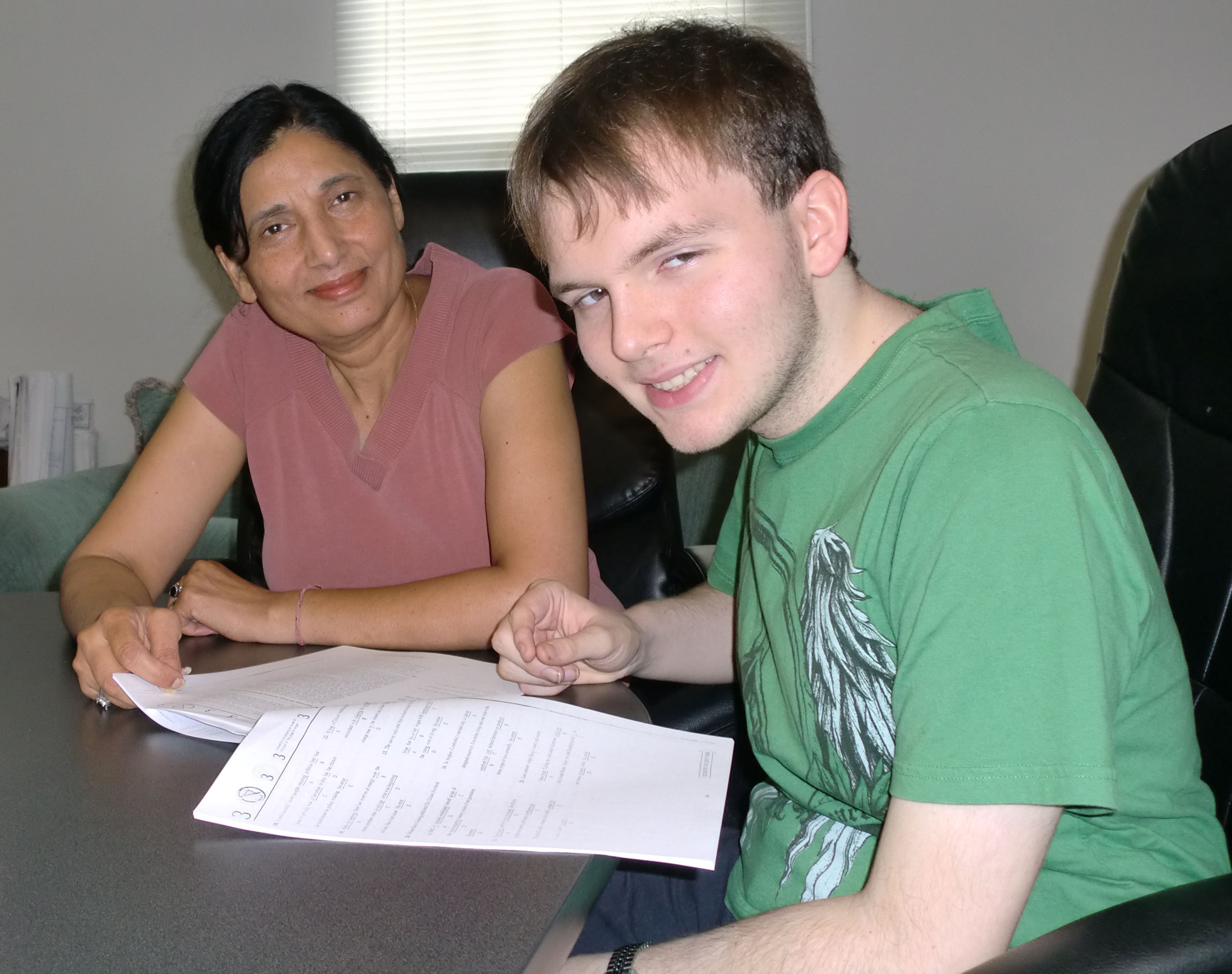
Dr. Anu Sud talks to Robby Fisher, a Durham student participating in the Scientifica program she helped found.
Dr. Anu Sud’s two daughters were accomplished in science by the time they were in high school, in part thanks to coaching by their mother, who had been a cytogeneticist at UNC-Chapel Hill and at LabCorps. The older daughter attended the North Carolina School of Science and Mathematics, and the younger, Shivani, won a $100,000 scholarship in the Intel Science Talent Search and numerous other top science honors when she was a junior and senior at Jordan High School.
When Shivani went off to Princeton, Dr. Sud was like many professional women who interrupt their careers to raise kids: should she return to her former career or try a new path? Then Shivani said to her, “Mom, why not help other kids like you helped us?” Read more…
Gephardt visits Triangle on tour to spur medical innovation
Wednesday, June 30, 2010, 2:12 pm No Comments | Post a CommentDick Gephardt is traveling across the country to reinvigorate medical innovation and on Wednesday the former Congressman, U.S. House majority leader and two-time Democratic presidential candidate visited North Carolina, a U.S. biotech hot spot.

U.S. Rep. Dick Gephardt
He carried a to-do list with him that he plans to take to Congress and the Obama Administration.
Changing the way the Food and Drug Administration regulates the development of new medicines, making the research and development tax credit for companies permanent and establishing a federal office to spearhead public-private partnerships between universities, the National Institutes of Health and R&D companies were among the suggestions on the list.
“It needs to be the new space program in my view,” Gephardt told about 100 people at the packed Capital City Club in Raleigh. Read more…

Homegrown innovation: MegaWatt Solar
Monday, April 19, 2010, 10:28 am 1 Comment | Post a Comment
A concentrated photovoltaic "solar tree" designed by MegaWatt Solar. (Image from MegaWatt Solar web site.)
I recently wrote a two-part post here reporting on a forum in Research Triangle Park which focused on barriers to homegrown global business innovation in the Triangle and in North Carolina. While contemplating the themes of the forum, and skimming today’s science news, I stumbled across this article in Popular Mechanics magazine which looks into the advances in concentrated photovoltaics over the past few years — and leads with the example of MegaWatt Solar, a renewable energy start-up in our own backyard. The company was formed by three professors at the University of North Carolina at Chapel Hill who seek to create utility-scaled concentrated photovoltaic systems to supplement fossil fuels-based energy production. (They’ve also been featured in UNC’s Endeavors research magazine, and have landed a story or two in the News & Observer, no longer available in their web archives.)
It struck me that MegaWatt Solar is a good example of the applied research that our area universities can generate to solve real-world problems, and also of the links that can be established between professors with marketable ideas and business-savvy entrepreneurs that can help carry the ideas from the research bench to the bank. Their story is truly one of homegrown innovation, though to be fair they are still in the pilot study phase and working out some kinks.
Because I’ve already written this story, I’m not going to write it again… Below is a reprint of the cover story article I penned about the people behind MegaWatt Solar, and their mission, for the fall 2009 issue of UNC College of Arts & Sciences magazine. It is reprinted here with full permission from the editors.

UNC Arts & Science cover, fall 2009, with MegaWatt Solar founders.
The Power of 20 Suns
MegaWatt Solar is a small start-up energy company in Hillsborough, N.C., backed by $17 million from Norwegian venture capitalists and mentally powered by three researchers in UNC’s College of Arts and Sciences. Tucked away in a brick textile-mill-turned-office-park, the company is poised to bring a new concentrated photovoltaic system to market that could provide the cheapest large-scale renewable source of electricity available anywhere.
But they didn’t design it for your home. They designed it for your utility company, to offset peak energy demand, which tends to coincide with the sunniest portions of the solar day. The term MegaWatt describes their goal of producing one megawatt of electricity from over a thousand solar “trees” spread across about 10 acres. The solar trees rotate on a dual axis mount that tracks the sun across the sky vault. One megawatt of electricity — one million watts — is enough to power about 800 homes.
MegaWatt Solar was founded by astrophysicist Chris Clemens, theoretical physicist Charles Evans, computer scientist Russ Taylor and a private sector power-grid systems engineer, Dan Gregory. They built their alpha version in spring 2006 in Evans’ driveway from what he describes as “an aluminum erector set for adults,” with parts bought off E-Bay, cheap advertising signboard and a highly reflective material scavenged from the interior of a Solotube skylight.
The best part? It worked.
“Boy, it was bright, “Evans said. “Everyone ran to get their sunglasses.”
They measured its electrical output and knew they were on to something red hot. Read more…


