Posts Tagged ‘RTI’

Proposed global health spending cuts raise concerns in Research Triangle
Wednesday, April 6, 2011, 10:45 pm No Comments | Post a CommentAt a global health conference in Chapel Hill, the tug-of-war over budget cuts on Capitol Hill landed smack-dab in North Carolina’s Research Triangle.
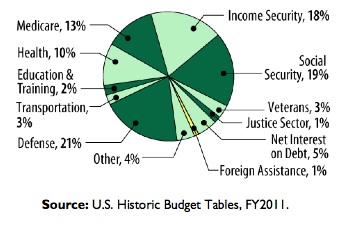
In 2010, foreign assistance accounted for 1 percent of all U.S. spending.
While Republicans and Democrats are negotiating about getting a handle on the federal deficit, concerns about proposed federal funding cuts are rising in states with global health research hubs, such as North Carolina, California and Washington.
House Republicans have proposed cutting international affairs and foreign assistance spending by a total of 44 percent over the next five years, including 29 percent in 2012. They’re also pushing for an 11 percent funding cut for global health programs during the remaining months of the current fiscal year, which would scale back malaria programs and reduce immunizations, the number of skilled birth attendants and other basic health services worldwide, Dr. Rajiv Shah, head of the U.S. Agency for International Development, told a House appropriations subcommittee.
At the conference, which took place April 1 at the University of North Carolina Friday Center in Chapel Hill, experts from USAID and the Center for Strategic and International Studies in Washington, D.C., and the Centers for Disease Control and Prevention in Atlanta addressed the future of global health and development.
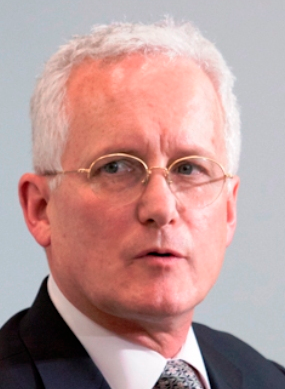
Stephen Morrison
“We’re now in an era of austerity, uncertainty and flattening or declining budgets,” said Stephen Morrison, director of the CSIS Global Health Policy Center.
Morrison didn’t foresee a catastrophic collapse of global health budgets. But the days of double-digit annual increases are gone, he said.
From 1990 to 2010, international spending for global health rose from about $6 billion to an estimated $27 billion, according to a report by Chris Murray of the University of Washington Institute for Health Metrics and Evaluation. About one-third of last year’s funding came from the U.S.
U.S. spending on foreign aid and global health more than doubled in the past 10 years and the increase benefited Africa and parts of Asia.
The Bush administration started an initiative to battle HIV/AIDS in Africa, contributed to an International Monetary Fund effort aimed at boosting education, health status, nutrition and gender equality in poor countries and increased security-related assistance to Afghanistan and Pakistan.
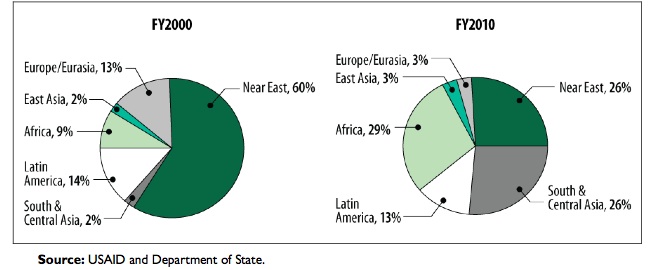
Regional distribution of U.S. foreign aid in FY 2000 and FY2010
In fiscal year 2010, the U.S. spent $39.4 billion on foreign aid, according to a Congressional report. Nearly 90 percent of that money was funneled through USAID. Still, foreign aid accounted for only about 1 percent of all U.S. spending.
Domestically, the funding increases boosted grant revenue at research institutes and created jobs at universities.
In the Research Triangle, RTI International was one of the biggest beneficiaries. RTI increased funding from USAID from $165.9 million in 2006 to $265.4 million in 2010. Another local research institute that benefited was Family Health International. FHI’s annual revenue rose about 40 percent from $224 million in 2005 to $370 million in 2009. About 70 percent of the global health funding FHI secured in 2009 came from USAID.
The UNC Gillings School of Global Public Health and the Duke Global Health Institute trained the workforce needed to implement the new initiatives.
In 2009, a Duke University study determined that North Carolina’s global health sector supported more than 7,000 jobs and $508 million in annual salaries and wages. The sector’s impact on the state’s economy was nearly the same as the textile industry’s, according to the study.
Similar economic impact studies have been done in California, where global health supports about 350,000 jobs that generate $19.7 billion in annual salaries, wages and benefits, and in Washington state, where global health supports 13,700 jobs that generate $1.7 billion in annual salaries, wages and benefits.
At the conference, Morrison encouraged global health professionals in the audience to lobby their House representatives, but he was convinced that global health would take a disproportional hit no matter how the budget negotiations would turn out.
“This is a moment of wake-up for us,” he said.
How energy alternatives can make us safer and healthier
Sunday, March 6, 2011, 8:21 pm 1 Comment | Post a CommentThe fiscal fight over monitoring greenhouse gases raged on Capitol Hill while more than 100 people gathered at N.C. State University Thursday and Friday to explore whether we dismiss the fallout from our fossil fuel dependency at our own peril.
Attendees of the two-day conference, which was partly sponsored by the U.S. Army War College, didn’t exactly make for a treehugging crowd. They included security analysts from Fort Bragg, economists, energy consultants to large investors and governments, former oil industry executives and scientists developing alternatives to oil and coal.
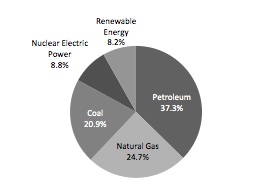
2009 U.S. energy consumption by source, U.S. Environmental Protection Agency
That greenhouse gases are taking a toll on climate, environment and health was never in question during the conference. Indeed, speakers expounded on the costly consequences that U.S. dependency on fossil fuels has on healthcare at home and defense overseas.
James Bartis, a senior policy researcher with the RAND Corp., a global policy think tank with an office in the Middle East emirate of Qatar, was one of the speakers at the conference. In testimony before the U.S. Senate Committee on Energy and Natural Resources two years ago, Bartis urged that there was “a compelling need to reduce greenhouse gas emissions” and a need for research on technologies that would allow us to use less oil, coal and natural gas, the three fossil fuels linked to almost 90 percent of the emissions.
At the NCSU conference, where he participated on a panel of alternative energy experts, Bartis was asked why lawmakers aren’t heeding his advice more. “There’s a lot of money to be had [with fossil fuels] and there’s a lot of inertia,” he responded.
 About 83 percent of the U.S. economy runs on fossil fuels and Alan Hegburg, a senior fellow at the Center for Strategic and International Studies and the conference’s keynote speaker, didn’t expect much will change the next 10 years.
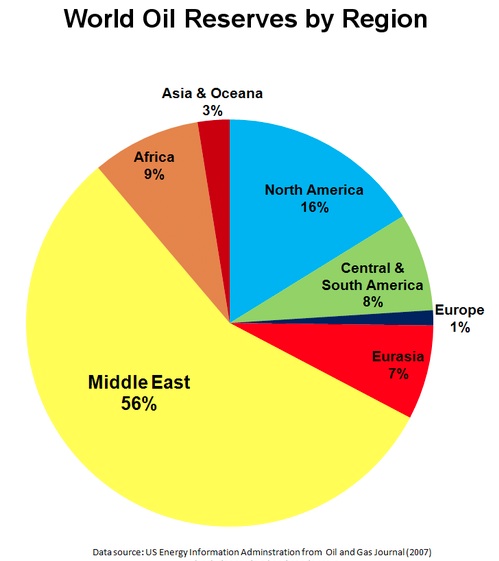
Coal is plentiful and cheap - no country has more coal reserves than the U.S. Crude oil is also still plentiful and cheap to extract - in the Middle East, which has more than half of the world’s oil reserves.
Fossil fuels pack a lot of energy. Their production is efficient. The delivery infrastructure is finetuned. And markets are well developed. In contrast, energy alternatives cost more and are less energy-dense. And functioning delivery systems to drive demand are rudimentary at best where they exist.
“Getting this train to change tracks will take a huge effort,” Hegburg said.
Then why try? Speakers at the conference offered as the main reason the hidden costs of fossil fuels.
Generating electricity from coal and burning oil for transportation is a dirty business. In 2005, pollution caused an estimated $120 billion in damages to human health, crops, timber yields, buildings and recreation nationwide, according to a report the National Research Council published 18 months ago.
Another study published a few weeks ago in the Annals of the New York Academy of Sciences estimated that extracting, transporting, processing and combusting coal caused $345 billion in damages to the health and the environment in 2005.
Factor in the hidden costs and electricity would be at least twice as expensive, according to the study. Do the same with oil and gasoline prices would be at least $1.50 per gallon higher, Bartis said.
Suddenly, wind and solar energy and investments to boost energy efficiency and conservation become competitive. Calls from research hubs for more funding to make cleaner energy alternatives cheaper and more efficient begin to make sense.
North Carolina’s Research Triangle is one of those hubs.
Last summer, the University of North Carolina at Chapel Hill, Duke University, NCSU and the Research Triangle Park-based research institute RTI International formed the Research Triangle Solar Fuels Institute to bring together local experts in chemistry, electrical engineering, material sciences and nanotechnology with the goal of developing technologies that tap the sun and make liquid fuel.
Researchers at RTI are working on capturing and reusing carbon dioxide – the most prominent greenhouse gas in the Earth’s atmosphere – producing bio-crude from organic waste and developing a nanotechnology light bulb that promises to be more energy efficient than a fluorescent light and doesn’t contain harmful mercury. Not far from RTI, at the corporate biotech research lab of Swiss agribusiness giant Syngenta, researchers have genetically engineered corn that requires less water and energy to make fuel ethanol.
And North Carolina, the third largest U.S. biotech hub by number of companies, has targeted biodiesel and ethanol from corn and biomass to meet an ambitious goal: By 2017, 10 percent of liquid fuels sold in the state should be locally grown and produced. This target goes hand-in-hand with the federal mandate that oil companies increase the use of renewable fuels such as ethanol in gasoline blends.
The federal ethanol mandate had its critics at the NCSU conference - diverting about one-third of the U.S. corn crop into ethanol production has contributed to rising food prices. But other speakers credited the mandate for keeping the discussion alive at a time when energy-related research funding is threatened by massive cuts.

David Dayton
“Because there’s a mandate, climate control, security issues and oil is $100 a barrel, at least we’re still talking about alternative fuels,” said David Dayton, biomass program manager at RTI’s energy research lab.
How much military activities cost us to maintain our fossil fuel dependency is difficult to determine - neither of the two studies provided estimates - but conference speakers said ensuring a steady supply of crude oil drives national security spending.
With about 19 million barrels daily, the U.S. consumed more oil in 2005 than the next three biggest consumers, China, Japan and India, together, figures of the U.S. Energy Information Administration show.
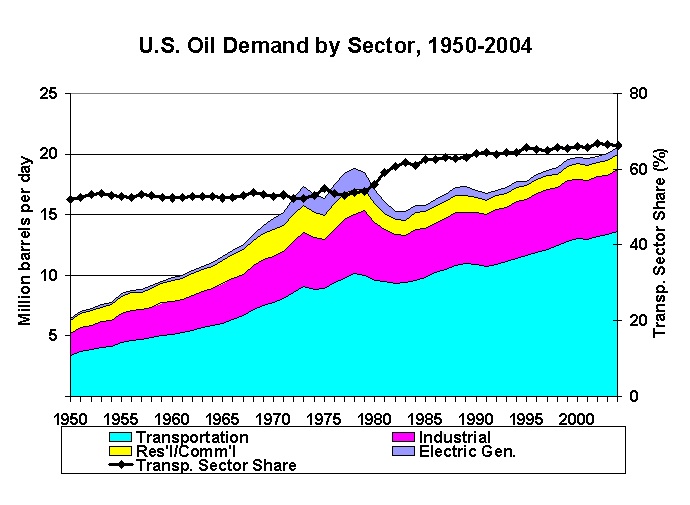
Transportion, which in 2004 made up more than 60 percent of the U.S. oil demand, has become the dominant driver over the past 50 years.
Source: Annual Energy Review
The increase in demand has influenced which regions are important for the U.S. to protect.
The Middle East, which sits on more than half of the world’s oil reserves, has gained importance in U.S. national security spending in the past 30 years, even though former Defense Secretary Donald Rumsfeld insisted that invading Iraq had nothing to do with oil, as Peter Maass, author of “Crude World: The Violent Twilight of Oil,” wrote on his blog last summer.
A study published two years ago estimated that between 1976 and 2007 the U.S. spent $6.9 trillion in the Persian Gulf region on military efforts, all of them oil-related. After the end of the Cold War in Europe, Persian Gulf military expenses took up an ever increasing portion of the entire U.S. defense spending in the 1990s and jumped to 91 percent in 2001. By 2007, their portion of the entire U.S. defense spending had decreased to about 80 percent.
Nobel Prize winning economist Joseph Stiglitz and Linda Bilmes, a leading expert on U.S. public finance, estimated in the Washington Post last year that the war in Iraq cost the U.S. in excess of $3 trillion and drove the price of oil up by about $10 per barrel.
This focus on the Persian Gulf region reflects the fact that more oil is shipped through the Strait of Hormuz, which connects the Persian Gulf with the Gulf of Oman and the Arabian Sea, than through any other narrow channel through which oil is shipped on global sea routes, according to numbers of the U.S. Energy Information Administration.
Every day, an average 15.5 million barrels of oil pass through the Strait of Hormuz, or about 18.5 percent of the daily oil production worldwide. More than three-fourths of the shipments are destined for Asian countries.

Source: WTRG Economics
Whether the U.S. investment to keep the oil flowing through the Strait of Hormuz was necessary is debatable, two speakers at the NCSU conference argued.
Eugene Gholz of the University of Texas Center for Energy Security and Ann Korin of the Institute for the Analysis of Globa Security argued that the price of crude is influenced mainly by production levels in countries that belong to OPEC, the Organization of Petroleum Exporting Countries.
It makes more sense for the U.S. to diversify energy consumption than to spend billions on military campaigns in the Persian Gulf or on currying favors with members of the OPEC cartel, Korin and Gholz suggested.
Once 15 percent to 20 percent of all of the vehicles in the U.S. can run on multiple fuels, Gholz said, the infrastructure to deliver gasoline alternatives will follow.
It’s advice North Carolina is heeding.
In addition to its commitment to boost the use of fuel ethanol made from plant fibers, the state is also at the forefront of establishing charging stations for plug-in electric vehicles, or PEVs. The Research Triangle is projected to get about 200 of the charging stations within the next year.
As a result, North Carolina is among the states where Nissan will fill the initial 50,000 orders for the Leaf, the first mass-produced, affordable electric car. The Leaf is not sold through dealerships. Deliveries started in December and January on the West Coast. The first cars are scheduled for delivery in North Carolina in April. (More on PEVs and the Leaf here.)
On Saturday, the day after the NCSU conference, Nissan brought about two dozen Leaf cars to the Raleigh farmers market for test drives.

Blue Crabs vs. Green Lawns: We May Have to Decide
Thursday, December 9, 2010, 9:24 am 6 Comments | Post a Comment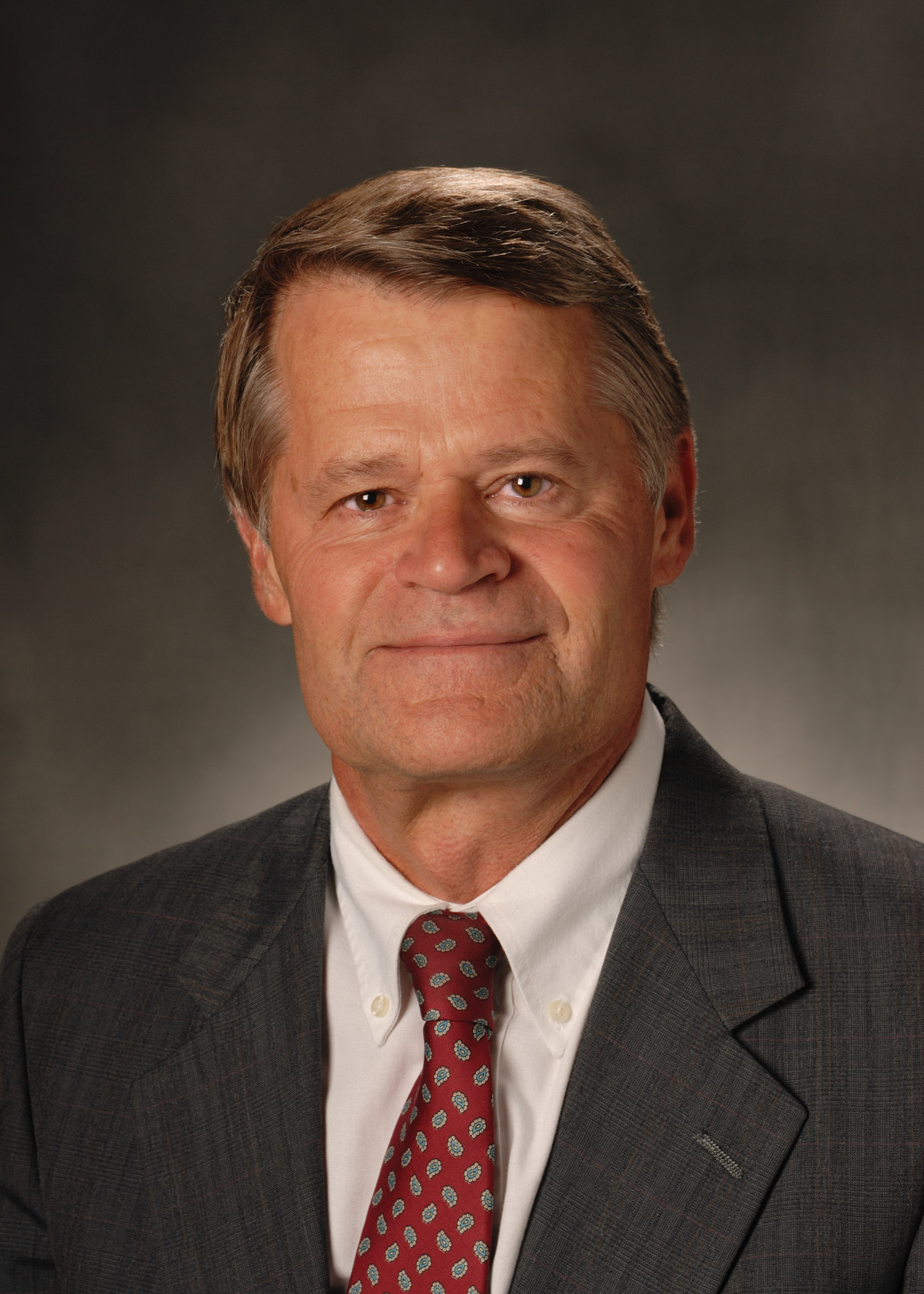
RTI water quality scientist Kenneth Reckhow says we may have trouble achieving mandated water quality standards without making major lifestyle changes.
What happens if we are unable to achieve federally mandated water quality standards in our lakes, rivers, and bays?
In 1972, Congress enacted the Clean Water Act (also referred to as the 1972 Amendments to the Federal Water Pollution Control Act) governing water pollution in the U.S. Among other things, the Clean Water Act regulates the release of pollutants into surface waters. Individual states determine water quality standards for bodies of water within their borders.
Now, a water quality scientist at RTI International is concerned that these water quality standards are unattainable in certain major bodies of water, including Falls Lake, a lake that is valued for recreation as well as being Raleigh’s municipal water source.
Read more…

Visiting Second Life to see the 3D AIDS quilt
Friday, December 3, 2010, 1:18 am No Comments | Post a CommentThe launch of the three-dimensional quilt during World AIDS Day Wednesday was accompanied by, as you would expect, songs, images and poems to remember loved ones who lived with and died from HIV.
But in every other respect this gathering was different from the largest community arts project in the world, the AIDS Memorial Quilt that was founded in 1987.
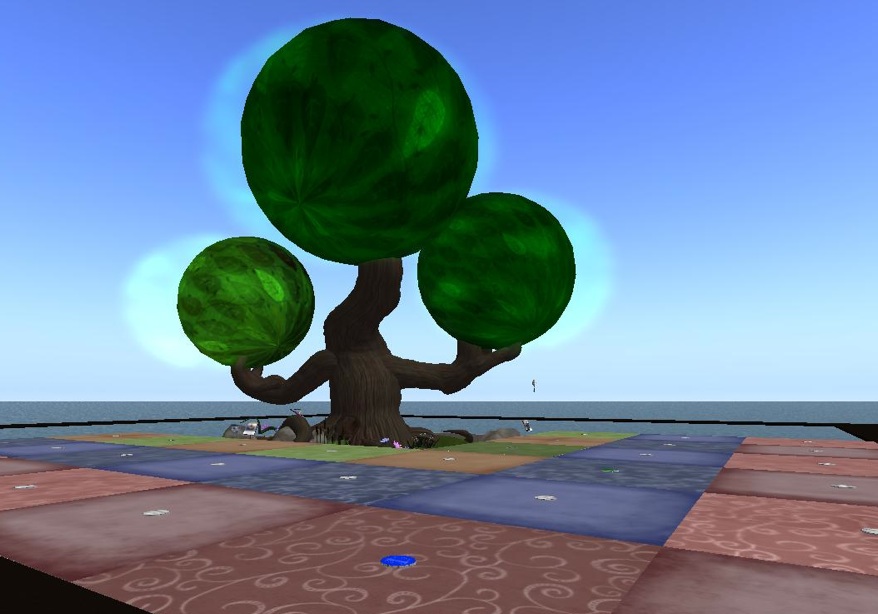
The 3D AIDS quilt in Second Life
The 3D AIDS quilt, which includes contributions from the University of North Carolina at Chapel Hill Center for AIDS Research and the Triangle Global Health Consortium, is laid out below an enormous tree that grows on Storybook Island in Second Life, a three-dimensional virtual world maintained by Linden Lab of San Francisco.
As Jena Ball, one of the creators of the 3D AIDS quilt, put it, this quilt “doesn’t have to be folded and stored. It’s available 24/7, can live in multiple places and grow to any size.”

Jenaia Morane
Ball, a writer who recently moved from Los Angeles to North Carolina’s Research Triangle area, made that point through her avatar, Jenaia Morane, during the launch celebration, which took place in an auditorium inside the tree on Storybook Island. Because, you see, you can only visit the 3D quilt in the form of an avatar. I was there as Zaidy Xenga, a redhead wearing a gray suit and one black shoe.
With the 3D AIDS quilt, Ball and her collaborators at Startled Cat studios - Martin Keltz, an Emmy award winning producer, and Doug Thompson, an Internet marketing entrepreneur - built on the Karuna initiative, a HIV/AIDS storytelling project in Second Life that kicked off in 2008 with a grant from the National Library of Medicine.
The initiative now consists of multiple Second Life islands, all owned by Startled Cat. On Karuna island, avatars can, for example, read the panels in the AIDS poetry garden, learn about the human immunodeficiency virus or visit the Ryan White tree. The seven-part Uncle D story quest is spread out over six islands. Avatars going on the quest can visit the house of Uncle D, a person who lived with HIV, and read his diary.
Here’s a video of Keltz’s avatar, Marty Snowpaw, going on one of the Uncle D story quests:

The 3D AIDS quilt is on yet another Second Life island. The quilt consists of rooms that commemorate people who have died of AIDS. My avatar, Zaidy Xenga, teleported to a few of the rooms.
One of the rooms is dedicated to Bobby, who loved flying. My avatar arrived in the room and looked at a single-engine plane frozen in mid-flight.
The next visit took me into the sleeping quarters of an AIDS orphanage in South Africa. The beds were made of logs. Spread across the floor was a play carpet that had the streets and buildings of a village woven into it. A slide show on one wall showed pictures of South African children playing.

Nicole Fouche's avatar
The room is a contribution of the Triangle Global Health Consortium and represents a memory of Nicole Fouche, TGHC’s executive director who grew up in South Africa. The memory is of a day in a park when a child took Fouche’s hand. The incident led her to realize there were entire orphanages in South Africa filled with children who lost their parents to AIDS, Fouche’s avatar said during the launch ceremonies.
Banners above the beds displayed the names of TGHC’s members, including Glaxo SmithKline, at whose U.S. headquarters in RTP the first AIDS drug was discovered in 1984, Duke University, UNC and RTI International.
The TGHC room on the 3D quilt commemorates the more than 16 million children under 18 who have been orphaned by HIV worldwide.
As Zaidy Xenga I also visited the room contributed by the UNC Center of AIDS Research, which is a collaboration of UNC, RTI and Family Health International.

Vanie MacBeth
On panels on the room’s wall, Vanessa White, aka Vanie MacBeth in Second Life, tells the story of Ann, who volunteered to speak about living with HIV to more than 300 UNC students on World AIDS Days. White manages the community outreach for the UNC Center for AIDS Research and recruited Ann before she died at 42 of complications from AIDS. An empty chair below the last story panel represents her death.
My avatar also sat next to avatars of more than 40 other visitors from across the world who gathered in the auditorium inside the tree on Storybook Island. Some wore billowing dresses, other jeans, wings or Werewolf skins. In Second Life, you can take on any shape you like, even glowing green skin. One of the avatars had “I am HIV+” written as part of its name.
On the panel in the center of the auditorium sat Jokay Wollongong, the avatar of Jo Kay, an Australian woman who created the JokaydiaGrid, a virtual world for educators and students age 10 to 16. A copy of the 3D AIDS quilt on JokaydiaGrid is available for commemorative rooms build by pre-teens and teens who are not allowed to go onto Second Life.
An argument for boosting federal funding for energy research
Wednesday, November 17, 2010, 4:43 pm 3 Comments | Post a Comment
Jim Trainham
Calls for Congress to boost federal funding for clean energy research are getting louder and Jim Trainham, executive director of the newly formed Research Triangle Solar Fuels Institute, is jockeying for a position in the chorus.
The University of North Carolina at Chapel Hill, Duke University, N.C. State University and RTI International formed the solar fuels institute this summer to give the Research Triangle Park area its due as an energy research hub.
“There’s a lot of expertise here,” Trainham said Tuesday during a presentation at the Triangle Area Research Directors Council.
From its four parents, the solar fuels institute got experts in chemistry, electrical engineering, material sciences and nanotechnology and a lofty goal: Tapping the sun to make liquid fuel. (Watch a Q&A with Trainham here.)
The technology to meet the goal could be developed in less than a decade, Trainham suggested at TARDC. The big question is how to pay for the research and development. Read more…

NASA tech ties mental state to gaming prowess
Friday, October 29, 2010, 1:03 pm No Comments | Post a Comment
Photo courtesy of Tim Bunce.
Nothing raises your heart rate quite like an encroaching horde of zombie skeleton warriors. Throw in a squadron of well-fortified goblin archers and a few steadily advancing mutant spider-crabs, and you’ve got all the ingredients for a high-stress situation — even if it is in a virtual world.
But Alan Pope and Chad Stephens want to help gamers become a little more zen about this kind of thing.
The two NASA researchers, who specialize in aerospace technology and human-machine interfaces, have developed a biofeedback add-on for the Wii controller that can measure key stress indicators during gameplay. Dubbed “MindShift,” the device can alter performance based on those stress levels, effectively allowing gamers to calm their minds through training.
“It amplifies or magnifies a person’s emotions, a person’s boredom and makes it disruptive in the game,” Pope said. “You have to overcome that disruption by achieving a more positive emotional state or better focus and concentration.”
The device consists mostly of off-the-shelf equipment like monitors for the ear, finger and chest. It can even accommodate brain wave caps, according to Brent Fagg, innovation manager at the Triangle-based RTI International. His firm is marketing licenses for the patent-pending device to peripheral manufacturers.
“NASA’s goal is to get it into the public’s hands rather than make a profit,” he said.
Before it gets to consumers though, Pope said the hardware will need a little refining. But he says the technology has come a long way over the last two decades.
RESEARCH IN MOTION
When he started exploring the concept, Pope used biofeedback systems to measure pilot stress in training. Those measurements then fed back into the flight simulation, increasing or decreasing the difficulty based on changes in the test subject’s stress level. Pope applied the same concept to the PlayStation to help children with ADHD, then licensed the patent to SmartBrain Technologies.
“It occurred to me in the mid-90s that the settings we were working with — flight simulators — were a lot like video games. So I started thinking about how I could use this idea of connecting physiological signals to systems in the context of video games,” Pope said. “It was a pretty easy translation.”
While he now considers that early demonstration “sort of rudimentary,” the Nintendo Wii console presented a new challenge. Of particular interest to the team was the new controller scheme.
“The Wii, the way it’s designed lends itself to modification,” Stephens said. “It also taps into a different modality of motion — instead of pressing buttons to get a character to do anything, it uses motion controllers.”
The inspiration for using the Wii actually came from the team’s then-high school intern, Nina Blanson, who’s now a student at Yale.
“When we put several ideas in front of her to ask which one of these is of interest to [her], it didn’t take her long to select the Wii video game as the one she would be interested in pursuing,” Pope said.
After months of brainstorming, Pope said they found a solution that affects gameplay “from the outside,” meaning they needed to install no software patches or obtain any proprietary information from Nintendo.
“We had to play with it for a while, go down a couple of blind alleys, before really coming up with a neat way of doing it,” Pope said.
The researchers declined to detail exactly how MindShift works, pointing out they’re still in the middle of patenting the technology. But they said it is already compatible with every Wii game off the shelf.
“It’s not always going to be as good with some games as with others,” Fagg said. “It’s the kind of thing where five of them will be awesome, five of them are going to suck.”
They said results have been impressive with the games they’ve tested so far. That includes Link’s Crossbow Training, a first-person shooter; Trauma Center, a surgery simulator; and Wii Sports Golf, which is packaged with the Wii console.
“In that game, we can actually connect a player’s state to their swing strength, and if they’re not in an optimal state, then their swing will be greatly reduced,” Stephens said.
The team also envisions pairing its technology with downloadable content and other add-ons, effectively increasing the value of the original game title.
“The player coming to the game that they’re best in the world at would face an additional challenge, another layer of challenge, in performing the game and playing the best they could,” Stephens said.
‘A DIFFERENT SKILLSET’
Aside from adding a whole new element of gameplay, Stephens said MindShift injects more realism into the gaming experience. Instead of measuring a driver’s nervousness or a sniper’s unsteadiness by a generic algorithm in the gaming code for example, this device could incorporate the actual mental state of the user.
“When you’re interfacing with any machine — whether it’s a video game, vehicle or computer — you sort of have a disconnect between your internal state and your external behavior,” Stephens said. “What this technology is trying to do is add that layer back into that interaction.”
It can also serve as a draw for nongamers not used to conventional controllers. Most highly competitive games require expert hand motion almost second nature to lifetime gamers.
“You might be very good with your hands and your thumbs — which is what current controllers require, a lot of thumb-twitch action,” Pope said. “But when you pick up the MindShift video game technology, you’d have to develop a different skillset: a skillset of controlling your internal psychological or mental state.”
That element could potentially level the playing field.
“It doesn’t depend on how cracked out you are on Mountain Dew,” Fagg said with a laugh.
But the effects of the biofeedback won’t last forever. The ultimate goal, Pope said, is to teach users to control their mental state and calm their nerves, even in high-stress situations.
“Eventually, when you learn that control, then there’s no difference in playing the game with your hand like you would without using this technology,” Pope said.
While RTI works to connect the technology to peripheral manufacturers like Mad Catz Inc., Logitech or Nyko, Pope and Stephens will work to expand to the PlayStation Move and Xbox Kinect. They’re even scheduled to speak about their work at TEDxNASA Nov. 4.
“Once you get into the mindset of thinking of this kind of thing, then there’s a whole domain of ways to do it that start occurring to you,” Pope said. “We’re hoping those will continue to unfold.”
Tyler Dukes is a freelance reporter and journalism adviser at N.C. State University. Follow him on Twitter as @mtdukes.
RTI unveils research gateway to secret U.S. Census and health data
Tuesday, October 19, 2010, 9:43 pm 1 Comment | Post a CommentThere’s U.S. Census data that’s easily available online, like the portion of the population below the poverty level (14.6 percent North Carolina, 13.2 percent U.S.), median household income ($46,574 North Carolina, $52,029 U.S.) and the percentage of the population that is foreign born (5.3 percent North Carolina, 11.1 percent nationwide).
And then there’s the secret U.S. Census data that only researchers with a security clearance can see.

Robert Groves
The Triangle Census Research Data Center that Robert Groves, director of the U.S. Census Bureau, opened Tuesday on RTI International’s campus in Research Triangle Park is a gateway to the secret kind of data, like detailed demographic and economic information from individuals, single households and individual businesses.
“We alone can’t extract all the insights,” Groves said. “We want to give the best minds in the country access to this data. RTP is blessed with a lot of smart people.”
The new center, which takes up part of a renovated one-story building on the RTI campus, is one of 13 nationwide. It also provides researchers access to detailed data collected by the National Center for Health Statistics. The sets of demographic, economic and health data are collected through questionnaires filled out by part of the U.S. population.

Gale Boyd
Even the secret data doesn’t include individual names, addresses or social security numbers, said Gale Boyd, a researcher in the economics department at Duke University and the center’s director. Still, access is restricted to protect those who fill out the questionnaires from harm and to preserve their anonymity.
Economists, sociologists, statisticians and others who want to work with the data need permission from the U.S. Census Bureau or the National Center for Health Statistics. Security clearances will take about three to four months, Boyd said. Law firms and private corporations need not apply, he said. “We’re not looking for private companies looking for profits.”
For the past 10 years, Boyd headed a smaller version of the center at Duke, which will remain open for now. The larger center on the RTI campus, which has nine cubicles with computers that tap into the databases at the U.S. Census Bureau and the National Center for Health Statistics, has an annual budget of about $300,000, provided by the University of North Carolina system and Duke. RTI’s contribution is the building.
RTI, Duke and UNC researchers who receive permission to use the center don’t have to pay to access the data. Researcher from other institutions pay a fee for the access.
RTP researchers collaborate to tap the sun and make liquid fuel
Monday, October 18, 2010, 1:37 pm 2 Comments | Post a CommentNorth Carolina’s Research Triangle missed out on the U.S. Department of Energy’s $122 million to establish the nation’s solar fuels innovation hub - the prize went to the Joint Center for Artificial Photosynthesis, headed by the California Institute of Technology.
But that isn’t stopping research here to tap the sun and make liquid fuel the East Coast way.
Experts in chemistry, electrical engineering, material sciences and nanotechnology at the University of North Carolina at Chapel Hill, Duke University, N.C. State University and RTI International will be working together for the first time at the newly formed Research Triangle Solar Fuels Institute.
Jim Trainham, the institute’s executive director, has an annual budget of about $2 million to sustain the research effort, which will focus on the semiconductor panels tasked with splitting water into hydrogen and oxygen with the help of solar energy.
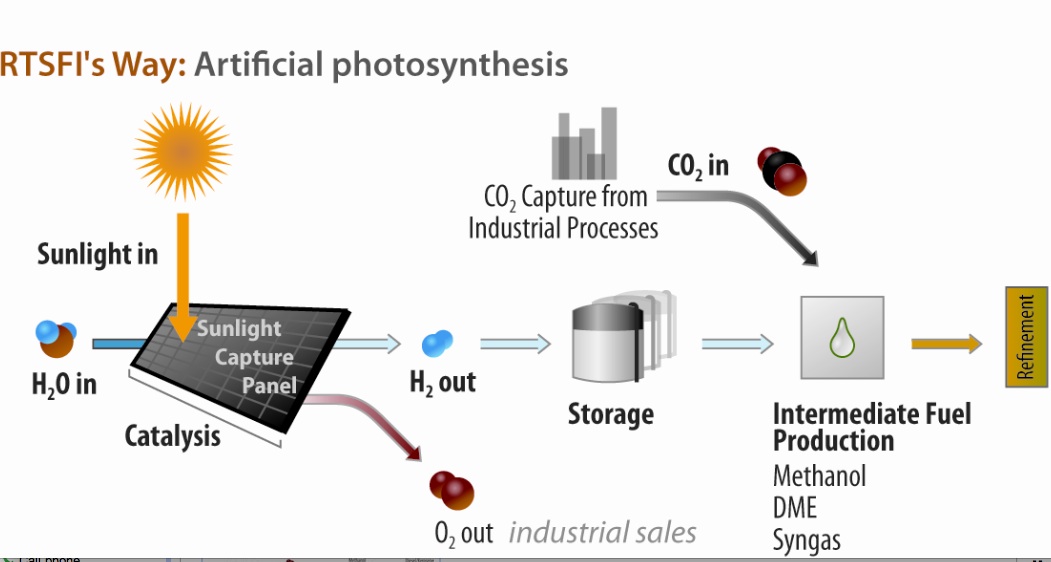
Solar fuel production the East Coast way.
But Trainham also foresees collaboration between researchers at the Research Triangle Solar Fuels Institute and the Joint Center for Artificial Photosynthesis, particularly in scaling up any solar fuels production methods and designing production plants.
Trainham also talked about the challenges the researchers are facing. Watch the Q&A with Science in the Triangle:

RTP conference chases environmental triggers of disease
Friday, October 1, 2010, 1:02 am 1 Comment | Post a CommentIt’s easy to look at what billows out of a car exhaust or a smokestack and say soot isn’t healthy.
It’s much harder to prove it.
It may require data that’s not available or collaboration across scientific disciplines with very different views of the world, disciplines such as chemistry, urban planning and epidemiology, for example.
To overcome some of the hurdles, more than 80 researchers and politicians gathered this week at a two-day conference the Research Triangle Environmental Health Collaborative called in North Carolina’s Research Triangle Park. Read more…
R&D billions are tectonic force in Research Triangle area
Wednesday, August 25, 2010, 8:27 pm 2 Comments | Post a CommentThe brainpower for which North Carolina’s Research Triangle area is known tends to hide inside buildings, behind tall trees or somewhere on sprawling university campuses.
Crossing Research Triangle Park on Interstate 40 or visiting Duke University, the University of North Carolina at Chapel Hill or N.C. State University provides little insight into what fuels one of the hottest U.S. research and development hubs.
Michael Walden
Sure, the Triangle was named the brainiest U.S. region and Raleigh the fastest growing metropolitan area last year. And the area’s vaunted labor pool continues to draw scientists and R&D companies from elsewhere, even though companies have closed shop or laid off employees in the past two years and the unemployment rate in the Triangle is nearly twice as high than before the economic downturn.
Mike Walden, an NCSU economist, doesn’t mince words when he assesses how important R&D is for the RTP area. “It’s one of our basic industries,” Walden said. “It’s one of the things that make us tick.”
But what sustains and boosts this industry that, it can be argued, flavors everything locally from schools to restaurants?
The credit usually goes to the three main research universities, Duke, UNC-CH and NCSU, and the hundreds of companies in and around RTP. But what specifically is it that they do to shape the RTP area? Is it the graduates they produce every year, the discoveries they spin off into local startup companies, or the money they spend on R&D? Read more…


