Archive for March, 2010

HSV challenges notions of infection, disease
Wednesday, March 31, 2010, 8:04 am No Comments | Post a CommentThere’s a virus that has infected one out of six Americans between the ages of 14 and 49. Closely related to the virus that causes chicken pox, this virus challenges the traditional way we think about infection and disease.
No treatment can eliminate the virus, though it can help reduce symptoms. Even without treatment the body’s immune system gets better at fighting and controlling the virus’ effects, though it too, can never eliminate the virus.
The virus can cause symptoms that range from irritating to agonizing. It rarely causes long-term harm to the body, but its psychological consequences can be devastating. Often, people who have the virus don’t even know that they are infected.
Scientists even hesitate to use the word “disease” with the virus, preferring the term “infection,” since diseases imply a distinct medical problem, with common signs, symptoms, and course of infection, all of which can be very different from person to person.
Despite all of this, the virus has been conspicuously absent from news reports, and people are often loath to talk about it.
The virus is herpes-simplex virus 2 (HSV-2), sometimes referred to simply as “herpes.” It is transmitted from person to person via sexual contact.
The latest statistics about herpes infection rates were released earlier in March by the 2010 CDC Sexually Transmitted Disease Conference. The American Social Health Association, a co-sponsor of the conference, is located in Research Triangle Park, and has been dealing with sexually transmitted diseases (or, to use the World Health Organization’s preferred term, sexually transmitted infections), since 1914.
The data about herpes come from the National Health and Nutrition Examination Survey from 2005-2008. The same study found that rates of herpes have roughly stabilized over the past decade. Herpes is especially high in women (21 percent), and black Americans (39 percent). Both biological (skin provides an effective barrier against the virus, and men have more of it) and social/economic reasons (black Americans are less likely to have good access to testing and treatment than white Americans) contribute to these disparities.
I worked at ASHA from 2000 to 2003 on the (now defunct) National Sexually Transmitted Disease and AIDS Hotlines. This was when automated phone trees were relatively rare, and before many people were comfortable using the Internet to gather information. The hotlines took thousands of calls a day and were open 24 hours a day, seven days a week.
The hotlines helped a lot of people, many of whom had been recently diagnosed with herpes. People know little about herpes or any other sexually transmitted infections. In the case of herpes, stigma and rumor make this very common, biologically mild virus, into something that is rare and deadly. Callers were in frequently in tears or spoke of suicide. I must have heard some variation of “no one will ever love me again” hundreds of times in my time on the hotlines.
Accurate information helped. Callers often in a state of panic when they are first diagnosed, often forgot or missed information from their health-care providers. At the hotlines we could answer people’s questions, and correct information about symptoms, transmission, and treatment at their convenience.
But I think it was just having an empathetic, nonjudgmental person who would listen to them that helped callers the most. In just a ten to 15-minute call, a person could often make the first steps toward coping with their infection.
Although the Internet has allowed many people to find information easily and anonymously, we’ve lost something without the human contact that a live hotline can provide.
So if you have been newly diagnosed with herpes, try to find that support from someone you trust. If you know someone who has, try to provide it.
ASHA continues to operate call centers on a smaller scale, advocate for greater awareness of sexually transmitted infections, and conduct research about STIs, and their consequences.
Correction: I previously wrote that the ASHA hotline is defunct. Although the hotline has lost federal funding, it continues to operate from private donations. The current hotline number is 919-361-8488 and provides information about STI testing, prevention, and treatment.

ScienceOnline2010 - interview with Misha Angrist
Tuesday, March 30, 2010, 11:33 pm No Comments | Post a CommentContinuing with the tradition from last two years, I will occasionally post interviews with some of the participants of the ScienceOnline2010 conference that was held in the Research Triangle Park, NC back in January. See all the interviews in this series here. You can check out previous years’ interviews as well: 2008 and 2009.
Today, I asked Misha Angrist from Duke (and the blog GenomeBoy), the fourth person in the Personal Genome Project whose entire genome was sequenced (thus one of the first 20 humans with a sequenced genome), to answer a few questions:

RTP Week Ahead
Tuesday, March 30, 2010, 10:35 am No Comments | Post a Comment
Monday, March 29
Seminar: Public Schools and Contaminated Land in Rhode Island: Integrating Research, Research Translation, and Advocacy through the NIEHS Superfund Research Program
10:30 AM - 12:30 PM
NIEHS, Rall Building, Rodbell A
Speaker: Dr. Laura Senier, University of Wisconsin-Madison Department of Community and Environmental Sociology and Department of Family Medicine. Open to the public. More information.
ASAP RTP Spring Green/Sustainability Event
5:30-7:30 PM
Mez Restaurant
Registration required: $20 ASAP members, $25 non-members Dinner, presentation, and networking included with your registration fee; cash bar opens at 5:30 Register today.
Tuesday, March 30
American Scientist Pizza Luncheon: Genomic and Personalized Medicine
12:00-2:00 PM
NC Biotechnology Center
Come hear Geoff Ginsburg, director of the Center for Genomic Medicine at Duke University, discuss genomic and personalized medicine at the American Scientist pizza lunch talk. American Scientist Pizza Lunch is free and open to science journalists and science communicators of all stripes. RSVPs are required (for the slice count), please email cclabby@amsci.org
Next for Women Presents: Build Your Own C.A.S.T.L.E.
6:00 - 8:00 PM
Elinvar, 1804 Hillsborough St., Raleigh
Speaker: Marirose Steigerwald RSVP/ticket required. More information.
Lean Startup Circle RTP March Meetup
6:00 - 7:00 PM
Park Research Center, 104 TW Alexander Drive, RTP
Wednesday, March 31
Breakfast Science Cafe: Darwin and the Path to Discovery
8:30 - 10:30 AM
Museum of Natural Sciences, 4th floor, Acro Cafe
Open to the public and free. The speaker is Will Kimler, an Associate Professor at North Carolina State University. His interests lay in the history of biology and particularly the history of Darwinism. He has been named Outstanding Teacher of the Year by the College of Humanities & Social Sciences, and inducted into the NC State Academy of Outstanding Teachers.
NESCent Seminar: Postdoc Professional Development - Mentoring Undergrads, Grad Students and Postdocs
12:00 - 1:30 PM
NESCent Building, Ninth Street and Main Street, Erwin Mill Building, 2024 W. Main Street, Suite A200, Durham
National Evolutionary Synthesis Center (NESCent) Speaker: Jory P Weintraub (NESCent) For more information, call 919-668-4551.
Thursday, April 1
Seminar: Deep Sequencing of Short RNAs Reveals Promoter-proximal Stalling of RNA Polymerase II Across the Genome
10:00 - 11:00 AM
NIEHS, Rall Building, Room D450
Speaker: Sergei Nechaev, Ph.D./Research Fellow - Laboratory of Molecular Carcinogenesis; NIEHS Part of weekly LMC Seminar Series
China’s Changing Business Environment
3:00 - 5:30 PM
Willow Oak Room, Sheraton Raleigh Hotel, 421 South Salisbury St, Raleigh, NC 27601
There is no cost to attend this event.More information.
Friday, April 2
Chemistry Lecture: Total and Stereoselective Synthesis
1:30 - 3:00 PM
Room A158, Levine Science Research Center, Duke University
Please visit the Science in the Triangle RTP Events Calendar for more listings.

Duke symposium: How personalized is medicine?
Saturday, March 27, 2010, 10:44 pm No Comments | Post a CommentTo treat each patient according to his or her genetic disease triggers is an idea researchers have pursued for nearly two decades. Tests and a few medicines have resulted from the pursuit, mostly to target some cancers and to prevent side effects from genetic drug sensitivities. But putting personalized medicine into practice has proven to be a lot more complicated than originally thought.
Patients, doctors and researchers have been particularly frustrated by how difficult it is to figure out the genetic nature of complex diseases such as diabetes, heart disease and Alzheimer’s, diseases that are costly because they are chronic and affect an increasing number of people.
A Personal Genomics Symposium that Duke University’s Institute for Genome Sciences and Policy held Wednesday took stock of how far science has yet to go seven years after researchers completed mapping of the human genome and how bumpy the road can be.

Dietrich Stephan
Dietrich Stephan, one of four presenters at the symposium, said the goal is to pinpoint hard-wired susceptibilities to diseases early on by sequencing the genome of each newborn. Once the risks are known for each person, medicine can intervene to keep people healthy longer by preventing or delaying disease. Stephan, a personalized medicine pioneer and chief executive of the Ignite Institute in Herndon, Va., called that approach “managing people from birth to death individually.”
It’s an approach, Stephan suggested, that is necessary to get a handle on run-away health care costs.
The U.S. spent 17.3 percent of its gross domestic product on health care last year, according to a recent report from the Centers for Medicare and Medicaid Services. The CMS estimated that by 2019 U.S. health care costs could nearly double.
The potential benefits are alluring, but personalized medicine also raises questions that go beyond how long it will take researchers to pin down genetic disease triggers.
How much control do patients have over the massive amounts of sensitive, individual data that would be collected? Should the search for gene-based tests and treatments be driven by patients, by institutions, by industry or by the government? Does the entity that pays for the research own parts of the human genome? How much of the data should be made public?

Misha Angrist
Already, patients are bringing results of gene-based tests to doctor visits, said Misha Angrist, an assistant professor at Duke’s Institute for Genome Sciences and Policy who’s interested in ethical and social issues that personalized medicine raises. But “the infrastructure for this stuff isn’t there yet,” Angrist said.
Three years ago, Angrist became the fourth person whose entire genome was sequenced, linked to disease risks and made public as part of the Personal Genome Project.
While the ethical and social implications of personalized medicine remain open questions, researchers are discovering genetic links to one disease after another.
Variations in one specific gene may be common to as many as half of those with age-related macular degeneration, a leading cause of vision loss in older Americans. One version of the apolipoprotein E gene increases the risk of late-onset Alzheimer’s disease. Up to 10 percent of thyroid cancer patients carry a mutation they inherited from a parent. Genetic variations increase the risk for urinary bladder cancer and skin cancer. A group of researchers has even discovered genetic variants that are associated with an increased risk of heart attack.
To pinpoint genetic traits that can be matched to diseases is like finding needles in a haystack. One company, deCODE Genetics, is collecting genetic information in Iceland, a country where residents can trace their lineage particularly well.

Dr. Kari Stefansson
At the Duke symposium, Dr. Kari Stefansson, co-founder and CEO of deCODE, spoke about the population-based approached his company has taken. Using the Icelandic database, DeCODE researchers have found genetic links to schizophrenia, diabetes and prostate cancer, Stefansson said.
DeCODE researchers also discovered that African-Americans who carry a particular gene are 3.5 times more likely to suffer a heart attack than people of European descent who carry the same gene.

David Goldstein
David Goldstein, director of Duke University’s Center for Human Genome Variation, used a similar approach to discover two genetic variants that explain why patients of European descent are more than twice as likely to be cured from chronic hepatits C than patients of African descent.
The two variants protect from anemia, a side effect from the standard treatment for chronic hepatitis C infections that can be severe.
“You can personalize the treatment of patients with hepatitis C,” Goldstein said.
But to find genetic triggers for most common diseases, Goldstein favors another approach. He has argued that only a few rare diseases can be linked to changes that affect one common gene, or two, or three. Goldstein suggests that complex diseases are caused by a combination of many rare genetic variants - missing genes as he calls them, because they are so difficult to find.
He’s using the approach to look into epilepsy, schizophrenia that runs in families and resistance to HIV/AIDS.

NC TraCS Conference: Partnering with the Community to Reduce Health Disparities
Wednesday, March 24, 2010, 9:33 pm No Comments | Post a CommentNorth Carolina may be one of the most diverse states in the Union, but it is still not immune to the health disparities that plague the rest of the nation. Minorities in the Tar Heel state experience significant gaps in health and health care when it comes to cancer, cardiovascular disease, obesity, diabetes and HIV/AIDS. Over a lifetime, even minor disadvantages can add up, cutting short the lives of those in the minority.
Translating new discoveries into better health outcomes for all NC residents was the topic of a conference last Friday that brought together researchers and community advocates from around the state.
“We are looking at ways – all across the spectrum — to improve the health of North Carolina,” said Giselle Corbie-Smith, deputy director of the North Carolina Translational and Clinical Sciences Institute (NC TraCS), which sponsored the all-day event. “So to begin with, we have to look at some of these conditions where we have populations and groups of people who are disproportionately affected, because by improving their health, we can improve the health of our state.”
The conference highlighted the perpectives of individuals from all along that spectrum, from basic science researchers to community partners. Reverend Danny Ellis, one of the key note speakers, shared his thoughts as a leader of a rural church that is often open to research but is not always trusting of researchers’ motives.
“What is your motivation – are you just out there to get your ticket punched – to go from an assistant to a full professor?,” asked Ellis. “Do you really care about HIV or is it just the latest thing? Because I will find out your motivation, if I ask you to come out here on a Saturday morning to help out and you can’t do it.”
Ellis, who has written over $15 million in grants for his own research, says that researchers need to understand that the community’s needs might be very different from their own.
“I have already told you I am saved and going to heaven, and I can go there with diabetes,” said Ellis. “Just because it is imporant to you, doesn’t mean it is important to me.”
Improving health in the community is not just about more health programs, or more translational research, he said, but it is about strange partnerships. Fostering new partnerships among the people in attendance was one of the main goals of the conference, said organizer Corbie-Smith. Raleigh YWCA worker and conference participant Kerry Waite says she made a number of valuable connections at the networking luncheon, including meeting a member of a local church who is interested in coordinating a health fair.
“We are a community-based organization that is involved in many different types of initiatives to improve the health of the community,” said Waite, who has a background in molecular biology. “It was great for me to learn about how to partner with universities and faith-based organizations, to actually translate these latest discoveries into something that will be useful to people in our area.”
The conference featured a number of concurrent sessions on health disparities research, such as studies on preterm birth and cancer care, as well as skills building workshops, such as how best to recruit study participants and how to build multidisciplinary teams.
In one of the afternoon workshops, UNC researcher Michael Fried described how his own laboratory and others in the field have looked for an explanation to why African Americans respond so much more poorly to treatment for hepatitis C than Caucasians.
“We looked at this nonstop for a number of years, and we couldn’t find a single smoking gun that is responsible for the difference,” said Fried.
It wasn’t until a few months ago, Fried explained, that researchers from Duke discovered a genetic variant that could explain in large part why some people can be cured of the disease whereas others cannot.
In addition to covering the science and the skills involved in translational research, the conference also hosted a session on the resources available from NC TraCS itself, which gives out millions of dollars in funding every year as the academic home of the NIH Clinical and Translational Science Awards at UNC-Chapel Hill.
ScienceOnline2010 - interview with Dennis Meredith
Wednesday, March 24, 2010, 11:49 am No Comments | Post a CommentContinuing with the tradition from last two years, I will occasionally post interviews with some of the participants of the ScienceOnline2010 conference that was held in the Research Triangle Park, NC back in January. See all the interviews in this series here. You can check out previous years’ interviews as well: 2008 and 2009.
Today, I asked Dennis Meredith to answer a few questions:
Rebecca Skloot visits RTP area
Tuesday, March 23, 2010, 9:11 pm No Comments | Post a Comment
Rebecca Skloot
When I found out Rebecca Skloot, author of “The Immortal Life of Henrietta Lacks,” would be back in the Research Triangle area to promote her book, I grabbed the opportunity to talk to her. The result of the conversation was published Monday in the Science & Technology pages of the News & Observer.
Skloot is spending three days in the RTP area. She visited Quail Ridge Books & Music in Raleigh on Monday and N.C. Central University in Durham on Tuesday. She will speak at 5:30 p.m. Wednesday at Duke University’s Sanford School of Public Policy in Durham.
Her previous visits here included ScienceOnline 2009, where she was the keynote speaker, and ScienceOnline 2010, where she was one of the panelists.
ScienceOnline2010 - interview with Mary Jane Gore
Wednesday, March 17, 2010, 2:53 pm No Comments | Post a CommentContinuing with the tradition from last two years, I will occasionally post interviews with some of the participants of the ScienceOnline2010 conference that was held in the Research Triangle Park, NC back in January. See all the interviews in this series here. You can check out previous years’ interviews as well: 2008 and 2009.
Today, I asked Mary Gore from The Duke Medicine Office of News and Communications to answer a few questions:
Brainweek@Duke: Following the tracks of autism and anorexia
Wednesday, March 17, 2010, 1:15 pm No Comments | Post a CommentHow can honeybees help us better understand neuropsychiatric diseases such as autism, schizophrenia or anorexia?
A beehive functions like a fine, Swiss clockwork. Worker bees collaborate seamlessly. Why? Partly because they’re all closely related. That means, social skills must be hard-wired in honeybees. But is that also true for other animals?
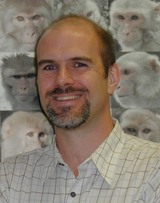
Michael Platt
Experiments that involved monkeys and Duke University students suggest so. Michael Platt, director of Duke’s Center for Cognitive Neuroscience, presented some of the results Tuesday during a lecture that was part of Brain Awareness Week, a research showcase the Duke Institute for Brain Sciences is putting on for the first time.
A better understanding of how genes, brain cells and learning are connected could lead to better and more individualized treatments of neuropsychiatric diseases, said Platt, who is already collaborating with physicians treating anorexia.
“That’s one of the potential hopes,” he said. “But we’re a long way off.” Read more…


