Posts Tagged ‘Environment’

Engineering for Better Wastewater Treatment Results
Sunday, December 26, 2010, 3:02 pm 1 Comment | Post a Comment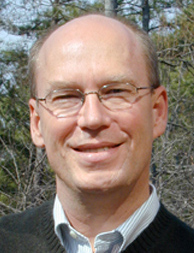
Wayne Flournoy, president of Entex Technologies
A few weeks ago, I reported on water quality expert Kenneth Reckhow’s concern that we will be unable to achieve water quality standards set by states in response to the Clean Water Act. Municipal water treatment plants have been improved “to the limits of technology,” he said, and additional cleanup was going to have to happen with somewhat unlikely changes like limiting development, changing farming practices, and prohibiting lawn fertilizers.
Last week, I had the opportunity to discuss the challenges of cleaning wastewater from the perspective of an entrepreneur who has been working with municipalities and industry to improve treatment plant performance. Wayne Flournoy is cofounder and president of Entex Technologies, a Chapel Hill company that designs systems for upgrading wastewater treatment plants or for new plants. Read more…
Unleashing the power of 1100 suns
Friday, December 17, 2010, 2:19 pm No Comments | Post a Comment
An array using high-concentration photovoltaics from Semprius, Inc.
A year or so ago, Joseph Carr found himself on an elevator with a man wearing a Siemens polo shirt. Having once worked for a division of Siemens, Carr introduced himself as the CEO of Semprius, Inc., a company that makes very high-efficiency solar modules. At the end of a fourteen-floor ascent, the two men exchanged business cards. Within months, Semprius and Siemens announced a joint development agreement.
Yes, a true “elevator pitch” success story.
Blue Crabs vs. Green Lawns: We May Have to Decide
Thursday, December 9, 2010, 9:24 am 6 Comments | Post a Comment
RTI water quality scientist Kenneth Reckhow says we may have trouble achieving mandated water quality standards without making major lifestyle changes.
What happens if we are unable to achieve federally mandated water quality standards in our lakes, rivers, and bays?
In 1972, Congress enacted the Clean Water Act (also referred to as the 1972 Amendments to the Federal Water Pollution Control Act) governing water pollution in the U.S. Among other things, the Clean Water Act regulates the release of pollutants into surface waters. Individual states determine water quality standards for bodies of water within their borders.
Now, a water quality scientist at RTI International is concerned that these water quality standards are unattainable in certain major bodies of water, including Falls Lake, a lake that is valued for recreation as well as being Raleigh’s municipal water source.
Read more…

Epidemiologist tracks environmental clues linked to rising autism rates
Tuesday, December 7, 2010, 9:25 pm 1 Comment | Post a Comment
Irva Hertz-Picciotto
Irva Hertz-Picciotto is a slight woman stepping squarely into a brawl: the controversy over rising autism rates.
That the rates have been rising is undisputed. In the 1980s, about 6 of 10,000 were believed to have an autistic disorder, according to a 2007 paper. Today, autism spectrum disorders affect about 40 in 10,000. That’s a 600 percent increase, but opinions differ over what’s causing the increase.
Many researchers see forms of autism as predominantly inherited disorders whose diagnoses have dramatically increased, because parents have become more aware of telltale signs and children get diagnosed earlier, more frequently and with less severe symptoms than 30 years ago.
Others like Hertz-Picciotto, a professor of public health sciences at the University of California at Davis, aren’t so sure genes are the only culprits. But lacking data, they have had little to go on beyond questioning inconsistencies. How, for example, can it be that one identical twin has an autistic disorder but the other doesn’t, even though they share the same genetic information? Read more…
10 Americans: Industrial toxins found in umbilical cord blood
Wednesday, September 22, 2010, 4:04 pm 3 Comments | Post a Comment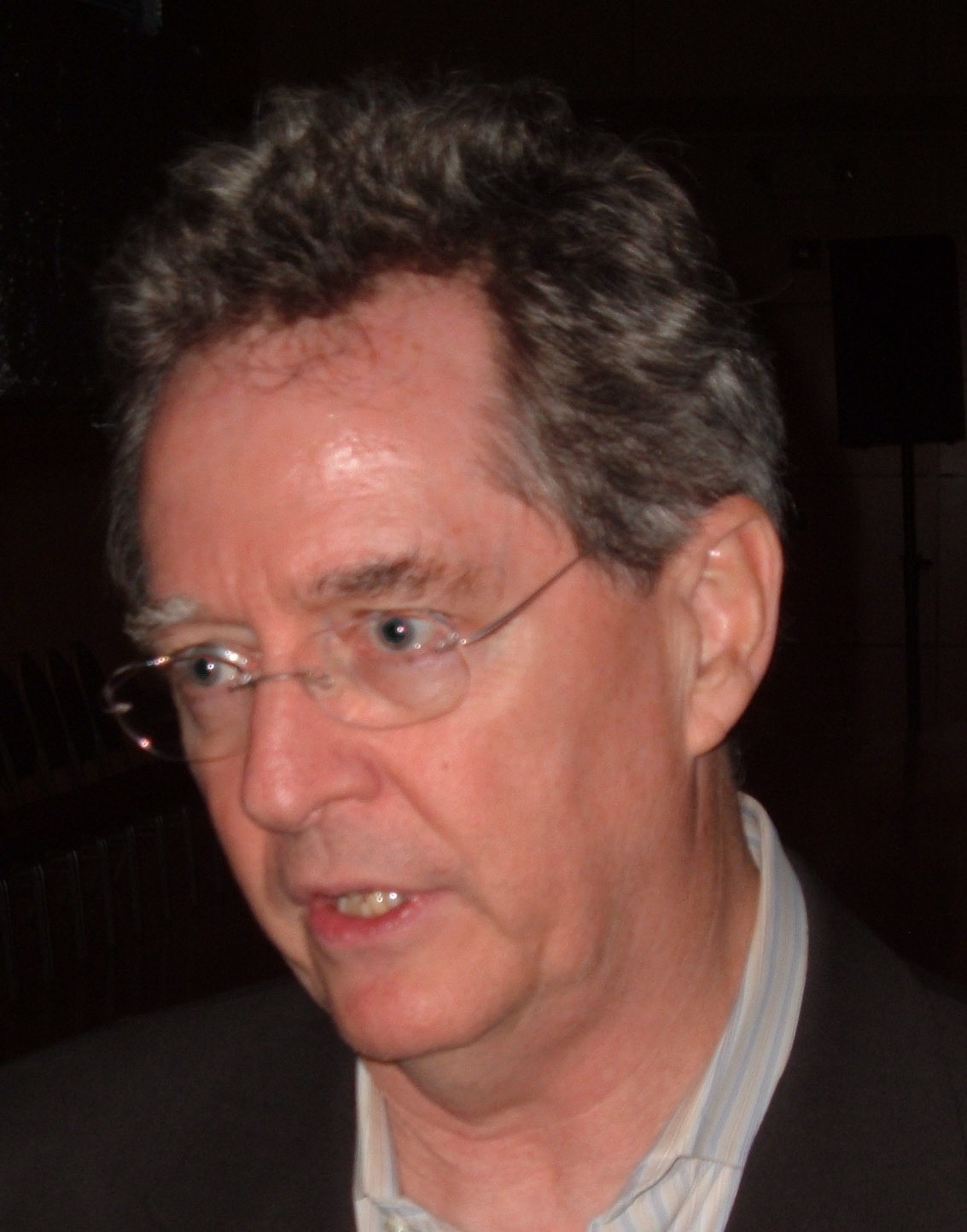
Ken Cook
A mother’s womb is a protective cocoon, but it is also where humans for the first time encounter the world that awaits them after birth. This encounter happens through sound and touch and through the exchange of blood between mother and child. About 300 quarts of blood from the mother bring nutrient and oxygen to the developing child every day.
The blood also delivers industrial pollutants like dioxins, consumer products chemicals like flame retardants and chemicals that come from pesticides, according to a study by the Environmental Working Group, a Washington, D.C.-based consumer advocacy group. The study tested samples of umbilical cord blood from 10 babies born in August and September 2004 in U.S. hospitals for 413 toxins and environmental pollutants.
On Tuesday, Ken Cook, co-founder and president of the Environmental Working Group, presented the results of the 10 Americans study at the University of North Carolina at Chapel Hill as part of the N.C. Science Festival.
The pollution in people by the numbers:
A Conversation with Dr. Robert Koger of Advanced Energy
Monday, September 20, 2010, 7:04 am 1 Comment | Post a Comment
Dr. Robert Koger
Dr. Robert Koger is president and executive director of Advanced Energy, a nonprofit organization established by the North Carolina Utilities Commission in 1980 to forestall electrical rate increases by promoting energy conservation and alternative and renewable sources of electricity. Advanced Energy provides services that focus on energy efficiency for commercial and industrial markets, electric motors and drives, plug-in transportation, and applied building science.
Advanced Energy also operates NC GreenPower, a program funded through consumers’ voluntary contributions, designed to increase the amount of renewable energy put on the electric grid in North Carolina and to mitigate greenhouse gas emissions.
This month, Dr. Koger assumes the chairmanship of Triangle Area Research Directors Council (TARDC), a group of science and technology leaders from local companies, nonprofits, and universities. The group meets over lunch monthly from September to May, to exchange ideas and information and to hear from guest speakers. TARDC’s first meeting under Dr. Koger’s leadership will be September 21, and the guest speaker will be Mr. Joe Freddoso, president and CEO of MCNC/NC STEM. Non-members of TARDC can attend the luncheons.
I recently asked Dr. Koger about the history of Advanced Energy and about his leadership of TARDC. Read more…
“Power Plants” on North Carolina’s Roadsides
Monday, September 13, 2010, 9:46 am 1 Comment | Post a CommentLike many farmers, Ted Sherrod double-crops, growing canola in the winter on the same land where he harvested sunflowers or safflower grown during the summer. But Sherrod’s “farms” are stretches of roadside or median across the state, and his crops are part of an innovative experiment designed to produce biodiesel for N.C. Department of Transportation vehicles.
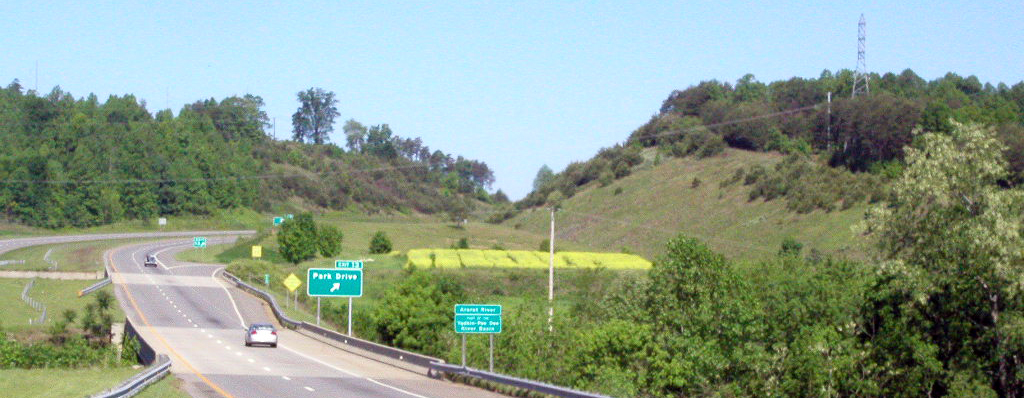
Biofuel crops on a roadside near Raleigh. Photo: NCDOT

Senergy helps NC farmers improve energy efficiency
Wednesday, July 21, 2010, 3:03 pm 2 Comments | Post a CommentOur world is undoubtedly becoming more and more concerned with energy efficient processes and renewable energy sources. And although it may not always be so obvious, the government is actually helping the cause.
In 2003 the US Department of Agriculture created the Rural Energy for America Program (REAP, then known as “Section 9006”) to provide grants to farmers and rural small businesses to cover up to 25% of the total costs associated with purchasing and installing renewable energy systems and making energy efficiency improvements.
As with any government program however, there’s a tedious process to go through and paperwork to fill out before receiving the funds. One of the first steps in the process is having an independent professional engineer conduct an audit estimating the potential energy savings on the specific project that they’re applying for to receive grant money. Kurt Creamer, Ph.D., says that the “actual percentage energy savings, in some cases are quite phenomenal.”
That’s where Senergy Inc., the Apex-based company hired to conduct these energy audits, comes in. Kurt Creamer, PhD, president of Senergy, founded the company in 2003 in response to REAP while he was still enrolled in the Biological and Agricultural Engineering PhD program at North Carolina State University and working full-time at the school. Even though there was a new need for energy auditors, business remained relatively slow for a few years.
“In the early days farmers had to pay up front for the energy audits which were often times quite difficult for the farmers,” Creamer said. Business for Senergy spread solely through word-of-mouth and only those farmers that could afford to front the initial costs of an audit got on board for the first 5-6 years of the program.
But then, in 2008, the North Carolina Farm Bureau got involved. The Farm Bureau covers the costs of the audits up front so that the farmers are much more willing to go through the process of applying for the REAP grants. The program (and business for Senergy) skyrocketed. It’s “been a real boom to my business to have the Farm Bureau involved in the project,” Creamer said.
Senergy’s work
Senergy typically works with farmers in Eastern North Carolina specializing in grain farms, but has had the opportunity over the years to work with a variety of types of farms including tobacco farms, some on swine & poultry farms, and a handful of dairy farms, often times on some very nontraditional projects.
One particular project on a hog farm required comparing the energy efficiency of burning the dead hogs to composting them—composting is more energy efficient, in case you were wondering. Creamer has also worked on energy efficient organic dairy farm feed grinding systems, poultry barns, irrigation systems, and grain dryers. But he’s not just limited to working on energy efficiency projects. Kurt also works on some renewable energy projects, including one this fall where he’ll be working on a “project to look at the use of sweet potatoes in an anaerobic digester,” Creamer explained, that “could generate enough biogas from the sweet potatoes to meet the requirements of the farm.”
What’s next?
Creamer says that he would love to expand in several ways:
- Geographically: There is still plenty of opportunity to pursue this program in other parts of North Carolina and beyond
- Explore the energy needs of rural small businesses (outside of the farm base)
- Take on more renewable energy projects
- Improve his engineering methodologies
At the end of the day Creamer says he really enjoys the work he does and “it’s a really good program for the farmers, and a good program for the environment.”

Books: ‘On The Grid’ by Scott Huler
Thursday, July 1, 2010, 10:47 pm 1 Comment | Post a Comment About a month ago, I told you about the book-reading event where Scott Huler (blog, Twitter, SIT interview) read from his latest book On The Grid (amazon.com). I read the book immediately after, but never wrote a review of my own. My event review already contained some of my thoughts about the topic, but I feel I need to say more, if nothing else in order to use this blog to alert more people about it and to tell everyone “Read This Book”.
What I wrote last month,
“I think of myself as a reasonably curious and informed person, and I have visited at least a couple of infrastructure plants, but almost every anecdote and every little tidbit of information were new to me. Scott’s point - that we don’t know almost anything about infrastructure - was thus proven to me.”
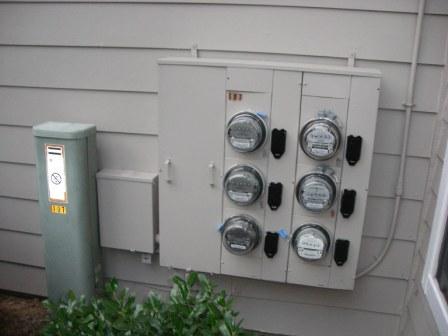 …was reinforced when I read the book itself: I don’t know anything about infrastructure. But after reading the book I can say I know a little bit, understand how much I don’t know, and realize how much more I’d like to know. I bet it was fun watching me as I was reading it, exclaiming on average five times per page “This is so cool”, and “Hey, this is neat” and “Wow, I had no idea!” and (rarely) “w00t! Here’s a tidbit I actually heard of before” and “Hey, I know where this is!” (as I lived in Raleigh for eleven years, I know the area well).
A few years ago, Scott was just as ignorant about infrastructure as most of us are. But then his curiousity got better of him and he started researching. He would start at his house in Raleigh and trace all the wires and cables and pipes going in and out of the house to see where they led. Sometimes there would be a crew on his street digging into the asphalt and fixing something and he would approach them and ask questions. At other times he would figure out where the headquarters are and who to ask to talk to:
Lyme disease, ecologists, and public health
Friday, June 25, 2010, 9:10 am 2 Comments | Post a CommentLast week I wrote about the impacts of swine operations on our water quality. It’s one example of how land use patterns can disrupt the environment and affect public health. That subject came up again this week during a conversation with Dr. Laura Jackson of the Environmental Protection Agency’s National Health and Environmental Effects Research Laboratory (NHEERL), a unit of the EPA’s Office of Research and Development that is housed in Research Triangle Park.

Dr. Laura Jackson of the EPA's National Health and Environmental Effects Research Laboratory (NHEERL), a unit of the EPA’s Office of Research and Development that is housed in Research Triangle Park.
Dr. Jackson and her colleagues in this RTP lab—more than 100 scientists—conduct research on ecosystem services, those benefits provided by the environment over and above the psychological benefits of being out in nature. These services can have tangible and measurable economic value.
For instance, in a normally functioning ecosystem, vegetation would take up nitrogen and phosphorus from animal waste and keep those nutrients from overburdening groundwater and streams. In last week’s example, when hogs were added to an ecosystem, they knocked it out of balance by depositing more nutrients than the vegetation could handle and by removing plants that could take up the nutrients and provide erosion control. The researchers at the Center for Environmental Farming Systems were developing countermeasures to keep the water clean near hog farming operations and restore ecosystem function. Read more…


