Archive for the ‘Business’ Category

RTP biotech companies travel to Bay Area to pitch to investors
Friday, October 7, 2011, 12:16 pm No Comments | Post a CommentYoung biotech companies in North Carolina’s Research Triangle don’t have to read Ernst & Young’s 2011 industry report to know that early stage funding is down, that investors increasingly tranch their payments and make the tranches dependent on milestone accomplishments, that competition from other industries is growing fiercer for venture capital nationwide. (More on what isn’t being funded here.)
But sitting around and complaining doesn’t help, either. So, seven Research Triangle Park area biotech companies decided to do something. Last month, they traveled to the San Francisco Bay Area on their own dime to meet with potential investors.
Peter Ginsberg
The trip to Palo Alto, Calif., was the first of its kind the N.C. Biotechnology Center organized, said Peter Ginsberg, the biotech center’s new vice president of business and technology development.
“We wanted to change the way Bay Area venture capitalists think about North Carolina companies,” Ginsberg said. “And maybe, maybe, down the line, knock, knock, knock, get them to open an office here.”
A report that the biotech center submitted to state legislators in January offers clues where investors from outside the state see shortfalls in the North Carolina biotech industry, which is centered in the RTP area and along the Interstate 85 corridor to Charlotte.
Even though in 2010 North Carolina was home to about 500 biotech companies that employed more than 225,000, ranking the state third behind California and Massachusetts, very few of the North Carolina companies generated revenue. Also, among the companies located in the state only 10 were publicly traded, according to Ernst & Young. That’s about 3 percent of all publicly traded biotech companies nationwide.
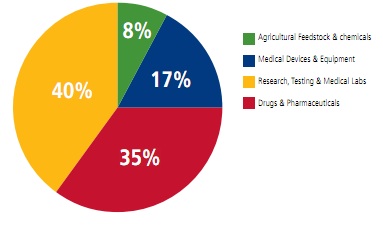
North Carolina's biotech employment is diverse.
Compared to other biotech hot spots, North Carolina lacks local life science entrepreneurs who successfully developed products and brought them to market and who financed multiple entrepreneurial ventures. (More on building entrepreneurial networks in the RTP area here and here.)
And the state’s many research institutions haven’t done a very good job translating their sponsored research into products.
As a former biotech analyst, institutional investor and company executive, Ginsberg has a good grasp of the fallout.
“We don’t have the breadth of life science venture capitalists as California or Massachusetts,” he said.
Add to that travel inconveniences.
The Bay Area is home to many venture capitalists, but without a non-stop flight to Raleigh-Durham International Airport most are reluctant to visit the RTP area, he added. “Venture capitalists travel a lot and it’s not easy for them to get here.”
So, traveling to Palo Alto for a day-long meet-and-greet with investors was similar to Muhammad going to the mountain to preach because the mountain wasn’t going to come to Muhammad.
The event was sponsored by Silicon Valley Bank, which has operations in the Triangle, and attracted more than a dozen venture capital firms, Ginsberg said. He declined to name them.
The seven biotech companies were traditional drug development companies, medical device and diagnostics companies and a company developing vaccines:
- Advanced Liquid Logic in Morrisville is working on a lab-on-a-chip based on nanotechnology developed at Duke University. Founded in 2004, the company has received $15 million in grants and $8.1 million in angel funding.
- CoLucid Pharmaceutical in Durham is testing a migraine drug in patients and working on therapies for chronic pain, Alzheimer’s disease and depression. Founded in 2005, the company has raised $42 million in venture capital.
- Heat Biologics, which relocated its headquarters from Miami to RTP this year, is working on therapeutic vaccines to combat a range of cancers and infectious diseases. Founded three years ago, the company has not released its funding.
- nContact in Morrisville develops and sells medical devices for minimally invasive treatment of heart arrhythmia. Founded in 2005, the company has raised more than $42 million.
- Scynexis in RTP is a drug discovery and development company that has delivered 11 drug candidates to customers in the past five years and is working on its own pipeline of experimental therapies. Founded in 2000, the company collaborates with Merck on a cancer drug and is part of a consortium working on the first pill to treat human African trypanosoniasis, also known as sleeping sickness.
- TearScience in Morrisville in July received regulatory approval to sell its first product, a medical device to treat dry eye patients in an outpatient procedure. Founded in 2005, the company has raised more than $60 million in venture capital. To bring the dry eye device to market, TearScience recently received $15 million in debt financing.
Biotech center funds steady, but funding requests are up
Monday, September 5, 2011, 10:04 pm No Comments | Post a CommentThe N.C. Biotechnology Center, a state-funded booster of the research and development enterprise in North Carolina’s Research Triangle, has as much money for grants and loans this fiscal year as a year ago despite a 13 percent budget cut.
Norris Tolson
Coming up short in tax collections, state legislators approved only $17.5 million for the fiscal year that started July 1, said Norris Tolson, who took over the helm at the biotech center in 2007 after serving six years as state secretary of revenue. But the biotech center made up the difference with about $2.3 million savings that it didn’t have to give back.
“We underspent our budget,” Tolson said about the last fiscal year.
Still, the biotech center will again have to turn down a number of funding requests this year.
Established in 1984 in Research Triangle Park, the state-funded nonprofit has long supported researchers projects on university campuses across the state, paid for equipment, helped recruit companies and university scientists and funded educational activities in K-12 schools, community colleges and museums.
Grants awarded last fiscal years include research grants of up to $75,000 to researchers experimenting with blueberries, fungi and algae to find new treatments for diabetes or to kill cancer cells or viruses. The University of North Carolina bioengineering program at UNC-Chapel Hill and N.C. State University received $195,500 to advance its micromachining capabilities. Duke University received a $145,757 grant to establish an insect transgenesis facility.
The biotech center also earmarked $2.5 million to accelerate development of commercial products from marine biotech research in Eastern North Carolina. (More about the Marine Biotech Center of Innovation here.)
Ken Tindall
About $8.5 million in grants and loans were approved last fiscal year, said Ken Tindall, senior vice president of science and business development.
But demand for funding is up, Tindall said. The biotech center received requests totaling about $13.7 million last year, or about 61 percent more than it approved.
Former GlaxoSmithKline researcher Subba Katamreddy is among those who applied for a loan and got turned down. To start his own drug discovery company, Vijaya Pharmaceuticals, Katamreddy and his wife invested savings and established a lab in the Park Research Center incubator in Research Triangle Park to explore some ideas he had for next-generation antibacterial and anti-inflammatory treatments. (More on Vijaya Pharmaceuticals here.)
“Demand is up across the board,” Tindall said.
Large drugmakers in RTP, like GlaxoSmithKline, are struggling and cutting R&D budgets and jobs like others in the pharmaceutical industry, but the agricultural biotech sector is booming. RTP is home to U.S. headquarters of BASF and Bayer CropScience and Syngenta’s corporate biotech research hub. The area is also a hub for vaccine research and has growing medical device and nanotechnology sectors.
From powering plug-in electric vehicles to backing up the grid
Saturday, July 30, 2011, 7:22 pm No Comments | Post a CommentIn a lab on N.C. State University’s Centennial Campus, engineers are probing the potential of the Chevrolet Volt’s T-shaped battery once it no longer powers General Motor’s plug-in hybrid electric car.
The research is based on an agreement GM and the ABB Group signed three months before the first Chevy Volt rolled off the lot, which was in December. The carmaker and the Swiss-based engineering firm are considering options that range from energy storage to powering bicycles.

A Chevy Volt battery is hooked up to an ABB inverter in the ABB lab on Centennial Campus.
ABB provides power and automation technologies to utilities and industrial customers worldwide. The firm concentrates on renewable energy and supplies wind and solar energy generators with electrical equipment and services. Its North American headquarters is in Cary and the R&D projects with the Chevy Volt batteries are conducted in the ABB lab on Centennial Campus. ABB employs about 500 in the Research Triangle area and 1,500 in North Carolina.
A first step in the research is combining a Chevy Volt battery with a commercially available ABB inverter, a device that exchanges direct current from the battery into alternating current used to transmit electricity on the grid.
The next step is hooking up several of the batteries to the inverter, said Sandeep Bala, an R&D engineer in the ABB lab.
“There’s a lot of work to do yet,” Bala said during a tour of the lab. “What the cost is, what the business case is.”
The learning curve will be steep, Pablo Valencia, the senior manager GM has assigned to the project, agreed. It’s not even known when it’s worth reconfiguring the battery, Valencia said.
The T-shaped lithium-ion battery consists of several cells and is built into the bottom of the Chevy Volt’s passenger cabin, with the cross bar being located under the back seat. The battery can power the car for about 40 miles in the city and has to be recharged. That’s the plug-in electric portion of the car. The Volt also has a gasoline tank to go another 300 miles. That’s the hybrid portion of the car.
The two power sources make the Chevy Volt the most fuel-efficient car on the market with a fuel economy of 90 miles per gallon to 95 mpg on the highway, according to the Edmunds.com review.
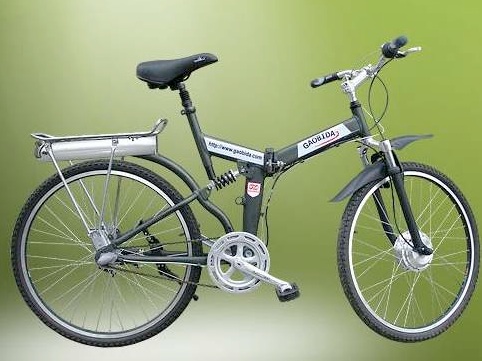
Battery cell above rear tire powers an e-bike.
How long it takes before a battery becomes available for reuse only time will tell. GM’s warranty on the battery is for eight years or 100,000 miles and after 10 years, the Volt’s battery retains about 70 percent of its capacity. But GM and ABB intend to figure out where else the batteries can be used once they come out of the cars.
One idea is to break down the battery and use single cells to power electric motors on bicycles.
Another is to use the batteries as storage - for renewable energy or as backup for electric outages. Renewable energy is dependent on the sun and the wind, which follow their own schedule. But stored in batteries, renewable energy would be available to flatten peaks and valleys in power consumption and allow utilities to run their power plants more evenly, and therefore more efficiently.
“The utilities love that,” Valencia said.
Power customers might like a backup system during power outages. The engineers estimated that 33 Chevy Volt batteries have enough storage capacity to power up to 50 homes for about four hours during a power outage.
Hamner signs Chinese collaborator
Wednesday, July 20, 2011, 4:28 pm No Comments | Post a CommentTwo years after the Hamner Institutes for Health Sciences set up a gateway to China, the Research Triangle Park research institute is adding a Chinese company to its collaborators.
Ascletis will establish its U.S. research and development operations on the Hamner campus. Other operations of the company will be in the National High Tech Industry Development Zone in Hangzhou, a city about two hours southwest of Shanghai.
Jinzi Wu
Founded this year by Jinzi Wu, former head of global HIV drug discovery at GlaxoSmithKline in RTP, and Jinxing Qi, a Chinese real estate investor and chairman of the Hangzhou Binjiang Real Estate Group, Ascletis has $100 million in commitments from U.S. and Chinese angel investors. The company plans to establish a global therapeutics business that targets cancer and infectious diseases.
Allan Baxter, former global head of medicines development at GSK, will lead Ascletis’ discovery and development strategy as chief strategy officer.
According to its Web site, the company aims to buy the rights to new treatments, develop them and introduce them to the growing Chinese pharmaceutical market.
Allan Baxter
Projected to generate about $60 billion in sales this year, the Chinese pharmaceutical market is increasing at an annual rate of more than 20 percent, according to a report by strategic consulting firm The Monitor Group. By 2015, Monitor advisors expect China to rank second in market size to the U.S. and ahead of Japan, Germany, France and the United Kingdom.
Incidence and mortality rates for lung, stomach, liver and breast cancers are comparable or higher in China than in the U.S., the Monitor report pointed out. But competition among pharmaceutical companies is high in China. Nearly all multinationals and numerous local firms are jostling for market shares.
Also, health insurance coverage in China is improving rapidly. In the past two years, the Chinese government invested more than $160 billion in healthcare reform.
Bill Greenlee, the Hamner’s chief executive, and Wu, chief executive of Ascletis, signed the joint venture July 16 at the U.S.-China Governors Forum in Salt Lake City. At the same forum, N.C. Gov. Beverly Perdue and Zhao Hongzhu, the party secretary of the province to which Hangzhou belongs, signed an agreement to foster business and economic development between North Carolina and Zhejiang Province through commercial interactions.
RTP startup gears up to track down cat scratch fever bacterium
Friday, July 1, 2011, 1:09 pm No Comments | Post a CommentEditor’s note: North Carolina’s Research Triangle is home to hundreds of young companies. Scientists and entrepreneurs started them to develop technologies and medicines for better detection and treatment of diseases. Some of the companies work on innovations that are the result of research done at one of the area’s universities. Others are outgrowths of established companies. Galaxy Diagnostics, which chases a stealth bacteria that infects pets and their owners, is one of those young companies.
Galaxy Diagnostics is going where few have gone before, to borrow a phrase from the American science fiction franchise Star Trek.
The startup is an outgrowth of work researchers at the N.C. State University College of Veterinary Medicine have done on Bartonella bacteria, pathogens that live in the digestive guts of lice, fleas, biting flies and ticks and are transmitted through the insects’ poop. Cats are particularly prone to harboring Bartonella; about 40 percent of them carry a strain called Bartonella henselae at some time of their lives. That’s why Bartonella infections in humans are best known as cat scratch fever.
Scientists have found signs of Bartonella infection in a 4,000-year-old human tooth from southeastern France. At the time, the pharaohs were building the pyramids in Egypt. But today’s physicians aren’t much better at diagnosing a Bartonella infection than their colleagues were in ancient Egypt.
To track down the elusive bacteria, the NCSU researchers combined lab skills common in the 1950s with 21st century genetic sequencing technology.
Amanda Elam
In 2009, with little hope of attracting outside investors while the U.S. economy was reeling, the researchers teamed up with a sociologist to launch Galaxy Diagnostics.
Amanda Elam, the sociologist, runs the company. Her title is president, but she calls herself “chief cook and bottle washer.”
To earn her doctorate in sociology at the University of North Carolina at Chapel Hill, Elam studied entrepreneurship. She taught at the NCSU College of Management last year and she continues to publish papers in her academic specialty. The company has received a state loan and a federal grant totaling about $230,000, but unlike the three lab technicians Galaxy Diagnostics employs, Elam doesn’t get paid for the more than 40 hours she puts in as the company’s president.
“It’s field work,” she said.
As Elam’s assessment of her job suggests, Galaxy Diagnostics is an experiment in more ways than one.

Bartonella henselae, a strain that infects cats. Researchers have identified more than two dozen Bartonella bacteria strains.
The test that the company has developed promises to detect a Bartonella infection earlier than other tests, before symptoms progress from a low-grade fever and muscle and joint aches to brain seizures, loss of sight, poor coordination and muscle weakness. But Galaxy Diagnostics also straddles human medicine and veterinary medicine, two health care disciplines that have more in common than most people think.
Animal pathogens can adapt and cause new diseases in humans. Severe acute respiratory syndrome, or SARS, bird flu and swine flu are among the most recent examples. All three diseases emerged in the past decade after viruses jumped from animals to humans.
The quicker viruses and bacteria multiply, the faster the infection develops. Two E.coli can form a colony of hundreds of bacteria in just a few hours. Bartonella bacteria double in numbers just once every 24 hours and infections can take years to develop.
Left to multiply, Bartonella bacteria infect red blood cells and the cells lining blood vessels and they manage to hide where the body’s immune defenses cannot detect them. That’s why tests looking for immune system antibodies to Bartonella bacteria often produce false negative results.
Galaxy Diagnostics goes after the bacteria themselves. The company uses a patented enrichment media in which even small numbers of Bartonella grow in a bottle. Genetic fingerprinting follows to positively identify the bacteria. A multi-drug antibiotic treatment usually gets rid of the bacteria.
More than 250 veterinarians in the U.S., Canada, the United Kingdom and Brazil have already sent Galaxy Diagnostics blood, tissue or fluid samples from pets that the company has tested for Bartonella bacteria.
In the past three to four years, a research lab at the NCSU vet school has run more than 800 human blood samples through Galaxy Diagnostics’ testing process. The samples came from patients suffering from symptoms their physicians couldn’t allocate to a disease. About 28 percent of the samples were positive for a Bartonella infection, Elam said.
By the end of the summer, Galaxy Diagnostics expects to be able to test human samples at its new lab in the Alexandria Innovation Center at a cost of about $600 to $800 per patient.
Former GSK drug researcher pursues ideas big pharma hasn’t
Monday, June 20, 2011, 9:23 am No Comments | Post a CommentEditor’s note: North Carolina’s Research Triangle is home to hundreds of young companies. Scientists and entrepreneurs started them to develop technologies and medicines for better detection and treatment of diseases. Some of the companies work on innovations that are the result of research done at one of the area’s universities. Others are outgrowths of established companies. Vijaya Pharmaceuticals, a drug discovery company founded in 2009 by a husband-and-wife team, is one of those young companies.
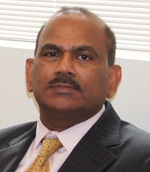
Subba Katamreddy
Former GlaxoSmithKline researcher Subba Katamreddy did what came natural to a medicinal chemist who in 2008 got caught at the beginning of U.S. drug research and development cutbacks that have rocked large pharmaceutical companies since then.
Katamreddy started his own drug discovery company, Vijaya Pharmaceuticals, and established a lab in the Park Research Center incubator in Research Triangle Park to explore some ideas he had for next-generation antibacterial and anti-inflammatory treatments.
So far, Katamreddy and his wife, Vijaya, have financed the startup on their own. Katamreddy is about to start making molecules to develop technology that he can patent and use to attract more investors. But funding early stage startups has gotten more difficult this year despite more money being raised.
So, Katamreddy has begun to take in contract work to generate revenue. He’s determined to keep going and hopes to hire a couple of employees in the next three to five years. “Vijaya,” is Telugu, a language that is spoken in the southern Indian region where the Katamreddies are from, and stands for “victory.”
“Whether you’re in a small lab or a big lab,” Katamreddy said, “an idea is an idea.”
He’s had good ideas before. During his seven years at GSK in RTP, Katamreddy was involved in discovering two experimental drugs. His area of research was metabolic diseases such as adult-onset diabetes. Large pharmaceuticals are investing heavily in finding treatments for diabetes and other chronic diseases, because these diseases are on the rise and require ongoing treatment.
Vijaya Pharma is treading were large pharma hasn’t.
The number of antibacterial drugs the Food and Drug Administration approved for sale declined 56 percent from 1983 to 2002, according to an analysis published 2004. Demand for new drugs is rising with the spread of multi-drug resistant bacteria. (More on the problems superbugs are causing here.)
Katamreddy is particularly interested in a group of antibacterials called macrolides. This group includes erythromycin, an antibiotic that is used to treat pneumonia, venereal disease and urinary tract infections.
Cempra Pharmaceuticals, another young drug development company in the Research Triangle, is testing a macrolide in patients. (More on Cempra Pharmaceuticals here.) There’s also some interest in macrolides outside of the U.S. European researchers are studying a macrolide to treat inflammatory bowel disease and rheumatoid arthritis. But large pharmaceutical companies hesitate to invest in antibacterial research, because successful drugs are used once and for a short time only.
Katamreddy’s other idea is related to a known anti-inflammatory called curcumin, which is the biologically active ingredient in the Indian spice turmeric. Researchers have tested curcumin’s effect on Alzheimer’s patients and cancer cells. Dennis Liotta, a researcher at Emory University, is also studying curcumin as a cancer treatment.
Large pharmaceutical companies have not shown much interest in curcumin, because it can’t be patented and it doesn’t stay in the body long enough. Katamreddy wants to tinker with naturally occurring curcumin, but he’s not ready yet to say how.
An RTP lab to test business ideas
Wednesday, June 1, 2011, 4:57 pm No Comments | Post a CommentA good idea has shelf life. We all know that.
Ideas pop into our heads every day. Only the good ones linger. They survive challenges and reassessment. That’s also true for business ideas, which hold the promise of starting a company, generating income and creating jobs.
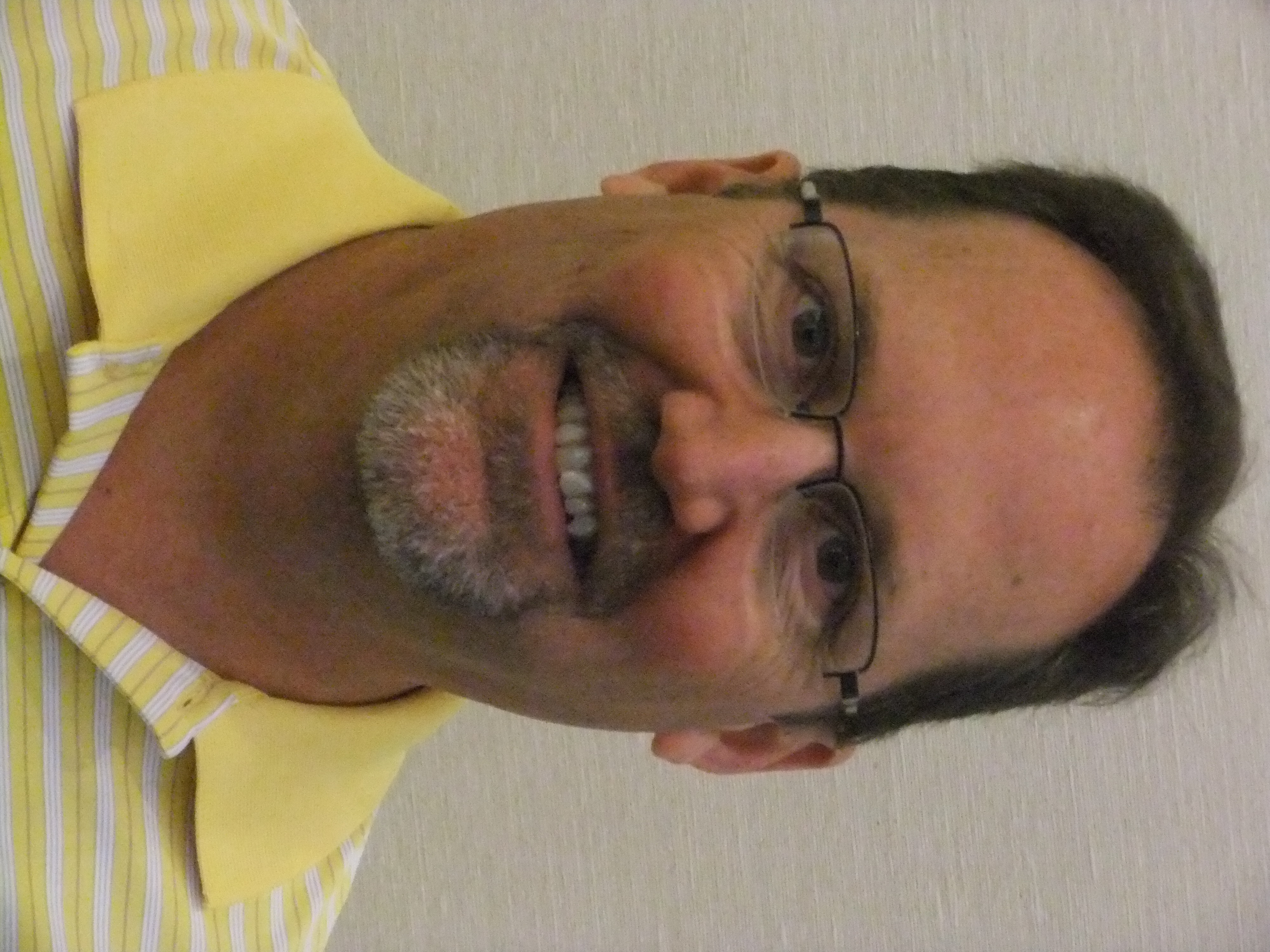
Ron Harman
But it’s hard to test how good a business idea really is, because honest feedback is difficult to get, said Ron Harman, owner of CTO Outsourcing, a Durham company that provides software expertise to startups.
“Getting people to tell you how great you are is easy,” Harman said. But few friends, relatives or paid consultants aren’t usually willing to probe an idea for flaws that could kill it.
“Nobody wants to tell you bad news,” Harman said.
To fill that gap, he and six other entrepreneurs in North Carolina’s Research Triangle eight months ago founded the RTP Idea Lab. So far, they’ve held three idea vetting sessions at RTP headquarters.
The sessions attract crowds of a few dozen and combine idea pitches, question-and-answer follow-up and critiques. It’s a concept that’s also being tried in other areas where lots of people work in research and development, including Boston, Pasadena, Calif., Austin, Texas, and at universities, but the efforts aren’t mirror images of each other.
Pasadena-based Idealab has created and operated pioneering technology companies since 1996. Bostinnovation is a digital community hub for ideas that have matured into startups. The Business Innovation Factory in Austin, Texas, is a nonprofit that was founded in 2004 to help innovators test ideas before they turn them into startups. The University of North Carolina at Chapel Hill has an IDEA Group to develop novel biomedical imaging and analysis tools.
The RTP Idea Lab mainly aims to provide a forum where innovators pitch their business ideas to a group of people who are neither experts nor potential investors. Ideas bandied about have ranged from mining company e-mails to prevent theft of intellectual property to matching up retired executives with startups and nonprofits in need of short-term mentoring.
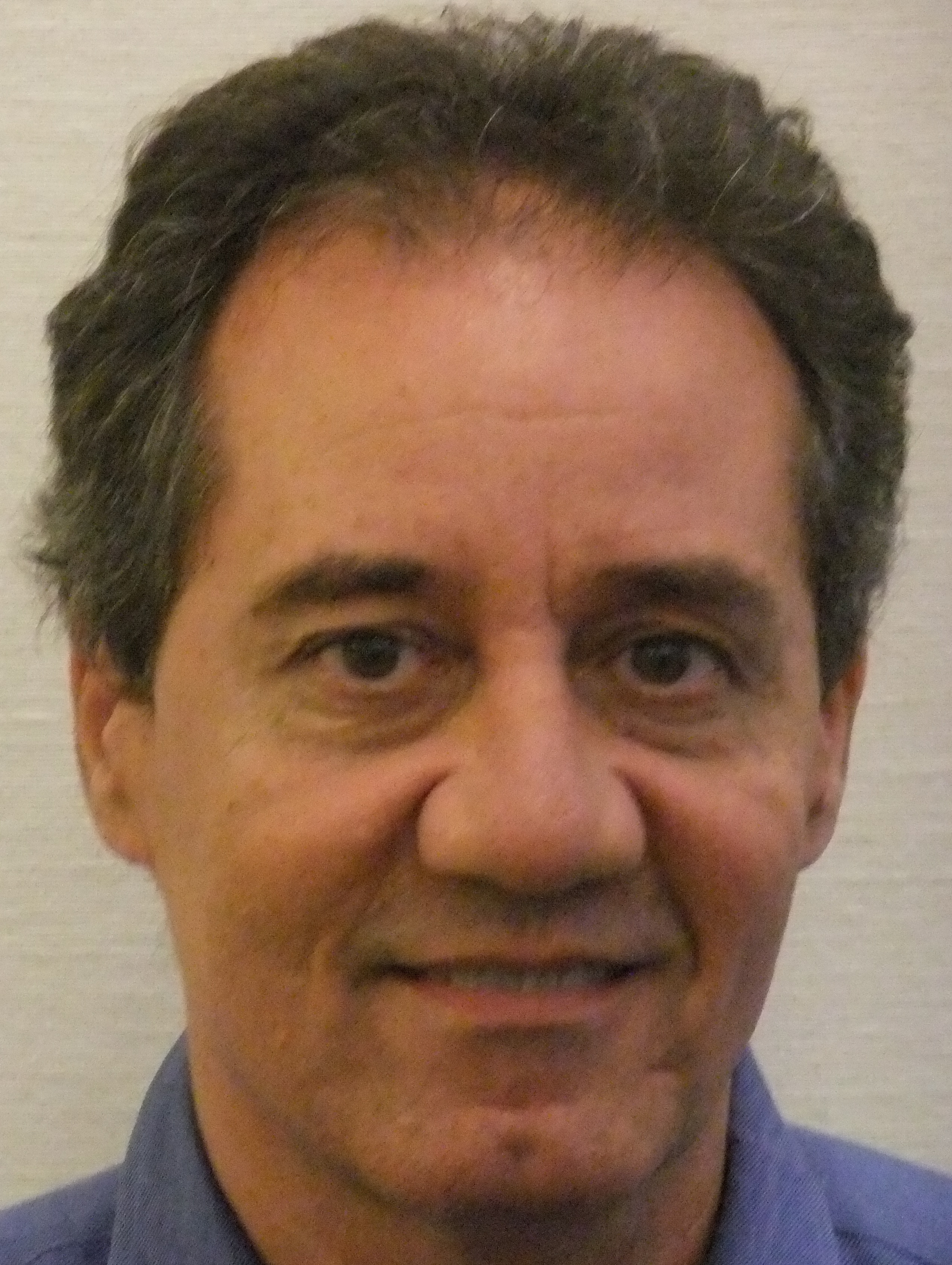
Jim Ingram
“Getting into a group and talking about ideas was very attractive,” said Jim Ingram, a technical writer and a RTP Idea Lab board member. At the most recent session in May, Ingram pitched his idea to reconfigure the hierarchy with which computers file information.
“An idea without an interaction with others is just a thought,” Ingram said. ” It dies in the brain if it isn’t talked about.”
The founders of the RTP Idea Lab, most of them local technology entrepreneurs, also want to stimulate the birth of new companies and the creation of jobs in the Triangle. The area’s unemployment rate has come down slightly in the past year, but it remains above 7 percent, according to April state unemployment figures. That compares to 9.5 percent unemployment statewide.
With federal and state budget cuts looming, it’s not likely that the government and public universities, important contributors to the Triangle’s economy, will be of much help. But technology startups are on a roll. Another Internet gold rush is on, stocks are up, investors are eager and startups are sprouting from New York to Durham.
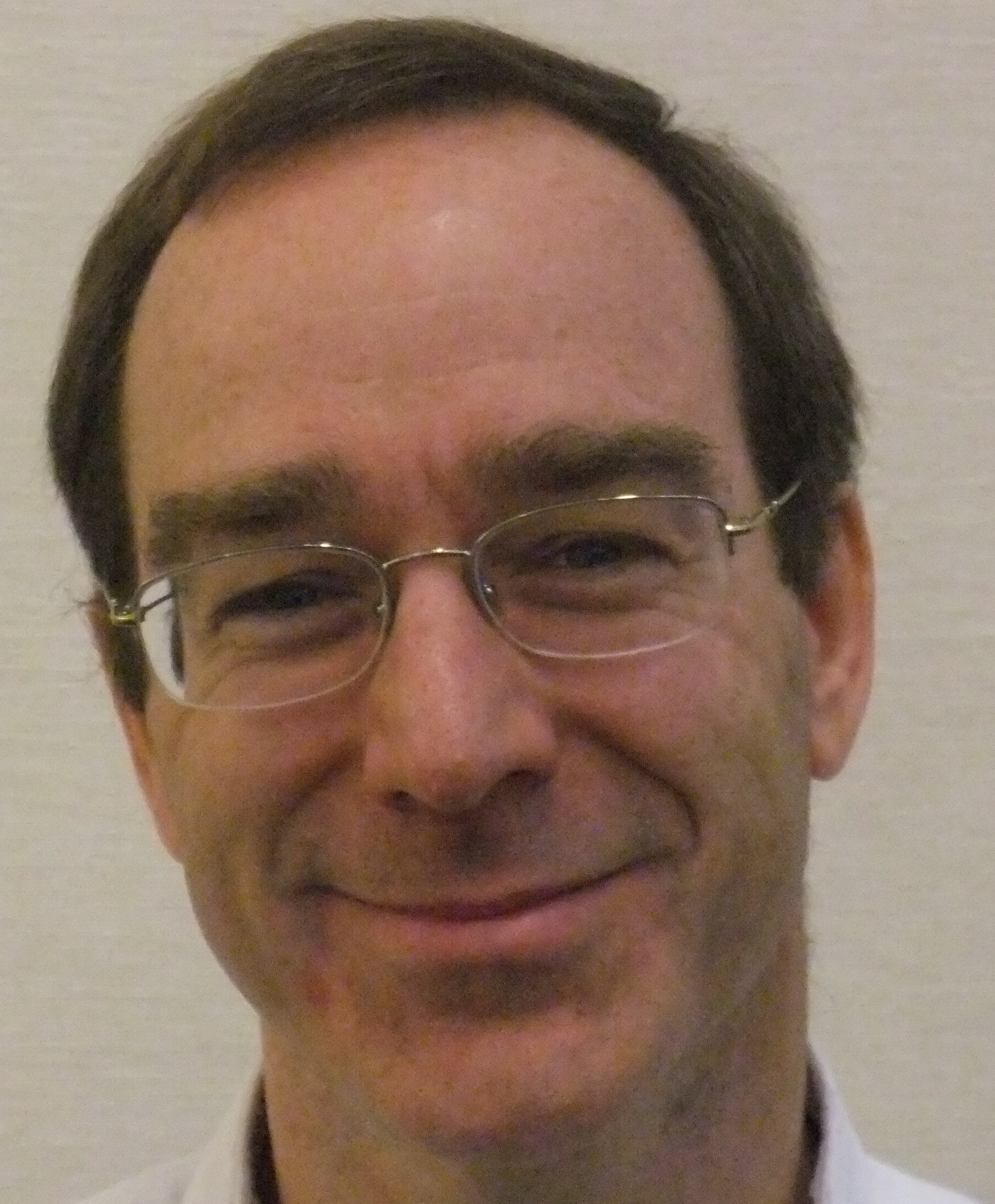
Anthony Edwards
The Triangle offers plenty of services to form a startup and find a home for it. What the area lacked was a place where people with ideas could ask other people, “What do you think?,” and get a honest answer. That’s where the RTP Idea Lab fits in, said Anthony Edwards, board chairman of the RTP Idea Lab.
Edwards is an IT consultant and a founder of Morrisville-based Tavve Software. He’s also involved in RedOak Logic, a Chapel Hill startup that targets the drug development industry but has yet to be funded.
Having RTP Idea Lab sessions “is good for the community, for RTP,” he said. “It encourages people to form companies.”
He wants to add to the feedback sessions and form partnerships with serial entrepreneurs, venture capitalists and angel investors to also provide seed funding.
POZEN’ a threat to outdated pharma marketing
Thursday, May 26, 2011, 3:42 pm No Comments | Post a CommentOriginally published on TheRTP Blog, 5/25/11. Watch The RTP’s exclusive sit-down interview with Liz!
For 25 years, Liz Cermak worked for Johnson & Johnson, one the biggest names in the pharmaceutical business. Now, she works for one of the smallest. And she says in terms of marketing, it’s giving the Goliaths a run for their money.
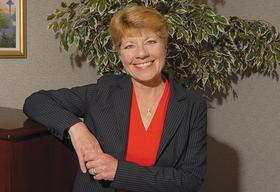
Cermak is the executive vice president of POZEN, Inc., a Chapel Hill-based pharma developer/manufacturer with no more than 30 employees. Since coming onboard in 2009, she has overseen the company attain FDA approval on two authentic combination drugs: Treximet and VIMOVO—for migraines and osteoarthritis, respectively. No small feat, even by J&J standards.
But what Cermak is most excited about is POZEN’s fresh and unique approach to pharmaceutical marketing.
Instead of sending sales representatives to hospitals and doctors’ offices to promote their products, Cermak and her team pitch most their medicines online.
“The reality is that the current sales rep model of traditional pharma is obsolete,” Cermak said to a packed house at the Marketing Mondays series held at The Research Triangle Park HQ earlier this week. “Eighty-six percent of US doctors go online for product info now, and 82 percent are on smart phones.”
In-person sales pitching can be inefficient, she said, because all health care workers are overbooked and overbusy, and representatives must endure a costly wait just to get two minutes in with the doctor.
Two minutes. That’s the average rep-doc face time. But online, the average time spent by a physician on a single ePromotion activity is eighteen minutes.
Cermak has three rules for digital pharma marketing:
1. Develop products that deliver real value to customers.
Be relevant and learn from your customers. Understand their needs and study their e-behavior. Most pharmaceutical companies need to broaden their apertures here, she said.
2. Make them affordable and accessible.
POZEN recognizes the strains today’s pharmaceutical pricing puts on doctors and patients today alike. As should go without saying, costs must be kept low to compete and to demonstrate a respect for your consumers.
3. Engage with customers in a meaningful but highly efficient way.
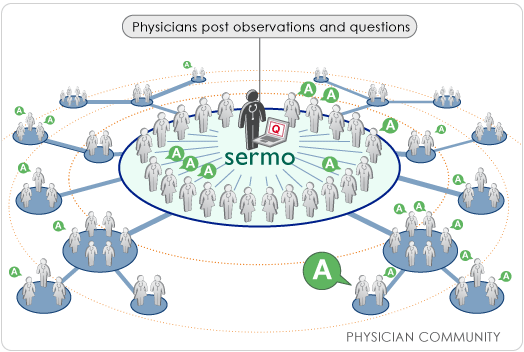
This means using social media and online public networks like Facebook and LinkedIn, but also more exclusive, MD-only communities like Sermo or CogNet. Use push and pull marketing tactics; see what works and what doesn’t.
Cermak calls this “Pharma 3.0”.
“The change isn’t coming,” she said. “It’s here.”
We’ve seen this before with other industries, as well. Amazon now sells more books for the Kindle than it does in print, and Netflix’s superior, customer-based business model has Blockbusters closing up shop around the country. The global economy is now decidedly digitalized and will only continue to shift that way.
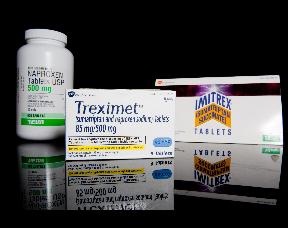
Now, as POZEN enters the final testing and approval phase for its latest development, an ulcer-reducing aspirin compound dubbed PA32540, a viral campaign is already underway to spread the word.
Cermak stressed there is still utility in face-to-face interaction, though. Sending sales reps is important to explaining drug principles to doctors, learning about clinic demographics, and building a personal rapport with primary care physicians. However, there are not enough reps to go around as it is now, and focusing sales online will drastically cut down their jampacked schedules.
The biggest advice Cermak has for pharma companies looking to try this new approach is to not be afraid to experiment. To take risks. And to lose.
“Be ready to try and fail,” she said. “Absolute ROI of a given digital initiative cannot be accomplished with a high degree of certainty.”
No one expected it to work out for POZEN. But no one expected 30 people from Chapel Hill to get two drugs FDA-approved in two years, either.
Eisai’s RTP plant aims to supply the world
Sunday, May 1, 2011, 9:36 pm No Comments | Post a CommentEisai’s new production plant in Research Triangle Park is fully equipped to make Halaven, a new treatment for advanced breast cancer, but the 66,700-square-foot building is still empty of people except for the occasional employee mopping floors. It will stay that way until the Food and Drug Administration inspects the plant and clears it for production.
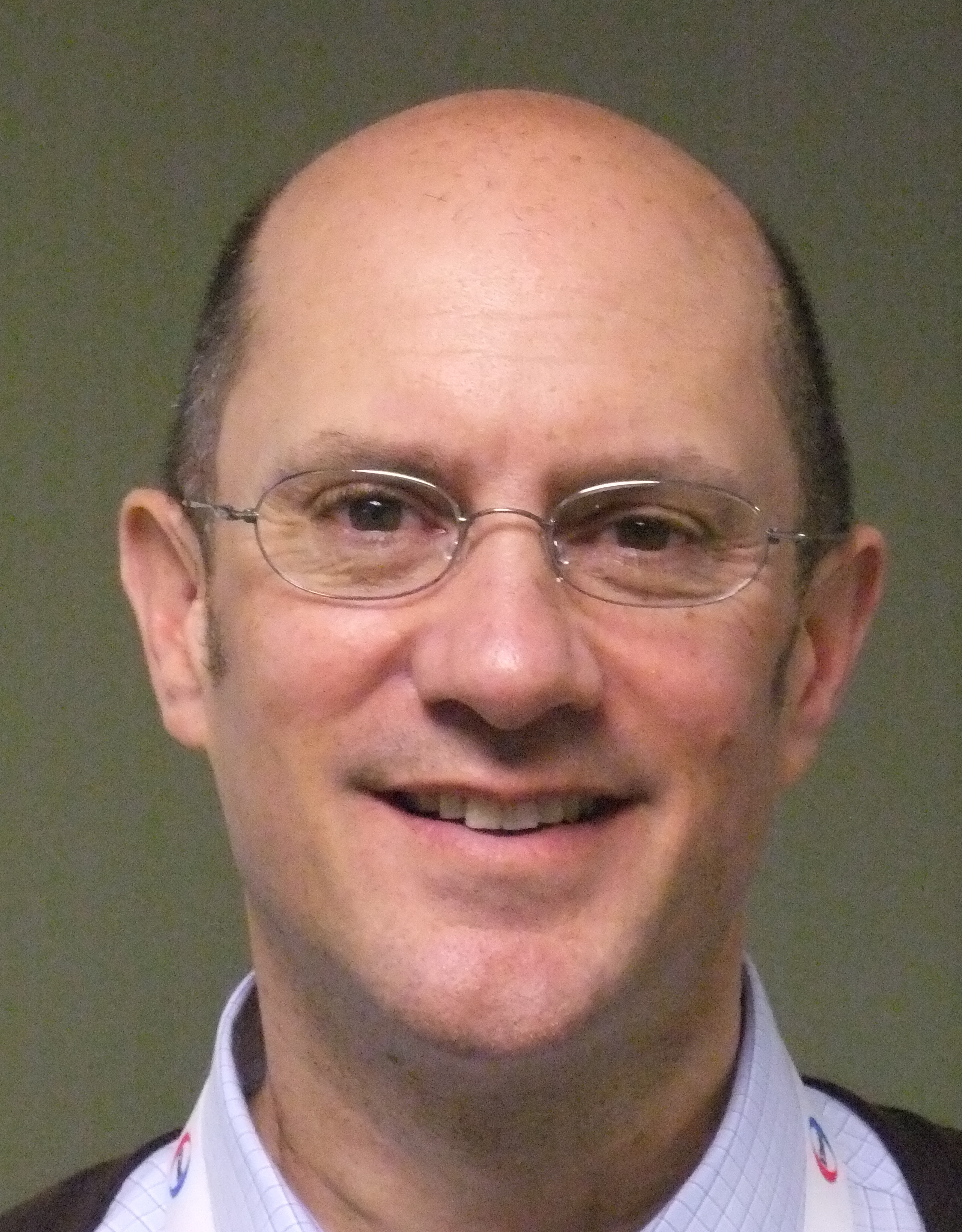
Stephen Errico
The FDA approval, which Stephen Errico, director of Eisai’s parenteral operations, expects in September, will usher in a new era for Eisai and its main U.S. manufacturing site in RTP.
The Japanese drugmaker is switching its attention to injectable drugs after focusing on pills for many years. Injectable cancer treatments such as Halaven are on top of Eisai’s priority list and no matter whether these cancer treatments will come out of Eisai’s own research and development labs or the labs of partners, the new RTP plant will make and package them and ship them, first to the U.S. market and later the rest of the world.
Plans to seek regulatory approval for the RTP plant to produce for the European market are next.
“This facility is very unique and important to Eisai,” Errico said during a recent tour of the plant.
For the past 13 years, Eisai has made and packaged pills in RTP - Aricept, the leading Alzheimer’s treatment, and Aciphex, an acid reflux treatment. Aricept, Eisai’s biggest seller, generated about $2 billion in annual sales in the U.S. But in November, Aricept lost patent protection and Eisai expects to lose about 60 percent of its blockbuster’s sales to cheaper generic competitors over the next two years. In March, Eisai cut 70 jobs at its RTP operations, all of them in the pill part of its business.
Future growth sees the company in the injectables and oncology market.
So do most pharmaceutical companies.
Cancer is the second most common cause of death in the U.S., according to the American Cancer Society. In 2010, more than 500,000 Americans died from the disease and more than 1.5 million Americans were newly diagnosed with cancer. With more than 200,000 new cases every year, breast cancer is the most common cancer in women.
The active ingredient in Havalen is eribulin mesylate, a synthetic version of a chemical made by a black sea sponge. It was first isolated in 1985 by a Japanese scientist and has shown to prevent cell division. Eisai found it screening chemicals made by plants and animals living under water and in the tropical rain forest.
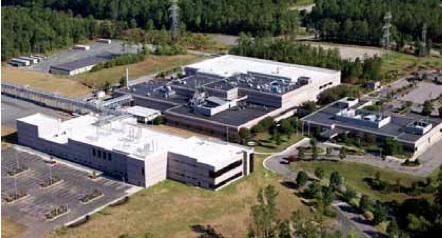
Eisai's operations in RTP include a new plant to make injectable oncology drugs. The new plant, in the foreground, could be expanded where the parking lot is now.
Eisai makes the eribulin mesylate in Japan. The active ingredient arrives in RTP as a powder, is then mixed with alcohol and water, filled in vials, labeled and packaged. All of the employees who will work on the line making Havalen will have to wear special clothing - from scrubs, hairnet, booties and gloves to two layers including a whole-body suit - for protection and to ensure the liquid isn’t contaminated.
Havalen faces competition from two other recently approved treatments for advanced breast cancer, but Eisai projects Havalen will become a blockbuster seller, generating about $1 billion per year. Up to 40 production workers could crank out as many as 4 million vials of Havalen on the RTP plant’s commercial production line per shift, Errico said. A second shift could be added.
A second production line is reserved for smaller batches of injectables used in clinical trials.
Errico estimated that initial demand for Halaven will keep about 25 percent of a shift busy. About 30 people have been hired and trained to work in the new plant. Errico said Eisai is looking for contracts to make other injectible products. “Our goal is to be a multi-product facility,” he said.
A framed architectural drawing on the wall shows three production lines Eisai could add on the southside of the building. But those are long-term plans. “I’ll probably be retired before we fill that,”Errico said.
Bayer continues to shift biotech seed development focus to U.S.
Thursday, April 28, 2011, 2:20 pm No Comments | Post a Comment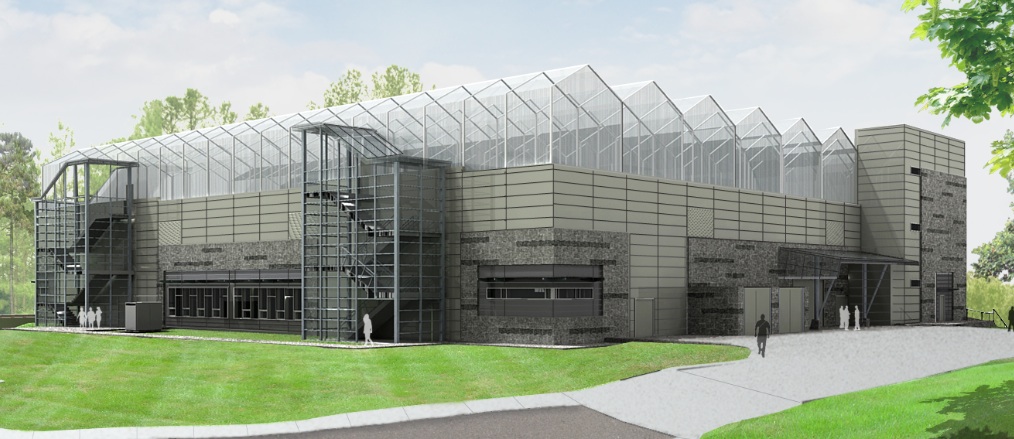
Rendering of Bayer CropScience's new greenhouse.
The 60,000-square-foot greenhouse that Bayer CropsScience is building in North Carolina’s Research Triangle Park represents a critical step in a strategic shift the German Bayer Group initiated two years ago.
The two-story greenhouse is projected to cost $20 million and will quadruple the greenhouse space Bayer Cropscience has in RTP.
Biotech crop seeds have long been part of Bayer CropScience’s business. Much of the trait development - work in the lab and greenhouse to come up with genes that improve crop yield and make corn, soybean, cotton and canola plants more resistant to insects and more tolerant to herbicides, drought and stress - has been done at Bayer’s plant technology innovation center in Ghent, Belgium.
When Bayer stepped up investment in plant technology research and development in 2009, it could have just added on to the Ghent facilities. Instead, the company shifted its focus from Europe to the U.S., where consumers are more accepting of genetically modified crops. So far, Bayer has announced close to $400 million in investments to boost biotech trait development near Bayer CropScience’s U.S. headquarters in RTP.
“We see that as a logical place,” Bayer CropScience spokesman Jack Boyne said from his RTP office.
The number of biotech crop seeds on the market has been rising steadily. In 2007, biotech seeds accounted for about $22 billion in worldwide sales with the top 10 sellers garnering about 68 percent of the global market, according to a report. Bayer CropScience came in seventh, behind Syngenta and market leader Monsanto.
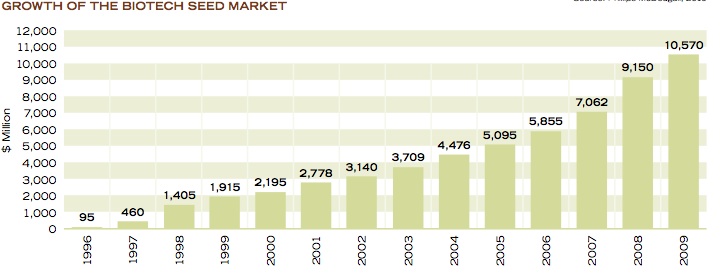
U.S. biotech seed sales
The RTP area, a U.S. biotech hotspot, is home to agricultural biotech operations of four of the large companies - Monsato, Syngenta, Bayer and BASF - and several smaller companies and startups. (More about research at Syngenta’s corporate biotech research center here.)
Eager to catch up, Bayer CropScience in 2009 bought a smaller RTP neighbor with an enviable collection of crop seed traits for $365 million. Athenix, which had research collaborations with Monsato and Syngenta, is now part of Bayer CropScience. So are Athenix’s 65 employees, but Bayer CropScience continues to hire to add a total of 125 employees by 2015. (More about the Athenix acquisition here.)
“We are making an increased investment in bioscience,” Boyne said. “We see this area as a strong growth opportunity.”
So do Monsanto, DuPont and Syngenta.
In 2009, Syngenta bought Monsanto’s hybrid sunflower seed business for about $160 million. In 2010, Monsanto broke ground to expand a soybean seed production facility in North Dakota. And DuPont announced in February that it will invest $50 million to expand its agricultural biotech research center in Delaware.
DuPont expected sales of its ag unit to rise 8 percent to 10 percent per year through 2015.


