Archive for the ‘Environment’ Category

From powering plug-in electric vehicles to backing up the grid
Saturday, July 30, 2011, 7:22 pm No Comments | Post a CommentIn a lab on N.C. State University’s Centennial Campus, engineers are probing the potential of the Chevrolet Volt’s T-shaped battery once it no longer powers General Motor’s plug-in hybrid electric car.
The research is based on an agreement GM and the ABB Group signed three months before the first Chevy Volt rolled off the lot, which was in December. The carmaker and the Swiss-based engineering firm are considering options that range from energy storage to powering bicycles.

A Chevy Volt battery is hooked up to an ABB inverter in the ABB lab on Centennial Campus.
ABB provides power and automation technologies to utilities and industrial customers worldwide. The firm concentrates on renewable energy and supplies wind and solar energy generators with electrical equipment and services. Its North American headquarters is in Cary and the R&D projects with the Chevy Volt batteries are conducted in the ABB lab on Centennial Campus. ABB employs about 500 in the Research Triangle area and 1,500 in North Carolina.
A first step in the research is combining a Chevy Volt battery with a commercially available ABB inverter, a device that exchanges direct current from the battery into alternating current used to transmit electricity on the grid.
The next step is hooking up several of the batteries to the inverter, said Sandeep Bala, an R&D engineer in the ABB lab.
“There’s a lot of work to do yet,” Bala said during a tour of the lab. “What the cost is, what the business case is.”
The learning curve will be steep, Pablo Valencia, the senior manager GM has assigned to the project, agreed. It’s not even known when it’s worth reconfiguring the battery, Valencia said.
The T-shaped lithium-ion battery consists of several cells and is built into the bottom of the Chevy Volt’s passenger cabin, with the cross bar being located under the back seat. The battery can power the car for about 40 miles in the city and has to be recharged. That’s the plug-in electric portion of the car. The Volt also has a gasoline tank to go another 300 miles. That’s the hybrid portion of the car.
The two power sources make the Chevy Volt the most fuel-efficient car on the market with a fuel economy of 90 miles per gallon to 95 mpg on the highway, according to the Edmunds.com review.
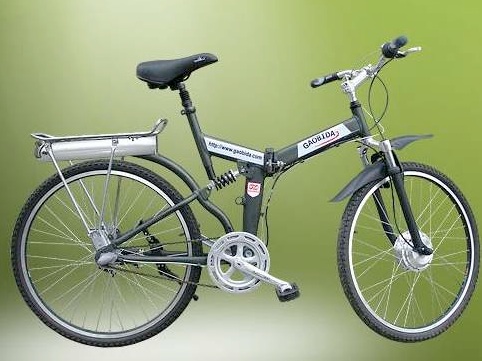
Battery cell above rear tire powers an e-bike.
How long it takes before a battery becomes available for reuse only time will tell. GM’s warranty on the battery is for eight years or 100,000 miles and after 10 years, the Volt’s battery retains about 70 percent of its capacity. But GM and ABB intend to figure out where else the batteries can be used once they come out of the cars.
One idea is to break down the battery and use single cells to power electric motors on bicycles.
Another is to use the batteries as storage - for renewable energy or as backup for electric outages. Renewable energy is dependent on the sun and the wind, which follow their own schedule. But stored in batteries, renewable energy would be available to flatten peaks and valleys in power consumption and allow utilities to run their power plants more evenly, and therefore more efficiently.
“The utilities love that,” Valencia said.
Power customers might like a backup system during power outages. The engineers estimated that 33 Chevy Volt batteries have enough storage capacity to power up to 50 homes for about four hours during a power outage.
April 1st kicks off 5th annual SmartCommute@RTP Challenge
Monday, April 4, 2011, 1:59 am No Comments | Post a Comment
Originally published 3/24/11:
Saying Jim Miller likes to bike is an understatement.
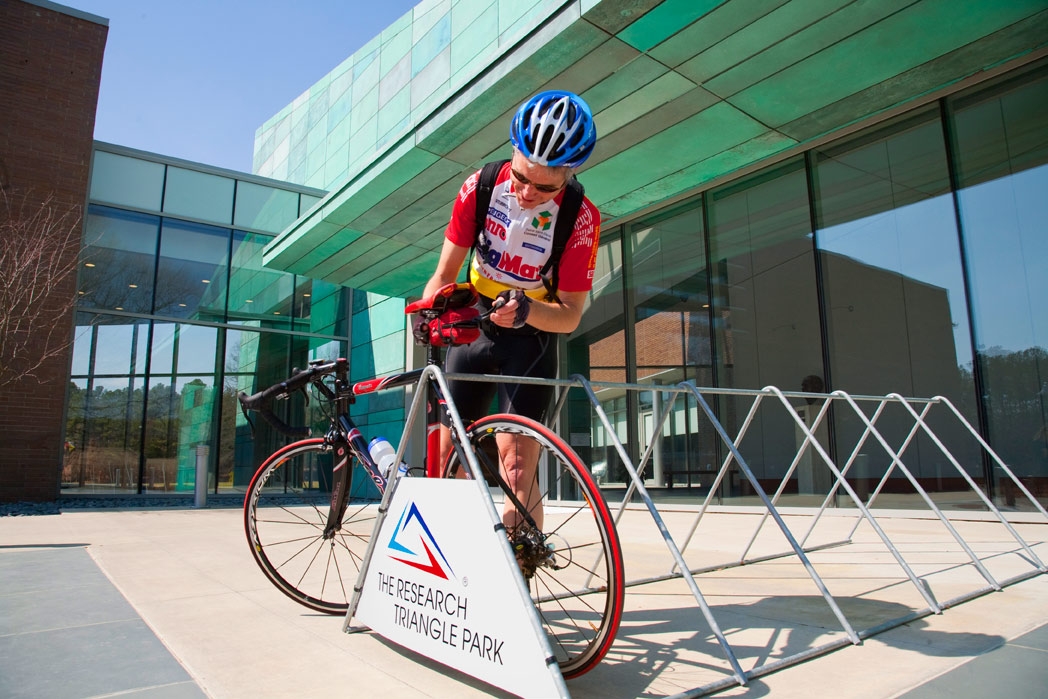
The 55-year-old facility engineering manager at Research Triangle International said he rides his Cannondale road bike to and from work every day of the year, including winter.
“I’ve biked when it’s 15 degrees Fahrenheit outside, and I’ve biked when it’s 105,” Miller said.
He estimates that he’s cycled between thirty and forty thousand miles between work and errands in the last three years. So naturally, each year Miller pledges to participate in the RTP SmartCommute Challenge.
The 5th annual challenge, which runs from April 1st to June 1st, encourages residents and employees in Wake, Orange and Durham counties to explore alternative modes of transit to work. In addition to biking, popular options include walking, carpooling, taking the bus, and telecommuting.
“Telecommuting is the most popular SmartCommute alternative in the region,” said James Lim, director of RTP programs at the Research Triangle Foundation.
Lim helps coordinate SmartCommute. He said one of the major benefits of taking the challenge is reducing the number of vehicle miles traveled. Along with this comes improved air quality, which includes reductions in CO2, mono-nitrogen oxides (NOx), and volatile organic compounds (VOCs).
Lim and his colleagues on the SmartCommute committee have established two goals for this year’s challenge: trying to save around 18,000 gallons of gasoline and trying to recruit 12,500 pledges. He said last year’s goal of 10,000 pledges was met and surpassed.
But to talk the talk, Lim feels he must walk the walk, literally. He plans to jog seven miles to the RTF headquarters from Durham each morning over the course of the two months.
“Now that I’m saying this in print,” Lim said. “I have to do it.”
He also carpools with another Foundation coworker. It’s important that employers are supportive of their staffs’ efforts to join the challenge, he said. Some companies have flexible starting and leaving times for those who bike or walk; others issue carpool parking passes closer to the building.
Darren Danko, the information technology director at RTF, is an avid SmartCommute cyclist as well, though admittedly he’s not as hardcore as Miller.
“I’ll bike whenever it’s 60 degrees or above,” Danko joked. His 3.2-mile ride from Durham takes him about 20 to 25 minutes on his aged, 10-speed Schwinn street bike.
Danko also opts for eco-friendly transit even after the challenge is over.
“It’s important to let people know that there are other alternative ways to get to work,” he said. “People need to get off their butts and do some exercise.”
According to past survey data, 75 percent of SmartCommuters elect to maintain the challenge after it comes to an end, Lim said.
Their efforts aren’t without incentive. Lim’s committee sponsors a SmartCommute Challenge awards ceremony each summer wherein companies and employees who participate are honored for their achievement. Two grand prizes of $750 are handed out to a pair of individuals who distinguish themselves.
This year there are two prize pools: one for new pledges trying green transit for the first time and one for veterans who continue to reduce their carbon footprints to work.
SmartCommute is co-sponsored by GoTriangle, a regional collaborative of transit providers. Research Triangle-based corporations like IBM, Cisco and Miller’s RTI also donate to the program.
Miller bikes twelve miles from his home in Chapel Hill to RTI’s headquarters in Research Triangle Park, a 24-mile roundtrip per day. He said it takes him about 45 minutes each way. Over the course of last year’s challenge, Miller rode more than 612 miles. It’s a part of who he is.
“I biked a lot when I was in my early twenties,” he said. “And I started again after I divorced 13 years ago.” His biggest ride was a coast-to-coast excursion in 2003.
He doesn’t see any downside to leaving the car in the garage. The only the cycling becomes a problem, he said, is during right turns at intersections with drivers jetting out behind him.
“I’ve only been hit by a car one time,” Miller said. “No accident, though. They just hit me in my arm with their side view mirror.”

Engineering for Better Wastewater Treatment Results
Sunday, December 26, 2010, 3:02 pm 1 Comment | Post a Comment
Wayne Flournoy, president of Entex Technologies
A few weeks ago, I reported on water quality expert Kenneth Reckhow’s concern that we will be unable to achieve water quality standards set by states in response to the Clean Water Act. Municipal water treatment plants have been improved “to the limits of technology,” he said, and additional cleanup was going to have to happen with somewhat unlikely changes like limiting development, changing farming practices, and prohibiting lawn fertilizers.
Last week, I had the opportunity to discuss the challenges of cleaning wastewater from the perspective of an entrepreneur who has been working with municipalities and industry to improve treatment plant performance. Wayne Flournoy is cofounder and president of Entex Technologies, a Chapel Hill company that designs systems for upgrading wastewater treatment plants or for new plants. Read more…
Unleashing the power of 1100 suns
Friday, December 17, 2010, 2:19 pm No Comments | Post a Comment
An array using high-concentration photovoltaics from Semprius, Inc.
A year or so ago, Joseph Carr found himself on an elevator with a man wearing a Siemens polo shirt. Having once worked for a division of Siemens, Carr introduced himself as the CEO of Semprius, Inc., a company that makes very high-efficiency solar modules. At the end of a fourteen-floor ascent, the two men exchanged business cards. Within months, Semprius and Siemens announced a joint development agreement.
Yes, a true “elevator pitch” success story.
Blue Crabs vs. Green Lawns: We May Have to Decide
Thursday, December 9, 2010, 9:24 am 6 Comments | Post a Comment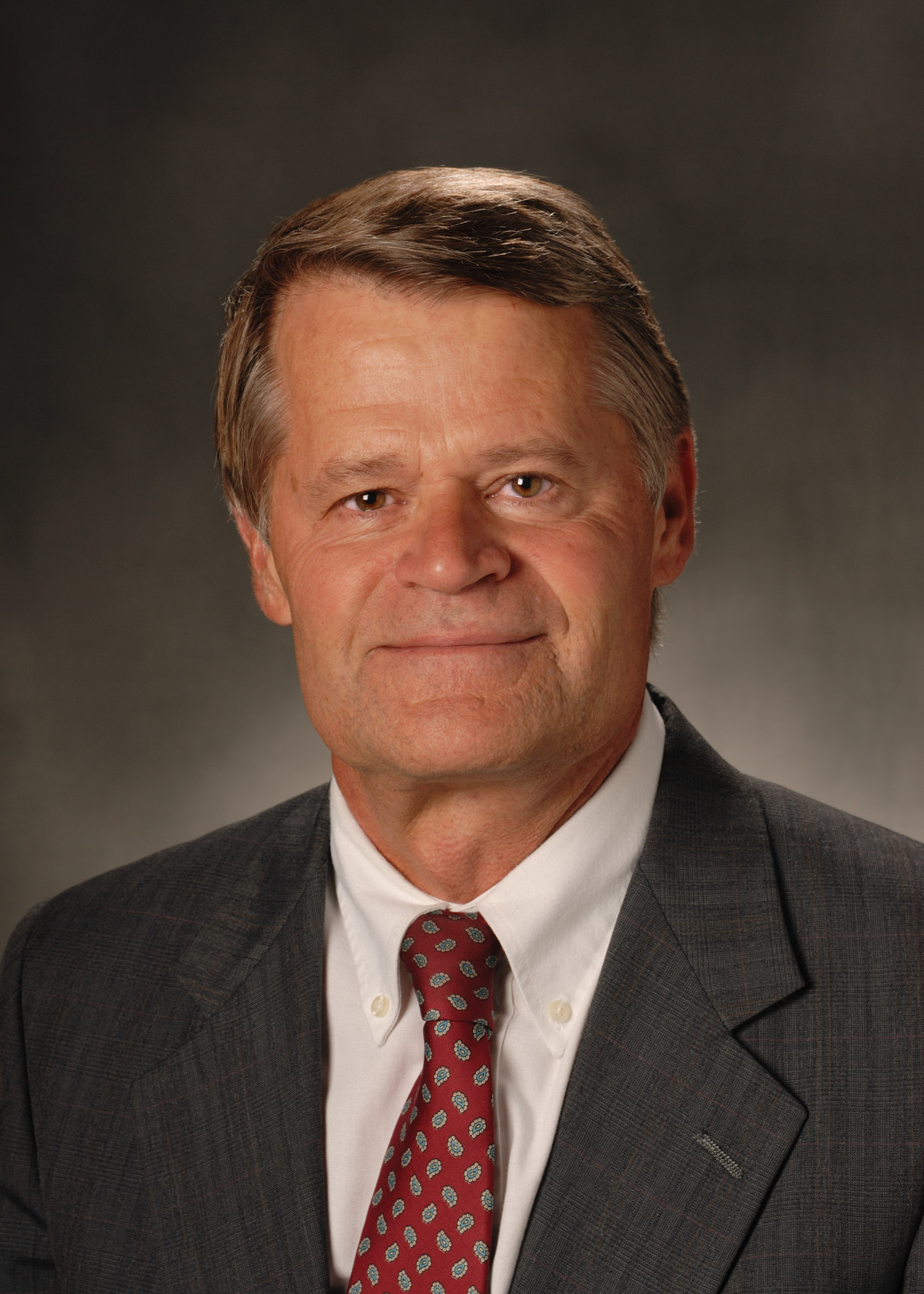
RTI water quality scientist Kenneth Reckhow says we may have trouble achieving mandated water quality standards without making major lifestyle changes.
What happens if we are unable to achieve federally mandated water quality standards in our lakes, rivers, and bays?
In 1972, Congress enacted the Clean Water Act (also referred to as the 1972 Amendments to the Federal Water Pollution Control Act) governing water pollution in the U.S. Among other things, the Clean Water Act regulates the release of pollutants into surface waters. Individual states determine water quality standards for bodies of water within their borders.
Now, a water quality scientist at RTI International is concerned that these water quality standards are unattainable in certain major bodies of water, including Falls Lake, a lake that is valued for recreation as well as being Raleigh’s municipal water source.
Read more…
An argument for boosting federal funding for energy research
Wednesday, November 17, 2010, 4:43 pm 3 Comments | Post a Comment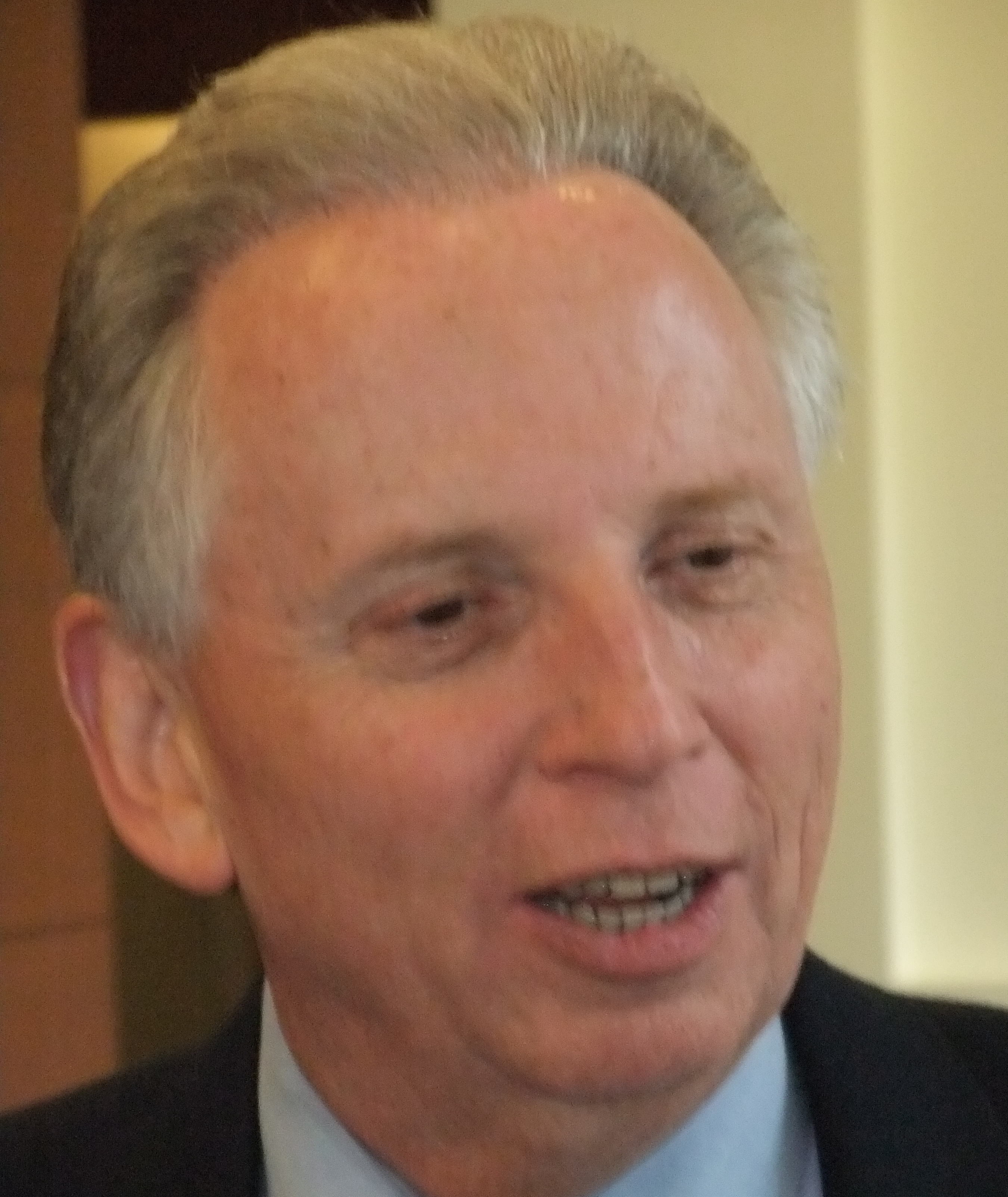
Jim Trainham
Calls for Congress to boost federal funding for clean energy research are getting louder and Jim Trainham, executive director of the newly formed Research Triangle Solar Fuels Institute, is jockeying for a position in the chorus.
The University of North Carolina at Chapel Hill, Duke University, N.C. State University and RTI International formed the solar fuels institute this summer to give the Research Triangle Park area its due as an energy research hub.
“There’s a lot of expertise here,” Trainham said Tuesday during a presentation at the Triangle Area Research Directors Council.
From its four parents, the solar fuels institute got experts in chemistry, electrical engineering, material sciences and nanotechnology and a lofty goal: Tapping the sun to make liquid fuel. (Watch a Q&A with Trainham here.)
The technology to meet the goal could be developed in less than a decade, Trainham suggested at TARDC. The big question is how to pay for the research and development. Read more…

“Doctor Bugs” visits the Triangle
Wednesday, October 20, 2010, 11:11 am No Comments | Post a Comment
Cover of the Adventures Among Ants, by Dr. Mark W. Moffett.
Not many scientists beg perfect strangers to eat the species they study. But that’s just what “Doctor Bugs” did when visiting tourist-magnet ruins in Cambodia. Dr. Mark W. Moffett proffered a dish of scrumptious crackers topped with herbs and, um, plump ant larvae to passersby — at times literally pleading with them to try it. It’s just one of the ways the world-famed ecologist, and Smithsonian Institution research associate, gets people to stop and notice the trillions of ants that share our world.
Moffett’s comedic showman personality was on display in full force on Tuesday night as he entertained an auditorium full of people at the N.C. Museum of Natural Sciences with stories about ants. And boy does he have stories. There’s the time he snaked a small camera attached to a long cable into a nest of weaver ants, capturing engaging footage of the ants at work… the camera pushed farther and farther past hundreds of ants, until ants swarmed the other end of the cable and overran him. The footage ended abruptly with audio of Moffett yelping in pain. Then there’s the time he stepped barefoot on a pair of ant forceps in his camp and spent the day worrying he’d been bitten by a poisonous snake, a fair concern considering there was a nest within a foot of his hammock. And let’s not forget the time he actually did sit on the world’s most poisonous snake in South America, too engrossed with photographing ants to notice.”If you must sit on a poisonous snake, sit closest to their head,” Moffett deadpanned to the crowd. “It’s the best way. It’s the only way.”

National Geographic cartoon of Moffet squatting on a pit viper.
More often, Moffett’s stories are about the ants themselves — their diverse ways of sensing the world, interacting, and divvying up labor to achieve survival goals efficiently. Moffett’s high-energy slide show was centered around promoting his new book, Adventures Among Ants: A Global Safari With a Cast of Trillions, published by the University of California Press.
“Ants differ from us in that the individual doesn’t matter, it’s all about what’s good for the group,” Moffett said. But they’re colonies are a lot like our cities, he went on to explain, drawing analogies between small cities/small ant colonies and large cities/large ant colonies. In smaller colonies, where there is less specialization of labor, each ant has to be a jack-of-all-trades and perform a variety of tasks.”They have their toolboxes built-in to their faces,” Moffett said, flashing a picture of a type of trap-jaw ant with extra long pitch-fork tipped jaws. It uses the long levers to pick up struggling prey and carry it safely back to the nest. But a much smaller, second pair of jaws tucked closer to its mouth allows it to eat.
Larger colonies, like our larger cities, tend to have more job specialization, Moffett said. Scientists can often tell what role they play by their size. Sometimes the largest ants of the same species outweigh the smallest ones by 500 times. The goliath ants are often used to deliver the death blow (a sting, or a bite) in battles with other ants or interlopers, and even act as “school busses,” allowing smaller ants in their colony to hitch rides. “Basically, it’s more energy efficient for the colony if the smaller ants ride on the bigger ants,” Moffett explained.

Leaf cutter ants cooperate to bring leaf fragments to their underground nests, where "gardener" ants cultivate a fungus upon the decaying vegetation. The colony harvests and eats the fungus. (Photo by Dr. Mark W. Moffett)
He also talked about various ways that ants work together, like the free-diving ants in Borneo that live in pitcher plants. They fetch crickets out of the water pooling in a pitcher’s basin, then haul it to the lip of the pitcher where they stash it and have a feast. The crickets are often too large for the pitcher plants to digest, he explained, so the ants are doing the plant a favor by saving it from experiencing an overdose of acid as the cricket decays. “They’re basically antacids for the plant,” Moffett joked.”But they also must have the strongest toes in the world to carry these large crickets up the slope of the pitcher plant, which is made so that insects will fall into its trap.” Ants also form chains to create living bridges that they use to cross from one tree to another high amid the canopies of rainforest trees, hundreds of feet from the forest floor. And some ants will sacrifice themselves to fill “pot holes” along highways the colony uses to move things to and from their nest. Then there are the leaf cutter ants, which divvy up leaf harvesting and fungus cultivating duties like nobody’s business (see photo at right).
Moffett’s photographs have been widely published and he often contributes work to National Geographic magazine. He searches for images that tell a story within their frames, he said, like the one he took of a battle between two ant species that shows a Goliath ant fending off attacks from smaller ants, with the carnage of warfare in the background: headless ants frozen mid-stride, and ants with their torso’s chopped in two and legs torn asunder. He encouraged the kids in the audience to “not lose that weird point of view you have when young,” because it can be valuable to being a scientist. He credits his own path to biology and entomology with reading too many Jane Goodall adventure books when younger, and climbing too many trees.
Moffett’s talk deftly distilled insights about ant ecology and social interactions into anecdotes that enthralled kids and adults like me who are in touch with their inner kids. If you missed his talk, you did miss out — but don’t sweat it, you can always order the book.
MORE MOFFET, LINKS:
Moffett on NPR’s Fresh Air; June 17, 2010
The hidden world of ants, Smithsonian Magazine; July 2009
RTP conference chases environmental triggers of disease
Friday, October 1, 2010, 1:02 am 1 Comment | Post a CommentIt’s easy to look at what billows out of a car exhaust or a smokestack and say soot isn’t healthy.
It’s much harder to prove it.
It may require data that’s not available or collaboration across scientific disciplines with very different views of the world, disciplines such as chemistry, urban planning and epidemiology, for example.
To overcome some of the hurdles, more than 80 researchers and politicians gathered this week at a two-day conference the Research Triangle Environmental Health Collaborative called in North Carolina’s Research Triangle Park. Read more…
10 Americans: Industrial toxins found in umbilical cord blood
Wednesday, September 22, 2010, 4:04 pm 3 Comments | Post a Comment
Ken Cook
A mother’s womb is a protective cocoon, but it is also where humans for the first time encounter the world that awaits them after birth. This encounter happens through sound and touch and through the exchange of blood between mother and child. About 300 quarts of blood from the mother bring nutrient and oxygen to the developing child every day.
The blood also delivers industrial pollutants like dioxins, consumer products chemicals like flame retardants and chemicals that come from pesticides, according to a study by the Environmental Working Group, a Washington, D.C.-based consumer advocacy group. The study tested samples of umbilical cord blood from 10 babies born in August and September 2004 in U.S. hospitals for 413 toxins and environmental pollutants.
On Tuesday, Ken Cook, co-founder and president of the Environmental Working Group, presented the results of the 10 Americans study at the University of North Carolina at Chapel Hill as part of the N.C. Science Festival.
The pollution in people by the numbers:
A Conversation with Dr. Robert Koger of Advanced Energy
Monday, September 20, 2010, 7:04 am 1 Comment | Post a Comment
Dr. Robert Koger
Dr. Robert Koger is president and executive director of Advanced Energy, a nonprofit organization established by the North Carolina Utilities Commission in 1980 to forestall electrical rate increases by promoting energy conservation and alternative and renewable sources of electricity. Advanced Energy provides services that focus on energy efficiency for commercial and industrial markets, electric motors and drives, plug-in transportation, and applied building science.
Advanced Energy also operates NC GreenPower, a program funded through consumers’ voluntary contributions, designed to increase the amount of renewable energy put on the electric grid in North Carolina and to mitigate greenhouse gas emissions.
This month, Dr. Koger assumes the chairmanship of Triangle Area Research Directors Council (TARDC), a group of science and technology leaders from local companies, nonprofits, and universities. The group meets over lunch monthly from September to May, to exchange ideas and information and to hear from guest speakers. TARDC’s first meeting under Dr. Koger’s leadership will be September 21, and the guest speaker will be Mr. Joe Freddoso, president and CEO of MCNC/NC STEM. Non-members of TARDC can attend the luncheons.
I recently asked Dr. Koger about the history of Advanced Energy and about his leadership of TARDC. Read more…


