Archive for July, 2011

From powering plug-in electric vehicles to backing up the grid
Saturday, July 30, 2011, 7:22 pm No Comments | Post a CommentIn a lab on N.C. State University’s Centennial Campus, engineers are probing the potential of the Chevrolet Volt’s T-shaped battery once it no longer powers General Motor’s plug-in hybrid electric car.
The research is based on an agreement GM and the ABB Group signed three months before the first Chevy Volt rolled off the lot, which was in December. The carmaker and the Swiss-based engineering firm are considering options that range from energy storage to powering bicycles.

A Chevy Volt battery is hooked up to an ABB inverter in the ABB lab on Centennial Campus.
ABB provides power and automation technologies to utilities and industrial customers worldwide. The firm concentrates on renewable energy and supplies wind and solar energy generators with electrical equipment and services. Its North American headquarters is in Cary and the R&D projects with the Chevy Volt batteries are conducted in the ABB lab on Centennial Campus. ABB employs about 500 in the Research Triangle area and 1,500 in North Carolina.
A first step in the research is combining a Chevy Volt battery with a commercially available ABB inverter, a device that exchanges direct current from the battery into alternating current used to transmit electricity on the grid.
The next step is hooking up several of the batteries to the inverter, said Sandeep Bala, an R&D engineer in the ABB lab.
“There’s a lot of work to do yet,” Bala said during a tour of the lab. “What the cost is, what the business case is.”
The learning curve will be steep, Pablo Valencia, the senior manager GM has assigned to the project, agreed. It’s not even known when it’s worth reconfiguring the battery, Valencia said.
The T-shaped lithium-ion battery consists of several cells and is built into the bottom of the Chevy Volt’s passenger cabin, with the cross bar being located under the back seat. The battery can power the car for about 40 miles in the city and has to be recharged. That’s the plug-in electric portion of the car. The Volt also has a gasoline tank to go another 300 miles. That’s the hybrid portion of the car.
The two power sources make the Chevy Volt the most fuel-efficient car on the market with a fuel economy of 90 miles per gallon to 95 mpg on the highway, according to the Edmunds.com review.
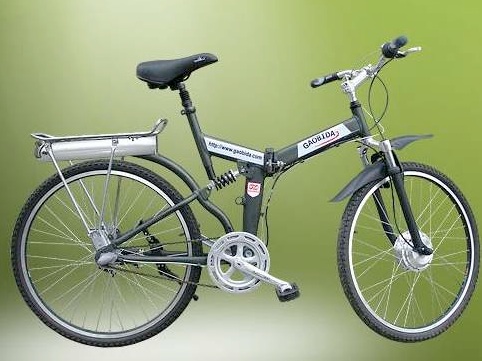
Battery cell above rear tire powers an e-bike.
How long it takes before a battery becomes available for reuse only time will tell. GM’s warranty on the battery is for eight years or 100,000 miles and after 10 years, the Volt’s battery retains about 70 percent of its capacity. But GM and ABB intend to figure out where else the batteries can be used once they come out of the cars.
One idea is to break down the battery and use single cells to power electric motors on bicycles.
Another is to use the batteries as storage - for renewable energy or as backup for electric outages. Renewable energy is dependent on the sun and the wind, which follow their own schedule. But stored in batteries, renewable energy would be available to flatten peaks and valleys in power consumption and allow utilities to run their power plants more evenly, and therefore more efficiently.
“The utilities love that,” Valencia said.
Power customers might like a backup system during power outages. The engineers estimated that 33 Chevy Volt batteries have enough storage capacity to power up to 50 homes for about four hours during a power outage.
Greener and cleaner: A talk with the director of RTI’s new research center
Saturday, July 23, 2011, 5:43 pm No Comments | Post a CommentAs a molecular biologist, Niels van der Lelie has researched microorganisms in different settings - in cheese making, in cleaning up contaminated water and soil and in growing crops on marginal lands. As the director of RTI International’s newest research center, van der Lelie plans to expand on these experiences and help develop technologies that aim at being greener and cleaner.
The Center for Agricultural and Environmental Biotechnology will be operational on RTI’s campus in Research Triangle Park in about two months. Initially, about 15 researchers will work at the center. Construction of a greenhouse, measuring 3,000 square feet to 4,000 square feet, is planned, with room for expansions.
Within a year, the number of researchers working for the center is projected to double to 30 and Lelie plans to establish a computational biology group.
The center will target research that deals with beneficial microorganisms that help clean up persistent contamination and digest municipal or animal wastes into biofuels, as well as with harmful microorganisms, such as bacteria that cause food-borne illnesses. The center also wants to work on making crop plants more drought resistant and produce better tasting. And it will look into domesticating medicinal plants, so natural resources can be protected.
Lelie expects the work to come from government research contracts and collaborations with industry. He has good chances of finding potential research and business partners in or near RTP. North Carolina’s Research Triangle is a hub for agricultural biotechnology. Companies such as Bayer CropScience, Syngenta and BASF CropScience have operations here. (More about agricultural biotech in the RTP area here.)
Lelie talked to Science in the Triangle about setting up the center and getting started:
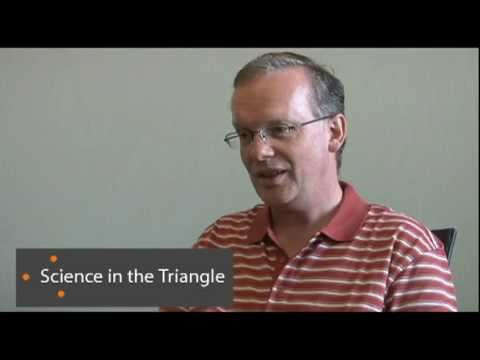

ScienceOnline2011 – interview with Kari Wouk
Saturday, July 23, 2011, 11:45 am No Comments | Post a CommentContinuing with the tradition from last three years, I will occasionally post interviews with some of the participants of the ScienceOnline2011 conference that was held in the Research Triangle Park, NC back in January 2011. See all the interviews in this series here.
Today I talk to Kari Wouk, Senior Manager of Presentations and Partnerships at the NC Museum of Natural Sciences in Raleigh.
Read more…
Hamner signs Chinese collaborator
Wednesday, July 20, 2011, 4:28 pm No Comments | Post a CommentTwo years after the Hamner Institutes for Health Sciences set up a gateway to China, the Research Triangle Park research institute is adding a Chinese company to its collaborators.
Ascletis will establish its U.S. research and development operations on the Hamner campus. Other operations of the company will be in the National High Tech Industry Development Zone in Hangzhou, a city about two hours southwest of Shanghai.
Jinzi Wu
Founded this year by Jinzi Wu, former head of global HIV drug discovery at GlaxoSmithKline in RTP, and Jinxing Qi, a Chinese real estate investor and chairman of the Hangzhou Binjiang Real Estate Group, Ascletis has $100 million in commitments from U.S. and Chinese angel investors. The company plans to establish a global therapeutics business that targets cancer and infectious diseases.
Allan Baxter, former global head of medicines development at GSK, will lead Ascletis’ discovery and development strategy as chief strategy officer.
According to its Web site, the company aims to buy the rights to new treatments, develop them and introduce them to the growing Chinese pharmaceutical market.
Allan Baxter
Projected to generate about $60 billion in sales this year, the Chinese pharmaceutical market is increasing at an annual rate of more than 20 percent, according to a report by strategic consulting firm The Monitor Group. By 2015, Monitor advisors expect China to rank second in market size to the U.S. and ahead of Japan, Germany, France and the United Kingdom.
Incidence and mortality rates for lung, stomach, liver and breast cancers are comparable or higher in China than in the U.S., the Monitor report pointed out. But competition among pharmaceutical companies is high in China. Nearly all multinationals and numerous local firms are jostling for market shares.
Also, health insurance coverage in China is improving rapidly. In the past two years, the Chinese government invested more than $160 billion in healthcare reform.
Bill Greenlee, the Hamner’s chief executive, and Wu, chief executive of Ascletis, signed the joint venture July 16 at the U.S.-China Governors Forum in Salt Lake City. At the same forum, N.C. Gov. Beverly Perdue and Zhao Hongzhu, the party secretary of the province to which Hangzhou belongs, signed an agreement to foster business and economic development between North Carolina and Zhejiang Province through commercial interactions.
The BIO message: India, China, Brazil are on the move
Friday, July 8, 2011, 10:49 pm No Comments | Post a CommentForget about the Bay Area and Boston. North Carolina’s Research Triangle, anchor of the third largest U.S. biotech hub, needs to look beyond continental shores if it wants to measure itself against some of the most innovative regions in the world. In China, India and Brazil, emerging biotech industries are stirring restlessly.
This came across so loud and clear at BIO 2011, the international biotechnology convention that from June 27 to June 30 brought companies, economic development recruiters, lobbyists and analysts from across the world to Washington, D.C., the message took on a measure of self-evidence.
The annual state-of-the-industry report, which Ernst & Young presented at the convention, provided supporting numbers:
- $61 billion, China’s drug market, which ranked second behind the U.S. last year and is projected to double in size by 2015.
- $1.8 billion, Brazil’s share of global investments in biofuel production last year. The U.S. ranked second and Europe was third.
- 70 percent to 75 percent, developing countries’ projected share of worldwide deaths from heart disease, stroke and diabetes in 2020.
- 25 percent, amount by which research and development investments in U.S., Europe, Canada and Australia decreased in the past two years.

Fareed Zakaria
What is happening, commentator and book author Fareed Zakariah said, is that “the landscape of innovation is shifting around the world.” Zakariah moderated a panel discussion with experts from India, Malaysia and China at BIO to explore the situation in those countries. Hundreds of BIO attendees came to listen.
To set the stage, Zakariah explained how the U.S. became the nation that sent the first man to the moon, developed vaccinations for childhood diseases such as polio and invented the personal computer.
In the 1920s and 1930s, Germany was the most innovative country, he said. During and after World War II, some of the brightest and most talented German scientists, many of them Jews, were part of a mass exodus that headed for the U.S.
“The U.S. benefited enormously from this inflow of talent,” Zakariah said.
The Immigration and Nationality Act of 1965 opened America’s gates to a similar mass inflow of talent from Asia. Buoyed by generous funding of basic sciences, nascent companies and public university systems during the Cold War, the U.S. became a worldwide dominating innovation power. But in the 1980s, the rest of the world started to catch up, Zakariah said. Economies developed, incomes and living standards rose - first in Japan, then in Singapore, Hongkong, South Korea and Taiwan, also known as the four Asian tigers, and most recently in India and China.
In the U.S., the housing market collapsed and the banking industry faltered. Research and development jobs started to move to low-cost countries, where many U.S. manufacturing jobs had already gone. Rising incomes and demand in developing countries convinced companies to pay more attention to consumers there.
“Now we face the question: Where does the U.S. go,” Zakariah said.
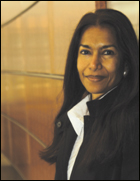
Anula Jayasuriya
Companies like the manufacturer that sells its portable EKG machine in India for a fraction of the price General Electric charges for its EKG machines is driving frugal innovation, said Anula Jayasuriya, an Indian life science investor and a member on Zakariah’s panel.
The Indian manufacturer is considering bringing its portable EKG machine to the U.S., Jayasuriya said.
Health care problems will be solved where the need is biggest, which is in developing countries, said Georg Baeder, Asia life science business leader of the strategic consulting group Monitor and also a member on Zakariah’s panel. And at costs that are customary in developing countries.
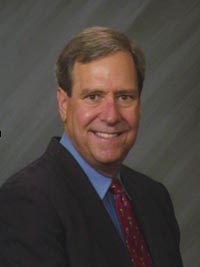
George Baeder
The Chinese government is spending about $125 billion to upgrade and stimulate life science research. In India, the government is trying to help early stage companies. In Singapore, the government is expected to invest $12.5 billion on life science research innovation over the next five years, according to the Ernst & Young report.
And about 80,000 researchers and entrepreneurs who left China for a college education in the U.S. and Europe are returning to China, Baeder said.
A score card that Scientific American magazine developed for BIO in concert with the biotech industry’s trade organization showed that China, India, Brazil still have some catching up to do before they become serious challengers to a still dominant U.S. But a ranking of the top 48 countries capable to generate innovation in biotech worldwide, the score card lists Singapore ninth, Malaysia 28th, China 30th, Brazil 42nd, and India 44th.
RTP startup gears up to track down cat scratch fever bacterium
Friday, July 1, 2011, 1:09 pm No Comments | Post a CommentEditor’s note: North Carolina’s Research Triangle is home to hundreds of young companies. Scientists and entrepreneurs started them to develop technologies and medicines for better detection and treatment of diseases. Some of the companies work on innovations that are the result of research done at one of the area’s universities. Others are outgrowths of established companies. Galaxy Diagnostics, which chases a stealth bacteria that infects pets and their owners, is one of those young companies.
Galaxy Diagnostics is going where few have gone before, to borrow a phrase from the American science fiction franchise Star Trek.
The startup is an outgrowth of work researchers at the N.C. State University College of Veterinary Medicine have done on Bartonella bacteria, pathogens that live in the digestive guts of lice, fleas, biting flies and ticks and are transmitted through the insects’ poop. Cats are particularly prone to harboring Bartonella; about 40 percent of them carry a strain called Bartonella henselae at some time of their lives. That’s why Bartonella infections in humans are best known as cat scratch fever.
Scientists have found signs of Bartonella infection in a 4,000-year-old human tooth from southeastern France. At the time, the pharaohs were building the pyramids in Egypt. But today’s physicians aren’t much better at diagnosing a Bartonella infection than their colleagues were in ancient Egypt.
To track down the elusive bacteria, the NCSU researchers combined lab skills common in the 1950s with 21st century genetic sequencing technology.
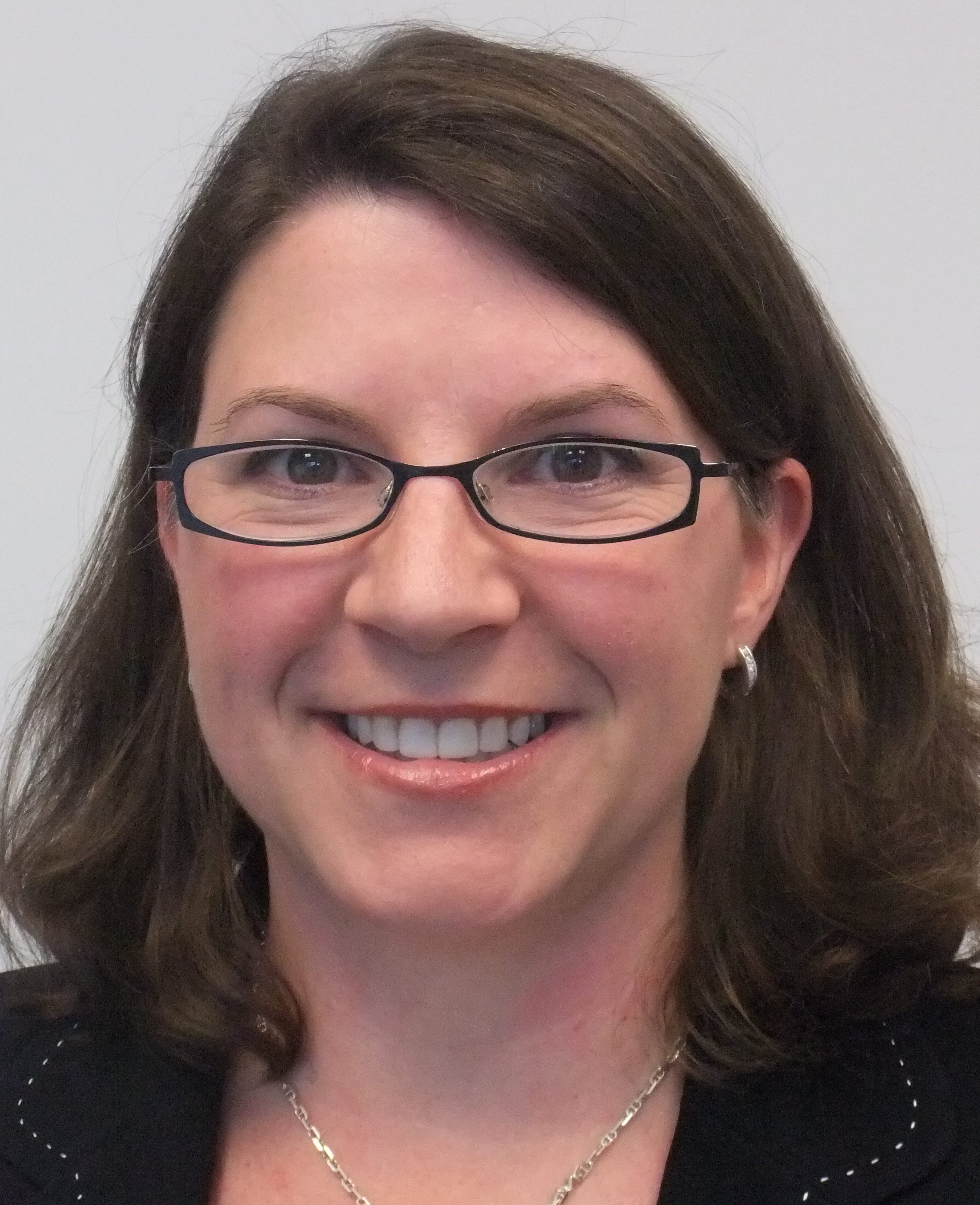
Amanda Elam
In 2009, with little hope of attracting outside investors while the U.S. economy was reeling, the researchers teamed up with a sociologist to launch Galaxy Diagnostics.
Amanda Elam, the sociologist, runs the company. Her title is president, but she calls herself “chief cook and bottle washer.”
To earn her doctorate in sociology at the University of North Carolina at Chapel Hill, Elam studied entrepreneurship. She taught at the NCSU College of Management last year and she continues to publish papers in her academic specialty. The company has received a state loan and a federal grant totaling about $230,000, but unlike the three lab technicians Galaxy Diagnostics employs, Elam doesn’t get paid for the more than 40 hours she puts in as the company’s president.
“It’s field work,” she said.
As Elam’s assessment of her job suggests, Galaxy Diagnostics is an experiment in more ways than one.

Bartonella henselae, a strain that infects cats. Researchers have identified more than two dozen Bartonella bacteria strains.
The test that the company has developed promises to detect a Bartonella infection earlier than other tests, before symptoms progress from a low-grade fever and muscle and joint aches to brain seizures, loss of sight, poor coordination and muscle weakness. But Galaxy Diagnostics also straddles human medicine and veterinary medicine, two health care disciplines that have more in common than most people think.
Animal pathogens can adapt and cause new diseases in humans. Severe acute respiratory syndrome, or SARS, bird flu and swine flu are among the most recent examples. All three diseases emerged in the past decade after viruses jumped from animals to humans.
The quicker viruses and bacteria multiply, the faster the infection develops. Two E.coli can form a colony of hundreds of bacteria in just a few hours. Bartonella bacteria double in numbers just once every 24 hours and infections can take years to develop.
Left to multiply, Bartonella bacteria infect red blood cells and the cells lining blood vessels and they manage to hide where the body’s immune defenses cannot detect them. That’s why tests looking for immune system antibodies to Bartonella bacteria often produce false negative results.
Galaxy Diagnostics goes after the bacteria themselves. The company uses a patented enrichment media in which even small numbers of Bartonella grow in a bottle. Genetic fingerprinting follows to positively identify the bacteria. A multi-drug antibiotic treatment usually gets rid of the bacteria.
More than 250 veterinarians in the U.S., Canada, the United Kingdom and Brazil have already sent Galaxy Diagnostics blood, tissue or fluid samples from pets that the company has tested for Bartonella bacteria.
In the past three to four years, a research lab at the NCSU vet school has run more than 800 human blood samples through Galaxy Diagnostics’ testing process. The samples came from patients suffering from symptoms their physicians couldn’t allocate to a disease. About 28 percent of the samples were positive for a Bartonella infection, Elam said.
By the end of the summer, Galaxy Diagnostics expects to be able to test human samples at its new lab in the Alexandria Innovation Center at a cost of about $600 to $800 per patient.


