Posts Tagged ‘clean energy’

A nuclear power scare from Japan
Sunday, March 27, 2011, 11:12 pm No Comments | Post a Comment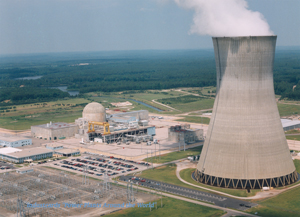
Shearon Harris is one of six nuclear power plants operating in North Carolina.
The hydrogen explosions, the fire, the radioactive leaks and the evacuations at the earthquake- and tsunami-ravaged Fukushima Daiichi nuclear plant about 150 miles north of Tokyo happened a continent and an ocean away from North Carolina’s Research Triangle. But there’s a good chance the fallout from the nuclear crisis in Japan will hit close to home - lest you forget the Shearon Harris nuclear plant about 20 miles southwest of Raleigh.
On clear days, Shearon Harris’ cooling tower and the steam rising from it are clearly visible across the Triangle, even from Eno River State Park about 50 miles north. Splitting an atom, a process called nuclear fission, is cleaner than burning coal to generate electricity and Progress Energy, which operates Shearon Harris, plans to add two reactors to the existing one by 2018.
But the events at the Fukushima Daiichi nuclear power plant could delay expansion plans at Shearon Harris and elsewhere in the U.S. and make them more expensive.
The Japanese earthquake and its fallout “will slow nuclear power down in the U.S.,” Paul Turinsky, professor of nuclear engineering, said during a symposium Wednesday at N.C. State University. Turinsky was one of four NCSU experts who spoke at the symposium.
The same day, the Nuclear Regulatory Commission and the nuclear power industry agreed to reassess reactor designs and training procedures and to reevaluate reactors at the 104 operating nuclear power plants nationwide.
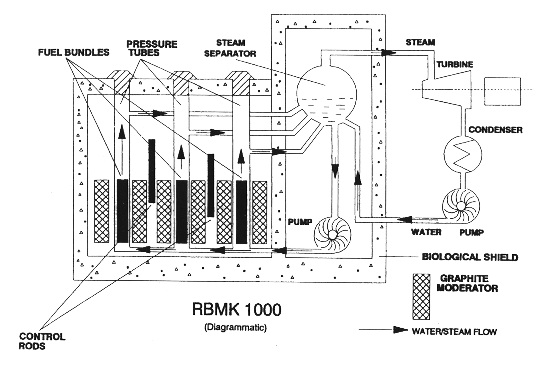
The Chernobyl reactor was an open design, lacking steel and concrete to contain radioactive material in case of an accident.
Also, public support for more nuclear energy has dropped. According to a CBS poll, more Americans disapproved than approved of building more nuclear plants in the wake of the Fukushima Daiichi crisis, and for the first time since the 1986 nuclear disaster in Chernobyl the disapproval rate reached 50 percent.
Add to that regulatory shortcomings fueling anti-nuclear sentiment that has lingered since the Three Mile Island nuclear power plant accident in 1979 and has foiled three decades worth of attempts to establish a nuclear waste repository.
A 2010 report by the Union of Concerned Scientists listed 27 cases in which nuclear power plants accidentally released radioactive materials over the previous four years and the Nuclear Regulatory Commission allowed plant owners to violate regulations with impunity.
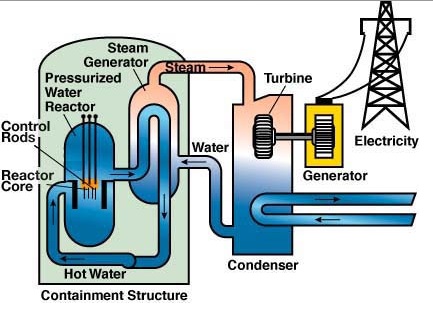
A pressurized water reactor like the one at Shearon Harris has a steel vessel around the reactor core and concrete containment structures.
Seven of the 27 violations happened at nuclear plants in North Carolina. Shearon Harris accounted for two of the seven; radioactively contaminated water leaked into the ground in both cases.
With Triangle residents following updates on the nuclear crisis in Japan, Triangle universities scrambled to line up nuclear energy experts who tried to dispel fears with facts. The day following the NCSU symposium, the University of North Carolina’s Morehead Planetarium and Science Center hosted a talk by David McNellis, the director of UNC’s Center for Sustainable Energy, Environment and Economic Development, on the risks of nuclear power.
Back to back, the experts analyzed nuclear reactor designs and their failures, from Three Mile Island to Chernobyl to Fukushima Daiichi.
Based on estimates of how much the general public was exposed to radioactively contaminated material, Man-Sung Yim, an associate professor of nuclear engineering and a radiological health expert at NCSU, ranked Chernobyl as the worst of the three nuclear power plant failures.
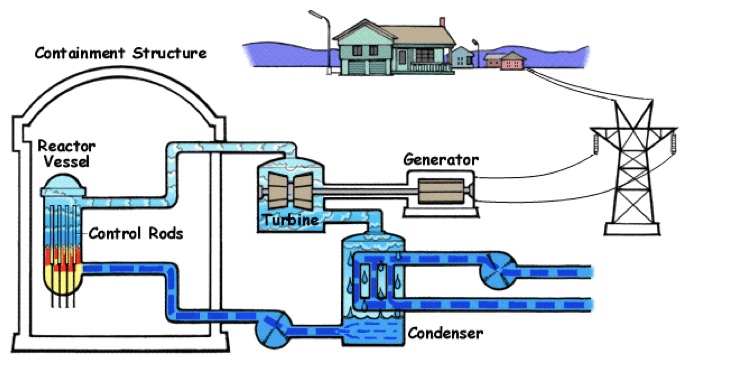
The Fukushima Daiichi plant uses boiling water reactors, which are equipped with steel reactor vessels and concrete containment structures.
Radiation exposure from Fukushima Daiichi “is less than Chernobyl, but far worse than Three Mile Island,” Yim said during the NCSU symposium.
Based on published measurements, Yim calculated that the general population was exposed to about 33 rem of radiation in Chernobyl. The evacuated area around the Fukushima Daiichi plant has received a dose of up to 10 rem.
The Three Mile Island accident exposed the general public to about 180 millirem of radiation, less than the 300 millirem to 600 millirem of radiation Americans take in every year from everyday living.
A 400 rem dose of radiation is considered lethal, Yim said.
The other experts linked the exposure risk of the three nuclear power plant failures directly to reactor design and operational safety standards.
All nuclear power plants generate electricity from steam that turns a turbine linked to a generator. The heat needed to turn water into steam comes from nuclear fission.
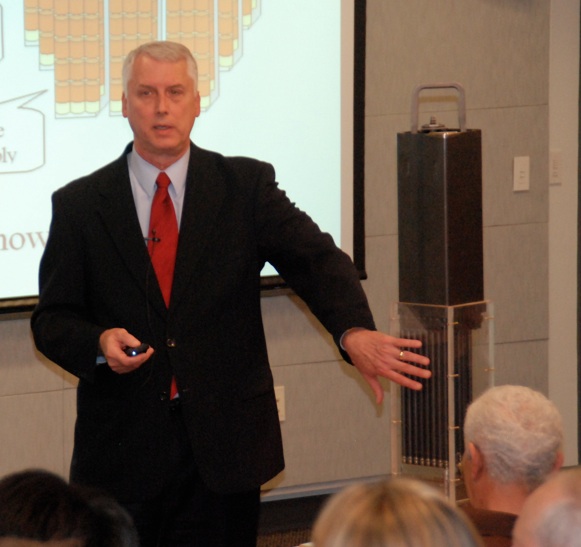
John Gilligan, professor of nuclear engineering at NCSU, shows off a nuclear fuel rod at the symposium.
The fuel to produce the heat is uranium, a natural metallic element in rock, soil and water that comes in multiple versions. The uranium is contained in ceramic-like pellets that are stacked in fuel rods in the core of a reactor. One uranium version, uranium-235, breaks apart when it gets hit by a neutron, releasing two to three neutrons, two radioactive fission products and heat. When released neutrons hit more uranium-235, the nuclear fission continues as a chain reaction.
Unlike the Three Mile Island and Fukushima Daiichi nuclear power plants, the Chernobyl nuclear power plant had no steel vessels around its reactor cores. When an experiment went awry on April 26, 1986, and reactor No. 4 overheated, pressure from the steam continued to build until it blew off the roof of the reactor building, scattering radioactive material from the melting reactor core across the landscape and setting free radioactive clouds that drifted westwards.
The Fukushima Daiichi plant withstood the massive March 11 earthquake, even though it wasn’t designed for such a powerful seismic event, John Gilligan, professor of nuclear engineering, said during the NCSU symposium.
Control rods automatically stopped nuclear fission, in effect shutting down reactors that were in operation the moment the electricity supply to the plant was cut off.
“It wasn’t the earthquake,” that caused the nuclear crisis at Fukushima Daiichi, Michael Doster, professor of nuclear engineering at NCSU, said. “It was the tsunami.”
The wall of water the earthquake had unleashed was more than twice as tall as the floodwall that was supposed to protect the nuclear power plant facing the sea. When the water flooded the plant, it knocked out emergency diesel engines that powered pumps, fans and other electrical equipment in the reactor buildings. After about eight hours, batteries backing up the emergency diesel engines were also exhausted.
Without power, pumps stopped cooling the water in 40-foot-deep pools that held spent fuel rods. The rods usually stay in these pools for about five years during which time they continue to give off heat. But unlike in the reactor, the heat production in the spent fuel storage pools cannot be turned off, said Doster.
“You cannot avoid it. You cannot control it,” he said. “You just have to deal with it.”
The spent fuel rods in the Fukushima Daiichi storage pools are made from zirconium alloy. As the temperature continued to rise in the storage pools, the zirconium interacted with the heated water and produced hydrogen gas. It was that hydrogen gas that exploded, Doster said. The explosions damaged the concrete buildings of at least two of the reactors and released radioactive material from the spent fuel.
Design flaws, malfunctioning equipment and human error caused reactor No. 2 at the Three Mile Island nuclear power plant to overheat March 28, 1979, UNC’s McNellis said.
It was the worst commercial nuclear power plant accident in U.S. history and led to sweeping changes involving emergency response planning, reactor operator training, human factors engineering, radiation protection and many other areas of nuclear power plant operations, according to the NRC. Regulatory oversight also tightened to enhance safety.
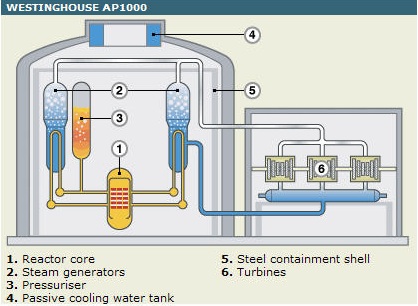 Like two-thirds of U.S. nuclear power plants, Shearon Harris’ reactor is the same design as reactor No. 2 at Three Mile Island. The remaining one-third of U.S. nuclear power plants rely on boiling water reactors like the Fukushima Daiichi plant.
Shearon Harris became operational in 1987, eight years after the Three Mile Island triggered the regulatory and safety changes.
The two reactors Progress Energy has proposed to add at Shearon Harris are a new design. Called AP1000, it includes a cooling tank on top of the reactor from which water trickles onto the core without the need for pumps.
Construction of nuclear plants with AP1000 reactors have begun in China and the U.S.
Charlotte-based Duke Energy, which is buying Raleigh-based Progress Energy, plans to build a nuclear power plant with AP1000 reactors in South Carolina. More are proposed in Florida and Alabama.
(Watch a video of the NCSU symposium here.)
How energy alternatives can make us safer and healthier
Sunday, March 6, 2011, 8:21 pm 1 Comment | Post a CommentThe fiscal fight over monitoring greenhouse gases raged on Capitol Hill while more than 100 people gathered at N.C. State University Thursday and Friday to explore whether we dismiss the fallout from our fossil fuel dependency at our own peril.
Attendees of the two-day conference, which was partly sponsored by the U.S. Army War College, didn’t exactly make for a treehugging crowd. They included security analysts from Fort Bragg, economists, energy consultants to large investors and governments, former oil industry executives and scientists developing alternatives to oil and coal.
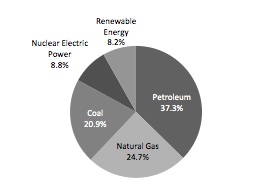
2009 U.S. energy consumption by source, U.S. Environmental Protection Agency
That greenhouse gases are taking a toll on climate, environment and health was never in question during the conference. Indeed, speakers expounded on the costly consequences that U.S. dependency on fossil fuels has on healthcare at home and defense overseas.
James Bartis, a senior policy researcher with the RAND Corp., a global policy think tank with an office in the Middle East emirate of Qatar, was one of the speakers at the conference. In testimony before the U.S. Senate Committee on Energy and Natural Resources two years ago, Bartis urged that there was “a compelling need to reduce greenhouse gas emissions” and a need for research on technologies that would allow us to use less oil, coal and natural gas, the three fossil fuels linked to almost 90 percent of the emissions.
At the NCSU conference, where he participated on a panel of alternative energy experts, Bartis was asked why lawmakers aren’t heeding his advice more. “There’s a lot of money to be had [with fossil fuels] and there’s a lot of inertia,” he responded.
 About 83 percent of the U.S. economy runs on fossil fuels and Alan Hegburg, a senior fellow at the Center for Strategic and International Studies and the conference’s keynote speaker, didn’t expect much will change the next 10 years.
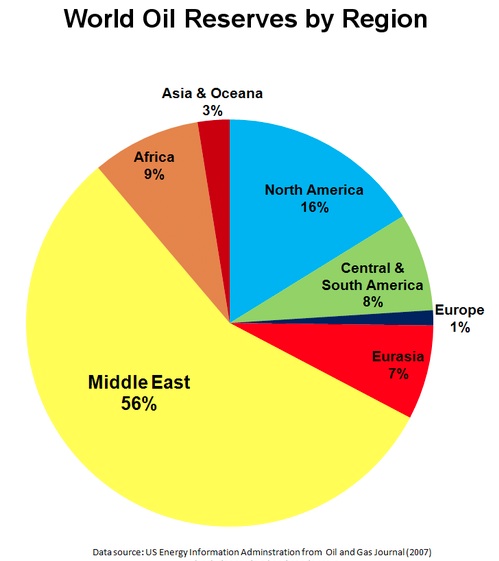
Coal is plentiful and cheap - no country has more coal reserves than the U.S. Crude oil is also still plentiful and cheap to extract - in the Middle East, which has more than half of the world’s oil reserves.
Fossil fuels pack a lot of energy. Their production is efficient. The delivery infrastructure is finetuned. And markets are well developed. In contrast, energy alternatives cost more and are less energy-dense. And functioning delivery systems to drive demand are rudimentary at best where they exist.
“Getting this train to change tracks will take a huge effort,” Hegburg said.
Then why try? Speakers at the conference offered as the main reason the hidden costs of fossil fuels.
Generating electricity from coal and burning oil for transportation is a dirty business. In 2005, pollution caused an estimated $120 billion in damages to human health, crops, timber yields, buildings and recreation nationwide, according to a report the National Research Council published 18 months ago.
Another study published a few weeks ago in the Annals of the New York Academy of Sciences estimated that extracting, transporting, processing and combusting coal caused $345 billion in damages to the health and the environment in 2005.
Factor in the hidden costs and electricity would be at least twice as expensive, according to the study. Do the same with oil and gasoline prices would be at least $1.50 per gallon higher, Bartis said.
Suddenly, wind and solar energy and investments to boost energy efficiency and conservation become competitive. Calls from research hubs for more funding to make cleaner energy alternatives cheaper and more efficient begin to make sense.
North Carolina’s Research Triangle is one of those hubs.
Last summer, the University of North Carolina at Chapel Hill, Duke University, NCSU and the Research Triangle Park-based research institute RTI International formed the Research Triangle Solar Fuels Institute to bring together local experts in chemistry, electrical engineering, material sciences and nanotechnology with the goal of developing technologies that tap the sun and make liquid fuel.
Researchers at RTI are working on capturing and reusing carbon dioxide – the most prominent greenhouse gas in the Earth’s atmosphere – producing bio-crude from organic waste and developing a nanotechnology light bulb that promises to be more energy efficient than a fluorescent light and doesn’t contain harmful mercury. Not far from RTI, at the corporate biotech research lab of Swiss agribusiness giant Syngenta, researchers have genetically engineered corn that requires less water and energy to make fuel ethanol.
And North Carolina, the third largest U.S. biotech hub by number of companies, has targeted biodiesel and ethanol from corn and biomass to meet an ambitious goal: By 2017, 10 percent of liquid fuels sold in the state should be locally grown and produced. This target goes hand-in-hand with the federal mandate that oil companies increase the use of renewable fuels such as ethanol in gasoline blends.
The federal ethanol mandate had its critics at the NCSU conference - diverting about one-third of the U.S. corn crop into ethanol production has contributed to rising food prices. But other speakers credited the mandate for keeping the discussion alive at a time when energy-related research funding is threatened by massive cuts.

David Dayton
“Because there’s a mandate, climate control, security issues and oil is $100 a barrel, at least we’re still talking about alternative fuels,” said David Dayton, biomass program manager at RTI’s energy research lab.
How much military activities cost us to maintain our fossil fuel dependency is difficult to determine - neither of the two studies provided estimates - but conference speakers said ensuring a steady supply of crude oil drives national security spending.
With about 19 million barrels daily, the U.S. consumed more oil in 2005 than the next three biggest consumers, China, Japan and India, together, figures of the U.S. Energy Information Administration show.
Transportion, which in 2004 made up more than 60 percent of the U.S. oil demand, has become the dominant driver over the past 50 years.
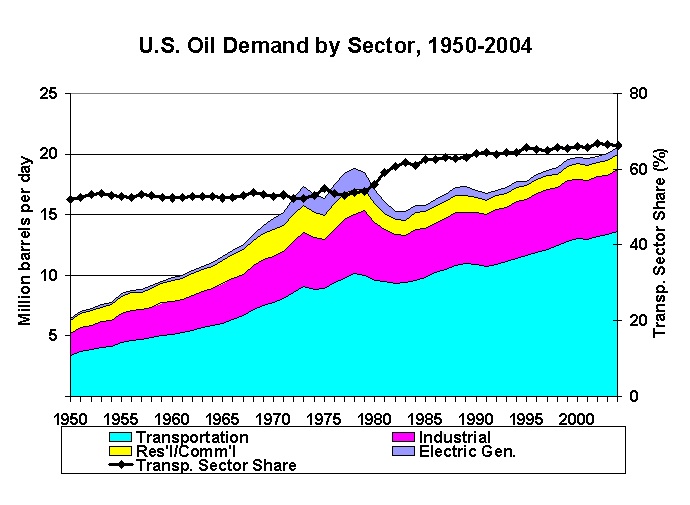
Source: Annual Energy Review
The increase in demand has influenced which regions are important for the U.S. to protect.
The Middle East, which sits on more than half of the world’s oil reserves, has gained importance in U.S. national security spending in the past 30 years, even though former Defense Secretary Donald Rumsfeld insisted that invading Iraq had nothing to do with oil, as Peter Maass, author of “Crude World: The Violent Twilight of Oil,” wrote on his blog last summer.
A study published two years ago estimated that between 1976 and 2007 the U.S. spent $6.9 trillion in the Persian Gulf region on military efforts, all of them oil-related. After the end of the Cold War in Europe, Persian Gulf military expenses took up an ever increasing portion of the entire U.S. defense spending in the 1990s and jumped to 91 percent in 2001. By 2007, their portion of the entire U.S. defense spending had decreased to about 80 percent.
Nobel Prize winning economist Joseph Stiglitz and Linda Bilmes, a leading expert on U.S. public finance, estimated in the Washington Post last year that the war in Iraq cost the U.S. in excess of $3 trillion and drove the price of oil up by about $10 per barrel.
This focus on the Persian Gulf region reflects the fact that more oil is shipped through the Strait of Hormuz, which connects the Persian Gulf with the Gulf of Oman and the Arabian Sea, than through any other narrow channel through which oil is shipped on global sea routes, according to numbers of the U.S. Energy Information Administration.
Every day, an average 15.5 million barrels of oil pass through the Strait of Hormuz, or about 18.5 percent of the daily oil production worldwide. More than three-fourths of the shipments are destined for Asian countries.
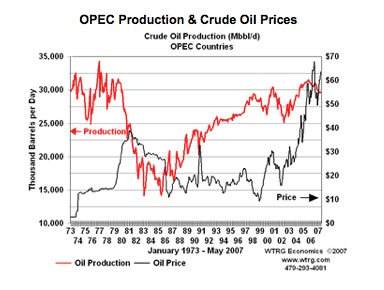
Source: WTRG Economics
Whether the U.S. investment to keep the oil flowing through the Strait of Hormuz was necessary is debatable, two speakers at the NCSU conference argued.
Eugene Gholz of the University of Texas Center for Energy Security and Ann Korin of the Institute for the Analysis of Globa Security argued that the price of crude is influenced mainly by production levels in countries that belong to OPEC, the Organization of Petroleum Exporting Countries.
It makes more sense for the U.S. to diversify energy consumption than to spend billions on military campaigns in the Persian Gulf or on currying favors with members of the OPEC cartel, Korin and Gholz suggested.
Once 15 percent to 20 percent of all of the vehicles in the U.S. can run on multiple fuels, Gholz said, the infrastructure to deliver gasoline alternatives will follow.
It’s advice North Carolina is heeding.
In addition to its commitment to boost the use of fuel ethanol made from plant fibers, the state is also at the forefront of establishing charging stations for plug-in electric vehicles, or PEVs. The Research Triangle is projected to get about 200 of the charging stations within the next year.
As a result, North Carolina is among the states where Nissan will fill the initial 50,000 orders for the Leaf, the first mass-produced, affordable electric car. The Leaf is not sold through dealerships. Deliveries started in December and January on the West Coast. The first cars are scheduled for delivery in North Carolina in April. (More on PEVs and the Leaf here.)
On Saturday, the day after the NCSU conference, Nissan brought about two dozen Leaf cars to the Raleigh farmers market for test drives.

Unleashing the power of 1100 suns
Friday, December 17, 2010, 2:19 pm No Comments | Post a Comment
An array using high-concentration photovoltaics from Semprius, Inc.
A year or so ago, Joseph Carr found himself on an elevator with a man wearing a Siemens polo shirt. Having once worked for a division of Siemens, Carr introduced himself as the CEO of Semprius, Inc., a company that makes very high-efficiency solar modules. At the end of a fourteen-floor ascent, the two men exchanged business cards. Within months, Semprius and Siemens announced a joint development agreement.
Yes, a true “elevator pitch” success story.
An argument for boosting federal funding for energy research
Wednesday, November 17, 2010, 4:43 pm 3 Comments | Post a Comment
Jim Trainham
Calls for Congress to boost federal funding for clean energy research are getting louder and Jim Trainham, executive director of the newly formed Research Triangle Solar Fuels Institute, is jockeying for a position in the chorus.
The University of North Carolina at Chapel Hill, Duke University, N.C. State University and RTI International formed the solar fuels institute this summer to give the Research Triangle Park area its due as an energy research hub.
“There’s a lot of expertise here,” Trainham said Tuesday during a presentation at the Triangle Area Research Directors Council.
From its four parents, the solar fuels institute got experts in chemistry, electrical engineering, material sciences and nanotechnology and a lofty goal: Tapping the sun to make liquid fuel. (Watch a Q&A with Trainham here.)
The technology to meet the goal could be developed in less than a decade, Trainham suggested at TARDC. The big question is how to pay for the research and development. Read more…
RTP researchers collaborate to tap the sun and make liquid fuel
Monday, October 18, 2010, 1:37 pm 2 Comments | Post a CommentNorth Carolina’s Research Triangle missed out on the U.S. Department of Energy’s $122 million to establish the nation’s solar fuels innovation hub - the prize went to the Joint Center for Artificial Photosynthesis, headed by the California Institute of Technology.
But that isn’t stopping research here to tap the sun and make liquid fuel the East Coast way.
Experts in chemistry, electrical engineering, material sciences and nanotechnology at the University of North Carolina at Chapel Hill, Duke University, N.C. State University and RTI International will be working together for the first time at the newly formed Research Triangle Solar Fuels Institute.
Jim Trainham, the institute’s executive director, has an annual budget of about $2 million to sustain the research effort, which will focus on the semiconductor panels tasked with splitting water into hydrogen and oxygen with the help of solar energy.
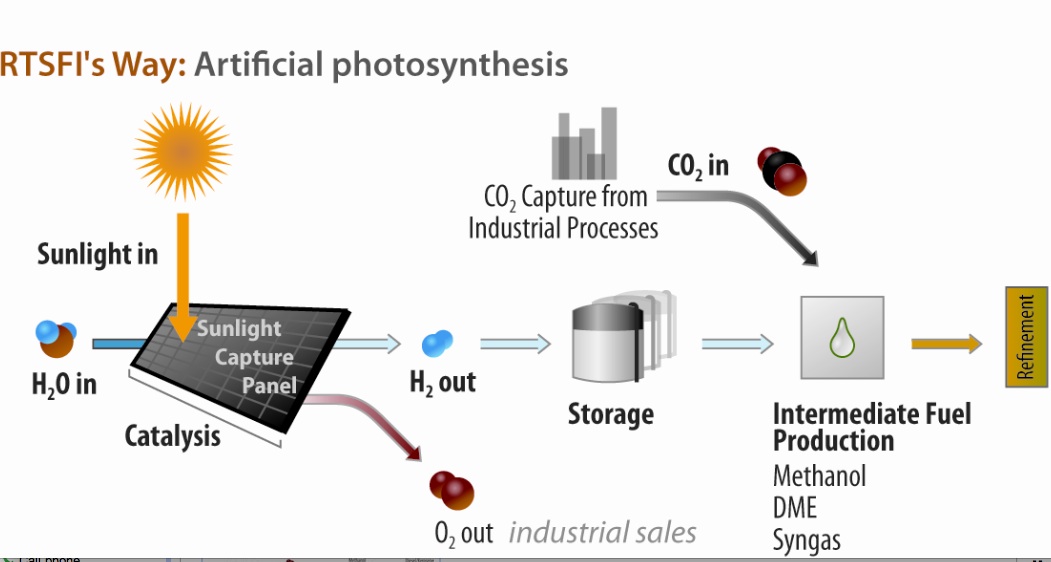
Solar fuel production the East Coast way.
But Trainham also foresees collaboration between researchers at the Research Triangle Solar Fuels Institute and the Joint Center for Artificial Photosynthesis, particularly in scaling up any solar fuels production methods and designing production plants.
Trainham also talked about the challenges the researchers are facing. Watch the Q&A with Science in the Triangle:

A Conversation with Dr. Robert Koger of Advanced Energy
Monday, September 20, 2010, 7:04 am 1 Comment | Post a Comment
Dr. Robert Koger
Dr. Robert Koger is president and executive director of Advanced Energy, a nonprofit organization established by the North Carolina Utilities Commission in 1980 to forestall electrical rate increases by promoting energy conservation and alternative and renewable sources of electricity. Advanced Energy provides services that focus on energy efficiency for commercial and industrial markets, electric motors and drives, plug-in transportation, and applied building science.
Advanced Energy also operates NC GreenPower, a program funded through consumers’ voluntary contributions, designed to increase the amount of renewable energy put on the electric grid in North Carolina and to mitigate greenhouse gas emissions.
This month, Dr. Koger assumes the chairmanship of Triangle Area Research Directors Council (TARDC), a group of science and technology leaders from local companies, nonprofits, and universities. The group meets over lunch monthly from September to May, to exchange ideas and information and to hear from guest speakers. TARDC’s first meeting under Dr. Koger’s leadership will be September 21, and the guest speaker will be Mr. Joe Freddoso, president and CEO of MCNC/NC STEM. Non-members of TARDC can attend the luncheons.
I recently asked Dr. Koger about the history of Advanced Energy and about his leadership of TARDC. Read more…
“Power Plants” on North Carolina’s Roadsides
Monday, September 13, 2010, 9:46 am 1 Comment | Post a CommentLike many farmers, Ted Sherrod double-crops, growing canola in the winter on the same land where he harvested sunflowers or safflower grown during the summer. But Sherrod’s “farms” are stretches of roadside or median across the state, and his crops are part of an innovative experiment designed to produce biodiesel for N.C. Department of Transportation vehicles.
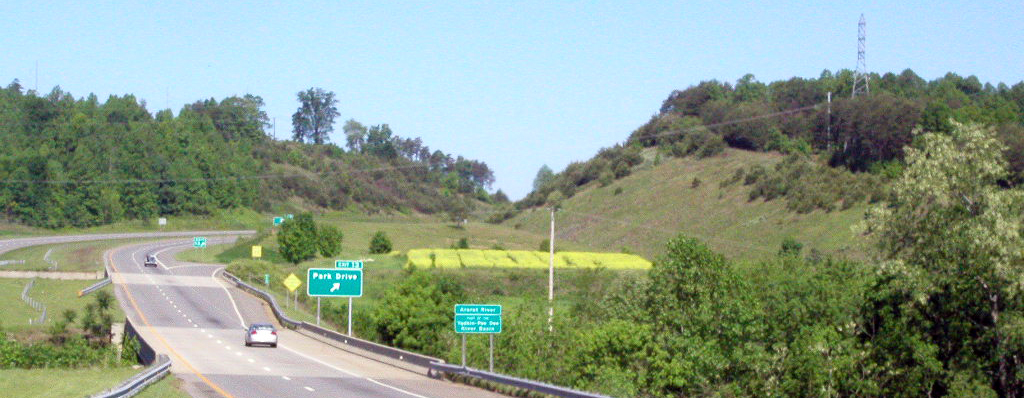
Biofuel crops on a roadside near Raleigh. Photo: NCDOT
White House: Tough year ahead for R&D funding
Thursday, September 9, 2010, 7:59 pm 1 Comment | Post a CommentIncreases in federal funding for research and development in the past 10 years - from the doubling of biomedical research dollars to the stimulus money - have created jobs and supported the economy in R&D hot spots like North Carolina’s Research Triangle area.

Kei Koizumi
But concerns about the rising U.S. deficit now threaten to slow the flow of federal R&D funding to universities, research institutes and companies developing new technologies. Budget proposals for the fiscal year starting October 2011 are due Monday and the Obama administration has asked all federal agencies to cut funding requests by 5 percent.
The five months of budget negotiations that are ahead will determine whether R&D funding can be protected from the cuts, Kei Koizumi, assistant director for federal R&D in the White House Office of Science and Technology Policy, told faculty at the University of North Carolina at Chapel Hill Wednesday.
Regardless of the outcome of the negotiations, Koizumi said, “it’s going to be a very tough year.”
With the same amount of money or less to go around, more new research projects might languish for lack of funding and existing projects might have to be scaled back in favor of others with a higher priority.
Health, clean energy, global climate change and security remain among the R&D priorities of the Obama administration, Koizumi said. But the budget may also include some new funding ideas, such as experimental approaches to bring new technologies to market and a shift in how to balance research that is relevant today and high risk-high return research that could prove transformational in the long term.
Results of these policy discussions and budget negotiations will reverberate in R&D hot spots, where federal R&D funding supports a significant part of the local economy.
 U.S. industry, nonprofits and taxpayers invest about $400 billion every year in R&D.
The federal government’s share is about 37 percent, or $147 billion. That’s up about 50 percent since 2000 thanks to initiatives to boost biomedical research and advances in clean energy and engineering.
Meanwhile, R&D spending in the Research Triangle about doubled.
In 2008, Duke University, UNC-CH, N.C. State University and RTI International, a research institute in Research Triangle Park, spent about $2.34 billion on R&D, according to a survey by the National Science Foundation and RTI’s annual report.
North Carolina was also among the states that benefited the most from stimulus money earmarked for R&D in the past 18 months - the three universities and RTI were awarded more than $225 million just from the National Institutes of Health.
Hundreds of R&D jobs have been created in the Triangle backed by stimulus funds and university researchers are already asking what will happen with these jobs once the funding runs out.
“There’s not going to be another stimulus,” Koizumi said. “There is some adjustment coming.”
Find Koizumi’s slide presentation here.
What does a plug-in vehicle have in common with the iPad?
Thursday, August 5, 2010, 9:58 pm No Comments | Post a Comment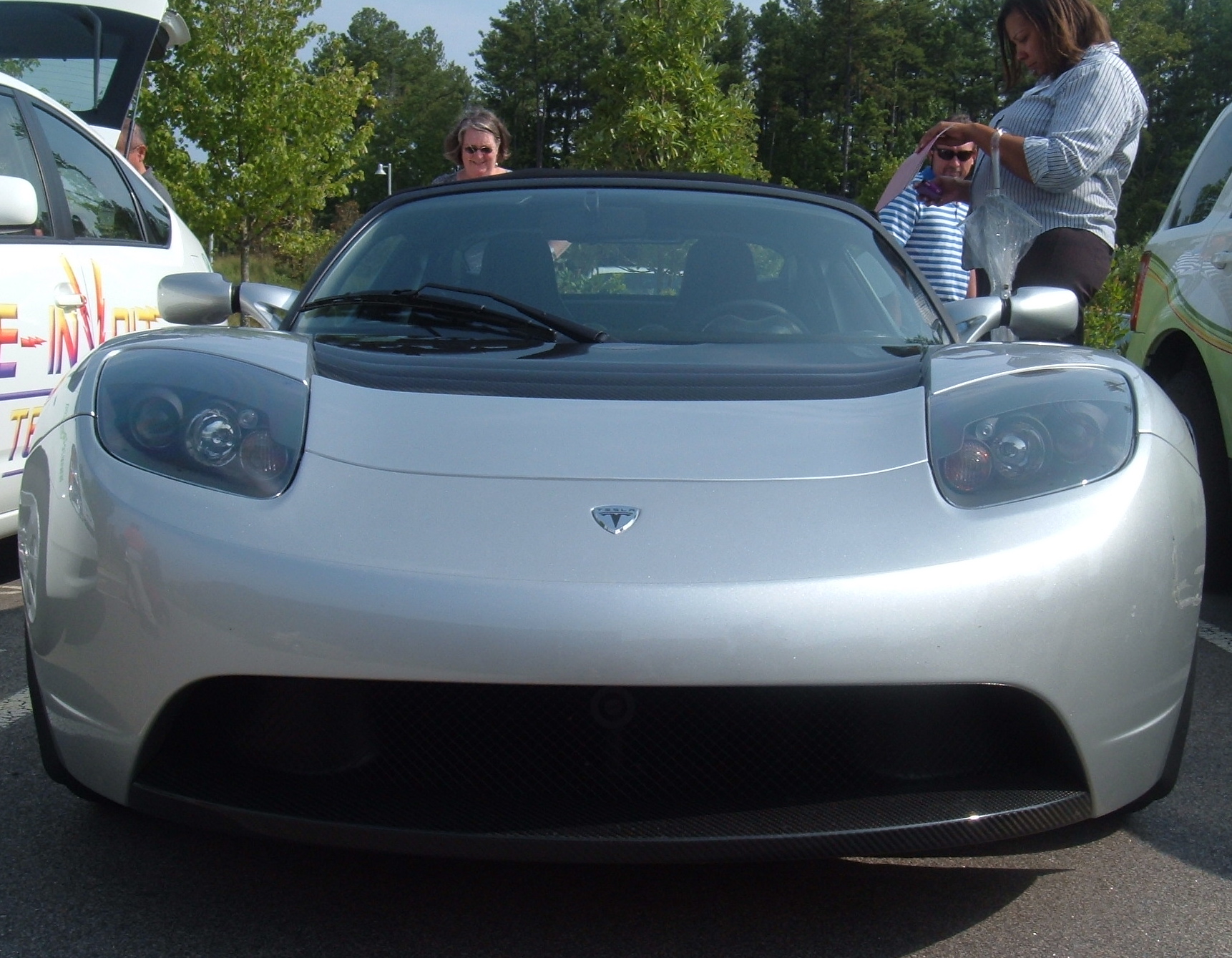
Duke Energy's Tesla
Duke Energy’s silver Tesla in the parking lot at Research Triangle Park headquarters was off-limits - you could touch and take pictures but not drive it or ride in it.
In that respect, Wednesday’s forum on plug-in electric vehicles resembled events featuring 20th century combustion engine technology with expensive sports cars spurring unattainable dreams amongst autophiles.
That the Tesla remained parked was unfortunate. It’s exactly the driving of a plug-in electric vehicle, or PEV, that would have provided a clue how shifting from fossil fuel to electricity might change daily life.
PEVs come in different flavors, from hybrids like the plug-in version of the Toyota Prius and the Chevy Volt to all-electric cars like the Tesla and the Nissan Leaf. But as the Leaf, the first mass-produced, affordable electric car, hits U.S. roads in December and January, the future of driving might feel more and more like the future of reading.
So, does the all-electric car promise to be to driving what the iPad or the Kendle promise to be to reading?
That’ll depend on how many people will buy the Leaf and whether they like what they buy, panel members at the forum, from Nancy Mansfield, Nissan’s electric vehicle regional manager, to Duke Energy’s John Langston and Progress Energy’s Mike Waters, agreed.

Nissan Leaf
More than 17,000 people in the U.S. have spent $99 each to reserve a spot on the list to order one of the first 50,000 Leafs, Mansfield said. The cars, which will be imported from Japan until U.S. production starts in 2012, will not be sold through dealerships.
First orders will be accepted by the end of the month and filled by December, Mansfield said. Orders from Tennessee, California, Arizona, Oregon and the state of Washington will be taken and filled first.
Of the 288 reservations in North Carolina, 139 came from the Research Triangle area, she said. The first local deliveries are projected in April.
That may not sound like a lot, considering that the National Auto Dealers Association put the number of cars on North Carolina roads at more than 3.6 million. But the Leaf sets the stage. In the next two years, automakers plan to bring to market about two dozen PEV models and despite lingering concerns about battery technology and ability of the electric grid to keep up, the number of federal incentives is set to increase.
Already, federal tax credits reduce the price of the Leaf and the cost of installing a charging station at home, because PEVs promise to reduce carbon dioxide emissions and fossil fuel imports.
But PEVs are more than cars without tailpipes. Owning one will change habits and routines. For starters, an electrical engine makes no noise and needs neither a transmission nor an oil change.
PEVs do need charging stations, however, in homes, parks, public parking lots, schools, hospitals and shopping centers. The RTP area is projected to get about 200 of them within the next 18 months, according to Jeffrey Barghout, director of Transportation Initiatives at Advanced Energy in Raleigh.
But the bulk of the charging is expected to be done overnight at home. Forget the stop at the gas station on the way home. Many PEVs will be refueled in the garage or at neighborhood charging stations. To completely recharge the Leaf’s batteries on a 110 Volt circuit takes up to 21 hours, so Nissan recommends installation of a 220 Volt charging station. That costs about $2,200 and requires a city permit.
The permitting process attracted officials from Cary, Raleigh, Durham and other communities in the RTP area to the forum. Some of them, like the Town of Cary, also reserved a spot to order a Leaf.
For more information about PEVs, check out Web sites by the Electric Drive Transportation Association, the industry’s lobby group; EV World, an online publication by electric vehicle aficionados; Plug-In America, an online publication by clean energy advocates; and Project Get Ready, an initiative of the Rocky Mountain Institute to prepare for the arrival of PEVs.
Still, a test drive is the best way to get a feel for how different PEVs are. Check out this video of a Tesla test drive (not Duke Energy’s car):

RTP scientists look to sun to fuel energy research hub
Friday, July 23, 2010, 7:22 pm 1 Comment | Post a CommentNorth Carolina’s Research Triangle was bested by California to get federal funding for a solar fuels innovation hub. The U.S. Department of Energy last week awarded the $122 million prize to a group led by the California Institute of Technology.
The news was disappointing for the University of North Carolina, Duke University, N.C. State University and RTI International, which make up the Research Triangle Solar Fuels Institute. That was clear when David Myers, RTI’s vice president of engineering and technology, talked to Science in the Triangle the same day the DoE made the announcement.
RTP-area efforts to develop a liquid fuel from sunlight will continue despite the federal funding setback, Myers said. The solar fuels initiative is one of the most active areas of energy research here and a key ingredient in plans to build the Triangle into an energy research hub.
“The area is vastly underrated in the amount of energy research going on,” Myer said.
Watch more of the videotaped Q&A here: