Posts Tagged ‘TARDC’

Woodson envisions a new NCSU
Wednesday, September 28, 2011, 9:08 am No Comments | Post a CommentWilliam “Randy” Woodson has been frank about his intentions to shake things up since he moved halfway across the country from Indiana’s Purdue University to become N.C. State University’s chancellor last year.

Randy Woodson
More than doubling NCSU’s endowment to about $1 billion. Recruiting more tenure-track faculty to better serve a student population that has grown rapidly in the past decade. Woodson has repeatedly put these two priorities on the top of his to-do list. He did so again when he spoke Sept. 20 at the Triangle Area Research Directors Council in Research Triangle Park.
But he went further, telling TARDC members how another budget cut - NCSU lost about $80 million, or 15 percent, in the current school year - has made strategic restructuring necessary. To bolster NCSU’s research budget and educate top-notch graduates in science, technology, engineering and math, the NCSU model has to change, he said.
“Our goal shouldn’t be to be the biggest,” Woodson said. “We’ve got to be an engine for the economy of the state.”
The 15 percent budget cut - the largest in three years of state revenue shortfalls - prompted NCSU to pool resources rather than cut across the board. Courses were cut, administrative staff laid off, programs consolidated. NCSU lost about 780 employees, Woodson said.
Tuition increased. Although NCSU received about 20,000 application for about 4,000 student spots this year, Woodson said he knows he’s not popular among students fearful of further increases. But the adjustments were necessary.
“We didn’t ask for the model to be changed,” he said.
To further bolster revenue and research, NCSU is stepping up its efforts of marketing technologies developed in its labs and is getting more involved in helping the state and the region recruit companies. (More on NCSU’s economic development efforts here.)
In 2010, NCSU spun off four companies and took in $5.1 million in royalties, Woodson said. He would like to see the number of spinoffs double to about eight or 10 a year, he added.
To recruit more tenure-track faculty - graduate enrollment has increased nearly 50 percent in the past 10 years while new faculty enrollment rose only 2 percent during the same period - Woodson said NCSU established a faculty recruitment program and funded it with $5 million.
An issue he’s also burning to address: NCSU’s ability to raise salaries to prevent faculty from being raided.
Currently, a raise requires a letter from another university offering a faculty member a job with a higher salary. By that time, the faculty member has very likely already decided to leave and NCSU offering a pay raise comes too late, Woodson said.
NC history of flight extends to space
Thursday, May 19, 2011, 9:26 pm No Comments | Post a CommentNASA’s interest in North Carolina goes back to the 1960s, when U.S. astronauts came to the University of North Carolina at Chapel Hill to learn at the Morehead Planetarium how to navigate in space by looking at stars, according to a N.C. Museum of History report. In the past 25 years, a handful of North Carolinians flew on space shuttle missions, including Beaufort native Michael Smith, who died in 1986 when the Challenger exploded shortly after liftoff.
To prepare for and support NASA missions, researchers at N.C. State University have studied how to more precisely land a vessel on Mars and how to grow plants in a spacecraft operating in zero gravity.
But NASA’s involvement in North Carolina goes further. Since 1991, teachers and students at North Carolina universities, community colleges and public schools have received about $15 million to study science, technology, engineering and mathematics, to research issues related to space missions and to work in companies contracting with NASA.
Funding for the research grants, scholarships and summer internships has been provided through the N.C. space grant, a program administered at NCSU.
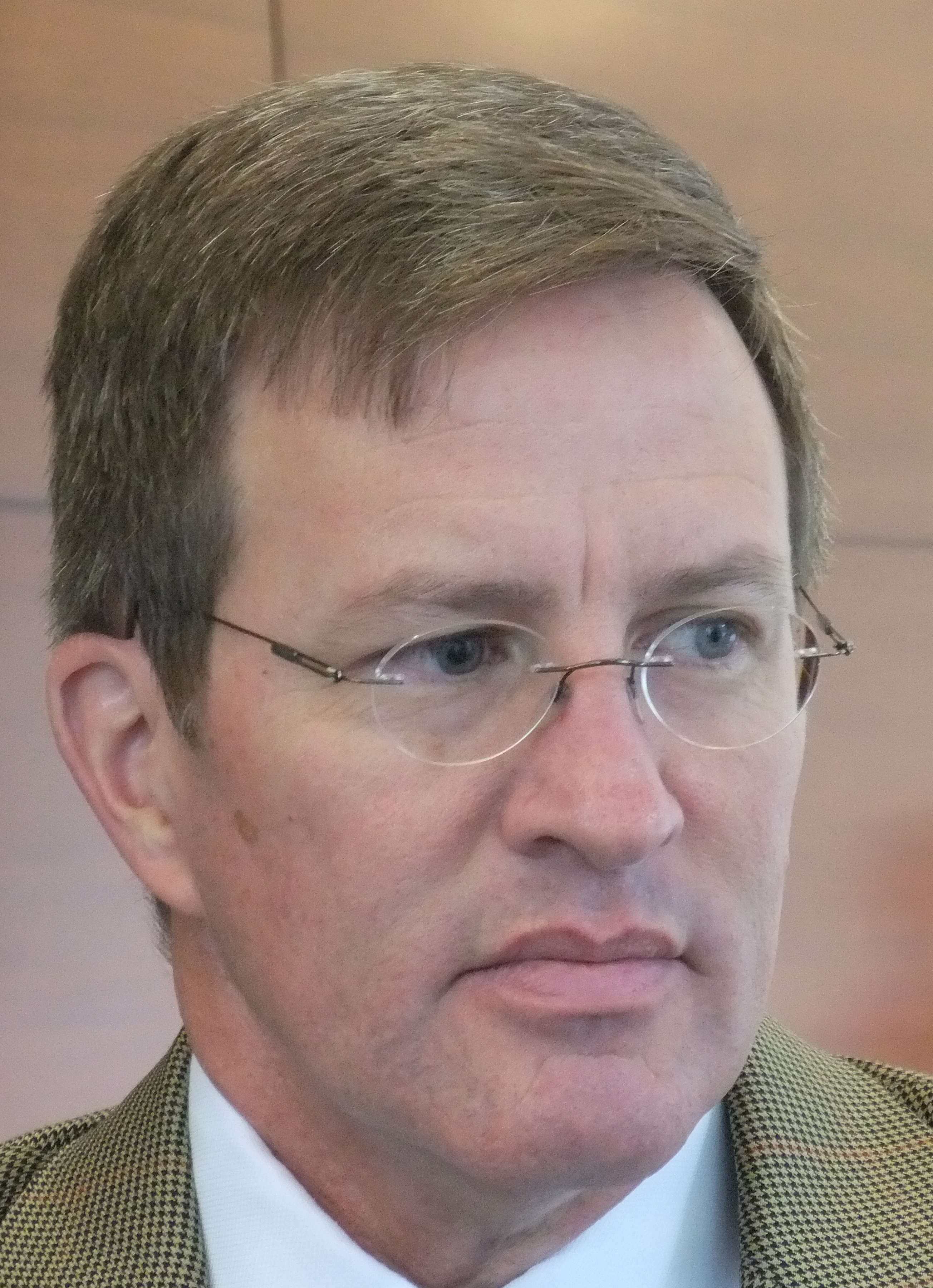
Christopher Brown
“The goal is to keep the pipeline filled for NASA,” Christopher Brown, director of the N.C. space grant, told members of the Triangle Area Research Directors Council who gathered this week at Research Triangle Park headquarters.
But “this isn’t just rockets and aerospace,” Brown said. Space grant projects in North Carolina include satellite tracking of red wolves and the development of an undergraduate robotics course at Duke University.
As a professor of plant biology at NCSU, Brown teaches a space biology class and some of his plant experiments will travel to the international space station on the last shuttle flight scheduled to take off in August.
NASA funds the N.C. space grant and similar programs in all other states through its annual budget.
In the past five years, the total for these grants has increased from about $30 million to $45.6 million. North Carolina’s portion is about $800,000 annually, Brown said. That includes a state match. The match used to be about $200,000 per year, but budget cuts have reduced it to $180,000.
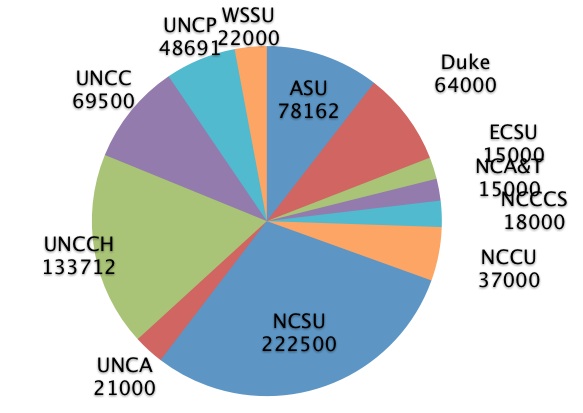
N.C. space grant beneficiaries
Federal cuts are also looming, but Brown said he didn’t think the program would be eliminated, because every Congressional district receives money. For fiscal year 2012, which starts Oct. 1, President Obama’s budget request for the space grant program is $26.5 million, according to NASA budget information. That’s a reduction of more than 40 percent.
In the past, N.C. space grant money has supported research of young university faculty, helped develop new college courses and paid for professional development of K-12 teachers, provided scholarships and summer internships for graduate and undergraduate students and students at community colleges.
Thirteen university campuses across North Carolina are affiliated with the N.C. space grant, from UNC Asheville to Elizabeth City State University.
North Carolina adds another renewable to its energy sources
Tuesday, May 3, 2011, 10:56 pm No Comments | Post a Comment
Wind turbines
North Carolina is on the way to become a state with one of the largest photovoltaic solar farms and one of the largest wind farms in the U.S.
The N.C. Utilities Commission Tuesday approved plans of a Spanish company to build up to 150 turbines, each about 400 feet tall, near Elizabeth City in the northeastern corner of the state. If the $600 million project gets the necessary federal, state and local permits, it will be another large source of renewable energy that is produced in North Carolina.
About 270 miles west of Elizabeth City, near High Point, construction of the final phase of a $173 million solar farm with 63,000 photovoltaic panels is under way on about 200 acres.
The electricity the two projects are expected to generate - enough to provide power to about 62,000 homes per year - would become part of the energy blend that residential, commercial and industrial consumers in the state already receive from the power grid. The utilities commission has been goosing North Carolina power companies and cooperatives for three years to add energy generated from renewables to the mix.
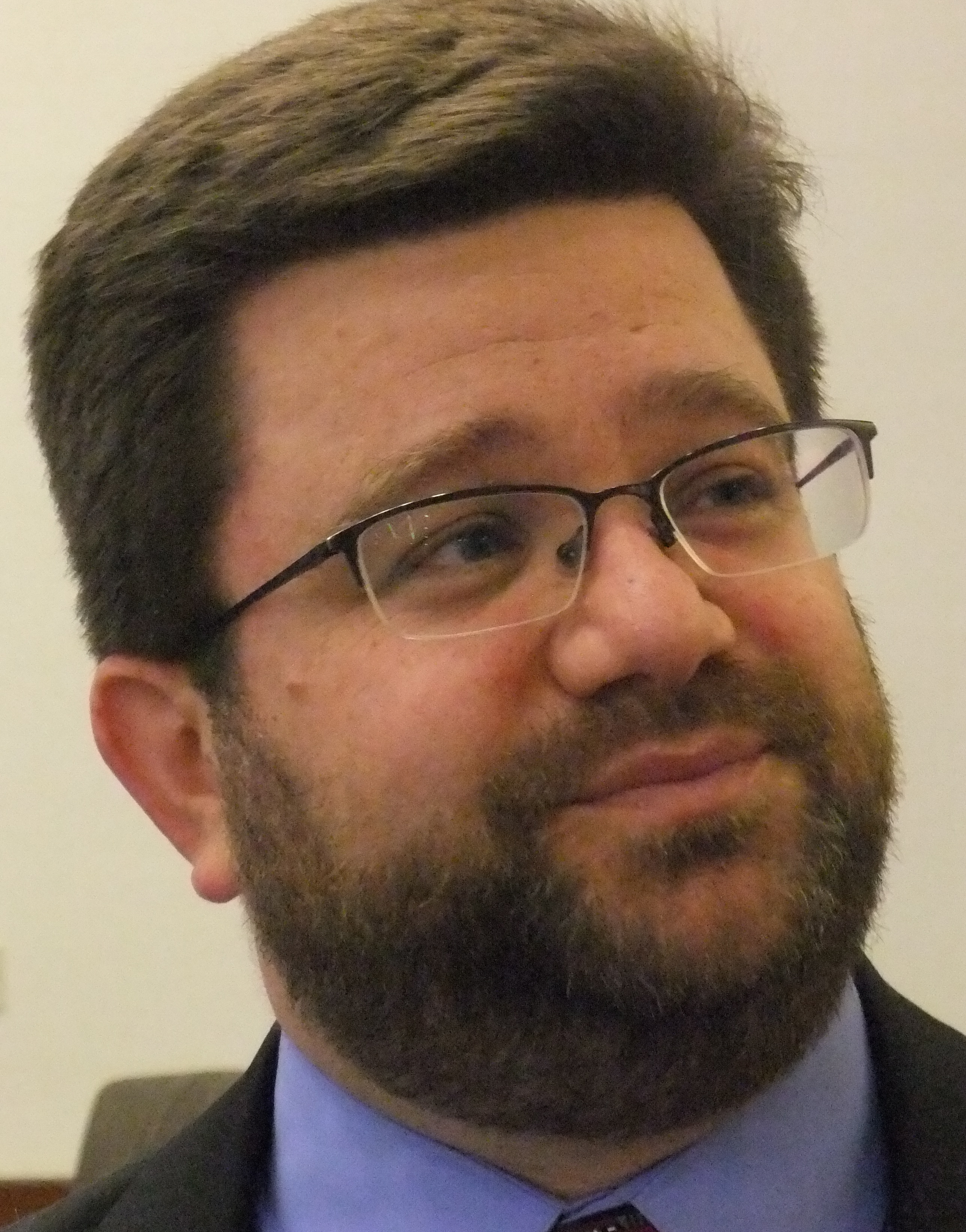
Steve Kalland
This regulatory pressure and industry incentives are key to successfully reduce America’s dependence on oil and lower the amount of harmful greenhouse gas emissions, Steve Kalland, executive director of the N.C. Solar Center, said during a recent meeting of the Triangle Area Research Directors Council in Research Triangle Park.
“It’s not a technology question anymore,” Kalland said. “Financing and regulatory are the two biggest barriers to move technologies forward.”
Energy from renewables is still more expensive than energy from traditional sources, such as oil and coal, Kalland said, but oil prices are going up and the price for green technology is coming down. “The trendlines say time is working in our favor.”
For the second time in three years, crude oil prices are above $100 a barrel and gas prices at the pump are closing in on $4 per gallon. Meanwhile, the cost to get solar panels installed in North Carolina has dropped 49 percent since 2007.
“Everytime oil goes up, we get a policy opportunity,” Kalland said. What he means by that is legislation that supports renewable energies, particularly federal legislation that deals with the differences in regulations from state to state. “Fifty states have 50 regulatory commissions, it’s something that cries out for federal intervention,” he said. But an array of special interests have so far foiled attempts to get anything done nationally.

Photovoltaic solar panels.
The North Carolina legislature has done more for renewable energy supporters.
In 2007, state lawmakers established renewable portfolio standards that the utilities commission tracks by making power suppliers file compliance reports. The standards say that by 2021, 12.5 percent of the energy that investor-owned utilities like Duke Energy supply must be generated from renewable sources. Solar, wind, biomass, tidal energy, landfill gas, swine and poultry waste all qualify and consumers must pay for part of the costs.
North Carolina is one of 32 states with such standards, according to information collected by the U.S. Department of Energy.

Swine waste.
For several years, the state has also offered a 35 percent renewable energy investment tax credit as an incentive to install solar, wind, geothermal and other renewable energy technology. Last year, the legislature added a tax credit for businesses and homeowners who install combined heat-and-power systems. CHP systems are up to twice as efficient than traditional heating and cooling systems.
If 20 percent of U.S. households installed CHP systems by 2030, the amount of energy consumed by U.S. households would be cut in half, the U.S. Department of Energy estimated.

Wood biomass
The carrot-and-stick approach has boosted the number of solar water heating installations and photovoltaic installations in North Carolina, ranking the state in the top 10 nationwide. In 2010, more than 100 solar energy companies operated in the state, employing more than 1,500, according to a report by the N.C. Solar Center.
The N.C. Sustainable Energy Association estimated that last year about 12,500 job in North Carolina were green.
SunEdison completed construction of the photovoltaic farm near High Point in January. Duke Energy has a 20-year contract to buy all of the power generated by the farm - about 17 megawatt, or enough to supply 2,600 homes per year.

Wave energy.
The wind farm that the U.S. subsidiary of the Spanish Iberdrola Renewables wants to build on about 20,000 acres in northeastern North Carolina is projected to produce up to 300 megawatt, or enough to supply 60,000 homes per year. The wind farm could start operations as soon as January 2013.
There’s potential for more to come off the coast.
A 9-month feasibility study that the University of North Carolina published in 2009 recommended that North Carolina pursue wind energy production aggressively. The study looked at locations offshore and in the Pamlico and Albermarle sounds and found 2,800 square miles within 50 miles of the coastline particularly well suited and worthy of further investigation.
Hurricanes are a threat to offshore wind farms, Kalland acknowledged during his TARDC talk. But insurance companies have no problem insuring the turbines.
Expanding the Hamner one institute at a time
Monday, March 21, 2011, 11:03 pm No Comments | Post a Comment
William Greenlee
William Greenlee is getting ready to build another institute on the 56-acre campus of the Hamner Institutes for Health Sciences in Research Triangle Park.
Construction of the Global Translational Research Institute, a 150,000 square-foot building projected to cost $70 million, could start as early as this fall, the Hamner chief executive told members of the Triangle Area Research Directors Council at their March 16 meeting.
The building is part of a $500 million expansion plan Greenlee unveiled in 2006. The plan envisions five buildings of labs and office space - a research hub focused on drug safety early in the development of new medicines.
Greenlee’s vision for the Hamner is inspired by biomedical research hot spots like the Salk Institute in San Diego, Calif., the Scripps Research Institute in La Jolla, Calif., and Jupiter, Fla., and the Broad Institute in Cambridge, Mass.
At the TARDC meeting, Greenlee showed a map of Cambridge, with the Broad Institute at the center of a triangle that had Harvard University, the Harvard Medical School and Massachusetts General Hospital as its corners. “This is an instructive model,” he said and pointed out that the Hamner sits in the middle of a similar node of knowledge with the University of North Carolina at Chapel Hill, Duke University and N.C. State University as the corners of the triangle.
“We don’t want to become Cambridge,” Greenlee said. “We want to create the energy of Cambridge.”
In the past five years, the Hamner has already made headway in pursuit of the ambitious expansion plan: A research partnership with UNC, research footholds in China and a collaboration with the Food and Drug Administration to reduce drug-induced liver injuries.
In June 2009, Janet Woodcock, head of the FDA’s Center for Drug Evaluation and Research, cut the ribbon at the opening of the Hamner’s Institute for Drug Safety Sciences, which built on the more than 30-year expertise the Hamner has with chemical toxins.
“And now math is something you get.”
Tuesday, December 21, 2010, 11:08 pm No Comments | Post a Comment
Bob Panoff
During a Bob Panoff show-and-tell it’s easy to forget the founder and executive director of the Shodor Education Foundation in Durham is talking about math, physics, science.
Among the things he likes to bring is a picture of waves on a cross. The trusted exhibit was along when Panoff spoke at this month’s Triangle Area Research Directors Council luncheon in Research Triangle Park.
The picture represents a trigonometric function on intersecting x and y axes and is a computational tool on Panoff’s laptop. He pulls up the formula that underlies the function and changes a multiplier. The waves get taller or shallower, but their frequency and length stay the same. Then he changes an addend. The waves come closer together or move farther apart, but their highs and lows don’t change.
“And now math is something you get,” Panoff told TARDC members. “Math and science are more about pattern and symbol recognition than numeric manipulation.”
At Shodor, Panoff and his staff of 15 use the same computational tool and others to help students understand that science doesn’t have to be a pain. It can be an onion, a problem that is solved one layer at a time, or a pearl, a solution built from an irritating grain of sand.
Students from fifth grade on can get the tools from Shodor’s Web site and learn chemistry, biology and physics through modeling or simulation. High school students can learn how to come up with the tools. Teachers and university faculty can learn how to use the tools as part of their lessons. And the more than 3 million page views per month on Shodor’s Web site suggest there’s demand.
What’s most important to Panoff is that the tools help students shift their attention from “What’s the answer to this problem?” to “How many different ways are there to look at the problem?” and “How do I know what’s right when I have multiple answers?”
Googling on the Internet is a surefire way to get multiple answers, Panoff said. The melting point of the radioactive chemical radium, for example, gets 116,000 hits on Google. Answers to the question include 1,292.0 degrees Fahrenheit, 1,392 degrees Fahrenheit and 1,291.7 degrees Fahrenheit.
And did you know numbers evoke feelings? Forty percent is less than half, but people in a shopping mall have a different perspective. To them 40 percent is a large number, Panoff said, because at a mall the number is associated with discount.
What Panoff is getting at is to get math and science is to understand that corrections of wrong answers will produce right answers, that verification and validation requires thinking skills and that handing out computers without training teachers on how to use computational tools isn’t preparing students to become part of the 21st century workforce.
View slides for Panoff’s TARDC presentation here.
An argument for boosting federal funding for energy research
Wednesday, November 17, 2010, 4:43 pm 3 Comments | Post a Comment
Jim Trainham
Calls for Congress to boost federal funding for clean energy research are getting louder and Jim Trainham, executive director of the newly formed Research Triangle Solar Fuels Institute, is jockeying for a position in the chorus.
The University of North Carolina at Chapel Hill, Duke University, N.C. State University and RTI International formed the solar fuels institute this summer to give the Research Triangle Park area its due as an energy research hub.
“There’s a lot of expertise here,” Trainham said Tuesday during a presentation at the Triangle Area Research Directors Council.
From its four parents, the solar fuels institute got experts in chemistry, electrical engineering, material sciences and nanotechnology and a lofty goal: Tapping the sun to make liquid fuel. (Watch a Q&A with Trainham here.)
The technology to meet the goal could be developed in less than a decade, Trainham suggested at TARDC. The big question is how to pay for the research and development. Read more…
Expansion of fiberoptic superhighway to boost research, learning
Sunday, September 26, 2010, 2:47 pm No Comments | Post a CommentOver the next three years, Research Triangle Park-based MCNC will spent about $116 million to significantly expand the fiberoptic superhighway that most North Carolina researchers, teachers and public health officials use to generate, collect, crunch and store data.
The project will extend the N.C. Research and Education Network, which currently follows I-85 and I-40 from Charlotte to Raleigh, to rural areas along North Carolina’s border with Virginia, in the mountains and along the coast. The additional 2,500 miles of fiberoptic cable will provide enough bandwidth to boost remote learning possibilities for teachers and students on the Internet, allow researchers hobbled by limited bandwidth capacity to do more data-intensive projects and open up opportunities for statewide research collaborations.
Joe Freddoso
By 2013, when MCNC plans to be done laying the cable, North Carolina will have a fiberoptic infrastructure for research and education that will rival top-ranked networks in Massachusetts, New York, Michigan and Missouri, said Joe Freddoso, president and chief executive at MCNC.
“We will have an infrastructure that will carry us through the next couple of generations,” Freddoso said during a presentation he recently made to members of TARDC, the Triangle Area Research Directors Council.
The funds for the expansion are largely federal stimulus money, but MCNC and the Golden LEAF Foundation, which administers North Carolina’s tobacco settlement, also contributed.
Being able to generate, digest and analyze ever larger quantities of data is crucial and the growing appetite for computing power is turning the Triangle in an emerging hot spot for cloud computing.
N.C. State University, the University of North Carolina at Chapel Hill, SAS Institute in Cary and IBM in RTP are working on affordable ways to scale up the ability to store and crunch increasing amounts of data.
Interest in cloud computing, which taps existing computing capacity like utilities tap electricity from a grid according to demand, is particularly keen among researchers and organizations working in the public health arena.
MCNC’s fiberoptic network is used by all institutions in the UNC system, all 2,400 public schools statewide, two-thirds of the 36 independent colleges and universities, nearly half of all the institutions in the state’s community colleges system, research institutions and foundations, rural libraries, public health department and county health clinics. In a next step, MCNC wants to add all public hospitals in the state.
Also, remote or e-learning has taken off statewide. Enrollment has quadrupled since 2005 as more and more students make use of the computer as a classroom. Community colleges, for example, offer virtual classes in high schools that have no staff to teach the subject.
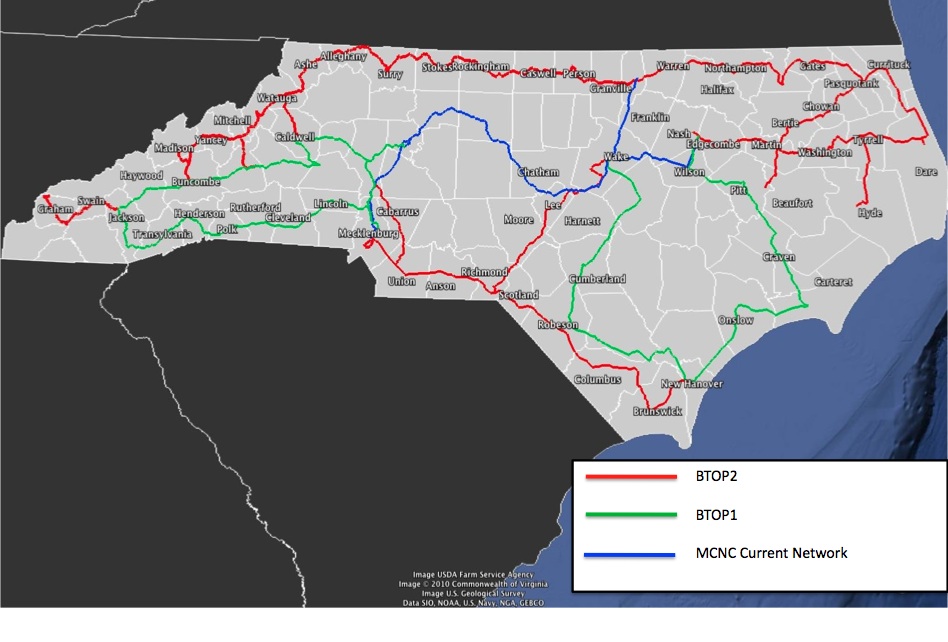
The expanded NCREN. Blue lines are existing network. Red and green lines are expansions.
Already, MCNC has 3 million users on the network per day.
Because of its limited capacity and geographical reach, MCNC’s existing fiberoptic network makes it difficult to accommodate all researchers in the state. Appalachian State University in Boone, Elizabeth City State University, UNC-Wilmington and UNC-Asheville are among the institutions that currently have to make do with a limited amount of bandwidth.
The network expansion over the next three years will also benefit the coastal studies institutes in Morehead City and on Roanoke Island and the National Climatic Data Center, the world’s largest archive of weather data, in Asheville.
MCNC plans to lay 48 strands of fiber along the proposed routes. That’s enough to add mobile connection points for researchers who, for example, work out in the field, take care of electronic medical records and lease bandwidth to commercial providers.
Pediatrician takes on rare metabolic diseases
Friday, June 4, 2010, 9:48 am 2 Comments | Post a Comment
Dr. Maria Escolar
Dr. Maria Escolar was a 35-year-old pediatrician overseeing a program for doctors in training at Duke University 12 years ago when she saw her first patient with Krabbe disease.
Named after a Danish neurologist who first described it in 1913, Krabbe disease is a rare, genetic disorder that is painful and damages mental and motor skills. Children with the disease show no symptoms at birth, but without treatment they go deaf and blind and usually die by the time they are 3.
“It’s one of the most horrible diseases I’ve ever encountered,” Escolar said. Read more…
Regenerative medicine: Taking lessons from salamanders
Wednesday, April 21, 2010, 9:30 pm No Comments | Post a CommentDr. Anthony Atala likes to start his talks with a time-lapse video of a salamander regrowing an injured limb over two weeks. Then, the director of the Wake Forest Institute for Regenerative Medicine asks his listeners to imagine humans regenerating limbs, tissue or organs that have been damaged or are missing.
“Salamanders can regenerate. Why can’t we?,” Atala asked during a TEDMed talk last fall.
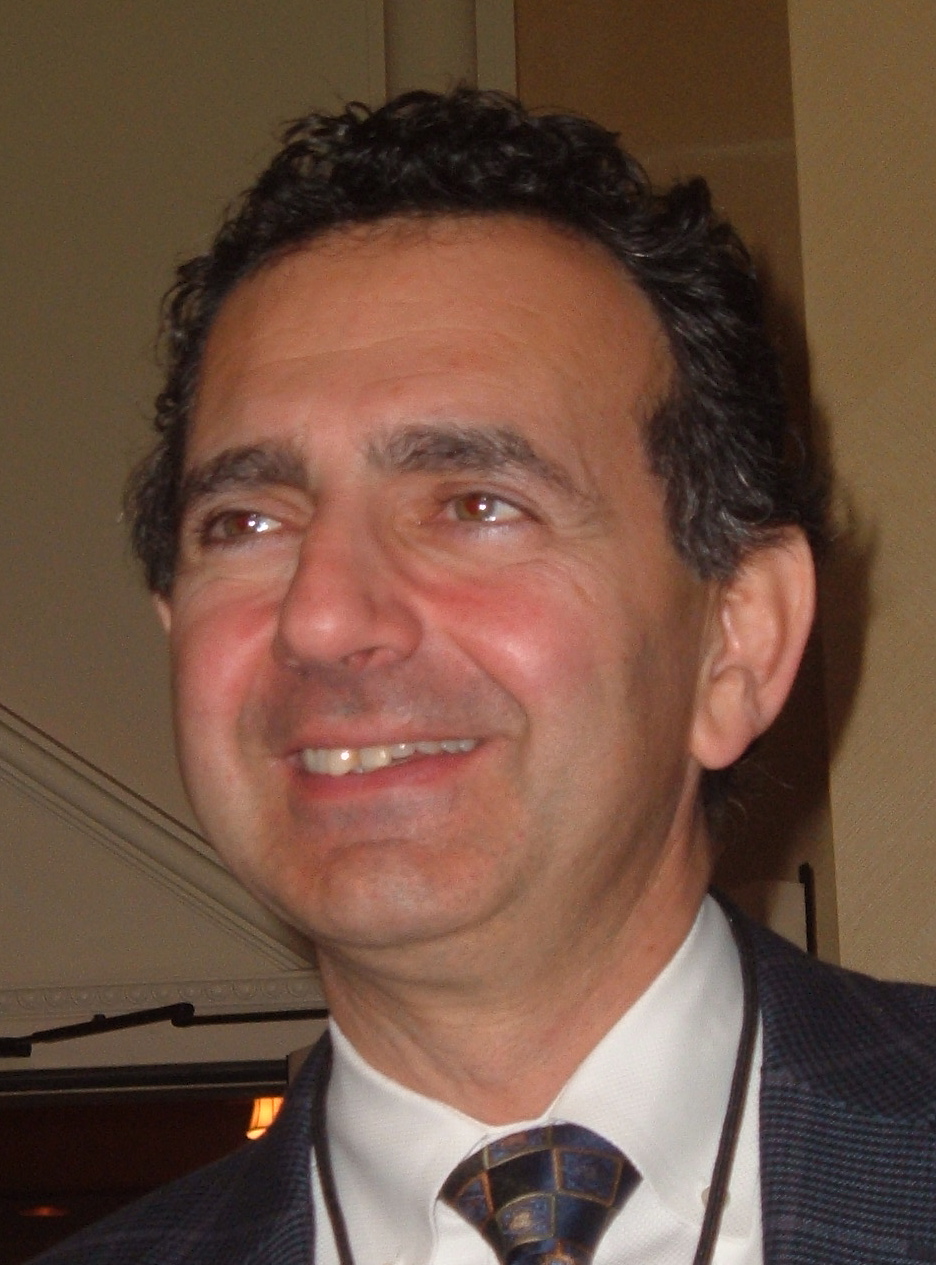
Dr. Anthony Atala
Actually, we can and we do, he responded Tuesday during a presentation at Research Triangle Park headquarters, where he had traveled from Winston-Salem to talk at the TARDC luncheon. “It’s real,” he said.
The human body replaces bones every 10 years, skin every two weeks and intestinal tissue every six days. Regenerative medicine taps into the body’s ability to regrow tissue, expands on it and speeds it up in the laboratory. Read more…
From the mouths of innovators
Wednesday, September 9, 2009, 10:32 am No Comments | Post a CommentA new speakers’ series is starting Sept. 15 at Research Triangle Park headquarters with Moritz Beckmann, chief executive of XinRay Systems.
The series, which is open to members of the Triangle Area Research Directors Council, or TARDC, taps executives from RTP area companies and leading university researchers who are advancing technology in various fields including medicine, drug development and diagnostics.


