Posts Tagged ‘GSK’

Hamner signs Chinese collaborator
Wednesday, July 20, 2011, 4:28 pm No Comments | Post a CommentTwo years after the Hamner Institutes for Health Sciences set up a gateway to China, the Research Triangle Park research institute is adding a Chinese company to its collaborators.
Ascletis will establish its U.S. research and development operations on the Hamner campus. Other operations of the company will be in the National High Tech Industry Development Zone in Hangzhou, a city about two hours southwest of Shanghai.
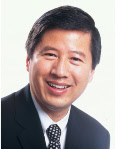
Jinzi Wu
Founded this year by Jinzi Wu, former head of global HIV drug discovery at GlaxoSmithKline in RTP, and Jinxing Qi, a Chinese real estate investor and chairman of the Hangzhou Binjiang Real Estate Group, Ascletis has $100 million in commitments from U.S. and Chinese angel investors. The company plans to establish a global therapeutics business that targets cancer and infectious diseases.
Allan Baxter, former global head of medicines development at GSK, will lead Ascletis’ discovery and development strategy as chief strategy officer.
According to its Web site, the company aims to buy the rights to new treatments, develop them and introduce them to the growing Chinese pharmaceutical market.
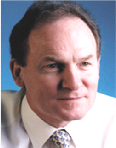
Allan Baxter
Projected to generate about $60 billion in sales this year, the Chinese pharmaceutical market is increasing at an annual rate of more than 20 percent, according to a report by strategic consulting firm The Monitor Group. By 2015, Monitor advisors expect China to rank second in market size to the U.S. and ahead of Japan, Germany, France and the United Kingdom.
Incidence and mortality rates for lung, stomach, liver and breast cancers are comparable or higher in China than in the U.S., the Monitor report pointed out. But competition among pharmaceutical companies is high in China. Nearly all multinationals and numerous local firms are jostling for market shares.
Also, health insurance coverage in China is improving rapidly. In the past two years, the Chinese government invested more than $160 billion in healthcare reform.
Bill Greenlee, the Hamner’s chief executive, and Wu, chief executive of Ascletis, signed the joint venture July 16 at the U.S.-China Governors Forum in Salt Lake City. At the same forum, N.C. Gov. Beverly Perdue and Zhao Hongzhu, the party secretary of the province to which Hangzhou belongs, signed an agreement to foster business and economic development between North Carolina and Zhejiang Province through commercial interactions.
Former GSK drug researcher pursues ideas big pharma hasn’t
Monday, June 20, 2011, 9:23 am No Comments | Post a CommentEditor’s note: North Carolina’s Research Triangle is home to hundreds of young companies. Scientists and entrepreneurs started them to develop technologies and medicines for better detection and treatment of diseases. Some of the companies work on innovations that are the result of research done at one of the area’s universities. Others are outgrowths of established companies. Vijaya Pharmaceuticals, a drug discovery company founded in 2009 by a husband-and-wife team, is one of those young companies.
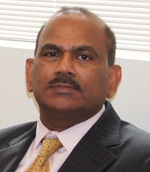
Subba Katamreddy
Former GlaxoSmithKline researcher Subba Katamreddy did what came natural to a medicinal chemist who in 2008 got caught at the beginning of U.S. drug research and development cutbacks that have rocked large pharmaceutical companies since then.
Katamreddy started his own drug discovery company, Vijaya Pharmaceuticals, and established a lab in the Park Research Center incubator in Research Triangle Park to explore some ideas he had for next-generation antibacterial and anti-inflammatory treatments.
So far, Katamreddy and his wife, Vijaya, have financed the startup on their own. Katamreddy is about to start making molecules to develop technology that he can patent and use to attract more investors. But funding early stage startups has gotten more difficult this year despite more money being raised.
So, Katamreddy has begun to take in contract work to generate revenue. He’s determined to keep going and hopes to hire a couple of employees in the next three to five years. “Vijaya,” is Telugu, a language that is spoken in the southern Indian region where the Katamreddies are from, and stands for “victory.”
“Whether you’re in a small lab or a big lab,” Katamreddy said, “an idea is an idea.”
He’s had good ideas before. During his seven years at GSK in RTP, Katamreddy was involved in discovering two experimental drugs. His area of research was metabolic diseases such as adult-onset diabetes. Large pharmaceuticals are investing heavily in finding treatments for diabetes and other chronic diseases, because these diseases are on the rise and require ongoing treatment.
Vijaya Pharma is treading were large pharma hasn’t.
The number of antibacterial drugs the Food and Drug Administration approved for sale declined 56 percent from 1983 to 2002, according to an analysis published 2004. Demand for new drugs is rising with the spread of multi-drug resistant bacteria. (More on the problems superbugs are causing here.)
Katamreddy is particularly interested in a group of antibacterials called macrolides. This group includes erythromycin, an antibiotic that is used to treat pneumonia, venereal disease and urinary tract infections.
Cempra Pharmaceuticals, another young drug development company in the Research Triangle, is testing a macrolide in patients. (More on Cempra Pharmaceuticals here.) There’s also some interest in macrolides outside of the U.S. European researchers are studying a macrolide to treat inflammatory bowel disease and rheumatoid arthritis. But large pharmaceutical companies hesitate to invest in antibacterial research, because successful drugs are used once and for a short time only.
Katamreddy’s other idea is related to a known anti-inflammatory called curcumin, which is the biologically active ingredient in the Indian spice turmeric. Researchers have tested curcumin’s effect on Alzheimer’s patients and cancer cells. Dennis Liotta, a researcher at Emory University, is also studying curcumin as a cancer treatment.
Large pharmaceutical companies have not shown much interest in curcumin, because it can’t be patented and it doesn’t stay in the body long enough. Katamreddy wants to tinker with naturally occurring curcumin, but he’s not ready yet to say how.
Big pharma goes back to college
Saturday, June 4, 2011, 3:53 pm No Comments | Post a CommentNorth Carolina’s Research Triangle is one of several research hubs in the U.S., Canada and the United Kingdom, where large drugmakers have hooked up with universities in the past year to boost drug discovery and shore up dwindling product lineups.
Pfizer signed a research collaboration with the University of California, San Francisco. Sanofi-Aventis has done the same with Harvard University, UCSF and Stanford University. GlaxoSmithKline and AstraZeneca called on the British University of Manchester. GSK, which is based in London and has its U.S. headquarters in Research Triangle Park, also struck up a strategic partnership with 16 academic institutions in Toronto.

Tom Denny
In the Research Triangle, Novartis went to Duke University.
“We had the right infrastructure,” said Tom Denny, chief operating officer of the Duke Human Vaccine Institute. Duke and Novartis will be working together on pandemic flu vaccines.
Big pharma companies have begun to troll for marketable innovation at universities - places where science and research are a taxpayer- and tuition-funded way of life - after spending increasing amounts of money on their own and other companies’ research and development with meager results.
Consolidation, R&D reorganizations, acquisitions of technologies and whole companies - large drugmakers have tried many strategies in the past decade to rejuvenate aging product lineups and plump up drug development pipelines. But the average number of innovative new medicines that came to market in the U.S. decreased to 22 in the second half of the decade from 28 in the first half, and that despite annually rising R&D expenses.

As blockbuster drugs lose patent protection, remaining sales drop off a cliff.
With R&D productivity stalled and valuable drug patents about to expire, big pharma three years ago began to cut R&D jobs and lay off thousands. The restructuring is still ongoing with a focus on reducing R&D expenses and boosting sales in emerging markets such as Asia and Latin America.
The driver behind the cost cutting is the U.S. “patent cliff.”
By 2015, cheaper generics are projected to replace prescription drugs worth more than $100 billion in U.S. sales. The losses are expected to send sales on a sharp decline that, drawn as a line, looks like a cliff.
After trying everything else with insufficient success, large pharma companies are now betting on universities for inspiration.
Pfizer agreed to pay UCSF $85 million over five years. Under the agreement, researchers from Pfizer and UCSF will work at UCSF labs to turn research into potential biological medicines.
The University of Manchester will receive about $16 million from GSK and AstraZeneca. The investment will establish a translational research center and recruit scientists who will look for novel treatments for inflammatory diseases, such as asthma and rheumatoid arthritis.
The pharma industry has long had relationships with individual university professors. It’s also not uncommon that university medical school faculty work with industry to test new treatments or that an academic research project attracts the interest of pharma companies. What’s new is that big pharma companies are outsourcing R&D to universities.
The seed for the pandemic flu vaccine collaboration grew out of an HIV/AIDS collaboration between Novartis and Duke, Denny said.

The Novartis vaccine manufacturing plant in Holly Springs.
One of the Novartis HIV/AIDS researchers was a Duke alumnus who knew his alma mater was just 30 miles from the state-of-the-art flu vaccine manufacturing plant Novartis opened in 2009 in Holly Springs. (More on the Novartis plant here.)
Flu viruses can change from year to year and vaccines have to be made to match the anticipated changes in the virus. But it’s only safe for researchers to work with highly contagious, maybe even deadly, flu virus strains in a specially equipped biocontainment lab. Duke has such a lab and the ability to test pandemic flu vaccines on animals.The vaccine manufacturing plant, which Novartis build in Holly Springs precisely because of the site’s proximity to RTP and its three anchor universities, has neither.
In case a new flu virus starts spreading around the world and the Centers for Disease Control and Prevention and the World Health Organization call a pandemic emergency, the agreement gains Novartis priority access to the Duke biocontainment lab within 24 hours for a daily fee.
The agreement also allows researchers from Duke and Novartis to collaborate on longer-term projects paid for by grants from the National Institutes of Health. The rights to any technology would be jointly owned by each partner, Denny said.
“This is, what we would hope, a long-term collaboration,” he said.
RTP Wrapup 2/26
Friday, February 26, 2010, 12:22 am No Comments | Post a CommentA Senate committee report blasts GlaxoSmithKline for being more concerned about the sales of Avandia than about possible serious cardiovascular risks associated with the blockbuster diabetes pill. Also, two Research Triangle area companies developing new drugs sign deals.
RTP Wrapup 2/5
Friday, February 5, 2010, 12:13 am No Comments | Post a CommentGlaxoSmithKline wants to scale back research and development and the cuts could affect jobs at the British drugmaker’s U.S. headquarters in Research Triangle Park, IBM unveils the $360 million cloud computing center it established on its RTP campus and a Durham startup reels in $10.5 million in venture capital and a deal with Burlington-based medical testing giant LabCorp. Read more…
RTP Wrapup 11/6
Thursday, November 5, 2009, 5:40 pm No Comments | Post a CommentQuintiles Transnational scores drug research contracts that cover whole development areas, Stiefel Laboratories shutters operations in Florida and Georgia and consolidates efforts in Research Triangle Park and a symposium organized by RTI International exposes research gaps.
RTP Wrapup 10/16
Thursday, October 15, 2009, 2:40 pm No Comments | Post a CommentGlaxoSmithKline gets hit with a $2.5 million jury verdict, Talecris borrows $550 million two weeks after going public and Affiliated Computer Services plans to hire 150 at its call center in Raleigh.
RTP Wrapup 9/25
Thursday, September 24, 2009, 4:48 pm No Comments | Post a CommentMicell Technologies receives $15 million from St. Jude Medical, GlaxoSmithKline curbs its funding educational programs that bring doctors up-to-date, Duke Genome Center gets a $19.5 million grant and a consortium of area universities and nonprofit organizations are chasing a piece of the $63 billion the Obama Administration wants to spend over the next six years on global health care programs.
RTP Wrapup 9/18
Thursday, September 17, 2009, 7:13 pm No Comments | Post a CommentSalix Pharmaceuticals watches its stock soar and Pozen takes action to broaden the scope of the company while GlaxoSmithKline waits for regulatory approval of two vaccines.
RTP Wrapup 9/11
Thursday, September 10, 2009, 9:39 pm No Comments | Post a CommentGlaxoSmithKline gets good news on its Cervarix vaccine and bad news on its blockbuster asthma treatment Advair, the N.C. Biotechnology Center prepares to build a $10.4 million expansion with the help of private donations and Quintiles Transnational gets ready for Clinical Research Education Day at N.C. Central University.


