Posts Tagged ‘Duke’

Is the money that built RTP at risk of getting an academic pork barrel rep?
Tuesday, August 30, 2011, 8:49 pm No Comments | Post a CommentA month later than originally planned, researchers from Duke University, the University of North Carolina at Chapel Hill, RTI International and N.C. State University gathered Monday at the National Institute of Environmental Health Sciences in Research Triangle Park to talk about the benefits of federally funded research.
The NIEHS, one of 21 institutes under the National Institutes of Health and the only one outside Bethesda, Md., had planned the roundtable discussion in July, because support for research is under fundamental review. But then the date coincided with the debate that a month ago was raging in Congress over raising the national debt ceiling.
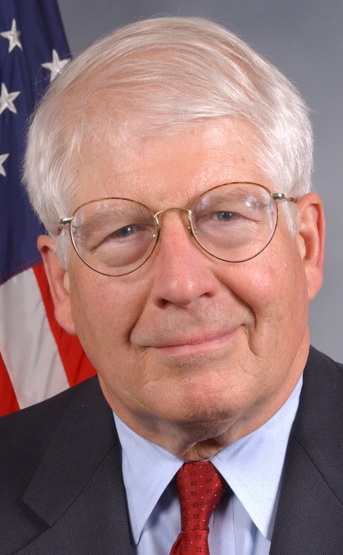
David Price
For roundtable member David Price, a Democratic Congressman who has represented North Carolina’s Research Triangle since 1987, the debt ceiling debate signaled the sentiment shift in Washington, D.C. that also affects research funding.
“There’s nothing in the world that comes close to the NIH’s 100-year history, though other countries aspire,” Price said, talking about the role the NIH have played in supporting health-related research at universities and institutes nationwide with federal tax dollars.
Federal funding for research in disciplines from medicine to engineering has been the foundation onto which Research Triangle Park and its more than 40,000 jobs were built over the past 50 years.
But, Price said, “things we might have taken for granted, parts of the RTP success story, may have to be redefined.”
In 2009, UNC-CH, Duke, NCSU and RTI spent about $2.5 billion on research, according to the latest figures from the National Science Foundation and RTI’s 2009 annual report. Federal tax dollars made up more than two-thirds of the money spent.
The expenditures represented nearly 2.9 percent of the Research Triangle’s gross product that year. In 2009, the metropolitan areas surrounding Raleigh and Durham generated services and goods worth about $86.9 billion, according to figures of the U.S. Bureau of Economic Analysis.
Sponsored research is a formidable economic engine in the Research Triangle, paying salaries and creating jobs when startup companies are formed around technologies that were developed at area universities or research institutes. (More on sponsored research in the Research Triangle here and here.)
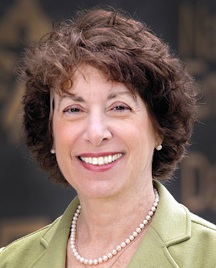
Linda Birnbaum
NIEHS injects about $200 million in federal tax dollars into the local economy per year, said Linda Birnbaum, NIEHS director and member of the roundtable discussion. About 1,400 employees work on the sprawling NIEHS campus in RTP.
“We’re really making an impact, not only economically, but scientifically,” Birnbaum said.
As proof, NIEHS had invited researchers from RTI, NCSU, UNC-CH and Duke to participate in the roundtable discussion. NIEHS has awarded grants to researchers at the three universities anchoring RTP and the research institute that started operations shortly after RTP was established in 1958.
Dr. John Hollingsworth, an associate professor of medicine at Duke, receives funding from the NIEHS to study whether environmental pollutants such as diesel exhaust and ozone cause genetic changes that affect how the immune system works.
His research is tracking the interaction of genetic and environmental factors behind inflammatory diseases such as asthma, especially during vulnerable periods like pregnancy. About 8 percent of the U.S. population suffers from asthma, Hollingsworth said, and his research could lead to new, innovative therapies.
Heather Patisaul, an assistant biology professor at NCSU, studies the effects of hormone-like substances on the developing brain. Among the environmental estrogens she’s tracking are genistein, which is in soy-based foods including soy baby formula, and bisphenol A, a chemical that is in metal food can linings and many plastic containers.
Genistein and BPA are suspected to impair fertility and trigger early puberty in girls.
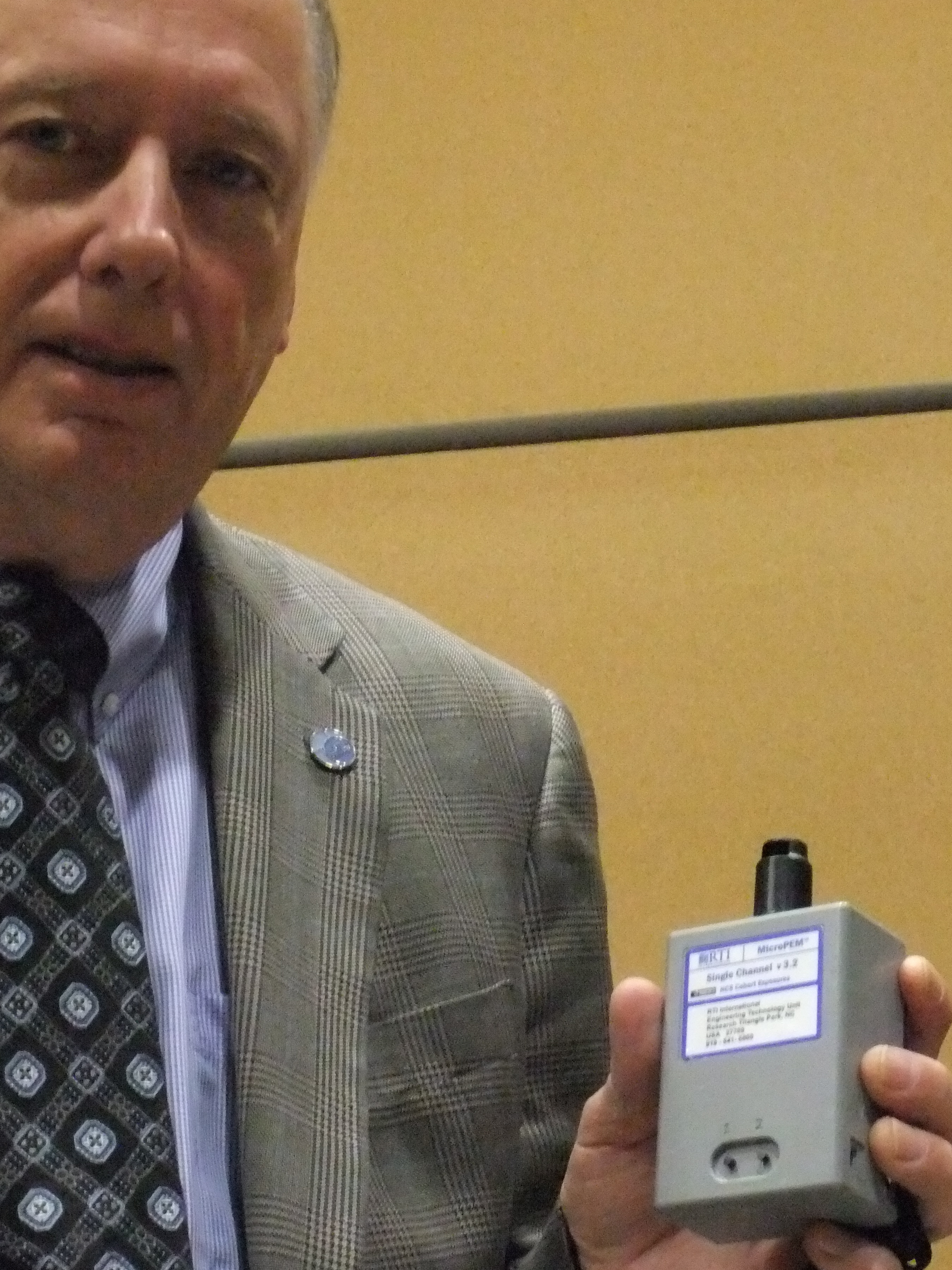
Charle Rhodes shows off the sensor RTI researchers developed to test air quality.
At RTI, researcher have received NIEHS grants to study air quality inside and outside of homes and diseases associated with poor air quality, said Charles Rhodes, a senior fellow at RTI.
Rhodes brought a sensor that RTI developed to run the air quality tests. Similar sensors will be used in a study that is scheduled to start next year in areas devastated by hurricane Katrina six years ago. The sensors will measure the air quality in trailers the Federal Emergency Management Agency provided residents whom Katrina rendered homeless. The trailers have been called “toxic tin cans,” for high formaldehyde levels in the air inside and health problems that have plagued many who have lived in the temporary housing.
UNC has worked with the NIEHS for a long time, training more than 500 researchers, looking for ways to determine susceptibility to environmental diseases, tracking how carcinogens and toxicants make people sick and how environmental toxins interact with human genes.
In the past decade, UNC has received about $112 million in research funding from the NIEHS, said James Swenberg, a UNC professor in environmental sciences and engineering.
Swenberg said he’s been trekking to Washington for 25 years to talk to federal lawmakers and lobby for research funding. In the past, lawmakers were generally eager to learn regardless of their politics.
“Research had never been a partisan issue,” he said. “It’s not going to be the same this time around. That’s really sad.
Republicans, especially in the House, and candidates running for President in next year’s election are “catering to extreme antigovernment views,” Price said. “We have to leave no doubt, that we’re good stewards of our tax dollars and that [research funding] is not some academic pork barrel.”
$2.5M grant to help generate marine biotech jobs in eastern North Carolina
Tuesday, August 2, 2011, 12:28 pm No Comments | Post a CommentThe N.C. Biotechnology Center in Research Triangle Park announced today that it will spend $2.5 million to help generate marine biotech jobs in the eastern part of the state.
The four-year grant will establish a center of innovation - the fourth in the state - to develop commercial products from North Carolina’s marine life with the help of biotech tools.
John Chaffee
Coastal marine labs are doing research that could be applied in several areas, such as health, energy, aquatic foods and diagnostics, according to John Chaffee, director of the biotech center’s eastern office, which is the fiscal agent for the marine biotech consortium.
The biotech center already spent $100,000 to plan for the marine biotech center of innovation or MBCI. This first grant was used to develop a business plan. With the new award, the MBCI must meet business milestones and ultimately establish itself as an independent, self-sustaining entity. The first milestone will be the hiring of an executive director, who will lead the center in identifying and prioritizing key market sectors, said Chaffee.
The University of North Carolina at Wilmington, the UNC-CH Institute for Marine Science, N.C. State University’s Center for Marine Science and Technology and the Duke Marine Lab helped during the planning phase. East Carolina University technology transfer staff assisted with new innovation center’s business plan.
Biotech innovation: What isn’t funded
Tuesday, June 28, 2011, 11:35 pm No Comments | Post a CommentInnovation capital, money to turn some of today’s most innovative discoveries into tomorrow’s medical treatments, is getting so scarce in the U.S., politicians, economic developers and entrepreneurs in regions specializing in early stage biotech research and development are scrambling.
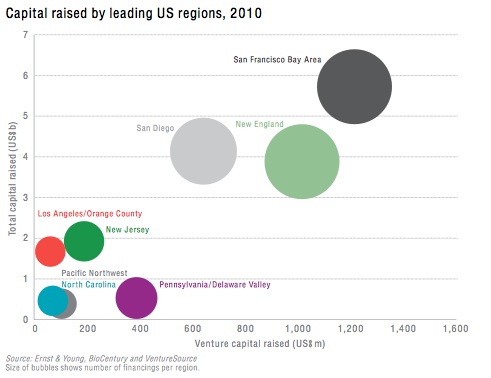
North Carolina, a hub for young biotech companies, trailed other U.S. biotech hot spots in venture capital raised last year, according to an Ernst & Young report.
North Carolina’s Research Triangle, the third largest U.S. biotech hub, is one of those regions.
Some of the world’s largest R&D companies have operations in the Triangle, including GlaxoSmithKline, Novartis and Bayer. But the lifeblood of the area has long been young, early stage companies in pursuit of ideas developed at local research universities such as Duke University, the University of North Carolina at Chapel Hill and N.C. State University or hatched by researchers who used to work in corporate labs in Research Triangle Park.
A little more than two years after a deregulated U.S. banking industry stumbled in the fall of 2008, investors are increasingly shying away from early stage biotech companies, a high-stakes, high-rewards gamble in the best of times. Innovation capital is drying up in the U.S., according to a 2011 report the U.S. accounting firm Ernst & Young published this month.
One consequence, a Research Triangle venture capital investor said, is “deals are dying on the vine.”
“More and more small, really good startups are having problems finding money,” said Norris Tolson, chief executive of the N.C. Biotechnology Center. “We’re about the only game in town for early stage biotech companies.”
The biotech center, which offers grants and loans up to $250,000, has seen the number of funding requests increase by about 10 percent, Tolson said. In the past year, about 280 applicants asked for financial support. About 130 were approved.
Traditionally, young biotech companies have relied on private investors, often venture capital investors, to kick their R&D into gear.
U.S. biotech companies raised $5.5 billion in venture capital in 2007, about twice as much as in 2000, according to Ernst & Young. But in the past three years, the amount has stagnated at about $4.5 billion annually and venture capitalists have begun to hold money back until companies reach certain milestones.
Total capital raised by biotech companies in the U.S. bounced back to $20.7 billion last year, from about $13 billion in 2008, according to Ernst & Young. But much of that capital went to mature companies. Young, early stage companies, which work on the most innovative technologies and generate more jobs than large, established companies, actually received about 20 percent less in capital than the year before.
In Europe, capital raised was more evenly distributed among startups and mature companies. In Singapore, China and India, governments are ratcheting up efforts to bolster biotech innovation. And in Latin America, Brazil’s already strong agricultural biotechnology sector is gaining attention.
But politicians, economic developers and university administrators in the Research Triangle have come up with ideas to encourage the formation of R&D startups despite the early stage funding crunch
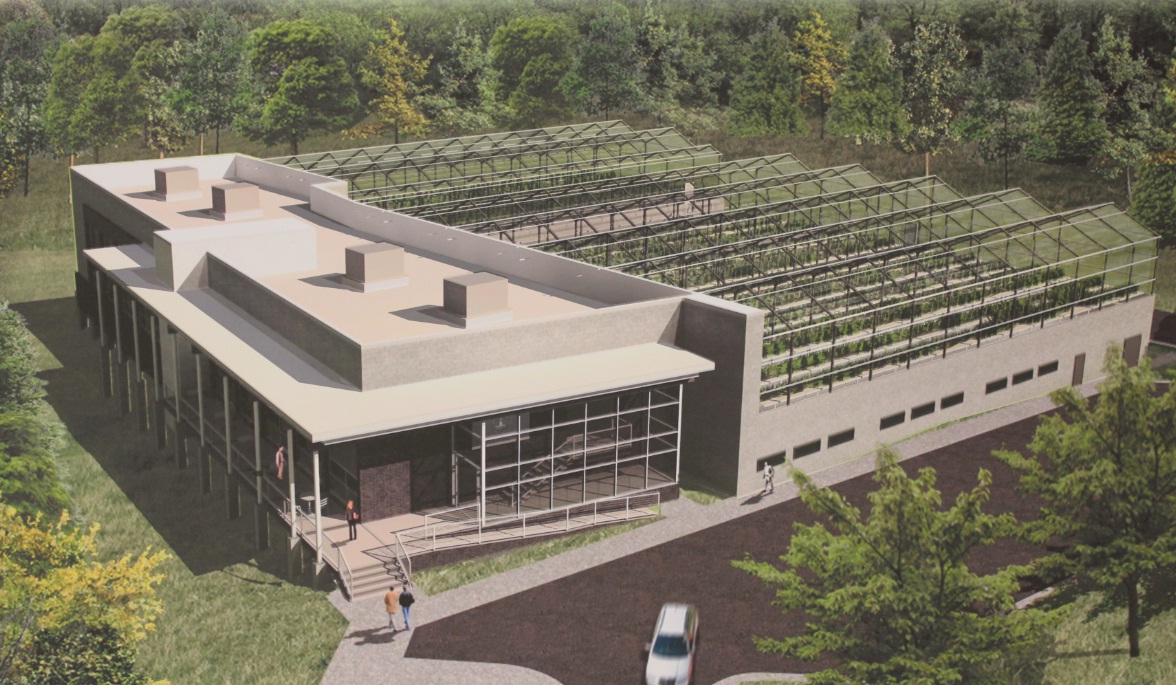
The planned Alexandria Ag-Tech Center.
The biotech center teamed up with Alexandria Real Estate Equities, a Pasadena, Calif.-based real estate investment trust, to attract young companies working in agricultural biotech research. Alexandria, which already owns lab buildings in the Triangle, will build a $13.5 million business incubator with about 18,000-square-feet of greenhouse space near RTP.
Several universities and the Council for Entrepreneurial Development are working with the charitable arm of the Blackstone Group, a global investment firm, to turn more technologies developed at universities into companies and bolster the Triangle’s existing entrepreneurial network.
The chancellors at UNC-CH and NCSU have set up innovation funds to further support spinoffs.
And state legislators are again considering establishing a nonprofit that can loan young companies money. The legislation has come up twice before and would use about $100 million an out-of-state investor is willing to provide, Tolson said. Initially, only life science companies could benefit, but recently state lawmakers suggested that information technology and green technology companies should also be included.
“There’s a huge need for startup capital across the U.S.,” Tolson said. In North Carolina, “a lot of people are understanding the need.”
Universities anchoring RTP step up economic development efforts
Monday, June 13, 2011, 10:41 pm No Comments | Post a Comment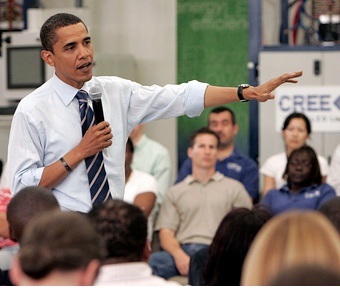
President Obama at Cree's manufacturing plant in Durham. Photo: Wall Street Journal
On his visit Monday to Cree’s Durham manufacturing plant President Obama brought his advisors from the Council on Jobs and Competitiveness along to impress on North Carolinians that his administration is focused on lowering the stubbornly high U.S. unemployment rate, which in May was 9.1 percent.
Jobs council members, which come from the business sector, labor and universities, are dedicating their time and energy to one singular task, Obama told Cree workers. “How do we create more jobs in America?”
Not far from where Obama was talking about getting out of the Great Recession, a job creation effort was under way to lower the state unemployment rate, which in April was 9.7 percent, and particularly the unemployment rate in the Research Triangle, which in April was at 7 percent in the Durham-Chapel Hill area and at 7.7 percent in the Raleigh-Cary area.
NCSU, Duke University and the University of North Carolina at Chapel Hill have long been engines of economic development in the region. They drove the formation of Research Triangle Park in the 1950s and educated the work force that attracted corporate research and development operations to RTP in the following three decades. The three universities that anchor RTP have also brought about technologies that started many an R&D company in the area.
Cree itself is a NCSU spinoff. The RTP company that makes light-emitting diodes, or LEDs, was formed in 1987 based on technology developed at NCSU.
With budget cuts for higher education looming, Triangle universities are stepping up and retooling their economic development efforts.
At NCSU, Terri Lomax, vice chancellor for research and innovation, is taking on responsibilities starting July 1 to help the state recruit companies and jobs, and the university is trying to boost the formation of spinoffs and their chances to survive and expand, be acquired or go public.
William Woodson, who was named NCSU chancellor in January 2010, established an innovation fund that will provide $2.5 million over the next five years to NCSU researchers to work on technologies that could be licensed or spun out as a company. To get off the ground, the young companies could tap into expertise at the university through a so-called proof-of-concept center on NCSU’s Centennial Campus.
To further accelerate startup formation, NCSU has joined forces with UNC, Duke, the Council for Entrepreneurial Development and N.C. Central University. The consortium is getting involved in the Blackstone Entrepreneurs Center, which has $3.6 million available over three years to evaluate technologies and tutor new companies.
“Most new jobs come from companies less than five years old,” Lomax said in an interview with Science in the Triangle. “We want to do everything we can to help these companies be successful. Especially after a recession that’s extremely important.”
She suggested that the efforts could double the number of successful startups that NCSU spins out per year to 10 to 12 by 2015.
“What we want is sustained economic development,” Lomax said.
Watch the entire Science in the Triangle interview with Terri Lomax here:
TEDxChapel Hill: A glimpse into the global technology era
Sunday, June 12, 2011, 7:08 pm No Comments | Post a CommentSoftware programmers who build Web sites that map incidents reported by mobile phone. A branchless banking system that allows customers to send cash by mobile phone text message. Medical specialists who diagnose patients hundreds of miles away with the help of images uploaded through a mobile phone app and stored as electronic medical records.
These are just three innovative uses for mobile phones, crowdsourcing and open-source technology. But this type of innovation isn’t happening in rich, developed countries like the U.S. or in Europe.
The Ushahidi mapping tool has collected crowdsourced incidents reports in Afghanistan, the Democratic Republic of Congo and Mexico. Kenyans mail small amounts of cash through M-Pesa‘s branchless banking system. SANA‘s open-source technology brings healthcare screening to rural areas in India and the Philippines.
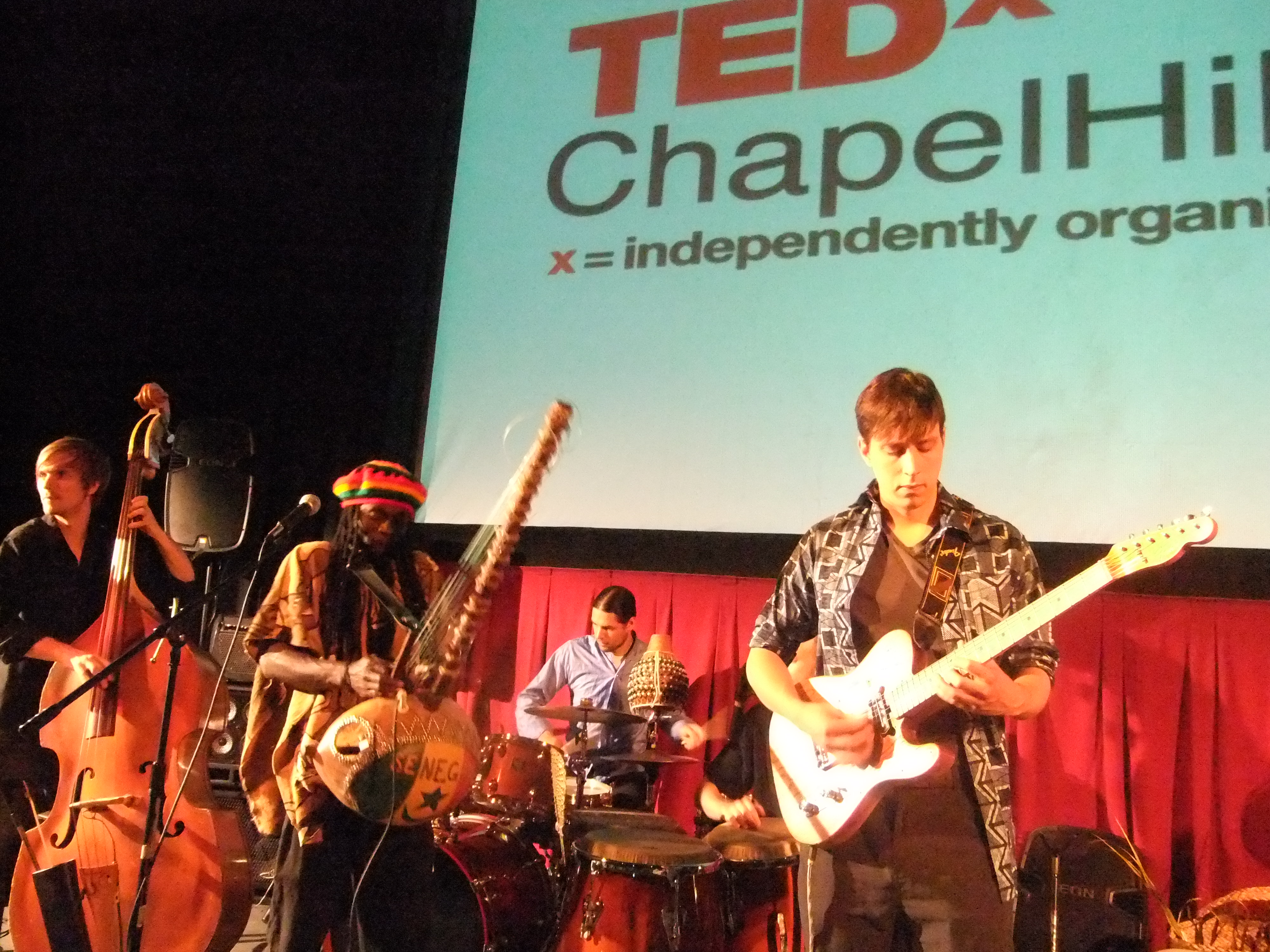
Diali Cissokho & Kairaba play music reminiscent of West African dance bands.
Presented at a TED talk independently organized by IntraHealth June 2 at the Varsity Theatre in Chapel Hill, these innovative technological applications provided a glimpse of what’s possible in places without functioning transportation, healthcare and banking infrastructures.
As Diali Cissokho & Kairaba, a band of Senegalese and North Carolina musicians, played between presentations, the crowd of more than 250 in the filled-to-capacity movie theater just across from the University of North Carolina’s Chapel Hill campus was left to re-examine perceptions of developed versus developing countries.
“It’s the new era of global technology,” said Heather LaGarde, special projects advisor to IntraHealth OPEN, an initiative that encourages the use of the latest technological advancements to improve healthcare in poor countries.
TED talks are an outgrowth of a conference that brought together technology geeks, entertainers and design mavens. The concept is owned by a private foundation a magazine publishing entrepreneur started in 1996.
TED talks follow in the footsteps of storytellers who spread knowledge and wisdom. Their purpose is to disseminate ideas.
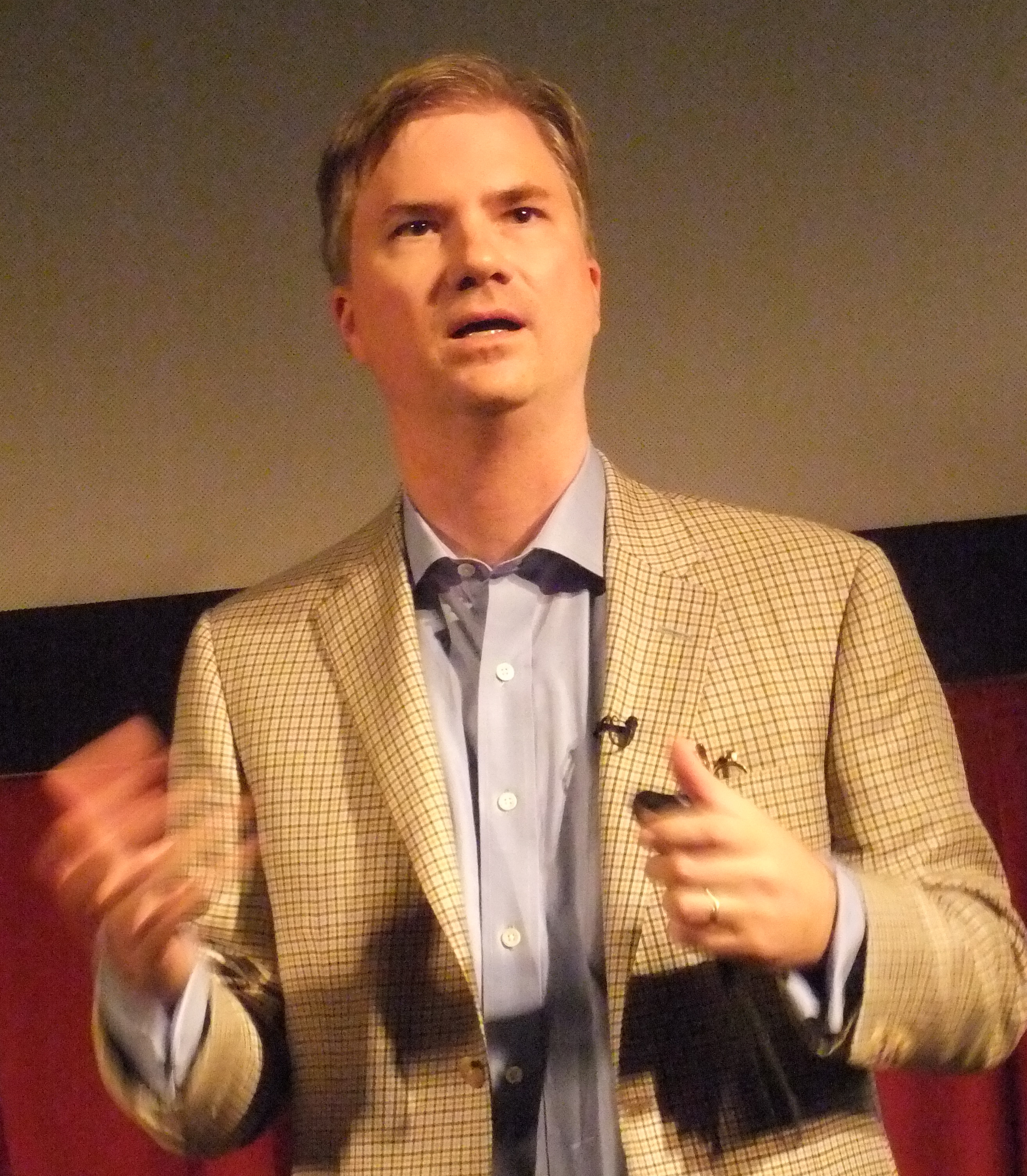
Holden Thorp at TEDxChapel Hill
TEDxChapel Hill was the fourth independently organized TED talk in the Research Triangle. Three previous talks took place in the past 18 months, one at the Research Triangle Park headquarters, one at N.C. State University and one in Raleigh. (More about the TEDxTriangle event at RTP here.)
The Chapel Hill talk was organized by IntraHealth, a UNC spinoff focused on global health. Among the speakers featured was Holden Thorp, UNC-CH’s chancellor, who as a UNC chemistry professor developed technology for electronic DNA chips and founded companies.
Thorp encouraged scientists to bring their research to bear upon problems people around the world are dealing with, such as drought, poverty and climate change.
“We have a leg up addressing these problems,” he said.
Thorp could draw some inspiration from the venue. In the mid 1980s, while he was an undergraduate at UNC, Thorp said, he watched the “Adventures of Buckaroo Banzai Across the 8th Dimension” 16 times at the Variety Theatre. The science fiction movie was about an adventurer, surgeon and rock musician who took on evil alien invaders with his band of men.
UNC and other universities as well as nonprofit research institutes and global health organizations in the Triangle are trying to do just what Thorp suggested.
At UNC, the Carolina Global Water Partnership developed a microfinancing program for Cambodians to buy biosand and ceramic filters and gain access to clean drinking water.
Robert Malkin
At Duke University, Robert Malkin, director of Engineering World Health, is encouraging engineers to develop medical equipment that works in hospitals in Sudan, Nigeria, Nicaragua, El Salvador, Haiti, Liberia and Sierra Leone.
The World Health Organization estimated that 70 percent of the medical equipment developed in the U.S. or Europe doesn’t work in poor countries in Asia, Africa and Latin America, including used and new surplus equipment donated by U.S. hospitals.
Indeed, much of this equipment is stacked in large warehouses, collecting dust, Malkin said. (More on barriers for medical devices in the developing world here.)
During his presentation at TEDxChapel Hill, Malkin said he observed this first-hand when he attended a heart surgery in a Nicaraguan hospital many years ago and the overhead surgery lights caught on fire. The nurses responded calmly, protecting the patients from the billowing smoke with a blanket, Malkin said. He found out later, that the special light bulbs for which the donated surgery lights were designed weren’t available in Nicaragua. The 100 Watt light bulbs the hospital used instead caught on fire routinely.
IntraHealth, which mostly deals with community health workers in developing countries, is also looking for hands-on solutions. IntraHealth’s OPEN Council brings together some of the most innovative thinkers, such as Jon Gosier, the founder of Appfrica, a company that invests in East African software startups; and Josh Nesbit, the chief executive of Medic Mobile, a nonprofit that uses mobile technology to create health systems in developing countries.
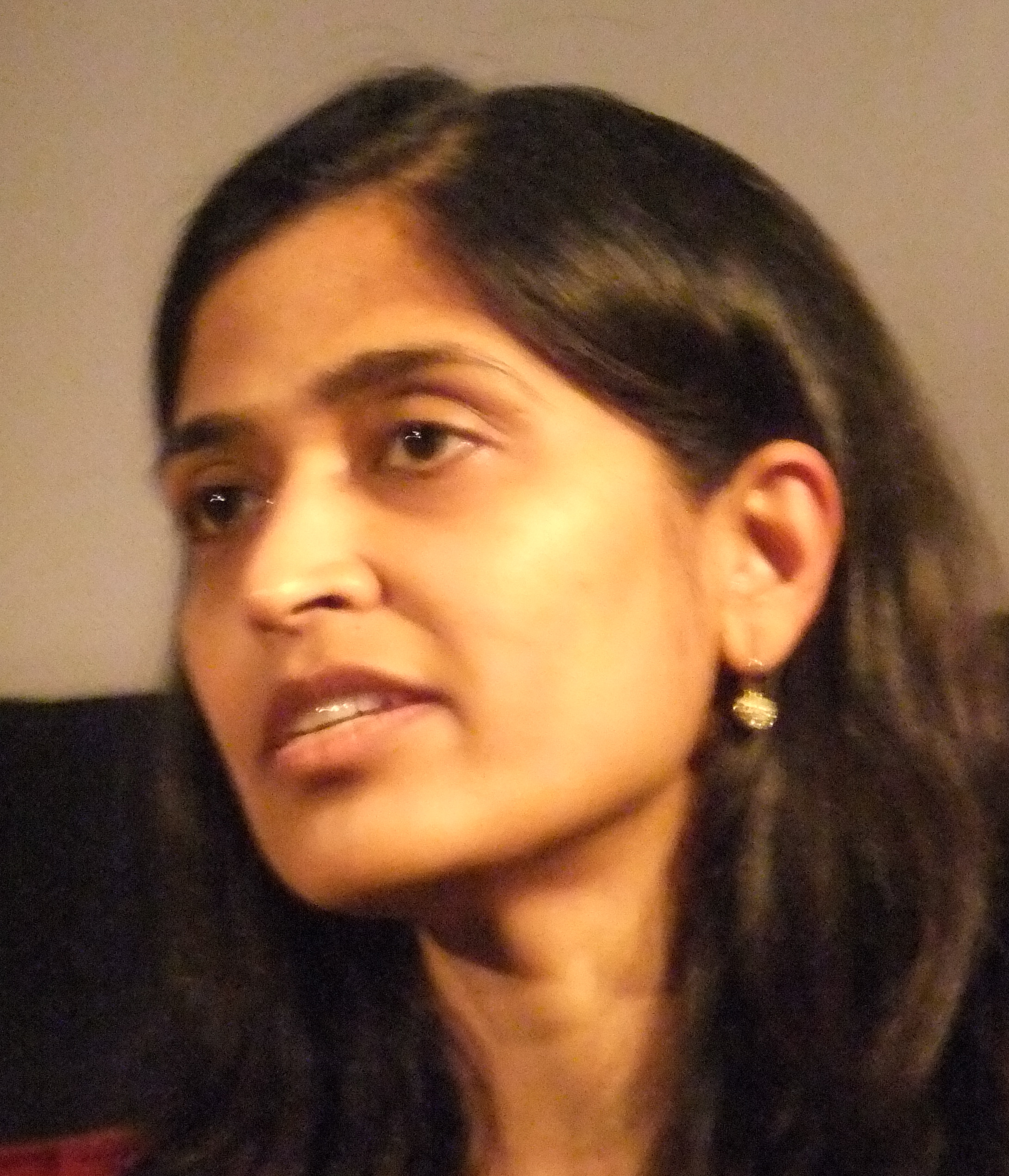
Dr. Radhika Chigurupati
Gosier and Nesbit also participated in TEDxChapel Hill, and so did Dr. Radhika Chigurupati, a surgeon at the University of California San Francisco Children’s Hospital, who talked about her work with SANA.
Mobile device technology developed by a team of students, volunteers and faculty at the Massachusetts Institute of Technology in Boston allows SANA to bring health screening to remote rural area.
More than half of the population in developing countries are mobile phone subscribers, according to a 2010 United Nations report.
In India, Chigurupati said, community health workers use their mobile phones to take high-resolution pictures of potentially cancerous lesions in patients’ mouths or on feet. The images are uploaded to a server to which physicians in faraway urban areas have access.
Trips from the countryside to see a doctor are prohibitively expensive for the patients. But mobile telemedicine enables community health workers to screen for cancerous lesions and connects them with experts who can help treat the lesions and save lives.
In 2010 alone, more than 4,000 patients in rural India were screened for oral cancer, a disease that is prevalent because of widespread tobacco and beetle nut chewing.
“I think the tide is high,” Chigurupati said. “If you’re shrewd enough and committed enough, you can make a difference in the lives of millions.”
Big pharma goes back to college
Saturday, June 4, 2011, 3:53 pm No Comments | Post a CommentNorth Carolina’s Research Triangle is one of several research hubs in the U.S., Canada and the United Kingdom, where large drugmakers have hooked up with universities in the past year to boost drug discovery and shore up dwindling product lineups.
Pfizer signed a research collaboration with the University of California, San Francisco. Sanofi-Aventis has done the same with Harvard University, UCSF and Stanford University. GlaxoSmithKline and AstraZeneca called on the British University of Manchester. GSK, which is based in London and has its U.S. headquarters in Research Triangle Park, also struck up a strategic partnership with 16 academic institutions in Toronto.

Tom Denny
In the Research Triangle, Novartis went to Duke University.
“We had the right infrastructure,” said Tom Denny, chief operating officer of the Duke Human Vaccine Institute. Duke and Novartis will be working together on pandemic flu vaccines.
Big pharma companies have begun to troll for marketable innovation at universities - places where science and research are a taxpayer- and tuition-funded way of life - after spending increasing amounts of money on their own and other companies’ research and development with meager results.
Consolidation, R&D reorganizations, acquisitions of technologies and whole companies - large drugmakers have tried many strategies in the past decade to rejuvenate aging product lineups and plump up drug development pipelines. But the average number of innovative new medicines that came to market in the U.S. decreased to 22 in the second half of the decade from 28 in the first half, and that despite annually rising R&D expenses.

As blockbuster drugs lose patent protection, remaining sales drop off a cliff.
With R&D productivity stalled and valuable drug patents about to expire, big pharma three years ago began to cut R&D jobs and lay off thousands. The restructuring is still ongoing with a focus on reducing R&D expenses and boosting sales in emerging markets such as Asia and Latin America.
The driver behind the cost cutting is the U.S. “patent cliff.”
By 2015, cheaper generics are projected to replace prescription drugs worth more than $100 billion in U.S. sales. The losses are expected to send sales on a sharp decline that, drawn as a line, looks like a cliff.
After trying everything else with insufficient success, large pharma companies are now betting on universities for inspiration.
Pfizer agreed to pay UCSF $85 million over five years. Under the agreement, researchers from Pfizer and UCSF will work at UCSF labs to turn research into potential biological medicines.
The University of Manchester will receive about $16 million from GSK and AstraZeneca. The investment will establish a translational research center and recruit scientists who will look for novel treatments for inflammatory diseases, such as asthma and rheumatoid arthritis.
The pharma industry has long had relationships with individual university professors. It’s also not uncommon that university medical school faculty work with industry to test new treatments or that an academic research project attracts the interest of pharma companies. What’s new is that big pharma companies are outsourcing R&D to universities.
The seed for the pandemic flu vaccine collaboration grew out of an HIV/AIDS collaboration between Novartis and Duke, Denny said.

The Novartis vaccine manufacturing plant in Holly Springs.
One of the Novartis HIV/AIDS researchers was a Duke alumnus who knew his alma mater was just 30 miles from the state-of-the-art flu vaccine manufacturing plant Novartis opened in 2009 in Holly Springs. (More on the Novartis plant here.)
Flu viruses can change from year to year and vaccines have to be made to match the anticipated changes in the virus. But it’s only safe for researchers to work with highly contagious, maybe even deadly, flu virus strains in a specially equipped biocontainment lab. Duke has such a lab and the ability to test pandemic flu vaccines on animals.The vaccine manufacturing plant, which Novartis build in Holly Springs precisely because of the site’s proximity to RTP and its three anchor universities, has neither.
In case a new flu virus starts spreading around the world and the Centers for Disease Control and Prevention and the World Health Organization call a pandemic emergency, the agreement gains Novartis priority access to the Duke biocontainment lab within 24 hours for a daily fee.
The agreement also allows researchers from Duke and Novartis to collaborate on longer-term projects paid for by grants from the National Institutes of Health. The rights to any technology would be jointly owned by each partner, Denny said.
“This is, what we would hope, a long-term collaboration,” he said.
NC history of flight extends to space
Thursday, May 19, 2011, 9:26 pm No Comments | Post a CommentNASA’s interest in North Carolina goes back to the 1960s, when U.S. astronauts came to the University of North Carolina at Chapel Hill to learn at the Morehead Planetarium how to navigate in space by looking at stars, according to a N.C. Museum of History report. In the past 25 years, a handful of North Carolinians flew on space shuttle missions, including Beaufort native Michael Smith, who died in 1986 when the Challenger exploded shortly after liftoff.
To prepare for and support NASA missions, researchers at N.C. State University have studied how to more precisely land a vessel on Mars and how to grow plants in a spacecraft operating in zero gravity.
But NASA’s involvement in North Carolina goes further. Since 1991, teachers and students at North Carolina universities, community colleges and public schools have received about $15 million to study science, technology, engineering and mathematics, to research issues related to space missions and to work in companies contracting with NASA.
Funding for the research grants, scholarships and summer internships has been provided through the N.C. space grant, a program administered at NCSU.
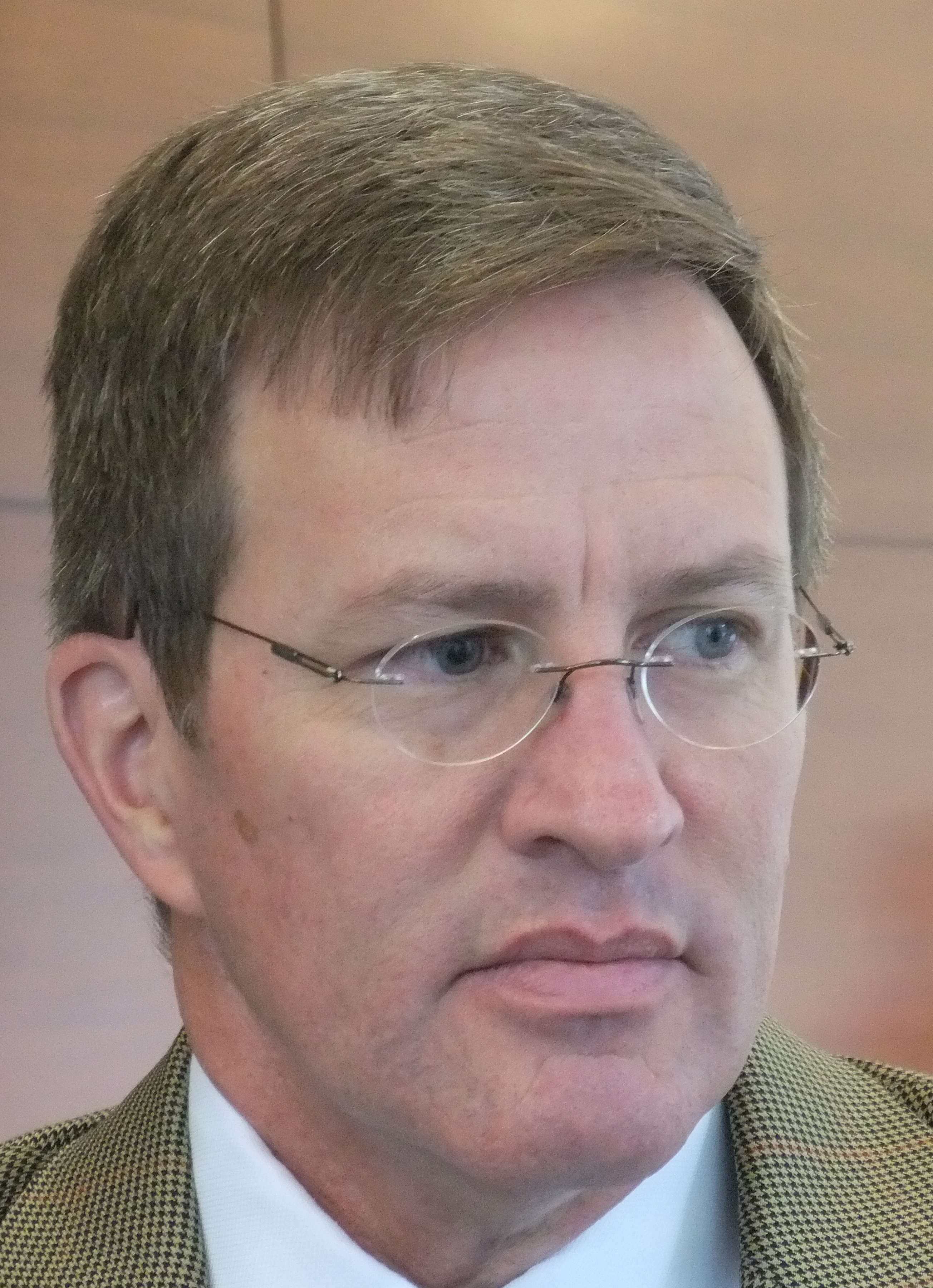
Christopher Brown
“The goal is to keep the pipeline filled for NASA,” Christopher Brown, director of the N.C. space grant, told members of the Triangle Area Research Directors Council who gathered this week at Research Triangle Park headquarters.
But “this isn’t just rockets and aerospace,” Brown said. Space grant projects in North Carolina include satellite tracking of red wolves and the development of an undergraduate robotics course at Duke University.
As a professor of plant biology at NCSU, Brown teaches a space biology class and some of his plant experiments will travel to the international space station on the last shuttle flight scheduled to take off in August.
NASA funds the N.C. space grant and similar programs in all other states through its annual budget.
In the past five years, the total for these grants has increased from about $30 million to $45.6 million. North Carolina’s portion is about $800,000 annually, Brown said. That includes a state match. The match used to be about $200,000 per year, but budget cuts have reduced it to $180,000.
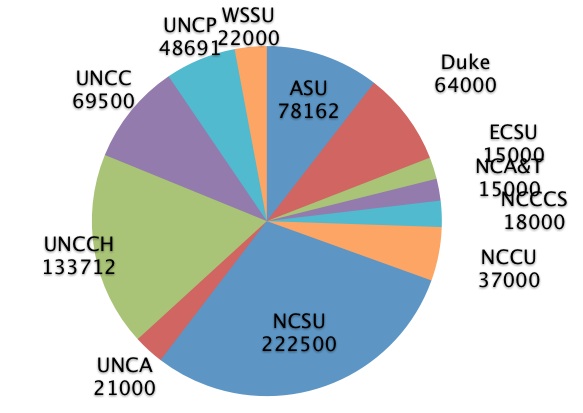
N.C. space grant beneficiaries
Federal cuts are also looming, but Brown said he didn’t think the program would be eliminated, because every Congressional district receives money. For fiscal year 2012, which starts Oct. 1, President Obama’s budget request for the space grant program is $26.5 million, according to NASA budget information. That’s a reduction of more than 40 percent.
In the past, N.C. space grant money has supported research of young university faculty, helped develop new college courses and paid for professional development of K-12 teachers, provided scholarships and summer internships for graduate and undergraduate students and students at community colleges.
Thirteen university campuses across North Carolina are affiliated with the N.C. space grant, from UNC Asheville to Elizabeth City State University.
Jane Goodall says “hello” to Duke University
Sunday, April 10, 2011, 8:14 pm No Comments | Post a CommentThe greeting was embracing but inquisitive. It emanated from deep within Jane Goodall and got louder, higher in pitch and more urgent with each bellow.

Jane Goodall
Goodall, the British primatologist considered the world’s foremost expert on chimpanzees, often starts her talks the way chimpanzees greet a new day in Gombe Stream National Park, the Tanzanian reserve where Goodall began her research in 1960 and where the institute she founded in 1977 still has a research project under way.
The greeting, Goodall has said, translates to, “Here I am. Who’s out there?”
Just six days short of her 77th birthday, Goodall stood on stage at the sold-out, 1,200-seat Page Auditorium at Duke University and again greeted her audience in Chimpanzeese.
But this time, she received in-kind answers from the audience. This welcome was special.
The March 28 Duke visit, Goodall’s third since 2007, followed two high-profile recruitments.
A year ago, Anne Pusey, a former field researcher for Goodall in Africa, joined Duke to head the evolutionary anthropology department. Pusey came from the University of Minnesota, home of the Jane Goodall Institute’s research archive since 1995. The archive is a daily expanding compilation of field notes, videos and photos and includes about 22 cabinets of paper files with many of the notes written by Goodall herself.
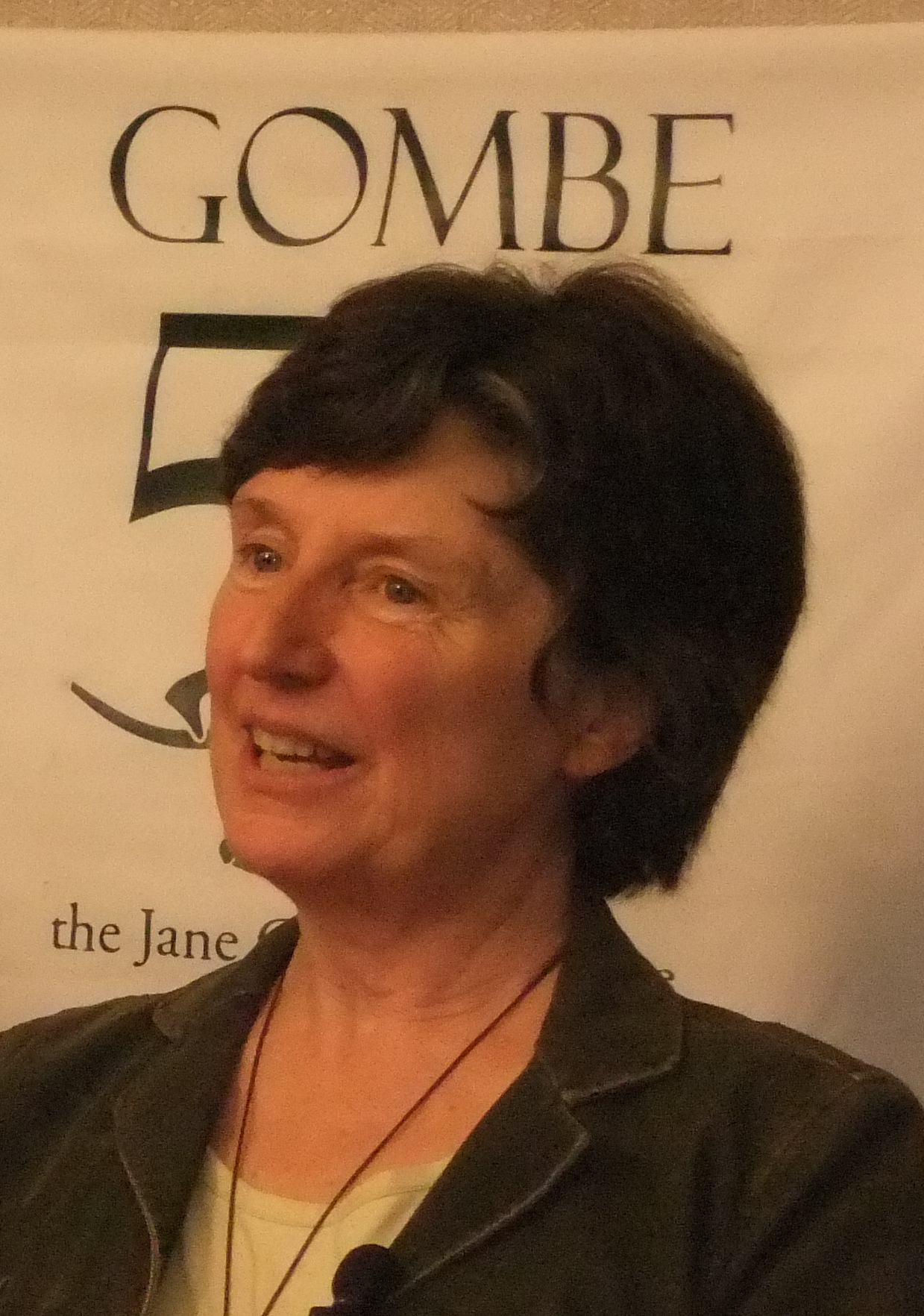
Anne Pusey
On March 17, Duke announced that the archive would follow Pusey to North Carolina and 11 days later, Goodall spent a very public day on the Duke campus, meeting journalists, visiting school children and talking about what she learned in the past 50 years.
In Minnesota, Pusey’s departure revived speculations that Goodall’s support for animal rights had ruffled feathers at the University of Minnesota, where researchers do extensive testing on animals, including on monkeys. Animal testing is also done at Duke, including invasive surgery testing on macaques. But joining Duke gained Pusey a distinguished, endowed professorship and a departmental chairmanship. At the University of Minnesota, she held the title of adjunct professor, usually a non-tenured, non-salaried position.
Also, Duke and the Jane Goodall Institute are exploring further collaborations, said Maureen Smith, the institute’s president. Environmental and humanitarian programs Goodall has started since the mid-1980s to preserve the chimpanzees’ rain forest habitat and improve the lives of neighboring villagers may offer research opportunities for Duke’s Nicholas School of the Evironment and Earth Sciences and the Duke Global Health Institute.
When asked at the press conference how she felt about the archive moving, Goodall answered, “I was happy for it to go where it needed to go.”
It was clear she didn’t want to talk about the archive’s 1,000-mile move. The woman, who showed a male-dominated academic world that humans aren’t the only ones using tools and that chimpanzees hunt prey and eat meat, preferred to talk about the encounters she’s had with “the animals that are most like us.”
Goodall’s favorites include stories about Fifi, Little Mama and Jojo.
Fifi
Fifi was about 2 when Goodall started her Gombe field research in 1960. Monkeys and humans age similarly, as Duke primatologists have found. (More about that here.) And chimpanzees can get as old as humans. But Goodall said that none of the chimpanzees she met in the early 1960s - she called them “her old friends” - are alive anymore. Fifi, the last surviving old friend, died in 2004.
“She almost made it,” Goodall said.
Like her mother, Flo, Fifi was popular with the male chimpanzees and a very successful and caring mother. She gave birth to nine sons and daughters, according to the Jane Goodall Institute a Gombe record. Fifi attained a very high rank in the group and so did several of her sons.
Flo, Fifi and Fifi’s offspring helped Goodall learn a lesson that in retrospect she called one of the most interesting of her career.
“There’s good mothers and bad mothers in chimp society,” Goodall said. “The offspring who have good mothers do better.”
Whether there’s a special relationship between male chimpanzees and their offspring is one of the questions that the field data in the archive may answer, she said. “Who knows what we’re going to find analyzing 50 years of data.”
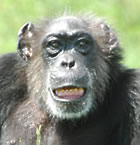
Little Mama
Little Mama is an example of how old chimpanzees can get. Born in 1938, the chimpanzee is just four years younger than Goodall and the oldest chimpanzee living in a zoo. The two have known each other for about 30 years and Goodall still visits Little Mama at the Lion Country Safari near West Palm Beach.
It’s usually easy to find Little Mama, Goodall said. She likes to wear a piece of cloth over her head.
To keep audience members from feeling like hugging the next best chimpanzee, Goodall also had a story about violent gang war between two groups of chimpanzees that used to be one. Males of one group didn’t rest until they had killed the males of the other group, she said, and compared the situation to the American Civil War.
Considering how dangerous male chimpanzees can be makes the story of Jojo particularly stunning. Goodall frequently ends her talks with this story and did so at Duke.
An essay Goodall wrote for Science in 1998 included this version of the Jojo story:
One of the unexpected rewards that I have found as I become increasingly involved in conservation and animal welfare issues, has been meeting so many dedicated, caring, and understanding people. I cannot close this without sharing a story that, for me, has a truly symbolic meaning. The hero in this story is a human being named Rick Swope who visits the Detroit zoo once a year with his family.
One day, as he watched the chimpanzees in their big new enclosure, a fight broke out between two adult males. Jojo, who had been at the zoo for years, was challenged by a younger and stronger newcomer, and Jojo lost. In his fear he fled into the moat which was brand new, and Jojo did not understand water. He had gotten over the barrier erected to prevent the chimpanzees from falling in—for they cannot swim—and the group of visitors and staff that happened to be there watched in horror as Jojo began to drown. He went under once, twice, three times. Rick Swope could bear it no longer. He jumped in to try to save the chimp, despite onlookers yelling at him about the danger. He managed to get Jojo’s dead weight over his shoulder, and then crossed the barrier and pushed Jojo onto the bank of the island.
Rick held him there—the bank was very steep and if he were to let go Jojo would slide back into the water—even when the other chimps charged toward him, screaming in excitement. Rick held Jojo until he raised his head, took a few staggering steps, and collapsed on more level ground.
The director of the institute called Rick. “That was a brave thing you did. You must have known how dangerous it was. What made you do it?”
“Well, I looked into his eyes. And it was like looking into the eyes of a man. And the message was, ‘Won’t anybody help me?’”
Another visitor at the Detroit Zoo caught the rescue on videotape. Here’s the TV news report with footage of the rescue:
Proposed global health spending cuts raise concerns in Research Triangle
Wednesday, April 6, 2011, 10:45 pm No Comments | Post a CommentAt a global health conference in Chapel Hill, the tug-of-war over budget cuts on Capitol Hill landed smack-dab in North Carolina’s Research Triangle.
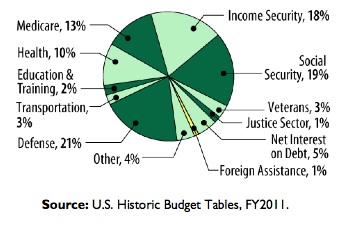
In 2010, foreign assistance accounted for 1 percent of all U.S. spending.
While Republicans and Democrats are negotiating about getting a handle on the federal deficit, concerns about proposed federal funding cuts are rising in states with global health research hubs, such as North Carolina, California and Washington.
House Republicans have proposed cutting international affairs and foreign assistance spending by a total of 44 percent over the next five years, including 29 percent in 2012. They’re also pushing for an 11 percent funding cut for global health programs during the remaining months of the current fiscal year, which would scale back malaria programs and reduce immunizations, the number of skilled birth attendants and other basic health services worldwide, Dr. Rajiv Shah, head of the U.S. Agency for International Development, told a House appropriations subcommittee.
At the conference, which took place April 1 at the University of North Carolina Friday Center in Chapel Hill, experts from USAID and the Center for Strategic and International Studies in Washington, D.C., and the Centers for Disease Control and Prevention in Atlanta addressed the future of global health and development.
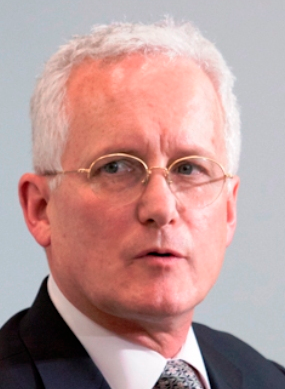
Stephen Morrison
“We’re now in an era of austerity, uncertainty and flattening or declining budgets,” said Stephen Morrison, director of the CSIS Global Health Policy Center.
Morrison didn’t foresee a catastrophic collapse of global health budgets. But the days of double-digit annual increases are gone, he said.
From 1990 to 2010, international spending for global health rose from about $6 billion to an estimated $27 billion, according to a report by Chris Murray of the University of Washington Institute for Health Metrics and Evaluation. About one-third of last year’s funding came from the U.S.
U.S. spending on foreign aid and global health more than doubled in the past 10 years and the increase benefited Africa and parts of Asia.
The Bush administration started an initiative to battle HIV/AIDS in Africa, contributed to an International Monetary Fund effort aimed at boosting education, health status, nutrition and gender equality in poor countries and increased security-related assistance to Afghanistan and Pakistan.
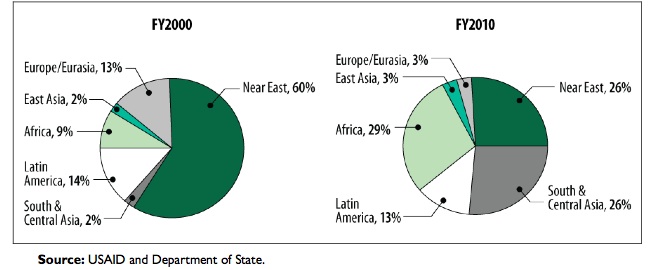
Regional distribution of U.S. foreign aid in FY 2000 and FY2010
In fiscal year 2010, the U.S. spent $39.4 billion on foreign aid, according to a Congressional report. Nearly 90 percent of that money was funneled through USAID. Still, foreign aid accounted for only about 1 percent of all U.S. spending.
Domestically, the funding increases boosted grant revenue at research institutes and created jobs at universities.
In the Research Triangle, RTI International was one of the biggest beneficiaries. RTI increased funding from USAID from $165.9 million in 2006 to $265.4 million in 2010. Another local research institute that benefited was Family Health International. FHI’s annual revenue rose about 40 percent from $224 million in 2005 to $370 million in 2009. About 70 percent of the global health funding FHI secured in 2009 came from USAID.
The UNC Gillings School of Global Public Health and the Duke Global Health Institute trained the workforce needed to implement the new initiatives.
In 2009, a Duke University study determined that North Carolina’s global health sector supported more than 7,000 jobs and $508 million in annual salaries and wages. The sector’s impact on the state’s economy was nearly the same as the textile industry’s, according to the study.
Similar economic impact studies have been done in California, where global health supports about 350,000 jobs that generate $19.7 billion in annual salaries, wages and benefits, and in Washington state, where global health supports 13,700 jobs that generate $1.7 billion in annual salaries, wages and benefits.
At the conference, Morrison encouraged global health professionals in the audience to lobby their House representatives, but he was convinced that global health would take a disproportional hit no matter how the budget negotiations would turn out.
“This is a moment of wake-up for us,” he said.
Offering a hand-up to student entrepreneurs
Tuesday, April 5, 2011, 5:24 pm No Comments | Post a CommentScott Kelly followed a long tradition with Startup Madness, a showcase of entrepreneurship and innovation in North Carolina’s Research Triangle.
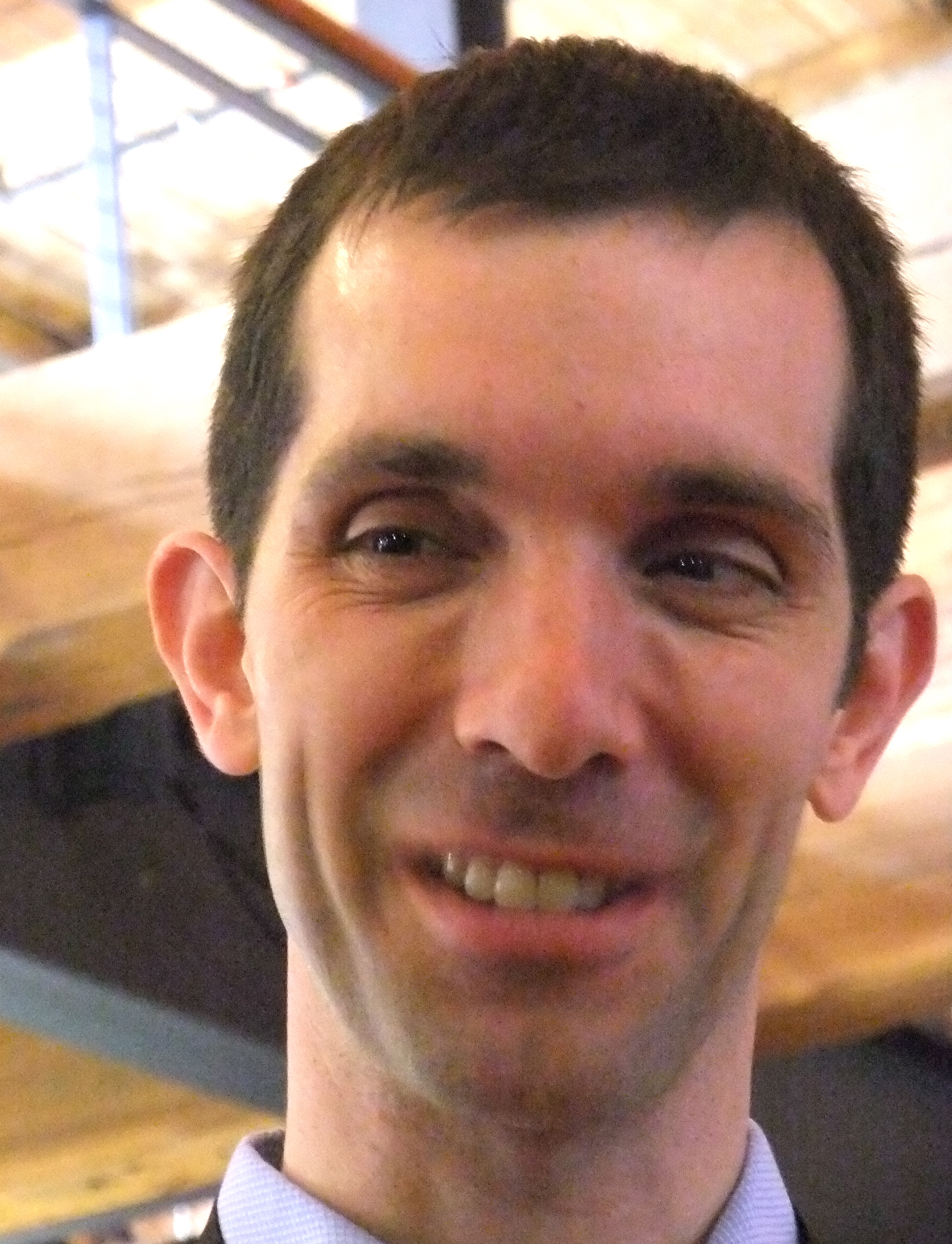
Scott Kelly
Kelly, an investment banker at KeySource Bank who has worked in Internet marketing and sales, recognized the enormous job creation potential of a three-county area dotted with universities - just like economic developers, academics and businessmen did in the 1950s when they established Research Triangle Park on wooded land that was flanked by Duke University in Durham, the University of North Carolina at Chapel Hill and N.C. State University in Raleigh.
Just like the RTP supporters, Kelly focused on Duke, UNC and NCSU students.
Startup Madness, which took place March 31 on the American Tobacco Campus in downtown Durham, introduced student entrepreneurs to the Research Triangle’s investor and business community. The goal, Kelly said, was to encourage innovative young minds to stay and to retain the startup businesses that are born here on university campuses.
“We have the universities. We have young talent, possibly more than anybody else,” Kelly said. “It would be a shame if they leave.”
Startup Madness was the third entrepreneurial showcase Kelly has organized in the past year. The first took place in May 2010, three months after the recession pushed North Carolina’s unemployment rate to 11.4 percent. In the Triangle, more than 8 percent of the labor force was out of work at the time.
Considering that about three-fourths of U.S. jobs tend to be in businesses with fewer than 100 employees, Kelly thought that helping student entrepreneurs start companies in the Triangle would be a good idea to address the unemployment rate.
At Startup Madness, three student entrepreneurs, one each from Duke, UNC and NCSU, pitched business ideas. The crowd picked the most popular idea. The winner, Kelly said, would get lunch with local business leaders and venture capital and angel investors.
The pitches were:
- An infrared glove that monitors blood glucose levels in children with Type 1 diabetes continuously. The glove is worn at night and replaces repeated finger pricks, said Kyle Foti, one of eight NCSU undergraduate students working on a prototype. Currently, children with Type 1 diabetes must be woken several times at night and tested to prevent hyperglycemia, which can damage the brain and organs. The glove is not only more accurate, but it would also wake parents and children only when there’s a problem.
- Unfiltered voice messages from professional athletes that fans can receive on their mobile phones. Gridiron Grunts plans to start with messages from NFL football players and then go on to NASCAR drivers, said Jeb Terry, a UNC business student who spent five years playing football professionally. Revenue would come from subscriptions, Terry said.
- Internet discounts on merchandise that local businesses offer college students. After its launch a few weeks ago Sidewalk already had 1,000 users across Internet platforms, said Brian Laker, a Duke business student. The merchants pay Sidewalk a fee for the services.
And the winner was: The infrared glove to prevent hyperglycemia, the first product being developed by Diagnostic Apparel.


