Posts Tagged ‘interview’

Why scientists (should) blog
Tuesday, January 25, 2011, 9:17 am 2 Comments | Post a Comment Last weekend, the Triangle hosted ScienceOnline 2011, a lively annual conference spearheaded by the tireless bloggers Bora Zivkovik and Anton Zuiker. Now in its fifth year, the conference has become so popular that registration for 300 spaces sold out this year in less than a day. The participants, according to the conference website, are “scientists, students, educators, physicians, journalists, librarians, bloggers, programmers and others interested in the way the World Wide Web is changing the way science is communicated, taught and done.”
As a first-time attendee and representative of Science in the Triangle, I divided my time between chasing down interviewees and attending panels, which were organized by participants on an online wiki.
One of those interviewees, Katie Mosher of NC Sea Grant, told me that she’d observed a coming together of science blogging and science journalism in the three years since she’d started attending ScienceOnline. More journalists are using the blog form either to replace or to supplement their print or broadcast stories, she said, some of them writing in traditional journalistic objective form and some of them adopting a point of view. Some of those journalists were present at the conference, just as she sees bloggers now attending conferences hosted by organizations like the National Association of Science Writers.
But journalists appeared to be outnumbered at the conference by scientists who blog (or tweet, or both). As a professional writer who frequently covers science, I should perhaps see these scientist-bloggers as competition. Not at all. To me, they are representative of a welcome trend in academics to communicate with the public about scientific findings and (sometimes controversially) the public policy implications of these findings. A scientist-blogger who writes well (perhaps one who attended the panel by Carl Zimmer and Ed Yong on avoiding obfuscation in science writing) and who knows how to attract an audience can have an immediate impact on public understanding of breaking news, as has been the case with the scientists at Deep-Sea News who covered science surrounding the Gulf oil spill. (Bora Zivkovic explains why scientists are such good explainers.)
A scientist-blogger takes some professional risks. Although I was unable to attend “Perils of Blogging as a Woman under a Real Name,” panelist Kate Clancy provides a detailed writeup here, which alludes to the skepticism with which academic colleagues and tenure and promotion panels view blogging and similar “soft” activities.
A scientist-blogger has to deal with certain downsides of being an online presence, most notably “cranks . . . who come onto our sites and leave comments that foment dissension rather than productive commentary,” according to Rick MacPherson, interim executive director and conservation programs director at the Coral Reef Alliance. It happens wherever evolution or climate change are discussed, he said, and he is the target for negative comments every time he writes or is interviewed about the role of climate change in sea level rise and ocean acidification, both threats to coral reefs.
According to MacPherson, the negative commenters are evidence that the general public doesn’t understand the evidence-based nature of science. “People don’t understand how science works,” he said. “It’s not a democratic process. . . . not opinions.”
His sentiments were echoed in “Lessons from Climategate” by panelist Chris Mooney, coauthor of Unscientific America: How Scientific Illiteracy Threatens our Future, who listed these depressing statistics:
- only 18 percent of Americans know a scientist
- just 13 percent follow science and technology news
- 44 percent can’t name a scientific role model; those who can most frequently name Albert Einstein, Al Gore, and Bill Gates, two of whom are not scientists
- in every five hours of cable news, just one minute is devoted to science and technology
According to Mooney, the situation “is ripe for climate skeptics; they are well-trained, skilled communicators who exploit lack of public knowledge and are willing to fight hard in ways climate scientists are not.” His co-panelist Josh Rosenau, who works to defend the teaching of evolution at the National Center for Science Education, said that the language of the attacks against climate science has an eerie parallel in the attacks against evolution. “For 90 years we’ve been fighting same battle,” he said. “Public opinion has not moved. If that happens to climate change we are doomed.”
Mooney and Rosenau were joined on the panel by Thomas C. Peterson, chief scientist at NOAA’s National Climatic Data Center in Asheville. Peterson was one of the climate scientists whose emails were hacked and published just a few weeks before the 2009 Copenhagen Climate Summit. Although his role in the affair was minor, he was excoriated in blogs (Peterson reminds us that some “science” blogs are unsound scientifically), subjected to harassing calls and emails, and asked by a congressman to produce all emails on the topic (which he did, and which vindicated him). Yet he was still subsequently elected by his peers to be president of the World Meteorological Association’s Commission for Climatology. Clearly, in his professional circles, he is a rock star even if some of the public doesn’t think so.
For Peterson and his co-panelists, the implication is clearly that the public doesn’t understand scientists the way scientists do. Mooney said that the climate emails were taken out of context by people who don’t understand science or scientists. His solution: train “deadly ninjas of science communication”-people who can frame the message and convey science clearly to different constituencies. He wants good communicators to claim the vacancies created when CNN dumped its entire science reporting unit and when daily newspapers gradually reduced their science coverage.
That’s a space that good scientist-bloggers can occupy alongside professional writers: reporting on science from the trenches, bringing scientific research alive, demystifying the scientific method, and unveiling the wealth of unsound science out there.
Notes:
Read my colleague Sabine Vollmer’s post on credibility in science blogging here.
A great resource for finding science blogs is scienceblogging.org.
Blue Crabs vs. Green Lawns: We May Have to Decide
Thursday, December 9, 2010, 9:24 am 6 Comments | Post a Comment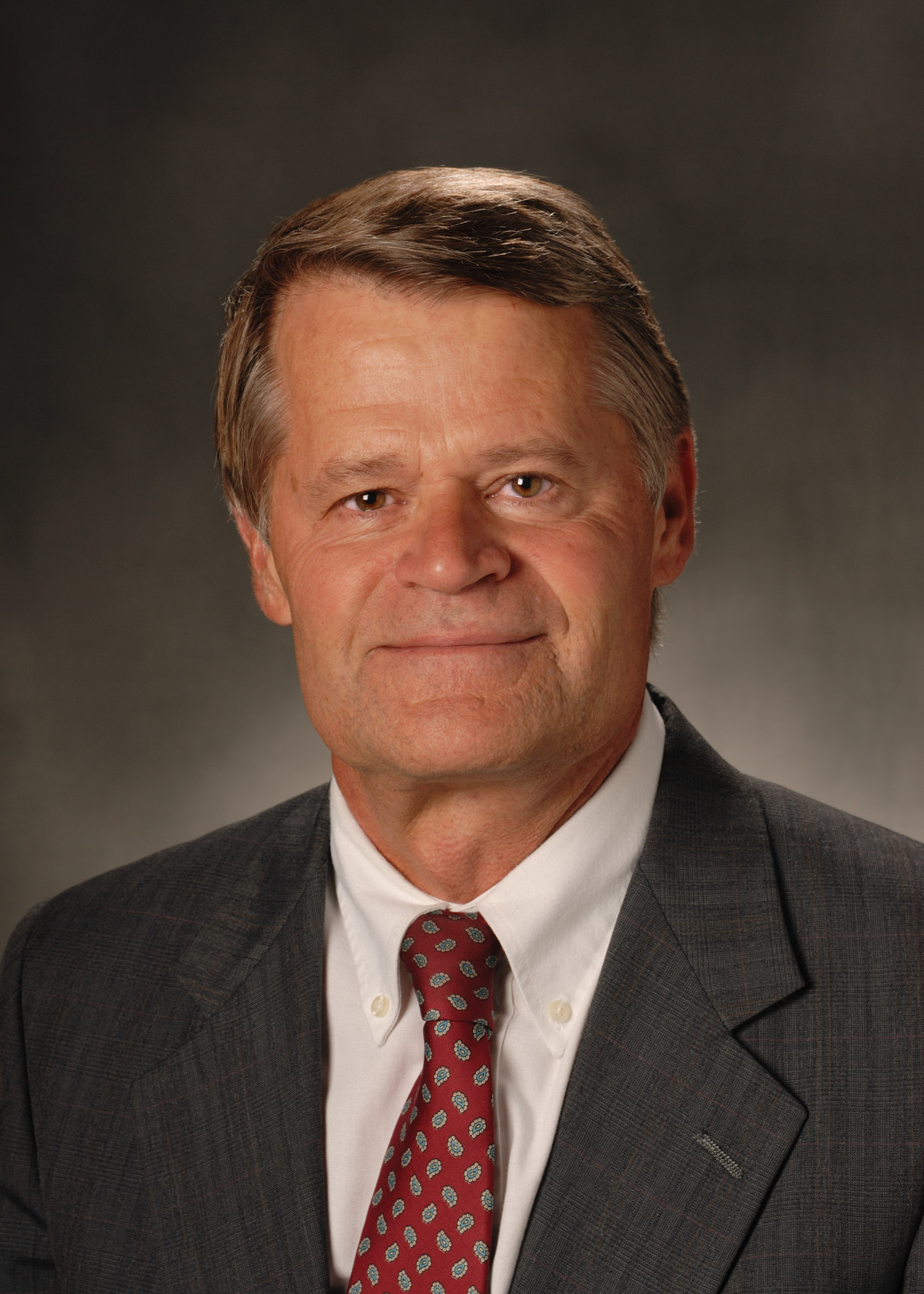
RTI water quality scientist Kenneth Reckhow says we may have trouble achieving mandated water quality standards without making major lifestyle changes.
What happens if we are unable to achieve federally mandated water quality standards in our lakes, rivers, and bays?
In 1972, Congress enacted the Clean Water Act (also referred to as the 1972 Amendments to the Federal Water Pollution Control Act) governing water pollution in the U.S. Among other things, the Clean Water Act regulates the release of pollutants into surface waters. Individual states determine water quality standards for bodies of water within their borders.
Now, a water quality scientist at RTI International is concerned that these water quality standards are unattainable in certain major bodies of water, including Falls Lake, a lake that is valued for recreation as well as being Raleigh’s municipal water source.
Read more…
Yap, Inc., Brings Us the Speech Cloud
Friday, November 5, 2010, 8:37 am 1 Comment | Post a CommentTechnology and language are strange and occasionally wonderful bedfellows. The same field that gave us 802.11b to describe a common household wireless standard is also capable of whimsical and clever trademarks. (Quick: when I say “blackberry,” do you envision a smart phone or an old-fashioned fruit?)
One of the best flights of fancy that has come from the wireless revolution is the Cloud. Loosely speaking, the cloud is the Internet—all of those computers out there that connect us in the world wide web. But cloud computing also refers to applications and sometimes data that reside “out there” rather than on your own computer. It’s rather soothing to think about all of those bits of code bouncing around the stratosphere on a cumulus mattress rather than residing in earthbound bunkers of supercomputers.
I was charmed, therefore, when reading up on Yap, Inc., to learn about the Speech Cloud. Yap provides software-processed (rather than human-processed) speech recognition services, largely via partners like Microsoft and Sprint and other phone carriers. Voice mails, conference calls, and other bits of dictation are transported to Yap’s Speech Cloud and rendered into text by software and returned to the customer’s computer or device.
The Speech Cloud is a "stone soup" of voices from all over, that cumulatively contribute to Yap's speech recognition accuracy.

ScienceOnline2010 - interview with Marla Broadfoot
Tuesday, November 2, 2010, 11:57 am No Comments | Post a CommentContinuing with the tradition from last two years, I occasionally post interviews with some of the participants of the ScienceOnline2010 conference that was held in the Research Triangle Park, NC back in January. As the next one - ScienceOnline2011 - is quickly approaching, I hope you enjoy these Q&As with past participants. See all the interviews in this series here. You can check out previous years’ interviews as well: 2008 and 2009.
Today, I asked Marla Broadfoot to answer a few questions.
Read more…
A Conversation with Dr. Robert Koger of Advanced Energy
Monday, September 20, 2010, 7:04 am 1 Comment | Post a Comment
Dr. Robert Koger
Dr. Robert Koger is president and executive director of Advanced Energy, a nonprofit organization established by the North Carolina Utilities Commission in 1980 to forestall electrical rate increases by promoting energy conservation and alternative and renewable sources of electricity. Advanced Energy provides services that focus on energy efficiency for commercial and industrial markets, electric motors and drives, plug-in transportation, and applied building science.
Advanced Energy also operates NC GreenPower, a program funded through consumers’ voluntary contributions, designed to increase the amount of renewable energy put on the electric grid in North Carolina and to mitigate greenhouse gas emissions.
This month, Dr. Koger assumes the chairmanship of Triangle Area Research Directors Council (TARDC), a group of science and technology leaders from local companies, nonprofits, and universities. The group meets over lunch monthly from September to May, to exchange ideas and information and to hear from guest speakers. TARDC’s first meeting under Dr. Koger’s leadership will be September 21, and the guest speaker will be Mr. Joe Freddoso, president and CEO of MCNC/NC STEM. Non-members of TARDC can attend the luncheons.
I recently asked Dr. Koger about the history of Advanced Energy and about his leadership of TARDC. Read more…
ScienceOnline2010 - interview with Morgan Giddings
Tuesday, September 7, 2010, 7:48 am 1 Comment | Post a CommentContinuing with the tradition from last two years, I will occasionally post interviews with some of the participants of the ScienceOnline2010 conference that was held in the Research Triangle Park, NC back in January. See all the interviews in this series here. You can check out previous years’ interviews as well: 2008 and 2009.
Today, I asked Morgan Giddings to answer a few questions.
Welcome to Science In The Triangle. Would you, please, tell my readers a little bit more about yourself? Where are you coming from (both geographically and philosophically)? What is your (scientific) background?
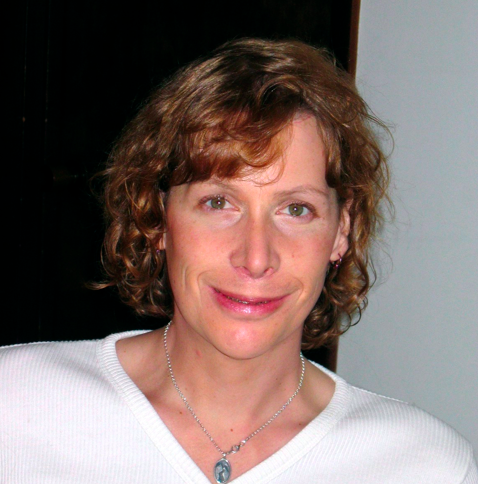 I am presently situated geographically in the center of North Carolina, specifically the Triangle area. If someone has already done it, then I’m bored with it. If the answers are already known, then I’m looking somewhere else.
My scientific background combines degrees in Physics, Computer Science, and a PhD focused on bioinformatics from UW Madison. After that, I got introduced to proteins and proteomics, and ever since have been tinkering with systems and approaches for combining proteomics, genomics, and computing to do hopefully useful things like helping to annotate the genes on the human genome.
Read more…
ScienceOnline2010 Interview – Jennifer Williams
Wednesday, September 1, 2010, 7:50 pm No Comments | Post a CommentContinuing with the tradition from last two years, I will occasionally post interviews with some of the participants of the ScienceOnline2010 conference that was held in the Research Triangle Park, NC back in January. See all the interviews in this series here. You can check out previous years’ interviews as well: 2008 and 2009.
Today, I asked Jennifer Williams to answer a few questions.
Read more…
Scientifica Gets Durham School Kids Excited about Science
Monday, August 16, 2010, 7:25 am 1 Comment | Post a Comment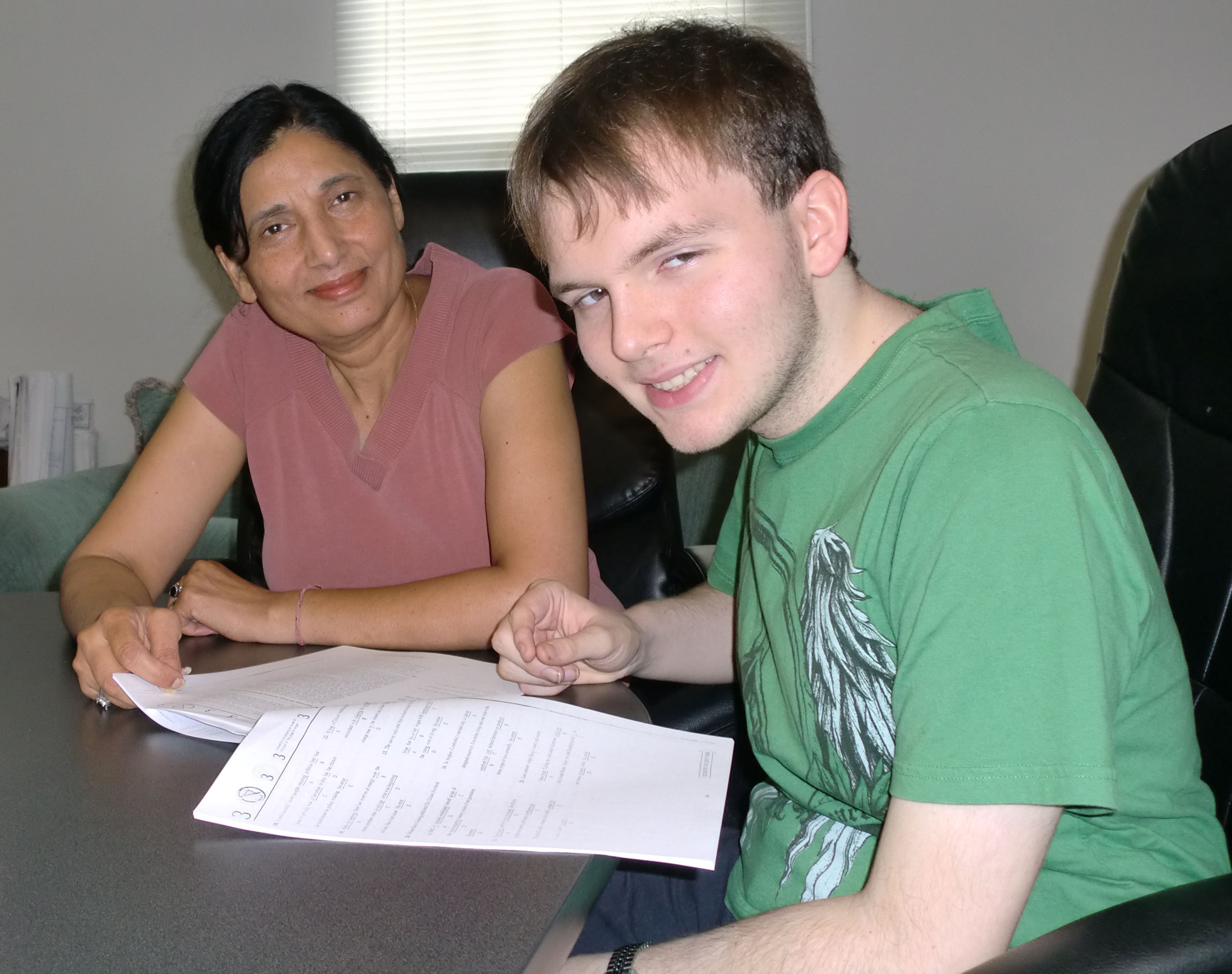
Dr. Anu Sud talks to Robby Fisher, a Durham student participating in the Scientifica program she helped found.
Dr. Anu Sud’s two daughters were accomplished in science by the time they were in high school, in part thanks to coaching by their mother, who had been a cytogeneticist at UNC-Chapel Hill and at LabCorps. The older daughter attended the North Carolina School of Science and Mathematics, and the younger, Shivani, won a $100,000 scholarship in the Intel Science Talent Search and numerous other top science honors when she was a junior and senior at Jordan High School.
When Shivani went off to Princeton, Dr. Sud was like many professional women who interrupt their careers to raise kids: should she return to her former career or try a new path? Then Shivani said to her, “Mom, why not help other kids like you helped us?” Read more…
ScienceOnline2010 - interview with Stephanie Willen Brown
Thursday, July 22, 2010, 1:32 pm No Comments | Post a CommentContinuing with the tradition from last two years, I will occasionally post interviews with some of the participants of the ScienceOnline2010 conference that was held in the Research Triangle Park, NC back in January. See all the interviews in this series here. You can check out previous years’ interviews as well: 2008 and 2009.
Today, I asked Stephanie Willen Brown to answer a few questions.
Welcome to A Blog Around The Clock. Would you, please, tell my readers a little bit more about yourself? Where are you coming from (both geographically and philosophically)? What is your (scientific) background?
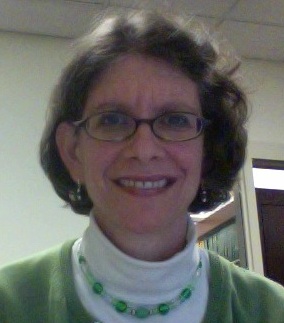 I’m Stephanie Willen Brown, aka CogSciLibrarian living in the Triangle area in North Carolina. I’ve been a librarian since 1996, and I started calling myself the CogSciLibrarian in 2004, when I was the librarian for the School of Cognitive Science at Hampshire College in Amherst, MA. I started the blog as a way of sharing cool cognitive science stories and books that I thought my colleagues would enjoy.
My scientific background is limited to that of a librarian, supporting faculty and students working in cognitive science, communications, and psychology over the years. I’d grown up intimidated by math and science, but cognitive / brain / neuroscience is so interesting AND there is so much good, accessible writing about it that I have become a fan.
My current reading interests include the effect of mindfulness on the brain, the development and use of language, and concussions in NFL and other athletes.
Tell us a little more about your career trajectory so far: interesting projects past and present?
I’m thrilled to be working at my dream job, as director of the Park Library at the School of Journalism and Mass Communication at the University of North Carolina, Chapel Hill. It incorporates many of my interests, such as library science, journalism, marketing, and advertising. I am a consumer of mass media, and I love to be around academics who are studying various aspects mass communication.
ScienceOnline2010 - interview with William Saleu
Tuesday, July 20, 2010, 5:13 pm No Comments | Post a CommentContinuing with the tradition from last two years, I will occasionally post interviews with some of the participants of the ScienceOnline2010 conference that was held in the Research Triangle Park, NC back in January. See all the interviews in this series here. You can check out previous years’ interviews as well: 2008 and 2009.
Today, I asked William Saleu to answer a few questions:
Welcome to A Blog Around The Clock. Would you, please, tell my readers a little bit more about yourself? Where are you coming from (both geographically and philosophically)? What is your (scientific) background?
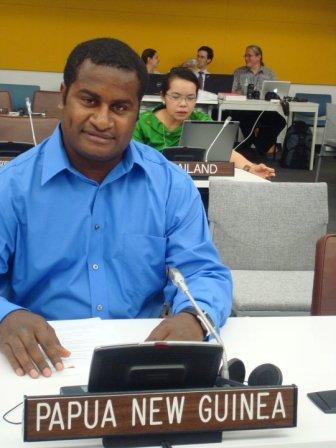 My name is William Saleu and I blog at BomaiCruz. I am from Papua New Guinea (PNG), an independent island nation making up the eastern part of the island of New Guinea which lies immediately north of Australia. I am a research fellow at the Duke University Marine Lab (DUML) in Beaufort, North Carolina.
I am part of a team that studies population structure and species connectivity among invertebrates from hydrothermal vent systems from the western Pacific. Most of our samples were collected from PNG so as you can imagine I have naturally taken up a personal interest in this subject. My ultimate goal is to be able to use the results of this research and other similar work to help identify and design conservation strategies for these unique ecosystems in PNG.
Tell us a little more about your career trajectory so far: interesting projects past and present?
So one might wonder how I ended up doing this. To answer that question I will have to take you back to my final days as an undergraduate at the University of Papua New Guinea (UPNG). I was a biophysics major and was almost at the end of my program when I realized that my options for employment after college were very slim and I decided to look at opportunities for post grad research at UPNG. I spoke to my physics advisor but he was not so enthusiastic about having me on his projects but told me to come up with my own project.


