Archive for March, 2011

‘Written in Stone’ author to pen another dino epic
Wednesday, March 30, 2011, 8:01 am 1 Comment | Post a CommentNew Jersey isn’t exactly known for its ample fossil record. But that didn’t stop Brian Switek from doing everything he could to become an expert on the subject of paleontology.
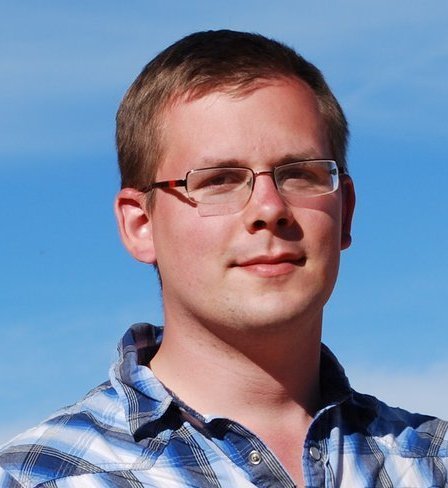
Brian Switek
Over the years, he’s written the popular book Written in Stone, blogged at Wired Science’s Laelaps and Smithsonian Magazine’s Dinosaur Tracking and published papers in academic journals — all as a part-time pursuit. But this summer, he’s taking his full-time freelance show on the road, traveling west to Salt Lake City to get his hands dirty for a new book, A Date with a Dinosaur.
Although there’s no publication date set yet, Switek said he’s excited to get started on a title that will explore a few of paleontology’s biggest celebrities.
“A Date With a Dinosaur is about catching up with the prehistoric monsters I met as a child. Since the time I first encountered them, reconstructions of ‘Brontosaurus’, Stegosaurus, Triceratops, and Tyrannosaurus have changed so much, and so many new dinosaurs have been discovered that it is almost impossible to keep up with them all,” Switek said in a message Wednesday.
“Through these finds, we are finally starting to answer some of the big questions about dinosaur lives - what color were they? how fast did they grow? how did they reproduce? - but dinosaurs aren’t just scientific objects. They are also pop culture icons, and sometimes there’s resistance to scientific discoveries that change the dinosaurs we grew up with. A Date With a Dinosaur is about reconciling these views - pop culture dinosaurs with dinosaurs as paleontologists know them - in the hope that I can introduce readers to aspects of dinosaur lives they have never encountered before.”
I caught up with Switek in January at ScienceOnline 2011 in Durham to talk about how he boned up on his beloved field and what’s exciting him most about the world of dinosaurs.

ScienceOnline2011 – interview with Jessica McCann
Tuesday, March 29, 2011, 9:20 am No Comments | Post a CommentContinuing with the tradition from last three years, I will occasionally post interviews with some of the participants of the ScienceOnline2011 conference that was held in the Research Triangle Park, NC back in January 2011. See all the interviews in this series here.
Today we chat with Jessica McCann from the Department of Molecular Genetics and Microbiology at Duke.
Welcome to Science In The Triangle. Would you, please, tell my readers a little bit more about yourself? Where are you coming from (both geographically and philosophically)? What is your (scientific) background?
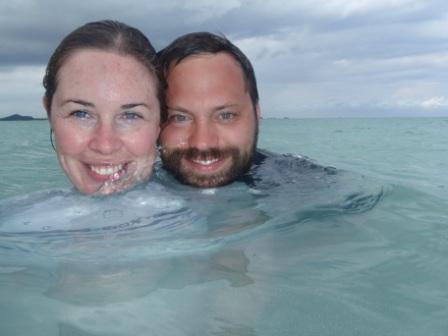
My husband and I moved to NC from Hawaii, where I was studying a bacterial symbiosis between the luminescent bacterium Vibrio fischeri and its squid host. I ended up there after I met my mentor during an undergrad semester at Woods Hole Marine Lab. When the squid-Vibrio lab moved to Wisconsin, we decided to move to NC instead, for two huge reasons: to be close to my husband’s family, and for me to continue graduate school in one of richest (not talkin’ cash) science environments in the country.
So now we live in Chapel Hill, NC, just a couple miles west of Carrboro and we will probably never move. But I was born in Maine, and grew up right on the border between Maine and NH in a little town called Portsmouth. I still spend lots of time up there and really miss it. I do not, however, have a Maine accent. Somehow my sisters and I avoided it, even though both of my parents have it “wicked bad.” When I hear that New England accent on This Old House, though, it feels like someone wrapped warm blanket around me, it reminds me so much of home.
Tell us a little more about your career trajectory so far: interesting projects past and present?
I LOVED my squid-vibrio project in Hawaii, and it got me interested in animal-bacterial relationships. The squid specifically harvests V. fischeri from the million-plus bacteria per milliliter of seawater it sees to make use of the light made by V. fischeri. I like thinking about how we and other animals recognize “good” bacteria from “bad”, and know which ones to harvest and which to repel/destroy.
For my PhD thesis, I studied a very “bad” bacterium, Mycobacterium tuberculosis, and how it pushes proteins out of itself and into you. One of the highlights of my graduate career, though, was when I was writing for Endeavors, a magazine that describes the research and creative activity at UNC. I had some patient, fabulous and hilarious editors and wrote four articles about UNC science faculty there. It was a wonderful experience, and what spurred me into trying to find a “non-traditional” sci career path that includes science writing - which led me to Scio11 (well, first it led me to Scio10, but I had no chance of getting in last year).
What is taking up the most of your time and passion these days? What are your goals?
Now I study Haemophilus influenzae, a bacterium that walks the line between good and bad. Most children have H. influenzae living in their nasal passages/upper respiratory system with no related symptoms. But in some circumstances, usually after a viral infection, H. influenzae causes ear infections, the most common reason for antibiotic prescriptions in the US - as any parent knows, I’m sure. In adults, H. influenzae infections cause severe pneumonia in people with chronic obstructive pulmonary disease.
The thing about H. influenzae, though, is that it doesn’t make any recognizable “virulence factors,” (like the cholera bacteria with it’s toxin for example). It really just gets your immune system to kick up serious inflammation, and its the inflammation that causes all the symptoms we associate with ear infections and pneumonia. I am specifically studying how H. influenzae attaches itself to host cells, both in health and disease. I hope that we might one day block this attachment, and keep noses free from H. influenzae colonization in the first place.
I am also really getting into the ethical questions that arise when scientists set up global biomedical research collaborations. I won’t say too much about it here, as I’m trying to decide on whether to start a blog - there are sooooo many good ones out there already. If I do start one, though, it would be about global science ethics.
What aspect of science communication and/or particular use of the Web in science interests you the most?
I use Twitter to keep up on interesting papers and the evaluation of those papers in the blogosphere. I read science blogs like mad. I am a fan of the open access science publishing movement, and am starting a campaign to get more of my senior colleagues to post comments on research online - it would be amazing to read critical discussions of papers RIGHT BELOW THE PAPER, in the comments section. Yet these comments are still pretty rare, at least in my field.
I also love open access data. Being able to mine someone else’s spreadsheets of how human genes change their expression patterns to respond to bacterial infection, for example, really informs my work and how I decide to proceed with experiments. I am still a n00b when it comes to Mendeley and other online science tools, but can see these becoming more and more critical to how science gets done.
One more thing. I turned to scientist-moms on the internet for advice and support after I had my gorgeous daughter. I seriously don’t think I could have made it through those first months back at work after maternity leave, where 60-80 hour work weeks are expected, without knowing about all the successful, lovely sci moms who had come before. I was one of those women in science who, during grad school, never encountered any bias or hardship due to my being female. I had a great female PI who seemed to have it all - family, great grant success, respect in the community, and was a wonderful mentor to boot. I was like, “it used to be harder for women, but it’s better now!”
But then I started my post doc and had a daughter. Everything changed (I wanted to write “Everything came crashing down,” but that’s a little dramatic, no?). While our little family is humming along now, I still feel like some aspect of work-love-motherhood life is always suffering. Not sure what to do to fix it, though, except maybe pay post-docs more so we can hire people to clean every once and a while. Don’t think the culture will change anytime soon.
How does (if it does) blogging figure in your work? How about social networks, e.g., Twitter, FriendFeed, Facebook and others? How do you intergrate all of your online activity into a coherent whole? Do you find all this online activity to be a net positive (or even a necessity) in what you do?
I am the LEAST organized person I know, so there are no coherent wholes in my life. Just lots of incoherent holes. Heh heh. But I do love Twitter, I love how quickly it moves, and how science discussions get updated over the course of minutes and hours instead of the weeks and months it takes by more traditional routes.
But one of the things I hate about twitter is how quickly it moves. I have about a 20-30 minutes to spend with social media most days in the lab, and there is no way I can click through more than one or two links. When I try to go back and find them at the end of the day, it is impossible and they are lost to me forever (maybe there is an app for storing tweets for later that I don’t know about?).
But blogging and social media aren’t really a part of my work (not yet, anyway). Things are still pretty old-fashioned around here, and we stick to bench work most of the time. The science blogs I read now usually describe work outside of my field - the good ones that condense the latest, coolest research. In my own field, I stick to the primary lit and sometimes seek out opinions on anything controversial from the few experts I know that are online.
When and how did you first discover science blogs? What are some of your favourites? Have you discovered any cool science blogs by the participants at the Conference?
We have had a subscription to Wired forever, so I have been a fan of Steve Silberman for some time. But I got into science blogs first through Carl Zimmer’s books. My husband got me “Evolution: the Triumph of an Idea” and “Parasite Rex” for one particularly geeky birthday, and then his blog was my gateway drug to science blogs in general. One of my favorite things about the conference was learning about all of the great writers and creativity I can now use to feed my addiction: Scicurious, Glendon Mellow’s artwork and tweets, and all the articles on Deep Sea News are a few of the many new additions to my daily routine. The best thing: I was so intimated to know that the people behind all this great work were going to be at Scio11 and I might actually talk to one of them. EVERYONE WAS SO VERY NICE, not to mention smart and witty. It was awesome.
What was the best aspect of ScienceOnline2011 for you? Any suggestions for next year?
I loved the workshop on writing effectively with Ed Yong and Carl Zimmer (“Death to Obfuscation). For a scientist with a very dry writing style and tendency towards passive voice, that workshop was the most helpful. I also loved Robert Krulwhich’s keynote, it was so inspirational. I didn’t get to attend the full Scio10 meeting but was a guest of Burroughs Wellcome for the Monti opening night of story telling, and think that would be an awesome thing to see again next year. I didn’t think the book readings went over all that well, it was too loud and social to really hear the person reading on stage, and that must have been tough for the readers. I do think the readings are a great idea, though, and maybe could be organized around a seated audience?
Is there anything that happened at this Conference - a session, something someone said or did or wrote - that will change the way you think about science communication, or something that you will take with you to your job, or to your science reading and writing?
One of the things that I was ambivalent about (but mostly against) before Scio11 was opening up the peer review process. My reasoning was that peer review makes a finished paper better and, like making sausage, not a process you want to be in on. The panel on open science really made me think twice. Then a few recent papers published in top tier journals had me wondering about the questions the reviewers might have asked and the speed at which this work got published - and wishing I could see the initial reviews. And, for students especially, seeing the nuts and bolts of the review process might help us design better experiments and better research from the get-go. I still believe that reviewers should be anonymous, however. Science is a very, very small world. You might review an author’s work one day and need reagents from that author the next. Not sure this will ever actually come about, though. A generation or two might have to pass before open peer review gets implemented.
Thank you so much for the interview. I hope to see you again soon, and at ScienceOnline2012 in January.

A nuclear power scare from Japan
Sunday, March 27, 2011, 11:12 pm No Comments | Post a Comment
Shearon Harris is one of six nuclear power plants operating in North Carolina.
The hydrogen explosions, the fire, the radioactive leaks and the evacuations at the earthquake- and tsunami-ravaged Fukushima Daiichi nuclear plant about 150 miles north of Tokyo happened a continent and an ocean away from North Carolina’s Research Triangle. But there’s a good chance the fallout from the nuclear crisis in Japan will hit close to home - lest you forget the Shearon Harris nuclear plant about 20 miles southwest of Raleigh.
On clear days, Shearon Harris’ cooling tower and the steam rising from it are clearly visible across the Triangle, even from Eno River State Park about 50 miles north. Splitting an atom, a process called nuclear fission, is cleaner than burning coal to generate electricity and Progress Energy, which operates Shearon Harris, plans to add two reactors to the existing one by 2018.
But the events at the Fukushima Daiichi nuclear power plant could delay expansion plans at Shearon Harris and elsewhere in the U.S. and make them more expensive.
The Japanese earthquake and its fallout “will slow nuclear power down in the U.S.,” Paul Turinsky, professor of nuclear engineering, said during a symposium Wednesday at N.C. State University. Turinsky was one of four NCSU experts who spoke at the symposium.
The same day, the Nuclear Regulatory Commission and the nuclear power industry agreed to reassess reactor designs and training procedures and to reevaluate reactors at the 104 operating nuclear power plants nationwide.
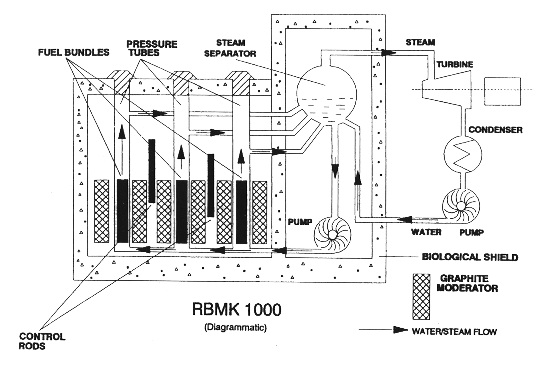
The Chernobyl reactor was an open design, lacking steel and concrete to contain radioactive material in case of an accident.
Also, public support for more nuclear energy has dropped. According to a CBS poll, more Americans disapproved than approved of building more nuclear plants in the wake of the Fukushima Daiichi crisis, and for the first time since the 1986 nuclear disaster in Chernobyl the disapproval rate reached 50 percent.
Add to that regulatory shortcomings fueling anti-nuclear sentiment that has lingered since the Three Mile Island nuclear power plant accident in 1979 and has foiled three decades worth of attempts to establish a nuclear waste repository.
A 2010 report by the Union of Concerned Scientists listed 27 cases in which nuclear power plants accidentally released radioactive materials over the previous four years and the Nuclear Regulatory Commission allowed plant owners to violate regulations with impunity.

A pressurized water reactor like the one at Shearon Harris has a steel vessel around the reactor core and concrete containment structures.
Seven of the 27 violations happened at nuclear plants in North Carolina. Shearon Harris accounted for two of the seven; radioactively contaminated water leaked into the ground in both cases.
With Triangle residents following updates on the nuclear crisis in Japan, Triangle universities scrambled to line up nuclear energy experts who tried to dispel fears with facts. The day following the NCSU symposium, the University of North Carolina’s Morehead Planetarium and Science Center hosted a talk by David McNellis, the director of UNC’s Center for Sustainable Energy, Environment and Economic Development, on the risks of nuclear power.
Back to back, the experts analyzed nuclear reactor designs and their failures, from Three Mile Island to Chernobyl to Fukushima Daiichi.
Based on estimates of how much the general public was exposed to radioactively contaminated material, Man-Sung Yim, an associate professor of nuclear engineering and a radiological health expert at NCSU, ranked Chernobyl as the worst of the three nuclear power plant failures.
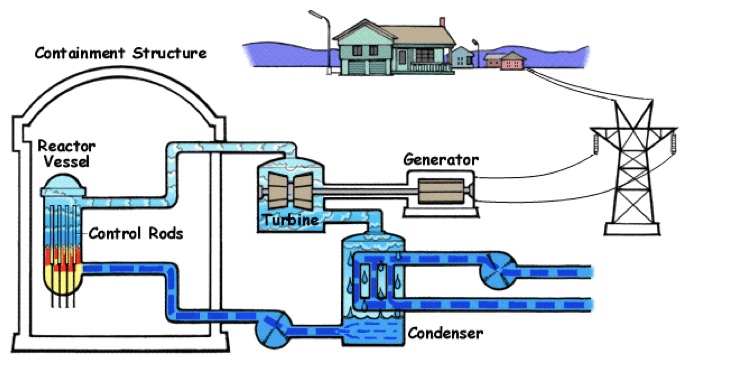
The Fukushima Daiichi plant uses boiling water reactors, which are equipped with steel reactor vessels and concrete containment structures.
Radiation exposure from Fukushima Daiichi “is less than Chernobyl, but far worse than Three Mile Island,” Yim said during the NCSU symposium.
Based on published measurements, Yim calculated that the general population was exposed to about 33 rem of radiation in Chernobyl. The evacuated area around the Fukushima Daiichi plant has received a dose of up to 10 rem.
The Three Mile Island accident exposed the general public to about 180 millirem of radiation, less than the 300 millirem to 600 millirem of radiation Americans take in every year from everyday living.
A 400 rem dose of radiation is considered lethal, Yim said.
The other experts linked the exposure risk of the three nuclear power plant failures directly to reactor design and operational safety standards.
All nuclear power plants generate electricity from steam that turns a turbine linked to a generator. The heat needed to turn water into steam comes from nuclear fission.
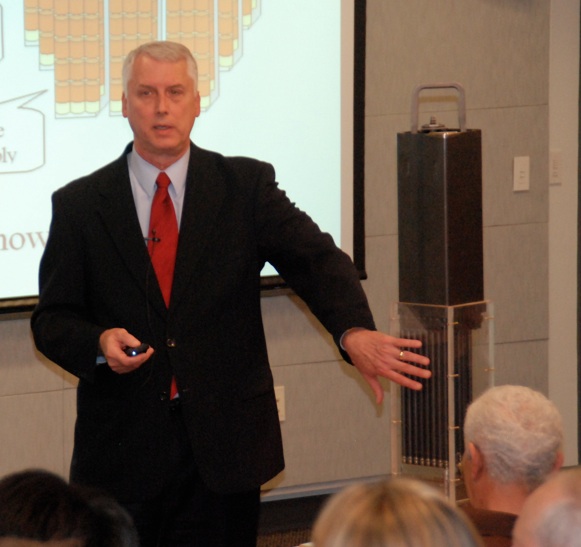
John Gilligan, professor of nuclear engineering at NCSU, shows off a nuclear fuel rod at the symposium.
The fuel to produce the heat is uranium, a natural metallic element in rock, soil and water that comes in multiple versions. The uranium is contained in ceramic-like pellets that are stacked in fuel rods in the core of a reactor. One uranium version, uranium-235, breaks apart when it gets hit by a neutron, releasing two to three neutrons, two radioactive fission products and heat. When released neutrons hit more uranium-235, the nuclear fission continues as a chain reaction.
Unlike the Three Mile Island and Fukushima Daiichi nuclear power plants, the Chernobyl nuclear power plant had no steel vessels around its reactor cores. When an experiment went awry on April 26, 1986, and reactor No. 4 overheated, pressure from the steam continued to build until it blew off the roof of the reactor building, scattering radioactive material from the melting reactor core across the landscape and setting free radioactive clouds that drifted westwards.
The Fukushima Daiichi plant withstood the massive March 11 earthquake, even though it wasn’t designed for such a powerful seismic event, John Gilligan, professor of nuclear engineering, said during the NCSU symposium.
Control rods automatically stopped nuclear fission, in effect shutting down reactors that were in operation the moment the electricity supply to the plant was cut off.
“It wasn’t the earthquake,” that caused the nuclear crisis at Fukushima Daiichi, Michael Doster, professor of nuclear engineering at NCSU, said. “It was the tsunami.”
The wall of water the earthquake had unleashed was more than twice as tall as the floodwall that was supposed to protect the nuclear power plant facing the sea. When the water flooded the plant, it knocked out emergency diesel engines that powered pumps, fans and other electrical equipment in the reactor buildings. After about eight hours, batteries backing up the emergency diesel engines were also exhausted.
Without power, pumps stopped cooling the water in 40-foot-deep pools that held spent fuel rods. The rods usually stay in these pools for about five years during which time they continue to give off heat. But unlike in the reactor, the heat production in the spent fuel storage pools cannot be turned off, said Doster.
“You cannot avoid it. You cannot control it,” he said. “You just have to deal with it.”
The spent fuel rods in the Fukushima Daiichi storage pools are made from zirconium alloy. As the temperature continued to rise in the storage pools, the zirconium interacted with the heated water and produced hydrogen gas. It was that hydrogen gas that exploded, Doster said. The explosions damaged the concrete buildings of at least two of the reactors and released radioactive material from the spent fuel.
Design flaws, malfunctioning equipment and human error caused reactor No. 2 at the Three Mile Island nuclear power plant to overheat March 28, 1979, UNC’s McNellis said.
It was the worst commercial nuclear power plant accident in U.S. history and led to sweeping changes involving emergency response planning, reactor operator training, human factors engineering, radiation protection and many other areas of nuclear power plant operations, according to the NRC. Regulatory oversight also tightened to enhance safety.
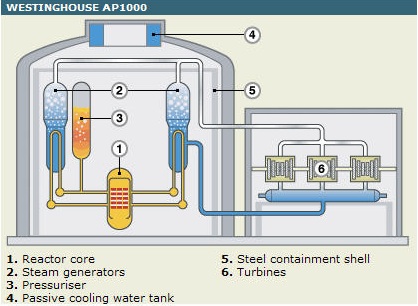 Like two-thirds of U.S. nuclear power plants, Shearon Harris’ reactor is the same design as reactor No. 2 at Three Mile Island. The remaining one-third of U.S. nuclear power plants rely on boiling water reactors like the Fukushima Daiichi plant.
Shearon Harris became operational in 1987, eight years after the Three Mile Island triggered the regulatory and safety changes.
The two reactors Progress Energy has proposed to add at Shearon Harris are a new design. Called AP1000, it includes a cooling tank on top of the reactor from which water trickles onto the core without the need for pumps.
Construction of nuclear plants with AP1000 reactors have begun in China and the U.S.
Charlotte-based Duke Energy, which is buying Raleigh-based Progress Energy, plans to build a nuclear power plant with AP1000 reactors in South Carolina. More are proposed in Florida and Alabama.
(Watch a video of the NCSU symposium here.)

Humans, monkeys age the same, say Duke primatologists
Sunday, March 27, 2011, 7:13 pm No Comments | Post a CommentOriginally published: 3/17/11
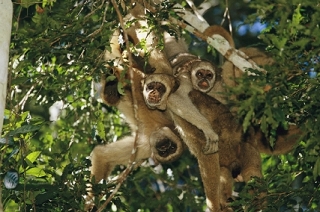
Studies find the muriqui monkey can live as long as the average human being
Humans share 98 percent of their DNA with monkeys. Clearly, the two species have a few things in common. One, say researchers from Duke University, is how we age.
Dr. Susan Alberts, a Duke biology professor, has been studying baboons in Kenya’s Amboseli National Park for quite some time. In fact, she’d just gotten off a flight home, she mentioned when interviewed.
Dr. Susan Alberts
Alberts is one of several Duke scientists who have teamed up with universities across the world to study aging behavior in wild primates. She said data was combined from seven different studies on non-human primates, each spanning 25 to 50 years. Two of these—the Jane Goodall Institute study on chimpanzees and Alberts’s Amboseli study on baboons—were based at Duke.
Findings from the studies appear in the March 11 edition of Science.
The studies chronicle primates over the course of their lives. Monkey populations were observed for births, deaths and physical deterioration. Alberts said long-term primate studies like these are invaluable to putting the human experience in perspective.
“Before, we didn’t have anything to compare to that was like us,” Alberts said. “So we were comparing ourselves to lab mice. And we are really different than lab mice.”
Dr. William Morris, a Duke ecology and population biology professor who assisted Alberts, said main conclusion of the report was that aging patterns and mortality risks coincide between humans and non-human primates.
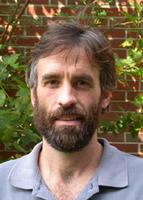
Dr. William Morris
“Your chance of dying increases with age in a similar way whether you’re a gorilla or a baboon or a human,” said Morris. “Humans still win, but we’re not too far away from our primate relatives.”
According to the report, female chimpanzees often live into their forties, some even into their fifties. Males live into their thirties but are mostly dead by their early forties. Morris said the monkey with the longest life expectancy was not the chimp or gorilla, but rather the lesser-known Brazilian muriqui, which can survive all the way into its seventies.
That is not too far off from the average life expectancy of a human, said Dr. Anne Pusey, chair of Duke’s evolutionary anthropology department. Nowadays, the typical American male will live into his eighties. Females, she said, live slightly longer. The gender difference is more pronounced in monkeys, though, because of male-male competition for reproductive opportunities with a limited number of females.
Pusey has been working with renowned British primatologist Jane Goodall at her chimpanzee park in Tanzania since 1970. In the wealth of data she’s collected over four decades, she has developed an eye for identifying chimp aging behavior.
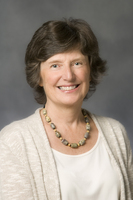
Dr. Anne Pusey
“Just knowing more about mortality patterns in other species helps us think about the evolution of our mortality patterns and understand which patterns are fixed and which are more elastic,” Pusey said. In the future, she and her colleagues plan to investigate how reproductive rates change with age.
“Humans are unusual in this regard because we hit menopause and continue to live a long time afterwards,” she said. “But female chimps go on having babies up until they die.”
Pusey took on her job at Duke last year. She said she was attracted to the area because she feels it’s one of the best of its kind in the country. Also, she had heard about Dr. Alberts’ study and discovered how much potential there is for primate research in the Triangle region.
Alberts said she’s interested in how animals use social behavior to solve environmental problems and how that impacts their survival. What characterizes the human race, she said, is that we’re primarily monogamous, which levels out competition among males.
This might seem counterintuitive at first. If females only mate with one male, wouldn’t there be increased drive for men to settle down with the most desirable female? Alberts said it is actually a great equalizer for the men, and everyone still ends up with a partner.
However, in non-human primate species, not everyone does. The females mate with multiple fathers, but not every male passes that litmus test.
“If females only mate with one male, it isn’t how many kids he’s going to have but how good a mate he’s going to get,” she said. “In primates, the least successful male wouldn’t have any kids at all.”
One finding that surprised her was that primate males are able to differentiate their own offspring. She found this remarkable since females mate with many different males in the course of a lifetime and there’s no discernable way for fathers to keep track of who’s whose. Paternal care goes very deep in our primate roots, she said.
“Human males are very good fathers, especially compared to most mammals,” said Alberts.
So in a lot of ways, socialization has factored into reproduction and life expectancy. Insight like this, Morris said, paves the way to understanding how human evolution has digressed from that our hairy ancestors.
“We live longer than the other primates because of the environment we create for ourselves,” he said. “Nutrition, modern medicine, health care—other primates don’t have these things.”
To Morris, the importance of the Amboseli study is in advocating long-term primate research because he thinks that’s how we really learn about the aging process. He said it’s much different than the plants he studies.
“With trees you can take a look at the core and see how old it is,” Morris said.
“You can’t do that with baboons and monkeys. You really need to follow them around to get the whole picture.”
ScienceOnline2011 – interview with David Wescott
Thursday, March 24, 2011, 9:22 am 1 Comment | Post a CommentContinuing with the tradition from last three years, I will occasionally post interviews with some of the participants of the ScienceOnline2011 conference that was held in the Research Triangle Park, NC back in January 2011. See all the interviews in this series here.
Today we chat with Dave Wescott (@wescott1)
Welcome to A Blog Around The Clock. Would you, please, tell my readers a little bit more about yourself? Where are you coming from (both geographically and philosophically)? What is your (scientific) background?
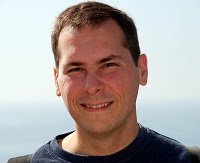 I’ve worked at a big PR firm for over 8 years. I grew up in Boston and I now live in Durham NC. If you’re talking about my philosophy about science communication, I’m more in Neil deGrasse Tyson’s camp than, say, Richard Dawkins’ camp, though I can see the value in both approaches. Politically I’m decidedly left-of-center. My background isn’t in science - it’s in politics, health care management, and strategic communications.
Tell us a little more about your career trajectory so far: interesting projects past and present?
The noteworthy moments in my career focus on the convergence of communities and ideas. When I worked for a public hospital’s pediatrics department in Boston, I organized a group of health care providers to lobby state legislators for better child nutrition provisions in the state welfare law. When I worked for Senator Edward M. Kennedy (D-MA) I focused on things like the intersection of intellectual property and global health, or business incubation and higher education, or energy and economic justice. Now that I work in public relations, I bring mom bloggers on tours of vaccine facilities and connect environmental bloggers with large energy companies. I’ve also done a lot of work in crisis communications - I once led a conference call discussing a plane crash while standing a few hundred feet from a burning train wreck.
What is taking up the most of your time and passion these days? What are your goals?
My true passion is my family. Boston Red Sox baseball is a big deal, too. Beyond that, I want to forge stronger ties between science bloggers and mom bloggers. Online moms have extraordinary power - far more than most people realize. Companies listen to them. Policy makers listen to them. Moms make the overwhelming majority of decisions in life - what to buy, who to vote for, when to get health care, and so on. They do most of the work. They do most of the child-rearing. If moms are making decisions based on the right information and with the right context - the kind of context you can get from science bloggers - the world will be a much better place.
What aspect of science communication and/or particular use of the Web in science interests you the most?
Media convergence. I love watching science writers who have influence in multiple channels - print, broadcast, and online. To me, effective communication is about being where the people are. I’m also interested in developing new ideas of outreach to people who may not have an active interest in science but may develop one if they get the right information under the right circumstances. Darlene Cavalier has been very kind to me in this regard - she lets me write a “best of the science blogosphere” post at Science Cheerleader, where the readership tends to be kids and moms.
How does (if it does) blogging figure in your work? How about social networks, e.g., Twitter, FriendFeed, Facebook and others? How do you intergrate all of your online activity into a coherent whole? Do you find all this online activity to be a net positive (or even a necessity) in what you do?
Blogging is central to my job. I’m a VP in social media for my company and helped establish the practice. As for social networking tools I find Twitter to be very effective. My favorite tool, however, is Delicious - I find enormous power in its simplicity. Organizing and sharing links is an essential task when your job involves interacting with multiple online communities. I’m really upset that Yahoo! may be abandoning Delicious soon.
When and how did you first discover science blogs? What are some of your favourites? Have you discovered any cool science blogs by the participants at the Conference?
I’ve known about science blogs for a long time, but I really got into them after drinking with Jonathan Gitlin at Ars Technica. That dude is brilliant with a capital SMART. I met Jonathan and his wife Elle (also brilliant) at a Drinking Liberally event in Lexington, Kentucky a few years ago and I’ve followed his stuff ever since. He told me about ScienceOnline, and now I’m hooked. I read a ton now but I’m partial to Deborah Blum, Jason Goldman, Chris Mooney & Sheril Kirshenbaum, and Maryn McKenna. I have a young son, so David Orr’s Love in the Time of Chasmosaurs is a must. (More dinosaur pics, please!)
What was the best aspect of ScienceOnline2011 for you? Any suggestions for next year?
I loved the panel on parenting and science blogging - the panelists were outstanding. I did notice that very few people in the room read parenting blogs, however. I’d love to see a panel about outreach to other online communities. The next logical step for science bloggers and science blogging networks is to expand the audience - that will require stepping out of a comfort zone for many.
Is there anything that happened at this Conference - a session, something someone said or did or wrote - that will change the way you think about science communication, or something that you will take with you to your job, or to your science reading and writing?
The one quote that still resonates with me from #scio11 came from Steve Silberman at the panel on “keepers of the bullshit filter.” He said you can’t call bullshit on someone if you’re anonymous. I know this is a sensitive topic for many in the science blogsophere, and some of my favorite science bloggers don’t use their names. But as a PR guy with a political background it’s so important. It goes to the heart of credibility. It drives me nuts when I see so many political ads out there funded by people who don’t want you to know who they are. If I tried to hide my identity or my interests while speaking for a client I’d be slaughtered for it, and rightfully so. If you want to influence people with your writing, I think it’s important to be transparent and to own your words.
Thank you so much for the interview. I hope to see you again soon, and at ScienceOnline2012 in January.
ScienceOnline2011 – interview with Jason Priem
Thursday, March 24, 2011, 9:21 am No Comments | Post a CommentContinuing with the tradition from last three years, I will occasionally post interviews with some of the participants of the ScienceOnline2011 conference that was held in the Research Triangle Park, NC back in January 2011. See all the interviews in this series here.
Today we chat with Jason Priem
Welcome to Science In The Triangle. Would you, please, tell my readers a little bit more about yourself? Where are you coming from (both geographically and philosophically)? What is your (scientific) background?
 Geographically, I’m a Floridian living in the frozen climes of North Carolina. Philosophically, I see my work in improving scholarly communication as the tip of a much bigger iceberg. The biggest current limit on the world-improving potential of science is the inefficiency of our antiquated communication infrastructure. If we can move the scholarly communication system into the current century, we can make science, and thereby the world, a lot better.
Tell us a little more about your career trajectory so far: interesting projects past and present?
I like always doing new things, so I’ve moved around a lot; I was an artist, then a history and english teacher, then a web designer, and now I’m a 2nd-year PhD student in information science. I’ve worked mostly on what a lot of us are calling altmetrics-new ways of measuring scholarly impact that capture more than traditional citation could. So for instance, we’re studying the impact that scientific articles by looking on Twitter, blogs, or in Mendeley or Zotero.
What is taking up the most of your time and passion these days? What are your goals?
Well, I’m doing a number of studies related to altmetrics; right now I’m really excited about altmetrics11, a workshop we’re putting on this summer that will showcase some of the great emerging research into altmetrics. (Shameless plug: we’re still accepting submissions through March; see http://altmetrics.org/workshop2011/).
What aspect of science communication and/or particular use of the Web in science interests you the most?
It’s tough to pick one. But right now I’m incredibly excited about the potential of the web to decouple the traditional functions of the scientific journal. Right now, journals distribute, certify, archive, and register scientific knowledge…but what if we separated those functions out, and let the market improve each one individually?
A service like ArXiv can provide free archiving and distribution. Why not just overlay peer review on top of that, as a service? I could add multiple peer-review “stamps” to the same article. I could even get a peer-review stamp for a blog post I write. As these decoupled services compete, the evolve and diversify; we get a nuanced, responsive, open way to share science.
How does (if it does) blogging figure in your work? How about social networks, e.g., Twitter, FriendFeed, Facebook and others? How do you intergrate all of your online activity into a coherent whole? Do you find all this online activity to be a net positive (or even a necessity) in what you do?
Like a lot of other folks, I find that the speed and ease of Twitter have tended to make my blog posts more thought-out but less frequent. I’m on FriendFeed occasionally because a lot of folks I follow are, but I never entirely cottoned to it…I love the minimalism of Twitter. I’ve also really enjoyed attending some recent conferences via Twitter; I felt more present as a virtual attendee at #beyondthepdf, for example, than I have at other conferences I’ve attended IRL. So social media is not just a net positive, but an essential part of my work.
What was the best aspect of ScienceOnline2011 for you? Any suggestions for next year?
I really enjoyed the sense of community, the open-mindedness, and the energy at SciO. It was great being around so many people for whom “well, we’ve always done it that way” wasn’t an ok answer. I think one improvement I’d suggest would be to make even more use of synchronous technologies like EtherPad to involve participants in sessions in real time. Talking is great, but it’s serial; the online environment lets us add a background of parallel cognition that can really enhance a session.
Is there anything that happened at this Conference - a session, something someone said or did or wrote - that will change the way you think about science communication, or something that you will take with you to your job, or to your science reading and writing?
Well, our altmetrics session was amazing (for me, anyway); there were some really useful ideas and questions that have helped to inform my work since. It was also really great getting to talk with some of the industry folks who are really pushing scholarly communication forward, like Sara from PLoS, Jan and Jason from Mendeley, and Lou from Nature Blogs.
Thank you so much for the interview. I hope to see you again in January.
Expanding the Hamner one institute at a time
Monday, March 21, 2011, 11:03 pm No Comments | Post a Comment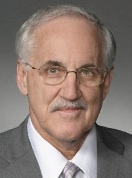
William Greenlee
William Greenlee is getting ready to build another institute on the 56-acre campus of the Hamner Institutes for Health Sciences in Research Triangle Park.
Construction of the Global Translational Research Institute, a 150,000 square-foot building projected to cost $70 million, could start as early as this fall, the Hamner chief executive told members of the Triangle Area Research Directors Council at their March 16 meeting.
The building is part of a $500 million expansion plan Greenlee unveiled in 2006. The plan envisions five buildings of labs and office space - a research hub focused on drug safety early in the development of new medicines.
Greenlee’s vision for the Hamner is inspired by biomedical research hot spots like the Salk Institute in San Diego, Calif., the Scripps Research Institute in La Jolla, Calif., and Jupiter, Fla., and the Broad Institute in Cambridge, Mass.
At the TARDC meeting, Greenlee showed a map of Cambridge, with the Broad Institute at the center of a triangle that had Harvard University, the Harvard Medical School and Massachusetts General Hospital as its corners. “This is an instructive model,” he said and pointed out that the Hamner sits in the middle of a similar node of knowledge with the University of North Carolina at Chapel Hill, Duke University and N.C. State University as the corners of the triangle.
“We don’t want to become Cambridge,” Greenlee said. “We want to create the energy of Cambridge.”
In the past five years, the Hamner has already made headway in pursuit of the ambitious expansion plan: A research partnership with UNC, research footholds in China and a collaboration with the Food and Drug Administration to reduce drug-induced liver injuries.
In June 2009, Janet Woodcock, head of the FDA’s Center for Drug Evaluation and Research, cut the ribbon at the opening of the Hamner’s Institute for Drug Safety Sciences, which built on the more than 30-year expertise the Hamner has with chemical toxins.
Gossiping on Facebook doesn’t make a social media whiz
Friday, March 18, 2011, 10:46 am No Comments | Post a CommentConsidering the popularity of Facebook - the social networking site has more than 600 million active users and an award-winning movie to its credit - you’d think every teen and college student is a social media whiz.
Think again, said Whitney Chrisco, a 23-year-old college graduate and herself a member of the Net generation.
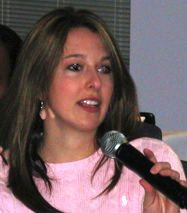
Whitney Chrisco
Chrisco, who has a biology degree from N.C. State University and graduated from the N.C. School of Science and Mathematics in Durham, went back to her high school a few weeks ago to see how much juniors and seniors know about Twitter, Tumblr, Flickr, Second Life and LinkedIn, social media tools used by millions to distribute information and network on the Internet.
The dozen teens who signed up for Chrisco’s seven-day class were smart, tech-savvy kids interested in public health and innovative ways to improve it. The N.C. School of Science and Math is a high school focused on science, math and technology whose graduates have started several Internet-based companies.
“I was worried they would know more than me,” she said. But she discovered, “They really didn’t know much.”
But then, much of what Chrisco knows about social media she learned last summer during a fellowship program at the University of North Carolina Gillings School of Global Public Health.
It’s no coincidence that Chrisco developed a high school course called “Social media networking through a public health lens” from scratch in North Carolina’s Research Triangle.
The region is a biotech and medical research hub that is also rich in global public health expertise. (More on the Research Triangle’s influence on global health here and on the benefits North Carolina reaps here.)
With researchers and students spread across the world, often working on a community level to improve water sanitation, prevent insect-borne diseases or reduce infant mortality, public health lends itself to social networking on the Internet. Free digital tools can help collect and distribute information and bring together people from all walks of life who are driven by the same concerns and interests.
All of the students who signed up for Chrisco’s course had a Facebook page to keep in touch with friends. They used Web cams on their laptops and video conferencing software called ooVoo to chat. They texted on their mobile phones. But they knew little about building a professional network using other resources and tools readily available on the Internet. Only two or three of them had a Twitter account, Chrisco said.
One of the students, Jeremiah McLeod, realized at the beginning of the course how limited his knowledge about Internet networking was.
In a post on the blogging platform Tumblr, McLeod wrote, ”Teenagers, such as myself — no longer spend evenings yakking on the cell phone, but rather, do so while sending gossip through instant messages, blogs, or oovoo. Reading what I’ve just written, I find myself sounding like an old grandpa, and I thus realize the vast importance of connecting with people in this new age.”
The Tumblr blog was one of the hands-on exercises Chrisco developed. Also, the students took photos of public health scenarios, uploaded them onto Flickr and created a map of the photo shoots for a public health sticker campaign. They went on field trips to see how different social media tools are used to promote public health. And they commented on their experiences on Twitter.
One field trip took them into the virtual world of Second Life, where each student created an avatar to visit a three-dimensional AIDS quilt. Fashioned after the AIDS Memorial Quilt, the 3D version is laid out below an enormous tree that grows on a virtual island on Second Life. Instead of fabric pieces commemorating loved-ones who died of AIDS, the 3D AIDS quilt has rooms that were contributed by relatives and friends, but also institutions involved in public health such as UNC’s Center for AIDS Research and the Triangle Global Health Consortium. (More on the 3D AIDS quilt here.)
Chrisco’s students also met two of the creators of the virtual quilt, Jena Ball and Martin Keltz of Startled Cat studios. Here’s what Greeshma Somashekar wrote on her blog about the encounter: “I would love to see the concept expanded to encompass other diseases as well. Like I mentioned earlier, I definetely feel that people are more inclined to learn about something from afar than at a conference, lecture, or public health campaign. Virtual worlds are an invaluable resource, in my perspective. People at risk for other diseases such as Alzheimers, Sickle-Cell Anemia, Tay-Sachs, Cystic Fibrosis, etc may benefit from being able to learn before making tough decisions such as whether or not to be tested for the responsible gene.”
Other students were less enthusiastic about the tool.
Adams Ombonga blogged this: “While I do feel Jenna and Martin’s idea of a virtual world is a very innovative and creative way of reaching out to the public and talk about these public health issues, I felt as if it wouldn’t be widely spread because of the everyday busy lives that people lead. I also felt that with the growth popular social sites such as facebook and twitter Second Life might not be able to compete with them because in the end Second Life is a virtual world and just can’t compete with reality.”
The other field trips took the students to two different places, the Rogers-Eubanks neighborhood northeast of Chapel Hill and the N.C. Biotechnology Center in Research Triangle Park, where speakers nonetheless addressed similar public health issues.
The Rogers-Eubanks neighborhood is predominantly African-American and borders the Orange County landfill. Unable to tap into public water and sewer lines, the neighborhood relies on wells many of which do not comply with federal water quality standards. To bring about changes in their neighborhood, residents use a blog to get their message out.
Water supply was also a topic Fred Gould, an NCSU professor, talked about during the Triangle Global Health Consortium breakfast the students attended at the biotech center. Gould’s presentation was about insect-borne diseases such as malaria and dengue fever and the mosquitoes that spread them. In communities where few households have running water, families store water indoors in open containers. These containers are breeding grounds for the mosquitoes, Gould said.
Kinesha Harris blogged about the visit to Rogers-Eubanks: “This neighborhood which was no more than a 15 minute bus ride away does not have sewage or decent water. There are pipes that run directly under their houses or are near by their houses that the government will not allow them to connect to. Residents of the neighborhood have been fighting for nearly 40 years to be able to connect to the pipes. Some people would ask why they do not just move to a different neighborhood and our guide, who has lived in the neighborhood a majority of his life, says that they will not leave because it is apart of their family history and they do not want to lose that history.”
Kelly Bates wrote about one solution Gould discussed to counter malaria and dengue - genetically engineered mosquitos. The class also read an article about such mosquitoes being released.
“Yesterday’s breakfast at the Triangle Health Consortium was unique. I had never been to something like that before. It was a presentation and discussion about genetically engineered mosquitos being flown into third world countries in the hopes of reducing malaria or dengue. Personally, I had never known about the genetically engineered mosquitos before reading the article and attending the meeting yesterday. All of this was new to me, so it opened my eyes to the huge debate that’s occurring between the people who like this new approach and those who don’t.”
Here’s a picture of Chrisco’s class taken after the Triangle Global Health Consortium breakfast:
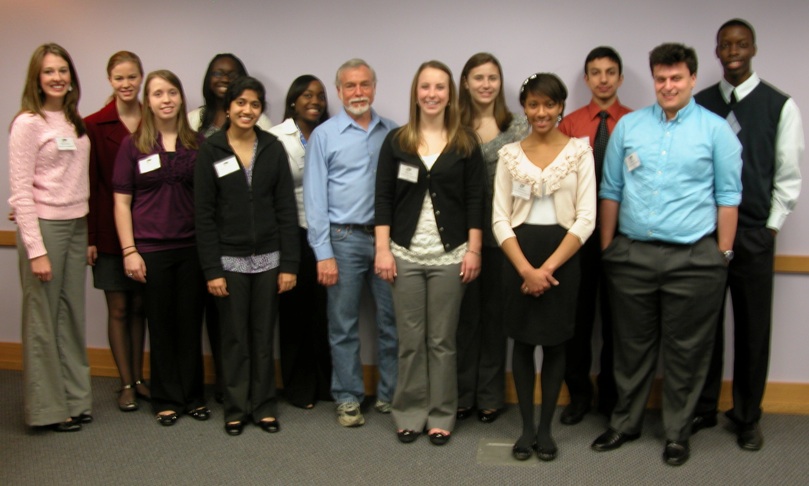
From left: Whitney Chrisco, Holly Modlin, Troy Royal, Jelicia Diggs, Greeshma Somashekar, Kinesha Harris, Fred Gould, Jordan Calvert, Kelley Bates, KeAira Roland, Naseer Ahmed, Jeremy Saxe, Adams Ombonga. Not pictured, Jeremiah McLeod.
Local gaming magazine’s ‘March Mayhem’ features local developers
Friday, March 18, 2011, 9:24 am No Comments | Post a Comment Tobacco Road may have its fair share of top-tier college sports teams, but now nearby gaming companies have the chance to compete in a little March Madness of their own.
The Escapist, an online gaming magazine based in Durham, is allowing users to vote for their favorite developers during its March Mayhem 2011 tournament. Among the bevy of 64 competitors are the Triangle’s own heavy hitters — Epic and Insomniac — which have already progressed to round two of the tournament.
Voting for round two ends Saturday at noon and the final round will wrap up April 4.
And what good would a tournament be if you can’t fill out a bracket for bragging rights and prizes? Although the deadline for filing a bracket was March 14, users can still vote for their favorite developers through the end of the tourney.
So when you’re done helplessly watching your teams and brackets crash and burn in the NCAA showdowns this month, pop on over to The Escapist and cast a vote for our home teams. It’ll feel better than yelling at the big screen.
One man’s vision of affordable health care for all
Monday, March 14, 2011, 3:17 pm No Comments | Post a CommentDurham is home to Duke University hospital, rated one of the best 50 hospitals in the U.S., but Durham also has one of the highest HIV infection rates in North Carolina. Sixty-five percent of adults are overweight or obese and an estimated 15 percent of the children in Durham are uninsured, according to the 2010 State of the County health report.
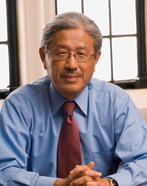
Dr. Victor Dzau
Considering that the Duke University Health System dominates healthcare in Durham, the community’s health status stands in stark contrast to the hospital’s nationwide ranking. Dr. Victor Dzau, Duke’s chancellor for health affairs and chief executive of Duke University Health System, acknowledged as much during a speech he gave March 9 at the Research Triangle Park Rotary Club’s Luther Hodges Ethics Luncheon.
But then Durham is no exception. Communities surrounding the best health systems in the country often have the worst health status, Dzau said.
The problems these communities face with access to healthcare and healthcare quality and affordability in many ways epitomize national challenges: Healthcare spending has increased faster than the economy and now represents 16 percent to 17 percent of the U.S. gross national product, but the U.S. population isn’t getting healthier. Obesity and diabetes rates are up, the infant mortality rate is higher in the U.S. than in most other developed countries and about 50 million American age 18 to 64 are uninsured, according to the Centers for Disease Control and Prevention.
“Some people say we’re in a crisis,” Dzau said.
As a doctor who promised to hold service above self and as the head of a health system whose costs for services to patients unable to pay reportedly increased from $45 million in fiscal year 2009 to $47.7 million in fiscal year 2010, Dzau said he believes healthcare is a human right and he worries about who’s going to pay for it.
He sees part of the solution in the federal healthcare reform act that passed last year. The law “has lots of elements we should embrace,” Dzau told RTP Rotarians, even though it’s “pretty scary for providers. It changes my entire business model.”
But he also envisions a role for academic health sciences centers like Duke to better pass on their knowledge from the bench to the bedside and to help surrounding communities come up with strategies for prevention and treatment. (More about organizational changes at Duke to embrace Dzau’s vision here.)
Implementing the reform act, which would expand health insurance to more than 30 million uninsured Americans, is projected to cost more than $1 trillion over nine years, according to a Congressional Budget Office report. But it also promises to change an inefficient and expensive fee-for-service system in which healthcare providers are paid whether treatments work or not.
Another CBO report estimated that by 2019 reform act provisions will reduce the national deficit by up to $143 billion.
Healthcare reform aims to, for example, reduce the more than $28 billion spent every year on infections by bacteria that can be traced back to healthcare settings. Provisions in the reform act include programs to increase measuring and reporting of healthcare-associated infections, to restrict reimbursements to hospitals for HAIs and to establish financial penalties for providers with high HAI rates. (More about efforts to reduce HAIs in North Carolina hospitals here.)
Other provisions restrict reimbursements to hospitals that discharge patients too quickly and have to readmit them within 30 days of the discharge.
The reform act would also test whether healthcare costs can be reduced by bundling payments to multiple providers, from the physician who treats, say a patient being admitted for a heart attack, to the home-health nurse who makes sure the patient takes his medicines, adjusts his diet and sticks with an appropriate exercise regimen.
“It’s going to be painful,” Dzau said. But “we’ve got to get the cost down and keep the quality.”
Financially, the status quo of U.S. healthcare is no longer tenable, he said.
Private health insurers have ratcheted up copays and deductibles for years to corral payments. To deal with a drop in tax revenue and a rise in Medicaid enrollments, states have begun slashing Medicaid programs to fill budget deficits. Meanwhile, hospitals have been shifting costs from Medicare and Medicaid patients to privately insured patients to reduce losses, Dzau said.
In addition to charity care for patients who couldn’t pay, Duke reported it absorbed $62 million in losses during fiscal year 2010 because Medicaid reimburses only 60 cents for every $1 spent on patients.


