Posts Tagged ‘biofuels’

How energy alternatives can make us safer and healthier
Sunday, March 6, 2011, 8:21 pm 1 Comment | Post a CommentThe fiscal fight over monitoring greenhouse gases raged on Capitol Hill while more than 100 people gathered at N.C. State University Thursday and Friday to explore whether we dismiss the fallout from our fossil fuel dependency at our own peril.
Attendees of the two-day conference, which was partly sponsored by the U.S. Army War College, didn’t exactly make for a treehugging crowd. They included security analysts from Fort Bragg, economists, energy consultants to large investors and governments, former oil industry executives and scientists developing alternatives to oil and coal.
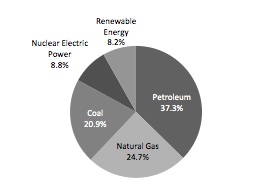
2009 U.S. energy consumption by source, U.S. Environmental Protection Agency
That greenhouse gases are taking a toll on climate, environment and health was never in question during the conference. Indeed, speakers expounded on the costly consequences that U.S. dependency on fossil fuels has on healthcare at home and defense overseas.
James Bartis, a senior policy researcher with the RAND Corp., a global policy think tank with an office in the Middle East emirate of Qatar, was one of the speakers at the conference. In testimony before the U.S. Senate Committee on Energy and Natural Resources two years ago, Bartis urged that there was “a compelling need to reduce greenhouse gas emissions” and a need for research on technologies that would allow us to use less oil, coal and natural gas, the three fossil fuels linked to almost 90 percent of the emissions.
At the NCSU conference, where he participated on a panel of alternative energy experts, Bartis was asked why lawmakers aren’t heeding his advice more. “There’s a lot of money to be had [with fossil fuels] and there’s a lot of inertia,” he responded.
 About 83 percent of the U.S. economy runs on fossil fuels and Alan Hegburg, a senior fellow at the Center for Strategic and International Studies and the conference’s keynote speaker, didn’t expect much will change the next 10 years.
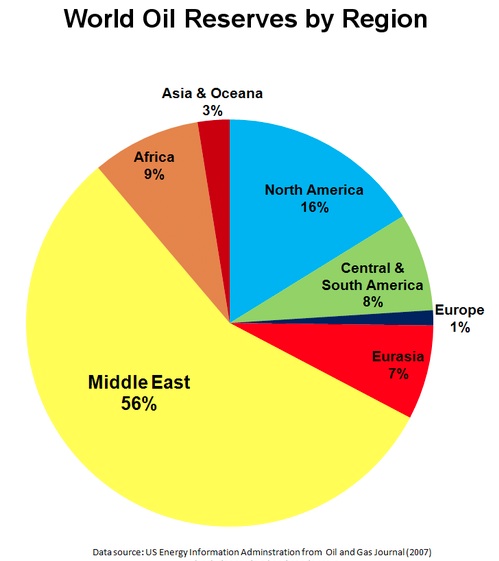
Coal is plentiful and cheap - no country has more coal reserves than the U.S. Crude oil is also still plentiful and cheap to extract - in the Middle East, which has more than half of the world’s oil reserves.
Fossil fuels pack a lot of energy. Their production is efficient. The delivery infrastructure is finetuned. And markets are well developed. In contrast, energy alternatives cost more and are less energy-dense. And functioning delivery systems to drive demand are rudimentary at best where they exist.
“Getting this train to change tracks will take a huge effort,” Hegburg said.
Then why try? Speakers at the conference offered as the main reason the hidden costs of fossil fuels.
Generating electricity from coal and burning oil for transportation is a dirty business. In 2005, pollution caused an estimated $120 billion in damages to human health, crops, timber yields, buildings and recreation nationwide, according to a report the National Research Council published 18 months ago.
Another study published a few weeks ago in the Annals of the New York Academy of Sciences estimated that extracting, transporting, processing and combusting coal caused $345 billion in damages to the health and the environment in 2005.
Factor in the hidden costs and electricity would be at least twice as expensive, according to the study. Do the same with oil and gasoline prices would be at least $1.50 per gallon higher, Bartis said.
Suddenly, wind and solar energy and investments to boost energy efficiency and conservation become competitive. Calls from research hubs for more funding to make cleaner energy alternatives cheaper and more efficient begin to make sense.
North Carolina’s Research Triangle is one of those hubs.
Last summer, the University of North Carolina at Chapel Hill, Duke University, NCSU and the Research Triangle Park-based research institute RTI International formed the Research Triangle Solar Fuels Institute to bring together local experts in chemistry, electrical engineering, material sciences and nanotechnology with the goal of developing technologies that tap the sun and make liquid fuel.
Researchers at RTI are working on capturing and reusing carbon dioxide – the most prominent greenhouse gas in the Earth’s atmosphere – producing bio-crude from organic waste and developing a nanotechnology light bulb that promises to be more energy efficient than a fluorescent light and doesn’t contain harmful mercury. Not far from RTI, at the corporate biotech research lab of Swiss agribusiness giant Syngenta, researchers have genetically engineered corn that requires less water and energy to make fuel ethanol.
And North Carolina, the third largest U.S. biotech hub by number of companies, has targeted biodiesel and ethanol from corn and biomass to meet an ambitious goal: By 2017, 10 percent of liquid fuels sold in the state should be locally grown and produced. This target goes hand-in-hand with the federal mandate that oil companies increase the use of renewable fuels such as ethanol in gasoline blends.
The federal ethanol mandate had its critics at the NCSU conference - diverting about one-third of the U.S. corn crop into ethanol production has contributed to rising food prices. But other speakers credited the mandate for keeping the discussion alive at a time when energy-related research funding is threatened by massive cuts.

David Dayton
“Because there’s a mandate, climate control, security issues and oil is $100 a barrel, at least we’re still talking about alternative fuels,” said David Dayton, biomass program manager at RTI’s energy research lab.
How much military activities cost us to maintain our fossil fuel dependency is difficult to determine - neither of the two studies provided estimates - but conference speakers said ensuring a steady supply of crude oil drives national security spending.
With about 19 million barrels daily, the U.S. consumed more oil in 2005 than the next three biggest consumers, China, Japan and India, together, figures of the U.S. Energy Information Administration show.
Transportion, which in 2004 made up more than 60 percent of the U.S. oil demand, has become the dominant driver over the past 50 years.
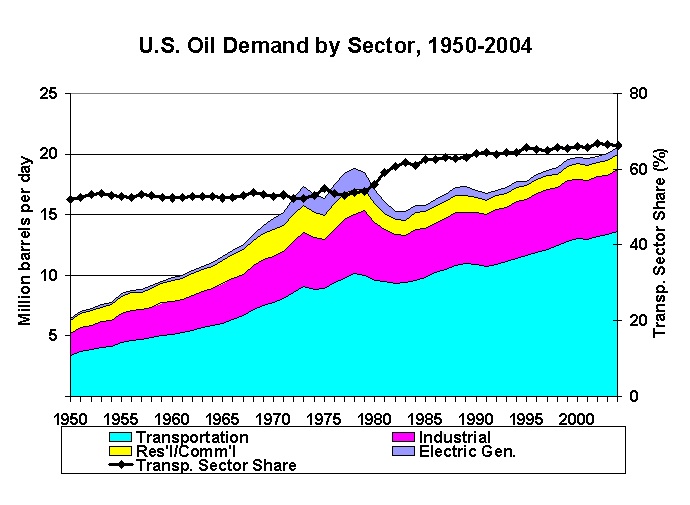
Source: Annual Energy Review
The increase in demand has influenced which regions are important for the U.S. to protect.
The Middle East, which sits on more than half of the world’s oil reserves, has gained importance in U.S. national security spending in the past 30 years, even though former Defense Secretary Donald Rumsfeld insisted that invading Iraq had nothing to do with oil, as Peter Maass, author of “Crude World: The Violent Twilight of Oil,” wrote on his blog last summer.
A study published two years ago estimated that between 1976 and 2007 the U.S. spent $6.9 trillion in the Persian Gulf region on military efforts, all of them oil-related. After the end of the Cold War in Europe, Persian Gulf military expenses took up an ever increasing portion of the entire U.S. defense spending in the 1990s and jumped to 91 percent in 2001. By 2007, their portion of the entire U.S. defense spending had decreased to about 80 percent.
Nobel Prize winning economist Joseph Stiglitz and Linda Bilmes, a leading expert on U.S. public finance, estimated in the Washington Post last year that the war in Iraq cost the U.S. in excess of $3 trillion and drove the price of oil up by about $10 per barrel.
This focus on the Persian Gulf region reflects the fact that more oil is shipped through the Strait of Hormuz, which connects the Persian Gulf with the Gulf of Oman and the Arabian Sea, than through any other narrow channel through which oil is shipped on global sea routes, according to numbers of the U.S. Energy Information Administration.
Every day, an average 15.5 million barrels of oil pass through the Strait of Hormuz, or about 18.5 percent of the daily oil production worldwide. More than three-fourths of the shipments are destined for Asian countries.
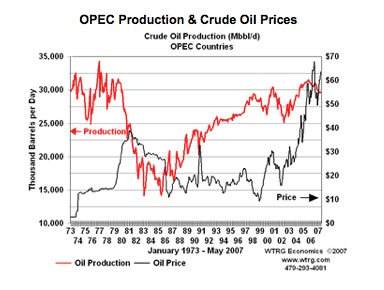
Source: WTRG Economics
Whether the U.S. investment to keep the oil flowing through the Strait of Hormuz was necessary is debatable, two speakers at the NCSU conference argued.
Eugene Gholz of the University of Texas Center for Energy Security and Ann Korin of the Institute for the Analysis of Globa Security argued that the price of crude is influenced mainly by production levels in countries that belong to OPEC, the Organization of Petroleum Exporting Countries.
It makes more sense for the U.S. to diversify energy consumption than to spend billions on military campaigns in the Persian Gulf or on currying favors with members of the OPEC cartel, Korin and Gholz suggested.
Once 15 percent to 20 percent of all of the vehicles in the U.S. can run on multiple fuels, Gholz said, the infrastructure to deliver gasoline alternatives will follow.
It’s advice North Carolina is heeding.
In addition to its commitment to boost the use of fuel ethanol made from plant fibers, the state is also at the forefront of establishing charging stations for plug-in electric vehicles, or PEVs. The Research Triangle is projected to get about 200 of the charging stations within the next year.
As a result, North Carolina is among the states where Nissan will fill the initial 50,000 orders for the Leaf, the first mass-produced, affordable electric car. The Leaf is not sold through dealerships. Deliveries started in December and January on the West Coast. The first cars are scheduled for delivery in North Carolina in April. (More on PEVs and the Leaf here.)
On Saturday, the day after the NCSU conference, Nissan brought about two dozen Leaf cars to the Raleigh farmers market for test drives.
Can RTP-based effort nip a Frankenwoods scare in the bud?
Thursday, December 16, 2010, 9:38 pm No Comments | Post a CommentNearly a decade after genetically modified foods garnered criticism as so-called Frankenfoods, most of the corn, canola and soybean plants grown commercially in the U.S. are genetically modified. Golden rice, modified to contain high amounts of vitamin A, is expected to come to market within two years. But crops that have been engineered in a laboratory to withstand herbicides or pests, to grow faster or to contain important nutrients still raise safety and ecological concerns - particularly in Europe.
Genetically modified trees could be next in line for global public scrutiny.
Much of the Hawaiian papaya crop is already grown on trees modified to resist a fungus that devastated the majority of Hawaii’s unmodified papaya plantations. A plum tree modified to resist blight and a tropical eukalyptus tree that can deal with freezing temperatures in the southeastern U.S. are up for regulatory approval and genetically modified trees for wood products, including biomass to make cellulosic ethanol, are being grown on research stations nationwide.
Anticipating criticism, academic and corporate proponents of biotech trees banded together to nip a “Frankenwoods” scare in the bud.
The effort was spearheaded by two nonprofits based in North Carolina’s Research Triangle area, the Institute of Forest Biotechnology and the Biofuels Center of North Carolina, and generated stewardship principles that promote transparency of the genetic modification and the tree’s origin.

Steven Burke
The 426-acre campus of the Biofuels Center, a former U.S. Department of Agriculture tobacco research station about 30 miles north of Research Triangle Park, is also the first field study site where genetically modified forest trees will be grown in accordance with the stewardship principles. Read more…

“Power Plants” on North Carolina’s Roadsides
Monday, September 13, 2010, 9:46 am 1 Comment | Post a CommentLike many farmers, Ted Sherrod double-crops, growing canola in the winter on the same land where he harvested sunflowers or safflower grown during the summer. But Sherrod’s “farms” are stretches of roadside or median across the state, and his crops are part of an innovative experiment designed to produce biodiesel for N.C. Department of Transportation vehicles.
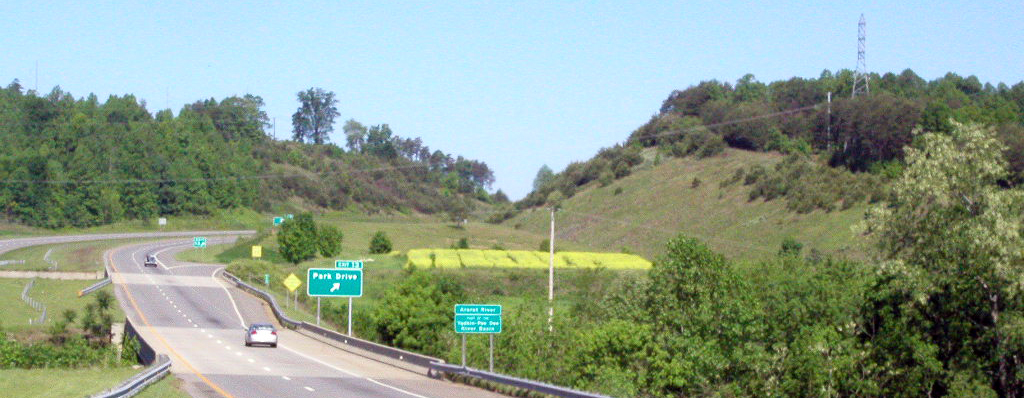
Biofuel crops on a roadside near Raleigh. Photo: NCDOT
RTP Wrapup 2/19
Thursday, February 18, 2010, 11:18 pm No Comments | Post a CommentNovozymes says it has figured out how to make cellulosic ethanol possible that costs about the same as gasoline, GlaxoSmithKline’s restless leg drug raises safety concerns and the Hamner Institutes team up with a leading cancer cluster in Oslo, Norway. Read more…
Global warming worries drive biofuels research
Tuesday, November 3, 2009, 3:32 pm No Comments | Post a CommentThe recession has tempered America’s voracious appetite for energy and $4-a-gallon gasoline is last year’s bad dream. But economics no longer dominate the search for alternatives to fossil fuels, the source of more than 80 percent of the world’s energy.
Government funding for research is up sharply from five years ago, so are concerns about global warming.
RTP Wrapup 10/30
Friday, October 30, 2009, 4:24 am No Comments | Post a CommentA test that assesses Tysabri’s risk of causing potentially deadly side effects could boost demand of the multiple sclerosis drug, GlaxoSmithKline is not ready to talk about efforts to develop a successor to best selling asthma medicine Advair and RTI International researchers will try to make biomass “oil.”


