Archive for October, 2010

RTP Week Ahead, Nov. 1-6
Friday, October 29, 2010, 3:31 pm No Comments | Post a Comment
Monday, November 1
DGHI Seminar: Changing Equity in China’s New Cooperative Medical Scheme
12:00 – 1:00pm
Trent Hall Room 124, Duke University
Speaker: Dr. Shenglan Tang, working as a Scientist at UNICEF/UNDP/World Bank/WHO Special Programme for Research and Training in Tropical Diseases (TDR). He has over twenty years experiences of undertaking research-related to health systems reform, disease control and maternal and child health in China.
Tuesday, November 2
HBA Women’s Interactive Networking (WIN) Luncheon
11:30am – 1:30pm
Brasa Steak House, 8551 Brier Creek Parkway, Raleigh, NC 27617
WIN is a bimonthly luncheon sponsored by the RTP Chapter of the Healthcare Businesswomen’s Association. This luncheon which is open to HBA members and to non-members will be held at the Brasa Steakhouse in convenient Brier Creek Shopping Center. The meeting begins with a casual networking session followed by a buffet luncheon and a variety of formal and informal networking activities.
Wednesday, November 3
Carrboro Creative Coworking: West End Ruby Meetup
6:30 – 8:30pm
Carrboro Creative Coworking 205 Lloyd St Suite 101 Carrboro, NC 27510
Thursday, November 4
8:00am – 5:00pm
National Institute of Environmental Health Sciences mall
Open to the public!
NCSU Engineering Seminar: “Computing and Communications Technologies: The Work/Life Connection”
4:00 – 6:00pm
Stewart Theatre, Talley Student Center, NC State University
Keynote speaker is Dr. Sherry Turkle; Panelists are Dr. Victoria Szabo, Dr. R. Michael Young and David Gruber.
Dr. Sherry Turkle is Abby Rockefeller Mauz? Professor of the Social Studies of Science and Technology at the Massachusetts Institute of Technology and the founder (2001) and current director of the MIT Initiative on Technology and Self, a center of research and reflection on the evolving connections between people and artifacts.
Friday, November 5
8:00am – 5:00pm
N.C. Biotechnology Center, 15 T.W. Alexander Drive, RTP, NC
Research Triangle Park Chapter Association of Clinical Research Professionals Fall Conference: Emerging Trends in Clinical Research. Keynote speaker is Ken Getz, Founder and Chairman of CISSCRP, Senior Research Fellow at Tufts CSDD, and former CEP and President at Thompson Centerwatch.
Saturday, November 6
Going Viral: Making and Distributing Online Video
9:30am – 5:00pm
Cambria Suites RDU, 300 Airport Dr, Morrisville, NC 27560
This workshop will change the way you think about viral videos and teach you how to make them work for you. Fundamentals include: * Why videos go viral * A framework for coming up with viral video ideas * User-friendly and affordable video technology * Techniques for storyboarding, shooting, editing and sound * Getting video found through search engines * Distributing video online through video-sharing sites and social media.
——————————-
To view a complete calendar of RTP community events, please visit the Science in the Triangle calendar.

NASA tech ties mental state to gaming prowess
Friday, October 29, 2010, 1:03 pm No Comments | Post a Comment
Photo courtesy of Tim Bunce.
Nothing raises your heart rate quite like an encroaching horde of zombie skeleton warriors. Throw in a squadron of well-fortified goblin archers and a few steadily advancing mutant spider-crabs, and you’ve got all the ingredients for a high-stress situation — even if it is in a virtual world.
But Alan Pope and Chad Stephens want to help gamers become a little more zen about this kind of thing.
The two NASA researchers, who specialize in aerospace technology and human-machine interfaces, have developed a biofeedback add-on for the Wii controller that can measure key stress indicators during gameplay. Dubbed “MindShift,” the device can alter performance based on those stress levels, effectively allowing gamers to calm their minds through training.
“It amplifies or magnifies a person’s emotions, a person’s boredom and makes it disruptive in the game,” Pope said. “You have to overcome that disruption by achieving a more positive emotional state or better focus and concentration.”
The device consists mostly of off-the-shelf equipment like monitors for the ear, finger and chest. It can even accommodate brain wave caps, according to Brent Fagg, innovation manager at the Triangle-based RTI International. His firm is marketing licenses for the patent-pending device to peripheral manufacturers.
“NASA’s goal is to get it into the public’s hands rather than make a profit,” he said.
Before it gets to consumers though, Pope said the hardware will need a little refining. But he says the technology has come a long way over the last two decades.
RESEARCH IN MOTION
When he started exploring the concept, Pope used biofeedback systems to measure pilot stress in training. Those measurements then fed back into the flight simulation, increasing or decreasing the difficulty based on changes in the test subject’s stress level. Pope applied the same concept to the PlayStation to help children with ADHD, then licensed the patent to SmartBrain Technologies.
“It occurred to me in the mid-90s that the settings we were working with — flight simulators — were a lot like video games. So I started thinking about how I could use this idea of connecting physiological signals to systems in the context of video games,” Pope said. “It was a pretty easy translation.”
While he now considers that early demonstration “sort of rudimentary,” the Nintendo Wii console presented a new challenge. Of particular interest to the team was the new controller scheme.
“The Wii, the way it’s designed lends itself to modification,” Stephens said. “It also taps into a different modality of motion — instead of pressing buttons to get a character to do anything, it uses motion controllers.”
The inspiration for using the Wii actually came from the team’s then-high school intern, Nina Blanson, who’s now a student at Yale.
“When we put several ideas in front of her to ask which one of these is of interest to [her], it didn’t take her long to select the Wii video game as the one she would be interested in pursuing,” Pope said.
After months of brainstorming, Pope said they found a solution that affects gameplay “from the outside,” meaning they needed to install no software patches or obtain any proprietary information from Nintendo.
“We had to play with it for a while, go down a couple of blind alleys, before really coming up with a neat way of doing it,” Pope said.
The researchers declined to detail exactly how MindShift works, pointing out they’re still in the middle of patenting the technology. But they said it is already compatible with every Wii game off the shelf.
“It’s not always going to be as good with some games as with others,” Fagg said. “It’s the kind of thing where five of them will be awesome, five of them are going to suck.”
They said results have been impressive with the games they’ve tested so far. That includes Link’s Crossbow Training, a first-person shooter; Trauma Center, a surgery simulator; and Wii Sports Golf, which is packaged with the Wii console.
“In that game, we can actually connect a player’s state to their swing strength, and if they’re not in an optimal state, then their swing will be greatly reduced,” Stephens said.
The team also envisions pairing its technology with downloadable content and other add-ons, effectively increasing the value of the original game title.
“The player coming to the game that they’re best in the world at would face an additional challenge, another layer of challenge, in performing the game and playing the best they could,” Stephens said.
‘A DIFFERENT SKILLSET’
Aside from adding a whole new element of gameplay, Stephens said MindShift injects more realism into the gaming experience. Instead of measuring a driver’s nervousness or a sniper’s unsteadiness by a generic algorithm in the gaming code for example, this device could incorporate the actual mental state of the user.
“When you’re interfacing with any machine — whether it’s a video game, vehicle or computer — you sort of have a disconnect between your internal state and your external behavior,” Stephens said. “What this technology is trying to do is add that layer back into that interaction.”
It can also serve as a draw for nongamers not used to conventional controllers. Most highly competitive games require expert hand motion almost second nature to lifetime gamers.
“You might be very good with your hands and your thumbs — which is what current controllers require, a lot of thumb-twitch action,” Pope said. “But when you pick up the MindShift video game technology, you’d have to develop a different skillset: a skillset of controlling your internal psychological or mental state.”
That element could potentially level the playing field.
“It doesn’t depend on how cracked out you are on Mountain Dew,” Fagg said with a laugh.
But the effects of the biofeedback won’t last forever. The ultimate goal, Pope said, is to teach users to control their mental state and calm their nerves, even in high-stress situations.
“Eventually, when you learn that control, then there’s no difference in playing the game with your hand like you would without using this technology,” Pope said.
While RTI works to connect the technology to peripheral manufacturers like Mad Catz Inc., Logitech or Nyko, Pope and Stephens will work to expand to the PlayStation Move and Xbox Kinect. They’re even scheduled to speak about their work at TEDxNASA Nov. 4.
“Once you get into the mindset of thinking of this kind of thing, then there’s a whole domain of ways to do it that start occurring to you,” Pope said. “We’re hoping those will continue to unfold.”
Tyler Dukes is a freelance reporter and journalism adviser at N.C. State University. Follow him on Twitter as @mtdukes.

Duke to anchor first clinical trial of next-generation HIV vaccine
Friday, October 29, 2010, 12:55 am 1 Comment | Post a CommentResearchers have been able to come up with cocktails of powerful pills that can keep the human immunodeficiency virus at bay, but a vaccine that prevents the virus that causes AIDS from infecting cells has so far eluded them.
In the past 20 years, ever more sophisticated HIV vaccines have been tested worldwide in more than 100 clinical trials without much success, according to a database the International AIDS Vaccine Initiative has kept. Almost two dozen clinical trials are still under way, most in the earliest stage of testing.
Now, vaccine experts at Duke University have assembled an international team to test yet another HIV vaccine in an early-stage clinical trial. But this vaccine is different. It aims to address not only HIV’s ability to outwit the immune system but also the virus’ geographic variations.
If it works, it has the potential to prevent more than 80 percent of HIV infections worldwide. Read more…
On the cutting edge: Three women in translational research
Wednesday, October 27, 2010, 9:16 pm 1 Comment | Post a CommentLarge pharmaceutical companies already leave much of the translational research to biotech companies and startups. But now, turning an idea into a potential product is gaining importance at U.S. medical schools as more and more university scientists are taking on the development of disease treatments and preventions.
In North Carolina, researchers at Wake Forest University are about to test a novel vaccine booster in healthy volunteers. The New England Journal of Medicine this month published the results of the first clinical trial of a therapy developed at the University of North Carolina at Chapel Hill to replace a defective gene that causes Duchenne’s muscular dystrophy. And Duke University researchers have come up with treatments for two rare diseases, Krabbe disease and Pompe disease, and are working on three more.

Dr. Priya Kishnani
The three scientists that the Raleigh-based Carolinas Chapter of The Indus Entrepreneurs invited to its life science panel discussion Tuesday at Brier Creek Country Club reflected not only this research & development shift, but as women they also succeeded in a male-dominated field.
One of the panel members was Dr. Priya Kishnani, a Duke pediatrician and geneticist, who was instrumental in developing Myozyme, a Pompe disease treatment that was approved in 2006 and is marketed by Genzyme.
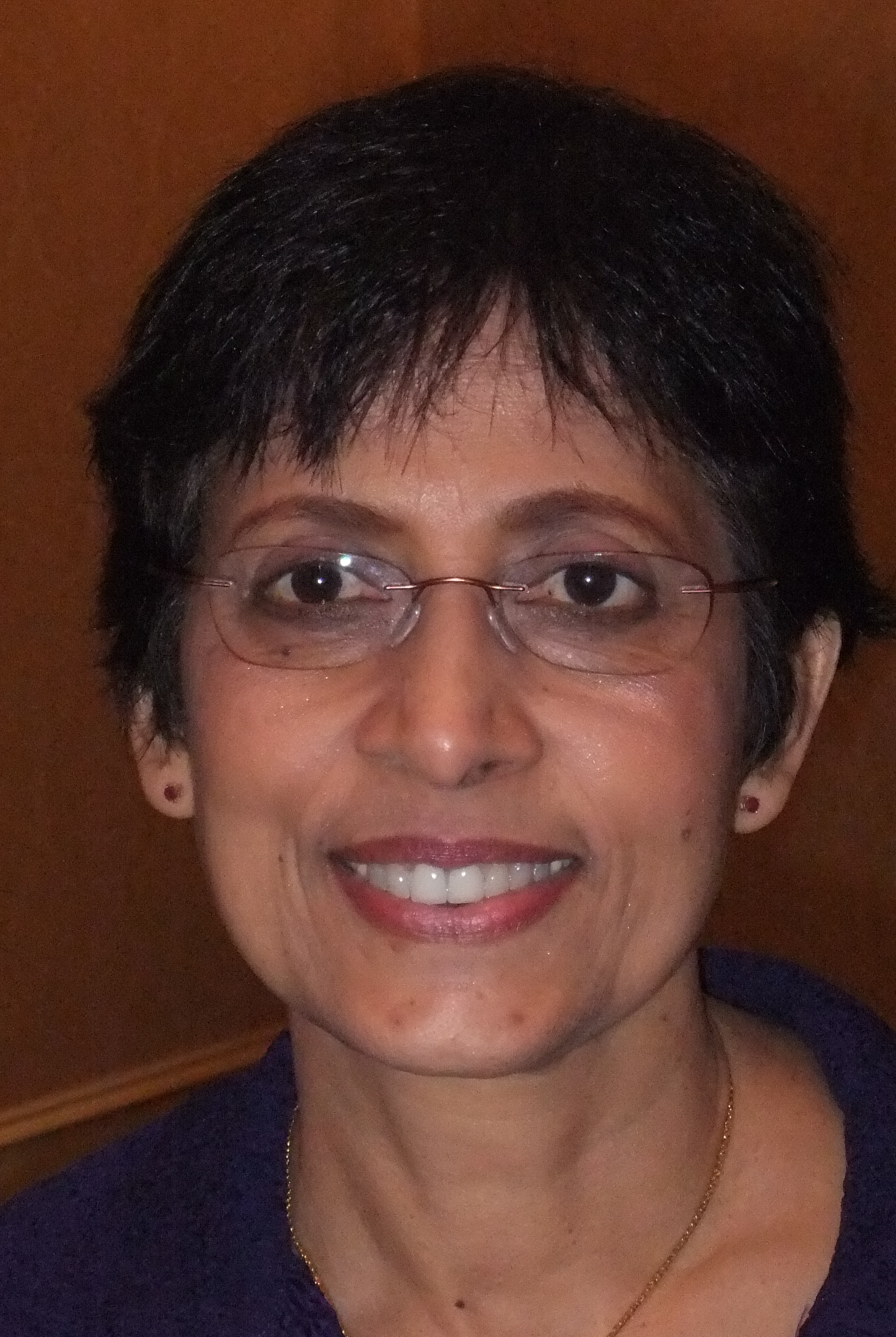
Prabhavathi Fernandes
Kishnani was joined by Prabhavathi Fernandes, chief executive of Cempra Pharmaceuticals, and Christy Shaffer, former chief executive of Inspire Pharmaceuticals.
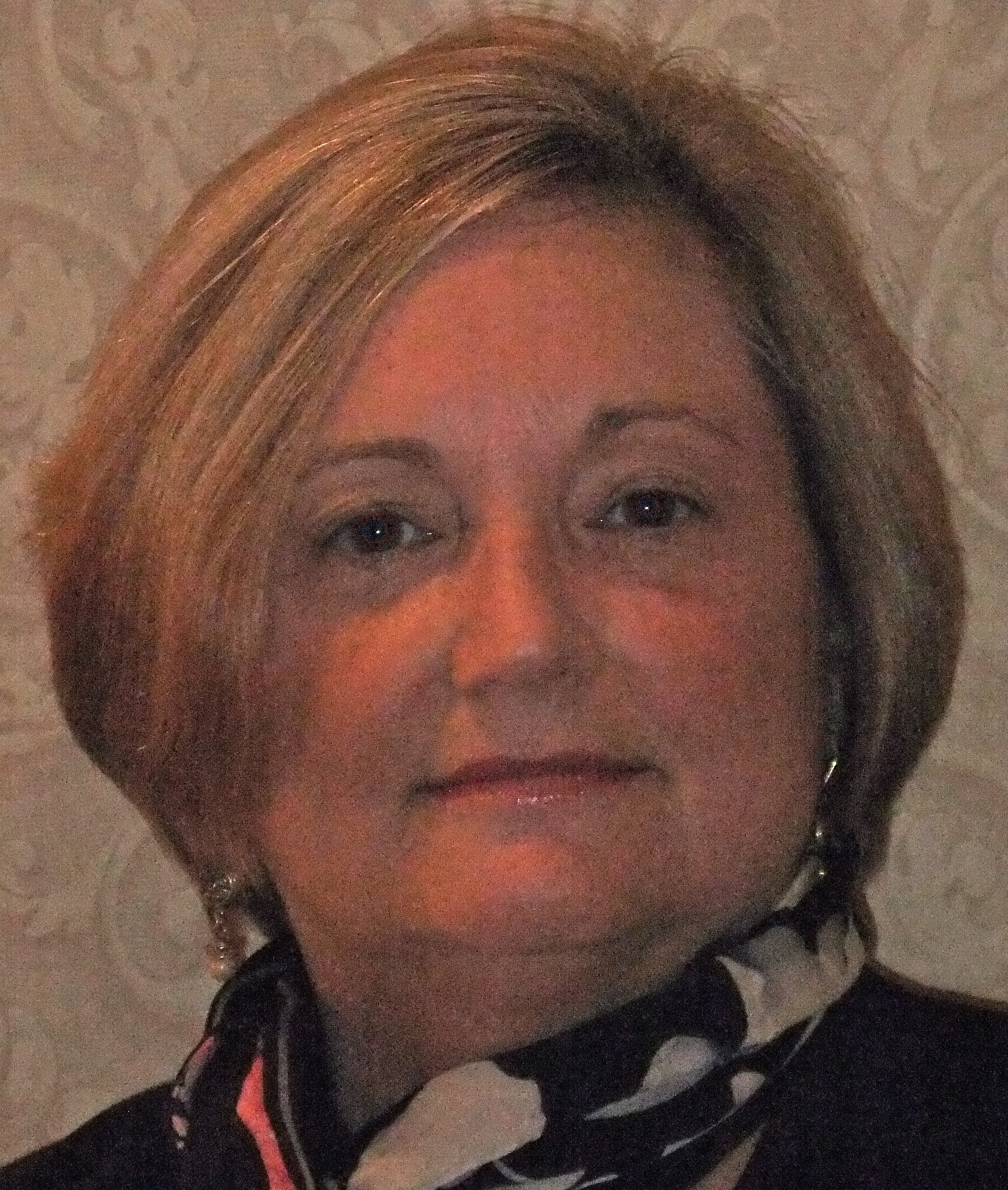
Christy Shaffer
Research Triangle Park was established to bring together academia and industry and develop research-based products. In that respect, Cempra, a 4-year-old Chapel Hill startup that has raised $60 million in venture capital to develop new antibiotics, and Inspire, a publicly traded Durham company with about $100 million in annual revenue, are driving forces in the home-grown life cycle of drug development.
The trio talked about what inspires them, whether they believe in an entrepreneurial gene and what’s unique about translational research in RTP. They also fielded questions from the audience, including one from Leslie Alexandre, former chief executive of the N.C. Biotechnology Center, on pricing of new medicines in the face of rising health care costs. Read more…
RTP Week Ahead, Oct. 25-29
Friday, October 22, 2010, 2:43 pm 1 Comment | Post a Comment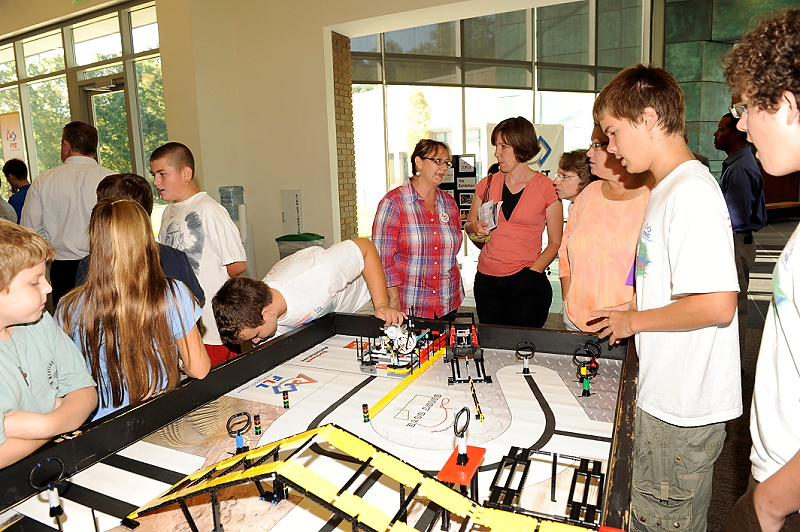 Students and parents enjoy the FIRST Robotics demonstration at The RTP Headquarters
Monday, October 25
2010 Safe Drinking Water Symposium: “Water and Health: Where Science meets Policy”
Mon. 10/25 – Thurs. 10/28
Friday Center, Chapel Hill
The international conference will bring together individuals and experts from academia, industry, NGOs, government and foundations to provide an inter-disciplinary perspective spanning science, policy, practice, financing and economics on drinking water sanitation, hygiene and water resources with a strong public health emphasis. The conference will deal with critical concerns relevant to both the developing and developed worlds.
2010 Biostatistics Seminar Series: “Statistical Issues in Imaging Studies”
12:00 – 1:50pm
Bondurant Hall, UNC-CH
Targets Clinical and Translational Science Investigators with basic training in biostatistics methods (e.g., completed Bios 541 and 542) and are interested in learning more about a variety of more advanced topics. Speaker: Hongtu Zhu.
Tuesday, October 26
Developing Breakthrough Medicines: Success Stories from Women Leaders in Life Sciences
6:00 – 9:00pm
Brier Creek Country Club
Dr.Vipin Garg, President and CEO of Tranzyme Pharma, will moderate a panel of three highly successful women in the life sciences industry who have been responsible for developing multiple new drugs during their careers. This unique panel will take you through their exciting journey starting from academic research to the pharmaceutical industry to successful entrepreneurship.
Wednesday, October 27
Seminar: Multiple Chemical Sensitivity
10:00am – 12:30pm
NIEHS, Keystone Room 3003
Speaker: Alison Johnson, Chemical Sensitivity Foundation
Thursday, October 28
CED’s “Start Something” Party!
6:00 – 9:00pm
Bay 7, American Tobacco Campus, Durham
Come celebrate our move at our Housewarming Party! CED is moving to The American Underground at the American Tobacco Campus in downtown Durham, NC. Join us for an evening of networking, tours, prizes and more. $15 a head.
Burden of Disease Approach to Prioritizing Environmental Policy Initiatives
5:30 – 7:00pm
North Carolina Biotechnology Center, 15 T. W. Alexander Dr, RTP, NC
Dr. Jacqueline MacDonald Gibson, UNC will discuss “Burden of Disease Approach to Prioritizing Environmental Policy Initiatives: A Case Study in the United Arab Emirates.” For more info, see online brochure.
Friday, October 29
7:00am – 12:00pm
N.C. Biotechnology Center, 15 T.W. Alexander Drive, RTP, NC
The BioSciences Forum brings together key industry leaders for a discussion of the management issues that are unique to the biosciences industries. We define biosciences as the red, green and white industry sectors impacted by the tools of biotechnology, including healthcare, pharmaceuticals, medical devices and diagnostics, nutrition, agriculture, industrial bioproducts, as well as firms allied with these industries. Our speakers represent a cross-section of these industry sectors. Free to attend!
——————————-
To view a complete calendar of RTP community events, please visit the Science in the Triangle calendar.
IBM city sim highlights gaming’s problem-solving potential
Thursday, October 21, 2010, 12:05 pm 1 Comment | Post a CommentThe world is becoming a more complicated place – but that’s OK with people like Phaedra Boinodiris.
As the gaming and marketing manager at IBM, Boinodiris said she sees the potential for video games to help everyone from citizens to political decision-makers understand issues by breaking them down into simpler elements. By showing the interactions between those pieces, Boinodiris said games can be effective at educating the public.
“It’s hard to capture any other way,” Boinodiris said. “We’re living in a more complex world.”
Boinodiris and her team at IBM wanted to break down that complexity about six months ago when they began working on a game to detail the company’s work with “smart cities.” The result was CityOne, a free city-building simulation developed with Center Line Digital in Raleigh, N.C., and released in early October.
Players begin the game as the manager of a drab, grayscale city facing serious infrastructure and industry problems. Using a limited set of resources and input from a group of advisers, players choose how they should invest in solutions like alternative energy and supply chain management. Winning the game, and creating a more vibrant city, depends on the player’s ability to effectively improve everything from water distribution to business climate.
“The initial inspiration for it was looking for ways to explain system solutions and its impact on the market and in the industry,” Boinodiris said.
Aside from the education component, Boinodiris said the game is out to communicate what IBM can do.
“There is no press release, no white paper, no spokesperson that can explain these concepts like a serious game can,” she said.
Daren Brabham, a professor of public relations at UNC-Chapel Hill, agrees. Through his research on crowdsourcing, he said he’s learned the power of interactive marketing and its ability to show the simple connections in a big system.
“With games, all they really do is teach us how to problem solve,” Brabham said. “The question is: What should the problem be?”
The interactivity doesn’t even have to be complicated to be effective.

The Next Stop Design project crowdsourced bus stop designs for Salt Lake City, eventually selecting the “Sugarhouse Lounge” concept by Aaron Basil Nelson.
In 2009, Brabham began a research project to crowdsource a design for a better bus stop in Salt Lake City. After initially planning a Web-based interface that would have allowed users to allocate resources in the planning of a 3-D model, Brabham abandoned the approach in favor of a more open submission system that just required applicants to send in sketches and plans. All of those designs were posted online, where users could rate and comment on them.
With that $5,000 site, Brabham said users submitted 260 designs. And two-thirds of them had never participated in a planning process before.
“To be honest, traditional methods of engaging stakeholders at a meeting really could only tackle one thing at a time,” he said. “[The crowdsourced method] would be a lot more of a democratic process than the 10 people who show up to the planning meeting and yell at each other.”
Boinodiris said she’s seen that need to participate among the public. She said people want to know what it would take for a city like Raleigh to support a smart grid, electric vehicles or other sustainable solutions. To participate, they also need good information about how to move forward and what those actions would mean.
“I think people are asking those questions: Why aren’t we there yet?” she said. “[CityOne] tries to show those building blocks and the affects of those missteps.”
So far, Boinodiris said thousands of people worldwide from several different industries have already played CityOne.
And gamers want more. She said she’s already gotten requests to expand the game with more SimCity-style gameplay, effectively allowing players to build cities from scratch. Players even suggested integrating real-time city data to add to the challenge of preparing municipalities for the future.
“They’re really putting the gauntlet down,” Boinodiris said.
Although she said this was the company’s “very first small steps” into a city simulation, she didn’t leave out the possibility for future editions, pointing out that it’s “inevitable” that corporations will pursue this type of marketing to get their messages across.
“It’s not a ‘what if?’ or ‘will it happen?’” she said. “It’s already happening.”
But businesses aren’t the only ones interested. Game designers like Jane McGonigal, who delivered a speech at a TED conference in 2010, believe gaming’s ability to harness a player’s problem-solving ability will be useful when tackling complicated issues.
“We’ve evolved technology to a point where we can do some good,” Brabham said.
Brabham even imagines the potential for groups like the Republican and Democratic national committees to create games allowing voters to explore the long-term impacts on the country if candidates are elected. Ideas like this, he said, can be an effective way to hear through the chatter.
“[Gaming] really holds a lot of democratic potential,” Brabham said. “It’s such a productive way to get a lot of people engaged.”
Tyler Dukes is a freelance reporter and journalism adviser at N.C. State University. Follow him on Twitter as @mtdukes.

“Doctor Bugs” visits the Triangle
Wednesday, October 20, 2010, 11:11 am No Comments | Post a Comment
Cover of the Adventures Among Ants, by Dr. Mark W. Moffett.
Not many scientists beg perfect strangers to eat the species they study. But that’s just what “Doctor Bugs” did when visiting tourist-magnet ruins in Cambodia. Dr. Mark W. Moffett proffered a dish of scrumptious crackers topped with herbs and, um, plump ant larvae to passersby — at times literally pleading with them to try it. It’s just one of the ways the world-famed ecologist, and Smithsonian Institution research associate, gets people to stop and notice the trillions of ants that share our world.
Moffett’s comedic showman personality was on display in full force on Tuesday night as he entertained an auditorium full of people at the N.C. Museum of Natural Sciences with stories about ants. And boy does he have stories. There’s the time he snaked a small camera attached to a long cable into a nest of weaver ants, capturing engaging footage of the ants at work… the camera pushed farther and farther past hundreds of ants, until ants swarmed the other end of the cable and overran him. The footage ended abruptly with audio of Moffett yelping in pain. Then there’s the time he stepped barefoot on a pair of ant forceps in his camp and spent the day worrying he’d been bitten by a poisonous snake, a fair concern considering there was a nest within a foot of his hammock. And let’s not forget the time he actually did sit on the world’s most poisonous snake in South America, too engrossed with photographing ants to notice.”If you must sit on a poisonous snake, sit closest to their head,” Moffett deadpanned to the crowd. “It’s the best way. It’s the only way.”

National Geographic cartoon of Moffet squatting on a pit viper.
More often, Moffett’s stories are about the ants themselves — their diverse ways of sensing the world, interacting, and divvying up labor to achieve survival goals efficiently. Moffett’s high-energy slide show was centered around promoting his new book, Adventures Among Ants: A Global Safari With a Cast of Trillions, published by the University of California Press.
“Ants differ from us in that the individual doesn’t matter, it’s all about what’s good for the group,” Moffett said. But they’re colonies are a lot like our cities, he went on to explain, drawing analogies between small cities/small ant colonies and large cities/large ant colonies. In smaller colonies, where there is less specialization of labor, each ant has to be a jack-of-all-trades and perform a variety of tasks.”They have their toolboxes built-in to their faces,” Moffett said, flashing a picture of a type of trap-jaw ant with extra long pitch-fork tipped jaws. It uses the long levers to pick up struggling prey and carry it safely back to the nest. But a much smaller, second pair of jaws tucked closer to its mouth allows it to eat.
Larger colonies, like our larger cities, tend to have more job specialization, Moffett said. Scientists can often tell what role they play by their size. Sometimes the largest ants of the same species outweigh the smallest ones by 500 times. The goliath ants are often used to deliver the death blow (a sting, or a bite) in battles with other ants or interlopers, and even act as “school busses,” allowing smaller ants in their colony to hitch rides. “Basically, it’s more energy efficient for the colony if the smaller ants ride on the bigger ants,” Moffett explained.

Leaf cutter ants cooperate to bring leaf fragments to their underground nests, where "gardener" ants cultivate a fungus upon the decaying vegetation. The colony harvests and eats the fungus. (Photo by Dr. Mark W. Moffett)
He also talked about various ways that ants work together, like the free-diving ants in Borneo that live in pitcher plants. They fetch crickets out of the water pooling in a pitcher’s basin, then haul it to the lip of the pitcher where they stash it and have a feast. The crickets are often too large for the pitcher plants to digest, he explained, so the ants are doing the plant a favor by saving it from experiencing an overdose of acid as the cricket decays. “They’re basically antacids for the plant,” Moffett joked.”But they also must have the strongest toes in the world to carry these large crickets up the slope of the pitcher plant, which is made so that insects will fall into its trap.” Ants also form chains to create living bridges that they use to cross from one tree to another high amid the canopies of rainforest trees, hundreds of feet from the forest floor. And some ants will sacrifice themselves to fill “pot holes” along highways the colony uses to move things to and from their nest. Then there are the leaf cutter ants, which divvy up leaf harvesting and fungus cultivating duties like nobody’s business (see photo at right).
Moffett’s photographs have been widely published and he often contributes work to National Geographic magazine. He searches for images that tell a story within their frames, he said, like the one he took of a battle between two ant species that shows a Goliath ant fending off attacks from smaller ants, with the carnage of warfare in the background: headless ants frozen mid-stride, and ants with their torso’s chopped in two and legs torn asunder. He encouraged the kids in the audience to “not lose that weird point of view you have when young,” because it can be valuable to being a scientist. He credits his own path to biology and entomology with reading too many Jane Goodall adventure books when younger, and climbing too many trees.
Moffett’s talk deftly distilled insights about ant ecology and social interactions into anecdotes that enthralled kids and adults like me who are in touch with their inner kids. If you missed his talk, you did miss out — but don’t sweat it, you can always order the book.
MORE MOFFET, LINKS:
Moffett on NPR’s Fresh Air; June 17, 2010
The hidden world of ants, Smithsonian Magazine; July 2009
RTI unveils research gateway to secret U.S. Census and health data
Tuesday, October 19, 2010, 9:43 pm 1 Comment | Post a CommentThere’s U.S. Census data that’s easily available online, like the portion of the population below the poverty level (14.6 percent North Carolina, 13.2 percent U.S.), median household income ($46,574 North Carolina, $52,029 U.S.) and the percentage of the population that is foreign born (5.3 percent North Carolina, 11.1 percent nationwide).
And then there’s the secret U.S. Census data that only researchers with a security clearance can see.

Robert Groves
The Triangle Census Research Data Center that Robert Groves, director of the U.S. Census Bureau, opened Tuesday on RTI International’s campus in Research Triangle Park is a gateway to the secret kind of data, like detailed demographic and economic information from individuals, single households and individual businesses.
“We alone can’t extract all the insights,” Groves said. “We want to give the best minds in the country access to this data. RTP is blessed with a lot of smart people.”
The new center, which takes up part of a renovated one-story building on the RTI campus, is one of 13 nationwide. It also provides researchers access to detailed data collected by the National Center for Health Statistics. The sets of demographic, economic and health data are collected through questionnaires filled out by part of the U.S. population.

Gale Boyd
Even the secret data doesn’t include individual names, addresses or social security numbers, said Gale Boyd, a researcher in the economics department at Duke University and the center’s director. Still, access is restricted to protect those who fill out the questionnaires from harm and to preserve their anonymity.
Economists, sociologists, statisticians and others who want to work with the data need permission from the U.S. Census Bureau or the National Center for Health Statistics. Security clearances will take about three to four months, Boyd said. Law firms and private corporations need not apply, he said. “We’re not looking for private companies looking for profits.”
For the past 10 years, Boyd headed a smaller version of the center at Duke, which will remain open for now. The larger center on the RTI campus, which has nine cubicles with computers that tap into the databases at the U.S. Census Bureau and the National Center for Health Statistics, has an annual budget of about $300,000, provided by the University of North Carolina system and Duke. RTI’s contribution is the building.
RTI, Duke and UNC researchers who receive permission to use the center don’t have to pay to access the data. Researcher from other institutions pay a fee for the access.

‘Companies to Watch’ Honors 25 Job-Creating, Revenue-Producing Firms in N.C.
Tuesday, October 19, 2010, 1:03 pm 3 Comments | Post a CommentStartup companies make for good storytelling. Entrepreneurial lore is filled with tales involving a couple of college dropouts, a garage, and a Big Idea. Some of them fail, and some of them morph into industry giants.
But along the way from startup to giant, those companies go through a second stage of growth, during which they add employees and revenue but are still growing fairly quickly. It’s these second-stage companies that are the unsung heroes of North Carolina’s economy, according to Penny Lewandowski of the Edward Lowe Foundation. In 2008, the last year for which figures are available, 9.7 percent of the resident companies in the state were second stage, but they accounted for almost 35 percent of the state’s jobs.
RTP researchers collaborate to tap the sun and make liquid fuel
Monday, October 18, 2010, 1:37 pm 2 Comments | Post a CommentNorth Carolina’s Research Triangle missed out on the U.S. Department of Energy’s $122 million to establish the nation’s solar fuels innovation hub - the prize went to the Joint Center for Artificial Photosynthesis, headed by the California Institute of Technology.
But that isn’t stopping research here to tap the sun and make liquid fuel the East Coast way.
Experts in chemistry, electrical engineering, material sciences and nanotechnology at the University of North Carolina at Chapel Hill, Duke University, N.C. State University and RTI International will be working together for the first time at the newly formed Research Triangle Solar Fuels Institute.
Jim Trainham, the institute’s executive director, has an annual budget of about $2 million to sustain the research effort, which will focus on the semiconductor panels tasked with splitting water into hydrogen and oxygen with the help of solar energy.
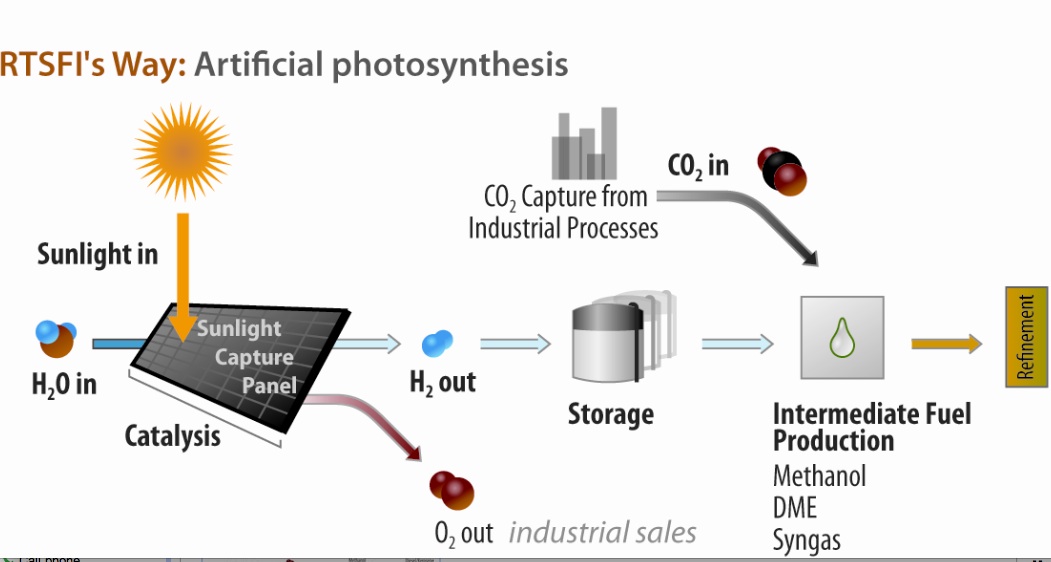
Solar fuel production the East Coast way.
But Trainham also foresees collaboration between researchers at the Research Triangle Solar Fuels Institute and the Joint Center for Artificial Photosynthesis, particularly in scaling up any solar fuels production methods and designing production plants.
Trainham also talked about the challenges the researchers are facing. Watch the Q&A with Science in the Triangle: