Archive for the ‘ScienceOnline2011’ Category

$2.5M grant to help generate marine biotech jobs in eastern North Carolina
Tuesday, August 2, 2011, 12:28 pm No Comments | Post a CommentThe N.C. Biotechnology Center in Research Triangle Park announced today that it will spend $2.5 million to help generate marine biotech jobs in the eastern part of the state.
The four-year grant will establish a center of innovation - the fourth in the state - to develop commercial products from North Carolina’s marine life with the help of biotech tools.
John Chaffee
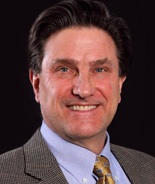
Coastal marine labs are doing research that could be applied in several areas, such as health, energy, aquatic foods and diagnostics, according to John Chaffee, director of the biotech center’s eastern office, which is the fiscal agent for the marine biotech consortium.
The biotech center already spent $100,000 to plan for the marine biotech center of innovation or MBCI. This first grant was used to develop a business plan. With the new award, the MBCI must meet business milestones and ultimately establish itself as an independent, self-sustaining entity. The first milestone will be the hiring of an executive director, who will lead the center in identifying and prioritizing key market sectors, said Chaffee.
The University of North Carolina at Wilmington, the UNC-CH Institute for Marine Science, N.C. State University’s Center for Marine Science and Technology and the Duke Marine Lab helped during the planning phase. East Carolina University technology transfer staff assisted with new innovation center’s business plan.

ScienceOnline2011 – interview with Kari Wouk
Saturday, July 23, 2011, 11:45 am No Comments | Post a CommentContinuing with the tradition from last three years, I will occasionally post interviews with some of the participants of the ScienceOnline2011 conference that was held in the Research Triangle Park, NC back in January 2011. See all the interviews in this series here.
Today I talk to Kari Wouk, Senior Manager of Presentations and Partnerships at the NC Museum of Natural Sciences in Raleigh.
Read more…

‘Written in Stone’ author to pen another dino epic
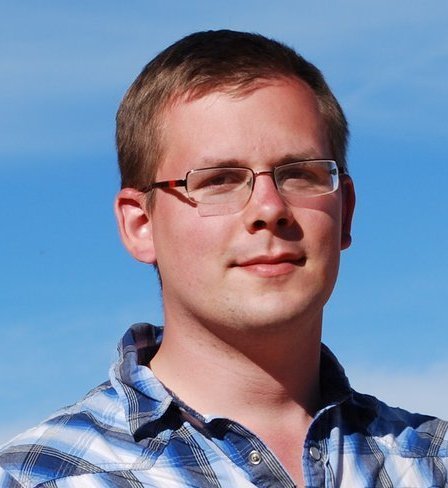
Wednesday, March 30, 2011, 8:01 am 1 Comment | Post a CommentNew Jersey isn’t exactly known for its ample fossil record. But that didn’t stop Brian Switek from doing everything he could to become an expert on the subject of paleontology.
Brian Switek
Over the years, he’s written the popular book Written in Stone, blogged at Wired Science’s Laelaps and Smithsonian Magazine’s Dinosaur Tracking and published papers in academic journals — all as a part-time pursuit. But this summer, he’s taking his full-time freelance show on the road, traveling west to Salt Lake City to get his hands dirty for a new book, A Date with a Dinosaur.
Although there’s no publication date set yet, Switek said he’s excited to get started on a title that will explore a few of paleontology’s biggest celebrities.
“A Date With a Dinosaur is about catching up with the prehistoric monsters I met as a child. Since the time I first encountered them, reconstructions of ‘Brontosaurus’, Stegosaurus, Triceratops, and Tyrannosaurus have changed so much, and so many new dinosaurs have been discovered that it is almost impossible to keep up with them all,” Switek said in a message Wednesday.
“Through these finds, we are finally starting to answer some of the big questions about dinosaur lives - what color were they? how fast did they grow? how did they reproduce? - but dinosaurs aren’t just scientific objects. They are also pop culture icons, and sometimes there’s resistance to scientific discoveries that change the dinosaurs we grew up with. A Date With a Dinosaur is about reconciling these views - pop culture dinosaurs with dinosaurs as paleontologists know them - in the hope that I can introduce readers to aspects of dinosaur lives they have never encountered before.”
I caught up with Switek in January at ScienceOnline 2011 in Durham to talk about how he boned up on his beloved field and what’s exciting him most about the world of dinosaurs.
ScienceOnline2011 – interview with Jessica McCann
Tuesday, March 29, 2011, 9:20 am No Comments | Post a CommentContinuing with the tradition from last three years, I will occasionally post interviews with some of the participants of the ScienceOnline2011 conference that was held in the Research Triangle Park, NC back in January 2011. See all the interviews in this series here.
Today we chat with Jessica McCann from the Department of Molecular Genetics and Microbiology at Duke.
Welcome to Science In The Triangle. Would you, please, tell my readers a little bit more about yourself? Where are you coming from (both geographically and philosophically)? What is your (scientific) background?
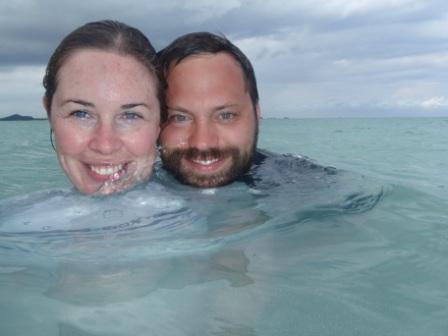
My husband and I moved to NC from Hawaii, where I was studying a bacterial symbiosis between the luminescent bacterium Vibrio fischeri and its squid host. I ended up there after I met my mentor during an undergrad semester at Woods Hole Marine Lab. When the squid-Vibrio lab moved to Wisconsin, we decided to move to NC instead, for two huge reasons: to be close to my husband’s family, and for me to continue graduate school in one of richest (not talkin’ cash) science environments in the country.
So now we live in Chapel Hill, NC, just a couple miles west of Carrboro and we will probably never move. But I was born in Maine, and grew up right on the border between Maine and NH in a little town called Portsmouth. I still spend lots of time up there and really miss it. I do not, however, have a Maine accent. Somehow my sisters and I avoided it, even though both of my parents have it “wicked bad.” When I hear that New England accent on This Old House, though, it feels like someone wrapped warm blanket around me, it reminds me so much of home.
Tell us a little more about your career trajectory so far: interesting projects past and present?
I LOVED my squid-vibrio project in Hawaii, and it got me interested in animal-bacterial relationships. The squid specifically harvests V. fischeri from the million-plus bacteria per milliliter of seawater it sees to make use of the light made by V. fischeri. I like thinking about how we and other animals recognize “good” bacteria from “bad”, and know which ones to harvest and which to repel/destroy.
For my PhD thesis, I studied a very “bad” bacterium, Mycobacterium tuberculosis, and how it pushes proteins out of itself and into you. One of the highlights of my graduate career, though, was when I was writing for Endeavors, a magazine that describes the research and creative activity at UNC. I had some patient, fabulous and hilarious editors and wrote four articles about UNC science faculty there. It was a wonderful experience, and what spurred me into trying to find a “non-traditional” sci career path that includes science writing - which led me to Scio11 (well, first it led me to Scio10, but I had no chance of getting in last year).
What is taking up the most of your time and passion these days? What are your goals?
Now I study Haemophilus influenzae, a bacterium that walks the line between good and bad. Most children have H. influenzae living in their nasal passages/upper respiratory system with no related symptoms. But in some circumstances, usually after a viral infection, H. influenzae causes ear infections, the most common reason for antibiotic prescriptions in the US - as any parent knows, I’m sure. In adults, H. influenzae infections cause severe pneumonia in people with chronic obstructive pulmonary disease.
The thing about H. influenzae, though, is that it doesn’t make any recognizable “virulence factors,” (like the cholera bacteria with it’s toxin for example). It really just gets your immune system to kick up serious inflammation, and its the inflammation that causes all the symptoms we associate with ear infections and pneumonia. I am specifically studying how H. influenzae attaches itself to host cells, both in health and disease. I hope that we might one day block this attachment, and keep noses free from H. influenzae colonization in the first place.
I am also really getting into the ethical questions that arise when scientists set up global biomedical research collaborations. I won’t say too much about it here, as I’m trying to decide on whether to start a blog - there are sooooo many good ones out there already. If I do start one, though, it would be about global science ethics.
What aspect of science communication and/or particular use of the Web in science interests you the most?
I use Twitter to keep up on interesting papers and the evaluation of those papers in the blogosphere. I read science blogs like mad. I am a fan of the open access science publishing movement, and am starting a campaign to get more of my senior colleagues to post comments on research online - it would be amazing to read critical discussions of papers RIGHT BELOW THE PAPER, in the comments section. Yet these comments are still pretty rare, at least in my field.
I also love open access data. Being able to mine someone else’s spreadsheets of how human genes change their expression patterns to respond to bacterial infection, for example, really informs my work and how I decide to proceed with experiments. I am still a n00b when it comes to Mendeley and other online science tools, but can see these becoming more and more critical to how science gets done.
One more thing. I turned to scientist-moms on the internet for advice and support after I had my gorgeous daughter. I seriously don’t think I could have made it through those first months back at work after maternity leave, where 60-80 hour work weeks are expected, without knowing about all the successful, lovely sci moms who had come before. I was one of those women in science who, during grad school, never encountered any bias or hardship due to my being female. I had a great female PI who seemed to have it all - family, great grant success, respect in the community, and was a wonderful mentor to boot. I was like, “it used to be harder for women, but it’s better now!”
But then I started my post doc and had a daughter. Everything changed (I wanted to write “Everything came crashing down,” but that’s a little dramatic, no?). While our little family is humming along now, I still feel like some aspect of work-love-motherhood life is always suffering. Not sure what to do to fix it, though, except maybe pay post-docs more so we can hire people to clean every once and a while. Don’t think the culture will change anytime soon.
How does (if it does) blogging figure in your work? How about social networks, e.g., Twitter, FriendFeed, Facebook and others? How do you intergrate all of your online activity into a coherent whole? Do you find all this online activity to be a net positive (or even a necessity) in what you do?
I am the LEAST organized person I know, so there are no coherent wholes in my life. Just lots of incoherent holes. Heh heh. But I do love Twitter, I love how quickly it moves, and how science discussions get updated over the course of minutes and hours instead of the weeks and months it takes by more traditional routes.
But one of the things I hate about twitter is how quickly it moves. I have about a 20-30 minutes to spend with social media most days in the lab, and there is no way I can click through more than one or two links. When I try to go back and find them at the end of the day, it is impossible and they are lost to me forever (maybe there is an app for storing tweets for later that I don’t know about?).
But blogging and social media aren’t really a part of my work (not yet, anyway). Things are still pretty old-fashioned around here, and we stick to bench work most of the time. The science blogs I read now usually describe work outside of my field - the good ones that condense the latest, coolest research. In my own field, I stick to the primary lit and sometimes seek out opinions on anything controversial from the few experts I know that are online.
When and how did you first discover science blogs? What are some of your favourites? Have you discovered any cool science blogs by the participants at the Conference?
We have had a subscription to Wired forever, so I have been a fan of Steve Silberman for some time. But I got into science blogs first through Carl Zimmer’s books. My husband got me “Evolution: the Triumph of an Idea” and “Parasite Rex” for one particularly geeky birthday, and then his blog was my gateway drug to science blogs in general. One of my favorite things about the conference was learning about all of the great writers and creativity I can now use to feed my addiction: Scicurious, Glendon Mellow’s artwork and tweets, and all the articles on Deep Sea News are a few of the many new additions to my daily routine. The best thing: I was so intimated to know that the people behind all this great work were going to be at Scio11 and I might actually talk to one of them. EVERYONE WAS SO VERY NICE, not to mention smart and witty. It was awesome.
What was the best aspect of ScienceOnline2011 for you? Any suggestions for next year?
I loved the workshop on writing effectively with Ed Yong and Carl Zimmer (“Death to Obfuscation). For a scientist with a very dry writing style and tendency towards passive voice, that workshop was the most helpful. I also loved Robert Krulwhich’s keynote, it was so inspirational. I didn’t get to attend the full Scio10 meeting but was a guest of Burroughs Wellcome for the Monti opening night of story telling, and think that would be an awesome thing to see again next year. I didn’t think the book readings went over all that well, it was too loud and social to really hear the person reading on stage, and that must have been tough for the readers. I do think the readings are a great idea, though, and maybe could be organized around a seated audience?
Is there anything that happened at this Conference - a session, something someone said or did or wrote - that will change the way you think about science communication, or something that you will take with you to your job, or to your science reading and writing?
One of the things that I was ambivalent about (but mostly against) before Scio11 was opening up the peer review process. My reasoning was that peer review makes a finished paper better and, like making sausage, not a process you want to be in on. The panel on open science really made me think twice. Then a few recent papers published in top tier journals had me wondering about the questions the reviewers might have asked and the speed at which this work got published - and wishing I could see the initial reviews. And, for students especially, seeing the nuts and bolts of the review process might help us design better experiments and better research from the get-go. I still believe that reviewers should be anonymous, however. Science is a very, very small world. You might review an author’s work one day and need reagents from that author the next. Not sure this will ever actually come about, though. A generation or two might have to pass before open peer review gets implemented.
Thank you so much for the interview. I hope to see you again soon, and at ScienceOnline2012 in January.
ScienceOnline2011 – interview with David Wescott
Thursday, March 24, 2011, 9:22 am 1 Comment | Post a CommentContinuing with the tradition from last three years, I will occasionally post interviews with some of the participants of the ScienceOnline2011 conference that was held in the Research Triangle Park, NC back in January 2011. See all the interviews in this series here.
Today we chat with Dave Wescott (@wescott1)
Welcome to A Blog Around The Clock. Would you, please, tell my readers a little bit more about yourself? Where are you coming from (both geographically and philosophically)? What is your (scientific) background?
 I’ve worked at a big PR firm for over 8 years. I grew up in Boston and I now live in Durham NC. If you’re talking about my philosophy about science communication, I’m more in Neil deGrasse Tyson’s camp than, say, Richard Dawkins’ camp, though I can see the value in both approaches. Politically I’m decidedly left-of-center. My background isn’t in science - it’s in politics, health care management, and strategic communications.
Tell us a little more about your career trajectory so far: interesting projects past and present?
The noteworthy moments in my career focus on the convergence of communities and ideas. When I worked for a public hospital’s pediatrics department in Boston, I organized a group of health care providers to lobby state legislators for better child nutrition provisions in the state welfare law. When I worked for Senator Edward M. Kennedy (D-MA) I focused on things like the intersection of intellectual property and global health, or business incubation and higher education, or energy and economic justice. Now that I work in public relations, I bring mom bloggers on tours of vaccine facilities and connect environmental bloggers with large energy companies. I’ve also done a lot of work in crisis communications - I once led a conference call discussing a plane crash while standing a few hundred feet from a burning train wreck.
What is taking up the most of your time and passion these days? What are your goals?
My true passion is my family. Boston Red Sox baseball is a big deal, too. Beyond that, I want to forge stronger ties between science bloggers and mom bloggers. Online moms have extraordinary power - far more than most people realize. Companies listen to them. Policy makers listen to them. Moms make the overwhelming majority of decisions in life - what to buy, who to vote for, when to get health care, and so on. They do most of the work. They do most of the child-rearing. If moms are making decisions based on the right information and with the right context - the kind of context you can get from science bloggers - the world will be a much better place.
What aspect of science communication and/or particular use of the Web in science interests you the most?
Media convergence. I love watching science writers who have influence in multiple channels - print, broadcast, and online. To me, effective communication is about being where the people are. I’m also interested in developing new ideas of outreach to people who may not have an active interest in science but may develop one if they get the right information under the right circumstances. Darlene Cavalier has been very kind to me in this regard - she lets me write a “best of the science blogosphere” post at Science Cheerleader, where the readership tends to be kids and moms.
How does (if it does) blogging figure in your work? How about social networks, e.g., Twitter, FriendFeed, Facebook and others? How do you intergrate all of your online activity into a coherent whole? Do you find all this online activity to be a net positive (or even a necessity) in what you do?
Blogging is central to my job. I’m a VP in social media for my company and helped establish the practice. As for social networking tools I find Twitter to be very effective. My favorite tool, however, is Delicious - I find enormous power in its simplicity. Organizing and sharing links is an essential task when your job involves interacting with multiple online communities. I’m really upset that Yahoo! may be abandoning Delicious soon.
When and how did you first discover science blogs? What are some of your favourites? Have you discovered any cool science blogs by the participants at the Conference?
I’ve known about science blogs for a long time, but I really got into them after drinking with Jonathan Gitlin at Ars Technica. That dude is brilliant with a capital SMART. I met Jonathan and his wife Elle (also brilliant) at a Drinking Liberally event in Lexington, Kentucky a few years ago and I’ve followed his stuff ever since. He told me about ScienceOnline, and now I’m hooked. I read a ton now but I’m partial to Deborah Blum, Jason Goldman, Chris Mooney & Sheril Kirshenbaum, and Maryn McKenna. I have a young son, so David Orr’s Love in the Time of Chasmosaurs is a must. (More dinosaur pics, please!)
What was the best aspect of ScienceOnline2011 for you? Any suggestions for next year?
I loved the panel on parenting and science blogging - the panelists were outstanding. I did notice that very few people in the room read parenting blogs, however. I’d love to see a panel about outreach to other online communities. The next logical step for science bloggers and science blogging networks is to expand the audience - that will require stepping out of a comfort zone for many.
Is there anything that happened at this Conference - a session, something someone said or did or wrote - that will change the way you think about science communication, or something that you will take with you to your job, or to your science reading and writing?
The one quote that still resonates with me from #scio11 came from Steve Silberman at the panel on “keepers of the bullshit filter.” He said you can’t call bullshit on someone if you’re anonymous. I know this is a sensitive topic for many in the science blogsophere, and some of my favorite science bloggers don’t use their names. But as a PR guy with a political background it’s so important. It goes to the heart of credibility. It drives me nuts when I see so many political ads out there funded by people who don’t want you to know who they are. If I tried to hide my identity or my interests while speaking for a client I’d be slaughtered for it, and rightfully so. If you want to influence people with your writing, I think it’s important to be transparent and to own your words.
Thank you so much for the interview. I hope to see you again soon, and at ScienceOnline2012 in January.
ScienceOnline2011 – interview with Jason Priem
Thursday, March 24, 2011, 9:21 am No Comments | Post a CommentContinuing with the tradition from last three years, I will occasionally post interviews with some of the participants of the ScienceOnline2011 conference that was held in the Research Triangle Park, NC back in January 2011. See all the interviews in this series here.
Today we chat with Jason Priem
Welcome to Science In The Triangle. Would you, please, tell my readers a little bit more about yourself? Where are you coming from (both geographically and philosophically)? What is your (scientific) background?
 Geographically, I’m a Floridian living in the frozen climes of North Carolina. Philosophically, I see my work in improving scholarly communication as the tip of a much bigger iceberg. The biggest current limit on the world-improving potential of science is the inefficiency of our antiquated communication infrastructure. If we can move the scholarly communication system into the current century, we can make science, and thereby the world, a lot better.
Tell us a little more about your career trajectory so far: interesting projects past and present?
I like always doing new things, so I’ve moved around a lot; I was an artist, then a history and english teacher, then a web designer, and now I’m a 2nd-year PhD student in information science. I’ve worked mostly on what a lot of us are calling altmetrics-new ways of measuring scholarly impact that capture more than traditional citation could. So for instance, we’re studying the impact that scientific articles by looking on Twitter, blogs, or in Mendeley or Zotero.
What is taking up the most of your time and passion these days? What are your goals?
Well, I’m doing a number of studies related to altmetrics; right now I’m really excited about altmetrics11, a workshop we’re putting on this summer that will showcase some of the great emerging research into altmetrics. (Shameless plug: we’re still accepting submissions through March; see http://altmetrics.org/workshop2011/).
What aspect of science communication and/or particular use of the Web in science interests you the most?
It’s tough to pick one. But right now I’m incredibly excited about the potential of the web to decouple the traditional functions of the scientific journal. Right now, journals distribute, certify, archive, and register scientific knowledge…but what if we separated those functions out, and let the market improve each one individually?
A service like ArXiv can provide free archiving and distribution. Why not just overlay peer review on top of that, as a service? I could add multiple peer-review “stamps” to the same article. I could even get a peer-review stamp for a blog post I write. As these decoupled services compete, the evolve and diversify; we get a nuanced, responsive, open way to share science.
How does (if it does) blogging figure in your work? How about social networks, e.g., Twitter, FriendFeed, Facebook and others? How do you intergrate all of your online activity into a coherent whole? Do you find all this online activity to be a net positive (or even a necessity) in what you do?
Like a lot of other folks, I find that the speed and ease of Twitter have tended to make my blog posts more thought-out but less frequent. I’m on FriendFeed occasionally because a lot of folks I follow are, but I never entirely cottoned to it…I love the minimalism of Twitter. I’ve also really enjoyed attending some recent conferences via Twitter; I felt more present as a virtual attendee at #beyondthepdf, for example, than I have at other conferences I’ve attended IRL. So social media is not just a net positive, but an essential part of my work.
What was the best aspect of ScienceOnline2011 for you? Any suggestions for next year?
I really enjoyed the sense of community, the open-mindedness, and the energy at SciO. It was great being around so many people for whom “well, we’ve always done it that way” wasn’t an ok answer. I think one improvement I’d suggest would be to make even more use of synchronous technologies like EtherPad to involve participants in sessions in real time. Talking is great, but it’s serial; the online environment lets us add a background of parallel cognition that can really enhance a session.
Is there anything that happened at this Conference - a session, something someone said or did or wrote - that will change the way you think about science communication, or something that you will take with you to your job, or to your science reading and writing?
Well, our altmetrics session was amazing (for me, anyway); there were some really useful ideas and questions that have helped to inform my work since. It was also really great getting to talk with some of the industry folks who are really pushing scholarly communication forward, like Sara from PLoS, Jan and Jason from Mendeley, and Lou from Nature Blogs.
Thank you so much for the interview. I hope to see you again in January.

Nonprofits and social media
Tuesday, February 1, 2011, 1:40 pm 1 Comment | Post a Comment“There’s something hopelessly quaint about the little piles of pens and paper on the tables at #scio11.”
“Best thing about #scio11 is that people will pull out an iPhone or iPad in the middle of a convo and they’re not rude; they’re live-blogging.”
 If these two tweets give the impression that ScienceOnline 2011 (or #scio11 in the Twitterverse) was a brave new world populated by geeky early adopters who have foresaken pens, paper, and print in favor of devices and Web 2.0, well, that’s partly true.
After all, it was a conference where it was normal to see panelists consulting notes on their iPads, where attendees did in fact live-blog and live-tweet, and where many sessions had a panelist devoted to monitoring Twitter for questions and comments from the audience. (One aggrieved camera operator told me that people watching the live webcast were tweeting complaints about camera angles!) Read more…
Talk science to me
Thursday, January 27, 2011, 7:20 pm No Comments | Post a CommentGive each geek a blog and you’ll get a taste of the many flavors science can take on.
Some will be scholarly, crusading or probing, others whimsical or funny, but each flavor will reveal something about how its creator ticks. As Robert Krulwich, NPR’s science correspondent and keynote speaker at ScienceOnline 2011, said in an interview: “You can’t help yourself. You ask the question that your soul asks.”
Unlike the more than 200 registered bloggers at ScienceOnline 2011 who mingled Jan. 13 to Jan. 16 in Research Triangle Park, Krulwich doesn’t blog. But his Radio Lab podcasts and Nova videos represented one flavor. Darlene Cavalier, Mary Canady and Brian Malow provided distinctly different flavors. All four talked to Science in the Triangle about their approach. (Watch Krulwich’s interview here.)
Cavalier is a former Disney Publishing executive who outed herself as a former Philadelphia 76s cheerleader to advocate for science literacy. She started Science Cheearleader.com and helps match people without a hard science background with scientists who need help with research such as keeping records of birds’ migratory patterns, taking water samples or measuring the amount of snow fallen.
Watch Cavalier talk about her citizen scientist flavor:

Canady is a biochemistry Ph.D. who switched from bench science to marketing. In 2008, she started Comprendia.com, a virtual bioscience consulting group in San Diego and began thinking about whether marketing and science blogging can mix.
“We’re forging new trails here and need to be creative in thinking about these new relationships - think outside the box, as trite as it may sound,” she said during a ScienceOnline 2011 session.
The iron curtain between advertisement and content is best handled with care as last year’s Pepsigate at Scienceblogs.com showed. More than 20 contributors pulled out after postings by Pepsi scientists were to be published on the first-of-its-kind science blogging network.
But what about scientists posting on corporate blogs, companies sponsoring ask-an-expert forums and businesses underwriting independent blogs?
Here is Canady’s take on the business flavor:

Malow is a professional stand-up comedian with a liberal arts degree who is feeling his way into science comedy.
A voracious reader who is intrigued by astronomy, physics and evolution, he started adding jokes about particles, Star Wars and creationism to his repertoire a few years ago.
He said he wasn’t hired to perform at ScienceOnline 2011 but pulled together an entire show just hours before volunteering to go on stage.
Watch an uncut interview with Malow about his taste of fun:

Why scientists (should) blog
Tuesday, January 25, 2011, 9:17 am 2 Comments | Post a CommentLast weekend, the Triangle hosted ScienceOnline 2011, a lively annual conference spearheaded by the tireless bloggers Bora Zivkovik and Anton Zuiker. Now in its fifth year, the conference has become so popular that registration for 300 spaces sold out this year in less than a day. The participants, according to the conference website, are “scientists, students, educators, physicians, journalists, librarians, bloggers, programmers and others interested in the way the World Wide Web is changing the way science is communicated, taught and done.”
As a first-time attendee and representative of Science in the Triangle, I divided my time between chasing down interviewees and attending panels, which were organized by participants on an online wiki.
One of those interviewees, Katie Mosher of NC Sea Grant, told me that she’d observed a coming together of science blogging and science journalism in the three years since she’d started attending ScienceOnline. More journalists are using the blog form either to replace or to supplement their print or broadcast stories, she said, some of them writing in traditional journalistic objective form and some of them adopting a point of view. Some of those journalists were present at the conference, just as she sees bloggers now attending conferences hosted by organizations like the National Association of Science Writers.
But journalists appeared to be outnumbered at the conference by scientists who blog (or tweet, or both). As a professional writer who frequently covers science, I should perhaps see these scientist-bloggers as competition. Not at all. To me, they are representative of a welcome trend in academics to communicate with the public about scientific findings and (sometimes controversially) the public policy implications of these findings. A scientist-blogger who writes well (perhaps one who attended the panel by Carl Zimmer and Ed Yong on avoiding obfuscation in science writing) and who knows how to attract an audience can have an immediate impact on public understanding of breaking news, as has been the case with the scientists at Deep-Sea News who covered science surrounding the Gulf oil spill. (Bora Zivkovic explains why scientists are such good explainers.)
A scientist-blogger takes some professional risks. Although I was unable to attend “Perils of Blogging as a Woman under a Real Name,” panelist Kate Clancy provides a detailed writeup here, which alludes to the skepticism with which academic colleagues and tenure and promotion panels view blogging and similar “soft” activities.
A scientist-blogger has to deal with certain downsides of being an online presence, most notably “cranks . . . who come onto our sites and leave comments that foment dissension rather than productive commentary,” according to Rick MacPherson, interim executive director and conservation programs director at the Coral Reef Alliance. It happens wherever evolution or climate change are discussed, he said, and he is the target for negative comments every time he writes or is interviewed about the role of climate change in sea level rise and ocean acidification, both threats to coral reefs.
According to MacPherson, the negative commenters are evidence that the general public doesn’t understand the evidence-based nature of science. “People don’t understand how science works,” he said. “It’s not a democratic process. . . . not opinions.”
His sentiments were echoed in “Lessons from Climategate” by panelist Chris Mooney, coauthor of Unscientific America: How Scientific Illiteracy Threatens our Future, who listed these depressing statistics:
- only 18 percent of Americans know a scientist
- just 13 percent follow science and technology news
- 44 percent can’t name a scientific role model; those who can most frequently name Albert Einstein, Al Gore, and Bill Gates, two of whom are not scientists
- in every five hours of cable news, just one minute is devoted to science and technology
According to Mooney, the situation “is ripe for climate skeptics; they are well-trained, skilled communicators who exploit lack of public knowledge and are willing to fight hard in ways climate scientists are not.” His co-panelist Josh Rosenau, who works to defend the teaching of evolution at the National Center for Science Education, said that the language of the attacks against climate science has an eerie parallel in the attacks against evolution. “For 90 years we’ve been fighting same battle,” he said. “Public opinion has not moved. If that happens to climate change we are doomed.”
Mooney and Rosenau were joined on the panel by Thomas C. Peterson, chief scientist at NOAA’s National Climatic Data Center in Asheville. Peterson was one of the climate scientists whose emails were hacked and published just a few weeks before the 2009 Copenhagen Climate Summit. Although his role in the affair was minor, he was excoriated in blogs (Peterson reminds us that some “science” blogs are unsound scientifically), subjected to harassing calls and emails, and asked by a congressman to produce all emails on the topic (which he did, and which vindicated him). Yet he was still subsequently elected by his peers to be president of the World Meteorological Association’s Commission for Climatology. Clearly, in his professional circles, he is a rock star even if some of the public doesn’t think so.
For Peterson and his co-panelists, the implication is clearly that the public doesn’t understand scientists the way scientists do. Mooney said that the climate emails were taken out of context by people who don’t understand science or scientists. His solution: train “deadly ninjas of science communication”-people who can frame the message and convey science clearly to different constituencies. He wants good communicators to claim the vacancies created when CNN dumped its entire science reporting unit and when daily newspapers gradually reduced their science coverage.
That’s a space that good scientist-bloggers can occupy alongside professional writers: reporting on science from the trenches, bringing scientific research alive, demystifying the scientific method, and unveiling the wealth of unsound science out there.
Notes:
Read my colleague Sabine Vollmer’s post on credibility in science blogging here.
A great resource for finding science blogs is scienceblogging.org.
Dr.David Kroll: scientist, musician, mensch
Thursday, January 13, 2011, 12:46 pm No Comments | Post a CommentDr. David Kroll is a man who wears many hats: researcher, professor, science blogger, and musician. His life seems to tie together all these separate parts into one cohesive theme of giving back to the community and enriching the lives of others.
 Kroll grew up on a neighborhood perched on a hill that afforded a direct view of the Roche tower in Nutley, New Jersey. Growing up looking at the Roche tower every day lead him to take an interest in pharmacology and the drug industry. He went to college as a first generation student and majored in Toxicology at Philadelphia College of Pharmacy and Science, following his dream of someday being able to help others by working in that same tower.
Throughout his career, Kroll kept in mind that knowledge can be used inclusively or exclusively. He wanted to use his knowledge of pharmacology to help regular people navigate the drugs that they were taking, but wasn’t very prepared for the discovery that science could be a profession so isolated from the public at large. He starting blogging as an outlet for his desire to educate the wider public on drugs, supplements, and pharmacology in general. Kroll recently
celebrated his fifth year of blogging in December 2010, blogging for ScienceBlogs, the American Chemical Society’s CENtral Science, and for PLoS Blogs over the years.
The path of Kroll’s educational and musical career intersect at many points in his life. He started playing guitar at the age of fourteen as a way to escape being labeled as a “real dork in high school.” However, the release of The Police’s Outlandos D’Amour and Joe Jackson’s Look Sharp lead him to an appreciation of the bass, which he switched to a year after picking up the guitar. This step proved to be successful as he went on to play bass in his first band with his high school girlfriend, his high school friend, his guidance counselor, and his high school history teacher. Kroll cites his history teacher as being a huge influence on getting him interested in the history of social injustice and specifically the history of science. His first band played bars and clubs around town throughout Kroll’s high school years.
In college, he played mostly solo but would occasionally play with his old high school band while visiting home. Around the time he was finishing college, Tom Petty and the Heartbreaker’s “Southern Accents” was released and proved to be yet another pivotal album in his life. This Tom Petty album release was right around the time of his acceptance into a pharmacology doctorate program at the University of Florida in Gainesville, the hometown of the Heartbreakers. Tom Rowe, his advisor at UF, was supportive of a work/life balance, and this freedom allowed him to play in a U2 tribute band for two years in graduate school.
After finishing his Ph.D., he landed an offer for a postdoc position at Roche, the original setting of his dream of working in pharmacology. He was literally within days of accepting when he got offered a position at the University of Colorado in Denver. He ended up taking the position in Denver instead, where he worked on the transcriptional regulation of the CREB protein and a shortly afterward went on to land an Assistant Professor position in the School of Pharmacology at the University of Colorado Health Sciences Center.
The move to Denver proved to be fortuitous to his musical life as well. One day he was typing up an abstract in the main office of the Division of Endocrinology, Metabolism, and Diabetes at the Univ of Colorado Health Sciences Center when a endocrinology fellow walked in to answer a page for a gig he was playing later that evening. Kroll struck up a conversation, mentioning that he was a bass player, and got invited to jam with Dan Bessesen, and his bandmate, Jay Reusch, a cardiologist whose wife was also an endocrinology fellow. These jam sessions evolved into Dogs in the Yard, an adult alternative band that lasted for eleven years, from 1990 - 2001. They played gigs at the medical center, fundraisers, and even the endocrine department Christmas party. They released two CDs, one in 1997 entitled “Sunday Afternoon” and one in 2001, “Til the Summer Fades Away.” About eight years into the band, EMI called and offered them a move to LA to pursue the possibility of a record deal. But as all of the people in the band had work and family obligations, they decided to turn it down.

Eleven years is an ancient time in band years, but all good things must come to an end. Kroll left Dogs in the Yard after he met his now-wife at a cancer research conference in Colorado. She was a Duke oncology physician-scientist who lead him to doing a sabbatical at Duke that eventually lead to a job offer in the North Carolina Research Triangle at RTI International. Despite the loss of the band, he continued his musical career with other scientists, playing with
Nick Oberlies, a chemistry postdoc, scientific collaborator at RTI, and DJ at Duke University station WXDU. He also played with Cole Guerra, a psychology graduate student at Duke who Kroll contacted after reading an article featuring him in the local Triangle Independent Weekly. Kroll joined his band on bass for shows at Cafe Driade and Local 506 in Chapel Hill. However, at RTI he missed the joy of teaching students and moved to take a professorship at North
Carolina Central University in Durham.

Kroll has continued to keep in touch with music at NCCU, playing the annual Faculty Talent Show and working on solo projects. Lately, he’s been writing songs under his own name in preparation to record a solo album called “From Denver to Durham.” The namesake of his album comes from the fact that both cities have an interstate exit numbered 284 that leads to the international airport, a testament to the myriad levels of interconnectivity in both his scientific and musical career.
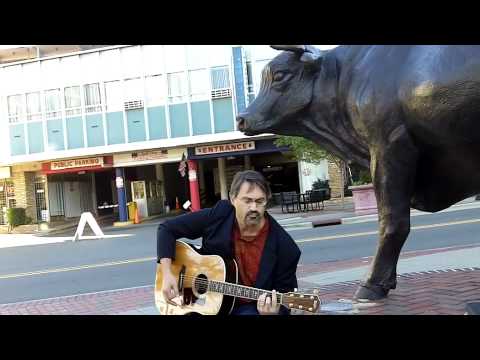
At the BlogTogether bash in Durham in October, he debuted a song called “Minister of the Ether” that pays tribute to Anton Zuiker in celebration of his 10th year of blogging and to all his work in the blogging community. Check out an exclusive video below of Kroll giving an acoustic performance of the song under the bull statue in Durham’s city center.