Posts Tagged ‘social media’

Gossiping on Facebook doesn’t make a social media whiz
Friday, March 18, 2011, 10:46 am No Comments | Post a CommentConsidering the popularity of Facebook - the social networking site has more than 600 million active users and an award-winning movie to its credit - you’d think every teen and college student is a social media whiz.
Think again, said Whitney Chrisco, a 23-year-old college graduate and herself a member of the Net generation.
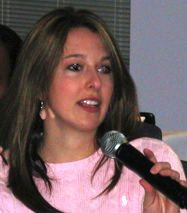
Whitney Chrisco
Chrisco, who has a biology degree from N.C. State University and graduated from the N.C. School of Science and Mathematics in Durham, went back to her high school a few weeks ago to see how much juniors and seniors know about Twitter, Tumblr, Flickr, Second Life and LinkedIn, social media tools used by millions to distribute information and network on the Internet.
The dozen teens who signed up for Chrisco’s seven-day class were smart, tech-savvy kids interested in public health and innovative ways to improve it. The N.C. School of Science and Math is a high school focused on science, math and technology whose graduates have started several Internet-based companies.
“I was worried they would know more than me,” she said. But she discovered, “They really didn’t know much.”
But then, much of what Chrisco knows about social media she learned last summer during a fellowship program at the University of North Carolina Gillings School of Global Public Health.
It’s no coincidence that Chrisco developed a high school course called “Social media networking through a public health lens” from scratch in North Carolina’s Research Triangle.
The region is a biotech and medical research hub that is also rich in global public health expertise. (More on the Research Triangle’s influence on global health here and on the benefits North Carolina reaps here.)
With researchers and students spread across the world, often working on a community level to improve water sanitation, prevent insect-borne diseases or reduce infant mortality, public health lends itself to social networking on the Internet. Free digital tools can help collect and distribute information and bring together people from all walks of life who are driven by the same concerns and interests.
All of the students who signed up for Chrisco’s course had a Facebook page to keep in touch with friends. They used Web cams on their laptops and video conferencing software called ooVoo to chat. They texted on their mobile phones. But they knew little about building a professional network using other resources and tools readily available on the Internet. Only two or three of them had a Twitter account, Chrisco said.
One of the students, Jeremiah McLeod, realized at the beginning of the course how limited his knowledge about Internet networking was.
In a post on the blogging platform Tumblr, McLeod wrote, ”Teenagers, such as myself — no longer spend evenings yakking on the cell phone, but rather, do so while sending gossip through instant messages, blogs, or oovoo. Reading what I’ve just written, I find myself sounding like an old grandpa, and I thus realize the vast importance of connecting with people in this new age.”
The Tumblr blog was one of the hands-on exercises Chrisco developed. Also, the students took photos of public health scenarios, uploaded them onto Flickr and created a map of the photo shoots for a public health sticker campaign. They went on field trips to see how different social media tools are used to promote public health. And they commented on their experiences on Twitter.
One field trip took them into the virtual world of Second Life, where each student created an avatar to visit a three-dimensional AIDS quilt. Fashioned after the AIDS Memorial Quilt, the 3D version is laid out below an enormous tree that grows on a virtual island on Second Life. Instead of fabric pieces commemorating loved-ones who died of AIDS, the 3D AIDS quilt has rooms that were contributed by relatives and friends, but also institutions involved in public health such as UNC’s Center for AIDS Research and the Triangle Global Health Consortium. (More on the 3D AIDS quilt here.)
Chrisco’s students also met two of the creators of the virtual quilt, Jena Ball and Martin Keltz of Startled Cat studios. Here’s what Greeshma Somashekar wrote on her blog about the encounter: “I would love to see the concept expanded to encompass other diseases as well. Like I mentioned earlier, I definetely feel that people are more inclined to learn about something from afar than at a conference, lecture, or public health campaign. Virtual worlds are an invaluable resource, in my perspective. People at risk for other diseases such as Alzheimers, Sickle-Cell Anemia, Tay-Sachs, Cystic Fibrosis, etc may benefit from being able to learn before making tough decisions such as whether or not to be tested for the responsible gene.”
Other students were less enthusiastic about the tool.
Adams Ombonga blogged this: “While I do feel Jenna and Martin’s idea of a virtual world is a very innovative and creative way of reaching out to the public and talk about these public health issues, I felt as if it wouldn’t be widely spread because of the everyday busy lives that people lead. I also felt that with the growth popular social sites such as facebook and twitter Second Life might not be able to compete with them because in the end Second Life is a virtual world and just can’t compete with reality.”
The other field trips took the students to two different places, the Rogers-Eubanks neighborhood northeast of Chapel Hill and the N.C. Biotechnology Center in Research Triangle Park, where speakers nonetheless addressed similar public health issues.
The Rogers-Eubanks neighborhood is predominantly African-American and borders the Orange County landfill. Unable to tap into public water and sewer lines, the neighborhood relies on wells many of which do not comply with federal water quality standards. To bring about changes in their neighborhood, residents use a blog to get their message out.
Water supply was also a topic Fred Gould, an NCSU professor, talked about during the Triangle Global Health Consortium breakfast the students attended at the biotech center. Gould’s presentation was about insect-borne diseases such as malaria and dengue fever and the mosquitoes that spread them. In communities where few households have running water, families store water indoors in open containers. These containers are breeding grounds for the mosquitoes, Gould said.
Kinesha Harris blogged about the visit to Rogers-Eubanks: “This neighborhood which was no more than a 15 minute bus ride away does not have sewage or decent water. There are pipes that run directly under their houses or are near by their houses that the government will not allow them to connect to. Residents of the neighborhood have been fighting for nearly 40 years to be able to connect to the pipes. Some people would ask why they do not just move to a different neighborhood and our guide, who has lived in the neighborhood a majority of his life, says that they will not leave because it is apart of their family history and they do not want to lose that history.”
Kelly Bates wrote about one solution Gould discussed to counter malaria and dengue - genetically engineered mosquitos. The class also read an article about such mosquitoes being released.
“Yesterday’s breakfast at the Triangle Health Consortium was unique. I had never been to something like that before. It was a presentation and discussion about genetically engineered mosquitos being flown into third world countries in the hopes of reducing malaria or dengue. Personally, I had never known about the genetically engineered mosquitos before reading the article and attending the meeting yesterday. All of this was new to me, so it opened my eyes to the huge debate that’s occurring between the people who like this new approach and those who don’t.”
Here’s a picture of Chrisco’s class taken after the Triangle Global Health Consortium breakfast:
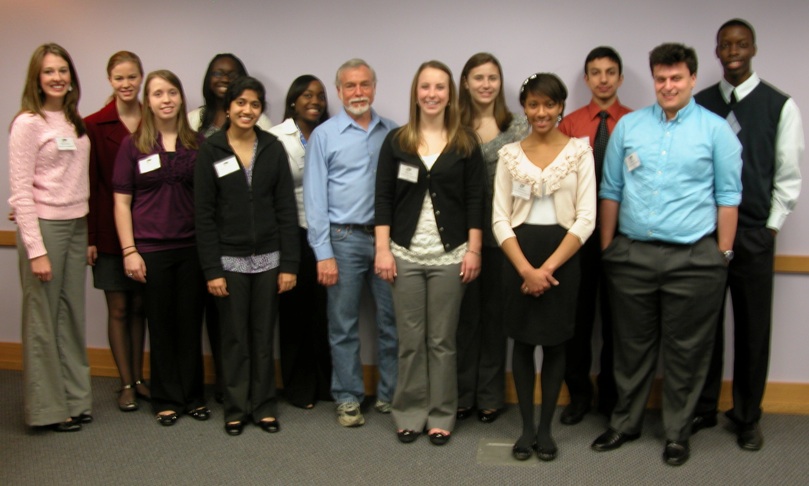
From left: Whitney Chrisco, Holly Modlin, Troy Royal, Jelicia Diggs, Greeshma Somashekar, Kinesha Harris, Fred Gould, Jordan Calvert, Kelley Bates, KeAira Roland, Naseer Ahmed, Jeremy Saxe, Adams Ombonga. Not pictured, Jeremiah McLeod.

Nonprofits and social media
Tuesday, February 1, 2011, 1:40 pm 1 Comment | Post a Comment“There’s something hopelessly quaint about the little piles of pens and paper on the tables at #scio11.”
“Best thing about #scio11 is that people will pull out an iPhone or iPad in the middle of a convo and they’re not rude; they’re live-blogging.”
 If these two tweets give the impression that ScienceOnline 2011 (or #scio11 in the Twitterverse) was a brave new world populated by geeky early adopters who have foresaken pens, paper, and print in favor of devices and Web 2.0, well, that’s partly true.
After all, it was a conference where it was normal to see panelists consulting notes on their iPads, where attendees did in fact live-blog and live-tweet, and where many sessions had a panelist devoted to monitoring Twitter for questions and comments from the audience. (One aggrieved camera operator told me that people watching the live webcast were tweeting complaints about camera angles!) Read more…
Why scientists (should) blog
Tuesday, January 25, 2011, 9:17 am 2 Comments | Post a CommentLast weekend, the Triangle hosted ScienceOnline 2011, a lively annual conference spearheaded by the tireless bloggers Bora Zivkovik and Anton Zuiker. Now in its fifth year, the conference has become so popular that registration for 300 spaces sold out this year in less than a day. The participants, according to the conference website, are “scientists, students, educators, physicians, journalists, librarians, bloggers, programmers and others interested in the way the World Wide Web is changing the way science is communicated, taught and done.”
As a first-time attendee and representative of Science in the Triangle, I divided my time between chasing down interviewees and attending panels, which were organized by participants on an online wiki.
One of those interviewees, Katie Mosher of NC Sea Grant, told me that she’d observed a coming together of science blogging and science journalism in the three years since she’d started attending ScienceOnline. More journalists are using the blog form either to replace or to supplement their print or broadcast stories, she said, some of them writing in traditional journalistic objective form and some of them adopting a point of view. Some of those journalists were present at the conference, just as she sees bloggers now attending conferences hosted by organizations like the National Association of Science Writers.
But journalists appeared to be outnumbered at the conference by scientists who blog (or tweet, or both). As a professional writer who frequently covers science, I should perhaps see these scientist-bloggers as competition. Not at all. To me, they are representative of a welcome trend in academics to communicate with the public about scientific findings and (sometimes controversially) the public policy implications of these findings. A scientist-blogger who writes well (perhaps one who attended the panel by Carl Zimmer and Ed Yong on avoiding obfuscation in science writing) and who knows how to attract an audience can have an immediate impact on public understanding of breaking news, as has been the case with the scientists at Deep-Sea News who covered science surrounding the Gulf oil spill. (Bora Zivkovic explains why scientists are such good explainers.)
A scientist-blogger takes some professional risks. Although I was unable to attend “Perils of Blogging as a Woman under a Real Name,” panelist Kate Clancy provides a detailed writeup here, which alludes to the skepticism with which academic colleagues and tenure and promotion panels view blogging and similar “soft” activities.
A scientist-blogger has to deal with certain downsides of being an online presence, most notably “cranks . . . who come onto our sites and leave comments that foment dissension rather than productive commentary,” according to Rick MacPherson, interim executive director and conservation programs director at the Coral Reef Alliance. It happens wherever evolution or climate change are discussed, he said, and he is the target for negative comments every time he writes or is interviewed about the role of climate change in sea level rise and ocean acidification, both threats to coral reefs.
According to MacPherson, the negative commenters are evidence that the general public doesn’t understand the evidence-based nature of science. “People don’t understand how science works,” he said. “It’s not a democratic process. . . . not opinions.”
His sentiments were echoed in “Lessons from Climategate” by panelist Chris Mooney, coauthor of Unscientific America: How Scientific Illiteracy Threatens our Future, who listed these depressing statistics:
- only 18 percent of Americans know a scientist
- just 13 percent follow science and technology news
- 44 percent can’t name a scientific role model; those who can most frequently name Albert Einstein, Al Gore, and Bill Gates, two of whom are not scientists
- in every five hours of cable news, just one minute is devoted to science and technology
According to Mooney, the situation “is ripe for climate skeptics; they are well-trained, skilled communicators who exploit lack of public knowledge and are willing to fight hard in ways climate scientists are not.” His co-panelist Josh Rosenau, who works to defend the teaching of evolution at the National Center for Science Education, said that the language of the attacks against climate science has an eerie parallel in the attacks against evolution. “For 90 years we’ve been fighting same battle,” he said. “Public opinion has not moved. If that happens to climate change we are doomed.”
Mooney and Rosenau were joined on the panel by Thomas C. Peterson, chief scientist at NOAA’s National Climatic Data Center in Asheville. Peterson was one of the climate scientists whose emails were hacked and published just a few weeks before the 2009 Copenhagen Climate Summit. Although his role in the affair was minor, he was excoriated in blogs (Peterson reminds us that some “science” blogs are unsound scientifically), subjected to harassing calls and emails, and asked by a congressman to produce all emails on the topic (which he did, and which vindicated him). Yet he was still subsequently elected by his peers to be president of the World Meteorological Association’s Commission for Climatology. Clearly, in his professional circles, he is a rock star even if some of the public doesn’t think so.
For Peterson and his co-panelists, the implication is clearly that the public doesn’t understand scientists the way scientists do. Mooney said that the climate emails were taken out of context by people who don’t understand science or scientists. His solution: train “deadly ninjas of science communication”-people who can frame the message and convey science clearly to different constituencies. He wants good communicators to claim the vacancies created when CNN dumped its entire science reporting unit and when daily newspapers gradually reduced their science coverage.
That’s a space that good scientist-bloggers can occupy alongside professional writers: reporting on science from the trenches, bringing scientific research alive, demystifying the scientific method, and unveiling the wealth of unsound science out there.
Notes:
Read my colleague Sabine Vollmer’s post on credibility in science blogging here.
A great resource for finding science blogs is scienceblogging.org.

TEDxTriangle: Old techniques and new technology to harness ideas
Monday, March 8, 2010, 8:38 pm 1 Comment | Post a CommentFeeling dull and uninspired? Try to practice selflessness like a Trappist monk. Play a video game that does more than entertain. Doodle.
The three tips could have come from self-help books, a consultant or a mentor. Instead, they came from the first TED talk in the Research Triangle Park area. The all-day, free event Saturday at RTP headquarters attracted more than 150 people, who on a sunny and balmy winter day sat inside, listened, did the wave and talked to people they had never met before.
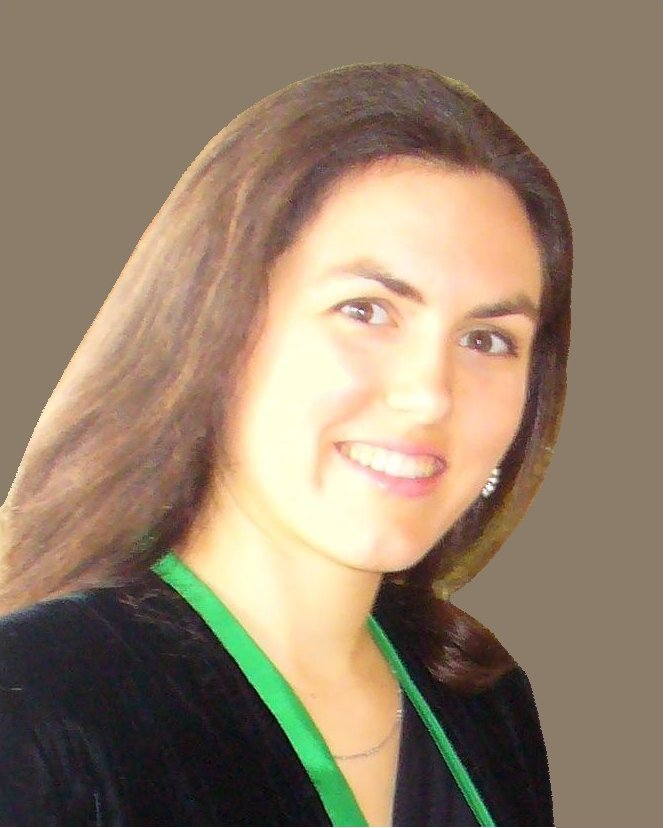
Amy Calhoun
Durham couple Amy and Eric Calhoun organized TEDxTriangle, an offshoot of the TED conference, over the past 10 months using word of mouth, Twitter and Facebook to recruit speakers. In the spirit of TED, whose motto is “ideas worth spreading,” TEDxTriangle brought together local speakers willing to share their ideas and insights.
“We’ve been TED fans for a long time,” said Amy Calhoun, who runs a management consulting business. The goal of the conference, she said, was to get attendees excited, plant seeds of passion and help people connect to solve problems. Read more…


