Archive for the ‘Science and Technology’ Category

Bayer continues to shift biotech seed development focus to U.S.
Thursday, April 28, 2011, 2:20 pm No Comments | Post a Comment
Rendering of Bayer CropScience's new greenhouse.
The 60,000-square-foot greenhouse that Bayer CropsScience is building in North Carolina’s Research Triangle Park represents a critical step in a strategic shift the German Bayer Group initiated two years ago.
The two-story greenhouse is projected to cost $20 million and will quadruple the greenhouse space Bayer Cropscience has in RTP.
Biotech crop seeds have long been part of Bayer CropScience’s business. Much of the trait development - work in the lab and greenhouse to come up with genes that improve crop yield and make corn, soybean, cotton and canola plants more resistant to insects and more tolerant to herbicides, drought and stress - has been done at Bayer’s plant technology innovation center in Ghent, Belgium.
When Bayer stepped up investment in plant technology research and development in 2009, it could have just added on to the Ghent facilities. Instead, the company shifted its focus from Europe to the U.S., where consumers are more accepting of genetically modified crops. So far, Bayer has announced close to $400 million in investments to boost biotech trait development near Bayer CropScience’s U.S. headquarters in RTP.
“We see that as a logical place,” Bayer CropScience spokesman Jack Boyne said from his RTP office.
The number of biotech crop seeds on the market has been rising steadily. In 2007, biotech seeds accounted for about $22 billion in worldwide sales with the top 10 sellers garnering about 68 percent of the global market, according to a report. Bayer CropScience came in seventh, behind Syngenta and market leader Monsanto.
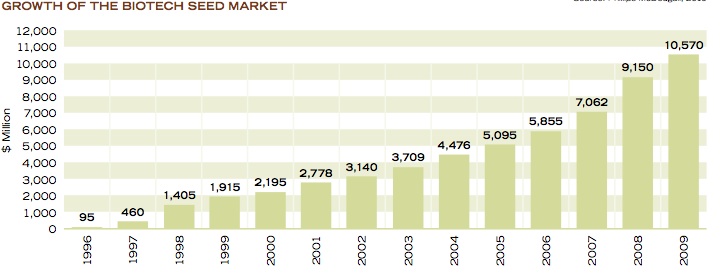
U.S. biotech seed sales
The RTP area, a U.S. biotech hotspot, is home to agricultural biotech operations of four of the large companies - Monsato, Syngenta, Bayer and BASF - and several smaller companies and startups. (More about research at Syngenta’s corporate biotech research center here.)
Eager to catch up, Bayer CropScience in 2009 bought a smaller RTP neighbor with an enviable collection of crop seed traits for $365 million. Athenix, which had research collaborations with Monsato and Syngenta, is now part of Bayer CropScience. So are Athenix’s 65 employees, but Bayer CropScience continues to hire to add a total of 125 employees by 2015. (More about the Athenix acquisition here.)
“We are making an increased investment in bioscience,” Boyne said. “We see this area as a strong growth opportunity.”
So do Monsanto, DuPont and Syngenta.
In 2009, Syngenta bought Monsanto’s hybrid sunflower seed business for about $160 million. In 2010, Monsanto broke ground to expand a soybean seed production facility in North Dakota. And DuPont announced in February that it will invest $50 million to expand its agricultural biotech research center in Delaware.
DuPont expected sales of its ag unit to rise 8 percent to 10 percent per year through 2015.
Offering a hand-up to student entrepreneurs
Tuesday, April 5, 2011, 5:24 pm No Comments | Post a CommentScott Kelly followed a long tradition with Startup Madness, a showcase of entrepreneurship and innovation in North Carolina’s Research Triangle.
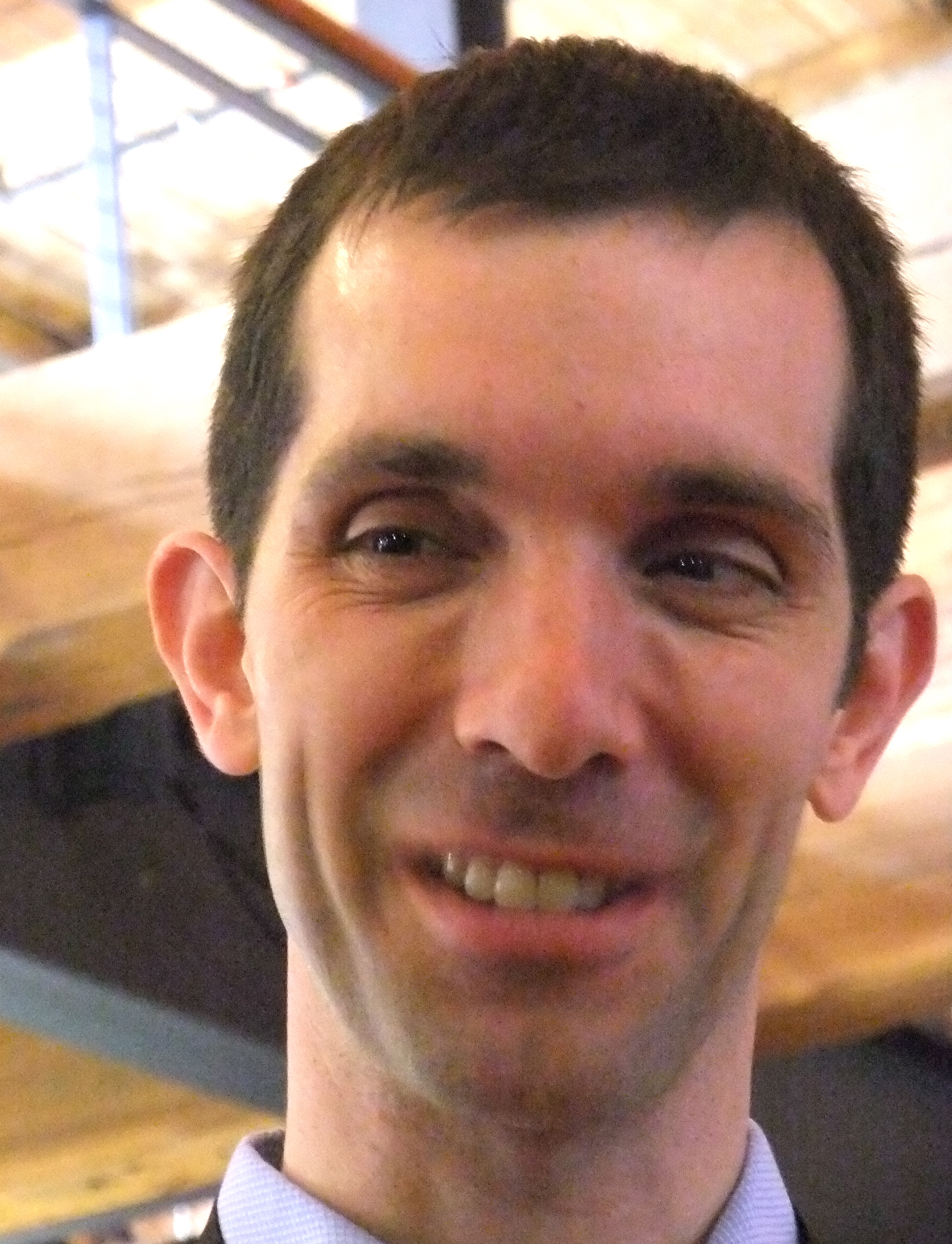
Scott Kelly
Kelly, an investment banker at KeySource Bank who has worked in Internet marketing and sales, recognized the enormous job creation potential of a three-county area dotted with universities - just like economic developers, academics and businessmen did in the 1950s when they established Research Triangle Park on wooded land that was flanked by Duke University in Durham, the University of North Carolina at Chapel Hill and N.C. State University in Raleigh.
Just like the RTP supporters, Kelly focused on Duke, UNC and NCSU students.
Startup Madness, which took place March 31 on the American Tobacco Campus in downtown Durham, introduced student entrepreneurs to the Research Triangle’s investor and business community. The goal, Kelly said, was to encourage innovative young minds to stay and to retain the startup businesses that are born here on university campuses.
“We have the universities. We have young talent, possibly more than anybody else,” Kelly said. “It would be a shame if they leave.”
Startup Madness was the third entrepreneurial showcase Kelly has organized in the past year. The first took place in May 2010, three months after the recession pushed North Carolina’s unemployment rate to 11.4 percent. In the Triangle, more than 8 percent of the labor force was out of work at the time.
Considering that about three-fourths of U.S. jobs tend to be in businesses with fewer than 100 employees, Kelly thought that helping student entrepreneurs start companies in the Triangle would be a good idea to address the unemployment rate.
At Startup Madness, three student entrepreneurs, one each from Duke, UNC and NCSU, pitched business ideas. The crowd picked the most popular idea. The winner, Kelly said, would get lunch with local business leaders and venture capital and angel investors.
The pitches were:
- An infrared glove that monitors blood glucose levels in children with Type 1 diabetes continuously. The glove is worn at night and replaces repeated finger pricks, said Kyle Foti, one of eight NCSU undergraduate students working on a prototype. Currently, children with Type 1 diabetes must be woken several times at night and tested to prevent hyperglycemia, which can damage the brain and organs. The glove is not only more accurate, but it would also wake parents and children only when there’s a problem.
- Unfiltered voice messages from professional athletes that fans can receive on their mobile phones. Gridiron Grunts plans to start with messages from NFL football players and then go on to NASCAR drivers, said Jeb Terry, a UNC business student who spent five years playing football professionally. Revenue would come from subscriptions, Terry said.
- Internet discounts on merchandise that local businesses offer college students. After its launch a few weeks ago Sidewalk already had 1,000 users across Internet platforms, said Brian Laker, a Duke business student. The merchants pay Sidewalk a fee for the services.
And the winner was: The infrared glove to prevent hyperglycemia, the first product being developed by Diagnostic Apparel.

‘Written in Stone’ author to pen another dino epic
Wednesday, March 30, 2011, 8:01 am 1 Comment | Post a CommentNew Jersey isn’t exactly known for its ample fossil record. But that didn’t stop Brian Switek from doing everything he could to become an expert on the subject of paleontology.
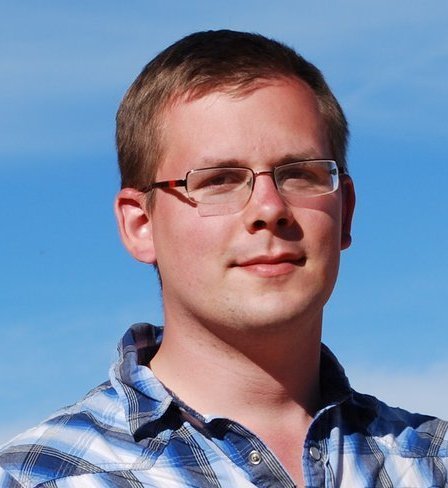
Brian Switek
Over the years, he’s written the popular book Written in Stone, blogged at Wired Science’s Laelaps and Smithsonian Magazine’s Dinosaur Tracking and published papers in academic journals — all as a part-time pursuit. But this summer, he’s taking his full-time freelance show on the road, traveling west to Salt Lake City to get his hands dirty for a new book, A Date with a Dinosaur.
Although there’s no publication date set yet, Switek said he’s excited to get started on a title that will explore a few of paleontology’s biggest celebrities.
“A Date With a Dinosaur is about catching up with the prehistoric monsters I met as a child. Since the time I first encountered them, reconstructions of ‘Brontosaurus’, Stegosaurus, Triceratops, and Tyrannosaurus have changed so much, and so many new dinosaurs have been discovered that it is almost impossible to keep up with them all,” Switek said in a message Wednesday.
“Through these finds, we are finally starting to answer some of the big questions about dinosaur lives - what color were they? how fast did they grow? how did they reproduce? - but dinosaurs aren’t just scientific objects. They are also pop culture icons, and sometimes there’s resistance to scientific discoveries that change the dinosaurs we grew up with. A Date With a Dinosaur is about reconciling these views - pop culture dinosaurs with dinosaurs as paleontologists know them - in the hope that I can introduce readers to aspects of dinosaur lives they have never encountered before.”
I caught up with Switek in January at ScienceOnline 2011 in Durham to talk about how he boned up on his beloved field and what’s exciting him most about the world of dinosaurs.
Humans, monkeys age the same, say Duke primatologists
Sunday, March 27, 2011, 7:13 pm No Comments | Post a CommentOriginally published: 3/17/11
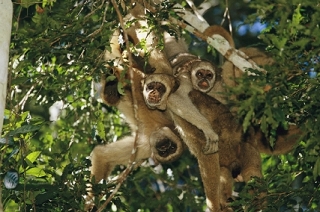
Studies find the muriqui monkey can live as long as the average human being
Humans share 98 percent of their DNA with monkeys. Clearly, the two species have a few things in common. One, say researchers from Duke University, is how we age.
Dr. Susan Alberts, a Duke biology professor, has been studying baboons in Kenya’s Amboseli National Park for quite some time. In fact, she’d just gotten off a flight home, she mentioned when interviewed.
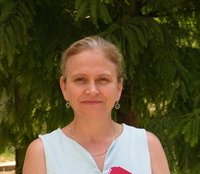
Dr. Susan Alberts
Alberts is one of several Duke scientists who have teamed up with universities across the world to study aging behavior in wild primates. She said data was combined from seven different studies on non-human primates, each spanning 25 to 50 years. Two of these—the Jane Goodall Institute study on chimpanzees and Alberts’s Amboseli study on baboons—were based at Duke.
Findings from the studies appear in the March 11 edition of Science.
The studies chronicle primates over the course of their lives. Monkey populations were observed for births, deaths and physical deterioration. Alberts said long-term primate studies like these are invaluable to putting the human experience in perspective.
“Before, we didn’t have anything to compare to that was like us,” Alberts said. “So we were comparing ourselves to lab mice. And we are really different than lab mice.”
Dr. William Morris, a Duke ecology and population biology professor who assisted Alberts, said main conclusion of the report was that aging patterns and mortality risks coincide between humans and non-human primates.
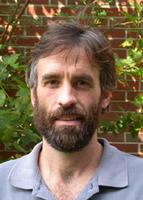
Dr. William Morris
“Your chance of dying increases with age in a similar way whether you’re a gorilla or a baboon or a human,” said Morris. “Humans still win, but we’re not too far away from our primate relatives.”
According to the report, female chimpanzees often live into their forties, some even into their fifties. Males live into their thirties but are mostly dead by their early forties. Morris said the monkey with the longest life expectancy was not the chimp or gorilla, but rather the lesser-known Brazilian muriqui, which can survive all the way into its seventies.
That is not too far off from the average life expectancy of a human, said Dr. Anne Pusey, chair of Duke’s evolutionary anthropology department. Nowadays, the typical American male will live into his eighties. Females, she said, live slightly longer. The gender difference is more pronounced in monkeys, though, because of male-male competition for reproductive opportunities with a limited number of females.
Pusey has been working with renowned British primatologist Jane Goodall at her chimpanzee park in Tanzania since 1970. In the wealth of data she’s collected over four decades, she has developed an eye for identifying chimp aging behavior.
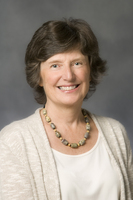
Dr. Anne Pusey
“Just knowing more about mortality patterns in other species helps us think about the evolution of our mortality patterns and understand which patterns are fixed and which are more elastic,” Pusey said. In the future, she and her colleagues plan to investigate how reproductive rates change with age.
“Humans are unusual in this regard because we hit menopause and continue to live a long time afterwards,” she said. “But female chimps go on having babies up until they die.”
Pusey took on her job at Duke last year. She said she was attracted to the area because she feels it’s one of the best of its kind in the country. Also, she had heard about Dr. Alberts’ study and discovered how much potential there is for primate research in the Triangle region.
Alberts said she’s interested in how animals use social behavior to solve environmental problems and how that impacts their survival. What characterizes the human race, she said, is that we’re primarily monogamous, which levels out competition among males.
This might seem counterintuitive at first. If females only mate with one male, wouldn’t there be increased drive for men to settle down with the most desirable female? Alberts said it is actually a great equalizer for the men, and everyone still ends up with a partner.
However, in non-human primate species, not everyone does. The females mate with multiple fathers, but not every male passes that litmus test.
“If females only mate with one male, it isn’t how many kids he’s going to have but how good a mate he’s going to get,” she said. “In primates, the least successful male wouldn’t have any kids at all.”
One finding that surprised her was that primate males are able to differentiate their own offspring. She found this remarkable since females mate with many different males in the course of a lifetime and there’s no discernable way for fathers to keep track of who’s whose. Paternal care goes very deep in our primate roots, she said.
“Human males are very good fathers, especially compared to most mammals,” said Alberts.
So in a lot of ways, socialization has factored into reproduction and life expectancy. Insight like this, Morris said, paves the way to understanding how human evolution has digressed from that our hairy ancestors.
“We live longer than the other primates because of the environment we create for ourselves,” he said. “Nutrition, modern medicine, health care—other primates don’t have these things.”
To Morris, the importance of the Amboseli study is in advocating long-term primate research because he thinks that’s how we really learn about the aging process. He said it’s much different than the plants he studies.
“With trees you can take a look at the core and see how old it is,” Morris said.
“You can’t do that with baboons and monkeys. You really need to follow them around to get the whole picture.”
Gossiping on Facebook doesn’t make a social media whiz
Friday, March 18, 2011, 10:46 am No Comments | Post a CommentConsidering the popularity of Facebook - the social networking site has more than 600 million active users and an award-winning movie to its credit - you’d think every teen and college student is a social media whiz.
Think again, said Whitney Chrisco, a 23-year-old college graduate and herself a member of the Net generation.
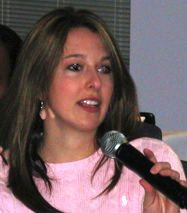
Whitney Chrisco
Chrisco, who has a biology degree from N.C. State University and graduated from the N.C. School of Science and Mathematics in Durham, went back to her high school a few weeks ago to see how much juniors and seniors know about Twitter, Tumblr, Flickr, Second Life and LinkedIn, social media tools used by millions to distribute information and network on the Internet.
The dozen teens who signed up for Chrisco’s seven-day class were smart, tech-savvy kids interested in public health and innovative ways to improve it. The N.C. School of Science and Math is a high school focused on science, math and technology whose graduates have started several Internet-based companies.
“I was worried they would know more than me,” she said. But she discovered, “They really didn’t know much.”
But then, much of what Chrisco knows about social media she learned last summer during a fellowship program at the University of North Carolina Gillings School of Global Public Health.
It’s no coincidence that Chrisco developed a high school course called “Social media networking through a public health lens” from scratch in North Carolina’s Research Triangle.
The region is a biotech and medical research hub that is also rich in global public health expertise. (More on the Research Triangle’s influence on global health here and on the benefits North Carolina reaps here.)
With researchers and students spread across the world, often working on a community level to improve water sanitation, prevent insect-borne diseases or reduce infant mortality, public health lends itself to social networking on the Internet. Free digital tools can help collect and distribute information and bring together people from all walks of life who are driven by the same concerns and interests.
All of the students who signed up for Chrisco’s course had a Facebook page to keep in touch with friends. They used Web cams on their laptops and video conferencing software called ooVoo to chat. They texted on their mobile phones. But they knew little about building a professional network using other resources and tools readily available on the Internet. Only two or three of them had a Twitter account, Chrisco said.
One of the students, Jeremiah McLeod, realized at the beginning of the course how limited his knowledge about Internet networking was.
In a post on the blogging platform Tumblr, McLeod wrote, ”Teenagers, such as myself — no longer spend evenings yakking on the cell phone, but rather, do so while sending gossip through instant messages, blogs, or oovoo. Reading what I’ve just written, I find myself sounding like an old grandpa, and I thus realize the vast importance of connecting with people in this new age.”
The Tumblr blog was one of the hands-on exercises Chrisco developed. Also, the students took photos of public health scenarios, uploaded them onto Flickr and created a map of the photo shoots for a public health sticker campaign. They went on field trips to see how different social media tools are used to promote public health. And they commented on their experiences on Twitter.
One field trip took them into the virtual world of Second Life, where each student created an avatar to visit a three-dimensional AIDS quilt. Fashioned after the AIDS Memorial Quilt, the 3D version is laid out below an enormous tree that grows on a virtual island on Second Life. Instead of fabric pieces commemorating loved-ones who died of AIDS, the 3D AIDS quilt has rooms that were contributed by relatives and friends, but also institutions involved in public health such as UNC’s Center for AIDS Research and the Triangle Global Health Consortium. (More on the 3D AIDS quilt here.)
Chrisco’s students also met two of the creators of the virtual quilt, Jena Ball and Martin Keltz of Startled Cat studios. Here’s what Greeshma Somashekar wrote on her blog about the encounter: “I would love to see the concept expanded to encompass other diseases as well. Like I mentioned earlier, I definetely feel that people are more inclined to learn about something from afar than at a conference, lecture, or public health campaign. Virtual worlds are an invaluable resource, in my perspective. People at risk for other diseases such as Alzheimers, Sickle-Cell Anemia, Tay-Sachs, Cystic Fibrosis, etc may benefit from being able to learn before making tough decisions such as whether or not to be tested for the responsible gene.”
Other students were less enthusiastic about the tool.
Adams Ombonga blogged this: “While I do feel Jenna and Martin’s idea of a virtual world is a very innovative and creative way of reaching out to the public and talk about these public health issues, I felt as if it wouldn’t be widely spread because of the everyday busy lives that people lead. I also felt that with the growth popular social sites such as facebook and twitter Second Life might not be able to compete with them because in the end Second Life is a virtual world and just can’t compete with reality.”
The other field trips took the students to two different places, the Rogers-Eubanks neighborhood northeast of Chapel Hill and the N.C. Biotechnology Center in Research Triangle Park, where speakers nonetheless addressed similar public health issues.
The Rogers-Eubanks neighborhood is predominantly African-American and borders the Orange County landfill. Unable to tap into public water and sewer lines, the neighborhood relies on wells many of which do not comply with federal water quality standards. To bring about changes in their neighborhood, residents use a blog to get their message out.
Water supply was also a topic Fred Gould, an NCSU professor, talked about during the Triangle Global Health Consortium breakfast the students attended at the biotech center. Gould’s presentation was about insect-borne diseases such as malaria and dengue fever and the mosquitoes that spread them. In communities where few households have running water, families store water indoors in open containers. These containers are breeding grounds for the mosquitoes, Gould said.
Kinesha Harris blogged about the visit to Rogers-Eubanks: “This neighborhood which was no more than a 15 minute bus ride away does not have sewage or decent water. There are pipes that run directly under their houses or are near by their houses that the government will not allow them to connect to. Residents of the neighborhood have been fighting for nearly 40 years to be able to connect to the pipes. Some people would ask why they do not just move to a different neighborhood and our guide, who has lived in the neighborhood a majority of his life, says that they will not leave because it is apart of their family history and they do not want to lose that history.”
Kelly Bates wrote about one solution Gould discussed to counter malaria and dengue - genetically engineered mosquitos. The class also read an article about such mosquitoes being released.
“Yesterday’s breakfast at the Triangle Health Consortium was unique. I had never been to something like that before. It was a presentation and discussion about genetically engineered mosquitos being flown into third world countries in the hopes of reducing malaria or dengue. Personally, I had never known about the genetically engineered mosquitos before reading the article and attending the meeting yesterday. All of this was new to me, so it opened my eyes to the huge debate that’s occurring between the people who like this new approach and those who don’t.”
Here’s a picture of Chrisco’s class taken after the Triangle Global Health Consortium breakfast:
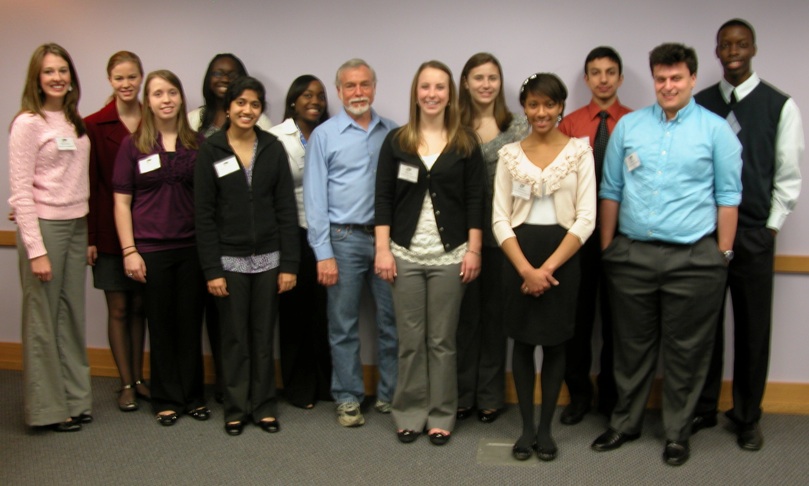
From left: Whitney Chrisco, Holly Modlin, Troy Royal, Jelicia Diggs, Greeshma Somashekar, Kinesha Harris, Fred Gould, Jordan Calvert, Kelley Bates, KeAira Roland, Naseer Ahmed, Jeremy Saxe, Adams Ombonga. Not pictured, Jeremiah McLeod.
RF radiation harmful to humans? Sent on my iPhone.
Saturday, March 12, 2011, 12:08 am 2 Comments | Post a Comment
A graphic depiction of radiofrequency (RF) radiation (picture via TopNews.in)
Cell phones continue to become more and more prevalent, but so does a debate in the scientific community as to whether they do more harm than good.
That’s why the National Toxicology Program (NTP), a subset of the National Institute of Environmental Health Sciences based in Research Triangle Park, is studying the effects of cell phone, or radiofrequency (RF), radiation on animals.
So far, there is no evidence to suggest any short- or long-term damage to humans, said Dr. Mike Wide, an NTP toxicologist involved in the study. There are two types of radiation, he said: ionizing and non-ionizing.
“Ionizing is what most people are familiar with,” Wide said. “Things like X-rays and nuclear bombs.” Ionizing radiation will strip electrons away from atoms and molecules and thus has the potential to cause ionic damage in tissue.
Meanwhile, non-ionizing radiation—which includes radiofrequencies—is much lower in intensity and does not endanger ions. It can heat things up, though.
“When the power level gets high enough, eventually the RF radiation energy starts to excite molecules and creates heat, like a microwave,” Wide said. “Increase someone’s body heat enough, and you’re eventually going to have a body of problems.”
This is called the thermal effect. Wide said although the potential for such damage exists, there is currently no reason to believe RF radiation could harm human tissue.
Not all his colleagues share this belief. Wide was part of a cell phone radiation expert panel that testified before Congress in 2009. Dr. Devra Davis of the Environmental Health Trust was another panelist.
Davis said the evidence clearly shows cell phones cause physiological harm in humans.
The thermal effect created by the phones can alter brain metabolism and glucose, she said. This could be especially detrimental to children, whose brains are still developing and who absorb twice as much radiation as adults.
There could be sexual side effects, too. Davis said there is a 50 percent reduction of sperm count in young men who keep cell phones in their pockets for four hours a day.
“Just by keeping it in your pocket, you exceed the FCC limit,” she said in reference to the Federal Communications Commission’s standard on cell phone radiation emission rates.
Currently, the maximum Specific Absorption Rate (SAR) for commercial cell phones is 1.6 megawatts per kilogram (MW/kg), a number developed in 1996 on recommendations by top scientific agencies like the EPA and the FDA. This rate measures the amount of radiation that is absorbed over one gram of tissue when the phone is using its maximum power, explained Wide.
Phones are rarely using their maximum power and this SAR ceiling is well below the threshold for actual bodily harm from radiation, said Bruce Romano, associate chief of the FCC’s office of engineering and technology.
“It’s a safety mark intentionally set that low,” Romano said. “Artificially low, even.”
The phones, he said, would have to emit much more than 1.6 MW/kg of RF radiation to cause any acute human damage, so everything below that level is safe. Some mistakenly assume a SAR of 1.2 is safer than a SAR of 1.4; however, as long as they’re below 1.6, all SARs are equally safe, he said.
“If you’re moving under a 12 foot bridge, what’s the difference between a nine and ten foot truck?” Romano said. “They both fit under.”
Davis argues the best way to reduce the risk of harmful radiation is to use a head-set or turn on the speakerphone. She helped found the Global Campaign for Safer Cell Phones, along with CNN medical commentator Dr. Sanjay Gupta.
The campaign advises against regular use and carry of cell phones and advocates safer model designs. Yet, Romano is not sure better designs are the answer.
“At this point, they’ve probably done everything they can do design-wise,” he said. “The next thing would be to lower the power, but then it doesn’t work as well or you need more base stations.”
What Wide points out is that the FCC’s standards are based on protection from acute injury. They are not designed to guard against long-term effects from repeated low-level exposure to thermal energy.
“That’s one of many reasons why we’re interested in this study,” Wide said, explaining that current regulations are not based in real life data, as far as the way people are using cell phones. He said 85 percent of Americans and four billion people worldwide use cell phones regularly.
“Even if there’s a small effect, with so many using them, it could affect a lot of people,” he said. “It will definitely remain an issue for several more years to come.”
Davis, on the other hand, said the time to act is now. Changes must be made to shield the younger generation from chronic exposure.
“We do not have the answers, but when should we have asked against tobacco or asbestos?” she said. “If we have to wait on proof for cell phones like with these, we’ll end up with dead bodies, of our children and grandchildren.”
Pest control from spoiled milk
Wednesday, March 9, 2011, 5:21 pm 1 Comment | Post a CommentThis spring, U.S. farmers are planting corn fortified with a new genetic weapon against hungry caterpillars: A chemical that an entomologist in North Carolina’s Research Triangle Park found 18 years ago in a batch of spoiled milk from his refrigerator.
The chemical is a protein that works like a natural insecticide. It is made by a bacterium that lives in the soil.

Greg Warren
Bacillus thuringiensis has long been known as a natural pest control. Agricultural chemical giants Monsanto, Dow, Syngenta and BASF have borrowed genetic material from the bacterium to protect crops from insect damage.
But the protein that Greg Warren discovered in the spoiled milk was different from anything that was known or used in agricultural pest control. He tried it on cutworms, caterpillars that chew through the stems of seedlings. It worked.
“They take a bite, they die,” said Warren, a bench-scientist-turned-patent-lawyer at Syngenta’s corporate biotech research hub in RTP.
Genetic engineering, manipulating genetic material in ways that don’t happen naturally, can be as controversial as it is common. Genetic engineering has brought about animals that researchers use to better understand human diseases, animals and plants that produce medicines and agricultural crops that tolerate drought and weed killers, control harmful insects and even produce an extra vitamin.
A year ago, the U.S. Department of Agriculture cleared the genetic trait Warren discovered for commercial use and Syngenta packaged it with other traits in genetically engineered corn seeds that it started selling last fall under the name Viptera.
“It’s a big deal in terms of sustainable pest control,” said Fred Gould, professor of agriculture at N.C. State University. It provides a novel defense against pests that have gotten used to the plants’ old weapons and new pests that moved in once the competition was gone.

Bacillus thuringiensis with spore and crystals
The older bacillus thuringiensis pest control trait, also known as the Cry gene, has been around since 1985 and is in nearly 20 percent of all biotech crops.
The rod-shaped bacterium activates the Cry gene at the end of its life. Just before it dies, it makes a spore to produce offspring and an endotoxin in the shape of diamond crystals to ward off pests.

Strings of bacilli thuringiensis
Earlier in its life cycle, when it divides into what looks like strings of beads, bacillus thuringienses also makes chemicals that act as bioinsecticides. They are called vegetative insecticide proteins or VIPs and are more powerful than endotoxins.
In the early 1990s researchers knew very little about VIPs beyond the fact that they existed, Warren said. “It was an area that hadn’t been explored.”
Warren, who in 1989 had joined Ciba-Geigy’s labs in RTP, wanted to find them. He took dozens of samples, of plants, dust and soil, to isolate bacteria, but none produced a chemical that killed cutworms. His managers at Ciba-Geigy and researchers at universities weren’t very hopeful.
They told him, “You’re crazy, you’re not going to find anything,” Warren recalled.
He didn’t listen. In 1993, he tested a sample of spoiled milk he had brought from home and found a bacillus thuringiensis strain in it. When he cultivated the bacteria and fed the liquid they had thrived in to cutworms, the caterpillars died.
“Out of contaminated food, we found a blockbuster product,” Warren said.
So why did it take 18 years to come to market?
“This is a very unique protein that has very unique properties,” Warren said. “It took time to figure out all those properties.”
Also, it didn’t help that the development of the VIP trait coincided with two large mergers, he said. Again and again, he had to convince superiors to continue funding the research.
In 1996, Ciba Geigy and Sandoz merged to become Novartis. Four years later, Novartis and AstraZeneca merged their agricultural business and formed Syngenta. Warren went to law school to become a patent lawyer the same year the second merger happened. Eric Chen, Warren’s successor as the head of Syngenta’s biostress traits group, oversaw the lab work to make the bacterial VIP gene acceptable to the corn plant.
Last year, Syngenta’s VIP trait won an international award for best novel agricultural biotech product and Michael Mack, the Swiss company’s chief executive, said in an interview with BusinessWeek that Viptera provides Syngenta a chance to challenge Monsanto, the market leader in genetically engineered crop seeds.

From fish to turtles to Facebook to starting a science camp at the age of 12
Wednesday, February 23, 2011, 10:12 pm 1 Comment | Post a CommentEditor’s note: Molly is an example of what can happen when girls are free to explore and supported as science activists - even when that means having a menagerie of 36 fish, salamanders, turtles, dogs, rabbits and other pets at home. She is a seventh grader at Resurrection Lutheran School in Cary and the founder of the Raleigh Aquatic Turtle Adoption. In this guest post, which she wrote with her mother, Molly describes how getting a pet fish led to planning a STEM summer camp at her school this year.
My name is Molly, I am 12 and I created STEM Leadership Camp.

Betta fish come in many colors. This is a green one.
When I was little I wanted tons of pets. My mom said I could have a betta fish if I took really good care of it. So I got Rainbow, who lived for two years. When I was 5, I got my first puppy, Zoe, who is my best friend.
Once we drove by a pond and I saw a turtle. I had seen one in a nature book, so I asked for a turtle. My mom and I looked up what kind of tank they like and where to get one.
Eventually, we adopted two turtles from an owner who couldn’t keep them. We decided to adopt more and realized we needed a permit to have more than four, so my mom applied for one and now we take care of many turtles.We also created Raleigh Aquatic Turtle Adoption (RATA) www.raleighaquaticturtleadoption.com and it has been running since 2006. RATA helps to get new homes for unwanted aquatic pet turtles.
I currently have about 20 fish, including 13 koi, three salamanders, 12 turtles, two dogs, two rabbits, one betta and three moon jellyfish, making a grand total of 36 pets. Read more…
Tackling the challenges of climate change modeling
Monday, February 21, 2011, 12:44 am 2 Comments | Post a CommentTrue to its mission, the Statistical and Applied Mathematical Sciences Institute in Research Triangle Park took on a tricky data- and model-driven scientific challenge in the first public talk it organized for a lay audience.

Douglas Nychka
SAMSI, a collaboration of the RTP area’s three main universities, the RTP-based National Institute of Statistical Sciences and the National Science Foundation, picked climate change as a topic for the talk on Feb. 15 and invited Douglas Nychka, a leading statistician and climate expert at the National Center for Atmospheric Research in Boulder, Colo., as its inaugural speaker.
Nychka didn’t go into the depths of the criticism that has dogged data-driven climate change modeling for more than a decade and has left most Americans convinced they can’t do anything to change global warming.
Only 18 percent of Americans strongly believe global warming is real, harmful and caused by humans, according to the 2008 American Climate Values Survey.
“This is an argument about cause and effect,” Nychka said.
He did, however, say that it was very difficult to statistically reproduce the global warming trend without including greenhouse gases from fossil fuel consumption. Read more…
Text-based game challenges homeless stereotypes
Monday, February 14, 2011, 10:39 am No Comments | Post a Comment
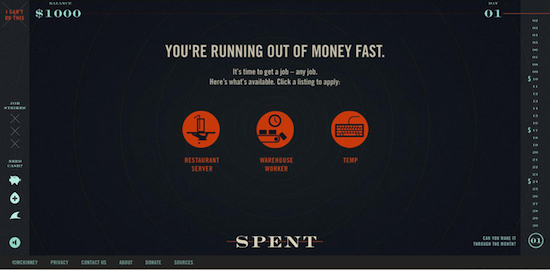
In Spent, players begin by choosing low-paying jobs to get them and their families through the month. | Image courtesy of McKinney
A new game from a Durham nonprofit is raising awareness about homelessness by challenging players to make a quickly dwindling bank account last a month.
Spent, developed by the advertising firm McKinney for Urban Ministries of Durham, puts players in the shoes of a jobless worker forced to make tough decisions about supporting a family with only $1,000 left. The text-based interface, which also employs a social media element, is designed to help users understand the causes of homelessness — and how close some people are to losing everything. Read more…


