
Duke to anchor first clinical trial of next-generation HIV vaccine
Friday, October 29, 2010, 12:55 am 1 Comment | Post a CommentResearchers have been able to come up with cocktails of powerful pills that can keep the human immunodeficiency virus at bay, but a vaccine that prevents the virus that causes AIDS from infecting cells has so far eluded them.
In the past 20 years, ever more sophisticated HIV vaccines have been tested worldwide in more than 100 clinical trials without much success, according to a database the International AIDS Vaccine Initiative has kept. Almost two dozen clinical trials are still under way, most in the earliest stage of testing.
Now, vaccine experts at Duke University have assembled an international team to test yet another HIV vaccine in an early-stage clinical trial. But this vaccine is different. It aims to address not only HIV’s ability to outwit the immune system but also the virus’ geographic variations.
If it works, it has the potential to prevent more than 80 percent of HIV infections worldwide.
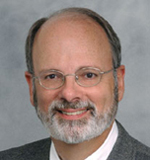
Dr. Barton Haynes
“It’s the first approach to go into humans that deals with [geographic] diversities,” said Dr. Barton Haynes, director of the Duke Human Vaccine Institute and the Center for HIV/AIDS Vaccine Immunology.
CHAVI is a consortium of universities and academic medical centers the National Institute of Allergy and Infectious Diseases established five years ago with access to more than $300 million in funding over seven years.
Antiretroviral drugs have slowed the HIV pandemic, but the number of people living with HIV worldwide continues to rise, according to figures by the World Health Organization. In 2008, it was 33.4 million, up from 33 million the year before.
Short of a cure, the hope to stop the HIV pandemic rests largely on a vaccine that prevents the virus from entering and infecting the body.
But so far, experimental vaccines at best cover 70 percent of all HIV strains.
In the most encouraging trial to date, a vaccine combo reduced the infection rate among 16,000 participating Thai volunteers by 31 percent, according to results published last year. The combo’s limited protection wore off within less than 18 months.
Unlike, for example, a flu virus, which changes its genetic makeup maybe once every flu season, the HIV can do the same within 10 days. A particularly mistake-prone enzyme involved in replicating the HIV is responsible for the quick changes and the virus’ geographic variations.

Bette Korber
The vaccine that Haynes expects to start testing in 2012 in healthy volunteers worldwide is based on HIV genetic pieces that a computer at the Los Alamos National Laboratory in New Mexico picked according to programmed patterns.
In the laboratory, cells turn these genetic pieces into recombinant proteins. Loaded on weakened smallpox viruses, the synthetic proteins make what is called a mosaic HIV vaccine.
Bette Korber, a computational biologist who leads the HIV sequence and immunology database at the Los Alamos laboratory, is the mother of the mosaic HIV vaccine.
“We have to deal with the diversity issue. If we don’t, we will never have a vaccine that works,” Korber is quoted in a report on HIV vaccine research that the International AIDS Vaccine Initiative published this year.
Other CHAVI members also contributed to making and testing it in animals and cell cultures, including Duke, the University of New Mexico and the French company Sanofi Pasteur.
The Bill and Melinda Gates Foundation, which in 2006 made $287 million more available for HIV vaccine research, and the National Institute of Allergy and Infectious Diseases will help fund the clinical trial.
“It’s a big team that’s worked together for a long time,” Haynes said.
The strategy behind the mosaic vaccine is to attack the HIV from many different directions, particularly weak spots on the envelope, part the virus uses to enter and infect a cell. But the vaccine also aims to stimulate two types of immune cells, white blood cells known as T-cells that help mount an immune response and that kill intruders.
“You need both T-cells to have a robust immune response,” Haynes said.
The mosaic HIV vaccine also has an antibody component. Antibodies are the combat troops that fight invading viruses at the front line. Haynes said the team is still working on that part of the vaccine.
Scientists at the National Institute of Allergy and Infectious Diseases revealed this summer that they found three powerful antibodies in the cells of a 60-year-old African-American gay man. Now they’re trying to figure out how to make them.
The planned clinical trial will be designed to track how well the mosaic HIV vaccine will stimulate the T-cells, how broad and long-lasting the immune response is and how many trial participants respond.


[...] Duke to anchor first clinical trial of next-generation HIV vaccine [...]