
Pediatrician takes on rare metabolic diseases
Friday, June 4, 2010, 9:48 am 2 Comments | Post a Comment
Dr. Maria Escolar
Dr. Maria Escolar was a 35-year-old pediatrician overseeing a program for doctors in training at Duke University 12 years ago when she saw her first patient with Krabbe disease.
Named after a Danish neurologist who first described it in 1913, Krabbe disease is a rare, genetic disorder that is painful and damages mental and motor skills. Children with the disease show no symptoms at birth, but without treatment they go deaf and blind and usually die by the time they are 3.
“It’s one of the most horrible diseases I’ve ever encountered,” Escolar said.
In 1998, very little was known about Krabbe disease and similar metabolic diseases beyond the fact that they were fatal and no cure existed. Escolar, who now heads the program for neurodevelopmental function in rare disorders at the University of North Carolina Gene Therapy Center, was instrumental in changing that research gap.
In 2005, Escolar co-authored a landmark study on Krabbe disease that was published in the New England Journal of Medicine. The study tracked the development of children with the disease who received transplants of umbilical-cord blood from healthy donors. The treatment was developed at Duke and was based on research Escolar and her colleagues at Duke and UNC did on the symptoms and progression of rare, genetic metabolic diseases.
Today, North Carolina’s Research Triangle area remains one of the few places in the world where children with these diseases are treated and new, experimental treatments are being explored.
During a presentation she made at the May TARDC luncheon at Research Triangle Park headquarters, Escolar outlined how much researchers have learned about the diseases since 1998 and what they still don’t know.
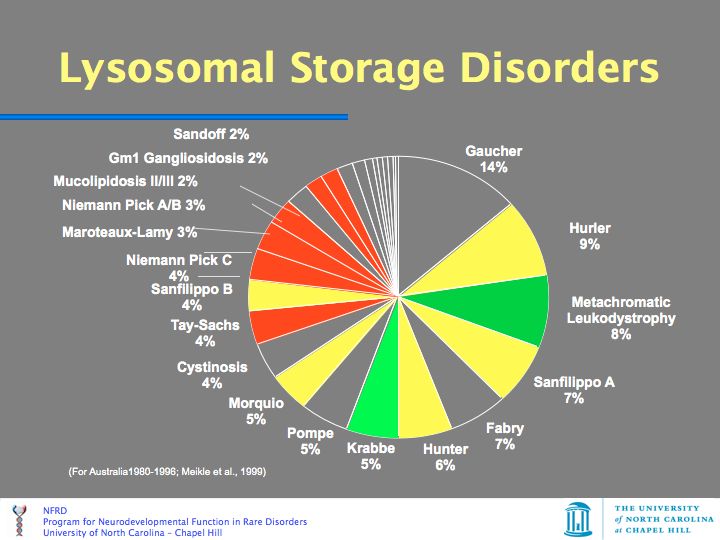 Also known as lysosomal storage disorders, these rare, genetic metabolic diseases are caused by mutations that are either inherited or happen spontaneously. The mutations disable enzymes the body needs to break down fat, protein and sugar molecules and make cell building blocks. Just one faulty enzyme can lead to the accumulation of undigested molecules that damage the brain and destroy the protective myelin sheath around nerves.
Lysosomal storage disorders occur in 1 in 100,000 people. The program Escolar heads at UNC has seen more than 400 affected children, 65 of them with Krabbe disease.
More than 100 of the children received umbilical-cord blood transplants.
Whether the transplants prolonged lives, prevented damage and lessened symptoms depended on the disease.
The transplant prevented cognitive damage in some of the children with Hunter Syndrome, a lysosomal storage disease that affects mostly boys. But others didn’t benefit and researchers are trying to find out why, Escolar said. The results in children with Sanfilippo Syndrome, another lysosomal storage disease, were equally puzzling. None of the children benefited from the transplants, except one boy whose social skills improved.
In children with Krabbe disease, the transplants were most effective when given before symptoms developed. Children who were treated within three months of birth suffered much less brain damage than children who were treated later, but even among the youngest transplant patients some showed delays in the development of motor skills.
“Now we understand that transplantation fixes a lot of problems, but we’re not catching it early enough,” Escolar said. A diagnosis in the first two years of life is crucial, she said. Newborn screening for Krabbe disease, as it was introduced in the state of New York in 2006, would be best, she added.
Researchers are also exploring treatment alternatives. Umbilical-cord blood transplantations have a 15 percent mortality risk, because they require chemotherapy and a year’s worth of immunosuppressive drugs. Some European researchers have tried treating the bone marrow of affected children. At UNC, researchers are looking into versions of gene therapy.


[...] dystrophy. And Duke University researchers have come up with treatments for two rare diseases, Krabbe disease and Pompe disease, and are working on three more. Dr. Priya [...]
"Maria EscolarDr. Maria Escolar was a 35-year-old pediatrician overseeing a program for doctors in training at Duke University 12 years ago when she saw her first patient with Krabbe disease."
You can read more about it?