
Scientifica Gets Durham School Kids Excited about Science
Monday, August 16, 2010, 7:25 am 1 Comment | Post a Comment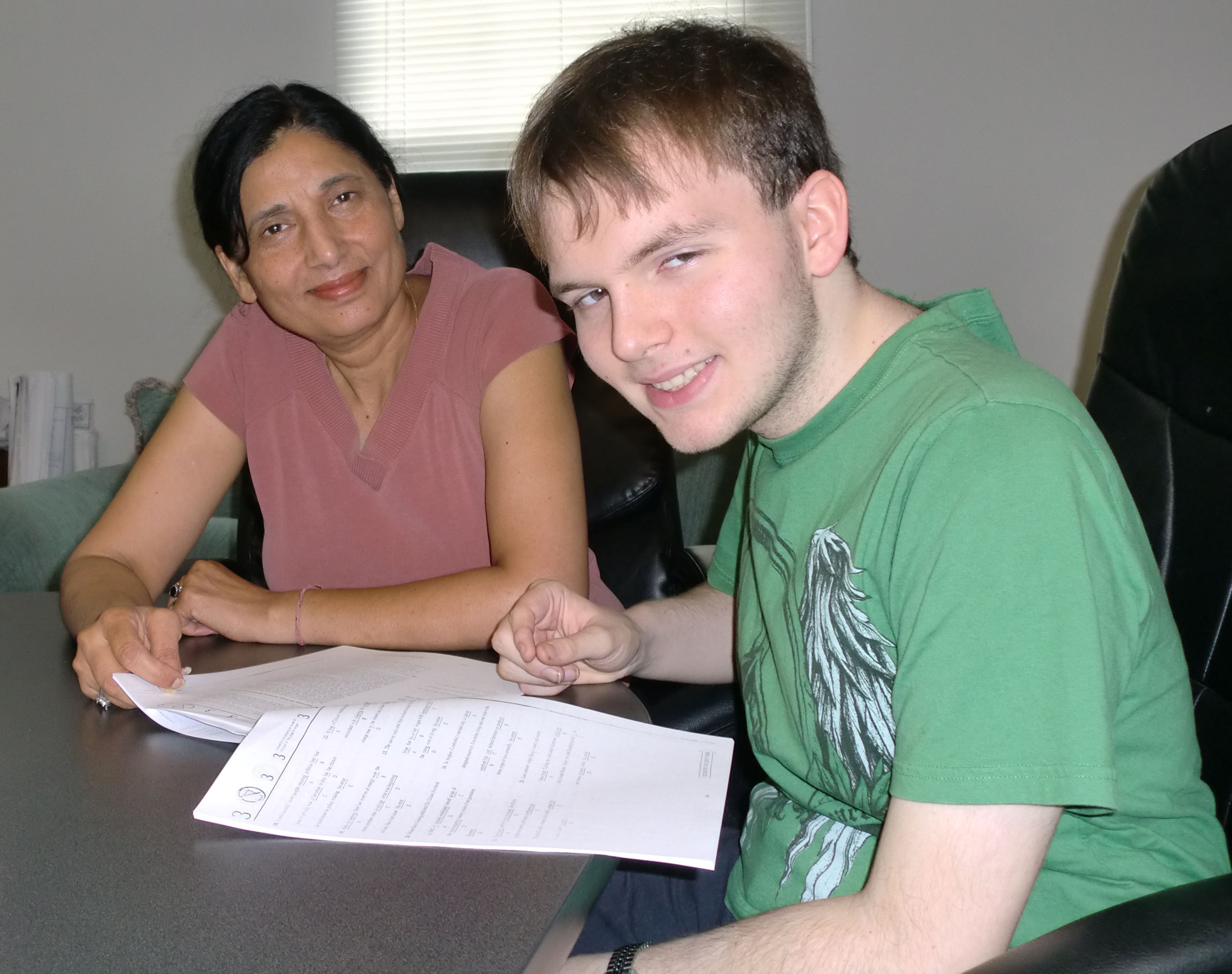
Dr. Anu Sud talks to Robby Fisher, a Durham student participating in the Scientifica program she helped found.
Dr. Anu Sud’s two daughters were accomplished in science by the time they were in high school, in part thanks to coaching by their mother, who had been a cytogeneticist at UNC-Chapel Hill and at LabCorps. The older daughter attended the North Carolina School of Science and Mathematics, and the younger, Shivani, won a $100,000 scholarship in the Intel Science Talent Search and numerous other top science honors when she was a junior and senior at Jordan High School.
When Shivani went off to Princeton, Dr. Sud was like many professional women who interrupt their careers to raise kids: should she return to her former career or try a new path? Then Shivani said to her, “Mom, why not help other kids like you helped us?”
She went to Dr. Carl Harris, then superintendant of Durham Public Schools, and out of their joint vision, she says, Scientifica was founded. This unique program exposes Durham Public School kids to scientific research being conducted at local universities and companies. The kids are mentored by students at Duke and UNC-Chapel Hill and are given the opportunity to conduct research during summer internships.
Now Dr. Sud feels that she has 300 kids—the approximate number who have benefited from Scientifica through internships and science club programs in the last two years.
The program’s mission is to create an environment in Durham schools where excellence in science is fostered. That kind of excellence cannot always be achieved by classroom instruction and book reading.
Students who complete Scientifica internships present their research to fellow students. By excelling in research and public presentation, they become positive role models to their peers.
Many of the undergraduate mentors come from the ranks of A.B. Duke, Robertson, and Morehead Scholars—some of the top students at Duke and UNC. They are able to tell the students how they got to their high level of achievement, which was often by participating in science fairs and other extracurricular programs. Sometimes professors come to talk to classes, and last year, a Duke professor’s lab adopted a middle school classroom for two days, dividing them into small groups and teaching them how to isolate DNA.
The heart of the program is the summer internship program, where students not only complete a research project but learn from mentors how to write up research results and present them to their classmates. The hope is that the student participants will extend the reach of the program by impressing their classmates with how comfortable they’ve become doing research and presenting it publicly.
A grant from the Burroughs Wellcome Fund now offers both the students and their mentors the ability to receive a stipend for their summer of science.
Scientifica is broadening its reach by forming science clubs at many of the public schools and by creating teams to compete in science fairs and other competitions like Envirothon and the International Robotics Competition. For the latter, Durham public high school students joined with peers at the North Carolina School of Science and Mathematics. “It was an amazing experience for our students, both the competition and the partnership with Science and Math,” Dr. Sud says.
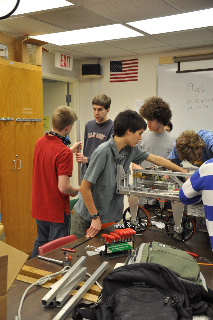
Durham students prepare for the International Robotics Competition. They had six weeks to design and build a robot.
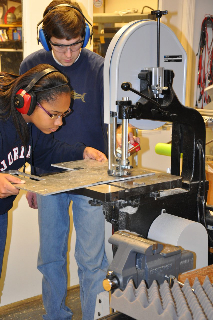
The competition boosted the students' physics and engineering knowledge as well as their interpersonal skills.
Students and their volunteer academic coaches worked after school for five hours every day for six weeks to design and build a robot. Participating in the project was a great way to learn physics, says Dr. Sud. The robot had to navigate a bump, which meant the students had to figure out the size of wheels that could handle that angle. “Things like that you can’t as easily learn in books,” she says.
Working in a group, they also had to develop real-life skills like negotiation and showing your best side, she says.
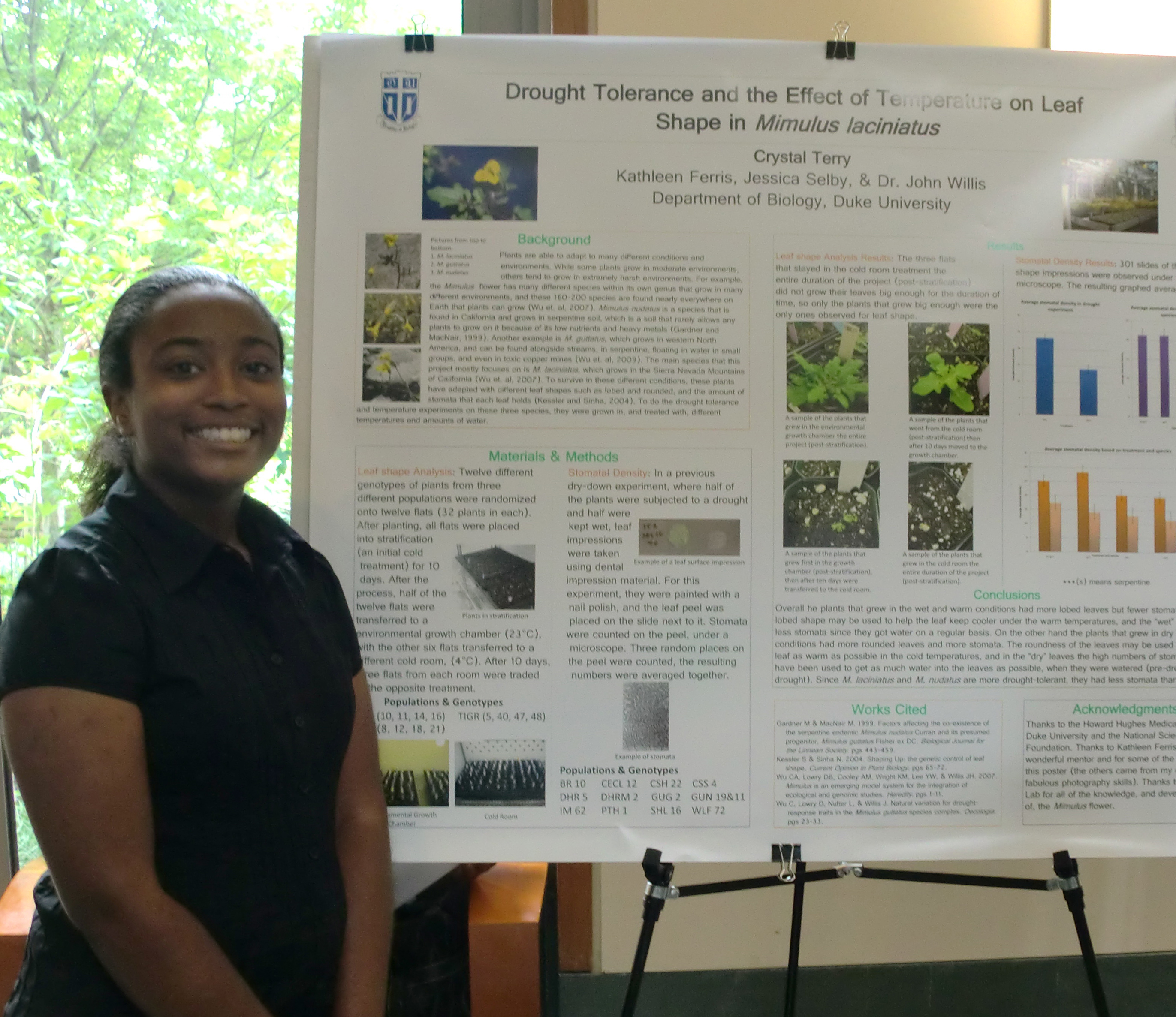
Scientifica’s programs are designed for students who have already shown a commitment to and aptitude for science. Sometimes, those kids need an extra boost, and there are few programs available for them, Dr. Sud says. She remembers a girl in the program, Terry Chrystal, a B student who did research internships two summers in a row at Duke. After the first year, she thought she’d be happy getting into any college. After the second year, she was talking Duke and Yale.
“This program gave her that confidence,” says Dr. Sud.
More information on Scientifica, including application forms, is available here. View a video about the program produced by Durham Public Schools here.


Just the sort of angle on the RTP region that we want SIT to be known for. Thanks.