Author Archive

ScienceOnline2011 – interview with Kari Wouk
Saturday, July 23, 2011, 11:45 am No Comments | Post a CommentContinuing with the tradition from last three years, I will occasionally post interviews with some of the participants of the ScienceOnline2011 conference that was held in the Research Triangle Park, NC back in January 2011. See all the interviews in this series here.
Today I talk to Kari Wouk, Senior Manager of Presentations and Partnerships at the NC Museum of Natural Sciences in Raleigh.
Read more…
ScienceOnline2011 – interview with Jessica McCann
Tuesday, March 29, 2011, 9:20 am No Comments | Post a CommentContinuing with the tradition from last three years, I will occasionally post interviews with some of the participants of the ScienceOnline2011 conference that was held in the Research Triangle Park, NC back in January 2011. See all the interviews in this series here.
Today we chat with Jessica McCann from the Department of Molecular Genetics and Microbiology at Duke.
Welcome to Science In The Triangle. Would you, please, tell my readers a little bit more about yourself? Where are you coming from (both geographically and philosophically)? What is your (scientific) background?
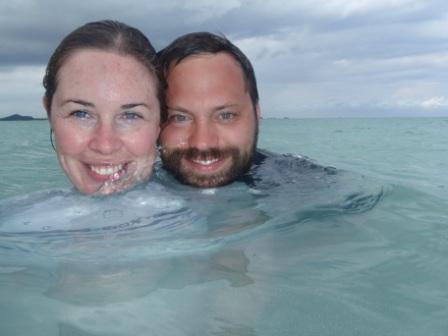
My husband and I moved to NC from Hawaii, where I was studying a bacterial symbiosis between the luminescent bacterium Vibrio fischeri and its squid host. I ended up there after I met my mentor during an undergrad semester at Woods Hole Marine Lab. When the squid-Vibrio lab moved to Wisconsin, we decided to move to NC instead, for two huge reasons: to be close to my husband’s family, and for me to continue graduate school in one of richest (not talkin’ cash) science environments in the country.
So now we live in Chapel Hill, NC, just a couple miles west of Carrboro and we will probably never move. But I was born in Maine, and grew up right on the border between Maine and NH in a little town called Portsmouth. I still spend lots of time up there and really miss it. I do not, however, have a Maine accent. Somehow my sisters and I avoided it, even though both of my parents have it “wicked bad.” When I hear that New England accent on This Old House, though, it feels like someone wrapped warm blanket around me, it reminds me so much of home.
Tell us a little more about your career trajectory so far: interesting projects past and present?
I LOVED my squid-vibrio project in Hawaii, and it got me interested in animal-bacterial relationships. The squid specifically harvests V. fischeri from the million-plus bacteria per milliliter of seawater it sees to make use of the light made by V. fischeri. I like thinking about how we and other animals recognize “good” bacteria from “bad”, and know which ones to harvest and which to repel/destroy.
For my PhD thesis, I studied a very “bad” bacterium, Mycobacterium tuberculosis, and how it pushes proteins out of itself and into you. One of the highlights of my graduate career, though, was when I was writing for Endeavors, a magazine that describes the research and creative activity at UNC. I had some patient, fabulous and hilarious editors and wrote four articles about UNC science faculty there. It was a wonderful experience, and what spurred me into trying to find a “non-traditional” sci career path that includes science writing - which led me to Scio11 (well, first it led me to Scio10, but I had no chance of getting in last year).
What is taking up the most of your time and passion these days? What are your goals?
Now I study Haemophilus influenzae, a bacterium that walks the line between good and bad. Most children have H. influenzae living in their nasal passages/upper respiratory system with no related symptoms. But in some circumstances, usually after a viral infection, H. influenzae causes ear infections, the most common reason for antibiotic prescriptions in the US - as any parent knows, I’m sure. In adults, H. influenzae infections cause severe pneumonia in people with chronic obstructive pulmonary disease.
The thing about H. influenzae, though, is that it doesn’t make any recognizable “virulence factors,” (like the cholera bacteria with it’s toxin for example). It really just gets your immune system to kick up serious inflammation, and its the inflammation that causes all the symptoms we associate with ear infections and pneumonia. I am specifically studying how H. influenzae attaches itself to host cells, both in health and disease. I hope that we might one day block this attachment, and keep noses free from H. influenzae colonization in the first place.
I am also really getting into the ethical questions that arise when scientists set up global biomedical research collaborations. I won’t say too much about it here, as I’m trying to decide on whether to start a blog - there are sooooo many good ones out there already. If I do start one, though, it would be about global science ethics.
What aspect of science communication and/or particular use of the Web in science interests you the most?
I use Twitter to keep up on interesting papers and the evaluation of those papers in the blogosphere. I read science blogs like mad. I am a fan of the open access science publishing movement, and am starting a campaign to get more of my senior colleagues to post comments on research online - it would be amazing to read critical discussions of papers RIGHT BELOW THE PAPER, in the comments section. Yet these comments are still pretty rare, at least in my field.
I also love open access data. Being able to mine someone else’s spreadsheets of how human genes change their expression patterns to respond to bacterial infection, for example, really informs my work and how I decide to proceed with experiments. I am still a n00b when it comes to Mendeley and other online science tools, but can see these becoming more and more critical to how science gets done.
One more thing. I turned to scientist-moms on the internet for advice and support after I had my gorgeous daughter. I seriously don’t think I could have made it through those first months back at work after maternity leave, where 60-80 hour work weeks are expected, without knowing about all the successful, lovely sci moms who had come before. I was one of those women in science who, during grad school, never encountered any bias or hardship due to my being female. I had a great female PI who seemed to have it all - family, great grant success, respect in the community, and was a wonderful mentor to boot. I was like, “it used to be harder for women, but it’s better now!”
But then I started my post doc and had a daughter. Everything changed (I wanted to write “Everything came crashing down,” but that’s a little dramatic, no?). While our little family is humming along now, I still feel like some aspect of work-love-motherhood life is always suffering. Not sure what to do to fix it, though, except maybe pay post-docs more so we can hire people to clean every once and a while. Don’t think the culture will change anytime soon.
How does (if it does) blogging figure in your work? How about social networks, e.g., Twitter, FriendFeed, Facebook and others? How do you intergrate all of your online activity into a coherent whole? Do you find all this online activity to be a net positive (or even a necessity) in what you do?
I am the LEAST organized person I know, so there are no coherent wholes in my life. Just lots of incoherent holes. Heh heh. But I do love Twitter, I love how quickly it moves, and how science discussions get updated over the course of minutes and hours instead of the weeks and months it takes by more traditional routes.
But one of the things I hate about twitter is how quickly it moves. I have about a 20-30 minutes to spend with social media most days in the lab, and there is no way I can click through more than one or two links. When I try to go back and find them at the end of the day, it is impossible and they are lost to me forever (maybe there is an app for storing tweets for later that I don’t know about?).
But blogging and social media aren’t really a part of my work (not yet, anyway). Things are still pretty old-fashioned around here, and we stick to bench work most of the time. The science blogs I read now usually describe work outside of my field - the good ones that condense the latest, coolest research. In my own field, I stick to the primary lit and sometimes seek out opinions on anything controversial from the few experts I know that are online.
When and how did you first discover science blogs? What are some of your favourites? Have you discovered any cool science blogs by the participants at the Conference?
We have had a subscription to Wired forever, so I have been a fan of Steve Silberman for some time. But I got into science blogs first through Carl Zimmer’s books. My husband got me “Evolution: the Triumph of an Idea” and “Parasite Rex” for one particularly geeky birthday, and then his blog was my gateway drug to science blogs in general. One of my favorite things about the conference was learning about all of the great writers and creativity I can now use to feed my addiction: Scicurious, Glendon Mellow’s artwork and tweets, and all the articles on Deep Sea News are a few of the many new additions to my daily routine. The best thing: I was so intimated to know that the people behind all this great work were going to be at Scio11 and I might actually talk to one of them. EVERYONE WAS SO VERY NICE, not to mention smart and witty. It was awesome.
What was the best aspect of ScienceOnline2011 for you? Any suggestions for next year?
I loved the workshop on writing effectively with Ed Yong and Carl Zimmer (“Death to Obfuscation). For a scientist with a very dry writing style and tendency towards passive voice, that workshop was the most helpful. I also loved Robert Krulwhich’s keynote, it was so inspirational. I didn’t get to attend the full Scio10 meeting but was a guest of Burroughs Wellcome for the Monti opening night of story telling, and think that would be an awesome thing to see again next year. I didn’t think the book readings went over all that well, it was too loud and social to really hear the person reading on stage, and that must have been tough for the readers. I do think the readings are a great idea, though, and maybe could be organized around a seated audience?
Is there anything that happened at this Conference - a session, something someone said or did or wrote - that will change the way you think about science communication, or something that you will take with you to your job, or to your science reading and writing?
One of the things that I was ambivalent about (but mostly against) before Scio11 was opening up the peer review process. My reasoning was that peer review makes a finished paper better and, like making sausage, not a process you want to be in on. The panel on open science really made me think twice. Then a few recent papers published in top tier journals had me wondering about the questions the reviewers might have asked and the speed at which this work got published - and wishing I could see the initial reviews. And, for students especially, seeing the nuts and bolts of the review process might help us design better experiments and better research from the get-go. I still believe that reviewers should be anonymous, however. Science is a very, very small world. You might review an author’s work one day and need reagents from that author the next. Not sure this will ever actually come about, though. A generation or two might have to pass before open peer review gets implemented.
Thank you so much for the interview. I hope to see you again soon, and at ScienceOnline2012 in January.
ScienceOnline2011 – interview with David Wescott
Thursday, March 24, 2011, 9:22 am 1 Comment | Post a CommentContinuing with the tradition from last three years, I will occasionally post interviews with some of the participants of the ScienceOnline2011 conference that was held in the Research Triangle Park, NC back in January 2011. See all the interviews in this series here.
Today we chat with Dave Wescott (@wescott1)
Welcome to A Blog Around The Clock. Would you, please, tell my readers a little bit more about yourself? Where are you coming from (both geographically and philosophically)? What is your (scientific) background?
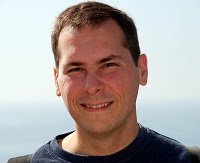 I’ve worked at a big PR firm for over 8 years. I grew up in Boston and I now live in Durham NC. If you’re talking about my philosophy about science communication, I’m more in Neil deGrasse Tyson’s camp than, say, Richard Dawkins’ camp, though I can see the value in both approaches. Politically I’m decidedly left-of-center. My background isn’t in science - it’s in politics, health care management, and strategic communications.
Tell us a little more about your career trajectory so far: interesting projects past and present?
The noteworthy moments in my career focus on the convergence of communities and ideas. When I worked for a public hospital’s pediatrics department in Boston, I organized a group of health care providers to lobby state legislators for better child nutrition provisions in the state welfare law. When I worked for Senator Edward M. Kennedy (D-MA) I focused on things like the intersection of intellectual property and global health, or business incubation and higher education, or energy and economic justice. Now that I work in public relations, I bring mom bloggers on tours of vaccine facilities and connect environmental bloggers with large energy companies. I’ve also done a lot of work in crisis communications - I once led a conference call discussing a plane crash while standing a few hundred feet from a burning train wreck.
What is taking up the most of your time and passion these days? What are your goals?
My true passion is my family. Boston Red Sox baseball is a big deal, too. Beyond that, I want to forge stronger ties between science bloggers and mom bloggers. Online moms have extraordinary power - far more than most people realize. Companies listen to them. Policy makers listen to them. Moms make the overwhelming majority of decisions in life - what to buy, who to vote for, when to get health care, and so on. They do most of the work. They do most of the child-rearing. If moms are making decisions based on the right information and with the right context - the kind of context you can get from science bloggers - the world will be a much better place.
What aspect of science communication and/or particular use of the Web in science interests you the most?
Media convergence. I love watching science writers who have influence in multiple channels - print, broadcast, and online. To me, effective communication is about being where the people are. I’m also interested in developing new ideas of outreach to people who may not have an active interest in science but may develop one if they get the right information under the right circumstances. Darlene Cavalier has been very kind to me in this regard - she lets me write a “best of the science blogosphere” post at Science Cheerleader, where the readership tends to be kids and moms.
How does (if it does) blogging figure in your work? How about social networks, e.g., Twitter, FriendFeed, Facebook and others? How do you intergrate all of your online activity into a coherent whole? Do you find all this online activity to be a net positive (or even a necessity) in what you do?
Blogging is central to my job. I’m a VP in social media for my company and helped establish the practice. As for social networking tools I find Twitter to be very effective. My favorite tool, however, is Delicious - I find enormous power in its simplicity. Organizing and sharing links is an essential task when your job involves interacting with multiple online communities. I’m really upset that Yahoo! may be abandoning Delicious soon.
When and how did you first discover science blogs? What are some of your favourites? Have you discovered any cool science blogs by the participants at the Conference?
I’ve known about science blogs for a long time, but I really got into them after drinking with Jonathan Gitlin at Ars Technica. That dude is brilliant with a capital SMART. I met Jonathan and his wife Elle (also brilliant) at a Drinking Liberally event in Lexington, Kentucky a few years ago and I’ve followed his stuff ever since. He told me about ScienceOnline, and now I’m hooked. I read a ton now but I’m partial to Deborah Blum, Jason Goldman, Chris Mooney & Sheril Kirshenbaum, and Maryn McKenna. I have a young son, so David Orr’s Love in the Time of Chasmosaurs is a must. (More dinosaur pics, please!)
What was the best aspect of ScienceOnline2011 for you? Any suggestions for next year?
I loved the panel on parenting and science blogging - the panelists were outstanding. I did notice that very few people in the room read parenting blogs, however. I’d love to see a panel about outreach to other online communities. The next logical step for science bloggers and science blogging networks is to expand the audience - that will require stepping out of a comfort zone for many.
Is there anything that happened at this Conference - a session, something someone said or did or wrote - that will change the way you think about science communication, or something that you will take with you to your job, or to your science reading and writing?
The one quote that still resonates with me from #scio11 came from Steve Silberman at the panel on “keepers of the bullshit filter.” He said you can’t call bullshit on someone if you’re anonymous. I know this is a sensitive topic for many in the science blogsophere, and some of my favorite science bloggers don’t use their names. But as a PR guy with a political background it’s so important. It goes to the heart of credibility. It drives me nuts when I see so many political ads out there funded by people who don’t want you to know who they are. If I tried to hide my identity or my interests while speaking for a client I’d be slaughtered for it, and rightfully so. If you want to influence people with your writing, I think it’s important to be transparent and to own your words.
Thank you so much for the interview. I hope to see you again soon, and at ScienceOnline2012 in January.
ScienceOnline2011 – interview with Jason Priem
Thursday, March 24, 2011, 9:21 am No Comments | Post a CommentContinuing with the tradition from last three years, I will occasionally post interviews with some of the participants of the ScienceOnline2011 conference that was held in the Research Triangle Park, NC back in January 2011. See all the interviews in this series here.
Today we chat with Jason Priem
Welcome to Science In The Triangle. Would you, please, tell my readers a little bit more about yourself? Where are you coming from (both geographically and philosophically)? What is your (scientific) background?
 Geographically, I’m a Floridian living in the frozen climes of North Carolina. Philosophically, I see my work in improving scholarly communication as the tip of a much bigger iceberg. The biggest current limit on the world-improving potential of science is the inefficiency of our antiquated communication infrastructure. If we can move the scholarly communication system into the current century, we can make science, and thereby the world, a lot better.
Tell us a little more about your career trajectory so far: interesting projects past and present?
I like always doing new things, so I’ve moved around a lot; I was an artist, then a history and english teacher, then a web designer, and now I’m a 2nd-year PhD student in information science. I’ve worked mostly on what a lot of us are calling altmetrics-new ways of measuring scholarly impact that capture more than traditional citation could. So for instance, we’re studying the impact that scientific articles by looking on Twitter, blogs, or in Mendeley or Zotero.
What is taking up the most of your time and passion these days? What are your goals?
Well, I’m doing a number of studies related to altmetrics; right now I’m really excited about altmetrics11, a workshop we’re putting on this summer that will showcase some of the great emerging research into altmetrics. (Shameless plug: we’re still accepting submissions through March; see http://altmetrics.org/workshop2011/).
What aspect of science communication and/or particular use of the Web in science interests you the most?
It’s tough to pick one. But right now I’m incredibly excited about the potential of the web to decouple the traditional functions of the scientific journal. Right now, journals distribute, certify, archive, and register scientific knowledge…but what if we separated those functions out, and let the market improve each one individually?
A service like ArXiv can provide free archiving and distribution. Why not just overlay peer review on top of that, as a service? I could add multiple peer-review “stamps” to the same article. I could even get a peer-review stamp for a blog post I write. As these decoupled services compete, the evolve and diversify; we get a nuanced, responsive, open way to share science.
How does (if it does) blogging figure in your work? How about social networks, e.g., Twitter, FriendFeed, Facebook and others? How do you intergrate all of your online activity into a coherent whole? Do you find all this online activity to be a net positive (or even a necessity) in what you do?
Like a lot of other folks, I find that the speed and ease of Twitter have tended to make my blog posts more thought-out but less frequent. I’m on FriendFeed occasionally because a lot of folks I follow are, but I never entirely cottoned to it…I love the minimalism of Twitter. I’ve also really enjoyed attending some recent conferences via Twitter; I felt more present as a virtual attendee at #beyondthepdf, for example, than I have at other conferences I’ve attended IRL. So social media is not just a net positive, but an essential part of my work.
What was the best aspect of ScienceOnline2011 for you? Any suggestions for next year?
I really enjoyed the sense of community, the open-mindedness, and the energy at SciO. It was great being around so many people for whom “well, we’ve always done it that way” wasn’t an ok answer. I think one improvement I’d suggest would be to make even more use of synchronous technologies like EtherPad to involve participants in sessions in real time. Talking is great, but it’s serial; the online environment lets us add a background of parallel cognition that can really enhance a session.
Is there anything that happened at this Conference - a session, something someone said or did or wrote - that will change the way you think about science communication, or something that you will take with you to your job, or to your science reading and writing?
Well, our altmetrics session was amazing (for me, anyway); there were some really useful ideas and questions that have helped to inform my work since. It was also really great getting to talk with some of the industry folks who are really pushing scholarly communication forward, like Sara from PLoS, Jan and Jason from Mendeley, and Lou from Nature Blogs.
Thank you so much for the interview. I hope to see you again in January.
ScienceOnline2011 – introducing the participants
Friday, January 7, 2011, 9:57 am No Comments | Post a Comment
This is the last post in the series of introductions to the attendees/participants of ScienceOnline2011. A couple of last-minute waitlisters may still squeeze in over the next few days so keep checking the list, but it may help if you get them in smaller chunks, focusing on a few at a time.
Robert Krulwich is a correspondent for NPR’s Science Desk where he hosts the Radio Lab and blogs. He also tweets as @rkrulwich.
Sarah Avery is the Medical reporter and Science editor at the Raleigh News & Observer.
Jacqueline Floyd is an Associate in Research at Yale University. She blogs at Element List and tweets as @jackiefloyd.
Ashutosh Jogalekar has just arrived at UNC Chapel Hill for a Postdoc. He blogs at The Curious Wavefunction.
Billy Frey is the North American Public Relations Manager at Alltech.
David Butler is the Web Marketing Manager at Alltech and he tweets as @AlltechTweets.
Karen Ventii is the Senior Medical Writer for TRM Oncology. I interviewed Karen back in 2008.
Ryan Shalley is an Intern at NC Sea Grant and tweets as @ryanshalley.
Dipika Kohli is the Creative Director of Design Kompany and she tweets as @dipikakohli.
ScienceOnline2011 – introducing the participants
Thursday, January 6, 2011, 8:53 am No Comments | Post a Comment
Continuing with the introductions to the attendees/participants of ScienceOnline2011. You can find them all on the list, but it may help if you get them in smaller chunks, focusing on a few at a time.
Read more…
ScienceOnline2011 – introducing the participants
Wednesday, January 5, 2011, 10:07 am No Comments | Post a Comment
Continuing with the introductions to the attendees/participants of ScienceOnline2011. You can find them all on the list, but it may help if you get them in smaller chunks, focusing on a few at a time.
Read more…
ScienceOnline2011 – introducing the participants
Tuesday, January 4, 2011, 10:21 am No Comments | Post a Comment
Continuing with the introductions to the attendees/participants of ScienceOnline2011. You can find them all on the list, but it may help if you get them in smaller chunks, focusing on a few at a time.
Read more…
ScienceOnline2011 – introducing the participants
Monday, January 3, 2011, 9:22 am No Comments | Post a Comment
Continuing with the introductions to the attendees/participants of ScienceOnline2011. You can find them all on the list, but it may help if you get them in smaller chunks, focusing on a few at a time.
Read more…
ScienceOnline2011 – introducing the participants
Friday, December 31, 2010, 10:11 am No Comments | Post a Comment
Continuing with the introductions to the attendees/participants of ScienceOnline2011. You can find them all on the list, but it may help if you get them in smaller chunks, focusing on a few at a time.
Read more…


