
Epidemiologist tracks environmental clues linked to rising autism rates
Tuesday, December 7, 2010, 9:25 pm 1 Comment | Post a Comment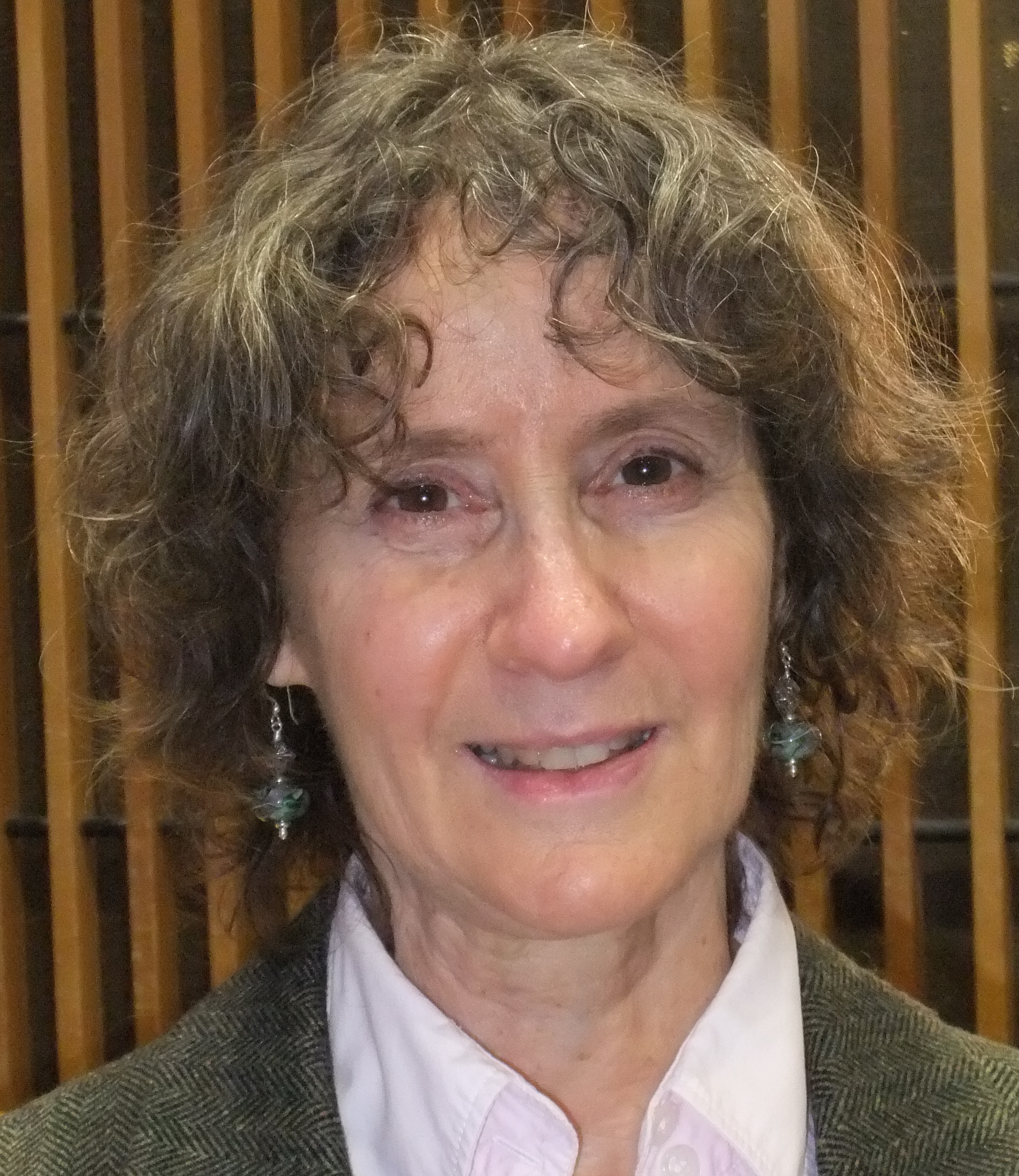
Irva Hertz-Picciotto
Irva Hertz-Picciotto is a slight woman stepping squarely into a brawl: the controversy over rising autism rates.
That the rates have been rising is undisputed. In the 1980s, about 6 of 10,000 were believed to have an autistic disorder, according to a 2007 paper. Today, autism spectrum disorders affect about 40 in 10,000. That’s a 600 percent increase, but opinions differ over what’s causing the increase.
Many researchers see forms of autism as predominantly inherited disorders whose diagnoses have dramatically increased, because parents have become more aware of telltale signs and children get diagnosed earlier, more frequently and with less severe symptoms than 30 years ago.
Others like Hertz-Picciotto, a professor of public health sciences at the University of California at Davis, aren’t so sure genes are the only culprits. But lacking data, they have had little to go on beyond questioning inconsistencies. How, for example, can it be that one identical twin has an autistic disorder but the other doesn’t, even though they share the same genetic information?
Also, at least one-third of the increase in prevalence has not been explained by higher awareness and a broader definition of autistic disorders, Hertz-Picciotto said Monday during a presentation at the National Institutes of Environmental Health Sciences in Research Triangle Park.
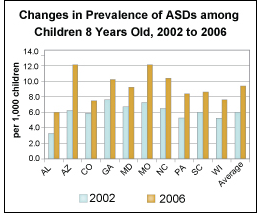
Source: Centers for Disease Control and Prevention
Considering the rapid rise of not only autistic disorders, but also asthma, obesity, diabetes and attention deficit hyperactivity disorder among children, she wondered whether there is “possibly a common set of environmental exposures that provides a unifying explanation for increased incidences of these conditions in recent decades?”
She was fully aware posing the question might open her up to criticism. “This is a little bit of a hot-button issue,” she said.
How hot, she found out last year when she suggested researchers should look for environmental culprits responsible for the increase in the autism rate in California. Her comment was part of a press release UC Davis issued after the publication of an analysis she and UC Davis programmer Lora Delwiche wrote on the rise in autism and the role of age at diagnosis. (Criticism in response to the statement here and here.)
Hertz-Picciotto, who studied effects of environmental exposures during prenatal development while she taught at the University of North Carolina at Chapel Hill in the 1990s, has become well known for her autism research. As a member of the UC Davis MIND Institute, she has been involved in two groundbreaking autism studies known as the CHARGE study and the follow-up MARBLES study.
CHARGE, which stands for childhood autism risk from genetics and the environment, started enrollment in 2003 to fill some large knowledge gaps in autism research.
“We know something about genes, but not which ones are the important ones,” Hertz-Picciotto said. “We know very little about the environment.”
So far, the CHARGE study has produced the following clues:
- Mercury and polybrominated diphenyl ethers or PBDEs, which are used as flame retardants on drapes and furniture fabrics, don’t seem to elevate the risk, but some pesticides do. (The pesticide results have not been published yet.)
- Maternal nutrition seems to make some difference, especially prenatal folic acid. (Results have also not been published.)
- Air pollution, unplanned Cesarean deliveries, maternal diabetes, obesity and hypertension and maternal fevers may also increase the risk, but data collection is still under way.
Also, a study by other autism researchers suggested autism may be linked to maternal immune responses, such as inflammation and immune disorders. Up to 12 percent of the mothers of kids with autistic disorders produce specific antibodies to fetal brain antigens. Based on the immunological research results, Hertz-Picciotto suggested to investigate immunological toxins, not just neurotoxins.
The CHARGE and MARBLES studies are being conducted in California, a state with a rich epidemiological database of autistic disorder diagnoses. Researchers in Pennsylvania and Maryland participate in the CDC’s EARLI study, which follows 1,200 mothers of children with autism at the start of another pregnancy and documents the newborn child’s development through three years of age.
At UNC-CH, research involving fruit flies has advanced understanding of autism.


Although the majority of the prevalence in autism has mostly been due to the alteration of the definition in the 90s, it is definitely undeniable that it has increased. As well, it is easy to believe that given the changes in the environment that we are guilty of the increase of diagnosis of autism. Great article.