
Does the FDA ensure that nanotech medicines are safe?
Sunday, May 22, 2011, 11:35 pm No Comments | Post a CommentNanotechnology promises to make medicines more effective, reduce side effects and allow earlier diagnoses of diseases. But nanotechnology also raises multiple questions most of which, for now, remain unanswered.

Katherine Tyner
When the N.C. Center of Innovation for Nanobiotechnology, also known as COIN, brought together a panel of regulatory experts in Research Triangle Park, several entrepreneurs and developers sought guidance on how to develop safe and effective nanotechnology products, especially from panel member Katherine Tyner, a chemist who heads a small nanotechnology research group at the Food and Drug Administration’s Center for Drug Evaluation and Research.
Understanding FDA requirements is crucial to get new drugs and medical devices approved for sale, but the FDA doesn’t have specific guidelines for nanotechnology. The agency doesn’t even have an official definition for nanotechnology, Tyner said. To assess safety risks of a nanotechnology product and whether it works, regulators apply existing guidelines for products without nanotechnology on a case-by-case basis.

Lawrence Tamarkin
It’s a system that works, said Lawrence Tamarkin, chief executive of CytImmune, a Rockville, Md.-based nanomedicine company, who also sat on the COIN panel on May 17.
Tamarkin suggested the great variety in nanotechnologies doesn’t lend itself to common guidelines. “It’s better the way we do it now,” he said.
Tyner, who researches drug safety but doesn’t review requests to approve nanotechnology products for sale, listed about two dozen medicines, cosmetic products and contrast agents for diagnostic tools that use nanotechnology and have passed muster with the FDA in the past 15 years.
But the list didn’t go over well with Jamie Oliver, a pharmacist and the chief executive of Peptagen, a Raleigh startup working on a nasal spray that delivers nanoparticle vaccines. Oliver, who sat in the audience during the COIN panel, shook his head when asked about Tyner’s FDA-approved nanomedicines list.
“No true nanoparticle [drug] is on the market,” he said.
Nanotechnology has been used for years in material science, electronics and cosmetic products, according to the National Nanotechnology Initiative. Nanoparticles make tennis rackets stronger, fabric wrinkle-free and camera lenses self-cleaning. Engineers have shrunk resistors to nanoscale to make computers smaller and more powerful.
Nanotechnology is also used to make batteries more efficient and to power mobile devices. A nanofabric paper towel cleans up 20 percent more spilled crude oil in an environmental cleanup. Many sunscreens, shampoos and lotions contain nanoparticles.
Though the applications are diverse, they all have one thing in common: The technology is generally only called nano when it measures between 1 nanometer and 100 nanometer.
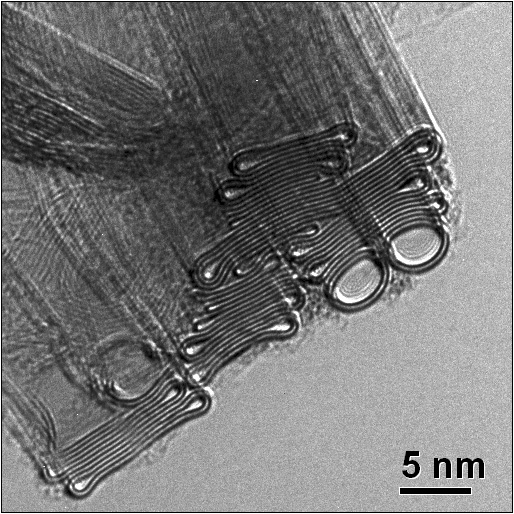
Single-walled carbon nanotubes
One nanometer is about 100,000 times smaller than a hair is thick. Hemoglobin, the oxygen-transporting protein in red blood cells, fits the official nanoscale, so does HIV, the virus that causes AIDS, and the width of a cell membrane. Single-walled carbon nanotubes and nanosilver are also true nanoparticles.
XinRay Systems, a medical device startup in RTP, uses carbon nanotubes-studded film to develop X-ray machines that are faster and more accurate. (More about XinRay Systems here.)
Nanosilver is a natural germ killer and is used in anything from pacifiers to sunscreen.
Lacking a definition for nanotechnology, the FDA considers even structures ten times larger than 100 nanometer as nanoparticles, such as liposomes, man-made vessels that are filled with drugs. Liposomes tend to measure more than 1,000 nanometers.
But size is crucial to nanotechnology. Richard Feynman, the father of nanotechnology, pointed that out in 1959. In “There’s Plenty of Room at the Bottom,” Feynman wrote that in a very, very small world, “we are working with different laws, …, we have new kinds of forces and new kinds of possibilities, new kinds of effects.”
Half a century later, researchers have just begun to look into some of those forces and effects that only occur on a true nanoscale.
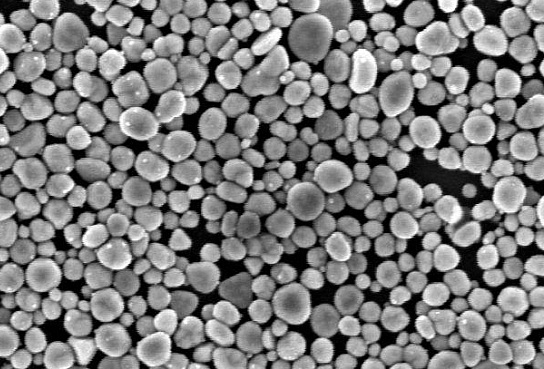
Nanosilver particles
Case in point: nanosilver.
Products that use nanosilver as an antibacterial contain silver particles that are 10 nanometers and 50 nanometers, but also silver particles that are much larger. Nanosilver was considered safe enough to be used in baby products, such as blankets, pacifiers and bottles.
But a 2008 study by researchers from the University of Connecticut’s Center for Environmental Sciences and Engineering raised concerns that loose nanosilver could compromise the human immune system. The smaller particles had that effect but not the larger ones, according to a ScienceNews report.
Since then, the Environmental Protection Agency has started to study the effects loose nanosilver has on the environment. (More on a petition to have nanosilver declared a pesticide here.)
So without a definition for nanotechnology in place, will the FDA catch potential safety risks that are specific to particle size?
Tyner presented an FDA that is very confident in the way it regulates nanotechnology products. But research projects under way at the FDA suggest regulators worry about missing clues for potential risk factors. Researchers at the agency are working on improved methods and tools to detect and measure nanomaterials and assess their safety and efficacy. And they’re developing class-based approaches to risk assessment of nanotechnology products.


