Posts Tagged ‘FDA’

NC biotech industry eyes unique chance to shape the FDA
Saturday, October 15, 2011, 8:48 pm No Comments | Post a CommentGov. Beverly Perdue’s announcement that a California biotech will set up shop in North Carolina’s Research Triangle was a welcome but short-lived diversion Wednesday during the annual meeting of the North Carolina Biosciences Organization in Research Triangle Park.

Paul Maier, Sequenom's chief financial officer, and Gov. Beverly Perdue face the TV cameras following Perdue's announcement that San Diego-based Sequenom will open a large lab in the Research Triangle.
Sequenom, a San Diego-based diagnostics company, plans to open a lab on Kit Creek Road next year and start analyzing blood samples from a new, prenatal blood test to detect Down Syndrome. The test would replace more invasive measures such as amniocentesis, which employs a long needle to sample amniotic fluid from inside the uterus.
Sequenom will invest $18.7 million and create up to 242 jobs.
The standing-room-only audience in the N.C. Biotechnology Center auditorium gave Paul Maier, Sequenom’s chief financial officer, a round of applause before Maier and Perdue faced the TV cameras and reporters outside.
Then, the biotech executives inside the auditorium went back to the unique chance that presents itself next year to shape the U.S. Food and Drug Administration.
Andrew von Eschenbach, former FDA commissioner and NCBIO’s keynote speaker, left no doubt that nothing short of a radical therapy will do.

Andrew von Eschenbach
“We’re approaching a crisis situation [in the U.S.] as far as being at the forefront of innovation,” Eschenbach said. The FDA is “in need of a systematic, systemic and formal revision. The moment for modernization is now.”
The FDA has been under close public scrutiny since 2004, when Vioxx was linked to thousands of sudden cardiac deaths before Merck pulled the pain killer off the market.
In 2009, a report released by the Government Accountability Office, the investigative arm of Congress, listed the FDA at risk of failing to fulfill its mission. Chronic underfunding, expanding responsibilities and an aging workforce that wasn’t keeping up with the rapidly advancing science hobbled the agency.
In July, FDAImports.com, a blog written by regulatory consultants, published information that suggested FDA Commissioner Dr. Margaret Hamburg was restructuring the agency’s top management tier. As a Washington Post profile pointed out, Hamburg, a Harvard-trained physician and former New York City health commissioner, had no ties to the pharmaceutical industry when President Obama appointed her.
With changes already under way at the FDA, it could become a watershed year.
In 2012, renewal of the Prescription Drug User Fee Act, or PDUFA, is up. Enacted in 1992, PDUFA established a funding mechanism for the FDA to regulate new medical products and make sure they are effective and do no unnecessary harm. The federal law has been subject to changes every five years, when Congress had to renew it to keep the system going.
The potential for significant changes is particularly large in 2012, because PDUFA for the first time is due for renewal during a presidential election year. And what a turbulent election year it promises to be four years into stubbornly high unemployment, ongoing banking crises and steep government budget cuts.
“This is going to create some interesting politics in Congress,” said J.C. Scott, the head lobbyist for AdvaMed, a trade association representing the medical device and technology industry. Scott was one of several NCBIO speakers addressing regulatory policy recommendations for overhauling the FDA.
Lobbyists for the biotech, pharmaceutical and medical device industries are not about to pass up this opportunity.
Young and small companies are getting squeezed by a lack of innovation capital. (More on innovation that isn’t being funded here.) Facing stagnant research and development productivity and the expiration of valuable drug patents in the U.S., large drugmakers have been cutting jobs for years. (More on the lack of big pharma R&D productivity here.)
The Biotechnology Industry Organization, or BIO, has already drawn up a wish list of changes. According to Cartier Esham, BIO’s senior director of emerging companies, health and regulatory affairs, who also spoke at NCBIO’s annual meeting, policy items on the list include:
- a fixed six-year term for the commissioner,
- the use of electronic health records and smart phones in clinical trials,
- faster approval of products for unmet medical needs similar to how European regulators do it,
- improved advisory committees,
- the establishment of chief medical policy officer positions and
- setting up the FDA with an independent budget. (The FDA is now funded under the U.S. Department of Agriculture.)
“It is our intent,” Esham said, “to get as many of these [policy changes] enacted into legislation as possible.”
Does the FDA ensure that nanotech medicines are safe?
Sunday, May 22, 2011, 11:35 pm No Comments | Post a CommentNanotechnology promises to make medicines more effective, reduce side effects and allow earlier diagnoses of diseases. But nanotechnology also raises multiple questions most of which, for now, remain unanswered.

Katherine Tyner
When the N.C. Center of Innovation for Nanobiotechnology, also known as COIN, brought together a panel of regulatory experts in Research Triangle Park, several entrepreneurs and developers sought guidance on how to develop safe and effective nanotechnology products, especially from panel member Katherine Tyner, a chemist who heads a small nanotechnology research group at the Food and Drug Administration’s Center for Drug Evaluation and Research.
Understanding FDA requirements is crucial to get new drugs and medical devices approved for sale, but the FDA doesn’t have specific guidelines for nanotechnology. The agency doesn’t even have an official definition for nanotechnology, Tyner said. To assess safety risks of a nanotechnology product and whether it works, regulators apply existing guidelines for products without nanotechnology on a case-by-case basis.

Lawrence Tamarkin
It’s a system that works, said Lawrence Tamarkin, chief executive of CytImmune, a Rockville, Md.-based nanomedicine company, who also sat on the COIN panel on May 17.
Tamarkin suggested the great variety in nanotechnologies doesn’t lend itself to common guidelines. “It’s better the way we do it now,” he said.
Tyner, who researches drug safety but doesn’t review requests to approve nanotechnology products for sale, listed about two dozen medicines, cosmetic products and contrast agents for diagnostic tools that use nanotechnology and have passed muster with the FDA in the past 15 years.
But the list didn’t go over well with Jamie Oliver, a pharmacist and the chief executive of Peptagen, a Raleigh startup working on a nasal spray that delivers nanoparticle vaccines. Oliver, who sat in the audience during the COIN panel, shook his head when asked about Tyner’s FDA-approved nanomedicines list.
“No true nanoparticle [drug] is on the market,” he said.
Nanotechnology has been used for years in material science, electronics and cosmetic products, according to the National Nanotechnology Initiative. Nanoparticles make tennis rackets stronger, fabric wrinkle-free and camera lenses self-cleaning. Engineers have shrunk resistors to nanoscale to make computers smaller and more powerful.
Nanotechnology is also used to make batteries more efficient and to power mobile devices. A nanofabric paper towel cleans up 20 percent more spilled crude oil in an environmental cleanup. Many sunscreens, shampoos and lotions contain nanoparticles.
Though the applications are diverse, they all have one thing in common: The technology is generally only called nano when it measures between 1 nanometer and 100 nanometer.
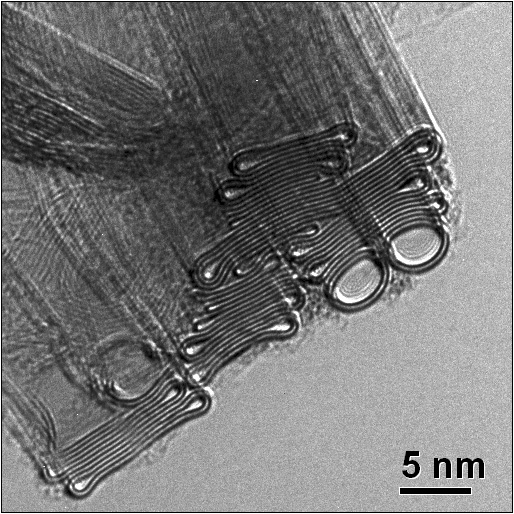
Single-walled carbon nanotubes
One nanometer is about 100,000 times smaller than a hair is thick. Hemoglobin, the oxygen-transporting protein in red blood cells, fits the official nanoscale, so does HIV, the virus that causes AIDS, and the width of a cell membrane. Single-walled carbon nanotubes and nanosilver are also true nanoparticles.
XinRay Systems, a medical device startup in RTP, uses carbon nanotubes-studded film to develop X-ray machines that are faster and more accurate. (More about XinRay Systems here.)
Nanosilver is a natural germ killer and is used in anything from pacifiers to sunscreen.
Lacking a definition for nanotechnology, the FDA considers even structures ten times larger than 100 nanometer as nanoparticles, such as liposomes, man-made vessels that are filled with drugs. Liposomes tend to measure more than 1,000 nanometers.
But size is crucial to nanotechnology. Richard Feynman, the father of nanotechnology, pointed that out in 1959. In “There’s Plenty of Room at the Bottom,” Feynman wrote that in a very, very small world, “we are working with different laws, …, we have new kinds of forces and new kinds of possibilities, new kinds of effects.”
Half a century later, researchers have just begun to look into some of those forces and effects that only occur on a true nanoscale.
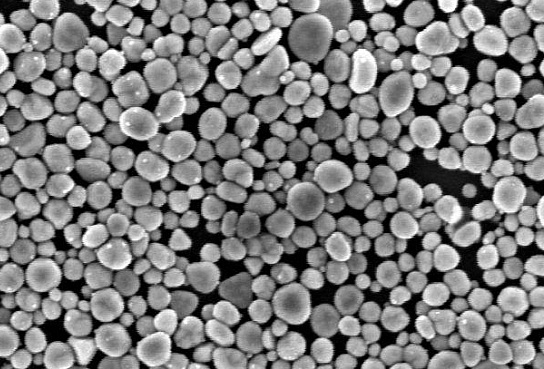
Nanosilver particles
Case in point: nanosilver.
Products that use nanosilver as an antibacterial contain silver particles that are 10 nanometers and 50 nanometers, but also silver particles that are much larger. Nanosilver was considered safe enough to be used in baby products, such as blankets, pacifiers and bottles.
But a 2008 study by researchers from the University of Connecticut’s Center for Environmental Sciences and Engineering raised concerns that loose nanosilver could compromise the human immune system. The smaller particles had that effect but not the larger ones, according to a ScienceNews report.
Since then, the Environmental Protection Agency has started to study the effects loose nanosilver has on the environment. (More on a petition to have nanosilver declared a pesticide here.)
So without a definition for nanotechnology in place, will the FDA catch potential safety risks that are specific to particle size?
Tyner presented an FDA that is very confident in the way it regulates nanotechnology products. But research projects under way at the FDA suggest regulators worry about missing clues for potential risk factors. Researchers at the agency are working on improved methods and tools to detect and measure nanomaterials and assess their safety and efficacy. And they’re developing class-based approaches to risk assessment of nanotechnology products.
RTP Wrapup 2/26
Friday, February 26, 2010, 12:22 am No Comments | Post a CommentA Senate committee report blasts GlaxoSmithKline for being more concerned about the sales of Avandia than about possible serious cardiovascular risks associated with the blockbuster diabetes pill. Also, two Research Triangle area companies developing new drugs sign deals.
FDA exec hails new drug safety center
Thursday, June 11, 2009, 7:07 pm No Comments | Post a CommentI was one of about two dozen visitors Thursday who took a first look at the new Hamner Institute for Drug Safety Sciences. Also among the visitors was Janet Woodcock, a Food and Drug Administration top executive who oversees the approval and regulation of all U.S. medicines. Woodcock called the opening of the 14,000-square-foot research laboratory in Research Triangle Park a “milestone in drug safety regulation.”


