Archive for March, 2011

Local technology drives mobile medical sim
Monday, March 14, 2011, 11:50 am No Comments | Post a Comment
Watch Virtual Heroes developer Juan Collado demonstrate HumanSim on an iPad. | Video by Tyler Dukes
As he piloted his Army Apache toward his landing zone, Jerry Heneghan knew he was in trouble.
Without warning, one of his helicopter’s twin engines began belching flame into the night sky, threatening to set the entire aircraft ablaze. Without thinking, he acted in the pitch black of the cockpit, flipping switches by feel and following procedures as he’d done hundreds of times before. There was no hesitation, no surge of adrenaline.
At least until he landed.
“It was only afterwards when I got the aircraft on the ground that I was like, ‘Oh my God, what just happened? I could have turned extra crispy up there,’” Heneghan said.
His survival had nothing to do with good fortune. Before ever stepping foot in a $20 million cockpit, he underwent an intensive training regimen that spanned a gamut of learning techniques from low-tech cockpit posters to full-motion flight simulators housed in gymnasium-sized facilities.
“I know that being in a simulator for thousands of hours over a 15-year career saved my life,” he said. “The time that I should have been most panicked, I was very calm.”
Heneghan, now the managing director of Raleigh-based game developer Virtual Heroes, is out to bring that simulated training approach to doctors, nurses and even combat medics. And he wants to put this training in their pockets. By building on local gaming technology and medical expertise, Virtual Heroes’ upcoming HumanSim aims to allow medical professionals at all levels to hone their skills almost anywhere — whether it’s on the iPad or the PC. Read more…

RF radiation harmful to humans? Sent on my iPhone.
Saturday, March 12, 2011, 12:08 am 2 Comments | Post a CommentCell phones continue to become more and more prevalent, but so does a debate in the scientific community as to whether they do more harm than good.
That’s why the National Toxicology Program (NTP), a subset of the National Institute of Environmental Health Sciences based in Research Triangle Park, is studying the effects of cell phone, or radiofrequency (RF), radiation on animals.
So far, there is no evidence to suggest any short- or long-term damage to humans, said Dr. Mike Wide, an NTP toxicologist involved in the study. There are two types of radiation, he said: ionizing and non-ionizing.
“Ionizing is what most people are familiar with,” Wide said. “Things like X-rays and nuclear bombs.” Ionizing radiation will strip electrons away from atoms and molecules and thus has the potential to cause ionic damage in tissue.
Meanwhile, non-ionizing radiation—which includes radiofrequencies—is much lower in intensity and does not endanger ions. It can heat things up, though.
“When the power level gets high enough, eventually the RF radiation energy starts to excite molecules and creates heat, like a microwave,” Wide said. “Increase someone’s body heat enough, and you’re eventually going to have a body of problems.”
This is called the thermal effect. Wide said although the potential for such damage exists, there is currently no reason to believe RF radiation could harm human tissue.
Not all his colleagues share this belief. Wide was part of a cell phone radiation expert panel that testified before Congress in 2009. Dr. Devra Davis of the Environmental Health Trust was another panelist.
Davis said the evidence clearly shows cell phones cause physiological harm in humans.
The thermal effect created by the phones can alter brain metabolism and glucose, she said. This could be especially detrimental to children, whose brains are still developing and who absorb twice as much radiation as adults.
There could be sexual side effects, too. Davis said there is a 50 percent reduction of sperm count in young men who keep cell phones in their pockets for four hours a day.
“Just by keeping it in your pocket, you exceed the FCC limit,” she said in reference to the Federal Communications Commission’s standard on cell phone radiation emission rates.
Currently, the maximum Specific Absorption Rate (SAR) for commercial cell phones is 1.6 megawatts per kilogram (MW/kg), a number developed in 1996 on recommendations by top scientific agencies like the EPA and the FDA. This rate measures the amount of radiation that is absorbed over one gram of tissue when the phone is using its maximum power, explained Wide.
Phones are rarely using their maximum power and this SAR ceiling is well below the threshold for actual bodily harm from radiation, said Bruce Romano, associate chief of the FCC’s office of engineering and technology.
“It’s a safety mark intentionally set that low,” Romano said. “Artificially low, even.”
The phones, he said, would have to emit much more than 1.6 MW/kg of RF radiation to cause any acute human damage, so everything below that level is safe. Some mistakenly assume a SAR of 1.2 is safer than a SAR of 1.4; however, as long as they’re below 1.6, all SARs are equally safe, he said.
“If you’re moving under a 12 foot bridge, what’s the difference between a nine and ten foot truck?” Romano said. “They both fit under.”
Davis argues the best way to reduce the risk of harmful radiation is to use a head-set or turn on the speakerphone. She helped found the Global Campaign for Safer Cell Phones, along with CNN medical commentator Dr. Sanjay Gupta.
The campaign advises against regular use and carry of cell phones and advocates safer model designs. Yet, Romano is not sure better designs are the answer.
“At this point, they’ve probably done everything they can do design-wise,” he said. “The next thing would be to lower the power, but then it doesn’t work as well or you need more base stations.”
What Wide points out is that the FCC’s standards are based on protection from acute injury. They are not designed to guard against long-term effects from repeated low-level exposure to thermal energy.
“That’s one of many reasons why we’re interested in this study,” Wide said, explaining that current regulations are not based in real life data, as far as the way people are using cell phones. He said 85 percent of Americans and four billion people worldwide use cell phones regularly.
“Even if there’s a small effect, with so many using them, it could affect a lot of people,” he said. “It will definitely remain an issue for several more years to come.”
Davis, on the other hand, said the time to act is now. Changes must be made to shield the younger generation from chronic exposure.
“We do not have the answers, but when should we have asked against tobacco or asbestos?” she said. “If we have to wait on proof for cell phones like with these, we’ll end up with dead bodies, of our children and grandchildren.”

Practice Makes Perfect: NC TraCS sponsors first-ever practice-based research conference in the state
Thursday, March 10, 2011, 1:49 am No Comments | Post a CommentImproving health is a scientific process. For physicians to improve the way they deliver health care – to truly understand what works and what doesn’t — they have to study it. This idea of medicine as a work-in-progress was a theme of the first North Carolina Conference on Practice-Based Research, held Friday, March 4, in Chapel Hill.
Co-sponsored by the North Carolina Network Consortium (NCNC) and the NC Translational and Clinical Sciences (NC TraCS) Institute, home of the Clinical and Translational Science Awards (CTSAs) at UNC, the conference brought together over 100 primary care providers, clinic staff and research coordinators from across the state to discuss the kind of studies practice-based research networks can conduct to improve health care.
“The new treatments that come out all the time from drug companies, device makers, or even things we do in clinic, require testing and evaluation prior to widespread adoption,” said Rowena Dolor, M.D., M.H.S., director of the Duke Primary Care Research Consortium, one of six practice-based research networks in the NCNC. “What we do know though is once a new drug or device is out on the market, there is widespread variation in how it is used in clinical care. And despite good intentions, not all treatments benefit patients. For example, we didn’t realize the COX2 inhibitors that were meant to relieve arthritis pain would also increase the risk of heart attack or stroke. That is why research is necessary.”
Read more…

Pest control from spoiled milk
Wednesday, March 9, 2011, 5:21 pm 1 Comment | Post a CommentThis spring, U.S. farmers are planting corn fortified with a new genetic weapon against hungry caterpillars: A chemical that an entomologist in North Carolina’s Research Triangle Park found 18 years ago in a batch of spoiled milk from his refrigerator.
The chemical is a protein that works like a natural insecticide. It is made by a bacterium that lives in the soil.

Greg Warren
Bacillus thuringiensis has long been known as a natural pest control. Agricultural chemical giants Monsanto, Dow, Syngenta and BASF have borrowed genetic material from the bacterium to protect crops from insect damage.
But the protein that Greg Warren discovered in the spoiled milk was different from anything that was known or used in agricultural pest control. He tried it on cutworms, caterpillars that chew through the stems of seedlings. It worked.
“They take a bite, they die,” said Warren, a bench-scientist-turned-patent-lawyer at Syngenta’s corporate biotech research hub in RTP.
Genetic engineering, manipulating genetic material in ways that don’t happen naturally, can be as controversial as it is common. Genetic engineering has brought about animals that researchers use to better understand human diseases, animals and plants that produce medicines and agricultural crops that tolerate drought and weed killers, control harmful insects and even produce an extra vitamin.
A year ago, the U.S. Department of Agriculture cleared the genetic trait Warren discovered for commercial use and Syngenta packaged it with other traits in genetically engineered corn seeds that it started selling last fall under the name Viptera.
“It’s a big deal in terms of sustainable pest control,” said Fred Gould, professor of agriculture at N.C. State University. It provides a novel defense against pests that have gotten used to the plants’ old weapons and new pests that moved in once the competition was gone.

Bacillus thuringiensis with spore and crystals
The older bacillus thuringiensis pest control trait, also known as the Cry gene, has been around since 1985 and is in nearly 20 percent of all biotech crops.
The rod-shaped bacterium activates the Cry gene at the end of its life. Just before it dies, it makes a spore to produce offspring and an endotoxin in the shape of diamond crystals to ward off pests.

Strings of bacilli thuringiensis
Earlier in its life cycle, when it divides into what looks like strings of beads, bacillus thuringienses also makes chemicals that act as bioinsecticides. They are called vegetative insecticide proteins or VIPs and are more powerful than endotoxins.
In the early 1990s researchers knew very little about VIPs beyond the fact that they existed, Warren said. “It was an area that hadn’t been explored.”
Warren, who in 1989 had joined Ciba-Geigy’s labs in RTP, wanted to find them. He took dozens of samples, of plants, dust and soil, to isolate bacteria, but none produced a chemical that killed cutworms. His managers at Ciba-Geigy and researchers at universities weren’t very hopeful.
They told him, “You’re crazy, you’re not going to find anything,” Warren recalled.
He didn’t listen. In 1993, he tested a sample of spoiled milk he had brought from home and found a bacillus thuringiensis strain in it. When he cultivated the bacteria and fed the liquid they had thrived in to cutworms, the caterpillars died.
“Out of contaminated food, we found a blockbuster product,” Warren said.
So why did it take 18 years to come to market?
“This is a very unique protein that has very unique properties,” Warren said. “It took time to figure out all those properties.”
Also, it didn’t help that the development of the VIP trait coincided with two large mergers, he said. Again and again, he had to convince superiors to continue funding the research.
In 1996, Ciba Geigy and Sandoz merged to become Novartis. Four years later, Novartis and AstraZeneca merged their agricultural business and formed Syngenta. Warren went to law school to become a patent lawyer the same year the second merger happened. Eric Chen, Warren’s successor as the head of Syngenta’s biostress traits group, oversaw the lab work to make the bacterial VIP gene acceptable to the corn plant.
Last year, Syngenta’s VIP trait won an international award for best novel agricultural biotech product and Michael Mack, the Swiss company’s chief executive, said in an interview with BusinessWeek that Viptera provides Syngenta a chance to challenge Monsanto, the market leader in genetically engineered crop seeds.
How energy alternatives can make us safer and healthier
Sunday, March 6, 2011, 8:21 pm 1 Comment | Post a CommentThe fiscal fight over monitoring greenhouse gases raged on Capitol Hill while more than 100 people gathered at N.C. State University Thursday and Friday to explore whether we dismiss the fallout from our fossil fuel dependency at our own peril.
Attendees of the two-day conference, which was partly sponsored by the U.S. Army War College, didn’t exactly make for a treehugging crowd. They included security analysts from Fort Bragg, economists, energy consultants to large investors and governments, former oil industry executives and scientists developing alternatives to oil and coal.
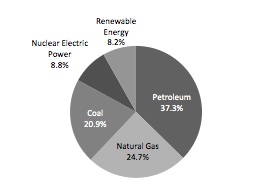
2009 U.S. energy consumption by source, U.S. Environmental Protection Agency
That greenhouse gases are taking a toll on climate, environment and health was never in question during the conference. Indeed, speakers expounded on the costly consequences that U.S. dependency on fossil fuels has on healthcare at home and defense overseas.
James Bartis, a senior policy researcher with the RAND Corp., a global policy think tank with an office in the Middle East emirate of Qatar, was one of the speakers at the conference. In testimony before the U.S. Senate Committee on Energy and Natural Resources two years ago, Bartis urged that there was “a compelling need to reduce greenhouse gas emissions” and a need for research on technologies that would allow us to use less oil, coal and natural gas, the three fossil fuels linked to almost 90 percent of the emissions.
At the NCSU conference, where he participated on a panel of alternative energy experts, Bartis was asked why lawmakers aren’t heeding his advice more. “There’s a lot of money to be had [with fossil fuels] and there’s a lot of inertia,” he responded.
 About 83 percent of the U.S. economy runs on fossil fuels and Alan Hegburg, a senior fellow at the Center for Strategic and International Studies and the conference’s keynote speaker, didn’t expect much will change the next 10 years.
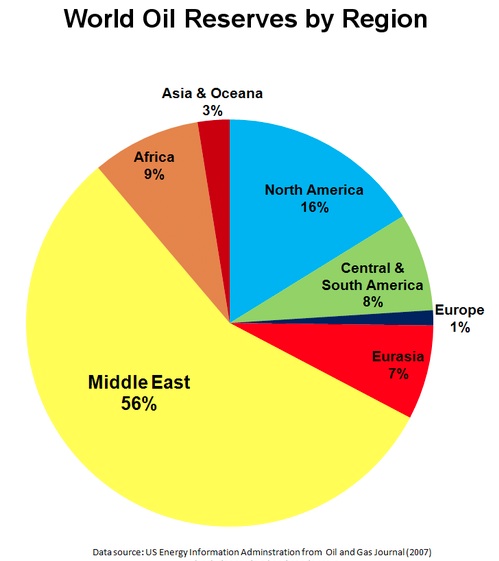
Coal is plentiful and cheap - no country has more coal reserves than the U.S. Crude oil is also still plentiful and cheap to extract - in the Middle East, which has more than half of the world’s oil reserves.
Fossil fuels pack a lot of energy. Their production is efficient. The delivery infrastructure is finetuned. And markets are well developed. In contrast, energy alternatives cost more and are less energy-dense. And functioning delivery systems to drive demand are rudimentary at best where they exist.
“Getting this train to change tracks will take a huge effort,” Hegburg said.
Then why try? Speakers at the conference offered as the main reason the hidden costs of fossil fuels.
Generating electricity from coal and burning oil for transportation is a dirty business. In 2005, pollution caused an estimated $120 billion in damages to human health, crops, timber yields, buildings and recreation nationwide, according to a report the National Research Council published 18 months ago.
Another study published a few weeks ago in the Annals of the New York Academy of Sciences estimated that extracting, transporting, processing and combusting coal caused $345 billion in damages to the health and the environment in 2005.
Factor in the hidden costs and electricity would be at least twice as expensive, according to the study. Do the same with oil and gasoline prices would be at least $1.50 per gallon higher, Bartis said.
Suddenly, wind and solar energy and investments to boost energy efficiency and conservation become competitive. Calls from research hubs for more funding to make cleaner energy alternatives cheaper and more efficient begin to make sense.
North Carolina’s Research Triangle is one of those hubs.
Last summer, the University of North Carolina at Chapel Hill, Duke University, NCSU and the Research Triangle Park-based research institute RTI International formed the Research Triangle Solar Fuels Institute to bring together local experts in chemistry, electrical engineering, material sciences and nanotechnology with the goal of developing technologies that tap the sun and make liquid fuel.
Researchers at RTI are working on capturing and reusing carbon dioxide – the most prominent greenhouse gas in the Earth’s atmosphere – producing bio-crude from organic waste and developing a nanotechnology light bulb that promises to be more energy efficient than a fluorescent light and doesn’t contain harmful mercury. Not far from RTI, at the corporate biotech research lab of Swiss agribusiness giant Syngenta, researchers have genetically engineered corn that requires less water and energy to make fuel ethanol.
And North Carolina, the third largest U.S. biotech hub by number of companies, has targeted biodiesel and ethanol from corn and biomass to meet an ambitious goal: By 2017, 10 percent of liquid fuels sold in the state should be locally grown and produced. This target goes hand-in-hand with the federal mandate that oil companies increase the use of renewable fuels such as ethanol in gasoline blends.
The federal ethanol mandate had its critics at the NCSU conference - diverting about one-third of the U.S. corn crop into ethanol production has contributed to rising food prices. But other speakers credited the mandate for keeping the discussion alive at a time when energy-related research funding is threatened by massive cuts.
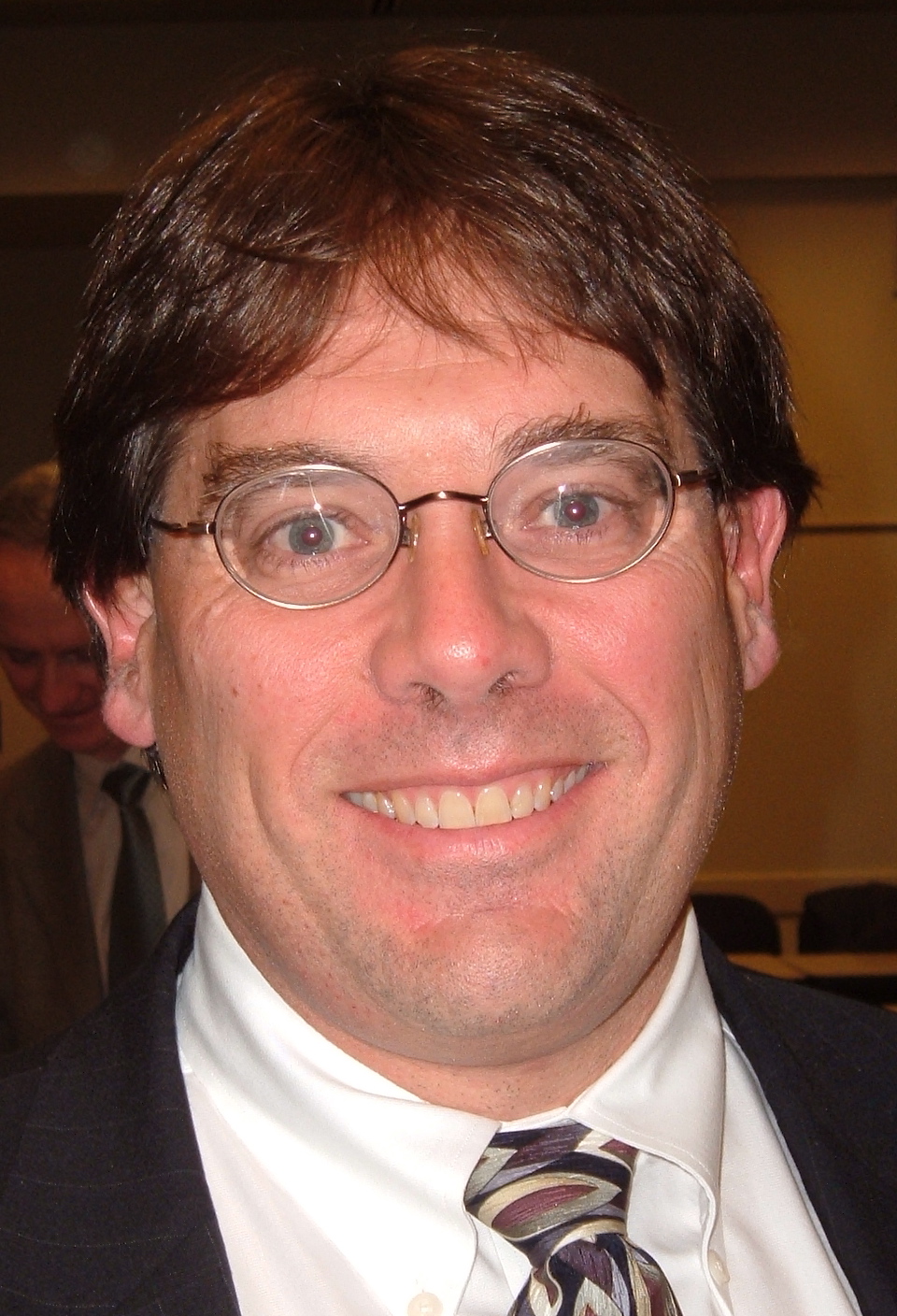
David Dayton
“Because there’s a mandate, climate control, security issues and oil is $100 a barrel, at least we’re still talking about alternative fuels,” said David Dayton, biomass program manager at RTI’s energy research lab.
How much military activities cost us to maintain our fossil fuel dependency is difficult to determine - neither of the two studies provided estimates - but conference speakers said ensuring a steady supply of crude oil drives national security spending.
With about 19 million barrels daily, the U.S. consumed more oil in 2005 than the next three biggest consumers, China, Japan and India, together, figures of the U.S. Energy Information Administration show.
Transportion, which in 2004 made up more than 60 percent of the U.S. oil demand, has become the dominant driver over the past 50 years.
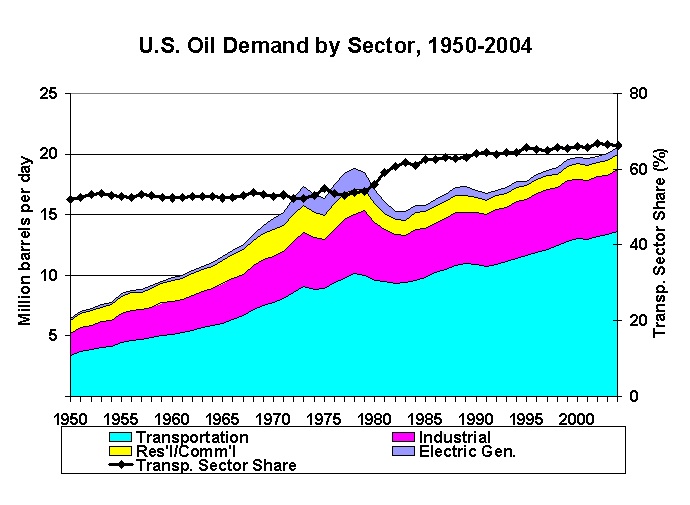
Source: Annual Energy Review
The increase in demand has influenced which regions are important for the U.S. to protect.
The Middle East, which sits on more than half of the world’s oil reserves, has gained importance in U.S. national security spending in the past 30 years, even though former Defense Secretary Donald Rumsfeld insisted that invading Iraq had nothing to do with oil, as Peter Maass, author of “Crude World: The Violent Twilight of Oil,” wrote on his blog last summer.
A study published two years ago estimated that between 1976 and 2007 the U.S. spent $6.9 trillion in the Persian Gulf region on military efforts, all of them oil-related. After the end of the Cold War in Europe, Persian Gulf military expenses took up an ever increasing portion of the entire U.S. defense spending in the 1990s and jumped to 91 percent in 2001. By 2007, their portion of the entire U.S. defense spending had decreased to about 80 percent.
Nobel Prize winning economist Joseph Stiglitz and Linda Bilmes, a leading expert on U.S. public finance, estimated in the Washington Post last year that the war in Iraq cost the U.S. in excess of $3 trillion and drove the price of oil up by about $10 per barrel.
This focus on the Persian Gulf region reflects the fact that more oil is shipped through the Strait of Hormuz, which connects the Persian Gulf with the Gulf of Oman and the Arabian Sea, than through any other narrow channel through which oil is shipped on global sea routes, according to numbers of the U.S. Energy Information Administration.
Every day, an average 15.5 million barrels of oil pass through the Strait of Hormuz, or about 18.5 percent of the daily oil production worldwide. More than three-fourths of the shipments are destined for Asian countries.
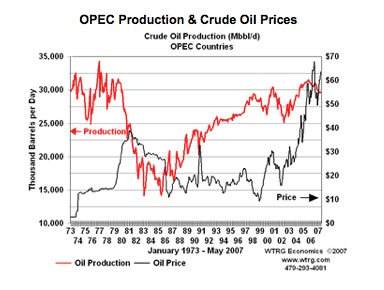
Source: WTRG Economics
Whether the U.S. investment to keep the oil flowing through the Strait of Hormuz was necessary is debatable, two speakers at the NCSU conference argued.
Eugene Gholz of the University of Texas Center for Energy Security and Ann Korin of the Institute for the Analysis of Globa Security argued that the price of crude is influenced mainly by production levels in countries that belong to OPEC, the Organization of Petroleum Exporting Countries.
It makes more sense for the U.S. to diversify energy consumption than to spend billions on military campaigns in the Persian Gulf or on currying favors with members of the OPEC cartel, Korin and Gholz suggested.
Once 15 percent to 20 percent of all of the vehicles in the U.S. can run on multiple fuels, Gholz said, the infrastructure to deliver gasoline alternatives will follow.
It’s advice North Carolina is heeding.
In addition to its commitment to boost the use of fuel ethanol made from plant fibers, the state is also at the forefront of establishing charging stations for plug-in electric vehicles, or PEVs. The Research Triangle is projected to get about 200 of the charging stations within the next year.
As a result, North Carolina is among the states where Nissan will fill the initial 50,000 orders for the Leaf, the first mass-produced, affordable electric car. The Leaf is not sold through dealerships. Deliveries started in December and January on the West Coast. The first cars are scheduled for delivery in North Carolina in April. (More on PEVs and the Leaf here.)
On Saturday, the day after the NCSU conference, Nissan brought about two dozen Leaf cars to the Raleigh farmers market for test drives.
Wind technology might harm N.C. environment it seeks to protect
Saturday, March 5, 2011, 5:04 am No Comments | Post a CommentOriginal publication: 2/24/11

When listing off renewable sources of energy, wind almost certainly comes to the forefront. Wind technology is associated with being clean, sustainable, and endless. What people often overlook, however, is its potential damages to the environment it seeks to protect.
Wind turbines have become a leading alternative source of energy to fossil fuels around the world, and now North Carolina is preparing to build structures along the coast and the eastern part of the state. Federal and state officials have formed a task force to begin mapping and planning, said Seth Effron, communications director for the North Carolina Energy Office.
Still, some citizens and scientists alike are concerned about the potential environmental hindrances wind turbines would create. They feel the harm to the land might outweigh the help.
A June 2009 study from UNC-Chapel Hill on the feasibility of the wind turbines for eastern North Carolina found several potential dangers with the project. Among them: the displacement of species, the destruction of habitats, and even the killing of birds in some cases.
Harm to Wildlife
Dr. Stephen Fegley, an associate professor at UNC’s Institute of Marine Sciences in Morehead City, co-led the study. He explained that turbines are installed with large, loud pile drivers that often scare off marine life temporarily.
“Based on the wind farms that have been created in Europe,” he said. “As soon as the piling began, the marine mammals swam away. As soon as the pile driving was over, they eventually came back.”
Fegley had not seen any negative effects on the animals under the water, although, in some instances, he had with those above.
“Even in the case of the existing wind farms, some are associated with a fairly large mortality of birds,” he said. It depends how the birds utilize a certain area, whether they feed on it or use it as a corridor for migration.
However, in some cases, he would observe the opposite. Fegley and his colleagues learned the turbine structures provided a basis for mussels and worms to grow on, like barnacles on an old ship. This in turn would bring more fish species into the area. In these cases, having the large wind structures proved very beneficial to the local ecosystems.
Power cables ruining land
The power lines connected to the turbine structures carry the potential to disrupt the surrounding marsh and topsoil. Initially, Fegley said, the land must be trenched, which would displace sea grass and could cause local terrain damage. It could also disrupt certain fisheries.
“There’s some evidence that the magnetic fields the cables create might disturb sharks and fish,” Fegley said.
It’s completely dependent on the area, though. In parts where cables would not cross any grass habitats, the equipment is not as hazardous.
There are plans to start designing floating turbines, which would operate much farther offshore, but costs are currently too high and no one has been able to test its effects on the ocean floor. Although Fegley said offshore turbines are generally considered safer than those onshore, he does not think having them float is a good idea.
“I legitimately think that would come to a point where it would completely change the landscape,” he said. “It could be quite objectionable.”
Aesthetic Objections
Another major complaint about the turbines is their obstruction of nature. Residents in counties considering wind projects have expressed a concern that the structures will interfere with their outdoor viewscape or with their recreational use of the water.
In 2009, the state Senate voted 42-1 to ban wind turbines from western North Carolina after an overflow of complaints about their running the scenery. National headlines and columns were written about how North Carolina voted down wind energy because it was “too ugly”. The bill was not taken up by the House.
But Julie Robinson, communications director of the North Carolina Sustainable Energy Association (NCSEA), said she thinks something has changed since then.
“I really think over the last three years, there’s been so much discussion and education and definitely more advancements in the technology,” said Robinson.
“In both the mountains and the coast, once people who expressed an early opposition hear more about the technology and the potential benefits, they become more supportive.”
The key to this, said Robinson, is conducting more conversations with local communities and disseminating information on project proposals. Iberdrola, the Spanish company that just announced construction of a 300-megawatt wind plant outside Elizabeth City, has been meeting with different groups there to discuss its intentions for more than a year.
RTP panels address rogues gallery of multidrug-resistant bacteria
Tuesday, March 1, 2011, 2:29 pm No Comments | Post a CommentHow to prevent bacterial infections associated with poor hygiene in hospitals, nursing homes and day care centers has become a necessary though rarely pleasant topic for healthcare providers.
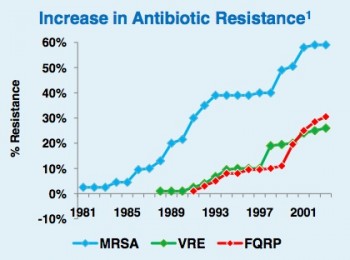
Source: Centers for Disease Control and Prevention
Every year, an estimated 5 percent of all hospitalized Americans, or about 1.7 million, are treated for a healthcare-associated infection. About 90,000 of them die, according to numbers reported by the Centers for Disease Control and Prevention. The infections are caused by multiple bacteria that can be traced back to healthcare settings and 14 percent involve a superbug, methicillin-resistant staphylococcus aureus or MRSA.
After rising rapidly in the 1990s, the number of MRSA cases began to decrease in the past decade, but following in MRSA’s footsteps are superbug wannabes such as floroquinolone-resistant pseudomonas aeruginosa (FQRP), vancomycin-resistant enterococci (VRE) and clostridium difficile, a bacterium that wreaks havoc after antibiotics wipe out healthy gut flora.

Staphylococcus aureus
Efforts to reduce healthcare-associated infections received boosts in the past few years.
In 2008, the Centers for Medicare and Medicaid Services stopped paying hospitals for infections they considered “serious complications that should never occur in a hospital” and private health insurers began to follow suit. The following year, the federal stimulus bill provided states with about $50 million to establish surveillance and prevention programs.
North Carolina’s state plan to monitor and prevent healthcare-associated infections, which took effect in January and relies on voluntary reporting, is such a program.
“It’s not inevitable that you go into the [intensive care unit] and you get a [central line-associated] bloodstream infection,” said Dr. Megan Davies, chief of the N.C. Division of Public Health’s epidemiology section.
Davies was one of five infectious disease experts in the Research Triangle who addressed healthcare-associated infections and the rogues gallery of multi-drug resistant bacteria. The Feb. 22 panel discussion was put together by Duke University and Becton Dickinson, a New Jersey-based medical instruments company whose corporate innovation center is in Research Triangle Park.

Enterococci faecium
Healthcare-associated infections add an estimated $28 billion to $33 billion in national healthcare costs every year, according to a report the CDC published in 2009.
Avoidable infections can enter the body at a surgical site or through a catheter, a ventilator or a central line used to supply medication, blood and fluids directly into the bloodstream.
In North Carolina, large programs to collect infection data and improve infection control have existed since 1997: the Statewide Program for Infection Control and Epidemiology, or SPICE, at the University of North Carolina School of Medicine and the Duke Infection Control Outreach Network, or DICON, that linked the Duke University School of Medicine and 39 community hospitals.
Central line-associated bloodstream infections and cases involving MRSA have decreased in the past decade due to efforts by SPICE and DICON.
But direct costs from dealing with healthcare-associated infections statewide are estimated to still exceed $280 million per year, according to the N.C. Department of Health and Human Services.
Innovations to prevent these infections such as special cleaning and medical supplies exist, said William Rutala, director of SPICE and one of the five infectious disease experts on the panel. But better compliance with more basic prevention tools such a hand hygiene would be an important first step.
 Only an average 40 percent of healthcare workers washed their hands in accordance with CDC guidelines, studies conducted in the 1990s showed. And other studies show that only about one-third of the surfaces at high risk of harboring infectious bacteria in hospital rooms were thoroughly cleaned before new patients came in, Rutala said.
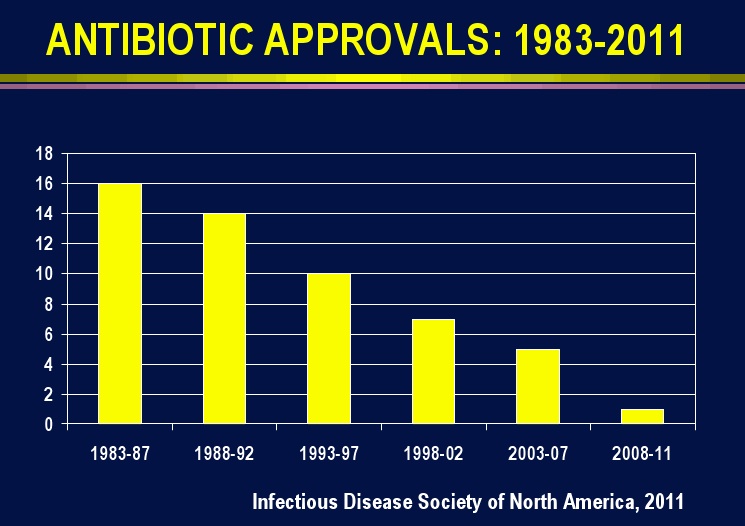
Fewer and fewer new antibiotics to battle the multi-drug resistant bacteria is yet another problem, said Dr. David Weber, associate chief of staff at UNC Health Care who was another infectious disease expert on the panel.
Years of antibiotic overuse and patients cutting short antibiotic treatments are driving forces behind the rogues gallery - not only in healthcare settings but maybe also in livestock farming.
About two-thirds of the MRSA central-line bloodstream infections in hospitals involve bacteria that came from outside the hospital but whose origin isn’t clear, according to Dr. Vance Fowler, an infectious disease specialist at Duke University.
Antibiotics are used extensively to promote growth in livestock farming, said Jorge Ferreira, a graduate student at the N.C. state University College of Veterinary Medicine. Daily use of antibiotics is also normal in dairy cows.
Fowler and Ferreira are collaborating on research to find out more about MRSA and whether the superbug is transmitted from animals to humans. They presented some of their findings as part of a panel discussion at the N.C. Biotechnology Center in RTP, a few hours after the infectious disease panel met in Durham.
So far, Ferreira reported, MRSA strains have been found in pigs, cows, dogs, cats and even hamsters.