Archive for April, 2010

Duke: How germs influenced the Civil War
Wednesday, April 14, 2010, 11:01 pm 2 Comments | Post a CommentNowhere are the medical advances of the past 150 years more obvious than during war. A U.S. soldier who is injured today on the battlefield in Iraq has about a 95 percent chance of survival. In World War II, the chance was 50 percent and during the Civil War it was 19 percent.
But the benefits of modern medicine go well beyond combat surgery.
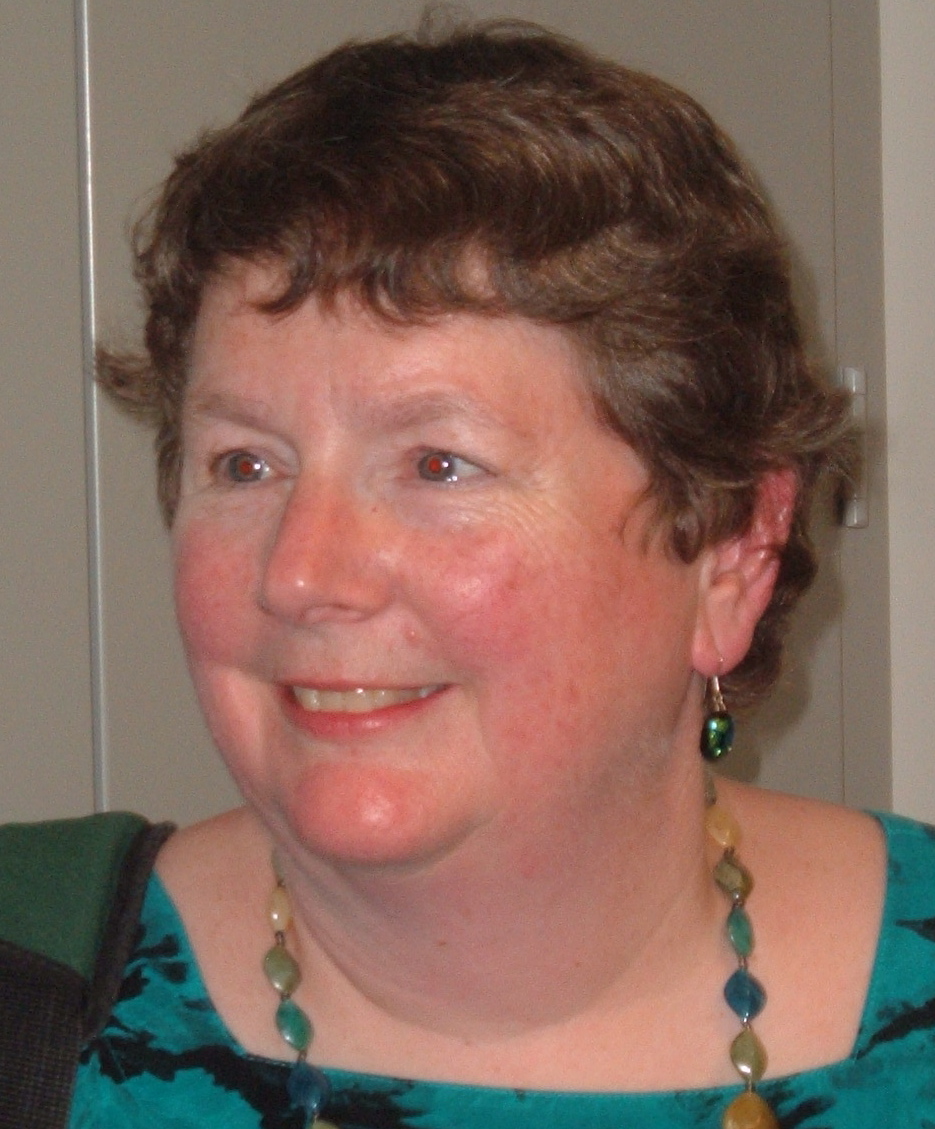
Dr. Margaret Humphreys
Dr. Margaret Humphreys, a Duke University professor in the history of medicine and a fellow at the National Humanities Center in Research Triangle Park, issued a reminder Tuesday during a lecture at the N.C. Museum of History in Raleigh that germs bag a bigger punch than bullets.
“It wasn’t until World War I that more soldiers died from wounds than from disease,” Humphreys said during her lecture on the role malaria and yellow fever played during the Civil War. Read more…

RTP Week Ahead
Monday, April 12, 2010, 1:14 pm No Comments | Post a CommentMonday, April 12
NIEHS Seminar: Transcription factor-DNA interactions: cis regulatory codes in genomes
2:30 – 3:30 PM
NIEHS, Rail Building, Rodbell AB
Open to the public. Speaker: Martha L. Bulyk, Ph.D. Speaker Professional Title: Associate Professor of Medicine and Pathology. More information.
Tuesday, April 13
NC BioNetwork Course
Tuesday-Wednesday, All Day
BioNetwork Capstone Center, BTEC, 250 B 850 Oval Drive, Centennial Campus, Raleigh
A Hands-on Approach to Cleaning Validation Addresses the elements of cleaning validation from start to finish and includes in-field exercises. Cost: $495. Instructor: A. Ari
Registration For more information regarding registration, please visit the website.
UNC Emerging Company Showcase
6:00 – 7:30 PM
Koury Auditorium, McColl Building, Kenan-Flagler School of Business, UNC Chapel Hill
Together NC BioStart of the NC TraCS Institute, the Office of Technology Development and Kenan-Flagler Business School are pleased to announce UNC-Chapel Hill’s Emerging Company Showcase. This event will highlight early stage companies built around innovative UNC-Chapel Hill technologies, primarily in the life science space. A series of short company presentations will be followed by a networking reception. More information.
TriDug Meetup
6:30 – 8:00 PM
Duke Corporate Education, 310 Blackwell Street, Durham
The April meetup will be an open mic night. Presenters: Greg Monroe has agreed to present on the Web File Management module. Other presentations TBA as folks come forward and volunteer. The meeting is scheduled to start at 6:30 with a half hour for meet and greet. Presentations should start at 7:00PM. More information.
Periodic Tables
7:00 – 9:00 PM
Broad Street Cafe, 1116 Broad St, Durham
More has been discovered about dog intelligence in the last decade than the preceding 100 years. The Duke Canine Cognition Center was founded to continue studying how dogs understand their world, how dogs might have evolved, and how we might help dogs be even more successful at helping people. Dr. Brian Hare will share some of his work comparing dogs to various species like wolves and chimpanzees. He is also interested in hearing your ideas for dogcentric research questions that you wish they had the answer to. Speaker: Dr. Brian Hare, Assistant Professor in Evolutionary Anthropology at Duke University. More information.
Wednesday, April 14
Innovation in RTP Speaker Series
4:00 – 5:00 PM
RTP Headquarters, 12 Davis Drive, RTP
Topic: Russ Gyurek of Cisco Presents: The future of the Internet: challenges and opportunities! Free event. RSVP required.
Thursday, April 12
Triangle Global Health Consortium Job Fair
12:00 – 5:00 PM
NC Biotechnology Center, 15 TW Alexander Drive, RTP
The Triangle Global Health Consortium is sponsoring this Job Fair/Industry Networking event. Individuals and companies are welcome to participate at no cost. To register please email nicole.fouche@triangleglobalhealth.org.
Friday, April 16
Going Global to Support North Carolina Innovation: The Role of Innovation Policy in Growing Exports, Creating Jobs, and Solving Global Challenges
RTP Headquarters, 12 Davis Drive, RTP
Hosted by the Global Innovation Forum of the National Foreign Trade Council in partnership with: The Research Triangle Foundation, Nicholas Institute for Environmental Policy Solutions of Duke University, CED, North Carolina Biotechnology Center and North Carolina Sustainable Energy Association. More information.
For a detailed listing of RTP and regional events, please visit the Science in the Triangle calendar.
If the U.S. falls off the flat earth, so does RTP
Sunday, April 11, 2010, 5:41 pm No Comments | Post a CommentNeal Lane, a physicist who in the late 1990s was President Clinton’s top science advisor, worries when he looks at federal spending on research and development.
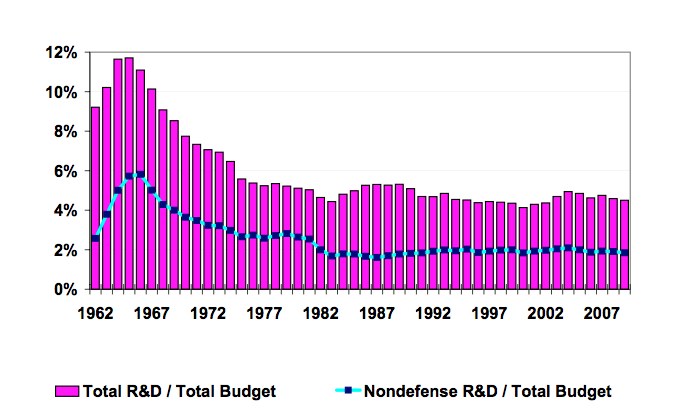
R&D spending as percentage of federal budget, FY 1962-2009
Sure, federal spending on R&D more than tripled in the past 50 years to about $147 billion in fiscal year 2009, as Lane pointed out Saturday in a talk at N.C. State University. But R&D’s share of all federal spending has been shrinking from nearly 12 percent during the height of the Apollo program in the late 1960s to about 5 percent in 2009, according to numbers from the American Association for the Advancement of Science.
Lane, a professor at Rice University and a senior fellow at the James A. Baker III Institute for Public Policy, is particularly concerned about federal funding for research in physics, mathematics and engineering, the disciplines that brought forth computers, the Internet and mobile devices such as the cell phone. Read more…

ScienceOnline2010 - interview with Ernie Hood
Friday, April 9, 2010, 12:04 pm No Comments | Post a CommentContinuing with the tradition from last two years, I will occasionally post interviews with some of the participants of the ScienceOnline2010 conference that was held in the Research Triangle Park, NC back in January. See all the interviews in this series here. You can check out previous years’ interviews as well: 2008 and 2009.
Today, I asked Ernie Hood to answer a few questions:
Wash Your Stinking Car and Don’t Feel Guilty
Thursday, April 8, 2010, 3:29 pm 1 Comment | Post a CommentI want you to take a minute to rethink your relationship to water. Because if you get your water from Falls Lake, then you can do the world a big favor by running right out and washing your car to get that green stuff off it. Or for that matter, taking a nice long shower to get that green stuff off you. Or even watering your lawn.
What? I am urging you to USE water?
I am doing just that. Not always – not even commonly. But today – right now. You’ll be helping Raleigh and the Army Corps of Engineers if you do.
I hear you scoffing, so I’ll explain.
Remember the drought? Yeah, that one, a couple years ago – Falls Lake was ten feet low, and we were letting our lawns dry out and our cars dust up and washing our babies’ butts in tubs with only an inch or so of water, letting things mellow if they were yellow and taking all kinds of other conservation measures. If you recall, fortunately it started raining again, though we sensibly left in place basic conservation measures.
But remember last November? As recently as November 9th, 2009, Falls Lake, the only source Raleigh (and the almost half a million people to whom who Raleigh Public Utilities delivers water) has for its drinking water, was more than four feet low, down from its managed 251.5 feet above sea level to 247.45 feet. And remember – that doesn’t mean the lake had gone from 251.5 feet deep to 247.45 feet. The Army Corps of Engineers, who manages the lake, measures not how deep it is but how high it is above sea level. The lake itself averages around twelve feet deep – which should tell you something about how much of it turns into dry land when it’s four feet low. You can check historical lake depth, by the way, here.
I bring all this up because it started raining again in November and didn’t stop for a while. At the moment I write this, the lake sits 8.64 inches high, at 252.22 feet above sea level (which you can instantly check here). That’s worth knowing for a couple reasons: for one, we’ve had about eight inches of rain since January 16, and the lake rose more than eight feet in that time. That is, you can see that at our current level of ground saturation, an inch of rain brings the lake up a foot. Given that the Corps works to keep it at 251.5, that means that the work the Corps is doing now is counterintuitive: It’s trying to drain our water source. At this very moment, they’re dumping water out at the rate of 580 cubic feet per second (at the moment you read this you can get the exact total here).
Let me translate for you: each cubic foot of water contains 7.48 gallons, so 580 cubic feet per second equals 4338.4 gallons per second. Which keeps the kayakers in the Neuse just below the dam happy, but above all dwarfs the 80 or 85 cubic feet per second the city of Raleigh drains to supply drinking water for its customers.
So, okay, this takes a bit of rethinking.
The point is you need to understand your lake. Falls Lake is Raleigh’s water source, sure – but it also provides flood storage to protect downstream communities (it can rise to 264.8 feet above sea level before it reaches the spillway – that will hold, by the way, almost twice the volume of the lake at its maintained level); it provides “water quality” storage – or water for constant releases to keep the Neuse River running at a healthy level. It also provides wildlife habitat and recreation opportunities. Five jobs the lake has – and the Corps keeps it at 251.5 feet because that’s where it’s designed to be. If Raleigh water customers get a little concerned about drought, the Corps doesn’t hold back extra water – that soaks habitat, wrecks beaches, and may parch the people downstream.
Which means that when the lake gets high, the Corps works like hell to get it down to 251.5 feet again, releasing, in recent weeks, anywhere from a hundred cubic feet per second or so to nearly 3000. Now the lake hasn’t had a drop of rain since March 29, and in that time, while you weren’t paying attention, the water level has risen and dropped a foot and a half.
I’m advocating paying attention: doing a little backyard and online science without wearing a lab coat. That is, yes – we need to conserve water, but much more important, we need to be aware of our water. Good-natured helpful people were probably conserving water back in early February, because we’ve all been trained to conserve. Except the thing is, the lake was almost nine feet high then (it peaked at almost 260 feet on February 10), the Corps was releasing water at as much as 4000 cubic feet per second), and though I was preaching a gospel of 20-minute showers for everyone, not too many people were listening.
This is a pretty small point, but it’s science and I think we should be doing it. I advocate, first, knowing where your water comes from — mine comes from the Upper Neuse River basin (interactive map; there’s also a list of other NC river basins, so wherever you live you can get this data for your own source of water. And if you happen to reach this piece from outside North Carolina, you can find your watershed here). Next, learn what the conflicts are: Who’s polluting? Who’s cleaning up? Who’s using and who’s complaining? The USGS and the EPA put this information online because they want you to have it. In Raleigh we have predictable fights – when it’s droughty, we want the lake release diminished, though the folks downstream in Goldsboro and Kinston don’t find that neighborly; when it’s hurricane season we want the lake low enough to absorb a Hurricane Fran if one comes by, whereas that’s when the folks downstream would prefer Raleigh to not even flush its toilets for a week (our treated wastewater reenters the Neuse downstream, of course).
Everybody’s talking about water right now: from NASA (http://launch.org/) to National Geographic, with its special issue about water, but water isn’t something that happens to people in sub-Saharan Africa or from satellites in space. Water falls on your yard, fills your reservoir, comes from your faucet, travels to the sea — here’s a video of a drop of water doing just that:
So anyhow, a small point: know your water. Know where it comes from. Check in on it to keep track: is this a time to conserve, or to use to my heart’s content? Today the lake is high, so go wild. It’s even supposed to rain soon, so Falls Lake will probably get higher again. And if science – organized observation of your surroundings, right? – does nothing more for you this week than get that green stuff off you and your car, that’s still a good week for science.
And by the way, wash your car on your lawn, not the driveway. Let that good stuff percolate into the ground, not run off into a creek.
Regenerative medicine: Making spare parts for the body
Wednesday, April 7, 2010, 10:54 pm 1 Comment | Post a CommentEfforts to grow skin, organs and blood vessels have advanced so fast so far that researchers who gathered Tuesday at the regenerative medicine forum in Winston-Salem paused before offering suggestions what they might accomplish in the next two decades.
Fashioned after conferences that have sprung up in the past few years across the U.S. and in Europe, the three-day forum brought together researchers, investors and policymakers interested in regenerative medicine, tissue engineering and stem cells. It was the first such event organized by Wake Forest University’s Institute for Regenerative Medicine, which is headed by Dr. Anthony Atala, a urological surgeon who in 1999 was the first to implant a laboratory-grown organ into a patient.
The organ was a bladder. Now researchers are working on skin, blood vessels and entire livers. So, what’s next? How about a whole heart, or a kidney grown from a skin cell?
“I don’t think that’s science fiction,” said Dr. Robert Lanza, chief scientific officer of Advanced Cell Technology, a biotech company near Boston. Read more…
ScienceOnline2010 - interview with Sabine Vollmer
Tuesday, April 6, 2010, 7:32 pm No Comments | Post a CommentContinuing with the tradition from last two years, I will occasionally post interviews with some of the participants of the ScienceOnline2010 conference that was held in the Research Triangle Park, NC back in January. See all the interviews in this series here. You can check out previous years’ interviews as well: 2008 and 2009.
Today, I asked Sabine Vollmer to answer a few questions:
RTP Week Ahead
Monday, April 5, 2010, 1:29 pm No Comments | Post a Comment
Monday, April 5
CED: Under New Management: Lessons Learned to Lessen the Pain of Transition
11:30 AM - 1:00 PM
CED Business Offices, 100 Capitola Dr, Suite 106, Durham NC
Discover strategies to implement and gain confidence to execute them. Hear from a discussion panel of industry leaders about how they have helped clients effectively manage a leadership transitions. Event panelists provide a 360° view by representing the five management perspectives on leadership transition. Lunch is provided for all registered panelist guests. There is no charge to attend –lunch will be provided for registered panel sponsor guests. Read more and register.
Tuesday, April 6
Triangle Business Journal: FREE Smart Readers Seminar
8:00 - 9:30 AM
The Royal Banquet and Conference Center, 3801 Hillsborough St, Suite 109 Raleigh
Join us, grow your business and become a smart reader. Breakfast presented by Snapfinger Catering and complimentary parking is provided. Seating is limited to first come first serve.
Media Leaders
7:00 - 10:00 PM
Issac Hunter’s Oak City Tavern, 112 Fayetteville Street, Raleigh
Wednesday, April 7
Triangle Game Conference (April 7-8)
All day on April 7-8
Marriott City Center and Raleigh Convention Center, Raleigh TGC is the leading East Coast event for developers and professionals working in the interactive entertainment and serious game industries. Offering five extensive tracks comprised of panels, lectures and discussions, attendees will advance their learning and “Immerse Themselves” in the following subjects. Click here for a full listing of confirmed speakers and to register.
NC DNA Day Training
5:00 - 6:00 PM
NIEHS, Rail Building, Rodbell C in The Research Triangle Park
Open to the public. More information.
WestEnd Ruby Meetup
6:30 - 8:30 PM
Carrboro Creative Coworking, 205 Lloyd St, Suite 101, Carrboro
Topic: Ruby programming language.
Thursday, April 8
Former Vice President Al Gore Speaks at Duke
6:00 - 7:30 PM
Page Auditorium, West Campus, Duke University
Free, with tickets.
Former Vice President Albert A. Gore Jr., who received the 2007 Nobel Peace Prize for his advocacy of environmental causes, will give the 2010 spring Duke Environment and Society Lecture. Ticket and event information are available online.
Raleigh Internet Marketing Mastermind Group
7:00 - 8:00 PM
Friday, April 9
Raising Capital Lunch and Learn
11:30 AM - 12:30 PM
649 Walnut St, Cary
This forum provides an excellent opportunity for business owners to learn more about and find sources of financing. More details.
Saturday, April 10
All day event.
UNC, Kenan-Flagler Business School, Koury Auditorium. The Product Development Management Association (PDMA) Carolinas Chapter will host “Innovate Carolinas Conference” April 10 at the University of North Carolina’s Kenan-Flagler Business School. The full-day conference will provide discussions and learning opportunities for business executives, managers, students, academics and others interested in innovation, growth strategies, new product development, product management and entrepreneurship. For more information and to register, or contact Burek at (585) 314-4611 and sueburek@gmail.com.
Lecture on Future of Science in America
4:00 - 5:30 PM
SAS Hall, NC State University North Carolina State University will host a lecture, titled “America’s Science Challenges and Opportunities: Past, Present and Future,” by Dr. Neal Lane, Malcolm Gillis University Professor at Rice University and senior fellow of the James A. Baker III Institute for Public Policy. Lane’s lecture and all Scope Academy seminars are free and open to the public, although registration by March 26 is required.
For a full listing of RTP and regional events, please visit the Science in the Triangle calendar.
How much life is there in Second Life?
Sunday, April 4, 2010, 4:45 pm 5 Comments | Post a CommentMore than 2,000 researchers and educators from 69 countries attended the Virtual Worlds Best Practices in Education conference last month, including Tony O’Driscoll of Duke University and Brent Ward from RTI International in Research Triangle Park.
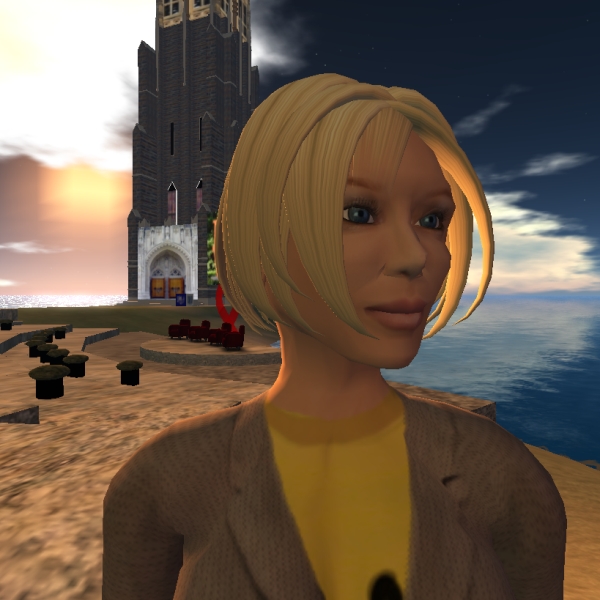
Like the other attendees, O’Driscoll and Ward didn’t travel to VWBPE in person. They sat in front of a computer and had their voice-activated avatars teleport to one of 20 specially constructed virtual islands, where the conference took place over 48 continuous hours. Some of the islands resembled the Guilin mountains in China, an Irish seaside cottage and Stonehenge, the famous English prehistoric monument.

Brent Werber
Wada Tripp, O’Driscoll’s avatar, gave a presentation on 3-D learning, which requires students to interact in simulated, or virtual, environments. Brent Werber, Ward’s avatar, moderated a panel at the conference.
O’Driscoll is a professor at Duke’s Fuqua School of Business and Ward provides RTI researchers technical assistance as the research institute’s director of commercialization. Both are professionals holding positions of responsibility, but neither thinks twice about slipping into his “digital sockpuppet,” a computer-generated persona that lives in Second Life, a three-dimensional virtual world maintained by Linden Lab of San Francisco. Read more…


