Posts Tagged ‘autism’

Epidemiologist tracks environmental clues linked to rising autism rates
Tuesday, December 7, 2010, 9:25 pm 1 Comment | Post a Comment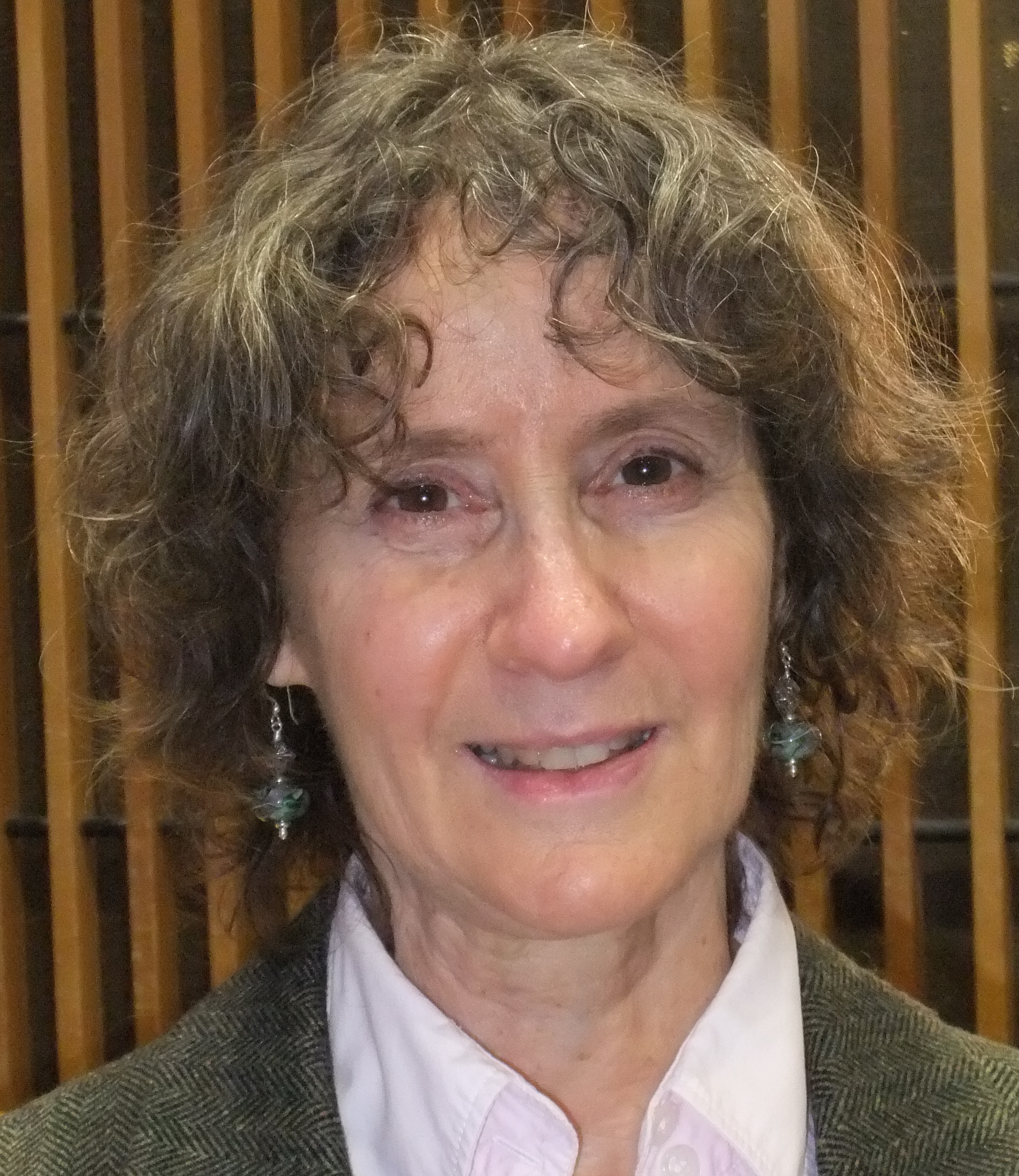
Irva Hertz-Picciotto
Irva Hertz-Picciotto is a slight woman stepping squarely into a brawl: the controversy over rising autism rates.
That the rates have been rising is undisputed. In the 1980s, about 6 of 10,000 were believed to have an autistic disorder, according to a 2007 paper. Today, autism spectrum disorders affect about 40 in 10,000. That’s a 600 percent increase, but opinions differ over what’s causing the increase.
Many researchers see forms of autism as predominantly inherited disorders whose diagnoses have dramatically increased, because parents have become more aware of telltale signs and children get diagnosed earlier, more frequently and with less severe symptoms than 30 years ago.
Others like Hertz-Picciotto, a professor of public health sciences at the University of California at Davis, aren’t so sure genes are the only culprits. But lacking data, they have had little to go on beyond questioning inconsistencies. How, for example, can it be that one identical twin has an autistic disorder but the other doesn’t, even though they share the same genetic information? Read more…
Conference Sheds Light on Rare Disease with Links to Autism
Monday, June 21, 2010, 12:19 pm 2 Comments | Post a CommentAny time you learn something new, your brain undergoes a sort of remodeling to store the fresh bits of information. This process takes advantage of what most brain scientists refer to as “neural plasticity,” the ability of our brains’ synapses – the connections from one neuron to another – to strengthen or weaken in order to house new memories.
For most of us, our neurons remain malleable throughout our lives, giving us the opportunity for lifelong learning (though it does get harder with age). But for those afflicted with the rare genetic disease Angelman syndrome, the synapses are almost completely incapable of being remodeled. By the time children with Angelman syndrome are toddlers, their synapses have largely lost their plasticity, hardening like concrete into rigid structures that can no longer easily relay new information.
The result is quite tragic – children whose bodies grow and age normally but whose brains are locked forever in the state of a two year old. But there is also reason to hope, as tremendous progress has been made in the understanding of Angelman syndrome, say many of the researchers, clinicians, and parents in attendance at a recent conference on the disorder. The 2010 Angelman Treatment and Research Institute Scientific Symposium, held at the Carolina Inn in Chapel Hill on June 15 and 16, showcased the current research on the genetic disease, with efforts tapping into the latest technological tools from mouse models, brain imaging, stem cells, proteomics and gene therapy.
“Over the span of the conferences I have attended, I really feel like I can see the gap getting smaller between the cellular molecular finding and its clinical applications,” said Heather Adams, a neuropsychologist from Massachusetts who specializes in kids with cognitive impairment. She also has a daughter with Angelman syndrome.
Angelman syndrome is a rare intellectual disorder that affects about one out of every 15,000 people. It is often placed on the autism spectrum because of the shared language difficulties and inappropriate social behavior. The language impairment in people with Angelman syndrome is much more severe than in those with autism – in fact, most of them never speak a single word. And whereas individuals with autism might shun social interaction, those with Angelman are quite social.
“One of the very endearing things about these individuals is they have a very happy demeanor,” said one of the conference’s organizers, Ben Philpot, an Associate Professor in Cell and Molecular Physiology at the University of North Carolina. “They are often said to have inappropriate laughter, but I think that they just find more things in life funny than we do.”
Their child-like view of the world – and the detrimental ramifications of a brain that is unable to change — all stem from a defect in a single gene called UBE3A. If the gene is mutated or deleted, the result is Angelman syndrome. But if it is duplicated, it may result in one of the more classic forms of autism. And altering its function can also lead to tumors of the cervix, though in the cancer field the gene goes by the name E6AP. So studying this one gene and its effects on the plasticity of our brains could have far-reaching implications.
“The work related to synaptic plasticity in genetic syndromes is forming thrilling insights as far as how we reason and learn things,” said conference attendee William Snider, director of the UNC Neuroscience Center.
At the two-day conference, scientists from across the country presented their latest findings on the role of this infamous gene in disease. One of the invited speakers, Harvard’s Michael Greenberg, explained the findings he had recently published in the journal Cell on targets of UBE3A. The molecule’s main job is to mark other proteins to be broken down or destroyed, so if UBE3A is absent then certain proteins accumulate to inappropriately high levels, causing subtle but lasting damage to our brain cells.
“If we know what the targets are we may be able to produce therapies that can break them down when UBE3A is no longer able to do its job,” said Philpot.
Philpot’s own work has indicated that pharmacotherapeutics or behavioral modifications may be able to restore the brain’s plasticity. He is currently using funding from the NC Translational and Clinical Sciences Institute (NC TraCS) to search for new molecules to treat Angelman syndrome, an area that is understandably of intense interest for many in the field.
“As a scientist I say the progress that has been made so far is remarkable, but as a parent, I say it is not fast enough,” said Alina Szmant, a marine biologist from Wilmington who has a 31-year-old daughter, Selena, with Angelman Syndrome.
Mark Nespeca, a clinician at Children’s Hospital in San Diego who also attended the conference, says that the pace of research depends a lot on your perspective. Because he does not conduct research himself, conferences like this one help him keep up with the many advances that have occurred since he was in medical school.
“With the advances in technology today, people are talking about sequencing your entire genome for just a thousand dollars,” said Nespeca. “There may come a day when kids will be coming to us at two months of age newly diagnosed, and we can say is there something we can do to make a difference so you can walk, can talk, not have seizures. But for a parent dealing with this illness day in and day out, it must be hard to wait and hope for that day to come.”
Brainweek@Duke: Following the tracks of autism and anorexia
Wednesday, March 17, 2010, 1:15 pm No Comments | Post a CommentHow can honeybees help us better understand neuropsychiatric diseases such as autism, schizophrenia or anorexia?
A beehive functions like a fine, Swiss clockwork. Worker bees collaborate seamlessly. Why? Partly because they’re all closely related. That means, social skills must be hard-wired in honeybees. But is that also true for other animals?
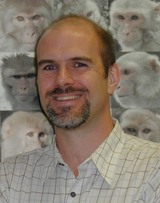
Michael Platt
Experiments that involved monkeys and Duke University students suggest so. Michael Platt, director of Duke’s Center for Cognitive Neuroscience, presented some of the results Tuesday during a lecture that was part of Brain Awareness Week, a research showcase the Duke Institute for Brain Sciences is putting on for the first time.
A better understanding of how genes, brain cells and learning are connected could lead to better and more individualized treatments of neuropsychiatric diseases, said Platt, who is already collaborating with physicians treating anorexia.
“That’s one of the potential hopes,” he said. “But we’re a long way off.” Read more…
Chasing an idea
Saturday, October 24, 2009, 4:58 pm 1 Comment | Post a CommentThe idea came to Jeffrey Macdonald on frequent 3½-hour drives to Beaufort, where the associate biomedical engineering professor is scientific co-director at the Martin Ryan Institute for marine science.


