Archive for November, 2010

The cybershrink will see you now
Friday, November 5, 2010, 9:05 pm 2 Comments | Post a CommentHow many people do you know who see a shrink? Marriage counseling, anger management, alcohol addiction. Therapists help identify and work through problems people have with others or themselves. Real-life problems. But what about virtual-life problems?
The Internet is a technology that is transforming the way we work, live and play one cell phone text, one tweet, one Facebook update at a time. When machines stop being mere tools and become companions, friends and emotional crutches, who do we call? The cybershrink.

Sherry Turkle
For the second lecture in its seminar series on engineering, policy and society Thursday, N.C. State University called on a clinical psychologist and sociologist who is the original cybershrink: Sherry Turkle, a professor at the Massachusetts Institute of Technology whose research has focused on people’s relationship with technology, particularly computers, for more than 30 years.
When Turkle started her research, bright minds at MIT wondered how we would keep computers busy.
Turkle recalled a two-day brainstorming session in 1978 where researchers tried to come up with ways to use computers. Ideas included tax preparation and games, she said. “Somebody suggested calendar and was told it was a dumb idea. Now we know, once computers connected us, once we were tethered, they keep us busy. We’re their killer app.”
It’s probably safe to say that the dark side of the Worldwide Web, mobile networks and social media isn’t a topic that’s frequently explored among computer scientists, software engineers and gadget geeks working on the next generation of virtual technology or among researchers in biology and chemistry eager to use it.
Those who participate in this kind of discussion risk being called Luddites, especially in universities, which are among the most wired places on the planet.
Turkle is no Luddite and neither were the panelists who joined her as part of the NCSU seminar series, which is sponsored by the College of Humanities and Social Sciences, the College of Engineering, the Institute for Emerging Issues, the Kenan Institute for Engineering, Technology and Science and the science, technology & society program.
The Research Triangle area, home of open-source software company Red Hat and IBM’s cloud computing center and the East Coast hub of the U.S. gaming industry, has its own bright minds whose research deals with the way the Internet is affecting our everyday life.
Three of them joined Turkle on a panel following her presentation: Victoria Szabo, program director for information science and information studies at Duke University; David Roberts, assistant professor of computer science at NCSU and David Gruber, a doctoral student in communication, rhetoric and digital media at NCSU.
Together, they explored the good, the bad and the ugly of computer technology.
First, the good.
The good …
Computer technology has changed medicine, transportation, education, business, politics and the flow of information. It has the potential to make us faster, smarter, more productive and more powerful, regardless of where we are, who we are and how much money we have.
It has brought about whole new industries.
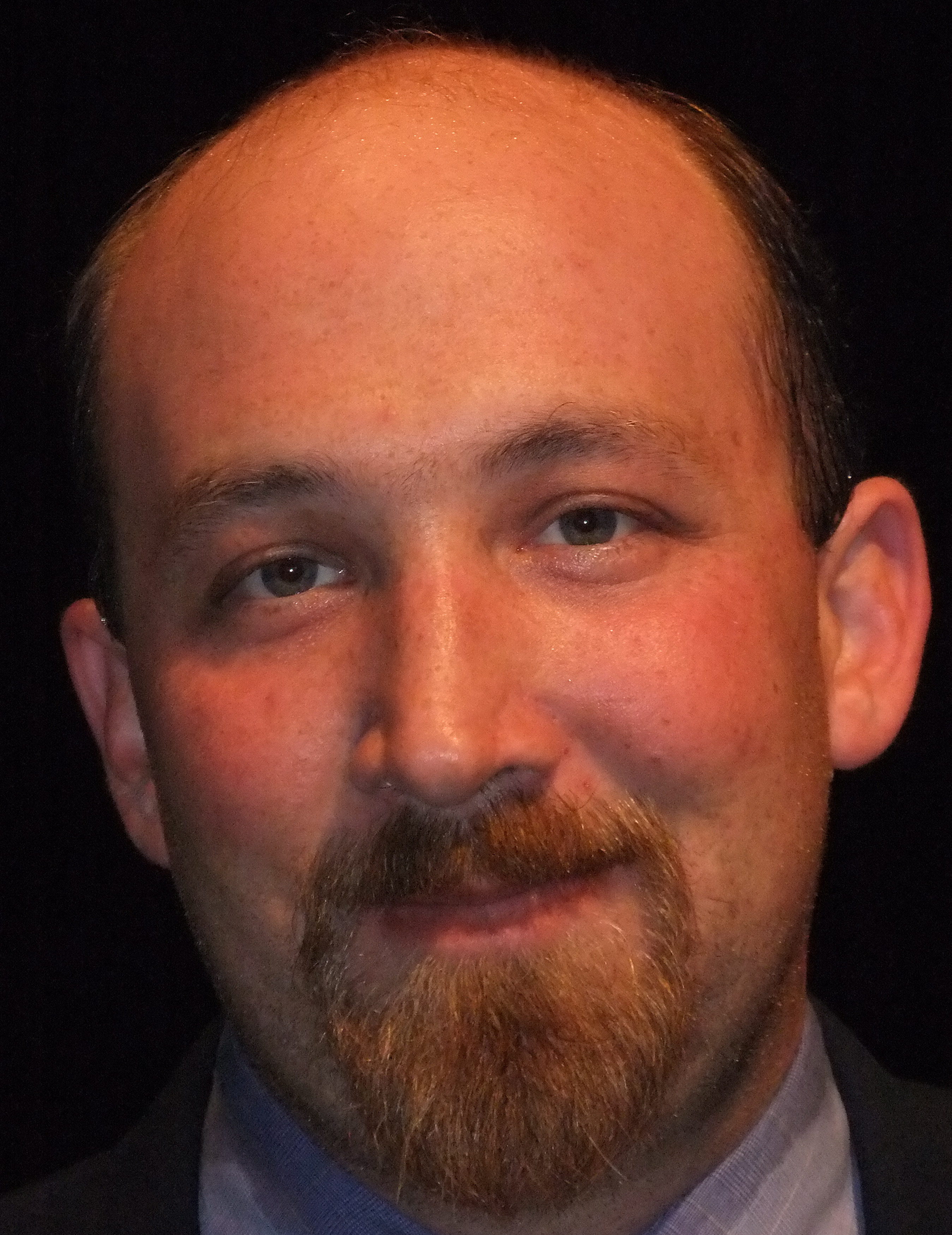
David Roberts
Internet advertising already generates more than $25 billion in sales per year and mobile advertising $1.6 billion, Roberts said. And ever more remote areas are getting connected.
Just a week ago, CNN reported the Internet is now available on Mount Everest. As proof, Roberts showed a photo he received from a colleague standing next to a rock at the Mount Everest base camp. She took the photo with her mobile phone and sent it to him.
The next frontier? According to Roberts, it’s your living room as Google TV combines television, the Internet, apps and a way to search across all of them.
Instead of trying to break free of the tethering, Roberts suggested we use it to our benefit. Examples he named were the Mannahatta Game, which allows players to trace Manhattan’s history by walking the streets with an iPhone, or the UbiFit Garden, mobile technology that encourages users to exercise.
But even Roberts nodded in agreement when Turkle suggested universities de-wire some, especially to prevent students from cruising the Internet and texting on their mobile phones while they should be listening to a lecture. Both agreed that the ability to multitask bears some of computer technology’s rather negative consequences.
… the bad …
Szabo said she’s glad blogging and texting are emphasizing writing. Computer technology allows people to share real-life experiences with others online. It’s this content that keeps interest in technology high, she said.
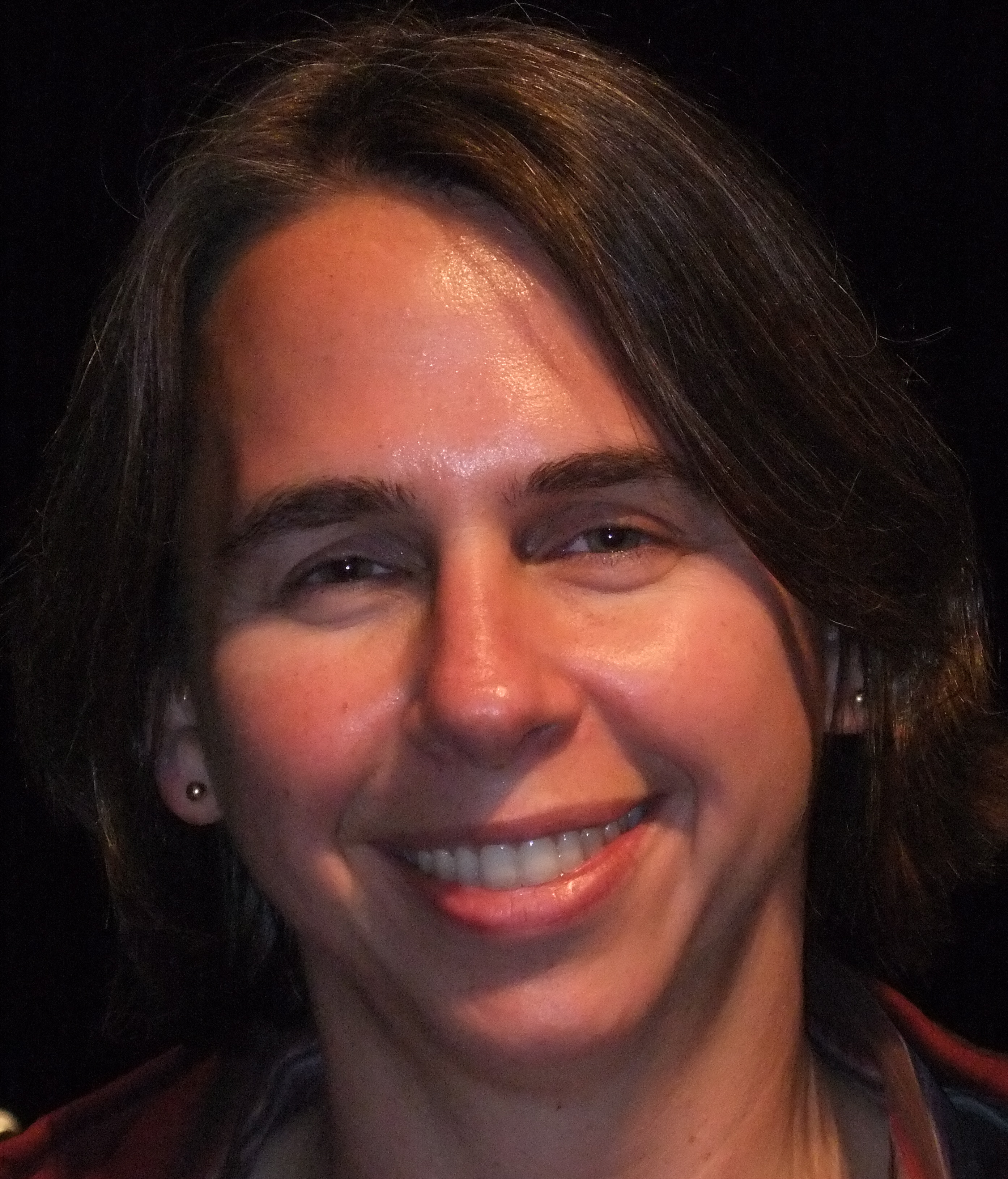
Victoria Szabo
Without content as added value, interest in technology wanes, Szabo said. That’s why Second Life, a computer-based virtual world built by Linden Lab, is losing money.
Educators at local universities and some schools extensively use Second Life as a teaching tool. Szabo said she manages three Second Life islands as part of her job at Duke, but she’s not going to pay twice as much rent for the land now that Linden Lab will remove the 50 percent discount for nonprofits and educators.
For Turkle virtual worlds like Second Life are places where our vulnerabilities are on display. We make our avatars, our virtual alter egos, thinner, younger and better looking and we dress them better than our real selves, she said.
At MIT, some of her colleagues even list the names of their Second Life avatars on their business cards.
Computer technology’s potential to expose vulnerabilities concerns Turkle in particular when it involves adolescents, the generation that grew up with the Internet and the mobile phone. For adolescents, the Internet is the perfect personality workshop at a time when they are looking for a place to experiment, she said.
They reach out for attention but instead get the illusion of companionship, Turkle said. “It’s the new state of hiding, We’d rather text than talk.”
Unplugged, they feel isolated, she said. When they’re plugged, in they feel overwhelmed by hundreds of text messages they receive on their mobile phones and by having to constantly update their Facebook pages.
“The point is not to denigrate the good,” Turkle said. “It’s to get a grip of what technology can offer us.”
Without that grip, computer technology can rear its ugly head.
… and the ugly
After interviewing adolescents for 15 years, Turkle brought some anecdotes to share.
Teens who slept with their mobile phones as if the devices were phantom limbs. The 16-year-old boy who told her that he looks for a pay phone that takes coins whenever he wants to make sure his call remains private. And then there was the young woman with the thumb splints, who opened the door painfully texting on her mobile phone. Turkle asked to see her flatmate and the young woman, rather than walk a few feet and knock on her flatmate’s door, preferred the pain and texted her.
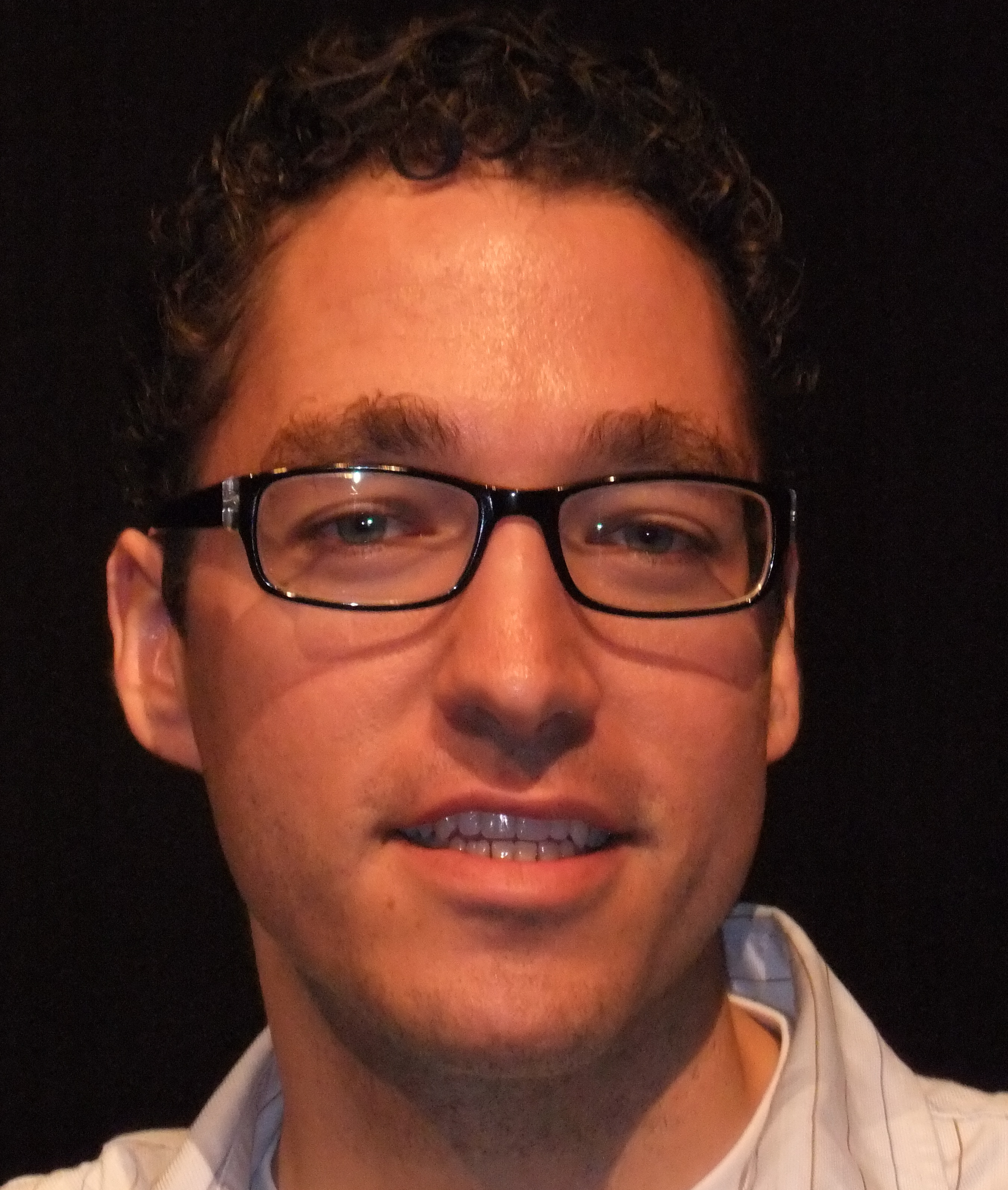
David Gruber
The risks of computer technology’s seductiveness prompted Gruber to wonder about what’s not changing despite the broad-ranging influences of the Internet, mobile phones and social media.
It’s an interesting thought.
By focusing more on what stays the same, it might become clearer whether computer technology merely puts on display and exaggerates existing societal weaknesses, or whether it creates them.
It might also provide a clue to who’s in charge, people or machines.
RTP Week Ahead, Nov. 8-13
Friday, November 5, 2010, 3:22 pm No Comments | Post a Comment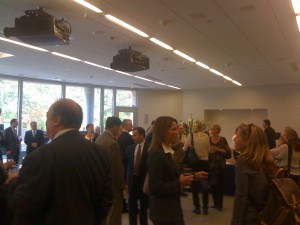 N.C. Biotechnology Center dedication, 10/26/10
Monday, November 8th
Entrepreneur Night with Brad Feld and David Cohen of TechStars
6:00 – 9:00pm
American Tobacco – BAY 7, 318 Blackwell Street, Durham, NC 27701
On November 8th, LaunchBox Digital and Square 1 Bank will host Brad Feld and David Cohen of TechStars fame. Brad and David will discuss their experiences with TechStars, their lifelong journey in technology startups and their new book, “Do More Faster”. $10. Tickets must be purchased in advance. Light food and beverage served.
Tuesday, November 9th
Lecture: “The Suicide of the Humanities”
5:00 – 7:00pm
National Humanities Center, 7 T.W. Alexander Drive, RTP, 27709
Speaker: Dr. Raymond Tallis, University of Liverpool
Periodic Tables: Scott Huler’s “On The Grid”
7:00 – 9:00pm
Broad Street Cafe, Durham
Join us for a unique Periodic Tables as DG Martin, host of UNC-TV’s North Carolina Bookwatch program, will be interviewing Scott Huler about his latest book. The event will be filmed for a later broadcast on UNC-TV.
Wednesday, November 10th
Practical Method Development for Liquid Chromatography
8:20am – 12:00pm
NC Biotechnology Center, 15 T.W. Alexander Drive, RTP
Seminar intended to provide a complete, practical working knowledge of liquid chromatographic method development. Workshop Lecturer: Richard Lake, Pharmaceutical Market Development Manager at Restek.
Innovation@RTP: Your Employees are leaving and you don’t even know!
4:00 – 5:30pm
RTP HQ, 12 Davis Drive, RTP, NC 27709
Employee Retention is not a subject managers are talking much about today. However, with the economy turning around, retention is a major issue facing many industries today. Come and learn how Cisco is addressing this issue with Talent Connection and lessons learned from rolling this major program across the company. Speaker: Heather Yurko.
Thursday, November 11th
CED’s Direct Connections Lunch: Life Science Trends
12:00 – 1:30pm
CED’s Classroom in the American Underground, American Tobacco (334 Blackwell, Suite B012, Durham, NC 27701)
Please note: Registration closes 2 days prior to the event and is for CED members only. This is a member-only event. To join CED as a member, click link.
Public Health Perspectives on Traditional and Integrative Medicine by Gerard Bodeker
4:00 – 5:30pm
John Hope Franklin Center Room 240, Duke Global Health Institute
Most research has focused on clinical and experimental medicine (safety, efficacy, and mechanism of action) and regulatory issues, to the general neglect of public health dimensions. Public health research must consider social, cultural, political and economic contexts to maximize the contribution of traditional and complementary medicine to health care systems globally. Speaker: Gerard Bodeker, University of Oxford and Columbia University.
Saturday, November 13th
2010 IndieConf
8:00am – 5:00pm
The McKimmon Center, 1101 Gorman St, Raleigh, 27695
indieconf is a conference for independent web professionals. Who should attend? Web freelancers, contractors and those considering making the jump. Whether you’re a designer or developer, indieconf will help you run your business smarter, saving you time and money. Only $99.
——————————-
To view a complete calendar of RTP community events, please visit the Science in the Triangle calendar.

Yap, Inc., Brings Us the Speech Cloud
Friday, November 5, 2010, 8:37 am 1 Comment | Post a CommentTechnology and language are strange and occasionally wonderful bedfellows. The same field that gave us 802.11b to describe a common household wireless standard is also capable of whimsical and clever trademarks. (Quick: when I say “blackberry,” do you envision a smart phone or an old-fashioned fruit?)
One of the best flights of fancy that has come from the wireless revolution is the Cloud. Loosely speaking, the cloud is the Internet—all of those computers out there that connect us in the world wide web. But cloud computing also refers to applications and sometimes data that reside “out there” rather than on your own computer. It’s rather soothing to think about all of those bits of code bouncing around the stratosphere on a cumulus mattress rather than residing in earthbound bunkers of supercomputers.
I was charmed, therefore, when reading up on Yap, Inc., to learn about the Speech Cloud. Yap provides software-processed (rather than human-processed) speech recognition services, largely via partners like Microsoft and Sprint and other phone carriers. Voice mails, conference calls, and other bits of dictation are transported to Yap’s Speech Cloud and rendered into text by software and returned to the customer’s computer or device.
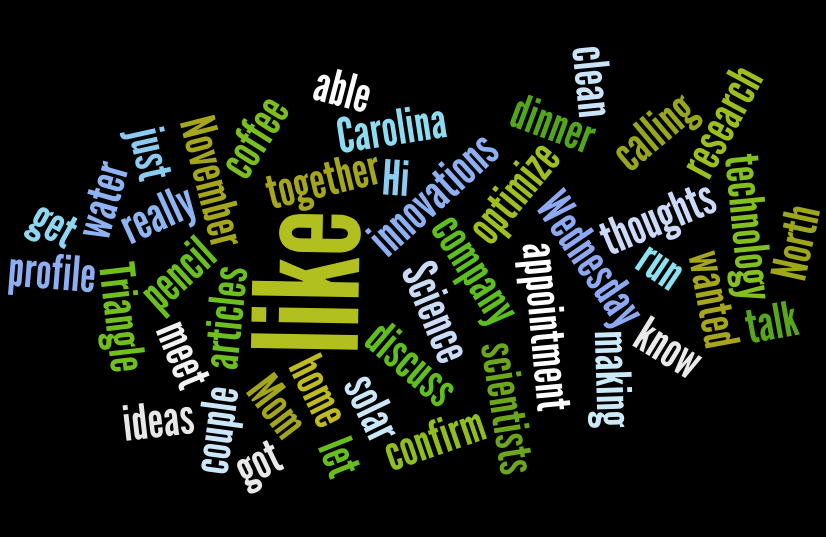
The Speech Cloud is a "stone soup" of voices from all over, that cumulatively contribute to Yap's speech recognition accuracy.
Disease and prejudice
Wednesday, November 3, 2010, 10:26 pm No Comments | Post a CommentThe risk of catching an infectious disease is high in India compared to the U.S. That’s a fact. So it’s no wonder when an American visiting India gets sick, right? Not so fast, says Mark Schaller.
Mark Schaller
The psychology professor at the University of British Columbia in Vancouver suggested Wednesday after his presentation at N.C. State University that coming down with diarrhea or a fever in India may have just as much to do with a visitor’s expectations and fears as with the country’s abundance of bacteria and viruses.
Schaller comes by his suggestion through researching the relationship of behavior and disease.
Neither a medical doctor nor an expert in the human immune system, he focuses on what he calls the behavioral immune system: Behaviors that evolved over time as defenses against pathogens, including hygiene rituals, cooking practices and cultural attitudes toward anything foreign. Read more…

ScienceOnline2010 - interview with Marla Broadfoot
Tuesday, November 2, 2010, 11:57 am No Comments | Post a CommentContinuing with the tradition from last two years, I occasionally post interviews with some of the participants of the ScienceOnline2010 conference that was held in the Research Triangle Park, NC back in January. As the next one - ScienceOnline2011 - is quickly approaching, I hope you enjoy these Q&As with past participants. See all the interviews in this series here. You can check out previous years’ interviews as well: 2008 and 2009.
Today, I asked Marla Broadfoot to answer a few questions.
Read more…


