Posts Tagged ‘NCBIO’

NC biotech industry eyes unique chance to shape the FDA
Saturday, October 15, 2011, 8:48 pm No Comments | Post a CommentGov. Beverly Perdue’s announcement that a California biotech will set up shop in North Carolina’s Research Triangle was a welcome but short-lived diversion Wednesday during the annual meeting of the North Carolina Biosciences Organization in Research Triangle Park.
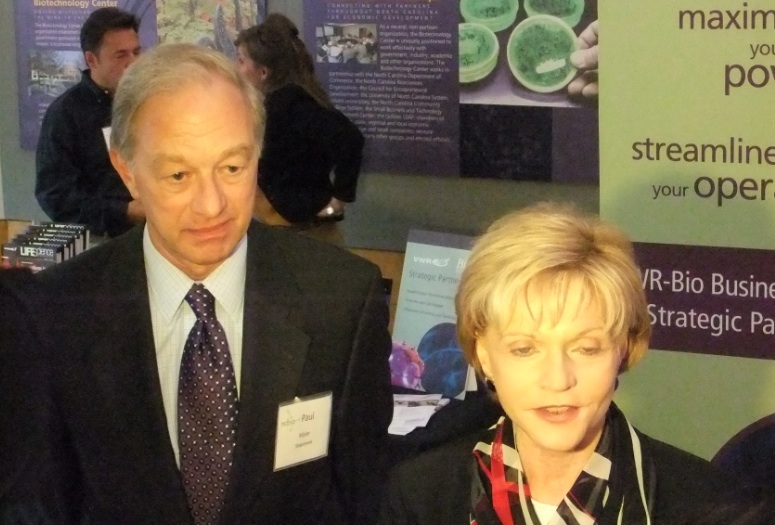
Paul Maier, Sequenom's chief financial officer, and Gov. Beverly Perdue face the TV cameras following Perdue's announcement that San Diego-based Sequenom will open a large lab in the Research Triangle.
Sequenom, a San Diego-based diagnostics company, plans to open a lab on Kit Creek Road next year and start analyzing blood samples from a new, prenatal blood test to detect Down Syndrome. The test would replace more invasive measures such as amniocentesis, which employs a long needle to sample amniotic fluid from inside the uterus.
Sequenom will invest $18.7 million and create up to 242 jobs.
The standing-room-only audience in the N.C. Biotechnology Center auditorium gave Paul Maier, Sequenom’s chief financial officer, a round of applause before Maier and Perdue faced the TV cameras and reporters outside.
Then, the biotech executives inside the auditorium went back to the unique chance that presents itself next year to shape the U.S. Food and Drug Administration.
Andrew von Eschenbach, former FDA commissioner and NCBIO’s keynote speaker, left no doubt that nothing short of a radical therapy will do.
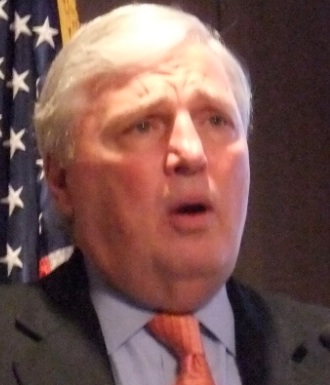
Andrew von Eschenbach
“We’re approaching a crisis situation [in the U.S.] as far as being at the forefront of innovation,” Eschenbach said. The FDA is “in need of a systematic, systemic and formal revision. The moment for modernization is now.”
The FDA has been under close public scrutiny since 2004, when Vioxx was linked to thousands of sudden cardiac deaths before Merck pulled the pain killer off the market.
In 2009, a report released by the Government Accountability Office, the investigative arm of Congress, listed the FDA at risk of failing to fulfill its mission. Chronic underfunding, expanding responsibilities and an aging workforce that wasn’t keeping up with the rapidly advancing science hobbled the agency.
In July, FDAImports.com, a blog written by regulatory consultants, published information that suggested FDA Commissioner Dr. Margaret Hamburg was restructuring the agency’s top management tier. As a Washington Post profile pointed out, Hamburg, a Harvard-trained physician and former New York City health commissioner, had no ties to the pharmaceutical industry when President Obama appointed her.
With changes already under way at the FDA, it could become a watershed year.
In 2012, renewal of the Prescription Drug User Fee Act, or PDUFA, is up. Enacted in 1992, PDUFA established a funding mechanism for the FDA to regulate new medical products and make sure they are effective and do no unnecessary harm. The federal law has been subject to changes every five years, when Congress had to renew it to keep the system going.
The potential for significant changes is particularly large in 2012, because PDUFA for the first time is due for renewal during a presidential election year. And what a turbulent election year it promises to be four years into stubbornly high unemployment, ongoing banking crises and steep government budget cuts.
“This is going to create some interesting politics in Congress,” said J.C. Scott, the head lobbyist for AdvaMed, a trade association representing the medical device and technology industry. Scott was one of several NCBIO speakers addressing regulatory policy recommendations for overhauling the FDA.
Lobbyists for the biotech, pharmaceutical and medical device industries are not about to pass up this opportunity.
Young and small companies are getting squeezed by a lack of innovation capital. (More on innovation that isn’t being funded here.) Facing stagnant research and development productivity and the expiration of valuable drug patents in the U.S., large drugmakers have been cutting jobs for years. (More on the lack of big pharma R&D productivity here.)
The Biotechnology Industry Organization, or BIO, has already drawn up a wish list of changes. According to Cartier Esham, BIO’s senior director of emerging companies, health and regulatory affairs, who also spoke at NCBIO’s annual meeting, policy items on the list include:
- a fixed six-year term for the commissioner,
- the use of electronic health records and smart phones in clinical trials,
- faster approval of products for unmet medical needs similar to how European regulators do it,
- improved advisory committees,
- the establishment of chief medical policy officer positions and
- setting up the FDA with an independent budget. (The FDA is now funded under the U.S. Department of Agriculture.)
“It is our intent,” Esham said, “to get as many of these [policy changes] enacted into legislation as possible.”


