Posts Tagged ‘cancer’

Eisai’s RTP plant aims to supply the world
Sunday, May 1, 2011, 9:36 pm No Comments | Post a CommentEisai’s new production plant in Research Triangle Park is fully equipped to make Halaven, a new treatment for advanced breast cancer, but the 66,700-square-foot building is still empty of people except for the occasional employee mopping floors. It will stay that way until the Food and Drug Administration inspects the plant and clears it for production.
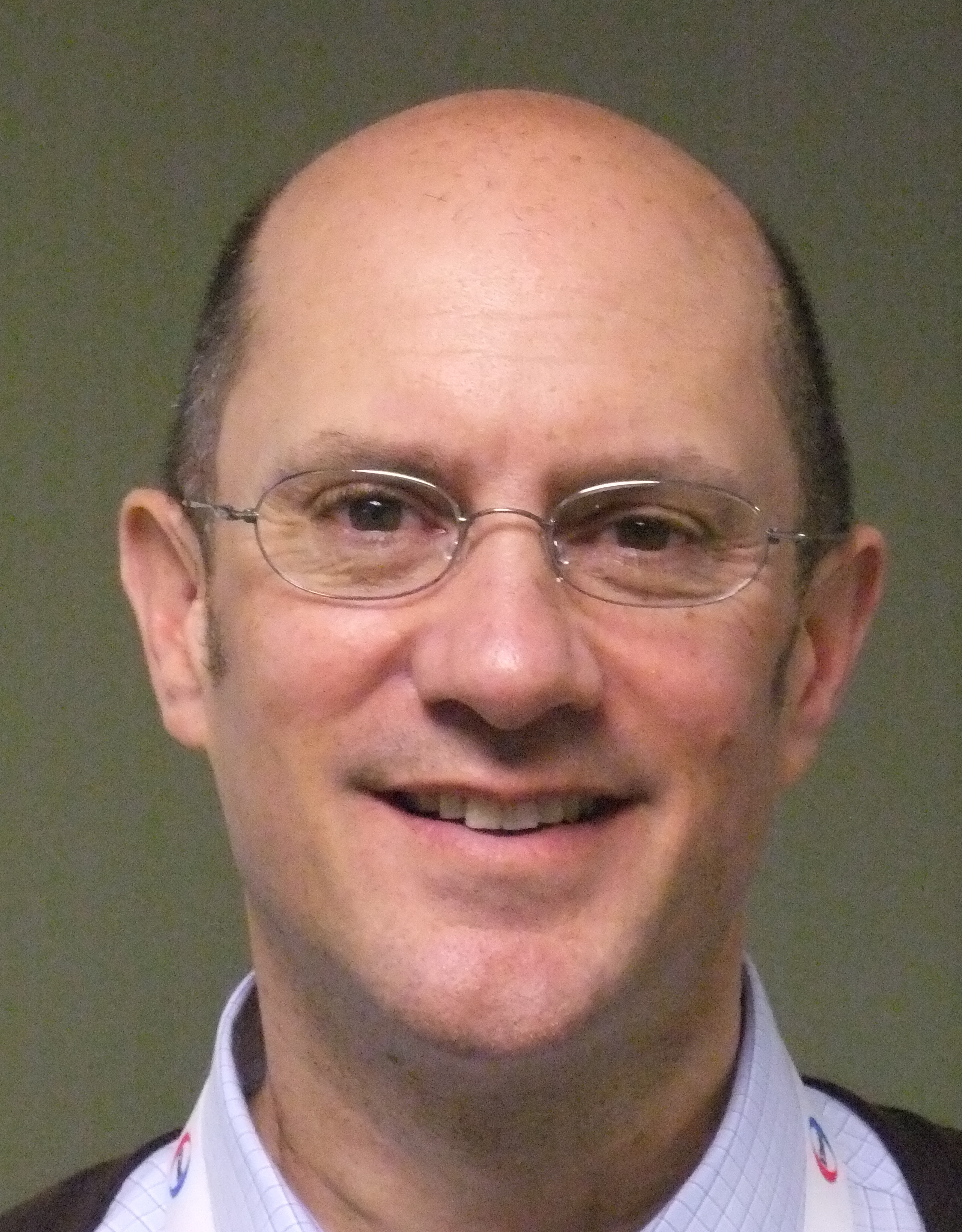
Stephen Errico
The FDA approval, which Stephen Errico, director of Eisai’s parenteral operations, expects in September, will usher in a new era for Eisai and its main U.S. manufacturing site in RTP.
The Japanese drugmaker is switching its attention to injectable drugs after focusing on pills for many years. Injectable cancer treatments such as Halaven are on top of Eisai’s priority list and no matter whether these cancer treatments will come out of Eisai’s own research and development labs or the labs of partners, the new RTP plant will make and package them and ship them, first to the U.S. market and later the rest of the world.
Plans to seek regulatory approval for the RTP plant to produce for the European market are next.
“This facility is very unique and important to Eisai,” Errico said during a recent tour of the plant.
For the past 13 years, Eisai has made and packaged pills in RTP - Aricept, the leading Alzheimer’s treatment, and Aciphex, an acid reflux treatment. Aricept, Eisai’s biggest seller, generated about $2 billion in annual sales in the U.S. But in November, Aricept lost patent protection and Eisai expects to lose about 60 percent of its blockbuster’s sales to cheaper generic competitors over the next two years. In March, Eisai cut 70 jobs at its RTP operations, all of them in the pill part of its business.
Future growth sees the company in the injectables and oncology market.
So do most pharmaceutical companies.
Cancer is the second most common cause of death in the U.S., according to the American Cancer Society. In 2010, more than 500,000 Americans died from the disease and more than 1.5 million Americans were newly diagnosed with cancer. With more than 200,000 new cases every year, breast cancer is the most common cancer in women.
The active ingredient in Havalen is eribulin mesylate, a synthetic version of a chemical made by a black sea sponge. It was first isolated in 1985 by a Japanese scientist and has shown to prevent cell division. Eisai found it screening chemicals made by plants and animals living under water and in the tropical rain forest.
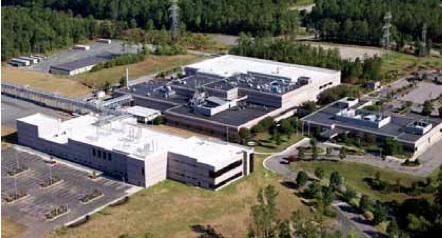
Eisai's operations in RTP include a new plant to make injectable oncology drugs. The new plant, in the foreground, could be expanded where the parking lot is now.
Eisai makes the eribulin mesylate in Japan. The active ingredient arrives in RTP as a powder, is then mixed with alcohol and water, filled in vials, labeled and packaged. All of the employees who will work on the line making Havalen will have to wear special clothing - from scrubs, hairnet, booties and gloves to two layers including a whole-body suit - for protection and to ensure the liquid isn’t contaminated.
Havalen faces competition from two other recently approved treatments for advanced breast cancer, but Eisai projects Havalen will become a blockbuster seller, generating about $1 billion per year. Up to 40 production workers could crank out as many as 4 million vials of Havalen on the RTP plant’s commercial production line per shift, Errico said. A second shift could be added.
A second production line is reserved for smaller batches of injectables used in clinical trials.
Errico estimated that initial demand for Halaven will keep about 25 percent of a shift busy. About 30 people have been hired and trained to work in the new plant. Errico said Eisai is looking for contracts to make other injectible products. “Our goal is to be a multi-product facility,” he said.
A framed architectural drawing on the wall shows three production lines Eisai could add on the southside of the building. But those are long-term plans. “I’ll probably be retired before we fill that,”Errico said.
RTP oncology startup gears up to launch first product
Wednesday, April 20, 2011, 7:15 pm No Comments | Post a CommentEditor’s note: North Carolina’s Research Triangle is home to hundreds of young companies. Scientists and entrepreneurs started them to develop technologies and medicines for better detection and treatment of diseases. Some of the companies work on innovations that are the result of research done at one of the area’s universities. Others are outgrowths of established companies. CivaTech Oncology, a startup that’s been around since 2006, employs two full-time and three part-time and is about to launch its first product, is one of those young companies.
Much of the furniture in the about 2,500-square-feet that CivaTech occupies at Park Research Center, a 13-building complex in Research Triangle Park, is second-hand. As the company’s two full-time employees, Suzanne Troxler Babcock and Seth Hoedl have important-sounding titles - Babcock is executive chairwoman and Hoedl is chief science officer - but they rely on a team of part-time employees and consultants.
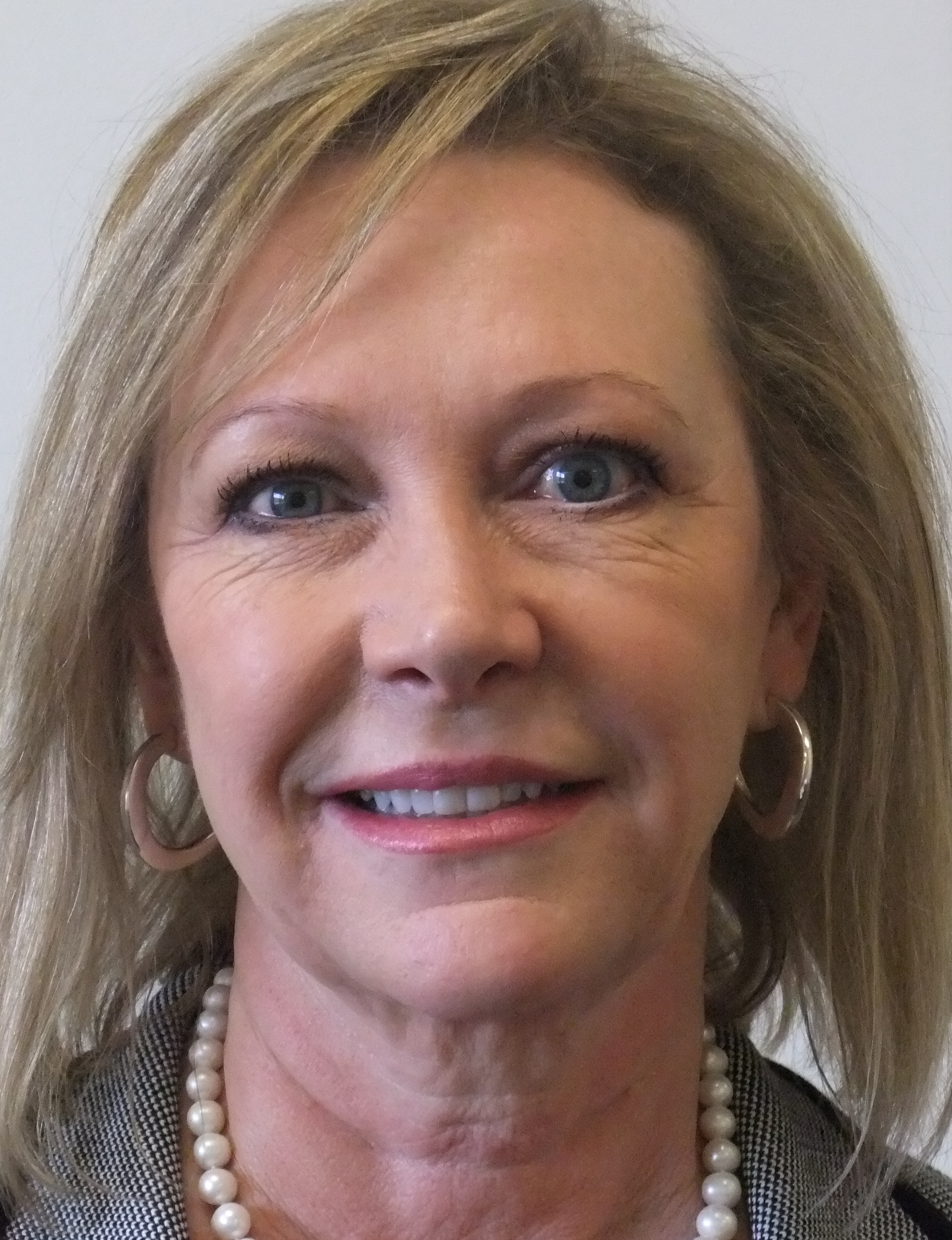
Suzanne Troxler Babcock
Like many startups, CivaTech operates on a tight budget. Since its inception, the company has raised about $2 million from private investors, most of them live in the RTP area.
But things are about to change, said Babcock.
“We think we’ll look quite different as an organization by the end of this year,” she said.
CivaTech is looking for a partner to start selling its first product, a next-generation alternative to radioactive seeds that have been used for about 20 years to help reduce tumors in the prostate, breast and cervix.
The Food and Drug Administration has already approved the product, called Civa-String, and Babcock said the first prostate cancer patient is expected to get a Civa-String implant this fall.
That would make the start-up a competitor in a growing market already occupied by some large, publicly traded companies.
Brachytherapy products, which is what the radioactive seeds are, generated $240 million in U.S. sales in 2008, according to a 2009 report by Bio-Tech Systems, a market research firm in the healthcare field. But by 2016, the market is projected to increase to about $2 billion in sales.
Radioactive seeds to treat prostate cancer accounted for about half of the 2008 sales, Bio-Tech Systems reported.
The biggest suppliers of the seeds are C.R. Bard, a New Jersey-based company that is publicly traded and reported $2.7 billion in sales last year; Oncura, a division of General Electric; and Theragenics, an Atlanta-based company with about $80 million in annual revenue.
The radioactive seeds are about the size of rice kernels - cylinders made of titanium and filled with radioactive material, iodine-125 or palladium-103. Worldwide, about 15,000 prostate cancer patients receive the seeds every year.
The radioactive seeds have side effects, frequent bathroom visits and sensitivity to many fruits and other foods. But the biggest problem with the seeds is that they can migrate, Hoedl said. About 120 seeds are implanted in a prostate for a therapeutic dose, he said. If one or two of them migrate, they can end up in the patient’s lung or kidney and do damage.
Civa-Strings shouldn’t migrate. They’re cheaper to make, because they require half the radioactive material to deliver the same therapeutic dose, Hoedl said. They dispense the radiation more uniformly and they’re made with palladium-103, an isotope that works more than three times faster than iodine-125.

A Civa-String, filled with palladium-103 and gold markers. The gold helps the doctor find the strip once it is implanted. Courtesy: CivaTech
The strings are flexible plastic tubes about the thickness of an angelhair spaghetti noodle that are loaded with palladium-103 and gold pellets. Depending on the dose prescribed for each patient, they come in lengths from less than an inch to about 2.5 inches. Radiation oncologists place the loaded strings with the same kind of 8-inch-long needle as the seeds.
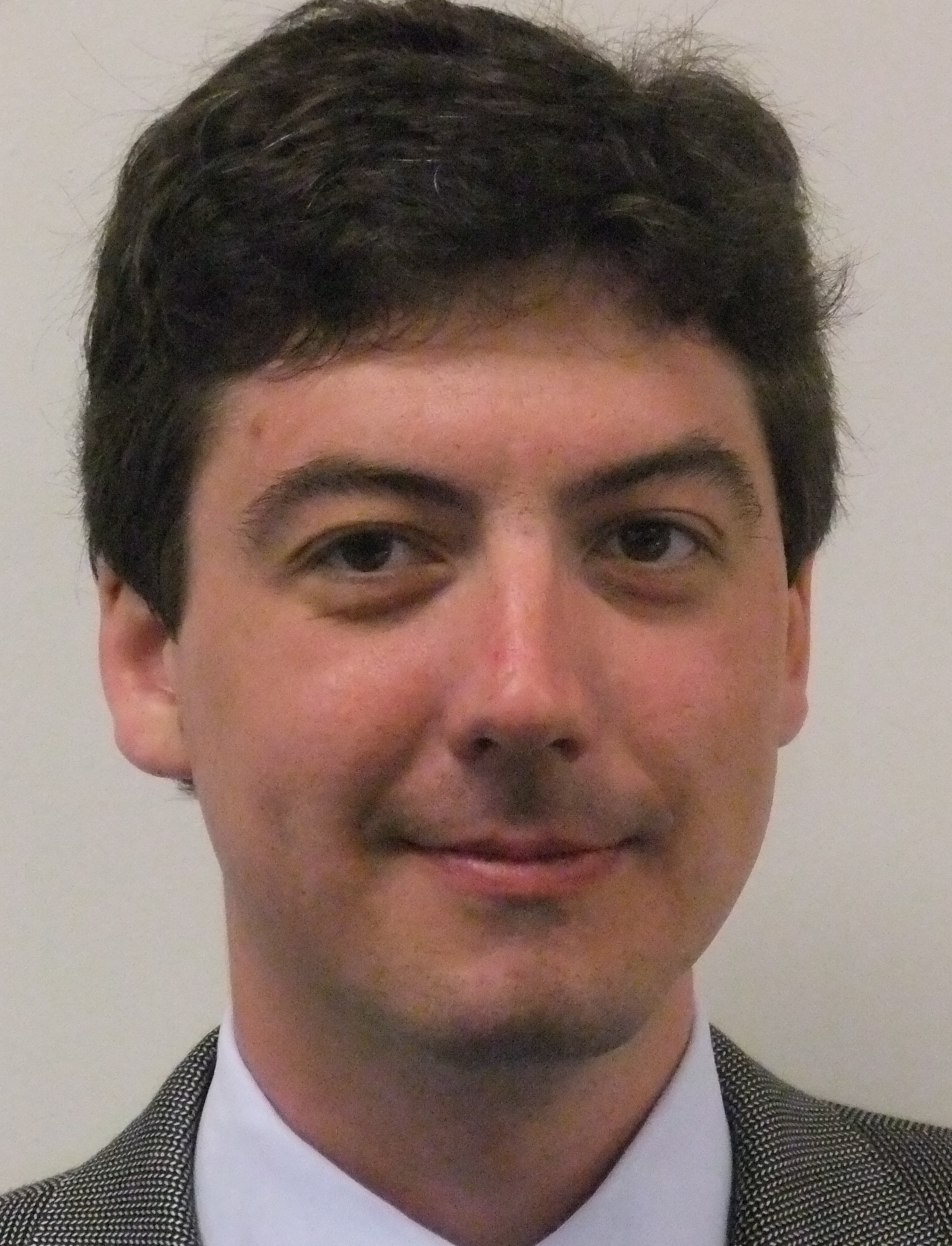
Seth Hoedl
Instead of about 120 seeds, a prostate cancer patient would require only 20 to 25 of the strings, Hoedl said.
CivaTech worked with the N.C. State University’s nuclear engineering department to make sure the palladium-103 doesn’t leach out.
If the launch happens as planned, Babcock expected to hire four more full-time employees this year.
Meanwhile, development of the next product, a sheet with palladium-103 loaded strips, continues. The sheet is aimed at shrinking cancers in the lung, colon and esophagus. Last year, CivaTech received $200,000 from the National Institutes of Health to work on the sheet.
Battling a killer cancer the net generation way
Tuesday, February 8, 2011, 11:14 pm No Comments | Post a Comment
Josh Sommer
Josh Sommer was still sitting in his hospital bed when he got an inkling of what he was up against with Chordoma, a rare bone cancer few survive more than 10 years.
He had fired up his laptop and was looking for information about the cancerous growth that surgeons at the University of Pittsburgh Medical Center had removed from the base of his skull two days earlier.
As a Duke University student, Sommer was able to pull up and read research papers published in peer-reviewed medical journals just like Duke researchers and doctors could.
He learned there was no cure for Chordoma, a cancer that is diagnosed in about 300 Americans per year. But he was quickly left wanting for information that didn’t exist.
“Growing up with the Internet and a smart phone, you expect instantaneous information,” said Sommer, 23, who now heads the Chordoma Foundation in Durham.
During the months following the surgery, he realized the research that had been done on Chordoma was spotty and haphazard. Funding to advance the understanding of the cancer’s genetic and biological drivers was minimal, which didn’t bode well for the development of treatment options to surgery, radiation and chemotherapy.
He was able to locate just one medical researcher with a federal grant to study Chordoma, Dr. Michael Kelley, an oncologist who happened to be an associate professor of medicine at Duke.
And he bumped into the pay walls that many peer-reviewed medical journals have erected, restricting online access to full research articles to those who pay for the information.
The pay walls still irk him - as a cancer patient, as a member of a generation that grew up with computers, the Internet, mobile phones, video games and Facebook and as a former engineering student who is familiar with software whose source code is public and can be changed by any programmer.
“The idea of using journal articles as a mode of communication, that was a big idea in the 1660s,” Sommer said. “Now we have iPhones.”
Open-access journals, which publish medical research online and without access fees, are starting to pop up. But established medical journals, descendants of scholarly publications that scientific societies started about 350 years ago, still drive much of the scientific discourse and, as a result, academic careers and research funding.
There was nothing he could do to tear down the pay walls, so Sommer decided to jumpstart Chordoma research another way.
He abandoned plans of becoming an engineer, took cell biology and genetics classes and started working in Kelley’s lab. In February 2007, a year after his diagnosis and the surgery, Sommer and his mother, a family doctor in Greensboro, founded the Chordoma Foundation.
Five years after his diagnosis, he doesn’t know how much time he has left. The cancer remains in remission, but he knows that with each year that passes the likelihood increases that the next biannual MRI scan could detect another tumor.
Listen to Sommer talk about his chances of outrunning Chordoma:
Audio clip: Adobe Flash Player (version 9 or above) is required to play this audio clip. Download the latest version here. You also need to have JavaScript enabled in your browser.
Disease-focused charities and private foundations like the Chordoma Foundation have long supplemented federal funding for medical research and they are increasingly financing early-stage drug development.

Source: The Foundation Center
The top 50 private foundations in the U.S. alone spent more than $1 billion on medical research in 2008, according to the latest numbers from the Foundation Center. Not included in those numbers is money from medical research charities like the American Cancer Society, which funded $124 million in research and teaching grants in fiscal year 2007-2008.
The pace of research into Chordoma has picked up in the past three to four years, said Kelley, the Duke oncologist who has studied the cancer for more than a decade.
Some of it is due to new research technologies that became available, he said. But he also credited efforts of the Chordoma Foundation, especially two workshops in 2007 and 2008 that brought together researchers whose expertise in other areas is useful in getting questions about Chordoma answered.
“That’s how science works,” said Kelley, who at both workshops met researchers whose work he didn’t know well. “It doesn’t happen in a vacuum.”
Fifty-three researchers attended the first workshop in 2007 thanks to the help of Dr. Francis Collins, whom Sommer’s mother had met at a gala. After she followed up by e-mail, Collins, who oversaw the International Human Genome Sequencing Consortium before becoming head of the National Institutes of Health in 2009, tapped his network of contacts for the Chordoma Foundation.
The second workshop a year later attracted 85 researchers. A third workshop is planned for March.
For starters, the Chordoma Foundation also offers a wiki on its Web site that’s a publicly accessible database of all published research papers addressing aspects of the cancer. Research news and other foundation updates go out on Sommer’s Twitter account via @sommerjo.
From the more than $1 million in donations it has collected, the Chordoma Foundation has begun to award grants to get research projects off the ground. Some of the money is earmarked to develop resources for researchers, such as tumor cell lines and genetically modified mice or rats that can be used for lab tests.
The largest grant so far, $120,000, went to the Sanger Institute, a British genome research institute primarily funded by the Wellcome Trust. The Sanger Institute was looking into mutations that can lead to cancer and included Chordoma in the project.
Results published last month went counter the textbook model of cancer development that says cells always start to divide uncontrolled after a series of genetic mutations and rearrangements happens one step at a time. The Sanger Institute researchers found that in at least 2 percent to 3 percent of all cancers the mutations and rearrangements all happened in a single catastrophic event. In bone cancers like Chordoma, however, this cellular crisis happens in 25 percent of all cases. (Read the New York Times story about the Sanger’s research results here.)
The discovery adds to what researchers know about Chordoma, Kelley said. “We’re learning more. What we don’t know yet is how to connect what we know with an effective treatment.”
Fight against cancer gets personal
Wednesday, February 17, 2010, 8:43 pm No Comments | Post a CommentThe pink ribbon, the icon for breast cancer awareness, and symbols representing other cancers may soon be outdated.
The symbols of tomorrow may cut across types of cancer and stand for a common protein whose long name includes the word kinase, a receptor on a cell’s surface where chemical messages attach, or a virus that is found in up to 80 percent of U.S. adults. Whatever people will identify with to support cancer research, prevention and treatment, it may no longer have anything to do with where the tumor is.
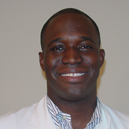
Dr. Duane Mitchell
If that is difficult to imagine, listen to Dr. Duane Mitchell, associate director of Duke University’s brain tumor immunotherapy program: “The hope is that there will be a common pathway that drives several cancer types,” Mitchell said Tuesday during a presentation to the Triangle Area Research Directors Council, an informal group of scientific leaders in the Research Triangle Park area.
Mitchell is part of a research group at Duke that is looking into ways to make cancer treatment less toxic and more effective. The Duke researchers are zeroing in on glioblastoma, a brain tumor that doesn’t respond well to treatment and usually kills within 15 months of being diagnosed. Read more…


