
ECGC encourages designers to create
Friday, April 15, 2011, 1:58 pm 1 Comment | Post a Comment
Timothy Gregory, an aspiring game developer and student at Piedmont Community College, works with the Unreal Development Kit during the East Coast Game Conference Thursday. | Photo by Tyler Dukes
It was barely 10 a.m. Thursday and Timothy Gregory was already busy creating worlds.
With a few gestures, he willed the ground into existence, adding texture and flooding his environment with water. Minutes later, he added grim, metallic structures: from complex pillars to blinking machines with unknown functions. Then with a click of his mouse, he created light. Read more…
Jane Goodall says “hello” to Duke University
Sunday, April 10, 2011, 8:14 pm No Comments | Post a CommentThe greeting was embracing but inquisitive. It emanated from deep within Jane Goodall and got louder, higher in pitch and more urgent with each bellow.

Jane Goodall
Goodall, the British primatologist considered the world’s foremost expert on chimpanzees, often starts her talks the way chimpanzees greet a new day in Gombe Stream National Park, the Tanzanian reserve where Goodall began her research in 1960 and where the institute she founded in 1977 still has a research project under way.
The greeting, Goodall has said, translates to, “Here I am. Who’s out there?”
Just six days short of her 77th birthday, Goodall stood on stage at the sold-out, 1,200-seat Page Auditorium at Duke University and again greeted her audience in Chimpanzeese.
But this time, she received in-kind answers from the audience. This welcome was special.
The March 28 Duke visit, Goodall’s third since 2007, followed two high-profile recruitments.
A year ago, Anne Pusey, a former field researcher for Goodall in Africa, joined Duke to head the evolutionary anthropology department. Pusey came from the University of Minnesota, home of the Jane Goodall Institute’s research archive since 1995. The archive is a daily expanding compilation of field notes, videos and photos and includes about 22 cabinets of paper files with many of the notes written by Goodall herself.
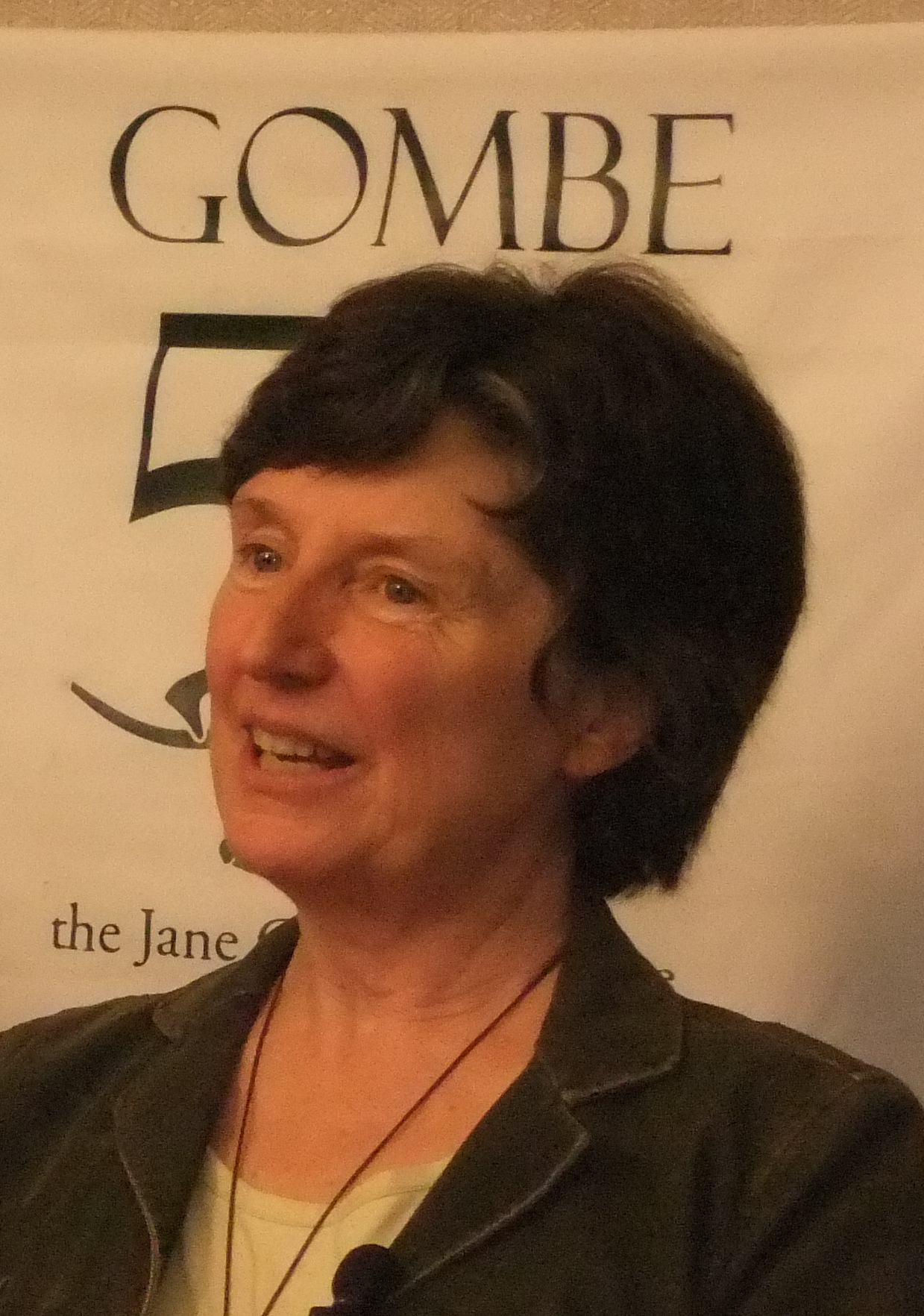
Anne Pusey
On March 17, Duke announced that the archive would follow Pusey to North Carolina and 11 days later, Goodall spent a very public day on the Duke campus, meeting journalists, visiting school children and talking about what she learned in the past 50 years.
In Minnesota, Pusey’s departure revived speculations that Goodall’s support for animal rights had ruffled feathers at the University of Minnesota, where researchers do extensive testing on animals, including on monkeys. Animal testing is also done at Duke, including invasive surgery testing on macaques. But joining Duke gained Pusey a distinguished, endowed professorship and a departmental chairmanship. At the University of Minnesota, she held the title of adjunct professor, usually a non-tenured, non-salaried position.
Also, Duke and the Jane Goodall Institute are exploring further collaborations, said Maureen Smith, the institute’s president. Environmental and humanitarian programs Goodall has started since the mid-1980s to preserve the chimpanzees’ rain forest habitat and improve the lives of neighboring villagers may offer research opportunities for Duke’s Nicholas School of the Evironment and Earth Sciences and the Duke Global Health Institute.
When asked at the press conference how she felt about the archive moving, Goodall answered, “I was happy for it to go where it needed to go.”
It was clear she didn’t want to talk about the archive’s 1,000-mile move. The woman, who showed a male-dominated academic world that humans aren’t the only ones using tools and that chimpanzees hunt prey and eat meat, preferred to talk about the encounters she’s had with “the animals that are most like us.”
Goodall’s favorites include stories about Fifi, Little Mama and Jojo.

Fifi
Fifi was about 2 when Goodall started her Gombe field research in 1960. Monkeys and humans age similarly, as Duke primatologists have found. (More about that here.) And chimpanzees can get as old as humans. But Goodall said that none of the chimpanzees she met in the early 1960s - she called them “her old friends” - are alive anymore. Fifi, the last surviving old friend, died in 2004.
“She almost made it,” Goodall said.
Like her mother, Flo, Fifi was popular with the male chimpanzees and a very successful and caring mother. She gave birth to nine sons and daughters, according to the Jane Goodall Institute a Gombe record. Fifi attained a very high rank in the group and so did several of her sons.
Flo, Fifi and Fifi’s offspring helped Goodall learn a lesson that in retrospect she called one of the most interesting of her career.
“There’s good mothers and bad mothers in chimp society,” Goodall said. “The offspring who have good mothers do better.”
Whether there’s a special relationship between male chimpanzees and their offspring is one of the questions that the field data in the archive may answer, she said. “Who knows what we’re going to find analyzing 50 years of data.”

Little Mama
Little Mama is an example of how old chimpanzees can get. Born in 1938, the chimpanzee is just four years younger than Goodall and the oldest chimpanzee living in a zoo. The two have known each other for about 30 years and Goodall still visits Little Mama at the Lion Country Safari near West Palm Beach.
It’s usually easy to find Little Mama, Goodall said. She likes to wear a piece of cloth over her head.
To keep audience members from feeling like hugging the next best chimpanzee, Goodall also had a story about violent gang war between two groups of chimpanzees that used to be one. Males of one group didn’t rest until they had killed the males of the other group, she said, and compared the situation to the American Civil War.
Considering how dangerous male chimpanzees can be makes the story of Jojo particularly stunning. Goodall frequently ends her talks with this story and did so at Duke.
An essay Goodall wrote for Science in 1998 included this version of the Jojo story:
One of the unexpected rewards that I have found as I become increasingly involved in conservation and animal welfare issues, has been meeting so many dedicated, caring, and understanding people. I cannot close this without sharing a story that, for me, has a truly symbolic meaning. The hero in this story is a human being named Rick Swope who visits the Detroit zoo once a year with his family.
One day, as he watched the chimpanzees in their big new enclosure, a fight broke out between two adult males. Jojo, who had been at the zoo for years, was challenged by a younger and stronger newcomer, and Jojo lost. In his fear he fled into the moat which was brand new, and Jojo did not understand water. He had gotten over the barrier erected to prevent the chimpanzees from falling in—for they cannot swim—and the group of visitors and staff that happened to be there watched in horror as Jojo began to drown. He went under once, twice, three times. Rick Swope could bear it no longer. He jumped in to try to save the chimp, despite onlookers yelling at him about the danger. He managed to get Jojo’s dead weight over his shoulder, and then crossed the barrier and pushed Jojo onto the bank of the island.
Rick held him there—the bank was very steep and if he were to let go Jojo would slide back into the water—even when the other chimps charged toward him, screaming in excitement. Rick held Jojo until he raised his head, took a few staggering steps, and collapsed on more level ground.
The director of the institute called Rick. “That was a brave thing you did. You must have known how dangerous it was. What made you do it?”
“Well, I looked into his eyes. And it was like looking into the eyes of a man. And the message was, ‘Won’t anybody help me?’”
Another visitor at the Detroit Zoo caught the rescue on videotape. Here’s the TV news report with footage of the rescue:
A nuclear power scare from Japan
Sunday, March 27, 2011, 11:12 pm No Comments | Post a Comment
Shearon Harris is one of six nuclear power plants operating in North Carolina.
The hydrogen explosions, the fire, the radioactive leaks and the evacuations at the earthquake- and tsunami-ravaged Fukushima Daiichi nuclear plant about 150 miles north of Tokyo happened a continent and an ocean away from North Carolina’s Research Triangle. But there’s a good chance the fallout from the nuclear crisis in Japan will hit close to home - lest you forget the Shearon Harris nuclear plant about 20 miles southwest of Raleigh.
On clear days, Shearon Harris’ cooling tower and the steam rising from it are clearly visible across the Triangle, even from Eno River State Park about 50 miles north. Splitting an atom, a process called nuclear fission, is cleaner than burning coal to generate electricity and Progress Energy, which operates Shearon Harris, plans to add two reactors to the existing one by 2018.
But the events at the Fukushima Daiichi nuclear power plant could delay expansion plans at Shearon Harris and elsewhere in the U.S. and make them more expensive.
The Japanese earthquake and its fallout “will slow nuclear power down in the U.S.,” Paul Turinsky, professor of nuclear engineering, said during a symposium Wednesday at N.C. State University. Turinsky was one of four NCSU experts who spoke at the symposium.
The same day, the Nuclear Regulatory Commission and the nuclear power industry agreed to reassess reactor designs and training procedures and to reevaluate reactors at the 104 operating nuclear power plants nationwide.
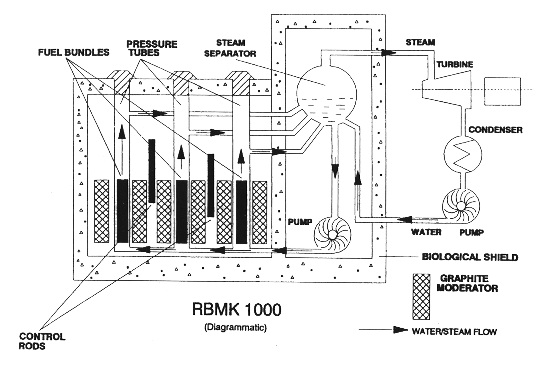
The Chernobyl reactor was an open design, lacking steel and concrete to contain radioactive material in case of an accident.
Also, public support for more nuclear energy has dropped. According to a CBS poll, more Americans disapproved than approved of building more nuclear plants in the wake of the Fukushima Daiichi crisis, and for the first time since the 1986 nuclear disaster in Chernobyl the disapproval rate reached 50 percent.
Add to that regulatory shortcomings fueling anti-nuclear sentiment that has lingered since the Three Mile Island nuclear power plant accident in 1979 and has foiled three decades worth of attempts to establish a nuclear waste repository.
A 2010 report by the Union of Concerned Scientists listed 27 cases in which nuclear power plants accidentally released radioactive materials over the previous four years and the Nuclear Regulatory Commission allowed plant owners to violate regulations with impunity.

A pressurized water reactor like the one at Shearon Harris has a steel vessel around the reactor core and concrete containment structures.
Seven of the 27 violations happened at nuclear plants in North Carolina. Shearon Harris accounted for two of the seven; radioactively contaminated water leaked into the ground in both cases.
With Triangle residents following updates on the nuclear crisis in Japan, Triangle universities scrambled to line up nuclear energy experts who tried to dispel fears with facts. The day following the NCSU symposium, the University of North Carolina’s Morehead Planetarium and Science Center hosted a talk by David McNellis, the director of UNC’s Center for Sustainable Energy, Environment and Economic Development, on the risks of nuclear power.
Back to back, the experts analyzed nuclear reactor designs and their failures, from Three Mile Island to Chernobyl to Fukushima Daiichi.
Based on estimates of how much the general public was exposed to radioactively contaminated material, Man-Sung Yim, an associate professor of nuclear engineering and a radiological health expert at NCSU, ranked Chernobyl as the worst of the three nuclear power plant failures.
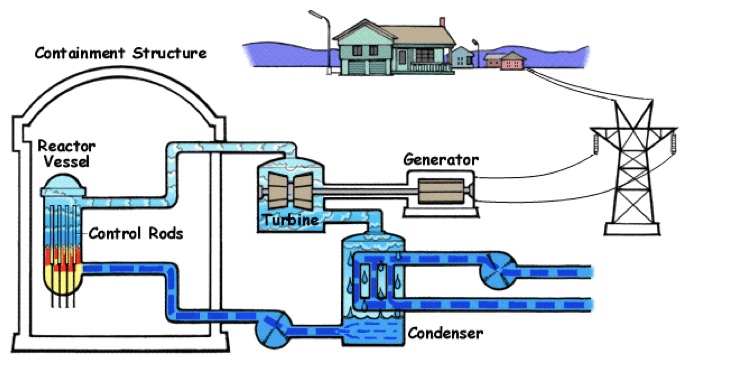
The Fukushima Daiichi plant uses boiling water reactors, which are equipped with steel reactor vessels and concrete containment structures.
Radiation exposure from Fukushima Daiichi “is less than Chernobyl, but far worse than Three Mile Island,” Yim said during the NCSU symposium.
Based on published measurements, Yim calculated that the general population was exposed to about 33 rem of radiation in Chernobyl. The evacuated area around the Fukushima Daiichi plant has received a dose of up to 10 rem.
The Three Mile Island accident exposed the general public to about 180 millirem of radiation, less than the 300 millirem to 600 millirem of radiation Americans take in every year from everyday living.
A 400 rem dose of radiation is considered lethal, Yim said.
The other experts linked the exposure risk of the three nuclear power plant failures directly to reactor design and operational safety standards.
All nuclear power plants generate electricity from steam that turns a turbine linked to a generator. The heat needed to turn water into steam comes from nuclear fission.
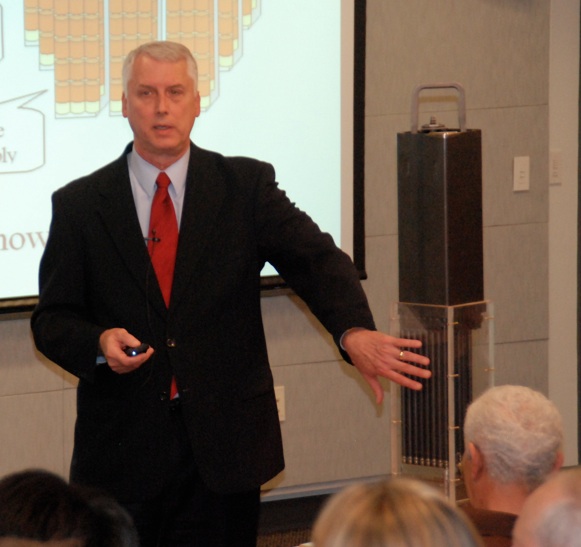
John Gilligan, professor of nuclear engineering at NCSU, shows off a nuclear fuel rod at the symposium.
The fuel to produce the heat is uranium, a natural metallic element in rock, soil and water that comes in multiple versions. The uranium is contained in ceramic-like pellets that are stacked in fuel rods in the core of a reactor. One uranium version, uranium-235, breaks apart when it gets hit by a neutron, releasing two to three neutrons, two radioactive fission products and heat. When released neutrons hit more uranium-235, the nuclear fission continues as a chain reaction.
Unlike the Three Mile Island and Fukushima Daiichi nuclear power plants, the Chernobyl nuclear power plant had no steel vessels around its reactor cores. When an experiment went awry on April 26, 1986, and reactor No. 4 overheated, pressure from the steam continued to build until it blew off the roof of the reactor building, scattering radioactive material from the melting reactor core across the landscape and setting free radioactive clouds that drifted westwards.
The Fukushima Daiichi plant withstood the massive March 11 earthquake, even though it wasn’t designed for such a powerful seismic event, John Gilligan, professor of nuclear engineering, said during the NCSU symposium.
Control rods automatically stopped nuclear fission, in effect shutting down reactors that were in operation the moment the electricity supply to the plant was cut off.
“It wasn’t the earthquake,” that caused the nuclear crisis at Fukushima Daiichi, Michael Doster, professor of nuclear engineering at NCSU, said. “It was the tsunami.”
The wall of water the earthquake had unleashed was more than twice as tall as the floodwall that was supposed to protect the nuclear power plant facing the sea. When the water flooded the plant, it knocked out emergency diesel engines that powered pumps, fans and other electrical equipment in the reactor buildings. After about eight hours, batteries backing up the emergency diesel engines were also exhausted.
Without power, pumps stopped cooling the water in 40-foot-deep pools that held spent fuel rods. The rods usually stay in these pools for about five years during which time they continue to give off heat. But unlike in the reactor, the heat production in the spent fuel storage pools cannot be turned off, said Doster.
“You cannot avoid it. You cannot control it,” he said. “You just have to deal with it.”
The spent fuel rods in the Fukushima Daiichi storage pools are made from zirconium alloy. As the temperature continued to rise in the storage pools, the zirconium interacted with the heated water and produced hydrogen gas. It was that hydrogen gas that exploded, Doster said. The explosions damaged the concrete buildings of at least two of the reactors and released radioactive material from the spent fuel.
Design flaws, malfunctioning equipment and human error caused reactor No. 2 at the Three Mile Island nuclear power plant to overheat March 28, 1979, UNC’s McNellis said.
It was the worst commercial nuclear power plant accident in U.S. history and led to sweeping changes involving emergency response planning, reactor operator training, human factors engineering, radiation protection and many other areas of nuclear power plant operations, according to the NRC. Regulatory oversight also tightened to enhance safety.
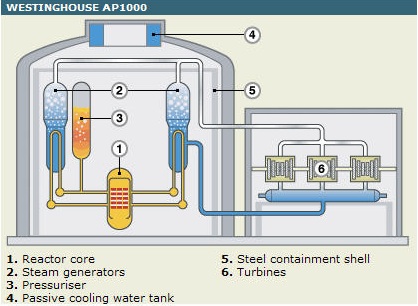 Like two-thirds of U.S. nuclear power plants, Shearon Harris’ reactor is the same design as reactor No. 2 at Three Mile Island. The remaining one-third of U.S. nuclear power plants rely on boiling water reactors like the Fukushima Daiichi plant.
Shearon Harris became operational in 1987, eight years after the Three Mile Island triggered the regulatory and safety changes.
The two reactors Progress Energy has proposed to add at Shearon Harris are a new design. Called AP1000, it includes a cooling tank on top of the reactor from which water trickles onto the core without the need for pumps.
Construction of nuclear plants with AP1000 reactors have begun in China and the U.S.
Charlotte-based Duke Energy, which is buying Raleigh-based Progress Energy, plans to build a nuclear power plant with AP1000 reactors in South Carolina. More are proposed in Florida and Alabama.
(Watch a video of the NCSU symposium here.)
One man’s vision of affordable health care for all
Monday, March 14, 2011, 3:17 pm No Comments | Post a CommentDurham is home to Duke University hospital, rated one of the best 50 hospitals in the U.S., but Durham also has one of the highest HIV infection rates in North Carolina. Sixty-five percent of adults are overweight or obese and an estimated 15 percent of the children in Durham are uninsured, according to the 2010 State of the County health report.

Dr. Victor Dzau
Considering that the Duke University Health System dominates healthcare in Durham, the community’s health status stands in stark contrast to the hospital’s nationwide ranking. Dr. Victor Dzau, Duke’s chancellor for health affairs and chief executive of Duke University Health System, acknowledged as much during a speech he gave March 9 at the Research Triangle Park Rotary Club’s Luther Hodges Ethics Luncheon.
But then Durham is no exception. Communities surrounding the best health systems in the country often have the worst health status, Dzau said.
The problems these communities face with access to healthcare and healthcare quality and affordability in many ways epitomize national challenges: Healthcare spending has increased faster than the economy and now represents 16 percent to 17 percent of the U.S. gross national product, but the U.S. population isn’t getting healthier. Obesity and diabetes rates are up, the infant mortality rate is higher in the U.S. than in most other developed countries and about 50 million American age 18 to 64 are uninsured, according to the Centers for Disease Control and Prevention.
“Some people say we’re in a crisis,” Dzau said.
As a doctor who promised to hold service above self and as the head of a health system whose costs for services to patients unable to pay reportedly increased from $45 million in fiscal year 2009 to $47.7 million in fiscal year 2010, Dzau said he believes healthcare is a human right and he worries about who’s going to pay for it.
He sees part of the solution in the federal healthcare reform act that passed last year. The law “has lots of elements we should embrace,” Dzau told RTP Rotarians, even though it’s “pretty scary for providers. It changes my entire business model.”
But he also envisions a role for academic health sciences centers like Duke to better pass on their knowledge from the bench to the bedside and to help surrounding communities come up with strategies for prevention and treatment. (More about organizational changes at Duke to embrace Dzau’s vision here.)
Implementing the reform act, which would expand health insurance to more than 30 million uninsured Americans, is projected to cost more than $1 trillion over nine years, according to a Congressional Budget Office report. But it also promises to change an inefficient and expensive fee-for-service system in which healthcare providers are paid whether treatments work or not.
Another CBO report estimated that by 2019 reform act provisions will reduce the national deficit by up to $143 billion.
Healthcare reform aims to, for example, reduce the more than $28 billion spent every year on infections by bacteria that can be traced back to healthcare settings. Provisions in the reform act include programs to increase measuring and reporting of healthcare-associated infections, to restrict reimbursements to hospitals for HAIs and to establish financial penalties for providers with high HAI rates. (More about efforts to reduce HAIs in North Carolina hospitals here.)
Other provisions restrict reimbursements to hospitals that discharge patients too quickly and have to readmit them within 30 days of the discharge.
The reform act would also test whether healthcare costs can be reduced by bundling payments to multiple providers, from the physician who treats, say a patient being admitted for a heart attack, to the home-health nurse who makes sure the patient takes his medicines, adjusts his diet and sticks with an appropriate exercise regimen.
“It’s going to be painful,” Dzau said. But “we’ve got to get the cost down and keep the quality.”
Financially, the status quo of U.S. healthcare is no longer tenable, he said.
Private health insurers have ratcheted up copays and deductibles for years to corral payments. To deal with a drop in tax revenue and a rise in Medicaid enrollments, states have begun slashing Medicaid programs to fill budget deficits. Meanwhile, hospitals have been shifting costs from Medicare and Medicaid patients to privately insured patients to reduce losses, Dzau said.
In addition to charity care for patients who couldn’t pay, Duke reported it absorbed $62 million in losses during fiscal year 2010 because Medicaid reimburses only 60 cents for every $1 spent on patients.
How energy alternatives can make us safer and healthier
Sunday, March 6, 2011, 8:21 pm 1 Comment | Post a CommentThe fiscal fight over monitoring greenhouse gases raged on Capitol Hill while more than 100 people gathered at N.C. State University Thursday and Friday to explore whether we dismiss the fallout from our fossil fuel dependency at our own peril.
Attendees of the two-day conference, which was partly sponsored by the U.S. Army War College, didn’t exactly make for a treehugging crowd. They included security analysts from Fort Bragg, economists, energy consultants to large investors and governments, former oil industry executives and scientists developing alternatives to oil and coal.
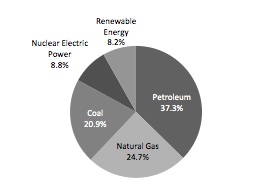
2009 U.S. energy consumption by source, U.S. Environmental Protection Agency
That greenhouse gases are taking a toll on climate, environment and health was never in question during the conference. Indeed, speakers expounded on the costly consequences that U.S. dependency on fossil fuels has on healthcare at home and defense overseas.
James Bartis, a senior policy researcher with the RAND Corp., a global policy think tank with an office in the Middle East emirate of Qatar, was one of the speakers at the conference. In testimony before the U.S. Senate Committee on Energy and Natural Resources two years ago, Bartis urged that there was “a compelling need to reduce greenhouse gas emissions” and a need for research on technologies that would allow us to use less oil, coal and natural gas, the three fossil fuels linked to almost 90 percent of the emissions.
At the NCSU conference, where he participated on a panel of alternative energy experts, Bartis was asked why lawmakers aren’t heeding his advice more. “There’s a lot of money to be had [with fossil fuels] and there’s a lot of inertia,” he responded.
 About 83 percent of the U.S. economy runs on fossil fuels and Alan Hegburg, a senior fellow at the Center for Strategic and International Studies and the conference’s keynote speaker, didn’t expect much will change the next 10 years.
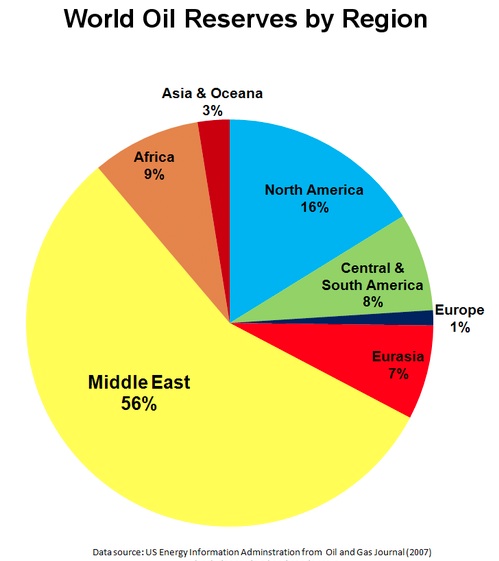
Coal is plentiful and cheap - no country has more coal reserves than the U.S. Crude oil is also still plentiful and cheap to extract - in the Middle East, which has more than half of the world’s oil reserves.
Fossil fuels pack a lot of energy. Their production is efficient. The delivery infrastructure is finetuned. And markets are well developed. In contrast, energy alternatives cost more and are less energy-dense. And functioning delivery systems to drive demand are rudimentary at best where they exist.
“Getting this train to change tracks will take a huge effort,” Hegburg said.
Then why try? Speakers at the conference offered as the main reason the hidden costs of fossil fuels.
Generating electricity from coal and burning oil for transportation is a dirty business. In 2005, pollution caused an estimated $120 billion in damages to human health, crops, timber yields, buildings and recreation nationwide, according to a report the National Research Council published 18 months ago.
Another study published a few weeks ago in the Annals of the New York Academy of Sciences estimated that extracting, transporting, processing and combusting coal caused $345 billion in damages to the health and the environment in 2005.
Factor in the hidden costs and electricity would be at least twice as expensive, according to the study. Do the same with oil and gasoline prices would be at least $1.50 per gallon higher, Bartis said.
Suddenly, wind and solar energy and investments to boost energy efficiency and conservation become competitive. Calls from research hubs for more funding to make cleaner energy alternatives cheaper and more efficient begin to make sense.
North Carolina’s Research Triangle is one of those hubs.
Last summer, the University of North Carolina at Chapel Hill, Duke University, NCSU and the Research Triangle Park-based research institute RTI International formed the Research Triangle Solar Fuels Institute to bring together local experts in chemistry, electrical engineering, material sciences and nanotechnology with the goal of developing technologies that tap the sun and make liquid fuel.
Researchers at RTI are working on capturing and reusing carbon dioxide – the most prominent greenhouse gas in the Earth’s atmosphere – producing bio-crude from organic waste and developing a nanotechnology light bulb that promises to be more energy efficient than a fluorescent light and doesn’t contain harmful mercury. Not far from RTI, at the corporate biotech research lab of Swiss agribusiness giant Syngenta, researchers have genetically engineered corn that requires less water and energy to make fuel ethanol.
And North Carolina, the third largest U.S. biotech hub by number of companies, has targeted biodiesel and ethanol from corn and biomass to meet an ambitious goal: By 2017, 10 percent of liquid fuels sold in the state should be locally grown and produced. This target goes hand-in-hand with the federal mandate that oil companies increase the use of renewable fuels such as ethanol in gasoline blends.
The federal ethanol mandate had its critics at the NCSU conference - diverting about one-third of the U.S. corn crop into ethanol production has contributed to rising food prices. But other speakers credited the mandate for keeping the discussion alive at a time when energy-related research funding is threatened by massive cuts.
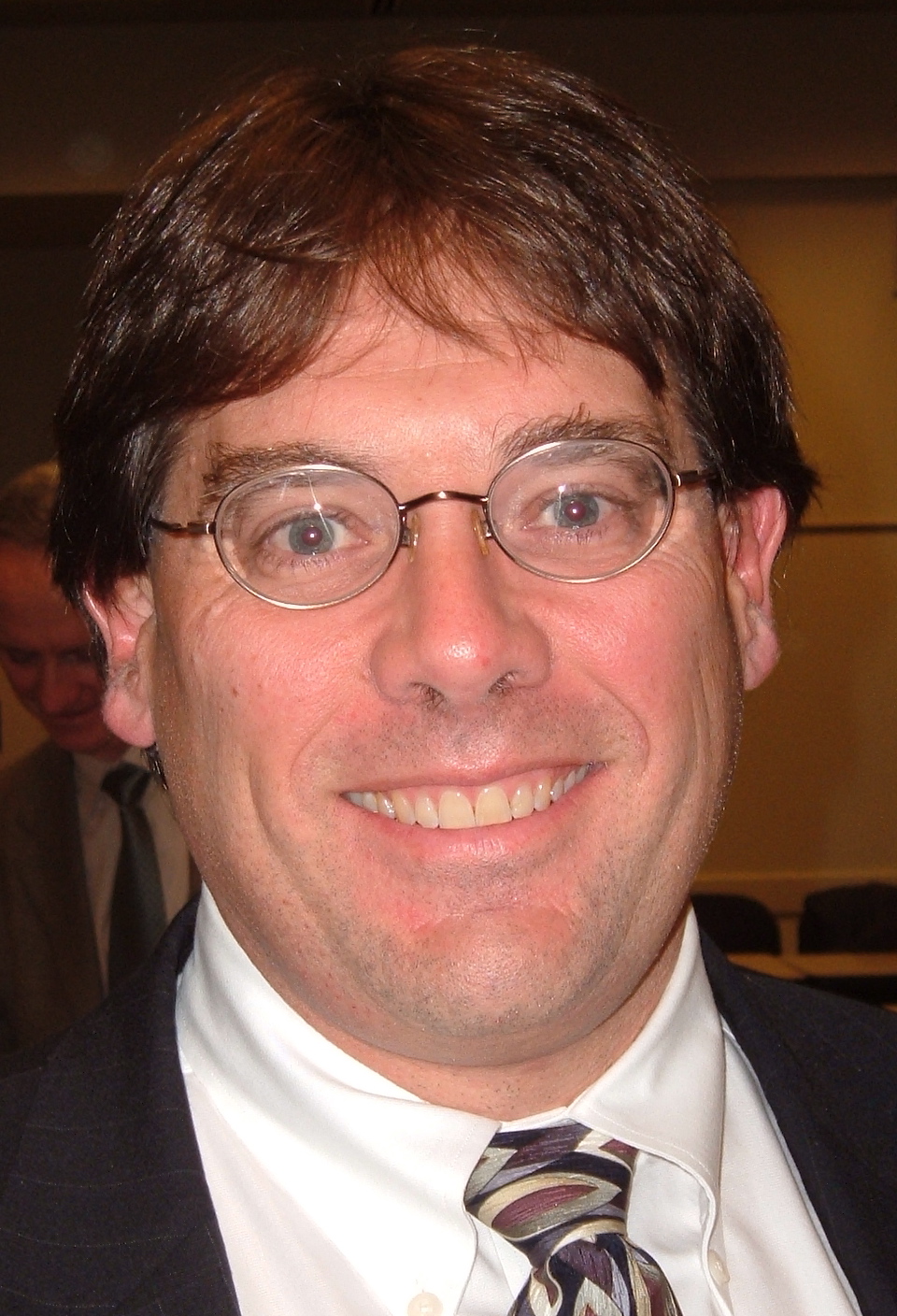
David Dayton
“Because there’s a mandate, climate control, security issues and oil is $100 a barrel, at least we’re still talking about alternative fuels,” said David Dayton, biomass program manager at RTI’s energy research lab.
How much military activities cost us to maintain our fossil fuel dependency is difficult to determine - neither of the two studies provided estimates - but conference speakers said ensuring a steady supply of crude oil drives national security spending.
With about 19 million barrels daily, the U.S. consumed more oil in 2005 than the next three biggest consumers, China, Japan and India, together, figures of the U.S. Energy Information Administration show.
Transportion, which in 2004 made up more than 60 percent of the U.S. oil demand, has become the dominant driver over the past 50 years.
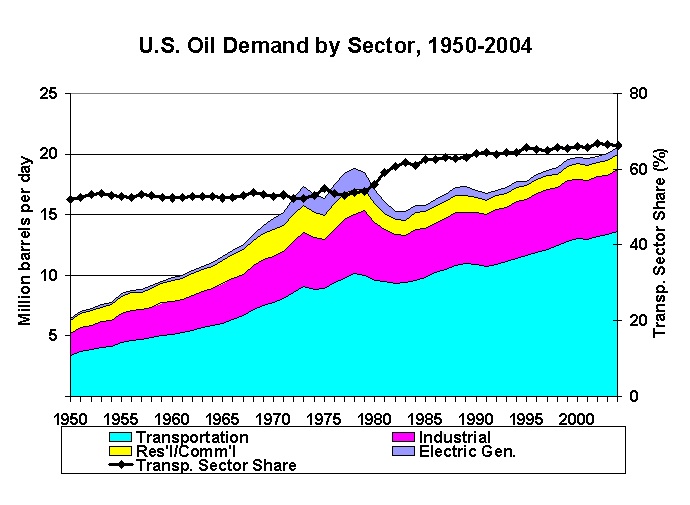
Source: Annual Energy Review
The increase in demand has influenced which regions are important for the U.S. to protect.
The Middle East, which sits on more than half of the world’s oil reserves, has gained importance in U.S. national security spending in the past 30 years, even though former Defense Secretary Donald Rumsfeld insisted that invading Iraq had nothing to do with oil, as Peter Maass, author of “Crude World: The Violent Twilight of Oil,” wrote on his blog last summer.
A study published two years ago estimated that between 1976 and 2007 the U.S. spent $6.9 trillion in the Persian Gulf region on military efforts, all of them oil-related. After the end of the Cold War in Europe, Persian Gulf military expenses took up an ever increasing portion of the entire U.S. defense spending in the 1990s and jumped to 91 percent in 2001. By 2007, their portion of the entire U.S. defense spending had decreased to about 80 percent.
Nobel Prize winning economist Joseph Stiglitz and Linda Bilmes, a leading expert on U.S. public finance, estimated in the Washington Post last year that the war in Iraq cost the U.S. in excess of $3 trillion and drove the price of oil up by about $10 per barrel.
This focus on the Persian Gulf region reflects the fact that more oil is shipped through the Strait of Hormuz, which connects the Persian Gulf with the Gulf of Oman and the Arabian Sea, than through any other narrow channel through which oil is shipped on global sea routes, according to numbers of the U.S. Energy Information Administration.
Every day, an average 15.5 million barrels of oil pass through the Strait of Hormuz, or about 18.5 percent of the daily oil production worldwide. More than three-fourths of the shipments are destined for Asian countries.

Source: WTRG Economics
Whether the U.S. investment to keep the oil flowing through the Strait of Hormuz was necessary is debatable, two speakers at the NCSU conference argued.
Eugene Gholz of the University of Texas Center for Energy Security and Ann Korin of the Institute for the Analysis of Globa Security argued that the price of crude is influenced mainly by production levels in countries that belong to OPEC, the Organization of Petroleum Exporting Countries.
It makes more sense for the U.S. to diversify energy consumption than to spend billions on military campaigns in the Persian Gulf or on currying favors with members of the OPEC cartel, Korin and Gholz suggested.
Once 15 percent to 20 percent of all of the vehicles in the U.S. can run on multiple fuels, Gholz said, the infrastructure to deliver gasoline alternatives will follow.
It’s advice North Carolina is heeding.
In addition to its commitment to boost the use of fuel ethanol made from plant fibers, the state is also at the forefront of establishing charging stations for plug-in electric vehicles, or PEVs. The Research Triangle is projected to get about 200 of the charging stations within the next year.
As a result, North Carolina is among the states where Nissan will fill the initial 50,000 orders for the Leaf, the first mass-produced, affordable electric car. The Leaf is not sold through dealerships. Deliveries started in December and January on the West Coast. The first cars are scheduled for delivery in North Carolina in April. (More on PEVs and the Leaf here.)
On Saturday, the day after the NCSU conference, Nissan brought about two dozen Leaf cars to the Raleigh farmers market for test drives.
North Carolina’s biotech industry gets wakeup call
Friday, February 25, 2011, 8:44 pm No Comments | Post a CommentBuyers looking for a kitchen appliance, computer or car can turn to a variety of product reviews and ratings, but there’s no version of Consumer Reports that helps physicians or patients with information about which treatments pack the most bang for the buck.
For that matter, in cases where multiple treatments are available, there may not even be any research to see which treatment does better under what circumstances.
Sure, health care providers like Duke University Health System and health insurers like Blue Cross Blue Shield keep extensive medical records to track an allergic reaction to a medication, length of stay in intensive care and other treatment results for each patient. Kaiser Permanente, the largest managed care organization in the U.S., developed a reputation early on for denying coverage of treatments that are not as effective as their cost might suggest. But in general, health insurers and providers don’t use comparative information extensively. They also rarely share the data.

Scott Evangelista
In the United Kingdom, regulators look at how new medicines fare against existing ones in clinical and cost effectiveness before they approve the new medicines for sale.
In the U.S., the standard test to get regulatory approval for a new medicine is a comparison with a placebo, a drug that is designed to do nothing, Scott Evangelista, a Deloitte consultant who lives in Chapel Hill and helps life science companies with tough problems nationwide, told an audience of hundreds this week at the North Carolina Biotech conference in Raleigh.
And when the new medicine passes the test, the drugmaker can claim, “We’re better than the sugar pill,” Evangelista said. The test results provide few clues how effective the new medicine is in a real-world situation.
But the pressure is rising to get the right medicines to the right people at the right time and the right value, he said.
For the more than 500 biotech companies in North Carolina - the majority of them call the Research Triangle area home - this could mean significant changes.
“You have to get your customers involved and you have to listen to things you don’t really want to hear,” Evangelista told the crowd at the conference.
Things like comparing a new drug head-to-head with existing ones, which can end favorably for the competition. Zeroing in on a small group of patients who stand to benefit most from a new drug, thereby limiting the drug’s sales potential. Adding a test to make sure only the patients who benefit from a drug get it, which makes the treatment more expensive and less convenient. Or suspending development of a drug, because it will cost a lot more than existing ones but is only a little bit more effective.
A 2010 report in the Journal of the American Medical Association suggested that of more than 300 studies the top six medical journals published over 15 months in 2008 and 2009, 43 percent included comparisons of different medications. Only 2 percent of the studies analyzed which treatments were better values.
Indeed, of the more than $2 trillion in annual U.S. health expenditures, only an estimated 0.1 percent is spent on researching the comparative effectiveness of medical treatments, according to a 2007 report of the Congressional Budget Office.

Source: Centers for Medicare and Medicaid Services, Office of the Actuary, National Health Statistics Group
The lack of information has contributed to health care costs that have little to do with how well patients do.
Case in point: Blood-pressure lowering drugs.
An 8-year-long study that followed more than 32,000 high-risk Americans age 55 and older found that diuretics were not only superior but also cheaper than newer enzyme inhibitors and calcium-channel blockers, according to outcome results published 2002 in JAMA.
With annual health care expenditures doubling to 16 percent of the U.S. economy in about 30 years and projected to reach 20 percent by 2016, this disconnect between costs and outcomes has insurers, employers and politicians pushing for a change in course.
In the past two years, Congress approved health care reform that stresses patients’ rights, earmarked $1.1 billion for comparative effectiveness research as part of the federal stimulus bill and established the Patient-Centered Outcomes Research Institute to set research priorities, oversee clinical trials and hand out money.
“None of this would be happening if cost wasn’t an issue,” Evangelista said.
Of course, comparative effectiveness isn’t a new concept in U.S. health care. It’s been around for more than 30 years. Two federal institutes to evaluate health care technology have opened and closed since 1978.
But this time around, America is graying - 10,000 baby boomers turn 60 every day, said Deidre Connelly, president of GSK North America Pharmaceuticals and a featured speaker at the biotech conference - treatments for chronic diseases account for an estimated 75 percent of U.S. health care spending and the rapid switch to electronic medical records will make comparative effectiveness analyses easier within a few years.
One Midwest health insurer has already launched its own research arm with plans to analyze its medical records for comparative effectiveness and conduct its own clinical trials, according to a report by CenterWatch, a trade publication that tracks the contract medical research industry.
This time, Evangelista said, “it’s going to happen.”
Global health: What’s in it for the Research Triangle?
Wednesday, February 16, 2011, 5:25 pm No Comments | Post a CommentTravel can spread diseases as seafaring Europeans proved about 500 years ago, delivering smallpox, influenza and the bubonic plague to the Americas and in return bringing syphilis back with them to Europe.
So it shouldn’t come as a surprise that a biotech hot spot like North Carolina’s Research Triangle, where scientists are taking aim at diseases like HIV/AIDS, diabetes and cancer, is also a hub for global health research - an emerging academic discipline that has gained significance as international travel, trade and finance have picked up.
North Carolina’s global health sector supports at least 7,000 jobs, according to a Duke University study that was based on 2007 data and published last year. The sector generates more than $500 million in annual salaries and wages and more than $18 million in annual tax revenue. Most of the jobs are in the Triangle, home to three large universities, multiple research institutes and nonprofits dedicated to boost health and health care and hundreds of businesses involved in research and development.
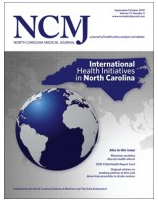
Cover of the North Carolina Medical Journal's latest issue.
The accumulation of brainpower makes the Research Triangle one of the few places in the U.S. where emerging diseases will be researched, medicines to treat them will be developed and programs to improve people’s wellbeing at home and abroad will be established.
“Global health involves highly interdisciplinary and interconnected areas that include human and animal health, medicine, law, engineering, economics, environmental science, agriculture and the social and biological sciences,” as four Duke researchers write in the North Carolina Medical Journal’s latest issue.
Their point of view is part of the NCMJ’s global health forum, which takes up much of the issue.
More than two dozen contributors, including nurses, doctors, community advocates, economists, a veterinarian, a lawyer and a pharmacist, explore what role North Carolina health care professionals and institutions play in global health and the benefits the state is reaping in return.
The forum’s premise follows much the same lessons we learned from the seafaring Europeans: Global health oftentimes is local health.
Today, HIV/AIDS has replaced the bubonic plague. Air travel spreads new influenza strains like H1N1. An obesity epidemic is threatening a rise in diabetes worldwide. Rising temperatures, an effect of global warming, are changing not only growing conditions for plants but also living conditions for animals that carry diseases.
North Carolina is feeling the effects of all these global developments:
- The number of people living with HIV/AIDS in North Carolina and in the Raleigh-Cary area is higher than the national average, according to the U.S. Centers for Disease Control and Prevention.
- Children ages 10 to 17 in North Carolina are among the most obese in the U.S., according to a 2009 report of the N.C. Department of Health and Human Services.
- Chronic disease and infant mortality rates in some eastern North Carolina are comparable to those in developing countries such as Malaysia, Thailand and Nicaragua, according to figures of the N.C. State Center for Health Statistics. The eastern part of the state also faces a particular shortage of health workers.
- North Carolina is getting warmer from the beaches through the Piedmont and across the mountains, according to the Arbor Day Foundation. Since 1990, much of North Carolina has switched from a zone where plants must survive temperatures as low as 0 degrees Fahrenheit to a zone where temperatures don’t dip below 10 degrees Fahrenheit. North Carolina has a long history of tick-borne diseases and research has shown milder winters increase tick-borne encephalitis among humans.
But North Carolina also stands to benefit from the work done in the Research Triangle to address global health issues:
- Researchers at the University of North Carolina at Chapel Hill and Family Health International, a Durham nonprofit, helped test a vaginal gel that contained 1 percent of the Gilead HIV/AIDS drug tenofovir. The test involved South African women and demonstrated that the gel reduced the risk of an HIV infection by up to 59 percent, according to results first published last year.
- RTI International, a research institute in Research Triangle Park, has developed a behavioral program to reduce the likelihood that at-risk women will get infected with HIV. The program is recognized by the CDC and implemented globally and locally.
- The UNC-CH chapter of Engineers without Borders has been involved in improving water quality in communities in Eastern Europe, Latin America and just outside Chapel Hill. Tests in a historically black neighborhood that borders the Orange County landfill showed that nine of 11 wells did not meet federal water quality standards.
- In 2009, UNC and CDC started a program in eastern North Carolina that used global models of mircofinance. It helps women start in business and provides health education.
- Nurses, physicians and dentists educated in India, the Philippines, Nigeria and Columbia are easing the health worker shortage in North Carolina. In the Research Triangle, about 15 percent percent of the physicians, 5.8 percent of nurses and less than 1 percent of dentists were educated outside of the U.S., according to an analysis by a postdoctoral fellow in the UNC School of Nursing that was based on unpublished data from the 2008 North Carolina Professions Data System.
Read all of the contributions to the NCMJ’s global health forum here.
Read here why in 2009 the Research Triangle was the first stop in the U.S. global health revamp.
Battling a killer cancer the net generation way
Tuesday, February 8, 2011, 11:14 pm No Comments | Post a Comment
Josh Sommer
Josh Sommer was still sitting in his hospital bed when he got an inkling of what he was up against with Chordoma, a rare bone cancer few survive more than 10 years.
He had fired up his laptop and was looking for information about the cancerous growth that surgeons at the University of Pittsburgh Medical Center had removed from the base of his skull two days earlier.
As a Duke University student, Sommer was able to pull up and read research papers published in peer-reviewed medical journals just like Duke researchers and doctors could.
He learned there was no cure for Chordoma, a cancer that is diagnosed in about 300 Americans per year. But he was quickly left wanting for information that didn’t exist.
“Growing up with the Internet and a smart phone, you expect instantaneous information,” said Sommer, 23, who now heads the Chordoma Foundation in Durham.
During the months following the surgery, he realized the research that had been done on Chordoma was spotty and haphazard. Funding to advance the understanding of the cancer’s genetic and biological drivers was minimal, which didn’t bode well for the development of treatment options to surgery, radiation and chemotherapy.
He was able to locate just one medical researcher with a federal grant to study Chordoma, Dr. Michael Kelley, an oncologist who happened to be an associate professor of medicine at Duke.
And he bumped into the pay walls that many peer-reviewed medical journals have erected, restricting online access to full research articles to those who pay for the information.
The pay walls still irk him - as a cancer patient, as a member of a generation that grew up with computers, the Internet, mobile phones, video games and Facebook and as a former engineering student who is familiar with software whose source code is public and can be changed by any programmer.
“The idea of using journal articles as a mode of communication, that was a big idea in the 1660s,” Sommer said. “Now we have iPhones.”
Open-access journals, which publish medical research online and without access fees, are starting to pop up. But established medical journals, descendants of scholarly publications that scientific societies started about 350 years ago, still drive much of the scientific discourse and, as a result, academic careers and research funding.
There was nothing he could do to tear down the pay walls, so Sommer decided to jumpstart Chordoma research another way.
He abandoned plans of becoming an engineer, took cell biology and genetics classes and started working in Kelley’s lab. In February 2007, a year after his diagnosis and the surgery, Sommer and his mother, a family doctor in Greensboro, founded the Chordoma Foundation.
Five years after his diagnosis, he doesn’t know how much time he has left. The cancer remains in remission, but he knows that with each year that passes the likelihood increases that the next biannual MRI scan could detect another tumor.
Listen to Sommer talk about his chances of outrunning Chordoma:
Audio clip: Adobe Flash Player (version 9 or above) is required to play this audio clip. Download the latest version here. You also need to have JavaScript enabled in your browser.
Disease-focused charities and private foundations like the Chordoma Foundation have long supplemented federal funding for medical research and they are increasingly financing early-stage drug development.

Source: The Foundation Center
The top 50 private foundations in the U.S. alone spent more than $1 billion on medical research in 2008, according to the latest numbers from the Foundation Center. Not included in those numbers is money from medical research charities like the American Cancer Society, which funded $124 million in research and teaching grants in fiscal year 2007-2008.
The pace of research into Chordoma has picked up in the past three to four years, said Kelley, the Duke oncologist who has studied the cancer for more than a decade.
Some of it is due to new research technologies that became available, he said. But he also credited efforts of the Chordoma Foundation, especially two workshops in 2007 and 2008 that brought together researchers whose expertise in other areas is useful in getting questions about Chordoma answered.
“That’s how science works,” said Kelley, who at both workshops met researchers whose work he didn’t know well. “It doesn’t happen in a vacuum.”
Fifty-three researchers attended the first workshop in 2007 thanks to the help of Dr. Francis Collins, whom Sommer’s mother had met at a gala. After she followed up by e-mail, Collins, who oversaw the International Human Genome Sequencing Consortium before becoming head of the National Institutes of Health in 2009, tapped his network of contacts for the Chordoma Foundation.
The second workshop a year later attracted 85 researchers. A third workshop is planned for March.
For starters, the Chordoma Foundation also offers a wiki on its Web site that’s a publicly accessible database of all published research papers addressing aspects of the cancer. Research news and other foundation updates go out on Sommer’s Twitter account via @sommerjo.
From the more than $1 million in donations it has collected, the Chordoma Foundation has begun to award grants to get research projects off the ground. Some of the money is earmarked to develop resources for researchers, such as tumor cell lines and genetically modified mice or rats that can be used for lab tests.
The largest grant so far, $120,000, went to the Sanger Institute, a British genome research institute primarily funded by the Wellcome Trust. The Sanger Institute was looking into mutations that can lead to cancer and included Chordoma in the project.
Results published last month went counter the textbook model of cancer development that says cells always start to divide uncontrolled after a series of genetic mutations and rearrangements happens one step at a time. The Sanger Institute researchers found that in at least 2 percent to 3 percent of all cancers the mutations and rearrangements all happened in a single catastrophic event. In bone cancers like Chordoma, however, this cellular crisis happens in 25 percent of all cases. (Read the New York Times story about the Sanger’s research results here.)
The discovery adds to what researchers know about Chordoma, Kelley said. “We’re learning more. What we don’t know yet is how to connect what we know with an effective treatment.”
Hmm, blueerrghh, eww: Using sounds to tell science stories
Saturday, January 22, 2011, 11:38 pm 1 Comment | Post a Comment
Robert Krulwich
Painters develop a style - Van Gogh’s brush strokes, Pollock’s abstract drips, Mondrian’s intersecting black lines. Writers find a voice to express themselves. The signature storytelling of Robert Krulwich, NPR’s science correspondent, uses style and voice. He paints with sounds.
As the keynote speaker at ScienceOnline 2011, which from Jan. 13 through Jan. 16 brought together more than 300 science bloggers in North Carolina’s Research Triangle Park, Krulwich used some of his science videos and radio podcasts, including a Radio Lab recording from 2008, as examples.
The Radio Lab recording explored brain research into how we make choices and, among other people, featured Dr. Oliver Sacks, a neuroscientist at Columbia University Medical Center in New York and author of the book “Awakenings.”
In the recording, Sacks talked about the routines he has developed to minimize choices. One involved a weekly trip to the farmer’s market, where he would always buy two pounds of kidneys. One week something went wrong and the vendor misunderstood Sacks. Instead of two pounds, the vendor packed up 22 pounds of kidneys. Too shy to complain, Sacks said, he just took them, paid for them and carried them home.
“I should have thrown away this monstrous, palpitating bag of kidneys,” Sacks said.
“Then followed an increasingly nightmarish period in which I had kidneys for breakfast, for lunch. Kidneys stewed. Sweet kidneys,” he said. “Finally, after about 10 days by which I had eaten about 50, BLUEERRGHH, an incredible nausea and vomiting took hold of me.”
Sacks’ retching sound unequivocally answered the question of how much is too much in a way any kindergartener could understand.
To take the audience along while he discovers how things work is what he aims for, Krulwich said in his keynote talk. The sounds are there to drive home impressions along the journey.
His sound pictures work, they tell a story that you can understand and feel, because Krulwich is inquisitive and an explainer at heart.
“You can’t help yourself,” he said in an interview with Science in the Triangle. “You ask the question that your soul asks.”
This wanting to explain things has gotten him into trouble, as Krulwich acknowledged in the interview. He has been told that it will never make him famous. And it’s hard work. It may look effortless when he breaks down complex topics such as science, technology and economics in a way that his aunt Nancy who got a B- in biology understands. But it isn’t, he said.
Watch the interview with Krulwich:

Watch the science story that he said was the hardest to tell here.
And watch his keynote talk at ScienceOnline2011 here and here and here.
NC economists predict slow recovery, recession residue for 2011
Wednesday, January 5, 2011, 10:39 pm 2 Comments | Post a Comment
John Silvia
Last year’s gloom was waning and the dark-suited crowd that filled the Fletcher Opera Theater Tuesday dared to laugh again, but John Silvia and Matthew Martin wove a few zingers into their cautiously optimistic predictions at the Greater Raleigh Chamber of Commerce’s 2011 economic forecast. (Read about last year’s economic forecast here.)
“Yes, you have a consumer rebound. Yes, there are a lot of people at the mall, but they’re buying a lot of discount products,” said Silvia, Wells Fargo’s outspoken economist.
“We’ve survived the crash,” he said. “But now we’re on a very different island than we were.” Read more…


