Archive for the ‘Media and Journalism’ Category

Ira Flatow urges scientists to learn to explain what they do
Monday, September 20, 2010, 10:38 pm 1 Comment | Post a CommentIra Flatow, the host of NPR’s Science Friday, skewered Harvard graduates who, wearing cap and gown, didn’t know why it is hotter in the summer than in the winter. But he spoke fondly of Grace Hopper, the U.S. Naval officer who helped develop COBOL, one of the first modern computer programming languages.

Ira Flatow
He brought videos of both, the Harvard graduates and Hopper, to his presentation Monday at Duke University that was part of N.C. Science Festival.
In the Hopper video, the “Queen of Software” explained to David Letterman what a nanosecond is. On the show, which was taped shortly after her retirement from the Navy in 1986, she pulled out a bundle of wires, each about a foot long, and told Letterman that’s the maximum distance light or electricity can travel in a nanosecond.
Hopper is a favorite, Flatow said, because she made something that was hard to understand - a billionth of a second - into something easy to grasp. And she was accurate and entertaining. Letterman could even pick a nanosecond color.
“We need scientists and engineers who are good at communicating,” he said.
Why? Because American adults would flunk basic science. A recent survey by the California Academy of Sciences showed that, for example, 47 percent of respondents didn’t know how long it takes the earth to revolve around the sun.
Americans want to know more about science, Flatow said. In a Pew Research Center survey a few months ago, 44 percent of the respondents said they want more news about science. That compared to 6 percent of the respondents who wanted more sports coverage.
But they’re not getting it in the mainstream media, Flatow said. “It’s becoming harder and harder for people like me and other science journalists to find a way to bring science to the public, when the mainstream media dumbs down science.”
Experienced science reporters were the first ones to let go and science sections discontinued when the recession accelerated the damage the Internet had been doing to mainstream media. But the Internet is also where a grassroots science movement is bubbling up, Flatow said. Blogs, Facebook, Twitter are reinvigorating science communication. But how to pay for it is a question yet unanswered.
“Maybe in the future we’ll see a golden age of science [communication].” he said.
Listen to Flatow answering questions by Science in the Triangle after the Duke presentation:
Audio clip: Adobe Flash Player (version 9 or above) is required to play this audio clip. Download the latest version here. You also need to have JavaScript enabled in your browser.
Watch the Letterman show with Grace Hopper:

How to write and publish a science book?
Wednesday, September 8, 2010, 7:53 pm No Comments | Post a CommentSCONC Presents: Writing Science: Local Authors Discuss Their Craft (an N.C. Science Festival event):
Join the Science Communicators of North Carolina as we probe the minds of local science writers to find out how they go about the process of writing a book.
How are ideas generated? What does their research process entail? How do they go about getting words down on the blank page/screen? What is the editing process like? Once the book is finished, what next?
Find out the answers to these questions and pose your own.
Panel includes:
T. Delene Beeland (blog, Twitter), author of the forthcoming The Secret World of Red Wolves.
Scott Huler (blog, Twitter), author of On the Grid (review).
Glenn Murphy, author of Why is Snot Green?
Moderated by Russ Campbell (blog, Twitter) of the Burroughs Wellcome Fund.
Thursday, September 23, 2010 from 6:30 PM - 8:00 PM (ET) in Research Triangle Park.
Really bad timing for me - I’ll be at the Block by Block summit on exactly the same day. I hate I will have to miss this. But you should go if you are in the area! This is bound to be awesome!
Science Communication Conference and Scienceblogging.org
Thursday, August 26, 2010, 9:46 pm 1 Comment | Post a Comment The first Science Communication Conference was held in Raleigh, at the North Carolina Museum of Natural Sciences last Saturday, organized by the Museum, SCONC (Science Communicators of North Carolina) and UNC-TV’s QUEST.
Read more…
Duke’s PottiGate: Another scandal
Wednesday, July 28, 2010, 9:41 pm 2 Comments | Post a Comment
Paul Goldberg
Dr. Anil Potti, the Duke University cancer researcher whose resume and research are under scrutiny, is the ideal target for Paul Goldberg, the editor of The Cancer Letter. Goldberg, who has an uncanny sense for hubris, is building a reputation for outing bad apples among cancer researchers, and he has dug up some interesting documents about Potti.
I met Goldberg a year ago at a training course the National Institutes of Health put on for science writers. He was one of the speakers and talked about a lung cancer researcher whose research was flawed and who failed to disclose the $3.6 million she had received from a cigarette maker.
After I read The Cancer Letter’s special issue about Potti, I called Goldberg and got his permission to link to the documents supporting the stories. Read more…
ScienceOnline2010 - interview with Anne Frances Johnson
Friday, July 16, 2010, 9:59 am No Comments | Post a CommentContinuing with the tradition from last two years, I will occasionally post interviews with some of the participants of the ScienceOnline2010 conference that was held in the Research Triangle Park, NC back in January. See all the interviews in this series here. You can check out previous years’ interviews as well: 2008 and 2009.
Today, I asked Anne Frances Johnson to answer a few questions. Anne is a freelancer and grad student at the University of North Carolina at Chapel Hill.
Welcome to A Blog Around The Clock. Would you, please, tell my readers a little bit more about yourself? Where are you coming from (both geographically and philosophically)? What is your (scientific) background?
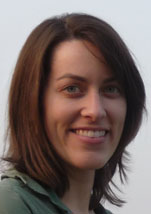 When I was a kid, I, like all 8-year-old girls, wanted to be a marine biologist and ride around on dolphins. A couple decades later, I’m still into science and nature, but I don’t actually ride wild animals. I’m a freelance science writer and master’s student in the Medical & Science Journalism program at UNC. I like to think it’s as fun as riding dolphins, but probably better for the environment.
I’m originally from Raleigh, NC, and I’ve recently come full circle back to the Triangle after more than ten years away with stops in New Mexico, New England, New Zealand and Washington, DC (I lived there even though it doesn’t have “new” in its name). I have a B.A. in biology from Smith College, where I spent lots of time cutting open fish stomachs for my thesis on lobster predation (What Eats Lobsters besides People?).
I always liked learning about science, but in college I found actually doing it to be rather gooey and tedious, and decided I probably didn’t have the endurance for it as a career. I found myself gravitating instead toward the edges of science, where it interacts with society. I worked at a marine reserve in New Zealand, patrolled Costa Rican beaches for would-be sea-turtle-egg poachers, and tended persimmons, goats and alpacas on various farms here and abroad. But it wasn’t until my first “real” job-at the National Academy of Sciences-that I discovered science writing. Instantly smitten, I’ve been a ravenous science reader and writer ever since.
Tell us a little more about your career trajectory so far: interesting projects past and present?
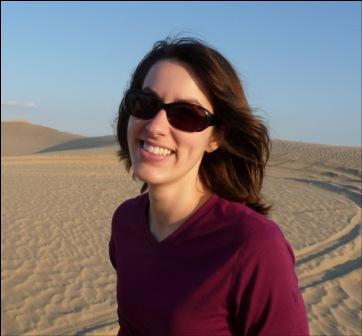 My first science communications piece was an educational booklet on stem cells. Most of the stem cell information available at the time followed either the science community’s party line (embryonic stem cells are more useful than adult stem cells so we should use them) or the conservative/political party line (scientists want to kill babies and we should stop them). Since I was working for a scientific organization, it would have been simple to take the usual tack, but we decided it was really time to go beyond that. I spent a lot of time talking to people ethically opposed to human embryonic stem cell research and tried to craft the booklet so it could reach those folks on their terms, while still being true to the science. Dealing with both the scientific and ethical issues head-on ultimately made it a more useful product for people, and tens of thousands of the booklets found their way into schools and doctors’ offices. It was very rewarding.
After that, I had the pleasure of developing a whole slew of other booklets (and posters and gadgets and websites) on topics including how to plant a pollinator-friendly garden, why microbes are cool and what the new science of “metagenomics” can tell us, and how climate change might affect ecosystems across the U.S. It’s been a constant learning experience.
What is taking up the most of your time and passion these days? What are your goals?
Last year I decided to go back to school to pick up some additional communications skills I wasn’t sure I could learn on the job. So now I’m a science journalism grad student. Perhaps the most exciting aspect of the curriculum is the multimedia work I’m doing. I know “multimedia” is a silly buzzword, but it really is useful to be able to apply whatever combination of media-text, sound, video, graphics, animations-is right for the topic at hand. I’m enjoying learning to wield all those tools and figuring out how to leverage the strengths of each to communicate in an engaging way.
Although teamwork is incredibly powerful, it’s also useful to be able to function as a “one-woman-band,” with a complete suite of skills to produce everything from documentaries to press releases myself. Wherever I end up after I graduate in 2011, I hope I’ll be able to apply all my fun new skills and continue to learn and adapt to the changing communications landscape.
What’s up with going to journalism school? No offense, but isn’t that a dying industry?
I get that a lot. Journalism school is actually alive and well, even in the current climate. The journalism business model is in a period of adjustment that’s leaving a lot of traditional journalists out of work, and that’s too bad. But I think people are hungrier than ever for information, and for the most part they know the difference between bad information and good information. I think there will always be a role for good journalistic work-especially when it comes to science topics.
Career-wise, I’m more interested in communications than traditional journalism, but I think going through this experience of learning to write more like a journalist makes me a stronger communications person. I also just love being in journalism school because I’m surrounded by really creative thinkers from all different backgrounds, which challenges me to go beyond the obvious and try different approaches.
What aspect of science communication and/or particular use of the Web in science interests you the most?
I love that there’s this vast array of genuinely interesting science content online that teachers can use as part of science education. Science education has had a terrible reputation for a long time. The Web gives teachers and parents opportunities to engage children in ways that have never existed before. Kids can interact with the scientific world on their terms and keep following the leads that interest them most. It sure beats those awful textbooks and cheesy videos I remember from childhood.
How does (if it does) blogging figure in your work? How about social networks, e.g., Twitter, FriendFeed and Facebook? Do you find all this online activity to be a net positive (or even a necessity) in what you do?
I have a healthy skepticism about using blogs and social networking in science communications. Organizations pour so much into getting their content out in all these different ways. They’re available and “free,” so why not? And sometimes they’re really effective at amplifying your reach and visibility. But they’re not magical. Sometimes, you’re better off simply producing more or better actual content, and your resources would be better spent focusing on the dissemination avenues that are most effective for your specific target audiences. There’s always a trade-off between quantity and quality, between producing new content and promoting your existing content. You have to hit the right balance, and I think blogs and social networking can be distracting if you don’t keep them in perspective. I try to use ‘em when they’re right for the task, and leave ‘em when they’re not.
What was the best aspect of ScienceOnline2010 for you? Any suggestions for next year? Is there anything that happened at this Conference - a session, something someone said or did or wrote - that will change the way you think about science communication, or something that you will take with you to your job, blog-reading and blog-writing?
One of my favorite experiences was getting to hold these really old dead birds they keep in the bowels of the NC Museum of Natural Sciences. There were just racks and racks of them. We got to pass them around, and they were so astoundingly light and beautiful. It was fun to connect with nature in the way that taxonomists have for years and years, where you can take note of the tiniest differences among species. I loved that behind-the-scenes tour, and would be thrilled to be able do more of the tours next year.
On blogging, the conference perhaps counter-intuitively convinced me that it’s okay not to blog about science. Seeing all those people blogging and tweeting so passionately, I thought, you know, there’s room for all types here. And if daily blogging isn’t my thing, it’s okay. People are blogging about science, and people are writing involved, long-form articles and books about science, and folks will continue to be engaged with science on whatever basis is useful for them-whether it’s monthly, daily or by the second. There are so many possibilities, so many ways for people to talk about science. With all those opportunities, you can really shop around and focus on what you can do best.
Thank you so much for the interview. I hope you will come to the meeting again next January.
ScienceOnline2010 - interview with Cassie Rodenberg
Tuesday, June 1, 2010, 9:50 pm No Comments | Post a CommentContinuing with the tradition from last two years, I will occasionally post interviews with some of the participants of the ScienceOnline2010 conference that was held in the Research Triangle Park, NC back in January. See all the interviews in this series here. You can check out previous years’ interviews as well: 2008 and 2009.
Today, I asked Cassie Rodenberg to answer a few questions:
ScienceOnline2010 - interview with Fenella Saunders
Monday, May 31, 2010, 3:21 pm No Comments | Post a CommentContinuing with the tradition from last two years, I will occasionally post interviews with some of the participants of the ScienceOnline2010 conference that was held in the Research Triangle Park, NC back in January. See all the interviews in this series here. You can check out previous years’ interviews as well: 2008 and 2009.
Today, I asked Fenella Saunders from The American Scientist to answer a few questions:
ScienceOnline2010 - interview with Karyn Hede
Tuesday, May 25, 2010, 3:25 pm No Comments | Post a CommentContinuing with the tradition from last two years, I will occasionally post interviews with some of the participants of the ScienceOnline2010 conference that was held in the Research Triangle Park, NC back in January. See all the interviews in this series here. You can check out previous years’ interviews as well: 2008 and 2009.
Today, I asked Karyn Hede to answer a few questions:
ScienceOnline2010 - interview with Tyler Dukes
Wednesday, May 12, 2010, 10:59 am No Comments | Post a CommentContinuing with the tradition from last two years, I will occasionally post interviews with some of the participants of the ScienceOnline2010 conference that was held in the Research Triangle Park, NC back in January. See all the interviews in this series here. You can check out previous years’ interviews as well: 2008 and 2009.
Today, I asked Tyler Dukes to answer a few questions:
ScienceOnline2010 - interview with Scott Huler
Monday, May 10, 2010, 10:46 pm 2 Comments | Post a CommentContinuing with the tradition from last two years, I will occasionally post interviews with some of the participants of the ScienceOnline2010 conference that was held in the Research Triangle Park, NC back in January. See all the interviews in this series here. You can check out previous years’ interviews as well: 2008 and 2009.
Today, I asked Scott Huler to answer a few questions:


