Archive for January, 2011

What if science blogging were defined?
Sunday, January 16, 2011, 1:22 am 3 Comments | Post a CommentThe credibility of science blogging is getting much scrutiny at the ScienceOnline 2011 conference, which is under way in North Carolina’s Research Triangle Park.
Two sessions on Saturday and one on Sunday addressed the quality of online science writing and ethics standards. Two touched on the fact that while blogs are rarely edited, posts published on them can be difficult to distinguish from edited content published in magazines and newspapers and without an editor, mistakes and sloppiness can happen. In the third session, journalistic standards of separating advertisement and content took center stage.
Virginia Hughes, the former community manager of ScienceBlogs and a panelist in the “Science Journalism Online: Better, or Merely Different” session, suggested labeling blogs. Ed Yong, a blogger for Discover Magazine and a panelist at the “Blogs, Bloggers and Boundaries?” session, said a blogger writing for a larger audience encounters more boundaries to get scientific information across and standards help to break down those boundaries.
OK. So what if there was a rating system for blogs, sort of a Good Blogging seal of approval to attract a wider, more general audience from traditional media - particularly from the many regional newspapers that have eliminated local science reporting. What if such a rating system would clearly identify blogs and rate how credible their information is?
The first question that arises is who would define the standards. The second question is who would apply them. Once both questions are answered, science blogging may be more defined, but it would also lose some of the vibrancy that comes from the freedom of not having an editor, of being able to write about the most obscure or the most mundane in any conceivable format.
Technology allows everybody to blog, to say his or her piece without having to pay printing costs. This offers the opportunity to depose authorities who speak from up high.
Sure, some blog posts will be inscrutable, wrong or wrong-headed. But others will be fantastic experiments of creativity. Some of them may even lead us to a way to write about science and make a living doing it.
It is premature to want to define science blogging while the future of online communication is far from clear.
Online science writing must remain as big a tent as possible, avoid institutionalization and leave judgment calls about quality and credibility to the audience.
What would help the audience do that, is more transparency - who the blogger is, where he or she is coming from, links to sources and disclosures of potential conflicts of interest.

Dr.David Kroll: scientist, musician, mensch
Thursday, January 13, 2011, 12:46 pm No Comments | Post a CommentDr. David Kroll is a man who wears many hats: researcher, professor, science blogger, and musician. His life seems to tie together all these separate parts into one cohesive theme of giving back to the community and enriching the lives of others.
 Kroll grew up on a neighborhood perched on a hill that afforded a direct view of the Roche tower in Nutley, New Jersey. Growing up looking at the Roche tower every day lead him to take an interest in pharmacology and the drug industry. He went to college as a first generation student and majored in Toxicology at Philadelphia College of Pharmacy and Science, following his dream of someday being able to help others by working in that same tower.
Throughout his career, Kroll kept in mind that knowledge can be used inclusively or exclusively. He wanted to use his knowledge of pharmacology to help regular people navigate the drugs that they were taking, but wasn’t very prepared for the discovery that science could be a profession so isolated from the public at large. He starting blogging as an outlet for his desire to educate the wider public on drugs, supplements, and pharmacology in general. Kroll recently
celebrated his fifth year of blogging in December 2010, blogging for ScienceBlogs, the American Chemical Society’s CENtral Science, and for PLoS Blogs over the years.
The path of Kroll’s educational and musical career intersect at many points in his life. He started playing guitar at the age of fourteen as a way to escape being labeled as a “real dork in high school.” However, the release of The Police’s Outlandos D’Amour and Joe Jackson’s Look Sharp lead him to an appreciation of the bass, which he switched to a year after picking up the guitar. This step proved to be successful as he went on to play bass in his first band with his high school girlfriend, his high school friend, his guidance counselor, and his high school history teacher. Kroll cites his history teacher as being a huge influence on getting him interested in the history of social injustice and specifically the history of science. His first band played bars and clubs around town throughout Kroll’s high school years.
In college, he played mostly solo but would occasionally play with his old high school band while visiting home. Around the time he was finishing college, Tom Petty and the Heartbreaker’s “Southern Accents” was released and proved to be yet another pivotal album in his life. This Tom Petty album release was right around the time of his acceptance into a pharmacology doctorate program at the University of Florida in Gainesville, the hometown of the Heartbreakers. Tom Rowe, his advisor at UF, was supportive of a work/life balance, and this freedom allowed him to play in a U2 tribute band for two years in graduate school.
After finishing his Ph.D., he landed an offer for a postdoc position at Roche, the original setting of his dream of working in pharmacology. He was literally within days of accepting when he got offered a position at the University of Colorado in Denver. He ended up taking the position in Denver instead, where he worked on the transcriptional regulation of the CREB protein and a shortly afterward went on to land an Assistant Professor position in the School of Pharmacology at the University of Colorado Health Sciences Center.
The move to Denver proved to be fortuitous to his musical life as well. One day he was typing up an abstract in the main office of the Division of Endocrinology, Metabolism, and Diabetes at the Univ of Colorado Health Sciences Center when a endocrinology fellow walked in to answer a page for a gig he was playing later that evening. Kroll struck up a conversation, mentioning that he was a bass player, and got invited to jam with Dan Bessesen, and his bandmate, Jay Reusch, a cardiologist whose wife was also an endocrinology fellow. These jam sessions evolved into Dogs in the Yard, an adult alternative band that lasted for eleven years, from 1990 - 2001. They played gigs at the medical center, fundraisers, and even the endocrine department Christmas party. They released two CDs, one in 1997 entitled “Sunday Afternoon” and one in 2001, “Til the Summer Fades Away.” About eight years into the band, EMI called and offered them a move to LA to pursue the possibility of a record deal. But as all of the people in the band had work and family obligations, they decided to turn it down.

Eleven years is an ancient time in band years, but all good things must come to an end. Kroll left Dogs in the Yard after he met his now-wife at a cancer research conference in Colorado. She was a Duke oncology physician-scientist who lead him to doing a sabbatical at Duke that eventually lead to a job offer in the North Carolina Research Triangle at RTI International. Despite the loss of the band, he continued his musical career with other scientists, playing with
Nick Oberlies, a chemistry postdoc, scientific collaborator at RTI, and DJ at Duke University station WXDU. He also played with Cole Guerra, a psychology graduate student at Duke who Kroll contacted after reading an article featuring him in the local Triangle Independent Weekly. Kroll joined his band on bass for shows at Cafe Driade and Local 506 in Chapel Hill. However, at RTI he missed the joy of teaching students and moved to take a professorship at North
Carolina Central University in Durham.

Kroll has continued to keep in touch with music at NCCU, playing the annual Faculty Talent Show and working on solo projects. Lately, he’s been writing songs under his own name in preparation to record a solo album called “From Denver to Durham.” The namesake of his album comes from the fact that both cities have an interstate exit numbered 284 that leads to the international airport, a testament to the myriad levels of interconnectivity in both his scientific and musical career.
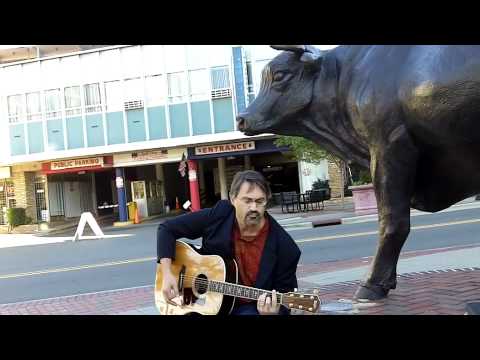
At the BlogTogether bash in Durham in October, he debuted a song called “Minister of the Ether” that pays tribute to Anton Zuiker in celebration of his 10th year of blogging and to all his work in the blogging community. Check out an exclusive video below of Kroll giving an acoustic performance of the song under the bull statue in Durham’s city center.
Test your flu preparedness
Wednesday, January 12, 2011, 12:35 am 2 Comments | Post a CommentThe H1N1 virus that fueled the 2009/2010 flu pandemic was less deadly than initially feared, but it carried enough punch to infect more than 1.4 million and kill about 25,000 worldwide.
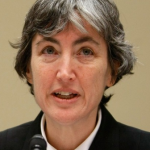
Dr. Anne Schuchat
Also, five months after the World Health Organization declared the end of the pandemic, the virus lives on as part of the seasonal flu. In the United Kingdom, the season geared up with an outbreak caused by the H1N1 virus that emerged in 2009.
With the flu season upon the U.S., Duke University invited Dr. Anne Schuchat, U.S. assistant surgeon general, to talk about influenza preparedness at its winter forum. The two-day forum starts at the beginning of the semester and allows about 100 undergraduate students to work through a global issue and what people can do about it.
Schuchat, who kicked off the forum Sunday, spoke about the intense media attention during the pandemic and how vital information sharing and transparency was in the public health response. Her talk inspired these questions and answers to test your flu preparedness. Read more…

RTP Week Ahead: January 10-14
Monday, January 10, 2011, 9:30 am No Comments | Post a CommentWednesday – January 12th, 2011
4:00 - 5:o0 pm
RTP Headquarters, 12 Davis Drive
To RSVP click here
Topic: CREE: New Horizons in Energy, Environmental and Advance Cluster Sectors! by Rick Bain
Rick Bain is currently the Director of Business Development for Cree, a technology based company, is focusing on the LED lighting market and power systems.
Thursday, January 13, 2011

National Humanities Center Public Lecture: What is College For?
James Engell, Harvard University
5:00pm at the National Humanities Center
Thursday, January 13 - Saturday, January 15, 2011

- ScienceOnline 2011, Jan.13-15 in RTP

3-Day Event (ends 5:00pm Sat, 1/15)
Sigma Xi, RTP
2010 has been an exciting year in science, in the developments of the Web, and in the media (including science journalism). The past year’s events, coupled with the growing reputation of our conference around the world, prompted us to make the conference bigger than last year: we expect as many as 500 participants to convene over the three full days of exciting discussions, conversations and events.
As in all the previous years, the meeting will be held in an ‘Unconference’ style – the Program is built beforehand with the help of participants on the wiki, and the sessions are designed to foster conversations and discussions rather than a more traditional lecture approach.
To view a complete calendar of RTP community events, please visit the Science in the Triangle calendar.
Dr. Robert Gallo talks about finding a cure for HIV/AIDS
Friday, January 7, 2011, 2:36 pm 1 Comment | Post a CommentAfter a presentation in front of a crowd of about 140, Dr. Robert Gallo sat in an empty auditorium at RTI International and compared the human immunodeficiency virus to Mount Everest.

Dr. Robert Gallo, courtesy J. W. Crawford/RTI International
Gallo, director of the Institute of Human Virology at the University of Maryland School of Medicine in Baltimore, has studied HIV for nearly 30 years.
In 1983, he was locked in a controversial race with French virologist Luc Montagnier to identify HIV as the cause of AIDS. The research results earned Gallo a 1986 Lasker award, also known as America’s Nobel. Montagnier received the Nobel Prize for Medicine in 2008.
The HIV discoveries by Gallo and Montagnier led to an antibody test that helped rid blood banks of the retrovirus and aided in the development of AZT, the first AIDS medicine, at Burroughs Wellcome in Research Triangle Park.
During a presentation Gallo gave Thursday at RTI - during his latest visit to RTP, long a hot spot for HIV/AIDS research - he outlined the clues he followed on the path to identify HIV and the work he’s doing now to develop a vaccine. Read more…

Incentives spur gaming job growth in Texas; N.C. next?
Friday, January 7, 2011, 1:17 pm No Comments | Post a Comment
Gears of War 3, a highly anticipated title from Cary-based Epic Games, is set to hit stores in fall 2011.| Photo courtesy of Epic Games
If North Carolina’s newly enacted tax incentives for the video game industry are anything like those in Texas, they could give the area some much-needed job growth.
A new report from the Lone Star State attributes the addition of 1,700 jobs in the gaming industry over the last year-and-a-half in large part to tax incentives passed in 2007. North Carolina’s own tax incentive package went into effect this week with the start of the New Year.
Signed at the Cary headquarters of Epic Games in July, the law grants a 15 percent tax credit to companies on development costs greater than $50,000, capped at $7.5 million. Working with community college and universities in the state boosts the credit to 20 percent. In Texas, qualifying developers get back 5 to 6.25 percent of what they spend in the state for projects greater than $100,000.
The prospects for job growth in North Carolina’s gaming industry are good, according to N.C. State economics professor Mike Walden, author of North Carolina in the Connected Age. But he said incentives might not be the main reason.
In an e-mail interview Friday morning, Walden said the state’s vibrant tech sector, higher education community and the presence of a young, well-educated workforce make the Triangle attractive to developers.
“Even without incentives, I think the gaming industry will expand in the Triangle region of North Carolina,” Walden said in an e-mail.
Walden points out that tax credits can certainly “sweeten the deal” for gaming companies looking to relocate or expand, but he said it’s hard to assess whether the incentives are the deciding factor.
“Before the state offers incentives, they make a projection of whether the incentives will ultimately ‘pay for themselves’ by creating enough additional tax revenue from the new economic activity,” he said in an e-mail. “Of course, the question is always whether the firm would have located here even without the incentives. We never know.”
In fact, Walden said the ground is so fertile for the gaming industry here in the Triangle those incentives might not be necessary at all.
“Only my opinion, but if there’s a high chance the firms would locate here without the incentives, then ‘saving’ the incentives for firms more difficult to attract would be the better policy,” Walden said in an e-mail.
With unemployment in the Triangle now up to 7.9 percent in November, the state could certainly use almost 2,000 more jobs from the growing gaming industry.
Hopefully, not everything’s bigger in Texas.

ScienceOnline2011 – introducing the participants
Friday, January 7, 2011, 9:57 am No Comments | Post a Comment
This is the last post in the series of introductions to the attendees/participants of ScienceOnline2011. A couple of last-minute waitlisters may still squeeze in over the next few days so keep checking the list, but it may help if you get them in smaller chunks, focusing on a few at a time.
Robert Krulwich is a correspondent for NPR’s Science Desk where he hosts the Radio Lab and blogs. He also tweets as @rkrulwich.
Sarah Avery is the Medical reporter and Science editor at the Raleigh News & Observer.
Jacqueline Floyd is an Associate in Research at Yale University. She blogs at Element List and tweets as @jackiefloyd.
Ashutosh Jogalekar has just arrived at UNC Chapel Hill for a Postdoc. He blogs at The Curious Wavefunction.
Billy Frey is the North American Public Relations Manager at Alltech.
David Butler is the Web Marketing Manager at Alltech and he tweets as @AlltechTweets.
Karen Ventii is the Senior Medical Writer for TRM Oncology. I interviewed Karen back in 2008.
Ryan Shalley is an Intern at NC Sea Grant and tweets as @ryanshalley.
Dipika Kohli is the Creative Director of Design Kompany and she tweets as @dipikakohli.
ScienceOnline2011 – introducing the participants
Thursday, January 6, 2011, 8:53 am No Comments | Post a Comment
Continuing with the introductions to the attendees/participants of ScienceOnline2011. You can find them all on the list, but it may help if you get them in smaller chunks, focusing on a few at a time.
Read more…
NC economists predict slow recovery, recession residue for 2011
Wednesday, January 5, 2011, 10:39 pm 2 Comments | Post a Comment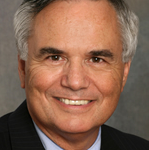
John Silvia
Last year’s gloom was waning and the dark-suited crowd that filled the Fletcher Opera Theater Tuesday dared to laugh again, but John Silvia and Matthew Martin wove a few zingers into their cautiously optimistic predictions at the Greater Raleigh Chamber of Commerce’s 2011 economic forecast. (Read about last year’s economic forecast here.)
“Yes, you have a consumer rebound. Yes, there are a lot of people at the mall, but they’re buying a lot of discount products,” said Silvia, Wells Fargo’s outspoken economist.
“We’ve survived the crash,” he said. “But now we’re on a very different island than we were.” Read more…
ScienceOnline2011 – introducing the participants
Wednesday, January 5, 2011, 10:07 am No Comments | Post a Comment
Continuing with the introductions to the attendees/participants of ScienceOnline2011. You can find them all on the list, but it may help if you get them in smaller chunks, focusing on a few at a time.
Read more…


