Archive for December, 2010

“And now math is something you get.”
Tuesday, December 21, 2010, 11:08 pm No Comments | Post a Comment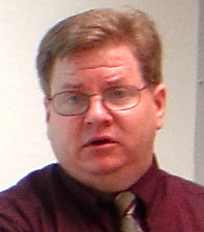
Bob Panoff
During a Bob Panoff show-and-tell it’s easy to forget the founder and executive director of the Shodor Education Foundation in Durham is talking about math, physics, science.
Among the things he likes to bring is a picture of waves on a cross. The trusted exhibit was along when Panoff spoke at this month’s Triangle Area Research Directors Council luncheon in Research Triangle Park.
The picture represents a trigonometric function on intersecting x and y axes and is a computational tool on Panoff’s laptop. He pulls up the formula that underlies the function and changes a multiplier. The waves get taller or shallower, but their frequency and length stay the same. Then he changes an addend. The waves come closer together or move farther apart, but their highs and lows don’t change.
“And now math is something you get,” Panoff told TARDC members. “Math and science are more about pattern and symbol recognition than numeric manipulation.”
At Shodor, Panoff and his staff of 15 use the same computational tool and others to help students understand that science doesn’t have to be a pain. It can be an onion, a problem that is solved one layer at a time, or a pearl, a solution built from an irritating grain of sand.
Students from fifth grade on can get the tools from Shodor’s Web site and learn chemistry, biology and physics through modeling or simulation. High school students can learn how to come up with the tools. Teachers and university faculty can learn how to use the tools as part of their lessons. And the more than 3 million page views per month on Shodor’s Web site suggest there’s demand.
What’s most important to Panoff is that the tools help students shift their attention from “What’s the answer to this problem?” to “How many different ways are there to look at the problem?” and “How do I know what’s right when I have multiple answers?”
Googling on the Internet is a surefire way to get multiple answers, Panoff said. The melting point of the radioactive chemical radium, for example, gets 116,000 hits on Google. Answers to the question include 1,292.0 degrees Fahrenheit, 1,392 degrees Fahrenheit and 1,291.7 degrees Fahrenheit.
And did you know numbers evoke feelings? Forty percent is less than half, but people in a shopping mall have a different perspective. To them 40 percent is a large number, Panoff said, because at a mall the number is associated with discount.
What Panoff is getting at is to get math and science is to understand that corrections of wrong answers will produce right answers, that verification and validation requires thinking skills and that handing out computers without training teachers on how to use computational tools isn’t preparing students to become part of the 21st century workforce.
View slides for Panoff’s TARDC presentation here.

ScienceOnline2011 - introducing the participants
Tuesday, December 21, 2010, 3:59 pm No Comments | Post a Comment
Continuing with the introductions to the attendees/participants of ScienceOnline2011. You can find them all on the list, but it may help if you get them in smaller chunks, focusing on a few at a time.
Read more…
ScienceOnline2011 - introducing the participants
Monday, December 20, 2010, 9:49 am No Comments | Post a Comment
Continuing with the introductions to the attendees/participants of ScienceOnline2011. You can find them all on the list, but it may help if you get them in smaller chunks, focusing on a few at a time.
Read more…

Unleashing the power of 1100 suns
Friday, December 17, 2010, 2:19 pm No Comments | Post a Comment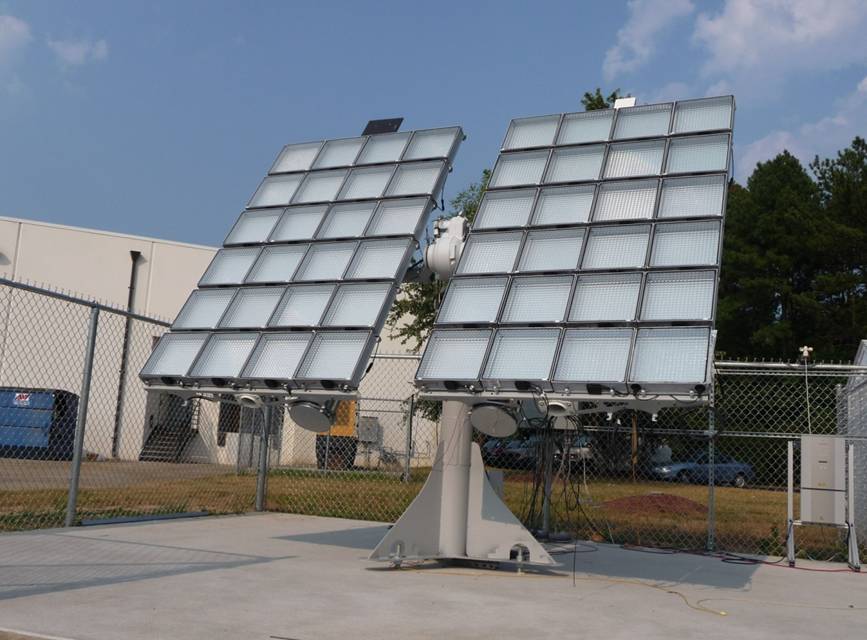
An array using high-concentration photovoltaics from Semprius, Inc.
A year or so ago, Joseph Carr found himself on an elevator with a man wearing a Siemens polo shirt. Having once worked for a division of Siemens, Carr introduced himself as the CEO of Semprius, Inc., a company that makes very high-efficiency solar modules. At the end of a fourteen-floor ascent, the two men exchanged business cards. Within months, Semprius and Siemens announced a joint development agreement.
Yes, a true “elevator pitch” success story.
ScienceOnline2011 - introducing the participants
Friday, December 17, 2010, 11:53 am No Comments | Post a Comment
Continuing with the introductions to the attendees/participants of ScienceOnline2011. You can find them all on the list, but it may help if you get them in smaller chunks, focusing on a few at a time.
Read more…
Can RTP-based effort nip a Frankenwoods scare in the bud?
Thursday, December 16, 2010, 9:38 pm No Comments | Post a CommentNearly a decade after genetically modified foods garnered criticism as so-called Frankenfoods, most of the corn, canola and soybean plants grown commercially in the U.S. are genetically modified. Golden rice, modified to contain high amounts of vitamin A, is expected to come to market within two years. But crops that have been engineered in a laboratory to withstand herbicides or pests, to grow faster or to contain important nutrients still raise safety and ecological concerns - particularly in Europe.
Genetically modified trees could be next in line for global public scrutiny.
Much of the Hawaiian papaya crop is already grown on trees modified to resist a fungus that devastated the majority of Hawaii’s unmodified papaya plantations. A plum tree modified to resist blight and a tropical eukalyptus tree that can deal with freezing temperatures in the southeastern U.S. are up for regulatory approval and genetically modified trees for wood products, including biomass to make cellulosic ethanol, are being grown on research stations nationwide.
Anticipating criticism, academic and corporate proponents of biotech trees banded together to nip a “Frankenwoods” scare in the bud.
The effort was spearheaded by two nonprofits based in North Carolina’s Research Triangle area, the Institute of Forest Biotechnology and the Biofuels Center of North Carolina, and generated stewardship principles that promote transparency of the genetic modification and the tree’s origin.
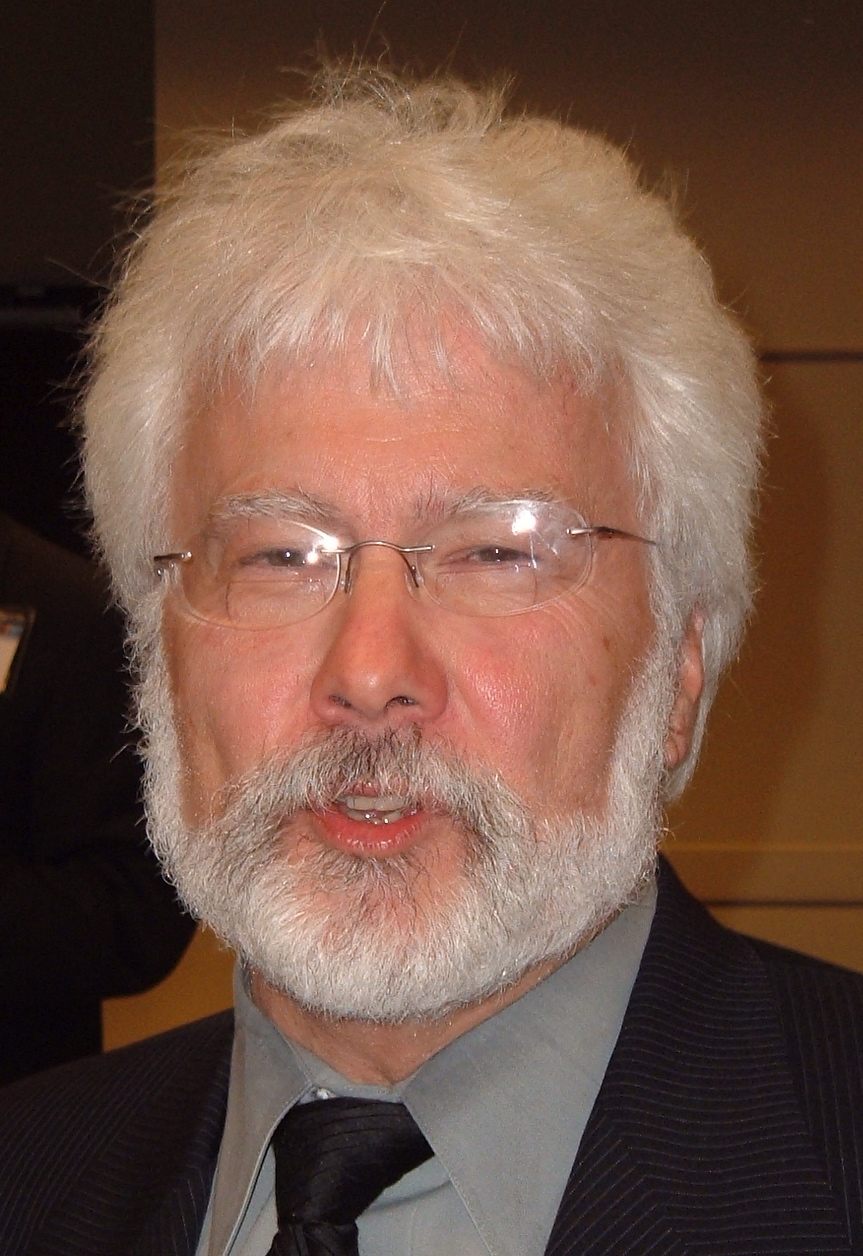
Steven Burke
The 426-acre campus of the Biofuels Center, a former U.S. Department of Agriculture tobacco research station about 30 miles north of Research Triangle Park, is also the first field study site where genetically modified forest trees will be grown in accordance with the stewardship principles. Read more…
ScienceOnline2011 - introducing the participants
Thursday, December 16, 2010, 8:00 pm No Comments | Post a Comment
Continuing with the introductions to the attendees/participants of ScienceOnline2011. You can find them all on the list, but it may help if you get them in smaller chunks, focusing on a few at a time.
Read more…
ScienceOnline2011 - introducing the participants
Wednesday, December 15, 2010, 10:35 pm No Comments | Post a Comment
Let’s continue introducing attendees/participants of ScienceOnline2011. You can find them all on the list, but it may help if you get them in smaller chunks, focusing on a few at a time.
ScienceOnline2011 - introducing the participants
Tuesday, December 14, 2010, 12:15 am No Comments | Post a Comment
As I do every year, I will do a series of posts introducing attendees/participants of ScienceOnline2011. You can find them all on the list, but it may help if you get them in smaller chunks, focusing on a few at a time.
Read more…
ScienceOnline2011 - introducing the participants
Monday, December 13, 2010, 10:11 am No Comments | Post a Comment
Here is another installment of the traditional series of posts introducing attendees/participants of ScienceOnline2011. You can find them all on the list, but it may help if you get them in smaller chunks, focusing on a few at a time.
Read more…


