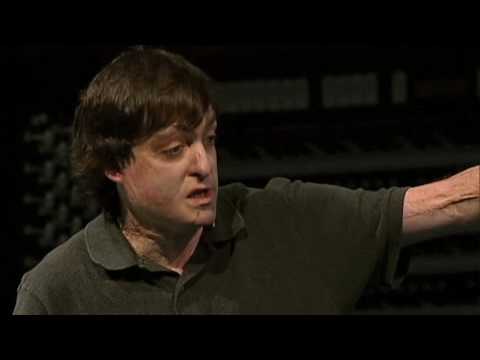
Duke’s Dan Ariely on how we cheat
Thursday, March 11, 2010, 9:20 pm No Comments | Post a CommentTo better understand stock markets or economic recessions, Dan Ariely likes to go where push comes to shove.
The Duke University professor is a behavioral economist who’s been in demand since the economy tanked nearly two years ago. The reason for his popularity is in his research.
Ariely looks at things that make no sense: Why does the price of an energy drink determine how many puzzles we solve? Taking a cue from his mother’s job as a parole officer, he also looks at behavior we know can get us into trouble, such as procrastinating and cheating.
Sometimes it’s hard to tell whether Ariely has an experiment going.
Case in point: At a lecture Wednesday at N.C. State University, Ariely gave me a matchbook, promotional material for his book “Predictably Irrational,” which became a New York Times bestseller when it was published last year.
Inside was a bright orange condom and instructions on how to prevent sexually transmitted diseases, including AIDS. On the back were nice things that George Akerlof and Daniel McFadden, two University of California economics professors, had to say about Ariely’s book.
“It’s the only condom endorsed by two Nobel laureates,” Ariely said without cracking a smile.
His lecture in front of a standing-room-only crowd of about 200 at NCSU was related to the book, which deals with “The Hidden Forces that Shape our Decisions,” as the subtitle on the cover says. Ariely talked about cheating, another difficult to understand behavior considering it undermines tenets kindergarteners understand, such as fairness and honesty.
Cheating comes in many flavors, including lying, corruption and fraud, and is a big deal in the U.S. Forensic accountants estimate on-the-job fraud costs U.S. businesses more than $600 billion per year. Cheating on tax returns costs the U.S. Treasury at least $250 billion per year. Insurance fraud adds another $24 billion in annual costs.
Ariely said he became curious about cheating in 2001, when the Enron scandal erupted. Lies, shady deals and deception forced the Houston-based energy company into bankruptcy, brought down one of the five largest auditing and accounting firms and cost investors nearly $11 billion.
Since then, more than 15,000 people across the world have participated in experiments Ariely and collaborators conducted to figure out how people cheat. Here are some of the findings:
- The size of the reward and the risk of getting caught don’t influence cheating. “We cheat a little bit, but we can still feel good about ourselves,” Ariely said. He called stretching the limit to where we’re still comfortable with our actions the “fudge factor.”
- Reminding people of their own morality at the time of temptation - before they fill out the tax return or take the exam -reduces cheating. Removing morality - backdating stock options is OK, but taking $100 from petty cash isn’t - increases cheating.
- Bankers cheat more than budding politicians, teen-age boys cheat more than teen-age girls, good storytellers cheat more than people who are less creative and in groups, people cheat more for group members than for themselves.
- Conflicts of interest, created through payments or other forces, make a difference in how people see the world.
Ariely blamed much of the financial meltdown on conflicts of interest, such as debt rating agencies getting paid by banks to assess risks the banks were taking.
“The biggest failure in the market is conflict of interest,” he said.
More on that in a talk Ariely gave in December 2008: