
Lovin’ the Numbers
Thursday, November 5, 2009, 8:56 am No Comments | Post a CommentAfter a few minutes of listening to Amory B. Lovins you see that, at heart, he’s a numbers guy. He even counts the fruit yield from tropical trees growing inside his energy efficient greenhouse-warmth-capturing home in Colorado, and he fondly refers to the current batch as “banana crop number 32.”
Lovins is not your run-of-the-mill environmentalist. Far from it. He is a physicist who harbors a vision for lowering global greenhouse gas emissions by 3 to 4 percent annually — without government subsidies or policies — and he has a lengthy performance record of creating profits from sustainable business solutions that eviscerate conventional wisdom.
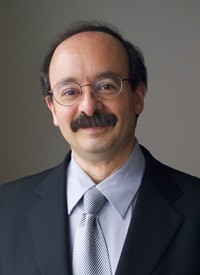 “I’m getting tired of redesigning things that weren’t designed right in the first place,” Lovins confessed last night to a standing-room only crowd of about 275 people at Love Auditorium on Duke University’s campus.
Lovins is the Chief Scientist and co-founder of the Rocky Mountain Institute in Snowmass, Colo., a non-profit “think-and-do-tank” with an unusual vision for reinventing the way we design and fuel our built environment and transportation networks. He carried a few pieces of this vision to the Triangle where he was the inaugural speaker for a new “Environment and Society” lectures series sponsored by Duke’s Nicholas School of the Environment. An estimated 600 or so people tuned in to watch the event streamed live over the web, and 50-plus people were turned away from the packed auditorium after trying to squat in the aisle steps.
Over the course of his 80-minute talk, Lovins spewed facts, figures and graphs depicting multiple paths for the U.S. and major industries to reduce oil, coal and electricity consumption. And he claimed they could turn huge profits doing so. He forecast a future where major business and industry invent a new energy culture devoid of oil and heavily reliant on renewables that fuel revamped aviation, car and truck designs.
The take-home message of the night was not a technical fix directed at individual consumers, such as “buy compact fluorescent light bulbs.” Rather, it was a message that energy efficiencies, availability of renewable energy sources and improved product designs will trickle down to the rest of us as major industries blaze the way to a sustainable future.
Lovins presented case after case where whittling down a few percentages of energy use here and there could culminate in moving society toward a reduced dependence on dirty fuels. But the end goal of a more environmentally-healthy future was nearly obscured by his fascination with how to get there, which requires reinventing the way we design and manufacture products, do business and build our cities and homes.
He focused on a handful of major industries that could, he said, turn the tide on energy efficiency and renewables for the rest of us: aviation, heavy trucks, military, fuels, finance and cars and light trucks. Policies, taxes and subsidies will do nothing to nudge these sectors toward a clean energy future, he said. But the economic markets will if major industries can capitalize on energy efficiencies in their built infrastructure, supply chains and transportation systems.
Personally, my Red Flag of Skepticism reaches full mast when anyone points to the economic markets as the sole driving force leading the way to a clean energy future. But Lovins did make some excellent points, including reinventing the way we design our buildings, cars and trucks. Now that is something I can get firmly behind.
Flipping through slides of redesigned airplanes and concept cars, he declared that ultralighting vehicles — using new designs and materials to make them lighter by attacking the physics platform first — was “as much fun as you can with your clothes on.” Because the U.S. expends half its oil budget on inefficient transportation, he said that major savings could be found by just making cars lighter. It’s pointless to run our autos on “primeval swamp goo,” he said, when 87 percent of the fuel energy never actually reaches the wheels and only .3 percent actually moves you, the driver. And vehicles with hybrid fuel sources don’t entirely fix the problem either if they are still heavy.
“The way to make hybrids cost-efficient is to not need as many batteries in the first place,” he said.
Extolling the virtues of ultra-lighting cars and trucks with new composite materials, Lovins passed around a bowl-shaped sample of what the future may hold, a carbon-fiber and thermoplastic composite material strong enough to form a car frame, but light enough that a person could lift with one hand an entire car door made from the stuff. But he did not fully address the safety that such lightweight materials would offer out on the road.
With parts so light, heavy manufacturing machinery like mechanical hoists become unnecessary, and using lighter-weight materials would spur a retooling of auto plants such that the next generation assembly line would require at least two-fifths less investment than today’s leanest plants, he claimed. But the new materials would not impact a car’s price, Lovins asserted, drawing as an example a 2003 Chrysler ultralight hybrid concept car that got 67 mpg.
Ultra-lighting is just one example of the many ideas Lovins’ presented as to how to go about revamping our conventional, energy-intensive way of doing things. He also attacked the big-picture financial costs of investing in nuclear power, and examined the minutiae of energy bleeds in “bloated software” and inefficient corporate IT systems. He pointed to numerous cases of large business improving their energy efficiencies whether or not they were worried about climate change or the environment. He rattled of massive profits earned by Interface, DOW, Dupont, IBM and British Petroleum gained by investing in strategies which also cut the companies’ energy use and reduced their greenhouse gas emissions.
If you couldn’t make the lecture – or if you got kicked out for squatting on the aisle steps before it even started – then you can watch a recorded version online.


