Posts Tagged ‘UV damage’

When light damages the eyes
Tuesday, August 16, 2011, 9:52 am No Comments | Post a Comment
Joan Roberts
Regardless of how many birthday cards, T-shirts and magazines declare that 50 is the new 30, the organs in our bodies start showing their age after 40. One of the first organs to do so is the eye, said Joan Roberts, a visiting scientist at the National Institute of Environmental Health Sciences in Research Triangle Park.
Presbyopia is what we notice - the eye’s lens loses elasticity, which makes it harder to focus on nearby objects and requires us to wear reading glasses. The chemical changes we don’t notice - at least not right away.
Between 40 and 50, the amount of protective antioxidants in our bodies decreases. That makes the eyes particularly vulnerable to damage from light, because it compounds a chemical change in the production of protective pigments that starts at about the same time.
The result, nearly 40 percent of Americans develop cataracts by the time they are 65 or older, according to data of the Centers for Disease Control and Prevention.
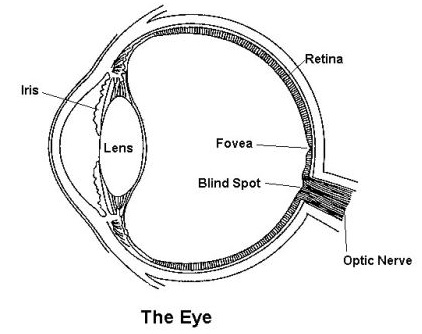
Cataracts, or clouding of the lens, can be treated with surgery. But when this increased vulnerability to light damages the retina, cells die and macular degeneration develops. This age-related disorder, which causes tunnel vision around a blurred spot in the center, affects about 5.6 percent of Americans 65 or older, according to CDC data.
Cataracts and macular degeneration aren’t avoidable, Roberts said, but their onset can be delayed.
 Roberts, a chemistry professor at Fordham University in New York City who for 15 years has done part of her research at NIEHS, has more than 25 years experience tracking the good and bad effects of light on the eye.
Ultraviolet radiation is largely responsible for the bad effects, as Roberts described in a 2009 research paper.
The cornea absorbs UV light with the most potential for damage. In adults, the lens absorbs the remainder of the UV light and only visible light reaches the retina. But the eye’s natural defenses start to break down after 40. The chemical changes in the pigments and the loss of antioxidants cause damage to the lens that adds up over time. Clear lenses get cloudy. Cataracts develop.
Drugs, such as the antibiotics Cipro and tetracycline, and medicinal herbs such as St. John’s Wort, can accelerate the lens damage. So can light reflecting off of sand and snow.
Roberts, who said, “It’s my job to turn that 70 into 100,” had several suggestions how to delay the onset of cataracts: Antioxidant boosts through nutrition. Fruit and vegetables high in vitamin E and lutein and green tea were high on her list. Wraparound sunglasses protect on the beach and in the mountains.
Macular degeneration can develop following UV damage to the retina at a very young age or following prolonged damage by visible light called short blue visible light. Age-related changes in the eye’s pigments after the age of about 50 can promote such prolonged damage.
Roberts’ suggestion to delay age-related macular degeneration are Eagle Eye sunglasses, which were developed by NASA and designed for astronauts to block short blue visible light.


