Posts Tagged ‘STEM’

From fish to turtles to Facebook to starting a science camp at the age of 12
Wednesday, February 23, 2011, 10:12 pm 1 Comment | Post a CommentEditor’s note: Molly is an example of what can happen when girls are free to explore and supported as science activists - even when that means having a menagerie of 36 fish, salamanders, turtles, dogs, rabbits and other pets at home. She is a seventh grader at Resurrection Lutheran School in Cary and the founder of the Raleigh Aquatic Turtle Adoption. In this guest post, which she wrote with her mother, Molly describes how getting a pet fish led to planning a STEM summer camp at her school this year.
My name is Molly, I am 12 and I created STEM Leadership Camp.

Betta fish come in many colors. This is a green one.
When I was little I wanted tons of pets. My mom said I could have a betta fish if I took really good care of it. So I got Rainbow, who lived for two years. When I was 5, I got my first puppy, Zoe, who is my best friend.
Once we drove by a pond and I saw a turtle. I had seen one in a nature book, so I asked for a turtle. My mom and I looked up what kind of tank they like and where to get one.
Eventually, we adopted two turtles from an owner who couldn’t keep them. We decided to adopt more and realized we needed a permit to have more than four, so my mom applied for one and now we take care of many turtles.We also created Raleigh Aquatic Turtle Adoption (RATA) www.raleighaquaticturtleadoption.com and it has been running since 2006. RATA helps to get new homes for unwanted aquatic pet turtles.
I currently have about 20 fish, including 13 koi, three salamanders, 12 turtles, two dogs, two rabbits, one betta and three moon jellyfish, making a grand total of 36 pets. Read more…

Tapping puberty to narrow the gender gap in science
Saturday, December 4, 2010, 10:58 pm No Comments | Post a CommentThe hormones that usher in puberty also help teenagers focus - on science, for example.
Women in Bio, a support group founded in 2001, has for years zeroed in on this opportunity to narrow the gender gap in science. Chapters come up with programs that expose middle- and high-school girls to a breadth of career choices in the world of bioscience.
WIB’s Research Triangle Park chapter, which formed last year, organized its first such program on Thursday. More than 30 middle-school girls from Wake and Durham counties toured the production facilities of Biogen Idec in Durham and learned what several women scientists do on the job, including Esther Alegria, the general manager at Biogen’s RTP campus.
Biogen employs about 850 in Durham, where the Boston-based company makes its two multiple sclerosis drugs, Avonex and Tysabri.
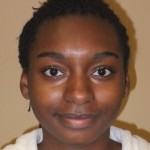
Elon Price
I talked to four of the girls to find out what they thought of the program. Listen to their answers:
Elon Price, a Clayton eight-grader who is homeschooled, was glad she attended the program, even though at first she didn’t think much of it when she found out her mother had signed her up.
“All of it was really cool,” she told me.
Audio clip: Adobe Flash Player (version 9 or above) is required to play this audio clip. Download the latest version here. You also need to have JavaScript enabled in your browser.
Like another girl I talked to, Elon was impressed by one of the experiments Colleen Dodson, a Biogen process engineer, had prepared for the girls. It involved a solution of vinegar and salt, a bunch of dirty pennies and two steel screws.
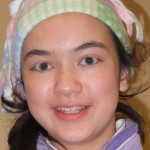
Lily James
The solution stripped dirt and patina, or copper oxide, from the pennies. Then, Dodson took the clean pennies out and put the shiny steel screws in the solution. After a while, the screws turned dark. They had been copper plated.
Lily James, an eighth-grader at Ligon Middle School in Raleigh, also liked the penny experiment.
Audio clip: Adobe Flash Player (version 9 or above) is required to play this audio clip. Download the latest version here. You also need to have JavaScript enabled in your browser.
Molly Paul, a seventh grader at Resurrection Lutheran School in Cary, liked the job shadowing best.
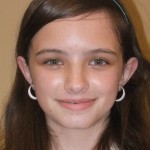
Molly Paul
Maybe Molly was looking for inspiration, because she already has a job that involves science.
She gave me her business card when I gave her mine. Hers read, “Raleigh Aquatic Turtle Adoption. Molly K. Paul, founder & director.” She even has a Web site for her organization.
Audio clip: Adobe Flash Player (version 9 or above) is required to play this audio clip. Download the latest version here. You also need to have JavaScript enabled in your browser.
The women scientists at Biogen who took the girls on a tour, designed and performed experiments and invited them into their cubicles, took great pains to impress on the girls that science is everywhere. Dodson, for example, listed make up, phones, medicine and our bodies, which she called chemical factories.
“All is chemistry, biology and physics,” Dodson said.
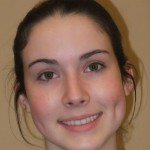
Carina Kling
Carina Kling, an eighth grader at Daniels Middle School in Raleigh, already had somewhat of an understanding of the potential power that science packs.
At her school, Carina volunteers to work with people with disabilities. Some of the disabilities are caused by genetic defects. Carina said the work as a volunteer has made her think about how she could help more, which has led her to an interest in genetics.
Audio clip: Adobe Flash Player (version 9 or above) is required to play this audio clip. Download the latest version here. You also need to have JavaScript enabled in your browser.
Are we pursuing innovation at the expense of wisdom?
Wednesday, November 10, 2010, 11:09 pm 1 Comment | Post a CommentIn the U.S. as in other countries around the globe the push is on to improve students’ skills in science, technology, engineering and mathematics, or STEM.
Innovation is the name of the game. Computer technology is already transforming how we work, live and play and researchers are delving deeper and deeper into our bodies and surroundings. The knowledge economy is where we believe the well-paying jobs of tomorrow will be.
This emphasis on the hard sciences - biology, chemistry, math, physics - brought about a $260 million nationwide STEM effort to move U.S. students to the top internationally. President Obama unveiled the Educate to Innovate Campaign about a year ago. But the emphasis on the hard sciences has also given rise to efforts that threaten to diminish the humanities, sometimes referred to as the soft sciences: Squeezed by budget cuts, the State University of New York at Albany on Oct. 1 announced cost cuts that would eliminate all degree programs in French, Italian, the classics, Russian and theater. (Responses to this SUNY decision here and here.)
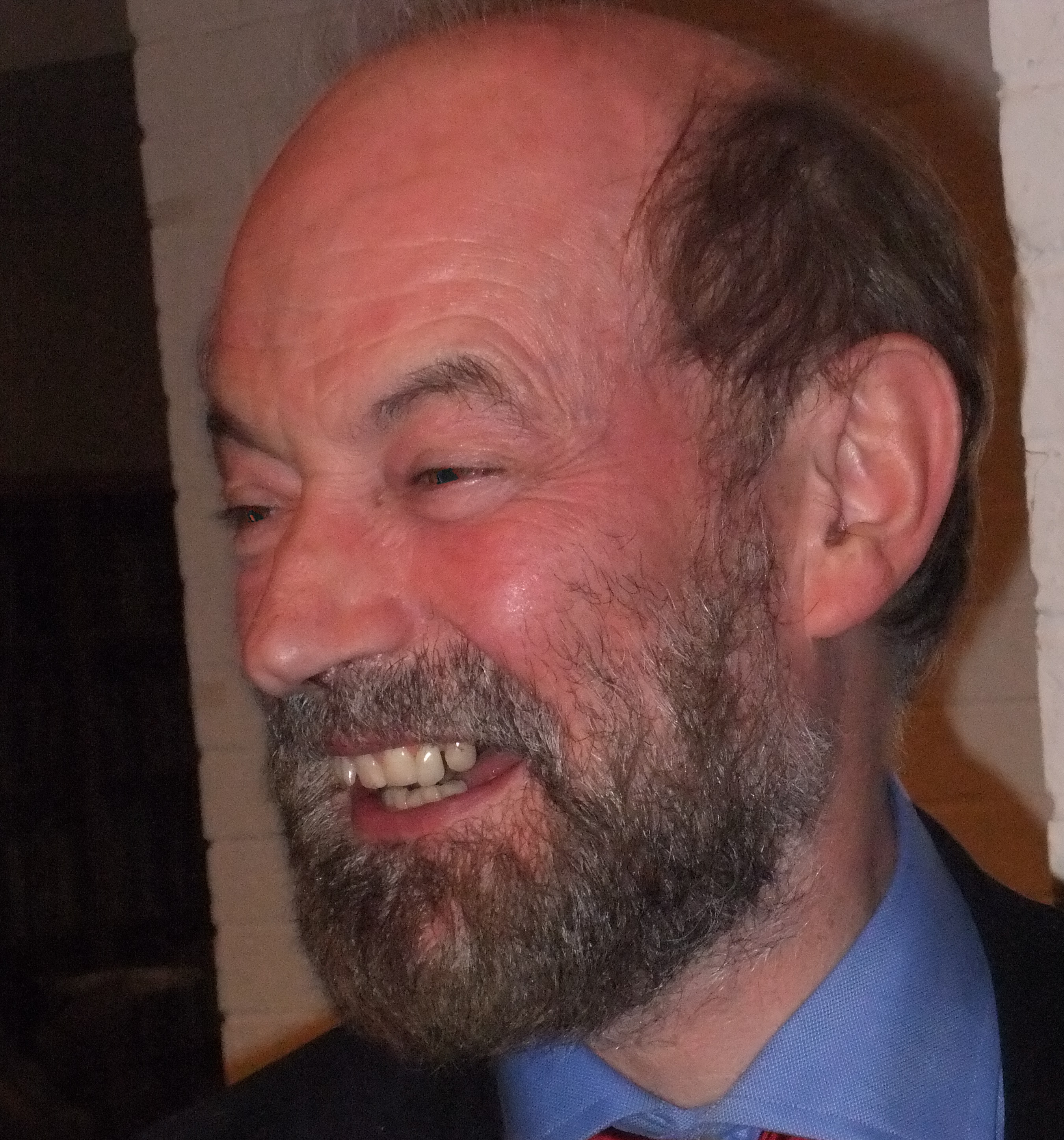
Dr. Raymond Tallis
But it gets worse, Dr. Raymond Tallis, a British philosopher and poet, told a crowd of more than 100 Tuesday at the National Humanities Center in Research Triangle Park.
Tallis is a retired neurologist who travels with a laptop and has neither a problem with Charles Darwin’s theory on evolution nor with modern medical research. What he has a problem with are efforts to, for example, explain moral judgments with the help of brain scans or to replace the human conscience in psychology, religion and the arts with the evolutionary drive to survive and procreate. Read more…


