Posts Tagged ‘Shearon Harris’

A nuclear power scare from Japan
Sunday, March 27, 2011, 11:12 pm No Comments | Post a Comment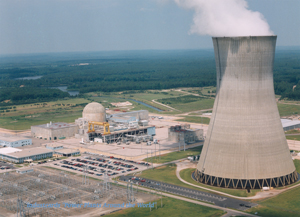
Shearon Harris is one of six nuclear power plants operating in North Carolina.
The hydrogen explosions, the fire, the radioactive leaks and the evacuations at the earthquake- and tsunami-ravaged Fukushima Daiichi nuclear plant about 150 miles north of Tokyo happened a continent and an ocean away from North Carolina’s Research Triangle. But there’s a good chance the fallout from the nuclear crisis in Japan will hit close to home - lest you forget the Shearon Harris nuclear plant about 20 miles southwest of Raleigh.
On clear days, Shearon Harris’ cooling tower and the steam rising from it are clearly visible across the Triangle, even from Eno River State Park about 50 miles north. Splitting an atom, a process called nuclear fission, is cleaner than burning coal to generate electricity and Progress Energy, which operates Shearon Harris, plans to add two reactors to the existing one by 2018.
But the events at the Fukushima Daiichi nuclear power plant could delay expansion plans at Shearon Harris and elsewhere in the U.S. and make them more expensive.
The Japanese earthquake and its fallout “will slow nuclear power down in the U.S.,” Paul Turinsky, professor of nuclear engineering, said during a symposium Wednesday at N.C. State University. Turinsky was one of four NCSU experts who spoke at the symposium.
The same day, the Nuclear Regulatory Commission and the nuclear power industry agreed to reassess reactor designs and training procedures and to reevaluate reactors at the 104 operating nuclear power plants nationwide.
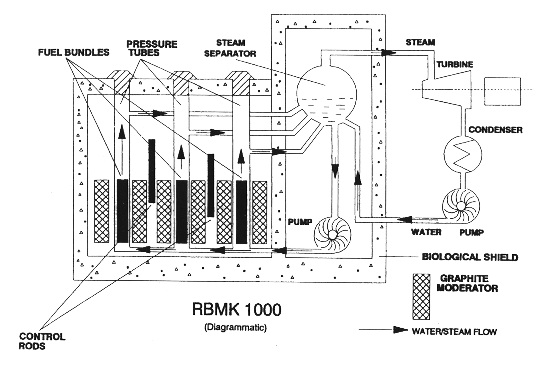
The Chernobyl reactor was an open design, lacking steel and concrete to contain radioactive material in case of an accident.
Also, public support for more nuclear energy has dropped. According to a CBS poll, more Americans disapproved than approved of building more nuclear plants in the wake of the Fukushima Daiichi crisis, and for the first time since the 1986 nuclear disaster in Chernobyl the disapproval rate reached 50 percent.
Add to that regulatory shortcomings fueling anti-nuclear sentiment that has lingered since the Three Mile Island nuclear power plant accident in 1979 and has foiled three decades worth of attempts to establish a nuclear waste repository.
A 2010 report by the Union of Concerned Scientists listed 27 cases in which nuclear power plants accidentally released radioactive materials over the previous four years and the Nuclear Regulatory Commission allowed plant owners to violate regulations with impunity.
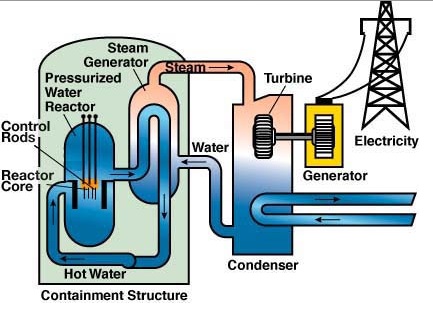
A pressurized water reactor like the one at Shearon Harris has a steel vessel around the reactor core and concrete containment structures.
Seven of the 27 violations happened at nuclear plants in North Carolina. Shearon Harris accounted for two of the seven; radioactively contaminated water leaked into the ground in both cases.
With Triangle residents following updates on the nuclear crisis in Japan, Triangle universities scrambled to line up nuclear energy experts who tried to dispel fears with facts. The day following the NCSU symposium, the University of North Carolina’s Morehead Planetarium and Science Center hosted a talk by David McNellis, the director of UNC’s Center for Sustainable Energy, Environment and Economic Development, on the risks of nuclear power.
Back to back, the experts analyzed nuclear reactor designs and their failures, from Three Mile Island to Chernobyl to Fukushima Daiichi.
Based on estimates of how much the general public was exposed to radioactively contaminated material, Man-Sung Yim, an associate professor of nuclear engineering and a radiological health expert at NCSU, ranked Chernobyl as the worst of the three nuclear power plant failures.
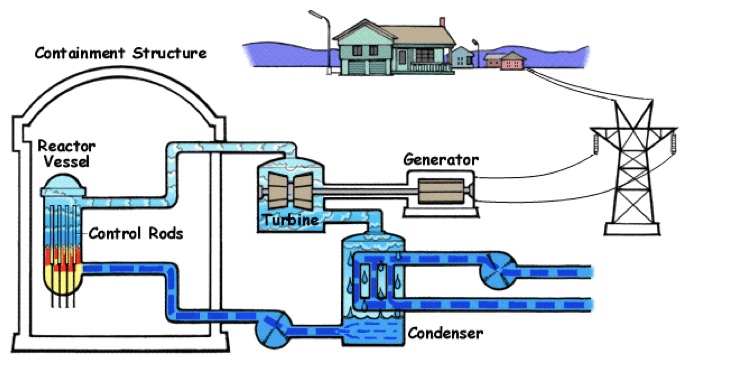
The Fukushima Daiichi plant uses boiling water reactors, which are equipped with steel reactor vessels and concrete containment structures.
Radiation exposure from Fukushima Daiichi “is less than Chernobyl, but far worse than Three Mile Island,” Yim said during the NCSU symposium.
Based on published measurements, Yim calculated that the general population was exposed to about 33 rem of radiation in Chernobyl. The evacuated area around the Fukushima Daiichi plant has received a dose of up to 10 rem.
The Three Mile Island accident exposed the general public to about 180 millirem of radiation, less than the 300 millirem to 600 millirem of radiation Americans take in every year from everyday living.
A 400 rem dose of radiation is considered lethal, Yim said.
The other experts linked the exposure risk of the three nuclear power plant failures directly to reactor design and operational safety standards.
All nuclear power plants generate electricity from steam that turns a turbine linked to a generator. The heat needed to turn water into steam comes from nuclear fission.
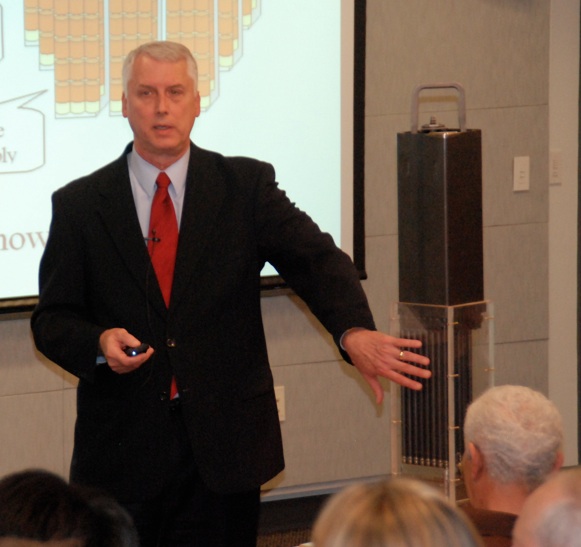
John Gilligan, professor of nuclear engineering at NCSU, shows off a nuclear fuel rod at the symposium.
The fuel to produce the heat is uranium, a natural metallic element in rock, soil and water that comes in multiple versions. The uranium is contained in ceramic-like pellets that are stacked in fuel rods in the core of a reactor. One uranium version, uranium-235, breaks apart when it gets hit by a neutron, releasing two to three neutrons, two radioactive fission products and heat. When released neutrons hit more uranium-235, the nuclear fission continues as a chain reaction.
Unlike the Three Mile Island and Fukushima Daiichi nuclear power plants, the Chernobyl nuclear power plant had no steel vessels around its reactor cores. When an experiment went awry on April 26, 1986, and reactor No. 4 overheated, pressure from the steam continued to build until it blew off the roof of the reactor building, scattering radioactive material from the melting reactor core across the landscape and setting free radioactive clouds that drifted westwards.
The Fukushima Daiichi plant withstood the massive March 11 earthquake, even though it wasn’t designed for such a powerful seismic event, John Gilligan, professor of nuclear engineering, said during the NCSU symposium.
Control rods automatically stopped nuclear fission, in effect shutting down reactors that were in operation the moment the electricity supply to the plant was cut off.
“It wasn’t the earthquake,” that caused the nuclear crisis at Fukushima Daiichi, Michael Doster, professor of nuclear engineering at NCSU, said. “It was the tsunami.”
The wall of water the earthquake had unleashed was more than twice as tall as the floodwall that was supposed to protect the nuclear power plant facing the sea. When the water flooded the plant, it knocked out emergency diesel engines that powered pumps, fans and other electrical equipment in the reactor buildings. After about eight hours, batteries backing up the emergency diesel engines were also exhausted.
Without power, pumps stopped cooling the water in 40-foot-deep pools that held spent fuel rods. The rods usually stay in these pools for about five years during which time they continue to give off heat. But unlike in the reactor, the heat production in the spent fuel storage pools cannot be turned off, said Doster.
“You cannot avoid it. You cannot control it,” he said. “You just have to deal with it.”
The spent fuel rods in the Fukushima Daiichi storage pools are made from zirconium alloy. As the temperature continued to rise in the storage pools, the zirconium interacted with the heated water and produced hydrogen gas. It was that hydrogen gas that exploded, Doster said. The explosions damaged the concrete buildings of at least two of the reactors and released radioactive material from the spent fuel.
Design flaws, malfunctioning equipment and human error caused reactor No. 2 at the Three Mile Island nuclear power plant to overheat March 28, 1979, UNC’s McNellis said.
It was the worst commercial nuclear power plant accident in U.S. history and led to sweeping changes involving emergency response planning, reactor operator training, human factors engineering, radiation protection and many other areas of nuclear power plant operations, according to the NRC. Regulatory oversight also tightened to enhance safety.
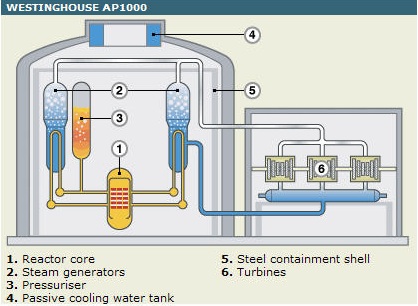 Like two-thirds of U.S. nuclear power plants, Shearon Harris’ reactor is the same design as reactor No. 2 at Three Mile Island. The remaining one-third of U.S. nuclear power plants rely on boiling water reactors like the Fukushima Daiichi plant.
Shearon Harris became operational in 1987, eight years after the Three Mile Island triggered the regulatory and safety changes.
The two reactors Progress Energy has proposed to add at Shearon Harris are a new design. Called AP1000, it includes a cooling tank on top of the reactor from which water trickles onto the core without the need for pumps.
Construction of nuclear plants with AP1000 reactors have begun in China and the U.S.
Charlotte-based Duke Energy, which is buying Raleigh-based Progress Energy, plans to build a nuclear power plant with AP1000 reactors in South Carolina. More are proposed in Florida and Alabama.
(Watch a video of the NCSU symposium here.)


