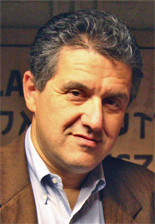
Sabine Vollmer

Duke’s PottiGate: Another scandal

Wednesday, July 28, 2010, 9:41 pm By 2 Comments | Post a Comment

Paul Goldberg

Dr. Anil Potti, the Duke University cancer researcher whose resume and research are under scrutiny, is the ideal target for Paul Goldberg, the editor of The Cancer Letter. Goldberg, who has an uncanny sense for hubris, is building a reputation for outing bad apples among cancer researchers, and he has dug up some interesting documents about Potti.

I met Goldberg a year ago at a training course the National Institutes of Health put on for science writers. He was one of the speakers and talked about a lung cancer researcher whose research was flawed and who failed to disclose the $3.6 million she had received from a cigarette maker.

After I read The Cancer Letter’s special issue about Potti, I called Goldberg and got his permission to link to the documents supporting the stories.

There is:

  • A copy of the letter more than two dozen biostatisticians wrote to Dr. Harold Varmus, newly appointed director of the National Cancer Institute, urging for a public inquiry.
  • A copy of the American Cancer Society letter that notified Dr. Sandy Williams, vice chancellor for academic affairs at Duke’s Medical Center, that payments were being halted on a $729,000 grant Potti had been awarded.
  • Three versions of Potti’s resume. One version that includes his now disputed claim of being a Rhodes scholar, a second version that also includes the claim and a third version that doesn’t. Potti used the two versions that include the claim while he was a research fellow at Duke. At the time of the third version, he was already an assistant professor in Duke’s department of medicine and the Institute for Genome Sciences and Policy.
  • A copy of Potti’s residency application at the University of North Dakota School of Medicine, which includes his educational history in India, a transcript from his medical college in India and a personal statement.
  • A faculty profile of Potti, which was published in 2007 in Genome Life, a newsletter of Duke’s Institute for Genome Sciences and Policy. The profile calls him a Rhodes scholar.

Resume padding to gain academic stature is nothing new.

A few months ago, a former Harvard students was indicted for falsifying the resume that got him into the Ivy League school and several scholarships. Last year, California regulators found out that a new law to regulate air pollution was based on statistical work done by a researcher who hadn’t earned a doctorate in statistics from the University of California at Davis as he had claimed. Three years ago, the dean of admissions at the Massachusetts Institute of Technology had to resign when it became clear she had inflated her resume with degrees she never received.

Dr. Anil Potti

But Duke has bigger problems than suspected resume padding by a rising star. The Lancet Oncology, a British medical journal, and the American Cancer Society are investigating potential errors in Potti’s research, because other researchers have been unable to independently replicate breakthrough statistical findings that promised to predict which chemotherapy is best for each cancer patient.

Questions about possible statistical errors in Potti’s research came up last year. Duke halted three clinical trials Potti was involved in and investigated, but didn’t allow outsiders to double-check the data in question, according to Goldberg.

Being able to repeat an experiment and come up with the same results is a basic tenet of research. It’s the litmus test to separate fact from fiction in science.

Duke has had problems with basics before.

  • In 2003, Jesica Santillan, a 17-year-old Mexican immigrant, died after receiving a heart-lung transplant at Duke University Hospital. The transplant was from a donor with the wrong blood type.
  • In 2005, surgical instruments at two hospitals in the Duke University Health System were washed in used hydraulic fluid instead of detergent. The mixup wasn’t detected for weeks, because administrative staff failed to heed multiple complaints by staff.
  • In 2008, research of Homme Hellenga, a Duke professor of biochemistry known for his work with designer enzymes, came under fire and he had to retract two research papers because other researchers who repeat his experiments cannot get the same results. According to a story in the magazine Nature, a student in Hellinga’s lab had raised questions about the experiments before the results were published.

Comments

  1. mbrauer says:

    "lunch cancer"?

  2. gpawelski says:

    The first chink in the armor came when scientific reviewers issued an “expression of concern” regarding the validity of the method. Further analyses revealed evidence that the technologies for the prediction of response in individual patients could not be reproduced. As the reviewers stated, “The scientific community should be able to replicate the results with the reported data available.”

    They continued, “Having tried, we can confidently state that this is not yet true.” The NCI convened a group of 31 scientists, who concluded, “It is absolutely premature to use these prediction models to influence the therapeutic options open to cancer patients.”

    While much attention has been given to the genomics field, the NCI has determined that – at this time – treatment selection results cannot be duplicated and the genomic methodology is not ready for clinical application.

    What went wrong?

    "The simple answer is that cancer isn’t simple," according to Dr. Robert Nagourney, one of the pioneers of functional profiling analysis.

    Cancer dynamics are not linear. Cancer biology does not conform to the dictates of molecular biologists. Once again, we are forced to confront the realization that genotype does not equal phenotype.

    In a nutshell, cancer cells utilize cross talk and redundancy to circumvent therapies. They back up, zig-zag and move in reverse, regardless of what the sign posts say. Using genomic signatures to predict response is like saying that Dr. Seuss and Shakespeare are truly the same because they use the same words. The building blocks of human biology are carefully construed into the complexities that we recognize as human beings. However appealing gene profiling may appear to those engaged in this field (such as Response Genetics, Caris, the group from Duke and many others) it will be years, perhaps decades, before these profiles can approximate the vagaries of human cancer.

    Functional profiling analyses, which measure biological signals rather than DNA indicators, will continue to provide clinically validated information and play an important role in cancer drug selection. The data that support functional profiling analyses is demonstrably greater and more compelling than any data currently generated from DNA analyses. Functional profiling remains the most validated technique for selecting effective therapies for cancer patients.

    Since the new millenium there has been the increasing acceptance of the concept that cancer is a very heterogenous disease and that it would be a good thing to try and individualize treatment. Oncologists are increasingly open to the concept of personalized therapy.

    Driving this change has been the success of a few drugs which target specific molecular targets within cancer cells. For instance, Gleevec in a relatively rare disease called chronic myelogenous leukemia (CML). Herceptin, which targets a mutation present in some patients with breast cancer. Iressa and Tarceva, which help some patients with a mutation in lung cancer.

    It has become routine to test breast cancer patients for the mutation conferring sensitivity to Herceptin. It is becoming routine to test lung cancer patients for the mutation conferring sensitivity to Iressa and Tarceva. When a tumor has certain KRAS mutations, the partially effective colon cancer drug Erbitux, is very unlikely to work.

    So we've have Her2 testing for predicting Herceptin activity in breast cancer. EGFR mutation testing to predict for Iressa and Tarceva (two different flavors of the same, similar type of drug) in lung cancer. KRAS mutation to predict for Erbitux in colon cancer. Of course, this leaves out the three dozen other drugs and a myriad of drug combinations, which may often be even more effective in each of these diseases, and leaves out virtually all of the other forms of cancer.

    Beyond this, there have been attempts to develop molecular-based tests to examine a broader range of chemotherapeutic drugs. New technologies for measuring the expression (biological activity) of literally hundreds to thousands of genes as part of a single test. There are two main technologies involved: RT-PCR (reverse transcription polymerase chain reaction) and DNA microarray.

    Dr. Larry Weisenthal, one of the pioneers of functional profiling analysis, has described the use of RT-PCR and DNA microarrays in personalized oncology as analogous to the introduction of the personal computer. Dazzling hardware in search of a killer application. This was wonderful technology and the geekiest of people bought them and played with them, but they really didn't start to do anything for a mass market until the introduction of the first killer application, which was a spreadsheet program called Visicalc.

    So what research scientists in universities and cancer centers have been doing for the past ten years is to try and figure out a way to use this dazzling technology to look for patterns of gene expression which correlate with and predict for the activity of anticancer drugs. Hundreds of millions of dollars have been spent on this effort. Objectively speaking, it's like the emperor's new clothes. So far, a qualified failure.

    Academics are besides themselves over the promise of the new technology. It seems so cool that it simply must be good for something. How about in the area of identifying drugs which will work in individual patients? It has been a major bust by whatever standard you choose to apply. Objectively, if you compare and contrast the peer-reviewed medical literature supporting the use of functional profiling for personalizing drug selection versus the correspond literature supporting molecular profiling, the literature supporting functional profiling wins (big time!).

Leave a Comment